Feeds:
Posts
Comments

Archive for the ‘Marriage Trouble’ Category

42SOUNDTRACK: IRON MAIDEN-Iron Maiden (1980).

Steve Harris was on That Metal Show recently.  Harris is the baimssist and primary songwriter for Iron Maiden and has been since their first album in 1980.  When I was in high school Iron Maiden was my favorite band hands down.  I had all their albums, I had all their singles, all their hard to find British vinyl 12 inch singles, even a few pictures discs.  Wonder if they’re valuable?

Every album was an epic event for me–I even played “Rime of the Ancient Mariner “off of Powerslave to my English class (not telling anyone it was 13 minutes long).

And then, after Somewhere in Time, I just stopped listening to them. Almost full stop.  I did manage to get the first four albums on CD, but the break was pretty striking.  I actually didn’t know that they’d had personnel changes in the ensuing years.  I’d vaguely heard that Bruce Dickinson  left, and that others followed, but I don’t think I quite realized that they were back to their big lineup these days.

Anyhow, Harris was so earnest and cool that I had to go check out some of their new stuff. Which was okay.  I’d need more time to digest, but then I had to listen to the first albums again.

And wow I had forgotten how much the first Iron Maiden album melds punk and prog rock into a wild metal hybrid.  There’s so much rawness in the sound and Paul Di’Anno’s vocals, not to mention the speed of some of the tracks.  And yet there’s also some epic time changes and starts and stops and the elaborate multipart Phantom of the Opera….  Wow.

The opening chords of “Prowler” are brutal.  But what’s surprising is how the second song “Remember Tomorrow” is a lengthy song that has many ballad-like qualities, some very slow moody sections–although of course each chorus rages with a great heavy riff and a blistering solo.  On the first two albums Paul Di’Anno was the singer.  He had a fine voice (it was no Bruce Dickinson, but it was fine).  What’s funny is that Bruce does the screams in “Remember Tomorrow” so much better in the live version that I forgot Paul’s vocals were a little anemic here.

However, Paul sounds perfect for the rawness of “Running Free” a wonderfully propulsive song with classic Harris bass and very simple metal chugga chugga riffs.  And this has one of the first real dual guitar solos–with both players doing almost the same riff (and later Harris joining in on bass).

“Phantom of the Opera” is the band’s first attempt at an epic multi-secton kinda-prog song.  It opens with a memorable, if slightly idiosyncratic riff and some wonderfully fast guitars/bass.  There’s a great slow bit that morphs into an awesome instrumental soloing section with bass and twin guitars playing a wonderful melody.

“Transylvania” is an instrumental that is challenging but probably not one of the best metal instrumentals out there, although again when Dennis Stratton and Dave Murray play in synch solos it’s awesome.  This track segues into “Strange World” a surprisingly trippy song (with effects that seem like keyboards but which aren’t).  It’s slow in a “War Pigs” kind of way, but it doesn’t entirely break up the album, because there are other slow bits on the disc.  It is a little out of place though.

Especially when “Sanctuary” blasts forth.  True, it wasn’t originally on the album (in the UK), but man, blistering punk or what!  “Charlotte the Harlot” was always one of my favorite songs (it taught me what a harlot was after all), it’s quite proggy, with a lot of stuttered guitar work and a middle section that features some loud and complex bass.  The disc ends with the by now almost immortal “Iron Maiden.”   A great raw riff opens the song, a harmony guitar partners it and the band blasts forth.  Who even knows what the lyrics area about, the song just moves and moves–There’s even a great chaotic bass/drum break in the middle.  And listening to the guitar noises in the solos at the end.  Amazing.  It’s quite the debut.

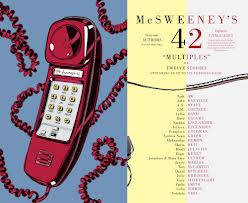
[READ: June 7, 2013] McSweeney’s #42

I have made it a point of (possibly misguided) pride that I have read every word in every McSweeney’s issue.  But this issue has brought that to an end.  As the title states, there are twelve stories in the book.  But there are also sixty-one authors writing in eighteen languages.  And there’s the rub.  One of my greatest (possibly misguided) shames is that I don’t speak any other languages.  Well, I studied Spanish and German, I know a few dozen words in French and I can read the Greek alphabet, but none of these would help me read any of these stories.  So, at least half of this book I didn’t read.

But that’s kind of the point.  The purpose of this book is to make a “telephone” type game out of these stories.  Stories are translated from one language to another and then re-translated back into English.  The translators were mostly writers rather than translators and while some of them knew the second language, many of them resorted to Google Translate or other resources to “read” the story.  Some people read the story once and then rewrote it entirely, other people tried to be as faithful as possible to the original.  And so what you get are twelve stories, some told three times in English.  Some versions are very similar and others are wildly divergent.

I normally write about the stories in the issues, but that seems sort of beside the point as the original stories were already published and were selected for various reasons (and we don’t even see any of the original stories).  The point here is the translation(s).  So, in a far less thorough than usual way, I’ll list the contents below. (more…)

Read Full Post »

200px-FatesWorseThanDeathSOUNDTRACK: THE STATLER BROTHERS-“Flowers on the Wall” (1965).

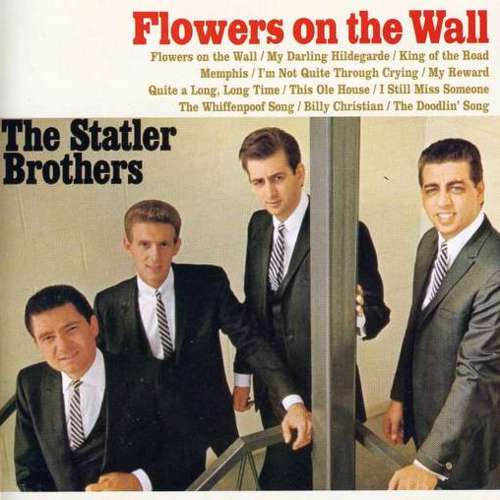
flowersonthe Vonnegut mentions this Statler Brothers song in Palm Sunday as well.  I know this from Pulp Fiction–a song that I found very amusing and never would have guessed was a classic country song.  Country music was very different in 1965 than it is now.  I don’t even know if there was a folk or bluegrass category back then, and this song, with its banjo and bouncey acoustic guitar is a great example of the kind of country music I like.  And those harmonies!

This song certainly seems to be about insanity–about a man counting flowers on the wall, playing solitaire with a deck of 51 cards, smoking cigarettes and watching Captain KAN Kangaroo.  Don’t tell him he’s nothing to do.  What a weird little song.  And man is it catchy.  No wonder it was a #1 hit.

[READ: May 31, 2013] Fates Worse Than Death

After reading Palm Sunday I learned that Fates Worse Than Death was a kind of autobiographical sequel to that non fiction book.  I also learned that the two essays that make up Nothing is Lost Save Honor which is impossible to find (and for which I can’t even find a cover) are available in FwtD.  However, since there is no real contents or index, you do have to read the whole thing to find out which chapters contain the essays.  Or you can just look here and see that “The Worst Addiction of Them All” (which was published in The Nation) is in Chapter XIV and “Fates Worse Than Death” appears in Chapter XV.

The last time I read a bunch of Vonnegut together I got a bit burnt out on him and the same thing happened here.  The problem with Vonnegut’s nonfiction is that he tends to repeat himself.  A lot.  And while this book is ostensibly about the 1980s, he talks an awful lot about his family and his friends from the war and his other literary acquaintances., like he did in Palm Sunday.  In a number of places, he says that he doesn’t like to read himself in English, and it would seem that he doesn’t proofread to see if he said something already either.

This is not to say that the book is not worth reading.  Indeed, if you read Palm Sunday in the 80s and then this one in the 90s, you might not remember all of the details that pop up again, but when you read them days apart…well. (more…)

Read Full Post »

PalmSundayFrontandBackSOUNDTRACK: THE STATLER BROTHERS-“Class of ’57” (1972).

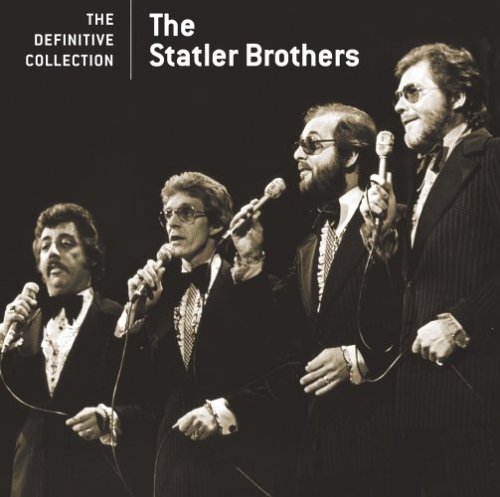
stalerI don’t know much about The Statler Brothers.  They are considered country, although this song is hardly country–it’s more folk with some bluegrass and, the real selling point–great harmonies (especially the bass singer with the big mustache).

The song is a wonderful coming of age song, sad and funny with a list of what happened to everyone in the class of ’57.  Like:

Betty runs a trailer park, Jan sells Tupperware,
Randy’s on an insane ward, Mary’s on welfare.
Charlie took a job with Ford, Joe took Freddie’s wife,
Charlotte took a millionaire, and Freddie took his life.

John is big in cattle, Ray is deep in debt,
Where Mavis finally wound up is anybody’s bet.

But the kicker comes at the chorus:

And the class of ’57 had its dreams,
Oh, we all thought we’d change the world with our great words and deeds.
Or maybe we just thought the world would change to fit our needs,
The class of ’57 had its dreams.

And then at the end:

And the class of ’57 had its dreams,
But living life from day to day is never like it seems.
Things get complicated when you get past eighteen,
But the class of ’57 had its dreams.

Vonnegut quotes the entirety of this song in the book and I’m glad he did, it’s a very moving song and really captures American life.

[READ: May 26, 2013] Palm Sunday

After writing several successful novels, Vonnegut paused to collect his thoughts.  And Palm Sunday begins: “This is a very great book by an American genius.”  It is also a “marvelous new literary form which combines the tidal power of a major novel with the bone-rattling immediacy of front-line journalism.”  After all the self praise, he decides that this collage–a collection of essays and speeches as well as a short story and a play which is all tied together with new pieces (in TV they would call this a clip show)–this new idea of a book should have a new name and he chooses: blivit (during his adolescence, this word was defined as “two pounds of shit in a one-pound bag.”  He proposes that all books combining facts and fiction be called blivits (which would even lead to a new category on the best seller list).  Until then, this great book should go on both lists.

This book is a collection of all manner of speeches and essays, but they are not arranged chronologically.  rather they are given a kind of narrative context.  What’s nice is that the table of contents lists what each of the items in the book is (or more specifically, what each small piece is when gathered under a certain topic).

Chapter 1 is The First Amendment in which he talks about Slaughterhouse Five being burned and how outraged he was by that–especially since the people so anxious to burn it hadn’t even read it (and the only “bad” thing is the word motherfucker).  The first speeches included are “Dear Mr. McCarthy” to the head of the school board where his books were burned and “Un-American Nonsense” an essay for the New York Times about his book being banned in New York State.  The next two are “God’s Law” for an A.C.L.U. fund raiser–it includes his confusion as to why people don’t support the A.C.L.U. which is working for all of our own civil liberties. (more…)

Read Full Post »

harpers maySOUNDTRACK: LAURA VEIRS-“Sun Song” (2013).

lauraI know of Laura Veirs from her work with The Decemberists, but as she’s mostly a backup singer (and occasional lead), I couldn’t really say I knew her very well.  So I was delighted to hear this song that she had written and to see just how great it is,.

The song begins with a simple folk guitar and pizzicato pluckings. Veirs’ voice has an innocence that I really love—gentle but clean.  The chorus brings an unexpected harmony vocals and vibrato but nothing prepares you for the feedback squalls that the new electric guitars bring in.

The song doesn’t get faster, just a little noisier—it reminds me of the best Sarah Harmer tracks.   Then the electric guitar goes away and the song feels fuller somehow.  The end of the song introduces a  kind of call and response which adds a cool new element until it all relaxes back into its original mellow style.

I really like this song and need to hear more from Veirs.  And I see that she has released a whole bunch of albums, so there’s a lot to choose from.

[READ: May 30, 2013] “Loyalty”

This story begins with a pretty straightforward sentiment: “As much as I love her, I blame Astrid.  Astrid told my wife, Corinne, that she could achieve happiness if only she’d leave me.”  Indeed, Astrid made a regular suggestion out of it–leave him, be free.  And so finally Corinne did–she left him alone with their son, Jeremy.  Initially Jeremy wrote to Corinne but eventually the replies were fewer and further between and he gave up.

Wes was crushed, but soon after he fell in love with Astrid and they got married.  I love the way it is presented:

The minute Corinne was gone, Astrid showed up. I don’t recall that, prior to that day, we had so much as exchanged a moody, sparking glance. She took me into her expert arms. It was consolation and sympathy at first, I guess. I didn’t question it. In about the time it takes to change the painted background in a photographer’s studio from a woodland scene to a brick wall, she had left her boyfriend and was presenting me with casseroles and opened bottles of cold beer.

We never really learn if Astrid had planned this all along.  It seems like it, but it’s not like Wes is a huge catch.  Corinne’s divorce request went though with no trouble or custody problems.  And soon he and Astrid had a new child, a daughter, Lucy.  Then they saw Corinne on TV, on a show about runaway moms–Wes asks, what would make her do such a thing–and no reasonable answer is given. (more…)

Read Full Post »

[LISTENED TO: May 13, 2013] Musicophilia

musico

My sister-in-law Karen got me this audio book for Christmas.  I had never read any Oliver Sacks before although I have always been amused/intrigued by his stuff (The Man Who Mistook His Wife for a Hat is such a great title).  So this book, as one might guess, is all about how music impacts our lives.  Music is more than just an enjoyable set of melodies, it is a more primordial form of communication.  The key thing for any fan of music to know about this book is that about 97% of the music he talks about is classical.  Which is fine, but you’re not going to get any kind of insight into rock.  The reason for this is twofold.  One–he likes classical (and doesn’t seem to like rock–although he did take one of his patients to a Grateful Dead show) and two–he wants to talk more about music and not so much about lyrics (although again, that’s not entirely true).

I have to admit that while I enjoyed the stories in the book and will certainly talk about it a lot, I found the book a little overwhelming–it was exhaustive and exhausting.  Sacks really tries to cover ever aspect of music (and many I never would have guessed) and so I found the nine hours of story a bit tiring by the end.

Part of that may also have been John Lee, the reader, who spoke very clearly and a little slowly and gave the book something of a lecture-feel.  Which was fine for much of the book, although again, it was a little exhausting sometimes.

The thing that is most exhausting about the book is that virtually every person he talks to or about has had some kind of trauma which makes their appreciation of music different from the norm.  If you are in any way a hypochondriac, this book will make you go insane  I’m not, but even I found myself worrying about having a stroke at any second or experiencing some kind of weird brain thing where I no longer like music or god forbid get some kind of long term amnesia.  Jesus, I was getting a little spooked by the end. (more…)

Read Full Post »

dreadSOUNDTRACK: PIÑATA PROTEST-El Valiente (2013).

elvaliente-frontrgbOn the Pogues album If I Should Fall from Grace with God, they sing a song called “Fiesta” that is more or less a punk Spanish song which, while very Spanish sounding, still retains a feeling of Irishness.  Piñata Protest, a band from San Antonio who sing in Spanish and English, sounds like a similar mix of Mexico, Ireland and punk (especially on the second track, “Vato Perron”).  I feel like the Ireland comes from the accordion (one of the primary instruments on the disc), while the punk lasts throughout (the whole album is 9 songs in 20 minutes).

The band plays loud guitars at a fast pace.  And it’s amazing how well the accordion brings it all together.

The band sings a few really fast songs and a couple slower ones.  Interestingly, the slower songs (“Tomorrow Today” and “Guadalupe”) are probably the most conventional and, consequentially, of the least interesting songs on the album.  They sound like pretty typical punk pop, albeit with touches of accordion.  It’s the more fast songs like “Vato Perron” and “Life on the Border” (with the great lead accordion and the fun “Hey!” refrain) which really stand out.

“Volver Volver” is a traditional song which starts out slowly (with big guitars) and after a few verses and a very long held note, the punk can’t be contained any longer and the song ends in a blur.  The title track is a great rocker with some interesting guitar sounds an a cool accordion solo.  Then there;s the rocking (and amusing) cover of “La Cucaracha.”  It starts out as a blistering punk song with no real connection to the original until about mid way through when a lone trumpet begins laying the familiar melody.  It’s only a minute long and so is the final cut “Que Pedo” which is just a blistering punk song with lots of screaming.

And with that album is done.  It’s a fun an unexpected treat of an album, and if you like your punk musically diverse, it’s worth checking out (NPR is streaming it this week).

[READ: May 11, 2013] Dread & Superficiality

Sarah got me this book for my birthday.  If you have ever seen Annie Hall (and if you haven’t, go watch it now), you’ve seen Woody-as-cartoon.  Hample is the person who created the cartoon for the movie.  Around the time that that happened, Hample was pushing Woody to have a comic strip based around him (Hample had a moderately successful strip at the time already) and also convincing newspapers that this was a good idea.  All parties agreed and Inside Woody Allen ran from 1976 to 1984.  1984!  I can’t believe I never saw this in a newspaper.  My parents were daily subscribers to two newspapers and I know I read the comics.  Of course, I didn’t care about Woody Allen until I went to college, so maybe I did see it but ignored it.

Anyhow, this book collects a bunch of those strips (I have no idea how many but I would venture around 200–which is a far cry from the nearly 3,000 that would have been produced over those years.  But hey since there’s no other place to see these strips (there were three books published but they are all long out of print), this is a good place to start and a nice collection.  But more than just the strips, most of the book collects the original proofs of the strips, so you can see Hample’s lines and notes (there are several pieces that deal with his color choices and notes on the same).

The book is broken down into subjects and is in no way chronological.  This makes sense as it’s good to see him dealing with the same topic in different ways, but it makes for weird continuity issues (something that will obviously occur when you only select random strips).  Woody is with various women over the strip and it’s hard to know if he was after Laura for a few months or the duration of the strip.  Of course, the sections aren’t really all that different–they all deal with Allen’s philosophical attitude, his attempts to woo women, his therapist and his parents.  However, the breakdowns, while somewhat arbitrary are enjoyable. (more…)

Read Full Post »

CV1_TNY_04_29_13Drooker.inddSOUNDTRACK: THE TRAGICALLY HIP-“Now for Plan A” (2012).

hip manWhile I was enjoying the Hip’s new album, I recognized a voice in a couple of duets.  That voice is Sarah Harmer’s!  I love Harmer and realized that I haven’t heard much from her lately (her last album was three years ago).  I looked up to see what she’s been up to and it appears she’s been on some human rights trips, which is quite cool.  But it’s nice to hear her voice again.

This is the title track to the album.  It starts slow with a wah wah’d guitar.  The sounds slowly build as more layers are added and after a minute Gord starts singing.  By the second verse Harmer sings along with Downie–their voices complement each other very nicely, although it’s funny that in this song neither one of them is really showing of his or her chops–their vocals are mostly quiet.  Although I like when it seems like Harmer is taking over in the final verse.

I don’t love Hip ballads as a rule, but this is a good one.

[READ: May 9, 2013] “Fragments”

This story is indeed about fragments.

It opens with a conversation. And it’s a pretty interesting one–about flying a helicopter over midtown Manhattan.  But then that conversation ends–the protagonist was just overhearing it.  We see that he is at work.  And then his phone rings.  His wife has butt-dialed him and he is able to hear fragments of her conversation.  Although we hear only snippets, it is enough for him (although not necessarily for me) to think that she is planning on having an affair with whomever she is talking to.

This fear is not helped by the fact that she is working extra late hours on a case.  She is out until very late often until he is asleep.  Although in one instance he only pretends to sleep to see what she will do.  She goes to sleep without waking him, which he takes as a bad sign (although honestly, what is she supposed to do wake him up to say she is going to bed?) (more…)

Read Full Post »

CV1_TNY_04_01_13Gutierez.inddSOUNDTRACK: TRAGICALLY HIP-“Man Machine Poem” (2012).

hip manI received the new Tragically Hip album Now for Plan A a while back. I’ve listened to it a few times, but it got lost in the shuffle.  Then I put this song on and it really blew me away.

It’s a very typical Hip song–guitars that build but then retreat to let Gord Downie’s voice soar above the quiet verses.  There’s something agonizingly beautiful about the way he sings the verses, which almost feel like they are a capella, the music is so minimal.  Then for the second verse, the band kicks in and builds the song even more.

The chorus, which is very simple and is barely a chorus at all, punctuates the verses perfectly, with Downie’s voice being a great anchor.  The song doesn’t rock as hard as some Hip songs, nor is it as ballady as others, but it’s a perfect example of what the Hip do so well–a middle tempo song that is both passionate and also rocks.  (Although I could do without those weird little keyboard notes that dot the end).

[READ: May 8, 2013] “Marjorie Lemke”

At first I was unhappy about this story—it seemed like it would be another story of a young girl who gets pregnant and has a shitty life.  Especially when I found out the father is a junkie who has run off and that she herself was a huffer of chemical fumes.  Oh boy. And for some reason I thought the story was Irish (I guess there’s lots of down on your luck Irish girl stories out there–cheeky!)

But Braunstein transcends that story but giving Marjorie a support system.  Her aunt, who is very helpful (but doesn’t remove her responsibilities), and a job as a maid at a nice (but not too nice) hotel.  Her daughter, Della, is small for her age, but she seems mostly healthy.  And the hotel allows Marjorie to bring Della along on her cleaning cart (tucked into the clean towels).  Della pretty much sleeps all day (which is good for work, but not so good for nighttime), and no one has complained about her cooing or drinking a bottle when she does wake up.

Then Marjorie knocks on a door and a man is in there—he didn’t say anything when she knocked.  At first Marjorie thinks he’s masturbating, but he’s not, he’s just absorbed in the newspaper on his lap.  He tells her to just go about her work, don’t mind him.  So she does.  He’s not cold exactly just absorbed in what he’s doing.

The next time she goes to the room, he is there again, but this time his wife is there too. She is brusque and tells Marjorie that they will be in the room for about 4 weeks—she is an inspector and has several jobs in the area.  She asks that Marjorie come every two days to clean and says there will be a large tip waiting for her.

The story then jumps forward a bit.  In a way that is impressionistic more than telling, we learn that Marjorie and the man, Gabe, are getting close—talking, holding hands, comforting each other.  (more…)

Read Full Post »

#20SOUNDTRACK: SUGAR-File Under: Easy Listening (1994).

fuelI  always thought File Under: Easy Listening was a very funny title.  But it’s possible that people took it too literally as it didn’t sell all that well. And in Mould’s autobiography he says he didn’t have much time to write songs for this disc and he thinks it suffered.  Of the three Sugar discs, this is definitely the weakest, although there are some great moments on it.

The disc opens with “Gift” which has some ragged distorted guitars. It’s got some noises and grungy sounding solos showing that FU:EL was a joke.  Although, the overall sound is kind of a cleaner version of the angry songs on Beaster.  “Company Book” is kind of a pounder, until the voice comes in and you realize…it’s not Mould!  It’s got a catchy chorus, but after the kind of underwhelming opener, it’s a strange place for a song that’s also not so dynamic.  Especially when it’s followed by “Your Favorite Thing” another great pop song from Mould—not top tier but a really strong second tier (although that bright, simple guitar solo is a real winner).  “What You Want It To Be” is a another decent song (the addition of that extra guitar playing the melody line really makes the song shine.  “Gee Angel” is also a high point.  A catchy song, but which never quite reaches the heights of the previous albums.

“Panama City Hotel” has the same feel as the opening of Beaster: bright acoustic guitars and a similar riff.  But it never really goes anywhere, and the 4 minutes seem.  The “do do do do’s” that open “Can’t Help You Anymore” are certainly the brightest spot on the album, and a big pop song as well.  “Granny Cool” has a nicely abrasive riff although it seems kind of mean spirited.  It’s funny that he tucked “Believe What You’re Saying” at the end of the album.  It’s a minor song but it sounds so bright on this album after the other songs. It’s really quite pretty.

And the closer, “Explode and Make Up” is one of Mould’s great angry songs.  Unlike Beaster, this one has a happy acoustic field—bnright guitars with that raging distorted guitar underneath.  It’s a great slow burner of a song and at five minutes it ends a somewhat lackluster album in a great way.

[READ: March 31, 2013] McSweeney’s #20

McSweeney’s #20 is an issue that I have read before.  At least I think I have.  My recollection is that it was the last one I read before I started writing about them on this blog.  I was hesitant to read it soon again, which is why I waited until now.  And while I remember the issue itself (with all of the art), I didn’t remember the stories.  So who knows if I actually read it six years ago.

Anyhow, this issue comes jam-packed with art.  Every fourth page has full-color artwork on it–many of them are quite famous.  It makes for a very beautiful book.

In between these artworks are a number of stories–ranging in size from 2 pages to 30-some pages.  There are no letters, and the explanatory and copyright information is on the cover of the book–which would be fine, except that it is covered up by a kind of 3-D artwork.  I wonder if the whole text is available anywhere?

The book also comes with a separate pamphlet–an excerpt from Chris Adrian’s Children’s Hospital.  I intend to read the novel eventually so I didn’t read the excerpt–although maybe if I put off the novel for six years I should just read the excerpt now. (more…)

Read Full Post »

#16SOUNDTRACK: SUGAR-Beaster EP (1993).

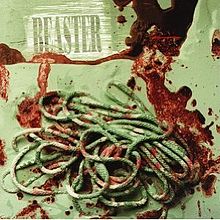
beasterI didn’t know that Beaster, the Sugar EP was recorded at the same time as Copper Blue.  Mould’s biography was very helpful in explaining all the details of the timing and styling behind these two recording.  As well as how the super pop of Copper Blue could be followed right on the heels with the very very dark EP of Beaster.

I have often thought of this disc as being really dark and insular and Mould confirmed as much—he was really airing out some demons with this disc.  But they thought it would be better to put them all in one place rather having them bounce around the poppier full length.  What must fans (like myself) have thought to hear this dark album after the pop of Copper Blue.  I mean just look at the cover!

I hadn’t listened to this in a long time, so I was surprised by how cool “Come Around” sounds—Mould’s acoustic guitar high in the mix with some appropriately grungey guitars in the background.  There are lyrics but for the most part I think of it as just Mould making sounds with his mouth.

It’s followed by the blistering “Tilting.”  It’s got superfast drumming with aggressive guitars, it’s like we’re back to the early Hüsker Dü punk sound (with a little more clarity).  The drumming is great in this track.  The song ends with a preacher being interrupted by dissonance and what sounds like electronic interference. And this song morphs into “Judas Cradle” one of Mould’s darkest songs.  It’s very claustrophobic-feeling with echoed vocals, lots of feedback and lots of compression on the overall sound—quite different from the big open sound of Copper Blue.  And yet for all of that, the chorus, “Have you seen the Judas Cradle, ah”is really quite catchy.

“JC Auto” has some buzzsaw guitars which make it seem like it’s going to be quite an angry song and yet the bridge is quite welcoming (all this talk of holidays) and then the chorus is amazingly fun to sing along to (Mould always finds pop in anger): “Passing judgment on my life you never really got it right/I can’t believe in anything / I don’t believe in / Do you believe in anything / Do you believe me now…  Look like Jesus Christ / act like Jesus Christ I Know I Know I Know Here’s Your Jesus Christ I’m Your Jesus Christ I Know I Know I Know.”  And, as always, I love when Mould repeats his lyrics in the background (the “I Know I Know” surfaces throughout the end of the song).

“Feeling Better” has weird synth blasts that kind of works in the song but sounds out of place on this record.  This song flips between really aggressive guitars and a very bright poppy chorus.   At 6 minutes this song is a little long (because it’s primarily repeating itself by the end), whereas Judas Cradle and JC Autos’ 6 minutes are well justified.

The final song “Walking Away” is a strange one. It is comprised entirely of organs (church organ it sounds like) with Mould delicately singing “I’m walking away back to you”  The end starts to wobble giving a bit of a nauseous feeling but then it’s over.  So even in his most downtrodden and questioning, Mould still has the chops to write some great music.  Down be put off by the cover, Beaster is a great album.

[READ: March 28, 2013] McSweeney’s #16

After the fairly straightforward Issue 15, McSweeney’s was back to fun with Issue #16.  The issue opens up into a kind of quad gatefold which has , in order–a comb, a book, another book and a deck of cards.

The main book contains nine stories, by the typical McSweeney’s roster at the time.  The other booklet contains a lengthy story by Ann Beattie.  The deck of cards is for Robert Coover’s “Heart Suite” and the comb is a comb.  It’s a nice one, although it has never touched my hair.

The MAIN BOOKLET (more…)

Read Full Post »

« Newer Posts - Older Posts »