Feeds:
Posts
Comments

Archive for the ‘Marriage (Happy)’ Category

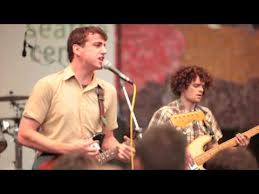
SOUNDTRACK: CYMBALS EAT GUITARS-Live on KEXP June 18, 2009 (2009).

Cymbals Eat Guitars are from Staten Island (with members from New Jersey).  They have released two albums, although this recording is from after the release of their first album.    They play four songs:  “And the Hazy Sea,” “Cold Spring,” “Tunguska,” and “Wind Phoenix.”   They are noisy songs (mostly) with squalls of guitars (squalls is a good word since two of the guys are from Manahawkin, New Jersey.

The band has true progenitors in the indie rock scene–there’s sounds of Pavement, The Replacements,  even more melodic Sonic Youth .  They play noisy guitars and the vocals veer from softly sung to loudly screamed (often within the same line).    “Cold Spring” starts like a kind of shoegazery song and then after almost three minutes it turns into a  blast of pummeling rock with a noisy guitar section, before moving into a third more melodic section.

There’s   a lengthy interview with the band, where they give a shout out to New Jersey and seem genuinely surprised by the success they’ve had.  It’s a good show, and you can hear it here

[READ: September 25, 2012] God Bless You, Dr. Kevorkian

Again, against my better judgment I brought this Vonnegut book home too because it was on the shelf (and it was very short).  I still haven’t finished Bluebeard yet, but I have been curious about this book for some time.  It references Vonnegut’s early novel God Bless You, Mr Rosewater, but it also name checks Dr Jack Kevorkian.  So just what is it?

Well, it is collection of radio spots that Vonnegut did for WNYC radio in New York back in 1998.  Vonnegut claimed that he went to Kevorkian’s facility, was strapped in and almost killed multiple times, but Kevorkian brought him back each time creating a near-death experience. And each time Vonnegut travelled through that “blue tunnel,” he would interview a dead person.

The people he interviews vary quite a lot in fame and stature: (more…)

Read Full Post »

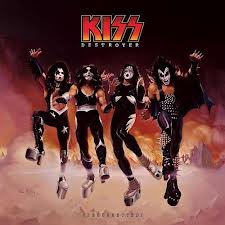
SOUNDTRACK: KISS-Destroyer {Resurrected} (2012).

Bob Ezrin, überproducer, decided he wanted to remaster Kiss’ Destroyer album (for its 35 year anniversary).  If his notes are to believed, this was all Ezrin’s doing with little input from the band.  The notes are interesting and explain Bob’s rational at the time and his rationale for remastering it now.

The remastering isn’t major–the guitars sound more vibrant (there seems to be extra flourishes on “King of the Night Time World”, the vocals sound a little fuller (with some extra echo).  I actually think I’d like the drums to be a little louder–Peter does some great drumming here and it should be emphasized more.  Ezrin explains that do to the limitations of the originals there wasn’t a lot he could do to  re-mix the album.

The most exciting find of the remaster is the new guitar solo for “Sweet Pain.”  It’s not a huge deal, it’s only a few notes, but it is  fun to hear a new take (even if the “real: solo is better).

He adds a “Get Up/Get Down” at the end of the solo in “Detroit Rock City” (which I do not like).  He also repeats an “ahhh” in “Beth” in the middle which just makes me think the song should end.  In the liner notes, he says they added new car crashes at the end of “Detroit Rock City” although  I can’t really hear it. There seems to be more of the little kid’s voice in “God of Thunder” (I always wish they’d provided transcript of what he says).  And overall I think that song sounds the best with the new mix–more intense, more scary, more bombastic.  As for the mellower songs (“Great Expectations,” “Do You Love Me?”) there’s a bit more oomph in the backing vocals.

In the notes he says he fixed something that has been bugging him for 35 years.  The internet boards suggest that it is this: In “Detroit Rock City,” Paul sang “Moving fast down 95,” but 95 goes nowhere near Detroit, so he mixed Paul’s voice to say “moving fast doin’ 95.”  I never really understood which one he was saying to begin with, so I can’t be sure of this.  Overall, is it worth getting this remaster?  Well, probably not. It sounds better and fuller, but not radically different.

The only other  Kiss albums he produced were Revenge and The Elder–Bob, I’d love a remaster of The Elder!

[READ: September 23, 2012] “The Casserole”

This really short story (less than two pages) has a title that’s not terribly exciting.  It also prepares you very little for what will happen and just how the casserole will come into play.

The story is of a trip that a long-married husband and wife take to her family’s ancestral home–a large farm with tons of acres, tons of livestock and worth tons of money.  But he and his wife don’t want the farm (which her parents want to give them), they’re happy in the city, being school teachers who live frugally, saving for a rainy day.

The story is almost all flashback as the couple waits to board the ferry that crosses the river to the house.  He thinks about how they don’t have kids (and never wanted them) and how this drives her parents crazy (they desperately want an heir to their property).  He thinks about how they spend very little money on anything–keeping it squirreled away for their retirement.  Even if his wife might like to go to Belize to show off her still hot body.  He thinks about how the only thing he would spend money on is a beautiful room to house his record collection and maybe to buy an awesome stereo–and how his wife is unimpressed by this. (more…)

Read Full Post »

SOUNDTRACK: DAN DEACON-“Guilford Avenue Bridge” (2012).

I only know Dan Deacon from his “cover” of “Call me Maybe” (in which he layered the song on top of itself 147 times).  Deacon has a new proper album out and while it’s not quite as outlandish as the “Call Me Maybe” cover, it’s still pretty out there.

This is the opening track–a noisy barrage of sound set to a really catchy drum beat and bassline.  But you almost have to listen hard for that beat because it is just a wall of noise that goes on for 90 seconds until the song completely stops and is replaced by a manipulated banjo solo (I think).  This slowly morphs into pianos and then waves of delicate keyboards (all of which I’m sure is some kind of manipulated sound).  With about 30 seconds left the noise comes back and the songs ends much like it started.  Although it ends with a very happy chord.

This is definitely not for most, but the experimental nature is quite fun, and it’s definitely not something you’re going to hear on the radio very often.

[READ: August 22, 2012] “The College Borough”

I hadn’t read any Joshua Cohen before this story (he wrote the 800+ page buzz book Witz, but is NOT the author of a book called Leverage which Sarah reacted very strongly to–that would be Joshua C. Cohen, this one is Joshua A Cohen).  Also, I put it off because it was long.

Before I summarize, I want to state that this story is flipped on its own head by the final line.  The final few words completely changed how I felt about this story.  And I have to wonder what the risk is for a writer to do something like this.  For the entire story we don’t know why the narrator acts the way he does (in the present).  The flashback that the story provided is very thorough and detailed but it does not answer our pressing question.  Even when we return to the present, and the past comes to meet them, it still doesn’t explain it. It is literally the last few words that justify everything.  That’s audacious.

I’ll say more about this at the end.

It also begins with an audacious statement: “I helped build the Flatiron Building though I’ve never been to New York.”  Indeed, it seems that the narrator never wanted to go to New York.  But ow that his daughter, a junior in high school, wants to go to college in Manhattan (they hope she’ll stay in-state), he agrees for them all to go to New York City.

The narrator met his wife, Dem, in college (at in-state college).  They were both in the writing program and they’d had some classes together before they enrolled in Professor Greener’s seminar.

The beginning of the story is mostly the narrator’s complaints about New York.  I especially enjoyed this line: “I know no city can contain all the amenities you’d find at a place like our alma mater.”  Back home they have more pools, more StairMasters and their very own Flatiron Building (dubbed the Fauxiron).

Then the story pulls back so we can figure out what the hell this guy is talking about. (more…)

Read Full Post »

SOUNDTRACK: DIVINE FITS-“Would That Not Be Nice” (2012).

This song was KCRW’s Today’s Top Tune on August 13, 2012.  Divine Fits are a supergroup of sorts with Spoon’s Britt Daniels, New Bomb Turks drummer Sam Brown and Wolf Parade/Handsome Furs member Dan Boeckner.  When I heard who was in the band, I was pretty excited to hear the track.  But I have to say that this sounds kind of like a over-polished Spoon song with keyboards.  Daniels’ voice and musical style are individual enough that he pretty much dominates whatever he does.  But at the same time, I feel like the jagged edges that make Spoon so interesting have been removed.

I assume that Boeckner is responsible for the keyboards and the interesting echo effect on the vocals.  They add an interesting balance to Daniels, but this doesn’t excite me the way Spoon does.

[READ: August 10, 2012] “Signs and Symbols”

I discovered this story because in my post of Lorrie Moore’s “Referential” someone commented that her story was plagiarized from this one.  I had intended to read this Nabokov story immediately so Moore’s would be fresh and I could lay down the “J’accuse.”  It’s been a couple of months but I can say that while her story is obviously inspired by this Nabokov–to the point where she uses elements from this story in her own, it’s a different take on the same idea.

But before we do any comparison, let’s look at this story.  The story begins by stating that for the fourth time in as many years, a young man’s parents don’t know what to take him for his birthday.  The problem is that he is in an institution and many things are forbidden.  And also, for their son man-made objects are either hives of evil or gross comforts–more on that shortly.  They knew they couldn’t get him a gadget of any kind, so they settled on a basket with a set of colorful jellies.  When they travel to him with the gift, everything goes wrong–the train breaks down, there are no busses, and when they finally get there, the nurses inform them that there has been an incident and he cannot see them now.  So they return home with the jellies.

The story describes what is wrong with their son as referential mania.  It’s an interesting situation, and an article about him had appeared in a scientific monthly.  It says that the patient believes that everything happening around him is somehow related to himself.  So clouds transmit details about him, trees talk about him, etc.  And this was driving him crazy (obviously).  He had even tried to kill himself via, what the doctor described as “a masterpiece of inventiveness.” (more…)

Read Full Post »

SOUNDTRACK: PHISH-Live Bait 5 (2011).

When this was released it was an astonishing free giveaway.  A mix of previously released and brand new recordings that spanned from 1987 to 2009!  Over 6 hours of music!  For free.

It’s fun to hear the really early stuff–like the songs that are from “Ian McLean’s Party at Connie Condon’s Farm” where the band is laughing with the audience (which seems like it’s about 100 people).  And when they invite everyone to another free part coming up.   This was back in 1987 before they had released their official debut Junta (who was taping all this stuff for them back then?  And with such good quality?).  But this one is especially fun because you can hear dogs barking during the quieter parts.

There’s also a big chunk of live Gamehendge material from Townshend Family Park in Vermont (circa 1989).  The middle block features the addition of The Giant Country Horns who play on “Flat Fee” and great versions of “David Bowie” and “Gumbo.”  I wouldn’t want the horns all the time, but they do add something to these shows.

Then there’s a jump to 1996 and a whole series of songs from shows at Loring Air Force base (through 1998).  There’s a 27 minute “Down with Disease” and a fun “Bathtub Gin.”  There’s then a bunch of songs from one show at the Big Cypress Seminole Reservation.

After a few year’s hiatus, they resume in 2003 back at Loring.  There’s a great version of “Waves,” although I found the “Mike’s Song” from this era kind of anemic.  And then, interestingly, there’s a “Split Open and Melt Jam” which is indeed, just the jam from the song and not the song itself.  “Suzy Greenberg” features Sharon Jones–it’s funny to me to hear r&b singers singing about a Jewish woman going to a neurologist. Fish, by the way has some of the funniest lines during the “forgotten my name bit.”  I’m also intrigued by the 2009 version of “McGrupp and the Watchful Hosemasters,” a pretty but kind of goofy song that dates back to 1985!

All in all, this was a very cool freebie to give to fans.

[READ: July 5, 2011] Five Dials 24

The newest Five Dials came as something of a surprise since Number 23 came out not too long ago and there was talk of the next issue being quite large.  But I like the small editions of Five Dials.  And this one is a cool, bite-sized nugget–a little fiction, an interview and an essay.  I have to assume this one was released when it was because it has a remembrance of David Rakoff, making this release rather timely.

…plus bear illustrations like you won’t believe by BECKY BARNICOAT (funny and dark drawings), LIZZY STEWART (beautiful pencil drawings) and NEAL JONES (blue bears). (more…)

Read Full Post »

SOUNDTRACK: PINK FLOYD-Alan’s Psychedelic Christmas (1970).

I’ve always loved Pink Floyd’s Atom Heart Mother.  I have no recollection of how I stumbled upon this live bootleg, but when I saw that it contained one of the few live recordings of “Alan’s Psychedelic Breakfast” I had to give it a listen.

So this show is from 1970 and was recorded in Sheffield just before Christmas (Nick Mason evidently introduced the show while wearing a Santa Claus suit).  The sound quality is pretty good given that it is 40 some years old.  There’s a bunch of hiss, and the quieter talking bits are hard to understand, but the music sounds fine.

So the show opens with “Alan’s Psychedelic Breakfast” and what is so silly (and I assume funny to watch (a little less funny on bootleg) is that the band made and ate breakfast on stage.  As Collectors Music reviews writes: “This is the only known live recording of ‘Alan’s Psychedelic Breakfast’ but also hosts an amazing performance by the band which included them making morning tea on stage which is audible. Just like most of their earlier performances, the performance of “Alan’s Psychedelic Breakfast” slightly differs from the album version due to some nice jamming done by the band, especially Gilmour with his delay pedal.” As I said, some of the audio is static and hard to make out in this song–the band is conversing during their tea, but who knows what they are saying.  And who know what is o the radio.

Then the band gets down to business.  One of things I love about this period Floyd which is so different from their later work is that the played really long spacey jams often with very few lyrics.  So we get a 12-minute version of “The Embryo” (the only available studio version is a very short one on Works which is quite a shame as the song is really good).  A 14-minute workout of “Fat Old Sun” which is usually only about 5 minutes.

There’s a great version of “Careful with that Axe Eugene” and “Set the Controls for the Heart of the Sun” (15 and 12 minutes respectively).

Then in a killer version of “Saucerful of Secrets,” just as they get to the end, there’s a power failure (at least according to the song title).  The band is rocking out just hitting the climax when suddenly all you can hear are un-miked drums.  Ha. After a couple of minutes, power comes back and they pick up from just before where they left off.

Then the band launches into a full 31-minute version of “Atom Heart Mother” complete with horns and choir  of voices.  It sounds quite good (the horns seem a little sketchy but that might be expected with such staccato music).

The set ends and the band needs an encore.  Apparently they couldn’t remember anything else because they just re-do the last few minutes of “Atom Heart Mother” again.

One of the things that cracks me up about these shows in the 70s in England, is that the audience is so polite. Their applause sounds like a classical theater rather than a rock show.  And with a bootleg you know they didn’t try to make the audience sound bigger than they are.

The whole package is a fun trip.

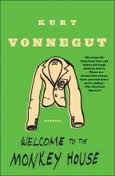
[READ: August 17, 2012] Welcome to the Monkey House

So this book is Vonnegut’s second collection of short stories.  But there’s a twist.  This collection contains all of the short stories from Canary in a Cat House except one. It also contains many of the stories he had written since then as well as stories not collected in Canary.  So you get basically 18 years worth of stories here.  And it’s interesting to see how much he has changed over those years (during which he wrote 5 novels, but not yet Slaughterhouse Five).

Since I read Canary a little while ago (see comments about the stories here), I knew that his 50’s era stories were influenced by WWII.  So it’s interesting to see how his stories from the 690s are not.  They deal more with day to day things and, of course, abstract concepts about humanity, although politics do enter the picture again once Kennedy is elected .

  • Where I Live (1964)

This was a good story to open with because it shows the then-later-period Vonnegut’s mindset and location.  This story is about Barnstable Village on Cape Cod (where I assume Vonnegut lived since there are a number of stories set on the Cape).  This is a very casually written story about an encyclopedia salesman who goes to the local library and sees that their two encyclopedias are from 1910 and 1938.  I enjoyed this line: “He said that many important things had happened since 1938, naming among others, penicillin and Hitler’s invasion of Poland.”  He is told to talk to the library directors who are at the yacht club.  I love the attitude that Vonnegut creates around the village which “has a policy of never accepting anything.  As a happy consequence, it changes about as fast as the rules of chess.” For really, this story is about the Village more than the encyclopedia salesman, and it’s an interesting look at people who move into a new place and want it to never change. (more…)

Read Full Post »

SOUNDTRACK: KISS-Asylum (1985).

This series of mid-80s Kiss CDs is regarded pretty poorly.  In fact, I believe that Gene and Paul have distanced themselves from Asylum.  And yet, despite its pop metal vine and really dayglo appearance, there’s some good stuff on it.  The solos are really notable on this disc.  Bruce Kulick has taken over lead guitar duties and he is wailing maniac.  He has speed and flash and he, frankly, really stand out (not always in a good way) in these songs.  His solos seem to signal a shift to a more pop heavy metal sound.

The disc opens with a pounding drum salvo and aggressive guitars!  “King of the Mountain” is a classic Kiss song—loud, with a great sing a long chorus from Paul.  “Anyway You Slice It” also rocks pretty hard, one of Gene’s fast, sex songs.  But man I hate songs that break down to just vocals and drums. “Who Wants to Be Lonely” seems like a ballad—lyrically and all—but it’s actually a pretty heavy song, again, perfectly suited for Paul’s voice.  “Trial By Fire” is the first song that really falters.  A generic anthem with the really lame chugga chugga guitars that Kiss would really push in this era.  “I’m Alive” opens with more crazy drumming and wild soloing and for all the world sounds like mid 80s Van Halen.  Until Paul belts out a fast vocal line.  This is a fast, aggressive song with a great chorus.

“Love’s a Dirty Weapon” almost turns into a great song—the chorus is just a little lacking.  And there’s that other part with just drums and a guitar solo—again, very Van Halen, which is good for Van Halen, but sounds really weird for Kiss.  I should hate “Tears Are Falling,” it’s got the chug chug chug guitars, and very little else, but I love a good Paul ballad—when he starts wailing at the end, it’s pretty great.  I am aware that the lyrics suck, yes.  But the solo is more like old school Kiss.  “Secretly Cruel” is cheesy, but delightfully so, and actually sounds like Kiss of old as well.  “Radar for Love” is an awkward song that never quite flows the way it wants.  It’s a good song that shows them branching out, though.  “UH! All Night” is a, well, look at the title.  It’s the kind of throwaway song that is so over-the-top ridiculous that it comes back around to be kind of fun.  And I imagine that some fans are still singing that chorus to themselves.  “When you work all day you gotta Uh all night.”  No one ever said Kiss was classy.  Note:  I listened to this song a week ago and that frikkin chorus is STILL in my head.

[READ: August 11, 2012] McSweeney’s #40

This issue came in a double pack–with a paperback issue of the magazine and a hardback edition of In My Home There Is No More Sorrow by Rick Bass.  I have not yet read Bass’ book [UPDATE: read it at the end of July 2013], because it sounds really depressing [UPDATE: It was].  But I do hope to get to it before the end of the year.  This issue has a few short stories and  a non-fiction at the beginning.  The entire back half of the journal is devoted to the January 25 uprising in Egypt.  It is full of testament and testimony about the event from all kinds of people–bloggers, poets, musicians.  It’s pretty profound–and almost seems like having a silly story in the journal is inappropriate.

As has been the trend lately, the journal also opens up with a series of letters. (more…)

Read Full Post »

SOUNDTRACK: REGINA SPEKTOR-Soviet Kitsch (2004).

After the poppy, polished joy of Far, I went back and decided to check out the one other Regina Spektor album I knew of–Soviet Kitsch.  This album has always stuck with me as an interesting title.  I ordered it from Amazon and was bummed to get a little cardboard sleeve rather than an entire disc (her artwork is really nice).  So I was a little biased against this disc from the start.  The music also doesn’t have any of the polish and sleekness of Far.  So it took a while for me to see the beauty within.

This album is largely simple piano (with strings and other addition), but it’s a much more raw album (akin to something like Tori Amos’ Little Earthquakes).

“Ode to Divorce” is a quiet piano song with some catchy moments.  “Poor Little Rich Boy” has some interesting percussion to accompany the piano.  And in this song you know that she’s in a slightly different territory than Tori Amos, which is good–the feeling is similar but the end result is unique.  Lyrically the album explores different ideas and on this song the repeated refrain of “you’re so young you’re so god damn young” is a little unsettling.  “Carbon Monoxide” introduces a more full sound (bass and drums).  And Regina shows off yet another side of her personality–playful, flirtatious and now almost childish (“C’mon, daddy.”)

“The Flowers” introduces another new aspect to the disc–more aggressive/borderline classical piano playing (rapid, loud notes).  It suits her style quite well and this song is  a definite highlight.  The end of the song has a very Russian-style nonsense syllable sing along which is very fun.   “Us” adds strings to the song and some great sing along parts.  “Sailor Song” is a funny song from a sailors perspective with the sing-along shanty chorus “Mary Anne’s a bitch” (complete with broken glass sounds).

The next song “****” is a whispered little conversation in which a young girl asks Regina when the next song is coming.  It makes the next song, “Your Honor” even more loud.  It really stands out on this disc because it is a full on punk song with screamed vocals and band work from Kill Kenada (who I don’t know anything about).  The song is about getting in a fight to defend a woman’s honor.  The slow piano middle section features the amusing question “gargle with peroxide a steak for your eye but I’m a vegetarian so it’s a frozen pizza pie…you fight for my honor but I just don’t know why.:”

“Ghost of Corporate Future” has a kind of lullaby feel and some amusing lyrics, ” When he gets to the crowded subway platform/He takes off both of his shoes/He steps right into somebody’s fat loogie/And everyone who sees him says “ew”/Everyone who sees him says “ew”/But he doesn’t care/Cause last night he got a visit/From the ghost of corporate future/The ghost said take off both your shoes/Whatever chances you get/Especially when they’re wet.”  It’s all sung in a manic style over a quiet piano melody.

“Chemo Limo” is certainly the highlight of the disc.  It’s 6 minutes long and is quite dramatic.  The basic premise is that dying from cancer sucks, so she’s going to live instead: “I couldn’t afford chemo like I couldn’t afford a limo/And on any given day I’d rather ride a limousine.”  There are several sections in the song–allowing Regina to show off her dynamic and dramatic vocal range (serious falsettos) and very impassioned sections, “Oh my God Barbara she looks just like my mom”  She even does some (very mild) beatboxing at the end of the song.  “Somedays” is a pretty, simple ballad, with some great vocals although it kind of gets lost at the end of the disc.  Although I was not that into this record when I first got it, repeated listens revealed wonderful surprises inside.

[READ: July 15, 2012] Canary in a Cat House

This is Kurt Vonnegut’s first collection of short stories.  It is currently out of print.  That’s not a big deal because almost all of the stories were later collected in Welcome to the Monkeyhouse.  But I thought it would be fun to read them in the original book.  When it came in from the library I was surprised at how tiny it was.  But what was really surprising was how small the print and how small the margins were.  They really crammed stories into collections back then!

These stories were all written in the 1950s and what was also surprising to me was how serious and unfunny some of those first stories were.  I realize that these were some of his first works, but the Vonnegut voice is so distinctive–a misanthropy tempered by jokes and absurdity, that I was surprised that some of these stories were not only serious but seriously emotional as well.  It’s been clear from all of his stories that WWII impacted his life tremendously (as one would expect), but in these early stories he talks very deliberately about violence and the cold war and the aftermath of WWII.  It’s pretty intense.  By the end of the book the more typical Vonnegut voice surfaces–sci-fi kinds of stories with dark humor involved.  It’s quite a collection. (more…)

Read Full Post »

SOUNDTRACKCHI’S SWEET HOME (new) end credits (2010).

I have yet to watch the anime of Chi’s Sweet Home, so I don’t know how new this is (r frankly even if it is new–of course why would this poster lie).  My kids will love it but it’s only available subtitled so I’m not sure how much they would enjoy that.

This song was a surprise to me because the voice is deep, at least until the ending Meow Meow Meows come in.

Regardless, it’s catchy and I prefer it to the opening theme.

[READ: July 2012] Chi’s Sweet Home 6-8

Ah, this series has been magnificent so far.  And we have now caught up to what is available in the U.S. and almost to what is available in Japan.

If you missed the first post, Chi is a kitten and these are her adventures.  As with the first 5 books, the action in these three takes place over a very short period of time (weeks, maybe).  So Chi remains an irrepressible kitten during these stories.  And that’s just what we like.

Each of the stories is 8 pages long (Book 8 ends with story #146).  Each one follows a short arc with a few of the stories continued in the next story.  In these books, Chi encounters her first pigeon, she sees the neighbor’s dog buring a bone and she wears a collar (very briefly).  She also gets locked out, falls asleep in a park and gets rained on.

Most of these books concern Chi exploring the outside world.  She is well settled in to her new surroundings and she is preparing to explore the world around her house.  She meets a little kitten called Cocchi who is a streetwise kitten and at first wants nothing to do with Chi.  But Chi s so innocent that she tags along, usually bringing out the playful kitten in Cocchi (even as he gets mad that she does so).  When they both get in trouble by sneaking into a garden shed and knockig thngs over, Cocchi even expreses concern about Chi.  Even though she loves her human family, she is starting to make cat friends. (more…)

Read Full Post »

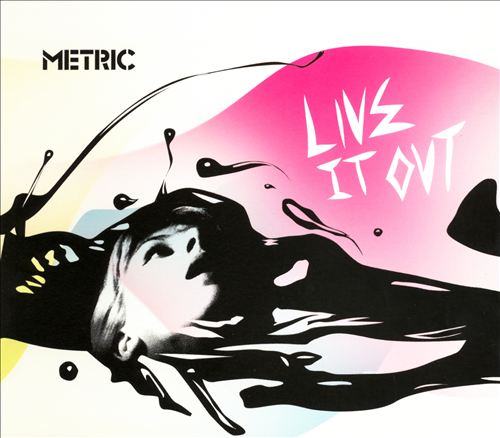
SOUNDTRACK: METRIC-Live It Out (2005).

I enjoyed Metric’s Fantasies album so much that I bought their previous album (an album that I had written down as worth checking out about 5 years ago).  At first I was a little disappointed–the album doesn’t have the glow (or perhaps sheen or polish) of Fantasies.  Normally I prefer raw to polished, but it’s surprising to go the other way sometimes.  And after a couple more listens I really started to appreciate this album’s rawness.

The guitars are loud and pushy.  There are keyboards that dominate some songs, but they never make the songs poppy.  And Emily Haines’ voice sounds great.  The opener “Empty” has a lot of quiet sections, but the guitars really just burst forth.  It’s 6 minutes long but that’s mostly through a long intro and outro.  The rest of the songs stick firmly in the 3-4 minute range.  “Glass Ceiling” has a cool stuttering riff and a kind of awkward bridge–these first two songs kind of resist admittance (the piano/guitar solo is certainly a weird combination–which I like now of course).  “Handshakes” shows their more commercial side–a slick kind of guitar riff with Haines’ more aggressive vocals.  True the siren sound may turn off some, but it’s certainly a signature.  “Too Little Too Late” is a slow sultry number, but even more sultry is the sleazy-feeling (no doubt because of the keyboards) “Poster of a Girl.”  In addition to a cool spoken word section in French (the whole song is bilingual), we get the English lines “Coming in your pants/For the off chance/With a…poster of a girl.”

“Monster Hospital” is a fun punk blast that is still a live favorite for the band.  “Patriarch on a Vespa” has another rough riff with some cool bass.  It also features some disconcerting singing (ahahs that sound more than a little spooky).  “The Police and the Private” is one of the cool songs with easily singable but easily confusable lyrics.  While “Ending Start” has some great guitar riffs near the end.   “Live It Out” ends the disc with a staccato punk number.  It’s a perfect summation of Metric before they got more commercial.  And it’s a great addition for fans of the band.

[READ: July 8, 2012] The Big Meal

This play came as a supplement with Lucky Peach issue #4.

I have often maintained that it is much better to see a play than to read one.  Not a daring opinion, by any stretch. I have taken that to something of an extreme however, which means that I pretty much never read plays.  This has severely limited by Shakespeare intact, naturally.  It also means that a lot of great works are lost to me.

I’m using that information by way of introduction, not because I think this play compares to Shakespeare, but because this is one of a few plays that I have read recently that I’ve really enjoyed.  So I’m retracting some of my earlier thoughts about reading plays.  True, some plays with multiple characters can be confusing to keep straight (since defining characteristics are not given).  But in shorter plays or plays with not too many characters, it’s not so hard to read them.  And in fact, it can be a quick and enjoyable read.

Although this play complicates things immensely because of its (very cool) setup.  The setup is described in the introduction to the play: “The actors play multiple generations of one family…as they glide through time.  As the characters age, their “essences” pass from younger to older actors.”  So, the story takes places over a few generations of time.  There are eight actors.  Each actor plays multiple roles.  These roles correspond to the characters at certain ages.  So, for example, the youngest actor plays Character A as a child; the adolescent actor plays Character A as an older child; the middle-aged actor plays Character A as a middle-aged person, etc.   So that’s a little confusing (although I’ll bet it makes sense seeing it live).  What I like though is that this “gimmick” is not so much a gimmick at all, but a real indication of how we turn into our parents and an indication of how quickly time passes in this play. (more…)

Read Full Post »

« Newer Posts - Older Posts »