Feeds:
Posts
Comments

Archive for the ‘Marriage (Happy)’ Category

resist3SOUNDTRACK: CHARLIE SIEM-Tiny Desk Concert #134 (June 15, 2011).

siemWhen he was 3 years old, Charlie Siem heard violinist Yehudi Menuhin play Beethoven’s Violin Concerto. That was all it took to inspire him to pursue the violin. Siem studied at Eton and the Royal College of Music, and now he plays one of Menuhin’s old violins—a stunning 1735 Guarneri del Gesu.  Upon describing this centuries old instrument he says “it helps me a lot when I’m doing my… little thing.”  He is also greatly amused when NPR’s Stephen Thompson asks if he can borrow it.

Siem recently discovered that he’s related to the 19th-century Norwegian violin virtuoso and composer Ole Bull. So he started off his Tiny Desk show with Bull’s bucolic Cantabile.  His introduction is great.  He says that Bull was a precursor to Paganini, who emigrated to the States and set up a colony on Pennsylvania.  He calls him a “really crazy guy.”  It’s a beautiful piece with occasional really high notes.  This violin seems to have an unreal sound to it, bringing it what sounds like harmonic notes or something.

Paganini’s Introduction and Variations on Paisiello’s “Nel Cor Piu”  (an aria from a now-forgotten Paisiello opera), contains a grab bag full of violin special effects.  This is just incredible.  His fingers move faster than can be believed.  There are trills all up and down the neck, there’s pizzicato plucking with his left hand (how?).  In a section of “harmonics” he even whistles the final note.  It’s amazing to watch.

Leopold Godowsky: Alt Wien (“Old Vienna”) (arr. Heifetz)  This is a lovely piece with lots of high keening notes in an arrangement by the incomparable Jascha Heifetz.

It’s amazing that Siem can be so good and yet somehow I’d never heard of him.  His kind of virtuosity is amazing.  And, as it turns out he’s a total hunk with a deep resonating actor’s voice as the pages of Italian Men’s Vogue magazine.  He’s also the 2011 spokesman for Dunhill, the men’s fashion house.  The write up says that for his Tiny Desk Concert appearance, you could say Siem dressed “casual, but with an understated elegance,” right down to his left-hand pinky, with its pink-painted fingernail.

I definitely need to hear more from him.

[READ: December 8, 2015] Victory

This final book in the trilogy sees the culmination of French Resistance against the Nazis.

We learn in the introduction that it has been four years since the occupation began and although victory seems within sight, things have been getting worse.  There’s hardly any food or resources and the Nazis are growing even more angry and vicious.  On June 6, 1944 the Allies landed in Normandy.  But they had a lot of fighting to do before they could liberate Vichy.

As this book opens we see Paul called into the prison because of his drawings.  He looks older now (a great detail on the drawing) and he finds it much easier to lie to the guards.  After an interrogation, Lucie’s father–the policeman we saw in the previous book who seemed to turn a blind eye to Paul’s activity–accuses him of sneaking around to see Lucie.  Paul catches on quickly that the man is helping him and when they are free together, Paul learns that there are people on his side who he never suspected. (more…)

Read Full Post »

resist2SOUNDTRACK: SIERRA LEONE’S REFUGEE ALL STARS-Tiny Desk Concert #118 (April 6, 2011).

sierraSierra Leone’s Refugee All Stars are famous for their story.  Its members met in refugee camps during Sierra Leone’s civil war and formed a band to spread joy during an otherwise difficult time.  But the band’s music is what has stood the test of time.  Ten years, two albums and an award-winning documentary later, these eight men are still riding that upbeat reggae groove.

The band consists of three drummers (all with hand-held drums) and one percussionist.  There’s 2 guitars (one electric and one acoustic) a bass and everybody sings.  Their music has a reggae feel, although it’s not exactly reggae, I don’t think.

“Jah Come Down” opens the show. The acoustic guitar keeps the melody while the electric guitar plays a riff throughout.  Occasionally the bass comes in with a cool line or two adding a nice low end.

“Living Stone” has a different singer (the percussionist).  His vocals are a bit more mellow, as this song is.  It’s amazing to see the age range of the players.

“Tamagbondorsu (The Rich Mock The Poor)” is the final song.  It opens with a guitar lick that reminded me of Paul Simon’s Graceland until i re-thought and realized that Graceland sounded like this.

The songs are fun and lively, perfect for dancing (as the singer does during the long instrumental outro).  Most reggae sounds the same to me, and these three songs do tend to blend together quite a lot.  But the music is fun and the players’ skill is undeniable.

Here;s to ten more years.

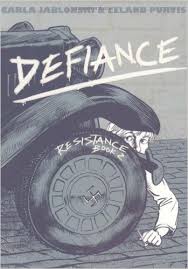
[READ: December 4, 2015] Defiance

This book is set three years into the Nazi occupation of France.  Things are sort of the same but worse for the residents of Vichy.  Neighbors inform on neighbors, and some residents collaborate with the Germans (and are more successful because of it).  And then in 1943, a new French-based Nazi police force called the Milice begin keeping watch over their own people

This aggressiveness causes more resistance, of course. And Paul has been drawing detailed and insulting pictures and posting them all over town (which is making the Milice quite upset).

Of course the kids are taking more aggressive stances now, too.  Some say that the posters are causing more harm because it makes the police mad.  But other kids’ parents have joined the police–some of whom are nice to the kids.  Even Paul’s sister, Marie, believes what her teachers say about Marshall Philippe Pétain (there’s a lesson about Pétain at the end of the book) and his governance.  And no one is going to say anything about the Resistance.   (more…)

Read Full Post »

resistSOUNDTRACK: LUISA MAITA-Tiny Desk Concert #100 (December 26, 2010).

maitaI’ve not heard of Maita.  The NPR write up speaks about the electronic flourishes and deep grooves of her songs.  Felix Contreras worried that their stripped down ensemble (only guitar, bass and fascinating bongos) would have a hard time creating that sound.

And in one way they do.  Except that it’s clear they didn’t even try.  Rather, they play a simple, but engaging kind of mellow Brazilian dance music.  In the first song, “Ai Vem Ele,” the guitar and bass play the same grooves except when they each take some meandering moments.  The percussion keeps a quiet but steady rhythm and Maita sings vocals and accent notes all over the place to keep the song interesting.  I really enjoyed at the end of the song when the bassist played exactly the vamping solo that she was singing.

“Alento” is a much faster song, with quickly sung lyrics.  It allows for rapid guitar playing and more uptempo feel.

They only play two songs (about 8 minutes long), but it really shows the kind of range she is capable of.

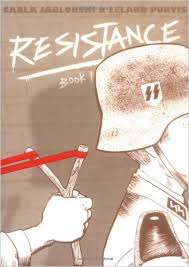
[READ: December 1, 2015] Resistance

This First Second graphic novel is about the Nazi occupation of France.  It’s not exactly light reading and yet Jablonski has taken this incredibly dark story and found an excellent and compelling narrative about one family who works as part of the resistance to fight back against their oppressors.

This is the first book in a trilogy and I am curious to see what the next two books bring as this story was nicely wrapped up but there are so many more stories which could be told.

Jablonski also helpfully sets up the situation in the introduction.  She explains how France was split in two as a result of the armistice agreement.  She gives a very brief but powerful explanation for why they would agree to splitting their country in half.  Paris and the upper portion of France became Occupied while Vichy and the southern part of France were “Free” (but still with a large Nazi presence).

This story is about an average family.  Paul Tessier and his parents and little sister live in the free part of France. Paul is an artist, and I love the way Purvis juxtaposes Paul’s art with what is actually happening (placing Paul’s “drawing” in the middle of the action so we know he is observing everything. (more…)

Read Full Post »

books SOUNDTRACK: PRESERVATION HALL JAZZ BAND-Tiny Desk Concert #328 (December 21, 2013).

peshallThis show is tangentially Christmassy.  I mean, it does feature a tuba player in a Santa Claus outfit, after all.  But the music isn’t Christmassy per se (except for one song).

Rather, the Preservation Hall Jazz Band does what it does best–play fun dancey jazz songs.  There’s trumpet (and trumpet solos) and trombone, there’s saxophone and piano and most importantly, there are two, count em, two tubas!

“Sugar Plum” is their instrumental version of a holiday song (about the sugar plum fairy).  It’s a fun bouncy swinging song.  “I Think I Love You” has vocals, and they are fine, but it makes the band swing a little less.

“Happy Holiday” is indeed a Christmas song, and a nice one with sweet lyrics.  It’s also got a lengthy some trade off trombone and saxophone solos.

The final song, “Dear Lord,” sees the Santa tuba player removing his instrument and taking over as lead singer (and commenting that he’s from the South Pole which is why he is so hot).  This final song seems to be a familiar one with people singing and clapping along as he blesses everyone from South Pole to North.

[READ: December 23, 2015] The Haunted Man and the Ghost’s Bargain

This is the final book in the Christmas Books collection. And it does return to the Spirit of Christmas more than the previous stories did.

As I learned from the previous story, the plot is quite simple but its length comes primarily from Dickens’ intense amount of detail (and lots of humor).

The story focuses on Mr. Redlaw.  Redlaw is a chemist and a kind man.  But he is beset upon by sadness at all of the things that have happened to him in his past.  One night he is visited by a spirit (who seems to be something of a version of himself, maybe?).  The spirit tells him that he can help to “forget the sorrow, wrong, and trouble you have known.”  Basically he proposes that he will remove all of the bad memories Redlaw has ever had.  And if he accepts this proposal, he will also be able to do this to everyone else that he meets.

This seems like a good deal–no bad memories!  So he accepts. (more…)

Read Full Post »

basoonSOUNDTRACK: THE MUSIC TAPES-Tiny Desk Concert #182 (December 20, 2011).

musictaopesJulian Koster released an album in 2008 called The Singing Saw at Christmastime.  It was a complete CD of Christmas songs played on the saw.  That should tell you that Koster is an unusual fellow. But that doesn’t prepare you for what he unleashes during his Tiny Desk Concert with The Music Tapes.

Koster has a very high-pitched voice (I have a recording of him doing “I’ve Got My Love to Keep me Warm,” which is almost unbearable.  His singing is really close to the fine line of unique and bad (and I imagine for many it crosses the line). He’s also got a fascinating way of looking at things and of storytelling.  So this Tiny Desk show winds up being quite long (20 minutes) with quite a lot of different things going on.

First he tells a lengthy story about his great grandpa.  And how his great grandpa told him that baby trees can walk.  But they are tethered to the ground by an umbilical cord. And when we cut them down, we sever the cord.  And a Christmas tree is adorned and worshiped for two weeks and then set free to roam the earth.  It is a warm and strange and delightful.

Then he and a second member of the group play “The First Noel” on two saws.  It’s weird ad wonderful.  At the end of the song he has his saw bow, and Bob says he didn’t know a saw could bow.  Julian says they do and in fact that singing saws sing by themselves but we encourage them by petting them and placing them in our laps.

I don’t enjoy everything Koster does, so the second song “Freeing Song For Reindeer,” a banjo based piece about a tired old reindeer transporting Santa is slow and kind of sad and not my thing.

But then he tells a story of growing up with all kinds of culture and Holiday traditions which leads into a version of Gavin Bryars’ “Jesus Blood.”  I enjoy the original and didn’t know what to expect here.  They begin with a tape loop of an old man singing the song (possibly the one Bryars used, but I don’t know).  And then Koster starts playing the banjo with a bow.  And then a second guy does the same. Then the percussionist stars playing the toy piano and the noises build.  He switches from piano to trumpet and plays along.  Meanwhile the second banjo player switches back to the saw for the end. It’s really quite a lovely performance.

“Takeshi And Elijah” is another slow and keening banjo based song.  It’s pretty long, I don’t really like it, but by the end, as it builds with trumpet and toy piano, he ends the song sith a puppet Santa doing a tap dance as percussion.  It’s a great ending to an okay song.

The final song is “Zat You, Santa Claus?”  It’s played on bowed banjo and sousaphone.  It’s a fun and crazy rendition.   It’s one of the weirdest Tiny Desk shows and certainly the weirdest Christmas set.

[READ: December 5, 2015] The Bassoon King

I really liked Rain Wilson in The Office, but I haven’t seen him in much else (I forgot he was in Six Feet Under and Galaxy Quest) . I wanted to like Backstrom, but it got cancelled before we even watched an episode.

So why did I check out this memoir of an actor I like a little bit?  Well, primarily for the title.  The Bassoon King had an absurd ring that I really gravitated towards.  When I saw there was an introduction by Dwight Kurt Schrute, I knew this would be a good book.

The introduction (by Dwight) is very funny.  I love Dwight and I love thinking to myself “FALSE!” whenever I disagree with someone.  Dwight wondered why anyone would read a biography of a young semi-famous actor.  “Fact. NO. ONE. CARES.”  But then says he doesn’t care either because he is making a lot of dollars per word for this thing.

Rainn begins his memoir by making fun of his big head (especially when he was a baby).  It’s pretty funny.  And then he describes his hippie family and his weird name.  His mom changed her named from Patricia to Shay in 1965.  She wanted to name Rainn “Thucydides.”  But his dad always liked Rainer Maria Rilke.  Now, they lived pretty close to Mt Rainier, so they went for Rainn (“Tack an extra letter on there for no apparent reason”). (more…)

Read Full Post »

books SOUNDTRACK: MATT WILSON’S CHRISTMAS TREE-O-Tiny Desk Concert #99 (December 20, 2010).

trreoMatt Wilson is a jazz drummer.  And he joined forces with Paul Sikivie on bass and reedman Jeff Lederer on saxophone, clarinet and piccolo.

Wilson is a great drummer and he normally plays standard (if wild) jazz.  But for this group (the name is an indicator of the silliness), they play a spirited and fun set of Christmas songs–some of them crazy and unrecognizable and others simply fun and jazzy.  And despite the fact that Wilson does some amazing things with just a snare and a cymbal, it’s hard not to say that the show belongs to Lederer.

“Hark the Herald Angels Sing” starts out pretty straightforward.  The initial melody is present and then Lederer goes off on a lengthy solo in the middle.  “O Come All You Faithful” is a sing-along in which Lederer plays a very slow staccato line on clarinet for the audience to sing along with.  It’s Sikivie’s steady bass that keeps the crowd in line.  Meanwhile Wilson is playing his brushes on everything–his snare, a desk, anything that comes along.  It’s good fun with everybody really getting into it by the end.  “O Come, O Come, Emmanuel” starts out slow with Lederer’s sax laying down a smooth melody line and then drifting into his own space.  It’s quite pretty if unusual.

“Angels We Have Heard on High” is audio only and it begins with a rattling of jingle bells and Lederer’s skronking sax (I’d actually like to see that part–it seems like the most interesting visual songs are the ones left off the video).  Then he starts playing a sax melody (although nothing like “Angels” normally sounds).  There is some notation of “Angels” by the end, but it’s very minimal.  The most unlikely Christmas song ever (well, until what comes next).

The final song is a version of Handel’s “Hallelujah Chorus” and it is completely unrecognizable.  It opens with skronking sax noise and martial drums.  Aside from a few seconds where the bass plays a part of the familiar melody, the rest is mostly noise.  As the song draws to a close Matt starts playing the four note “ha – leh – lu – jah” on the snare, he then starts hitting that rhythm on everything–the rim, the bookcase, he even grabs a mug off the shelf and plays it on that.  It’s pretty funny and clear that Wilson is having a grand old time.

This nonsense ends when Lederer picks up the piccolo and plays a fun if silly version of “We Wish You A Merry Christmas,” which is very slow despite Matt’s super fast drumming.

It’s a funny, silly good time and an unexpected way to sing Christmas carols.

[READ: December 18, 2015] The Battle of Life

This book is the third of four in the collected Christmas Books.  This book is very tangentially related to Christmas (although he did publish it as a Christmas book) as one section takes place at Christmas time.

The thing that I really caught on to while reading this is that Dickens’ stories were really written for a very different time.  His books unfold slowly.  I find that I like to read fast (as many others do, I suspect), and I think the reason people dislike Dickens is because he really forces you to slow down.  But if you do slow down, you can really appreciate his descriptions and his humor.

This story begins on a battlefield.  And Dickens tells us all about the battle that took place here and all the people who died here.  For several paragraphs he goes on about it.  And then you learn that the battle has nothing to do with the story–except as an underpinning to the attitudes of people who live there.

Rather, the story is set on the battlefield many many many years later (and has nothing to do with the battle).  For this is a love story, after all. (more…)

Read Full Post »

moonfoolsSOUNDTRACK: MARTIN TIELLI-Ottawa Bluesfest Ottawa, ON (July 5, 2008).

bluesfestThis brief set at the Ottawa Bluesfest was for a Six Shooter Records showcase. As such it is short (about 30 minutes).  By the end there are tons of guests playing with him, which is fun.

He opens with three solo acoustic songs: “I’ll Never Tear You Apart” which sounds great and “Something in Those Woods” which would appear on his third album The Ghost of Danny Gross the following year. When the song ends, he says he is still  “working on it.” The third song “The Underbrush” will also appear on Danny.

Then the band comes in: Ford Pier, Greg Smith and Doots (Steven Pitkin) on drums.   Someone in the band says that Martin looks great, the treatments really paid off to which Martin replies “What?” incredulously.

The rocking “My Sweet Relief” segues nicely into the rocking “That’s What You Get for Having Fun.”  Interestingly, Martin seems to forget the words, so they play an entirely instrumental verse (complete with a solo) before resuming the song.

The final song is a great version of “Shaved Head,” with a full cast of Six Shooter Records players in the guest list: Luke Doucet, Paul LaPlante, Christine Fellows, Justin Rutledge, NQ Arbuckle, Casey Laforet and  Mark Sasso as well as a few others whose names I missed.

It’s a great fun show and a great quality recording.

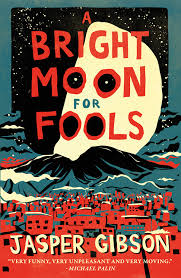
[READ: July 1, 2015] A Bright Moon for Fools

I found this book at work and was intrigued by it.  Not by its title or cover, which is dreadful, but because on the edge of the pages was printed Up on two legs, man!  I love a book that plays with convention so I decided to check it out.  Then on the front is a blurb from Michael Palin(!) which says “Very funny, very unpleasant and very moving.”  And this is a very apt blurb for this book.  It is quite funny, it is very unpleasant and it is also rather moving.

The story is about a man named Harry Christmas.  Christmas is a scoundrel.  He is mid-fifties but appears much older–fat, drunk and be-mustached.  He fancies that he looks fantastic, but no one is fooled.

Christmas suffers no fools. He expounds vociferously about any slight (especially slights against common courtesy–for although he is belligerent, he does believe in common courtesy).  He hates all of the vulgar inanities of modern life, which he calls, “The Rot.”  He hates people who use air quotes, he hates people who listen to walkmen (or whatever other technological marvel is out there), he hates people who want to sit and talk to him while he is eating, and worst yet he hates those who assume that because he is British, he loves football.  None of these hatreds seems that unreasonable to me, but since Harry is a big drunken man, his belligerence moves past justifiable and into the realm of scary.

And yet, he is a funny and enjoyable protagonist to be sure.  Well, except that he has stolen the life savings from his previous girlfriend and has fled London for Venezuela. (more…)

Read Full Post »

dispossesSOUNDTRACK: YOLANDA KONDONASSIS-Tiny Desk Concert #96 (December 8, 2010).

yolandaI have mentioned a much more recent Tiny Desk concert from Yolanda Kondonassis in which she duetted with Jason Vieaux (from 2015).  This show is just Kondonassis and her harp.

And it is absolutely gorgeous.

Kondonassis plays three distinct styles of music to show the variety of music a harp can make.  It is amazing to watch her play as well.  She closes her eyes and simply knows where everything is, absorbed in the music.

Her first piece is by Domenico Scarlatti: “Sonata in A Major, K. 208,” which is considered a rather “traditional” harp piece (I love hearing her do the “fast notes” a the end of each section.

She introduces the second piece by saying that she wanted to compose a piece and through meeting a Chinese composer wound up arranging this traditional Chinese piece called “Small River Flowing.”  And it is amazing to hear the Chinese melodies immediately from the high notes.  But perhaps my favorite part of this song is that she hits the low bass notes to make them ring out almost like a gong.  I have never seen anyone do this before with a harp.

She says the final piece is by Carlos Salzedo: “Chanson dans la nuit” which crosses over into almost world music.  And in a short time, it really shows off all of the different sounds and colors that the harp is capable of.  She’s absolutely right.  While the song begins with some very traditional sounding harp music, she seems to also play some harmonics (who even knew you could do that on a harp) as well as some sounds of just her nails running across the strings–bringing a fascinating texture–as well as some very fast, loud chords and indeed, actual percussive sounds as she taps on the body of her (truly beautiful looking) harp.  The song is not as pretty as the others since there is so much going on, but it’s a wonderful song and it’s great to watch her play it.

I never knew I wanted a CD of harp music before, and now I do.

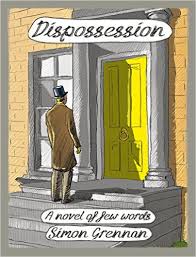
[READ: November 12, 2015] Dispossession

This graphic novel has a fascinating origin.  It is based on the novel John Caldigate by Anthony Trollope.  And in fact, it follows that story pretty faithfully.  However, it eschews massive amounts of the book (the original is quite long) and also adds a subplot of Wiradjuri peoples (which includes dialogue in Wiradjuri translated into English by Cheryl Riley).  There’s also a Postface (which is very helpful for explaining the origin of the story and how Grennan modified the original) by Jan Baetens and Ortwin de Graef.

The subtitle, A Novel of Few Words, proves to be accurate.  For the most part, each page has six panels, and the only words are sparse dialogue.  Grennan really has the story move quickly through these images, which tend to jump ahead pretty quickly.

We first meet John Caldigate.  Caldigate is a wealthy man, soon to be heir to his father’s fortune.  But he is unsatisfied in England.  And he decides to sell off his inheritance and to set off for New South Wales with his friend Ned.  There they will seek their fortune in the gold mines.

There is a woman he has left behind, Hester, the daughter of a local family.  She is certainly desirable, but it’s unclear how Caldigate feels about her because he wishes to find his fortune elsewhere.

Then the men set sail for Australia, two bachelors on a lengthy sea voyage.  Aboard the ship is Mrs Smith, a divorced actress who is also heading to Australia.  Mrs Smith is considered somewhat disreputable aboard the ship–and several people warn him against her.  But he cannot be denied. (more…)

Read Full Post »

ny2015SOUNDTRACK: RHEOSTATICS-Hamilton ON (February 24 2001).

hamiltonThis is a show that there is no real information about.  In fact, I have to wonder if it is actually from the date that it says because during the set someone (very casually, I think) mentions that their album came out today (it was released on October 23, 2001).  It is also really short (just over an hour) and is clearly not the entire show.  I assume the first half was lost, but it’s hard to know.

Despite the brevity, there is a great sound on the disc.  The first two songs sound amazing.  And “Stolen Car” is scorchingly good.

There’s a funny discussion about the washroom, which turns into a joke that the “washroom rocks.”  And there’s some wonderfully funny “ads” for Snapple, Marlboro “the smoke that hurts,” and even a Gibson “the guitar for depressed musicians.”  “Feed Yourself” is particularly long with lots of chatter in the middle and they joke about Martin playing with “millennium technology,” some gadget that makes his guitar sound different.

“Four Little Songs” has a very funny refrain about Martin’s “device” which they now call the robot dog–there’s even a silly riff at the end.

It’s a great show, even if it is brief and it’s a good collection of older songs (which is weird if their new album came out that day).

[READ: April 21, 2015] “Major Maybe”

This was the second short and breezy story I read this week, which was kind of fun.

This story is so simple, it’s even told quickly, as if the narrator just had to get it out.

“Major Maybe” is the name of a dog in her neighborhood.  She and her roommate Eagle Soars (his real name) are living in Chelsea in New York.  He is a wanna be actor and she helps him with his lines.

One day they were rehearsing in their usual spot in front of their building.  Their building was quite nice, the first floor resident was a therapist and he decked out the front stoop very nicely with flowers and chairs.  As they were rehearsing the red-haried homeless lady came by.  She was known to have good days and bad days  Today was a bad day. (more…)

Read Full Post »

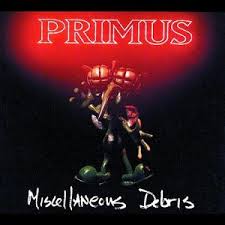
824SOUNDTRACK: PRIMUS-Miscellaneous Debris (1992).

debrsiAfter the success of Sailing the Seas of Cheese, Primus created this five song EP of covers.  Les had just gotten a new Carl Thompson “rainbow bass” and he used the EP as a way to try it out.

This EP is, interestingly, their most listener friendly release thus far.  In part because they are playing more conventional songs (even if in an unconventional way).  Although they are not the most obvious covers:

Peter Gabriel-“Intruder.”  This is an earlier Peter Gabriel song (when he was still kind of weird).  The Primus version is suitably spooky and weird, but it is a great version.  It sounds a lot like the original, which is creepier than you might expect from Gabriel–but he was a weirdo before he became an adult contempo sweetheart.

XTC-“Making Plans for Nigel”  One of XTC’s more popular songs, this version is faster than the original, but right on and quite fun.

The Residents-“Sinister Exaggerator”  The Residents are quite weird (and may be the one band that is closest in spirit to Primus). This version is indeed pretty close to the original (although you can hear the lyrics better on the original!).

The Meters-“Tippi Toes”  The Meters area n old school funk band.  This is a song with no lyrics.  The Primus version sounds more full than the original (which incorporates Tiptoe Thru the Tulips”)  but it is quite faithful otherwise.

Pink Floyd-“Have a Cigar”  This is clearly the most popular original on the disc.  But Primus do a great job with it (Les is under the impression that Roger Waters didn’t like their version–but what do you expect?). They have a lot of fun with this song–keeping it close to the original (except for Ler’s guitar, mostly) and the twisted lyrics that say “who the hell’s this guy they call Bob Cock?”

So while this is a great introduction to Primus, it is not entirely representative of their sound. And yet, it sort of is as well.  Hence the title.

[READ: January 6, 2015] “One Saturday Morning”

Tessa Hadley continues to impress me with her beautiful stories in which really nothing happens.  It opens with a girl practicing her piano and ends with her and her brother looking at a bug.  And in between something almost happens, but not quite.

Set in the 1960s, Carrie is a ten-year old girl practicing her piano.  Her brother is outside playing cricket and her parents are out shopping for their party that evening.  Carrie hates practicing the piano–the music just doesn’t speak o her.  She also fears that her piano tutor is mad at her because of a childish letter she wrote and may have left at her tutor’s house.

While she is thinking about this, the doorbell rings.  She doesn’t recognize the man right away but she quickly realizes that it his her parents’ old friend Dom.  Dom is a big man, somewhat intimidating but affable. Carrie is intimidated by him though, especially since her parents aren’t around.  He hasn’t been around since he moved a way a few years ago.  But he says he is in town and wanted to visit friends.  She assures him that her parents will be home shortly and invites him in.  But rather than entertain him, she runs upstairs to hide. (more…)

Read Full Post »

« Newer Posts - Older Posts »