Feeds:
Posts
Comments

Archive for the ‘The Walrus’ Category

SOUNDTRACK: THE TRAGICALLY HIP-Music @Work (2000).

I tend to dismiss this Hip record for two reasons: the cover is pathetic and I don’t like the title.  Of course, the title track is catchy as anything, and, in reality, the whole record stands up quite well.

Music @Work rocks harder than Phantom Power did, although clearly The Hip are in a new mode of music making–no longer lengthy emotive tracks, now the make shorter, poppier tracks that explore what would have to be called their gentler side.  “Stay” is a very simple acoustic guitar track with maybe a bit of keyboards, but Downie’s voice is mixed so high it’s practically like a spoken word track (only catchy).

There’s a lot of songs that, while not brilliant, are catchy and very toe tapping like “The Completists.”  As I described their earlier stuff, this disc is above average rock, and this is a more adult-alternative rock than their earlier raw rock.    But there are a few louder rocking songs too: “Freak Turbulence” is a fast rocker  that comes in at under 3 minutes.  “Train Overnight” is a return to a somewhat rawer sound and “Wild Mountain Honey” has a great opening riff and some unexpected stops and starts.

Despite my negative thoughts about this record, listening to it again made me realize just how good it is.

[READ: February 15, 2011] “Warlords”

This story continues with The Walrus‘ flash fictions.  Again, I don’t see this story as being in the tradition of Flash Fiction so much as just being a very short story.  Of course, as with any good flash fiction, this story packs a ton of information in to a half a page.

The story is all about Warlords.  Duh.  But rather than looking at the warlord himself, Atwood looks at the people who live under a warlord.  Those who can work for him or those (women, bankers, writers) who will never be able to.  She then peels away the layers of the warlord’s minions until we reach the inner circle.

And what happens to the inner circle when a warlord is deposed?  Is that guy sweeping garbage a former member? (more…)

Read Full Post »

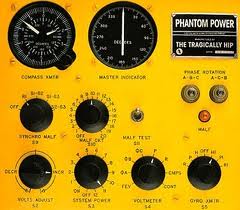
SOUNDTRACKTRAGICALLY HIP-Phantom Power (1998).

The last couple of Hip albums were pretty intense, and it seems like the live album seems to cured them of their need for raucousness. And so Phantom Power follows with a much less intense collection of songs.

The first three songs are somewhat loud and rocking, but they lack any of the twists and turns that the previous records had.  Rather they are pretty straightforward rock tracks.  “Poets” is catchy and fun to sing along to, with a good guitar intro.  And “Something On” is similarly rocking.  But after that the disc changes.

There’s a lot more folk and acoustic guitars here.  It’s an unexpected direction, especially when you figure that their first albums were so raw sounding.  In some ways that makes the album disappointing.

But what they have removed in intensity they have made up in subtler ways.  Take the cool harmonies on “Membership.”  I’ve always found their backing harmonies to be slightly off, usually in an interesting way, but the harmonies are perfected on this song, where they are more of an echo of Downie’s vocals which add a new sound to the song.

There’s a really fun rocking song about hockey (among other things) in “Fireworks,” although for all of its speed, it’s a very poppy track–there’s very little bass evident on the track (or most of the disc).  And it speeds along just as catchy as can be.

I have to wonder if “Vapour Trails” had any influence on Rush’s decision to name their comeback album Vapor Trails.  Probably not, but it’s fun to think about (and it is probably the heaviest song on this disc).

But “Bobcaygeon” is the obvious highlight (although it’s even better live)–the bridge into the chorus is sublime.  It’s one of their more mellow tracks, but there are cool twists and turns throughout.  Second is “Escape is at Hand for the Travellin’ Man” an uptempo but by no means rocking number that propels itself along on a simple riff and engaging lyrics.

I tend to forget about this album because it is not so intense, but listening to it again, I’m reminded not to overlook this album, even if it’s not a hit-worthy as some of their others.

[READ: February 8, 2011] “Samson and Delilah”

This story is a retelling of the Samson and Delilah biblical story.  I knew the original story pretty well, but I didn’t know that Samson was blinded (which he was).

This retelling is more contemporary (in langauge) and it is somewhat funnier (although it’s obviously not a funny story in the end).  Goldstein has added aspects that make it funny: anachronisms and such.  But he also imbues Samson (and Samson’s father) with characteristics that aren’t in the original. (more…)

Read Full Post »

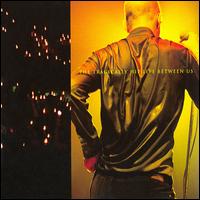
SOUNDTRACK: THE TRAGICALLY HIP-Live Between Us (1996).

This show was recorded live November 23, 1996 in Detroit.  It’s kind of odd that these Canadian favorites would record their live album in the U.S.

In the intro to the album Downie thanks The Rheostatics for opening (you can hear the Rheos’ sets from other days on the tour, but not this night, at their Live site).

This concert is a great, strong set of songs, and an excellent way to experience the Hip live.  Downie is practically a loose cannon with his extemporaneous ramblings…he’s funy, weird and clever and he’s a charismatic front man.  And the band sounds great (no overdubs on the disc, and none are needed).

The set list is a wonderful selection of tracks from all five of their albums (none from the first EP).  Two each from the first two, Three from Fully & Day and the first four tracks from Trouble (which is probably why I like the beginning of Trouble so much more than the end).

True, any fan will complain about the lack of certain songs on here (no “38 Years Old,” no “Little Bones” no “Unplucked Gems” no “Hundred Meridian” or “Fifty Mission Cap” no “Fire in the Hole”–wow, that’s a lot of great songs to leave off, shows just how many great songs the Hip have).  But with only 14 songs to choose from, they made a great set list and you don’t even miss those songs until you realize they’re not there.

The audience is very responsive and the band seems to feed off it.  If you’re new to the Hip, this is a great place to start.  It’s sort of like a greatest hits of the early years, but it will leave you wanting more too.

[READ: January 26, 2011] “Summer Plum (Winter Version)”

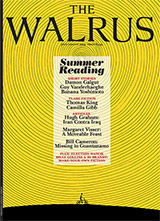
This was the final of seven stories in The Walrus‘ Summer Reading Issue 2004, and it was the final flash fiction.  This story is a bizarre whirlwind from the get go.

It opens with a belief that shredded coconut can make you fly and ends with a paean to a plum.  In between Keds are glued to a driveway and there’s a lot of repetition of “plump plum plump plum.”

I admit I have no idea what this story was supposed to be saying.  It seemed more like a sort of evocative poem, relishing the textures of life.  And yet there’s that whole thing about being glued to the driveway which kind of throws a wrench into that interpretation. (more…)

Read Full Post »


SOUNDTRACK
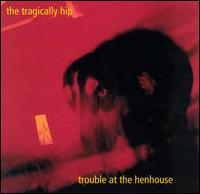
: THE TRAGICALLY HIP-Trouble at the Henhouse (1996).

After the major high of Day for Night, The Hip followed it up with Trouble in the Henhouse.

It opens with “Giftshop” which sounds like it could have come straight from Day for Night.  “Springtime in Vienna” is a marvel.  The opening is quiet with Downie’s almost whispered voice telling a compelling story until it blasts out with a wonderful chorus.  “Ahead by a Century” opens with a catchy acoustic intro.  Again, the harmony vocals add wonders to the verses.

But overall the album feels like the Hip exhausted their angst and anger on Day for Night and have chosen to go with a more mellow sound here.  It almost seems like Day for Lite.  Songs like the final track, “Put It Off” dabble with intensity, but have more atmospherics than powerful guitar and verses.  It’s like the come down after a big party.

The most peculiar song on the disc is “Butts Wigglin” which was used on the Kids in the Hall Brain Candy soundtrack.  It doesn’t really fit on this disc, but it’s such a great song that I understand them not leaving it off.  It’s very silly and musically groovy with  almost no guitars and all keyboards.  It’s a goof, but nice to see the lighter side of the band.

I find Trouble to be really enjoyable in itself, but it kind of pales in comparison to the previous two.  Nevertheless, these three albums are a wonderful trio of discs released by a great Canadian band.

They celebrated this era of the band with a live album the following year.

[READ: January 26, 2011] “An African Sermon”

Of all the stories in this Summer Reading Issue of The Walrus, this one was the most powerful.  (It wasn’t my favorite because it was rather distrubing) but it had a strong impact on me.

The bulk of the stoiry is set on a train in Africa.  Two white men introduce themselves to each other; the older one confides that he hopes no Blacks come into thier car.  Of course a Black does come into thier car and the younger man, who is a preacher, tries to embarass the racist man but immediately shaking the black man’s hand.

The black man is hostile to the young man’s advances, more or less shutting him out entirely.  Indeed, when the young man follows him to the dining car to talk (he is genuinely sympathetic to people, but he’s also very curious about the man and wants to pry a bit) the black man (whose name is Leonard Sagatwa) listens briefly and then, claiming a headche, returns to the cabin  room and goes to sleep.

During the night, the train stops because of a malfunction and it will be some time before it is fixed.  The priest goes out to the landing to find something to occupy himself when Leonard comes down.  He says to the priest that he wants to tell his story.  He wants to tell it once, to a complete stranger so that he can unburden himself and then be done with it.  The priest is tickled to hear the story.

But the story is one of Rwandan genocide:  Hutu vs Tutsi, brothers who turn  against each other; Leonard’s brother turning on him and his family.  Killing family members slowly, cruelly, calling them cockroaches.  It is harrowing and the priest is taken aback by the brutality.

But at the end of the story, the priest is resilient and insists that Leonard can forgive his brother.  Never, says Leonard.

The priest is able to use this story for his very first sermon in Africa.  He pretties up the story somewhat and makes it moral, and it works.  The new congregation accepts him and he feels welcomed to Africa.

When, several months later, the priest sees Leonard again, everything has been turned upside down.  And I’ll just leave it at that.

It is a great story.  Wonderfully powerful.

Read Full Post »

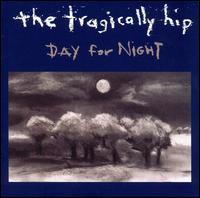
SOUNDTRACK: THE TRAGICALLY HIP-Day for Night (1995).

This is the first Hip album that I bought.  In fact, I first learned about them when I saw a video for “Nautical Disaster” on Much Music when I lived in Boston.  That was my first exposure to The Hip–and to another cool Canadian band, The Tea Party–and I’ve loved Much Music ever since (even if I can’t get it anymore).

For me, Day for Night takes the greatness of Fully Completely and ramps it up a notch further.  In part this is probably because the album is almost 60 minutes long instead of just 40, but I think the intensity that The Hip found on Fully is fully matured all over this disc.

The album opens with a great bass intro on “Grace, Too.”  And with Downie’s intensity in the breakdown it’s an amazing opening to a great disc.  “Yawning or Snarling” has even more intensity, with practically snarled verses and a strangely catchy chorus (and great lyrics).  It’s followed by the blistering rocker “Fire in the Hole” which really captures the anger that seems to be brooding under the surface of this disc.

“Thugs” follows, it’s a catchy, quiet song; I love the chorus: “I do the rolling, you do the detail.”  ANd there’s another great opening , with an unexpected twist for “Inevitability of Death.”  Which is followed by “Scared,” another mellow, minor-chord song which is a great lead in to “An Itch an Hour.”

Normally a disc this long can’t hold the listener’s attention for the whole disc.  But the penultimate song, “Titanic Terrarium,” an atmospheric brooding song with a quirky verse melody draws you in to its claustrophobic subject of life in a biosphere.

The Hip had a minor buzz in America with this album and even played Saturday Night Live, where they shaved a minute off of Nautical Disaster, but keep all five minutes of “Grace Too.” Watch it here:

This is a great album, perennially one of my favorites.  It’s only a shame that it never broke through to U.S. audiences, leaving The Hip as one of Canada’s biggest cult bands (in the U.S.).

[READ: January 26, 2010] “Questions Surrounding My Disappearance”

This was the third flash fiction in this 2004 Summer Reading issue of The Walrus.  And of the four, this was my favorite.  It was weird and kind of silly but underneath it had some real angst.

The story opens with a kind of generic dismissal of the Canadian Film and Television Industry (“who should give a shit who wrote or lit or recorded the sound for a television show or a movie….”).  But nevertheless, he’s not too dismissive of it (“There have been…awards”).

As with the other flash fictions in the issue, the set-up is quite long, but unlike the other stories this sort of casual tone continues throughout the story.  And we learn a bit more and more about the narrator and about his opinions of the CBC.

The title obviously comes into play, as we soon learn that when he was, in fact, missing, very few people seemed to be up in arms about it (including his family).  Perhaps the most surprising aspect being that during the time he was reported missing he was interviewed on the radio (true, it was a program dedicated to the arts, but still). (more…)

Read Full Post »

SOUNDTRACK: THE TRAGICALLY HIP-Fully Completely (1993).

Even thought Road Apples was good, Fully Completely is amazing.  The band has traded in some rawness for textural complexity and yet they haven’t lost the rocking groove of their earlier sound.

This album has some of my favorite Hip songs: “Courage” (the Sarah Polley cover in The Sweet Hereafter is also beautiful in a very different way). “At the Hundredth Meridian” (a title which should tell you that the lyrics of the song aren’t going to be typical rock fodder), and “Fifty Mission Cap.”   “Fifty Mission Cap” is about the fascinating story of Toronto Maple Leaf Bill Barilko, another atypical lyrical concept and an amazing song from start to finish (although, honestly the opening chords make it sound like it’s going to be a lame 80′ metal anthem…maturation as a band made this song brilliant instead).

The duel guitar opening of “Pigeon Camera” is also gorgeous, as are the wonderful vocal harmonies on the bridge.  And the rawness isn’t all gone either.  “Locked in the Trunk of a Car” rocks as hard as anything on Road Apples.  There’s also a mellow folk song in “Wheat Kings.”  It slows the disc down a bit after the intensity of the amazing “Fully Completely,” and “Fifty Mission Cap,” but the last two songs are a string ending to an already great disc.

Even though I think that Fully is an amazing record, I think that mostly it’s preparation for the even more amazing Day for Night which came out two years later.

[READ: January 26, 2011] “Platanus”

Anyone playing along might have noticed that February is Canada month here.  All of the authors this month have been from the Great White North.  This story breaks with that, but I feel that it still counts because it came in a Canadian magazine.  But Banana Yoshimoto is Japanese (no, really!).  With a name like “Banana” (which is a pseudonym), it’s hard to forget this author.  I even bought Kitchen (her first translated book) when it came out (although I haven’t read it yet).

This story is translated from the Japanese by Michael Emmerich.  It is set in Mexico, specifically in the village of Mendoza.  The narrator (aged 35) and her husband (aged 60) enjoy escaping Tokyo and spending time in this sleepy village.

The story provides some interesting familial background of the two characters (both of their families disapprove of the marriage) and the kinds of things that they get up to in Mendoza.  And really that’s all there is to the story. (more…)

Read Full Post »

SOUNDTRACK: THE TRAGICALLY HIP-Road Apples (1991).

A cleverly designed cover signals an amazing album inside. After the vast improvements of Up to Here, Road Apples rocks and is the first of the Hip’s most great and cohesive records from this period.

The one-two punch of the opening rockers “Little Bones” and “Twist My Arm” is sublime.  And Downie has really found his voice at this point.  Those initial two songs show the kind of complexities the band will add on future discs.

The rest of the disc is really successful raw, bluesy rock.  The guitar solos are longer and more substantial (songs like “Bring It All Back” showcases Rob Baker soloing skills).  And the bulk of the rest are songs that could be staples of any classic rock station.

But they mix up the styles a bit as well.  “Cordelia” is a brooding, intense song, that builds from a quiet intro into a rocking chorus, the kind of song which later albums will showcase.  “Long Time Running” is a grooving ballad.   And “Fiddlers Green” is a pretty acoustic number.  The final track, “The Last of the Unplucked Gems” is another mellow acoustic track, but it foreshadows some of the great songs the band would write in the future.

Road Apples is a hugely successful disc, although for my tastes it’s on the next two albums that The Hip really hit their excellence.

[READ: January 26, 2011] “Not Enough Horses”

This second flash fiction of The Walrus’ 2004 Summer Reading Issue has a similar “problem” as the first one. It actually feels too long to be flash fiction.  True it is only one page and, since it is mostly conversation, it is very brief.  But the story is actually rather detailed, something which I feel doesn’t quite belong in flash fiction.

Indeed, it is a simple enough story:  a young man would like to marry a Native woman.  He goes to the woman’s father and begins offering him gifts for his blessing.  The father says that in the past the gift would have been horses, although the boy’s first gift is kittens. (more…)

Read Full Post »

SOUNDTRACK: THE TRAGICALLY HIP-Up To Here (1989).

Up to Here is a pretty big leap from their first EP.  There’s more guitar soloing (not grandiose solos, just little guitar noodling in the songs “Blow at High Dough,” which was used wonderfully for the show Made in Canada (also known as The Industry).

Downie’s voice is more in keeping with what we’d come to know later, and lyrically the songs are esoteric and interesting.

“Blow at High Dough” opens the disc with a very cool guitar intro (“They shot a movie once, in my hometown”) “I Believe in You (Or I’ll Be Leaving You Tonight)” a not terribly good song has some proto-Downieisms: spoken passages, stories in a breakdown of the song, but the subject matter is not that exciting.  Of course, it’s hard to sound good when you’re followed by “New Orleans is Sinking” another fantastic song that still sounds great today (especially in their live versions).

“38 Years Old” is a surprisingly moving song with some slides guitars…a nod to their country/folk roots that they tend to bury under raw rock guitars.

But even some of the less memorable, less exciting songs have great aspects to them.  Songs like “She Didn’t Know” are pretty standard rock songs.  Better than average, but not exceptional.  But the band puts little things into them that bring them up from the mundane: the guitar licks, the backing vocals (slightly R.E.M.-ish).

Even “Boots to Hears” which sounds a bit too much like John Mellencamp in the intro really wins you over by the end (the lyrics are great).  For what really is a debut album, it’s solid and shows great songwriting skills and promise.

They still haven’t quite gotten the hang of cover art yet, though.

[READ: January 26, 2011] “You Go First”

This was the first of four flash fictions in this issue.  Flash fiction doesn’t really have a definition per se (except that it is very short).  There are some masters of flash fiction who can write very compelling stories with astonishing brevity.  These stories are all short (one magazine page a piece), but they feel kind of bloated compared to the writers like Lydia Davis.

Gibb’s story actually feels a lot longer than it is.  It opens with us meeting the narrator’s next door neighbors, Carl the cremator, his obese wife Brenda and their son Jason.  The narrator doesn’t really like Jason, but he’s the only person who will hang out her because he wasn’t around for her birthday party last year.  At that party, her hippie parents encouraged everyone to play a game called Getting to Know Our Bodies. (more…)

Read Full Post »

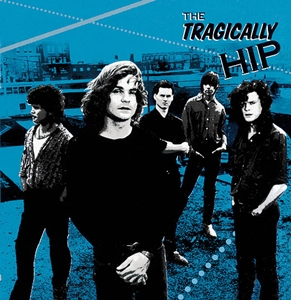
SOUNDTRACK: THE TRAGICALLY HIP-The Tragically Hip (1987).

It’s not really fair to review a successful, long-lived band’s first album over 30 years after the fact.  I mean, Rush’s first album doesn’t show any of the prog tendencies they’d be known for (not to mention a different  drummer/lyricist).  In fact, virtually no bands come out fully formed, which is good for all fans.

Having said that, from this album, you’d have very little indication that the Hip would become as dynamic as they eventually did.

This is a 7 song EP full of rocking tracks with overlays of acoustic guitars.  Unlike later discs, there’s only a minor indication that they’re from Canada (“Last American Exit”) or overly literate.  Mostly they seem like a rocking bar band.  The songs are good, somewhat generic, but solid.  In fact, “Small Town Bringdown” is still played in concert from time to time.

The biggest surprise is Gord Downie’s voice.  By now his voice is pretty distinctive, but on this first disc it seems like he’s still trying to figure out what he’s doing.  On “Killing Time” he’s unrecognizable from the frontman of today.  He seems to be working in a much gruffer range than he would later use.  Lyrically, the songs are also tougher than they would eventually become.

The most memorable song is probably the most embarrassing: “I’m a Werewolf, Baby” is as silly as it sounds, but the riff is really great and it has staying power.  Shame about the lyrics.  This disc is probably not worth getting since “Small Town” is available on their Greatest Hits.  Although if you really want to hear “Werewolf” it’s only available here.

[READ: January 26, 2011] “Live Large”

Just as I settle into the idea of reading 25 back issues of The Walrus for all of the fiction contained therein, I get to this 2004 Summer Reading Issue which features seven stories!  Three of them are short stories and the other four are flash fiction.

This first story was my favorite of the bunch.  It is a fairly simple story about a down-and-out man who longs for one day of joy.  Billy Constable has slowly seen his money evaporate.  He has had to sell off a lot of his luxuries, including the membership  to the Fairview Golf Club.  He has also had a recent medical scare (a minor heart attack) which has made him go straight and clean: no booze or smokes.

Except that things have gotten really bad lately, and who can resist the slide back into temptation.  When he gets a call to play a round of golf, from the very man he sold his golf membership to, he is about to tell him where to go, until he realizes that the man is calling him because he genuinely wants him to play in their foursome.  He decides why the hell not. (more…)

Read Full Post »

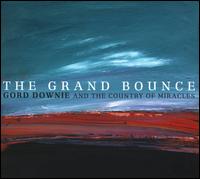
SOUNDTRACK: GORD DOWNIE AND THE COUNTRY OF MIRACLES-The Grand Bounce (2010).
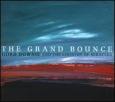
I knew I was going to write about Canadian musicians for this series of Extraordinary Canadians, but I wasn’t sure who would get matched to whom. I figured I’d match Gord Downie to Mordecai Richler, but when I saw this in the liner notes to this disc, I knew I’d made the right choice:

Thank you to the Richler Family for the font you are presently reading.  The Richler font, not publicly available, was created and named for the great Mordecai Richler.  It was commissioned by Louise Dennys, designed by Nick Shinn and graciously made available by Florence Richler.  I am grateful for this honour.

So Gord Downie is the driving force behind The Tragically Hip.  I’m always curious when a guy who pretty much runs a band needs to do a solo album (or three).  And in this case, since the last Hip album was much more mellow and almost country, it seemed like he got some of his less rocky side out on that disc, so what’s the need?  Unless, of course, it’s just the need to play with some other folks once in a while.

Well, whatever the reason, this disc finds Downie in incredible form.  In fact, I think I like this disc better than the last Hip disc (which I did like, but which was a little too mellow overall).  The songs are all great, from the simple folk tracks to the more elaborate rockers.  And, yes, while the disc never rocks as hard as some Hip songs tend to, this is not a simple acoustic guitars and solo vocals record.

“The East Wind” is a wonderful starter.  It’s fairly simple with awesomely catchy lyrics.   I learned that the lyrics are from a quote by Todd Burley.  And they are an awesome way to describe a hostile and violent wind: it’s lazy, because “it doesn’t go around you, it goes right through you.”  Fantastic.

“Moon Over Glenora” sounds a lot like a Hip song.  Downie’s lyrics are almost mumbled and understated until he gets to the end of each verse when he raises his voice an octave for maximum effect.   The stops and starts in the bridge are also great.  “As a Mover” is also smoothly catchy with a wonderful rising chorus.

“The Dance and the Disappearance” is another great conceit.  This song is inspired by a quote from Crystal Pite: “Dance disappears almost at the moment of its manifestation.”  It is suitably dramatic with some great verses.  “The Hard Canadian” is a gentle acoustic number that would not be out of place on the more recent Hip records.  “Gone” feels like a continuation of “Heart,” almost like the slightly more rocking second half of it.

My favorite track is “The Drowning Machine” (I seem to like anything that Downie writes that’s about the sea).  It’s a minor chord wonder, dark and mysterious and wonderfully catchy.  The rock comes back on the rather simple “Night is For Getting.”  It’s probably the least essential track on the disc except that once again the chorus/bridge is really great and memorable.

The last three tracks bring on the mellow, which is a fitting ending for the disc, although since the three t racks take up about 12 minutes, it makes the end drag a bit.  “Retrace” is a country-tinged (steel guitar) mellow track (again, Downie’s voice brings out the excitement) .  “Broadcast” has an extended outro of gentle guitars and piano that for all the world sounds like the end of a disc, so I’m always surprised that there’s a final track after it.   And so the final track “Pinned” feels like filler.  It has a movie projector clicking sound and gentle piano with almost inaudible vocals.  It’s actually a pretty song, but it feels almost discarded here.

One of things I’ve always liked about Downie’s lyrics is that they are atypical of rock songs.  They’re not “about” sex or rock or drugs or swagger or anything like that.  In this case they are about locations and events.  And it really paints a picture.  And speaking of painting, Downie painted the cover art.  The beautiful simplicity of the painting is not unlike the beautiful simplicity of the music on the disc.

Oh and my copy is autographed too! (although I wasn’t there when he autographed it, so it could have been anyone who scribbled on the cover).

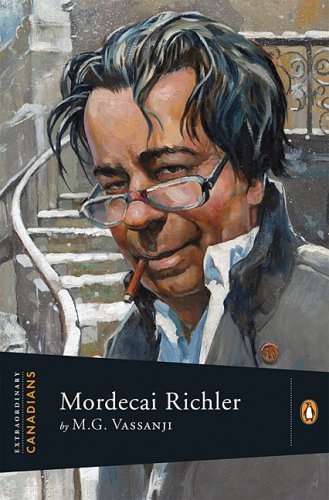
[READ: November 15, 2010] Mordecai Richler

I don’t know a lot about Mordecai Richler, although I feel like whenever I read about him it’s in hushed tones (a neat trick, that).  Nevertheless, for a number of reasons I have wanted to read him for many years but have just never done it.  Now, the stars are aligning with me for Richler.
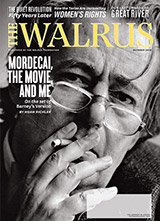
There’s this book, there’s the cover of the October 2010 issue of The Walrus and the recent filming of his book Barney’s Version (the filming of which is discussed in the same issue).  And then a patron asked for the film of The Apprenticeship of Duddy Kravitz.  So, it’ about time to read one of his books.  But here’s the rub…do I start with the great books or do I start at the beginning and work my way through his career?  And, there’s also a huge new biography coming out (the review of which mentions a wonderfully offensive event in which Richler absolutely dismisses his Jewish audience).

This book was written by M.G. Vassanji.  I feel that I’ve heard of him but I’ve never read him.  And yet listen to this incredible biography:

M.G. Vassanji was born in Kenya and raised in Tanzania.  He attended University in the United States, where he trained as a nuclear physicist, before coming to Canada in 1978.  Vassanji is the author is six novels and two collections of short stories…and he has twice won the Giller Prize.

Damn.

Since I read this right after Coupland’s McLuhan it’s tempting to compare them.  And yet, as I said in that review, it seems quite apparent than Coupland’s book will be like no one else’s, so I won’t say much about that.  Instead, Vassanji opens the book by talking about the similarities between himself and Richler and their few awkward but pleasant meetings.  (In this respect yes, it is sort of like Coupland’s book in that the author puts himself into the text). (more…)

Read Full Post »

« Newer Posts - Older Posts »