Feeds:
Posts
Comments

Archive for the ‘Magazines’ Category

may16SOUNDTRACK: MARISA ANDERSON-Tiny Desk Concert #374 (July 19, 2014).

marisaMarisa Anderson may be the most unassuming guitar wizard I’ve ever seen.  There’s nothing flashy about her or her look, but man can she make those guitars sound great.  And she plays an old-timey bluegrass style of guitar with slides and lots of picking.

For this set she plays 5 songs (on four different guitars).  She doesn’t sing, she just lets the music do all the work.

“Hard Times Come Again No More” is done on a hollow-bodied electric guitar.  It’s noisy, and fuzzy.  She plays finger-picks the main melody in the high notes and then in the middle of the song she plays big open string chords–buzzy and noisy–while still playing the melody.  She says the song “gets stuck in my head if I’m driving through snow.”

“Sinks and Rises” is about a swimming hole in Kentucky.  She went there in a car, but she wasn’t driving and she’s never been there since but it was the best swimming day of her life.  For this song she plays a lap steel guitar that looks to be made of ivory.  It’s so much fun to watch her slowly moving that slide up and down the neck (sometimes only playing one note) while her picking hand goes like crazy.

For the third song she plays a different hollow body guitar.  “Hesitation Theme and Variation Blues” was inspired by her favorite guitar player Rev. Gary Davis.  She says this is a deconstruction of his “Hesitation Blues.”  She doesn’t sing so she took it apart and put it back together.  It begins with an almost classical theme before launching into a very cool blues.

Then she switches back to guitar #1.  She says she plays in settings didn’t allow cover songs, she didn’t want to do just originals so she played songs from public domain–like the national parks if we don’t use them we’ll lose them.  In 2013, she released an album that was all songs in the public domain.  “Canaan’s Land Medley” is a medley of three gospel songs.  She plays the melodies with her fingers and a slide on her pinky–which adds some cool textures to the song.

For the final song, “Galax,” she brings out guitar #4, a Fender Strat (or knock off). She says she went to a bluegrass festival and was overwhelmed by all of the good songs being played in the parking lot–she’s not even sure if she got to the show.  This song is about all those songs being played at once.  There’s some really fast guitar playing and slide at the same time.  It sounds great and is even more fun to watch.

Anderson is really a marvel–totally soft-spoken and seemingly shy, but main is she amazing to listen to.

[READ: July 13, 2016] “Call Me Crazy”

The May 16, 2016 issue of the New Yorker had a series called “Univent This” in which six authors imagine something that they could make go away. Since I knew many of them, I decided to write about them all.  I have to wonder how much these writers had to think about their answers, or if they’d imagined this all along.

Of the six articles, Brownstein’s was certainly the funniest.  It’s also the most contemporary and almost the most obvious thing to complain about.  But it suits her comic style very well.

She wants to uninvent the conference call.  She assumes that we all agree that the conference call is a bad idea, but in case we need convincing she offers this example. (more…)

Read Full Post »

CoverStory-KadirNelson-ADayattheBeach3-879x1200-1467305948SOUNDTRACK: LYDIA LOVELESS-Tiny Desk Concert #369 (July 1, 2014).

lovelssI want Lydia Loveless to be a punk singer–Her name is like a combination of Lydia Lunch and a last name that conjures up an asskicking punk.

But not the country singer that Loveless is (even if she is ass-kicking herself). Loveless is a new breed of alt-country which is pretty explicit with noticeably rocking guitar solos.  But her voice is so twangy it’s hard to not call it country (and in fact it’s a bit too much for me to take sometimes).

“Head” features this rather memorable chorus “Don’t stop getting undressed /Don’t stop giving me head.”  It seems especially surprising since Loveless looks like she’s about 12 (she was 23 at the time of this recording).  The buzzy solo is lengthy and more or less runs throughout the song.  Although at some point when Loveless takes her own solo the whole sound seems to fade out and get a little anemic.

Her band is fun with her bassist being very tall and having very long hair playing a very tall upright bass.  And then there’s another guy playing guitar and lap steel.

“Verlaine Shot Rimbaud” has a title that begs for an awesome song.  It’s not an epic masterpiece or anything.  In fact its closer to a pop song, The slide guitar and Loveless’ heavy accent on the chorus place it firmly in the country camp.

“Mile High” has a fun folk riff.  It sounds a lot like The Byrds and the chorus is super catchy.  If I could get her to sing less twangy I would love this song much like I love the punk country of X, or at least the Knitters.

[READ: December 29, 2010] “Who are All These Trump Supporters”

[This essay in the New Yorker also came under the heading “Trump Days.”]

So the title of the essay is a question I myself have been asking as I watch the hatred and vitriol bubble over during the convention.

If there was anyone I wanted to write this piece it would be George Saunders and he is actually the only reason I read it in the first place (I plan to read all of his contributions to the New Yorker eventually, but I’m glad to have read this one when it was timely–I hope it will be utterly irrelevant by the time I get to the rest of his works).  He self identifies as a liberal (although he was a conservative who loved Ayn Rand way back in the Reagan era).  He is a thoughtful and not prone to anger–a perfect foil for the crowd.  And he’s got a great way with words.

So great in fact that I’m just going to be quoting him a lot.  I could have pulled more excellent quotes from the essay, but really you should read the whole thing. (more…)

Read Full Post »

may16 SOUNDTRACK: SUZANNE VEGA-Tiny Desk Concert #336 (February 10, 2014).

vegaSuzanne Vega is practically a one hit wonder except that she has released a half-dozen great albums that are full of wonderful songs.  I stopped listening to her some time in the mid 90’s, so I missed her 2000s comeback, but this four-song show from 2014 has her two most famous songs and two songs from her then about t o be released album Tales from the Realm of the Queen of Pentacles.

As the Concert opens, she asks “for real?” and the hits the Tiny Desk gong (with quite a flourish).

Then she launches into “Luka.”  She plays acoustic guitar and sings.  Her voice sounds pretty much exactly as it did twenty years ago.  In part, sure, it’s because her singing voice is practically a whisper, but it’s amazing how good she sounds.  She has a second guitarist, Gerry Leonard, with her (on electric guitar) who plays a great sounding solo in the middle of the song.

The first new song is “Crack in the Wall.”  She says that it  describes when a crack appears allowing you to see into the spiritual world.  In this version (I don’t know the studio version), it sounds a lot like an old song–stripped down and simple, with Vega’s interesting gentle acoustic guitar chords and voice.  There’s also a cool echoed electric guitar solo.

For “I Never Wear White” she takes off the acoustic guitar.  It’s just her singing and Leonard playing.  And his guitar his rough and distorted.  It is pretty shocking for a Vega song, but it works really well with her voice.  I really like this song a lot.

She ends with “Tom’s Diner.”  She was going to say the one and only, but says they’ve done so many different versions of it.  So this is their latest.  She sings parts a capella but the guitar plays some wonderful washes of sounds (looped) with different parts layered.  He also plays a percussive sound that makes the song kind of danceable.  And when she mentions the bells of the cathedral, Gerry plays some cool harmonic notes that are echoed and sound like clock chimes.  It’s very cool.

Vega’s speaking voice sound a little like Hillary Clinton’s (especially during the thank yous at the end).  But it’s nice that her singing voice still sounds the same and that 2014 album seems like it might be interesting.

[READ: July 6, 2016] “High Maintenance”

The May 16, 2016 issue of the New Yorker had a series called “Univent This” in which six authors imagine something that they could make go away. Since I knew many of them, I decided to write about them all.  I have to wonder how much these writers had to think about their answers, or if they’d imagined this all along.

I’ve never read Mary Karr, I only know her peripherally as connected with David Foster Wallace.  This may not have been the best introduction to her, although since she mostly writes memoirs, maybe this is the perfect introduction.

Mary Karr would like to uninvent high heels.  And while she does speak of this with some humor, the entire article just reeks of vanity and foolishness.  (The fact that she even mentions she can still squeeze into a size 4 should tell you all you need to know about this essay). (more…)

Read Full Post »

may16 SOUNDTRACK: SOFIA REI-Tiny Desk Concert #338 (February 22, 2014).

sofiaSofia Rei is an Argentinian singer.  For this Tiny Desk Concert she has two accompanists: drummer Franco Pinna incorporates a drum from the Argentine Pampas into a traditional drum set and guitarist/bassist JC Maillard plays a pretty guitar and a modified saz bass.

In profile Sofia looks a bit like Polly Jean Harvey but when she sings it’s very different.  Her voice is sultry and influenced by Argentinian jazz.

I love the way the first song, “La Gallera” starts with slow verses but the chorus are just wild and crazy and full of rhythms and some great chords.  And of course, that drum is an integral part of the solo that fills the middle so the song.

“La Llorona”  is a beautiful slow ballad with Rei’s voice floating above the percussion and gentle modified saz bass (more on that in a moment).  The song builds over five minutes with her voice getting louder and more impassioned.  And just as the song really builds and seems as if its going to rock out, it ends–leaving us wanting more.

“Todo Lo Perdido Reaparece” (“Everything That Has Been Lost Reappears”) brings her back home to Argentina.  The song starts quietly with Rei singing some syllables and noises before the song proper starts.  It is a slow ballad filled with percussion.  Midway through the song while Maillard is doing a wonderful guitar solo, Rei picks up a charango and plays lovely high notes.  The chord progression during this and the following section with vocals is fanatic–catchy but also unusual.

At the end of the show, Maillard talks about his modified saz bass.  He says it is based on the Turkish instrument but it was made for finger picking rather than plectrum.  His is the first ever made.  With eight strings, it has bass strings for thumb picking and high notes for the other fingers.  It also has a lot of “empty” spaces to make interesting percussion sounds. I love seeing new instruments and this little demonstration is very cool.

[READ: July 11, 2016] “Bad Character”

The May 16, 2016 issue of the New Yorker had a series called “Univent This” in which six authors imagine something that they could make go away. Since I knew many of them, I decided to write about them all.  I have to wonder how much these writers had to think about their answers, or if they’d imagined this all along.

Ted Chiang says he never learned anything in the Saturday morning Chinese school he was forced to attend as a child.  But that’s not why he wants to get rid of the Chinese character-driven alphabet system.

He says that he is a fan of literacy but that Chinese characters have been an obstacle to literacy for millennia. You have to learn three thousand characters and you can’t use pronunciation to help you–it’s all memorization.  Even highly educated Chinese speakers regularly forget how to write the characters that they use infrequently.

He also decries the technological obstacles that Chinese poses–computers and smart phones are impossible to use.  And even dumbed-down solutions like Pinyin just cause more work.

Interestingly, even though he wants to do away with the written characters the last couple of paragraphs of this essay talk about the virtues of this system.

Pronunciation changes over the centuries, so as language evolves, older works are harder to understand (take Beowulf).   This is why “Classical Chinese remains readable precisely because the characters are immune to the vagaries of sound.”

Chinese culture is notorious about tradition.  He says this is not because of the Chinese characters but there must be some influence.  He speculates that if the English language had not evolved since the days of Beowulf, that maybe English culture would be more Anglo-Saxon.

Conversely if China didn’t have the language it does, it too may have evolved over the years and might be less resistant to new ideas.  Perhaps the country would be better able to deal with modernity.

Regardless of whether that would be better or not, he’d love to live in a  world where he wouldn’t have to hear the misconceptions about Chinese characters “that they’re like little pictures, that they represent ideas directly, that the Chinese world for ‘crisis’ is ‘danger’ plus ‘opportunity.'”

That’s a bit anticlimactic of an ending, but the overall essay was interesting.

Read Full Post »

may16 SOUNDTRACK: FANFARE CIOCARLIA-Tiny Desk Concert #335 (February 8, 2014).

fanfareFanfare Ciocarlia (pronounced “fan-FAR-eh cho-car-LEE-ah”) is a 12 piece Balkan brass band from the Romanian village of Zece Prăjini.  They are frenetic and wild, who knows what they are singing, but boy are they having fun playing.

On the left side we have four men in black all with big brass instruments–sousaphones and baritone horns and the like.  On the right side we have eight men in red shirts.  The far right have trumpets and saxophones or and down the middle are the percussionists and the singer.  And when they play, everyone is in motion, including the audience.

“Sirba De La Monastirea” is a super fast instrumental–the tempo is insane with the red shirted guys’ fingers flying up and down the horns.  It’s practically like a punk klezmer song.  Hard to dance to but impossible to sit still during.

“Lume, Lume” has vocals. It opens with a fast section but the song slows down to some gentle washes of bass horns–slow and mournful.  After some verses, a sax solo (which sounds like a clarinet for some reason) plays over the horns.  But once the solo is over, the song picks up with a clap-along that grows faster and faster until it once again hits breakneck speed.

“Asfalt Tango” opens with a lot of bass–low horns and drums.  And then that sax/clarinet comes in and wails around.  There are times when the song sounds somewhat mariachi (especially with the red suits).  The trumpets take over which is pretty magnificent.  After a few minutes (the whole song is about 9 minutes long), the band drops away and the sax plays a real solo–just him–until a trumpet and bass horn take over with the melody of “Summertime” while the rest of the band dances or claps along.

The band is having such a good time.  They are lots of fun, cheering and clapping and raising their hands in praise.  Whatever these songs are about, this they area  lot of fun.

[READ: July 6, 2016] “Dance, Off”

The May 16, 2016 issue of the New Yorker had a series called “Univent This” in which six authors imagine something that they could make go away. Since I knew many of them, I decided to write about them all.  I have to wonder how much these writers had to think about their answers, or if they’d imagined this all along.

Brooker, while serious, certainly has fun with his uninvention.  He would like dance to be eradicated.  “I’d sooner defecate on live TV than dance at your wedding.”

He says he is awkward at the best of times so any kind of  attempt to make him coordinate his body with music is astronomically cruel. (more…)

Read Full Post »

may16 SOUNDTRACK: ROBERT GLASPER EXPERIMENT-Tiny Desk Concert #332 (January 20, 2014).

glasperI am unfamiliar with Robert Glasper, but he is a whirlwind on the keyboard and a n excellent improviser.  He’s also pretty funny.  Before the show starts he made a few jokes including picking up a nearby phone and whispering that they were about to do a concert.

The band plays three songs.  I hated the first one, but really enjoyed the second two.

Glasper is classified as neo-soul or R&B.  He typically has a core band and many guests.  The first song is “Trust” which features Marsha Ambrosius on vocals and it is everything I dislike in R&B.  While she has a lovely voice, she does all kinds of trills and vibratos and frippery that turns the 6 minute song into an endless excursion (although everyone else in the room loves it, so it’s obviously just me).

The other two songs are instrumental and fare much better.

The first is called “NPR Tiny Desk Jam (Part 1)” and is an improvised piece. He talks to the other guys and they agree to “Make up something funner than playing something we know.” I love the bass sound on this song.  And for much of it bassist Derrick Hodge, is playing the main part (Hodge has his own albums out too).  When Glasper throws in the little splashes of keys they work really well too.  And the drummer Mark Colenburg, is doing some amazing things with just a snare drum and some bells.  It’s a great 7 minute jam.

  The final song”F.T.B. (Gonna Be Alright)” is one that he has done as an instrumental and with vocals.  Thankfully this version is instrumental.  Although after the opening notes he sings “hey, yeah” which makes the rest of the band laugh and stop.  As the song starts off, much to Bob Boilen’s delight, Glasper grabs the Tiny Desk gong and the drummer uses it in the song.   It’s another good jazzy song with some more excellent bass playing.  I might wind up calling this the Derrick Hodge Experiment instead.

[READ: July 6, 2016] “Seeing Double”

The May 16, 2016 issue of the New Yorker had a series called “Univent This” in which six authors imagine something that they could make go away. Since I knew many of them, I decided to write about them all.  I have to wonder how much these writers had to think about their answers, or if they’d imagined this all along.

This uninvent essay is about mirrors.  I enjoyed the opening of the essay in which Kleeman talks about the superstitions behind mirrors–things I didn’t really know about.  A Victorian superstition claims that a mirror captures a portion of one’s soul, which is why breaking a mirror is bad luck–it injures the soul.

And after someone died, mirrors were covered to prevent the soul from becoming trapped.

But Kleeman is more concerned with the surface level engagement we have now because of mirrors. (more…)

Read Full Post »

may16 SOUNDTRACK: AFRO BLUE-Tiny Desk Concert #331 (January 13, 2014).

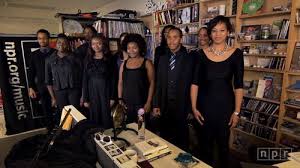
afroblueAfro Blue, a nine-member a cappella troupe from Howard University in Washington, D.C.

They sing three African American spirituals.  “Swing Low Sweet Chariot” is done very slowly, and you can really hear the power in the words of this often ill-used song.

“Motherless Child” I know from Richie Havens, but this version is much slower and impassioned.  The chorus is much different from any version I’ve heard before.

“Ain-a That Good News” is a song I didn’t know.  It has their most powerful chorus of vocals and ends the Concert in a great way.

[READ: July 6, 2016] “Telling Tales”

The May 16, 2016 issue of the New Yorker had a series called “Univent This” in which six authors imagine something that they could make go away. Since I knew many of them, I decided to write about them all.  I have to wonder how much these writers had to think about their answers, or if they’d imagined this all along.

Child says that he saw his 92-year-old father who was in very poor health.  Lee told him that he had been a good man (which was not true).  He says that his father probably said the same thing to his own father (which may or may not have been true).

He says that it is language (and syntax and grammar) that helped us become what we are–we could now plan and theorize and speculate. (more…)

Read Full Post »

maha SOUNDTRACK: MASHROU’ LEILA-Tiny Desk Concert #543 (June 24, 2016).

mashrouMashrou’ Leila is a band from Beirut.  And because I love this kind of thing, here is their name in Arabic script: مشروع ليلى

They are on their second ever tour in the U.S.  They sing in Arabic but their music is full of rock and indeed dance motifs.

There are five members of the band: singer and lyricist Hamed Sinno, violinist Haig Papazian, keyboardist and guitarist Firas Abou Fakher, Ibrahim Badr on bass and drummer Carl Gerges.  And the band make up is rather diverse:

Sinno is openly gay, and Mashrou’ Leila is well acquainted with the targeting of LGBT people. The band has faced condemnation, bans and threats in its home region, including some from both Christian and Muslim sources, for what it calls “our political and religious beliefs and endorsement of gender equality and sexual freedom.” And yet, when Mashrou’ Leila performs in the U.S., its members are often tasked with representing the Middle East as a whole, being still one of the few Arab rock bands to book a North American tour.

Their set took place on the morning after the dead club murders in Orlando (June 12), and since the band has had direct experience with this, they modified their intended set list.

I want their music to speak for itself, because it’s really good.  But since it’s sun in Arabic, some context helps

“Maghawir” (Commandos), is a song Sinno wrote in response to two nightclub shootings in Beirut. In the Beirut incidents, which took place within a week of each other, two of the young victims were out celebrating their respective birthdays. “Maghawir” is a checklist of sorts about how to spend a birthday clubbing in the band’s home city, but also a running commentary about machismo and the idea that big guns make big men.

It begins with a low menacing bass (keyboard) note and some occasional bass (guitar) notes until the echoed violin plays some singularly eerie notes.  Sinno’s voice is really interesting–operatic, intense and not really sounding like he’s singing in Arabic exactly.  He has rock vocal stylings down very well, and the guttural sound of Arabic aids the song really well.  I’m really magnetized by his singing.  And the lyrics:

“All the boys become men / Soldiers in the capital of the night,” Sinno sings. “Shoop, shoop, shot you down … We were just all together, painting the town / Where’d you disappear?” It was a terrible, and terribly fitting, response to the Florida shootings.

For the second song, “Kalaam” (S/He),Sinnos says it’s about the way “language and gender work in nationalism.  In Arabic, words are feminine or masculine and it’s about being in between while trying to pick someone up at a bar.”

Sinno dives deep into the relationships between language and gender, and how language shapes perception and identity: “They wrote the country’s borders upon my body, upon your body / In flesh-ligatured word / My word upon your word, as my body upon your body / Flesh-conjugated words.”

There’s interesting percussion in this song.  And more of that eerie echoed violin.  But it’s when the chorus kicks in and there’s a great bass line (which comes out of nowhere) that the song really comes to life.  There’s a cool middle section in which the keyboards play a sprinkling piano sound and there some plucked violins.  All along the song is catchy but a little sinister at the same time.

The final song, “Djin,” is based on Joseph Campbell’s archetypes.  Sinno describes the comparison between Christian and Dionysian mythologies but it’s also about just about “getting really messed up at a bar.”

“Djin,” is a perfect distillation of that linguistic playfulness. In pre-Islamic Arabia and later in Islamic theology and texts, a djin (or jinn) is a supernatural creature; but here, Sinno also means gin, as in the alcoholic drink. “Liver baptized in gin,” Sinno sings, “I dance to ward off the djin.”

It has a great funky beat and dance quality.  The way the chorus comes in with the simple backing vocals is great.

There’s some pretty heady stuff in their lyrics, and that works on the level of their band name as well:

The most common translation of “Mashrou’ Leila” is “The Night Project,” which tips to the group’s beginnings back in 2008 in sessions at the American University of Beirut. But Leila is also the name of the protagonist in one of Arabic literature’s most famous tales, the tragic love story of Leila and Majnun, a couple somewhat akin to Romeo and Juliet. Considering Mashrou’ Leila’s hyper-literary bent, it’s hard not to hear that evocation.

I hope they get some airplay in the States. Sadly their album is only available as an import, but it is downloadable at a reasonable price.

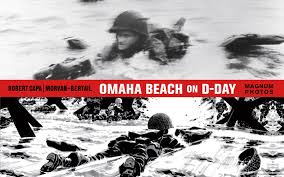
[READ: June 10, 2016] Omaha Beach on D-Day

Nobody picks up this book for fun.  I mean, look at that title. You know this isn’t going to be a laugh.  But it is an amazing book and I think  perhaps the title does it a bit of a disservice.

This book is not exactly about the massacre that was Omaha Beach on D-Day.  It is about that certainly, but the book is really about Robert Capa, the photographer who took the most iconic photos of Omaha Beach on D-Day.  This book is far more of a biography of him than an account of the war.  And in typical First Second fashion, they have made a gorgeous book full of photorealistic drawings that really exemplify the work that the book describes.

The book opens in Jan of 1944 with Capa carrying bottles of champagne amid the burned out wreckage of war.  He is bringing the celebratory drink to his fellow reporters who have been hiding out for a few days. Capa says he is leaving for London. (more…)

Read Full Post »

592016SOUNDTRACK: FLORIST-Tiny Desk Concert #527 (April 29, 2016).

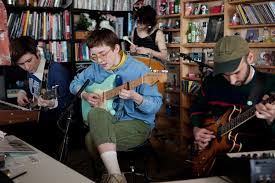
floristFlorist is a quiet band–they remind me a bit of Kimya Dawson from the Juno soundtrack.  There are four members of the band–lead singer/guitarist Emily Sprague and a drummer who has only one drum and plays very sparsely. And then there are two guys who switch between bass/guitar and keyboards.  In this Tiny arrangement, the keys are right next to the guys which makes it very easy for them to switch back and forth–I wonder if it works so well on a bigger stage.

I knew the first song, “Vacation” from an earlier All Songs Considered show and this live version sounds pretty much like the recorded version.  Sprague has a very gentle voice–almost a whipser (but not mumbling or anything).  And her guitar playing is really pretty.  I remember Bob Boilen talking about how much he liked her lyrics like:

Like when I used to ride roller coasters with my dad / When a swimming pool in a hotel / Was a gift from God / Like, love, we’re like a family / I don’t know how to be

The song is mostly just her singing until the end when the bassist sings (also very quietly) a duet with her

At least I know that my house wont burn down down to the ground / or maybe it will / if I’ve been in love before and I’m pretty sure I have / I’m pretty sure that my house could burn down down to the ground tomorrow.

 Between the first and second song the bassist/keyboardist holds down some notes while the others tune and get ready to play.  They’re the most un rock n roll looking band I’ve seen, with them dresses in cozy clothes as they calmly prepare for the second song.

“Cool and Refreshing” sounds that way.  The melody is really pretty once again.  And Sprague’s vocal line is quite lovely.  And the lyrics:

Think of me by the creek in cutoff jeans holding onto / Something that has meaning to me / I don’t really think my life will ever make me / As happy as Kaaterskill Creek

I like the middle of the song when everything drops away except for the lone synth note.

The notes ring out after the second song when Emily finally looks up and says “Thanks everybody” before looking sown and starting the third song, “1914.”  This vocals are a duet, and musically it is just the two guitars.  It’s a very simple song, sparsely conveying the idea of a farewell letter from 100 years ago:

Please remember to feed the cat.  Please remember that I’m never coming back.  I was born in 1994 / I as born in the 70s / I was born in 1823 and you were born right next to me.

Florist was touring recently.  I imagine it must be the quietest show you could ever go to.  But also a very pretty show.

[READ: December 13, 2012] “The Foosball Championship of the Whole Entire Universe”

The premise of this piece is very simple–it is indeed the foosball championship of the whole entire universe.  And the players are eleven-year old Nathaniel Rich and seven-year old Simon Rich.

This “joke” more or less tells itself, but Rich is able to add wonderful details to the story of it to make it much funnier than just the title.  Nathaniel’s Blue team has won all 83 matches, but this game–the last of the summer vacation–is for all the marbles.

Rich has broken the “story” down into analyses of Keys to the Game.

Like Coaching, in which we learn all about Coach Simon’s style (as told by the “players”): “Coach cries a lot” or “the last time we lost, coach attacked us.  It was scary because even though he’s just a boy, he’s also a giant–fifty to sixty times our height.” (more…)

Read Full Post »

592016 SOUNDTRACK: PETER FRAMPTON-Tiny Desk Concert #526 (April 27, 2016).

framptonI’ve never been a big fan of Frampton.  Never disliked him, just never got into him.  It always made me laugh that Frampton Comes Alive was so huge and yet I only ever knew two songs from it.  And in my head the only thing he was known for was that voice guitar thing.

So it’s interesting to see him now, considerably older with much less hair. Indeed he changes the lyrics to the first song “All I Want To Be (Is By Your Side)” to “I don’t care now that I’ve…lost some hair.”  For this song it’s just him playing an acoustic guitar and singing–no effects.  (This is all in tour of his new Acoustic Classics album).  It’s interesting to hear him playing such a folkie song (which sounds a bit like Eric Clapton).  But the more important thing is that his voice sounds great.  Many singers his age simply don’t have the voice anymore, but he certainly does.  He hasn’t lost anything.

For the second song, “Lines On My Face,” he is joined by Gordon Kennedy.  Kennedy has been his writing partner for decades.  Together they wrote some of Frampton’s classics as well as a song for Eric Clapton and Bonnie Raitts’ new single “Gypsy in Me.”  He says that this song is something he wrote a long time ago and it’s still a favorite.  While Kenendy plays acoustic backing chords, Frampton plays some good solos on that acoustic guitar.

For being Peter Frampton, he was actually very humble and self-effacing and rather funny.  There’s a good moment when he says he didn’t expect quite this many people.  “You hear like “clap clap clap….”

Of course, I know “Baby, I Love Your Way.”  I’m not exactly sick of it, but I don’t go out of my way to listen to it.  However, in this new acoustic format I really got to listen to the song anew.  It’s really quite a nice song.  And when the crowd spontaneously chimes in and sings along he seems genuinely pleased and it makes the song t hat much better.

This Tiny Desk made me appreciate Peter Frampton in a way I never thought I would.

[READ: June 10, 2016] “Three Short Moments in a Long Life”

I enjoy when a story has Parts.  This one has three and they all connect, which is even better than three discrete parts.  But this story, which covers a man’s life from childhood to old age is really quite a downer.  It speaks volumes about the futility of life without actually ever saying anything about it.

Part 1 is called The Spy (although I’m not entirely sure why).  In it, the narrator talks about Beverly LaPlante.  He and Beverly were in second grade together.  She was very shy and cried a lot.  They both hated recess and he was afraid to get lumped in with–the kids made fun of her a lot.  Midway through the year she left the school and that was that.

Third grade meant a new teacher and he had a crush on her.  Then one day during dodge ball he noticed that there was a new girl.  And her name was Beverly LaPlante.  But there was no way she was the same girl, right?  She wasn’t shy at all, in fact, she ended the dodgeball game by cursing out some of the losers.  He was upset that he sweet teacher didn’t yell at her.  When she finally said something to the girl, Beverly shouted “Jesus Christ and shit, piss, fuck!”

The narrator prayed that night–he prayed that Beverly would die.  He immediately took it back but it was too late.

Part 2 is called The Writer.

In this brief part the boy is grown up.  He is a writer, and has written several books which no one cared about.  While he was thinking about writing, there was a knock at the door.  He opened it and there was Jesus: “he had long blond hair and those eyes that follow you around the room.”  Except of course it wasn’t Jesus, right?  It was a just a guy looking for work or change.

Part 3 is called The Substance of Things Hoped For.

As the section opens the man is now eighty–lying on his bed unable to move.  We learn that he has Parkinson’s and is being taken to the hospital for pneumonia.

He has felt like a burden to his wife and some time ago tried to kill himself. It failed obviously but she told him if he ever did that again she’d kill him herself: “She’s a genuine saint, the real thing, without any pious crap, so she’s not always easy to live with.”

He is in the hospital for a while, marveling at the attendants and how young they seem.  He wonders if and when he is going to die.

This last part seemed really extraneous and not very meaningful.  I realize that it was meant to wrap everything up but I would have preferred to have the two parts together and let me imagine the third.

Read Full Post »

« Newer Posts - Older Posts »