Feeds:
Posts
Comments

Archive for the ‘Magazines’ Category

SOUNDTRACK: NATHANIEL RATELIFF-Tiny Desk (Home) Concert #190 (April 12, 2021). 

Nathaniel Rateliff treads a fine line between country and rock.  But between this album and his work with the Night sweats, I tend to prefer him to others like him.

The Mercury Café is one of the first places Nathaniel frequented when he moved to Denver in 1998, hearing jazz, dancing, and eventually playing many shows there. For his Tiny Desk (home) concert, he’s assembled a dozen players including a string section, backing singers, and some of his oldest friends: Joseph Pope III on bass, Mark Shusterman on keys, Luke Mossman on guitar and Patrick Meese on drums.

On the opening song and the title track to his 2020 album, And It’s Still Alright, they’re restrained as Nathaniel sings about loss, “I’ll be damned if this old man / Don’t start to counting his losses / But it’s still alright.”

This song is so darned catchy, despite how sad it is.  Mossman plays lead guitar and Shusterman keeps the keys going throughout. The addition of strings (Chris Jusell: violin, Joy Adams: cello, Adrienne Short: violin and Rachel Sliker: viola) add a new component that sounds great.

“All Or Nothing” has an interestingly picked guitar with lots of bouncy bass from Joseph Pope III.  Midway through, the song starts rocking out with two drummers.

But restraint lets loose on the chorus of “Redemption,” a song about breaking free of the past and written for Apple original film Palmer.

“Redemption” is a powerful song that has a simple but big chorus “Just set me free.”  The backing vocals from Larea Edwards, Chrissy Grant and Kinnie Maveryck sound fantastic.

The ender, a tune called “Mavis,” truly is a grand finale, a song that conjures up images of The Band singing Bob Dylan’s “I Shall Be Released” — and what a fabulous release it is.

Half way through the song builds to a really full sound.  Rateliff sounds great and so do his songs.

[READ: May 7, 2021] “The Shape of a Teardrop”

I really love the diversity of style and subject matter that T. Coraghessan Boyle brings to his stories.

This one is told from two different points of view.

We open on Justin, a belligerent person, angry that his parents have kicked him out of his room. It took three final straws–dropping him from the family cell phone plan; putting a lock on the fridge and the final final straw was the eviction notice on his door.

Alternating sections are are supplied by the first narrator’s mother. She says how much they loved their son and tried to give him everything they could.  They had tried so hard to have children, including expensive in vitro.  And then one day their miracle was born.

Their son doesn’t have a car (it’s on blocks in the driveway) and doesn’t have any motivation to get a job.  But he does have very expensive salt water fish and a bar that he likes to go to (he enjoys the bartender whose name is apparently Ti-Gress. (more…)

Read Full Post »

SOUNDTRACKACID MOTHERS TEMPLE & THE MELTING PARAISO U.F.O.-Lord of the Underground: Vishnu and the Magic Elixir (2009).

A lot of AMT music sounds vaguely similar with Kawabata’s wild guitar noodling (and because they always play “Pink Lady Lemonade”) but this album really changes things up because Kawabata plays the bouzouki, saz and sitar which adds a Middle Eastern flavor to the proceedings.

There’s three songs on this album, one really short one, one really long one and one really really really long one.  The lineup is the same as other albums from this period, although the instrumentation has changed a bit:

  • Tsuyama Atsushi: monster bass, voice, acoustic guitar, alto recorder, flute, toy trumpet, kazoo, cosmic joker
  • Higashi Hiroshi: synthesizer, dancin’king
  • Shimura Koji: drums, latino cool
  • Kawabata Makoto: electric guitar, bouzouki, saz, sitar, organ, percussion, speed guru

“Eleking the Clay” is fourteen minutes long.  Kawabata plays a simple, fast, rocking riff on the bouzouki while Tsuyama Atsushi sings along.  At around five minutes Kawabata starts a wild solo while the rest of the band continues chugging along.  Near the end the keys take over and the bass starts going predictably wild.  It’s interesting to hear the familiar mixed with the new here.

“Sorcerer’s Stone of the Magi” is a short guitar piece at just under 4 minutes.  Acoustic guitar chords and a lead sitar play a bouncing melody while the singer sings along.  The track is full of bird song and chatter in the background.  A lovely pastoral piece.

“Vishnu and the Magic Elixir” is the monster song on this album at over 25 minutes long.  It starts off slowly with single notes on the sitar but the echoing notes almost give it a Western feel at the same time.  The trippy synth sounds make the song sound like Middle East meets the Old West in outer space.

Tsuyama starts adding in pig snorts and mocking laughter after and around 6 minutes some growling and singing are followed by the kazoo (!).  By around ten minutes the song starts to pick up the tempo with the bass really taking the lead and meandering around.  Kawabata’s solo starts to get intense around this time as well.  Then Tsuyama throws in some toy trumpet.  Things build and build and by 17 minutes it’s a full on wild freak out that lasts almost until the end of the song.  Although by 25 minutes the song stats to fade with echoing notes giving the song a proper ending.

And, yes, I don’t really know the difference between a bouzouki and a saz, so I could be wrong about what he’s playing.

[READ: May 1, 2021] “A Tranquil Star”

This very short story was translated from the Italian by Ann Goldstein.

The story concerns a star and its observer.  The star was a peaceful star and it was very big and very hot.  But words are meaningless on this scale, right?  Australia is very far, an elephant is very big, I can have a hot bath.

The thing was though, that the star was not so tranquil.  It was just hard to observe from earth.   Arab and Chinese astronomers were aware of the star, but Europeans were too busy with earthly pursuits to notice.  The Arab watched it for 30 years and watched how it performed differently at different times.

But when he died, the star took no notice. (more…)

Read Full Post »

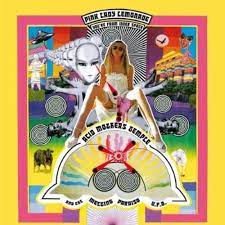
SOUNDTRACK: ACID MOTHERS TEMPLE & THE MELTING PARAISO U.F.O.-Pink Lady Lemonade ~ You’re From Inner Space (2011).

This album is something like the fortieth AMT album and somewhere in the middle of the band’s tenure with this lineup:

Tsuyama Atsushi: monster bass, voice, cosmic joker
Higashi Hiroshi: synthesizer, dancin’ king
Shimura Koji: drums, latino cool
Kawabata Makoto: guitar, guitar synthesizer, speed guru

The album consists of one song, the title track, broken into 4 parts all based around a simple, but rather lovely guitar melody

 “Part 1” is 32 minutes long.  It begins with the opening guitar melody which plays along with some trippy sounds.  Tsuyama is reciting the words (in Japanese?  English?  Gibberish?) and occasionally you hear the words “Pink lady Lemonade.”  At around 12 minutes drums and bass are added.  Once the bass starts meandering through some catchy riffs, Kawabata starts soloing.  It’s pretty far down in the mix (the main melody continues throughout).  Then around 22 minutes Tsuyama starts adding the monster bass–wild riffs that go up and down the fretboard.  With about 5 minutes left Kawabata starts playing s louder solo–louder than the rest of the music–and you can really hear him wailing away.   Part 1 fades out completely before jumping into Part 2.

“Part 2” is only 5 minutes, but it is utter chaos, with everyone making a big pile of noise–keyboard banging, sliding bass, thumping drums and wild, seemingly uncontrollable guitars.  It ends five minutes later with some warbling keys

Then comes “Part 3,” which runs just over the minutes.  It’s a faster chord version of the same guitar intro with slow bass notes and a big guitar solo.  It changes shape and adds some discoey bass lines.  About midway through the synths take over and while there is music in the background the song becomes mostly washes of sounds.

“Part 4” ends the disc at just over 18 minutes.  It picks up with the original guitar melody once more.  This time, it’s only a minute until the drums and bass kick in and the soling begins.  At five and a half minutes the guitar solo gets really loud and takes over.  The soloing is wild for over ten minutes and then around 13 minutes the song grows very quiet with only the lead guitar and the heavily echoed main riff playing.

There’s on online version here that has this entire record but adds six minutes at the end of the last part which is mostly the introductory melody and some washes of keys over the top.  i rather like this extra 6 minutes and it feels like a really nice ending.


[READ: May 1, 2021] “My First Passport”

This essay was translated from the Turkish by Maureen Feely.

Pamuk talks about people travelling from Turkey when he was young.  First it was his father, who left the country when Orhan was seven.  No one heard a word from him for several weeks when he turned up in Paris.  He was writing notebooks and regularly saw John-Paul Sartre.   He had become one of the penniless and miserable Turkish intellectuals who had been walking the streets of Paris.  Initially Orhan’s grandmother sent Orhan’s father money but eventually she stopped subsidizing her bohemian son in Paris.

When he ran out of money he got a job with I.B.M. and was transferred to Geneva.  Soon after Orhan’s mother joined his father but left Orhan and his brother with the grandparents.  They would follow when school was done.

Orhan sat for his first passport photo (included in the essay).  Thirty years later he realized that they had put the wrong eye color down–“a passport is not a document that tells us who were are but a document that shows what other people think of us.” (more…)

Read Full Post »

SOUNDTRACK: THE PEELS-“Juanita Banana” (1966).

I heard this song today on WXPN’s “Worst Song in the World” segment.  And as soon as it started, I understood why it was on there.

The person who submitted the song said she just wanted to know…  why? Why would someone make this?  And this is a good question.  More amazingly why would they make a Part 2?  (They did).

The song opens with a kind of Mexican guitar intro and spoken word story of Juanita–a banana grower’s daughter.  She wanted to sing at the opera, so she left the banana fields and went to the city.  And as the chorus comes in Juanita sings an incredibly high pitched (and way out of context) note that turns into the melody of “Caro Nome” from Giuseppe Verdi’s opera Rigoletto.

What?

Then the band sings the “Juanita Banana” chorus in a kind of Mexican accent complete with horns.

What?

Her melody comes one more time and just when you think that the operatic vocals are enough, Juanita’s father burns down the trees, moves to the city and sings in a deep voice the same melody.

They even duet at the end!

It is so bizarre, so potentially offensive, and yet so catchy (that Rigoletto part is wonderful) that it could only be a mid 60’s novelty song.

The DJ explained that it was a novelty song but it was actually a minor hit in 1966.  He said a little more about it, but sadly I  didn’t catch the whole story.

And yet I can’t get that scream melody out of my head.

[READ: May 3, 2021] “The Case for and Against Love Potions”

This story opens with an older, married man talking to a younger, single man.  The younger man asks what one should do if the person he loves does not love him back.  The older man is pleased that the younger man recognized that the older man is “the most sagacious man in this part of the country.”

I rather enjoyed the tone of the story and the amusing way the sagacious man spoke:

As you know, there are a million and three solutions to this problem.. .I imagine you tried at least twenty-eight of them before coming to see me today.

The best advice the man can give is simple: love potions. (more…)

Read Full Post »

SOUNDTRACK: CALMA CARMONA-Tiny Desk Meets AFROPUNK: #204/196 (May 2, 2021).

Tiny Desk Meets AFROPUNK was the opening event of AFROPUNK’s “Black Spring” festival. The virtual celebration, hosted by Jorge “Gitoo” Wright, highlighted outstanding talent in Afro-Latin and Afro-Caribbean music across the globe. Our showcase featured four artists who honored their homes and celebrated the art their heritage has inspired.

Calma Carmona got her start in 2013 when the Latin soul singer-songwriter released her first EP and opened for Beyoncé’s The Mrs. Carter Show World Tour in Puerto Rico.

Carmona is mesmerizing as the massive amount of dreadlocks is piled on top of her head.  The setting is fascinating–it looks like an aquarium–a dark hallway with lit windows, but instead of fish there seems to be technology in the windows.  I love how in some scenes, it’s almost totally black–since (almost) everyone is dressed in black as well.

Her music is not dark, though.  Indeed, “When I Was Your Girl” has a kind of reggae feel, at least from the rhythm guitar (which I’m assuming is looped because Pedro “PJ” González is playing lead throughout. Carmona’s voice is quiet and kind of sultry through this song and when she’s supported by her backing singers, Athina Alejandra, Almonte Duluc and Yarinés Salgado, they sound great together.

There’s a lot of drums in these songs, although it’s so dark it’s hard to know who is doing what. Gabriel Oliver plays drums and he, Andres “Kino” Cruz and José “Junny” Elicier all play the barril, a traditional hand drum.

From her hometown of San Juan, Puerto Rico, Calma Carmona delivers a bewitching Tiny Desk performance. Her voice rarely rises above a whisper as she sings over impassioned Afrobeats during her three-song set — but when it does, it’s a gritty, intimidating growl.

That growl is present on “Ella Se Mueve” a darker song with deep bass from Adrián “AJ” Rodríguez and distorted deep keys from J. Rochet.  “PJ” González noodles some guitar solos throughout and you can really hear the barril.  Carmona sang in English on the first song but she switches between English and Spanish here

“Vibra” opens with the three men playing the barril and a slow bass line.  She sings the verses and then throws in a growly rapped verse.  I really enjoy the slinky way the song ends with them singing “and I’ll be on my way.”

And before the send us out, there’s a quick barril serenade.

[READ: May 3, 2021] “How Octavia E. Butler Reimagines Sex and Survival”

Having read three of Octavia E. Butler’s book recently, I was saving this article (what timing) until all three were done.  And considering the opening line of this article mentions Parable of The Sower (the second book of the three that we read) I’m glad I waited.

Although this is really a book review of her new Library of America Collection (she is the sixth science fiction writer to be featured in the series and the the first Black science fiction writer).  The book collects Kindred (1979) Fledgling (2005) and short stories.

He says, as we have noted

It’s often observed that the Parables, already prescient when they were published, now read like prophecy

But I didn’t know that Earthseed had inspired an opera by folksinger Toshi Reagon and that last September Parable of the Sower was back on the best seller list (we’re so trendy).

The article notes that her protagonists often begin as fugitives or captives but emerge as prodigies of survival only to find that adaptation exacts hidden costs. (more…)

Read Full Post »

SOUNDTRACK: BORIS-Akuma No Uta (2003).

Boris albums are never an easy thing to find.  This album was originally released in Japan in 2003.  Then it was reissued in America in 2005 with a vastly superior cover.  The cover to the right, a hilarious mock up of Nick Drake’s Bryter Layter album (left).  The original album (cover way below) was only 31 minutes, but the reissue was extended to 39 minutes because that’s how long the Nick Drake album was.

So this new album is quite different from the original: In addition to running an additional 7 minutes, the opening track of the newer version is a totally different take; both use the same riff from “Akuma no Uta,” but the original, shorter track repeats it far less and opens with over a minute of ambient, resonant amp noise absent from the longer version.

I have the newer edition and don’t know the original.  “イントロ” (Intro)” opens with a slow, simple infectious riff and then a sort of soaring siren sound starts.  The four note riff is enveloped in distortion while the backing chords cycle through slowly.  Then comes soaring guitars and washes of noise which stretch this song out to almost 10 minutes.

The opening track lulls you into a false sense of mellowness until “Ibitsu” comes blasting out with heavy rocking guitars, pounding drums and screaming vocals.  Most of the verses are just drums and Atsuo’s singing with an occasional riff from Wata. Then Takeshi joins in on the chorus and turns it into a big old crashing metal song. The middle is a three note riffs before a brief Wata solo and some wild drumming. The end is so loud it seems to blow out the speakers.

There’s a brief pause and then “フリー” (Furi) kicks off even faster and more intense heavy rock.  There’s a fast riff and a chorus that is super fun to sing along to even though I have no idea what they are saying.

“無き曲” (Naki Kyoku)” is a grooving slower song.  The first three minutes are primarily a solo by Wata.  The middle turns into a slow jam with stops and starts.  A slow grooving solo resolves into a another catchy rocking singalong before feedbacking out.  Around five minutes, the vocals come in.  The middle has another solo and some meandering bass from Takeshi–almost like a call and response musical section.

“あの女の音量” (Ano Onna no Onryou) is another big crashing rocker with heavy ponderous chords.  It’s got screaming guitars and shouted vocals but plenty of room for noisy feedback.

The album ends with “”あくまのうた” (Akuma no Uta).  A big gong introduces the three note riff.  Around two minutes the fast guitar riff begins and the song rocks out–a classic short heavy Boris rocker.

[READ: May 1, 2021] “Casting Shadows”

I haven’t read a lot of Jhumpa Lahiri’s stories, but she was very popular a while back.  I’m not sure if she still is.

Perhaps the most fascinating thing about this story is that it was written in Italian (translated by the author, which is also interesting).

Lahiri used to write in English but she has recently begun writing in Italian.  I find that fascinating, especially since she translated this work herself–how different is it than if she had written it in English first, I wonder.

This is the story of an older woman and how she interacts with the world around her. particularly the men.  She was

Never married, but, like all women, I’ve had my share of married men.

It’s a really interesting character study and shows a powerful woman who some people might (foolishly) try to take advantage of. (more…)

Read Full Post »

SOUNDTRACK: BORIS: Boris at last -Feedbacker- (2003).

Boris’ sixth album is pretty iconic, what with the bloodied head of Wata on the cover and all.

The album contains one song–43 minutes of “Feedbacker.”  But it is broken into five surprisingly discernable parts.

Part 1 (9:38) opens with low feedback and slowly played chords that ring out.  Then single notes pick out a melody that recurs throughout.  Low bass notes and low harmonic frequencies play out through the bulk of the track until it segues into Part 2 (14:54).  That’s when the drum is added.  It’s a slow beat at first with the low feedbacking tones.  Then the guitars start playing a slow chord progression.  Eventually there’s some quiet lead guitar noodling added.  After about 8 minutes, Wata start one of her big slow solos.  Then around 12 minutes, Takeshi starts sings softly.  But after a minute and a half of this, the song shifts gears and gets much louder–big chords, crashing drums and louder vocals.

Part 3 (5:52) opens with serious crashing of cymbals which turns into noisy chaos.  There’s some high-pitched feedback and and then a seriously heavy riff starts up.  The rocking part of the song takes over with heavy distorted guitars and rumbling bass and drums.  A really noisy guitar solo is followed by a buzzy riff after which things slow down for quiet vocals once again.  The drums are still heavy but the guitars are quietly echoing.  The end gets louder again with roaring and chanted vocals.  (I have no idea what they are saying but it’s easy to sing along to).

Part 4 (9:52) is basically a wall of noise and feedback with echoing distorted cymbals and crackling sounds.  Near the end, noisy piercing feedback soars through until it segues into Part 5 (3:34).  As the feedback fades, the song resumes part 2, with soft drums and slow guitar chords and a quiet feedback floating over everything.

It’s a pretty monumental record.  Not as abrasive as the cover would suggest, but with enough heavy parts so that it’s not just a pretty drone record.

[READ: April 30, 2021] “The Rivals”

I feel like I tend to read stories that are written in a convoluted way.  Either with multiple time lines, or multiple threads that eventually come together.  So it was nice to get a story that was pretty straightforward.

Sure, it started in the middle, but it flashed back, got to the opening scene, and continued along in a pretty straight line.  And it was very enjoyable.

The story is set in Madagascar.  Floristella, a plump Italian man, sees his former friend Pianon, a skinny Italian man, and jumps out at him, hitting him with a walking stick.  It takes a bunch of servants to pull these older men apart.

The narrator then fills us in on what’s going on.  Pianon and Floristella were at one time very good friends.  Pianon is from Verona.  He is a widower who always dresses nicely. He is the bookkeeper and rental manager at the Red House.  Floristella is from Sicily. He comes from a small fortune and acts like it, even if his money is mostly gone now. His house is next to the Red House.

Floristella’s wife was bored of Madagascar, so she returned home, allowing Floristella to enjoy the beach and all of its perks. Like Noelline.  She was his secretary and then his mistress.  She was no longer young, but she was voluptuous and stylish.  She also flouted all conventions on the island.

Each morning she came to his place, did work for him, had sex with him and then went home.

Most of the women on the island hated her. (more…)

Read Full Post »

SOUNDTRACK: KING GIZZARD AND THE LIZARD WIZARD-Infest the Rat’s Nest (2019).

One of the (many) fascinating things about King Gizzard and the Lizard Wizard is that if you don’t like something they’ve done, you need to just wait a little bit and they’ll do something else.  They released five albums of very different styles of music in 2017.

Then in 2019 they released Fishin for Fishies, a kind of blues and roots album.  They followed that four months later with this album, a tribute of sorts to some of the heaviest, thrashiest heavy metal from the 1980s.

It deals with climate change (Australia bore the brunt of a lot of climate abuse that year), destruction of the environment and human resettlement to other planets.

The album is a clear tribute to thrash pioneers, with double bass drums, brutally fast guitars, killer piercing riffs and growling vocals–it’s almost hard to tell it’s singer Stu singing these songs.

Unlike other albums, there’s not a ton of diversity in these songs.  And that’s by design.  The songs are short and heavy.  “Planet B” has wailing guitars, some cool basslines and a ton of double bass drum.  “Mars for the Rich” features a middle bass “solo” (same note but only bass and drums) before raw guitars return.

“Organ Farmer” has a kind of false start with a slow drum intro before the song takes off into pure heaviness with screaming guitar solos and licks.  “Super Bug” is one of the most growly songs with a middle section that’s just voice and drum.  Most of the songs are three minutes, but this one jams out to almost 7 and feels like an old school Black Sabbath song with loping bass and a slow thoughtful guitar solo.

“Venusian 1” is a heavy song with pummeling blasts of guitar and drums and a ripping guitar riff.  “Perihelion” has a catchy chorus and then a middle part that sounds nothing like the rest of the album.  “Venusian 2” is a big chugger of a song with some great riffage.  It’s just under 3 minutes of heavy speed metal.

“Self-Immolate” sounds like a classic Slayer riff and even has some pretty wild drumming a la Dave Lombardo.

The album ends 9at just over 35 minutes) with “Hell,” which chugs along with double bass drums.  After an extended feedback moment the song plays a microtonal version of itself and then pummels to the finale which ends with the album title lyric.

I encourage anyone to checkout any of KGATLW’s albums because there’s bound to be something you like.  but this album is singular of purpose and if you don’t like classic thrash metal, it’s not for you.  Surprisingly, you hate to wait over a year for their next album K.G., which sounds absolutely nothing like this one.

[READ: April 25, 2021] “Good-Looking”

The narrator’s dad was a fit 38 year-old man who worked at the gym.  He didn’t wear a wedding ring because he said it was good for business–he was encouraged to flirt with the customers.

Most of the gym’s members were women and women were more likely to bring friends.

Men were the worst customers.  They did free classes, came alone, and didn’t clean the equipment when they were done.

The narrator’s mom didn’t like that his dad didn’t wear a wedding ring.   And she had reason to be concerned. The two of them met when he was married to someone else.  She was 17 at the time.  He had married his high school sweetheart and gotten her pregnant when she was 17.  He divorced this first woman and was now married a new 17 year old–he got older, they seemed to stay the same age.

It seemed that every ten years he got bored.  That’s why his mother was concerned, they’d had three kids over the last ten years.

The story zooms in on a woman that his dad took a interest in–a professor at the local university.  She came to the gym a lot and he paid attention to her.

Now, I love Dad and I hate to say this, but no way would a man like him ever get to meet a smart woman like her outside o the gym.

One day after class she asked him out.  It was courageous of her and made the other women jealous.

He didn’t drink so she asked him for coffee.  He agreed. When it was time to meet he took the narrator along.

She seemed surprised and confused.  He then proceeded to talk a lot about his wife and how jealous she gets.

But he also flirted the whole time–talking about books to make himself seem smarter.  The narrator even feels a little bad for him.

He talked about how much he liked being in love.  She finally asked him how he knew love would happen again.

This question came from a woman who believed in magic and romance, in second chances.  Dad, the brute that he was, said, “That’s life,” and shrugged, like love was a thing that could happen to you over and over again.

As they left the cafe, the narrator looked back at the woman.  He watched her wipe something from her face before she turned and walked away.  He never saw he again but he fell in love with her that night.

His dad started wearing his wedding ring after that night.

Read Full Post »

SOUNDTRACK: KING GIZZARD AND THE LIZARD WIZARD-Live in San Francisco ’16 (2020).

This is a fun show from The Independent in San Francisco on May 25, 2016.  It’s on the Nonagon Infinity tour, which means a lot of stuff from that album appears here.

The one irritant is the woman who is a little too close to the soundboard.  You can hear her throughout the set, and she’s not exactly an intellectual giant.  She shouts, “Why do you have two drummers?” as the show starts.  This would be no big deal if it was all you could hear from her.

They album is a series of songs that segue into each other.  What I like here is that the first five songs do segue into each other but, while they start with the opening song “Robot Stop,” it segues into 2014’s slower “Hot Water” (from I’m in Your Mind Fuzz).  It’s very cool the way their songs keep a similar beat throughout.

They jump right back to Nonagon’s second song “Big Fig Wasp.”  From there they continue with Nonagon for two more songs, “Gamma Knife” and “People Vultures.”  It’s impressive how tight they are–they can stop and shift gears so seamlessly that they jump between songs as if it were one long song.

After the introductory five songs, they pause a bit.  There’s some banter with the audience, but the microphones are distorted and hard to make out.  They shift gears somewhat to the mellow Paper Mâché Dream Balloon album.  “Trapdoor” is one of he heavier songs on the album, made somewhat heavier here despite the preponderance of flute on it.

Then its back to the I’m in Your Mind Fuzz album.  The first four songs segue into each other on the album and they do so here as well.  “I’m in Your Mind” shifts into “I’m Not In Your Mind” which features a fun bass-only rumble for about a minute near the end. Stu says, “Hey, smile, you’re on camera,” then they jump right into the catchy “Cellophane” and end with “I’m in Your Mind Fuzz.”

The CD is broken into two short discs (KGATLW have a million albums but but their shows are never terribly long).  Disc Two opens with the mellow ten minute “The River” from Quarters.

You can hear the drunk woman shout “yeah, fuck yeah” and then start talking to her friend during the mellow part.  Even a curmudgeon like me admits that you can talk between songs, but not during the quiet parts of songs.  Come on!

After the mellow song it’s a quick jump back to Nonagon with a ripping “Evil death Roll.”  They jam this song out for over five minutes and then begin a mega 22 minute “Head On/Pill” with heavy and quiet parts as well as some classic KGATLW ending moments.

KGATLW put out a lot of records (5 in 2017), so each show tour tends to be very different.  This is a nice snapshot from later 2016.

[READ: April 25, 2021] “The Crooked House”

Mull is in a house that is crooked and keeps changing.

When it starts, he has just met the man who claimed to have exited the house by falling into a desert.

Mull had been to many places in the house.  He was searching for a woman.

The cafeteria seemed to always have coffee.  But passageways were getting blocked and opening in other locations.  He could no longer access the cafeteria, but now he could get to the atrium where people often brought hot foods.

It was in the atrium that he met the man who claimed to have left.  He said he went to Joshua Tree and got back by hitchhiking–it’s not that far. (more…)

Read Full Post »

SOUNDTRACK: KACY & CLAYTON-Tiny Desk (Home) Concert #186 (March 29, 2021).

Kacy & Clayton had been generating some buzz around here just as the pandemic hit.  I hadn’t heard any of their songs, but their names kept cropping up.  And the one constant note was that they were cousins.

I don’t know who Marlon Williams is, or if he sings with them much (you’d think their name would be different) but he features prominently in these songs.

Across hemispheres, despite a nearly 8,000-mile separation, the Saskatoon, Canada duo of cousins Kacy & Clayton and New Zealand’s Marlon Williams manage to create harmony and intimacy. The Tiny Desk (home) concert, on the surface, is joyful and playful with animated illustrations by Daniel Syrnick.

They start with “I Wonder Why.”  Marlon sings lead and plays backing guitar on this one. Then Clayton play a quite electric lead guitar before Kacy kicks in with some really nice backing harmonies.  She sings in a striking country style although this song has a kind of old school country rock and roll feel.

Marlon’s Roy Orbison-like voice conjure a 1950s rock and roll sound that’s a surprisingly perfect match for Kacy’s serene voice.

A careful listen to “Plastic Bouquet,” the title track to the 2020 collaboration between Kacy Lee Anderson, Clayton Linthicum, and Marlon Williams, reveals a depth of storytelling more familiar in murder ballads than the trio’s upbeat Americana sound.

Kacy sings,

When a small four-door car was severed in two
Three girls were killed by a boy they all knew
Out for a party, they’d never attend
Pockets with money they never would spend

The devastatingly sad tale is met with smiles across hemispheres while an animated teacup pops on screen for Kacy to sip.

Kacy’s banter between songs seems really stiff for some reason.  But Marlon seems to be enjoying himself.

The “Arahura” has an old West/Americana feel despite the fact that the river is in New Zealand.  The yodeling vocals do work well together along with Clayton’s guitar licks.

Kacy stiffly says, “Wow that is a fun one.  It’s fun but it’s sad.”

“Isn’t It” has a very cool guitar riff and is a bit more uptempo.

It’s a magic collaboration of the very far north meeting the very deep south. The wizardry of technology reminds me of the wondrous world we often share these days, from a distance.

Before the final song, “Devil’s Daughter” comes the most awkward banter I have ever seen.

Marlon: It’s nice to be able to play these songs.
Kacy: It IS nice.  It’s nice because we know them.  [WTF?]
Marlon: I know, imagine if we didn’t
Kacy: Yes it’s be hard.  {WTF]

“Devil’s Daughter” is a pretty song with some nice guitar work from Clayton.

[READ: April 30, 2020] “Feel and Hold”

I’ve said before and this confirms my opinion that Diane Williams writes amazing sentences.  But cockamamie stories.

The Rotches went out for food in the morning.  But the meat didn’t look appetizing so they didn’t buy any.

This despite or because of the fact that the butchers hands were more expressive than their own–“those vendor’s hands could hold and feel at the same time.  When we hold a thing–I am not so sure we feel it.”

After a few paragraphs the story interrupts itself

Rotsch was–did I tell you this?–my friend Rotsch became quite a problem in the end and he fled to some remote part of the country.  I enjoy weird interruptions like that, but this story seems to be all interruption. (more…)

Read Full Post »

« Newer Posts - Older Posts »