Feeds:
Posts
Comments

Archive for the ‘Magazines’ Category

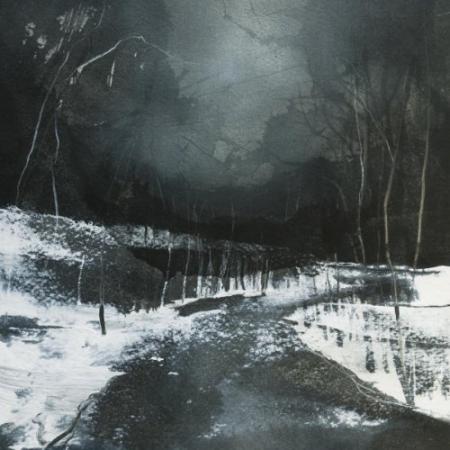
SOUNDTRACK: AGALLOCH-“Into the Painted Grey” (2010).

For this week’s music I ‘m going to look at the Top Ten albums picked by  Lars Gotrich (Viking) on NPR’s All Songs Considered.  Viking loves black metal and drone music, so most of these albums aren’t on a lot of Top Ten Lists.

Agalloch’s Marrow of the Spirit was his number one album of the year.  This is a fascinating song full of ambient guitars and rather beautiful melodies (in the intro).  It is a song of longing and distance.  The guitars intertwine and are quite nice.  Then at almost 2 minutes in (of a 12 minute song), the drums kick in and work as an introduction to the dark metal chords that are forthcoming.

At almost 3 minutes, the vocals come in and this is where they’ll lose most listeners.  The vocals are barely audible demon growls.  And yet they are low in the mix and don’t overpower the song (I have no idea what he’s singing about).

Indeed, the vocals are almost spoken (sounding not unlike Gollum) setting more of a mood than an actual story.  It’s a shame that the vocals are going to turn people off because the rest of the song is rather majestic in scope and tone.  Back when black metal first started, vocals like these were matched to equally sludgy music, but when they’re matched to this kind of progressive, epic music, they feel like another instrument, another addition to the melody.

And the rest of the song is so much more than just standard black metal.  Especially at the five and a half minute mark when all of the noise pulls back and a beautiful guitar riff comes to the fore.  Another great melody break comes again at the 10:30 mark.  They really transcend the genre.

I’ve never heard Agalloch before, but their sense of melody and composition is really top-notch, and even with the vocals, this is a pretty stunning piece of music.  Not for everyone, obviously, but a good choice for Viking’s song of the year.

[READ: December 29, 2010] “Honor Bound”

This is the first of five one-page anecdotes/stories/histories in this issue of The New Yorker that come under the heading of “Something Borrowed.”  I read all five because two of them are by Zadie Smith and Jonathan Franzen.  I haven’t read Henry Bromell before, so I don’t know how representative this story is of his other works.

This anecdote concerns Bromell’s time at a boarding school in Wales.  The school was an old castle (it sounds awesome).  Their library was structured around an honor system; the boys were supposed to write their name down on the list, keep the book for two weeks and then return the book to its place on the shelf.  Since his life had very little structure (he was an army brat and didn’t have a “home”), Bromell began keeping the books from the school’s library (carefully hidden on…the shelves in hid bedroom(!)).  He even put his name on the title page of some of them.

(more…)

Read Full Post »

SOUNDTRACK: RADIOHEAD-Amnesiac (2001).

It’s with Amnesiac that I basically stop remembering any titles to Radiohead songs.  This album came out quickly after Kid A and was talked of as being something of a return to form after the experimentation of Kid A.  However, it is more of the same kind of Kid A experimentation.

But as with Kid A, just when you think there’s no hooks to grab onto, you get the compelling line from “Packt like Sardines in a Crushed Tin Box”: “I’m a reasonable man, get of my case.”

With “Pyramid Song” the disc shows signs of more conventional songwriting (a piano opens the track!).  There’s some wild electronica over the top of the piano, but it’s still a piano-based song.  Of course, just when you think things are fairly standard, you get the oddly titled “Pulk/Pull Revoloving Doors” a stuttering electronic track with distorted vocals that just sort of meanders.  Of course, the more you focus, the more you get out of it (especially with headphones).

There’s some great guitar work on “I Might Be Wrong” but the highlight of the disc has top be “Knives Out,” the most conventional song on the disc and an absolute knock out.  “Morning Bell” reprises itself from Kid A in a slightly more twisted way  It’s rather less satisfying than Kid A‘s version.  And the rest of the album, including the very cool and creepy “Like Spinning Plates” contains more of that electronic bizarreness from Kid A.  The disc ends with the cool clarinet of “Life in a Glass House”

To my mind, Amnesiac is a far more experimental disc than Kid A, and while I enjoy it and I like it in theory, I don’t find it as satisfying to listen to.   And indeed on the In Rainbows show, they didn’t play anything from it.

[READ: December 30, 2010] “Corrie”

Chalk up another great story for Alice Munro.

This one is very simple.  A not-so-young anymore woman, set to inherit a lot of money must take care of her ailing father.  He desperately wants to see her married, but she is simply not interested.

As the story opens, she is having dinner with her father and a church architect named Mr Ritchie.  Mr Ritchie is married, but he seems grateful to Corrie’s father for the work, so he lingers around, working on the church and also helping Corrie as her father worsens.

When her father dies, they begin an affair. (more…)

Read Full Post »

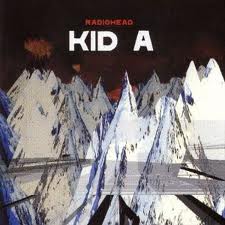
SOUNDTRACK: RADIOHEAD-Kid A (2000).

After the rocking brilliance of OK Computer, Radiohead released Kid A.  And the world hushed.  The opening song “Everything in Its Right Place” begins with keyboard notes and what-the-hell vocals by Thom Yorke.  Once the song proper starts, though, it turns into a cool, electronically detached Radiohead song.  And even though it never lifts beyond that state, the melody is captivating.  Next, the title track is downright bizarre, a quiet electronic ticking and bleeping song with distorted vocals and, eventually, electronic drums.  It’s a statement of purpose if nothing else and shows that you’ll not be hearing any guitar anthems here.

And then comes “The National Anthem,” one of my favorite Radiohead songs ever.  It reasserts them as songwriters (even if its a really weird song).  It features a great bass line and then–about 3 minutes in–it devolves into a noisy skronky horn filled mess.

After the moody near-instrumental “How to Disappear Completely” and the mellow actual- instrumental “Trefingers”, “Optimistic” comes back with some wonderfully clear moments amidst the beautiful murk of the song.  It is followed by “Idioteque,” which is probably the perfect encapsulation of the new Radiohead: full of disorienting electronic distorted noises and yet utterly catchy and captivating.  “Morning Bell” the next track is equally stunning.

It’s odd of course that the disc ends with two minutes of silence, but that’s surely not the oddest thing on this disc.  And yet for all my seeming criticism, the disc is genre-breaking and mind-bending.  It’s an extraordinary piece of music.   And it virtually smashed all communication with their earlier selves.

Oh, and I even managed to score the limited edition disc with the booklet behind the tray!

[READ: December 31, 2010] “Assimilation”

Although I have met E.L. Doctorow (and he signed his then latest book–which I have yet to read), I have not read a lot by him.  I’m not sure why exactly, as I regard him highly, he’s just another writer who has slipped through my fingers.

As such, I have no idea if this story is in any way representative of his work.

It is a fairly straightforward story.  A hispanic man, Ramon, who is an American citizen and has gone to college, finds himself busing tables in a restaurant owned by a Russian immigrant.

One day the boss asks him, basically, if he would marry a Russian woman so as to get her legally into America.  He agrees.  They do.  And she treats him like dirt, because really, she has no reason to be nice to him.

She is such an unlikable (almost unbelievably so) character that I considered not finishing the story.  I also felt that Ramon may have been to gullible.  And yet, Doctorow writes so wonderfully, that I kept reading even though I didn’t really care about them. (more…)

Read Full Post »

SOUNDTRACK: RADIOHEAD-OK Computer (1998).

The Bends showed amazing maturation for Radiohead, but OK Computer was like going from black and white to color.  It opens with “Airbag” a blast of music, oddly off kilter and unsettling but which immediately brings you into a great riff.  About midway through, the song splits in stereo with two competing solos vying for attention.   It ends with a loud stretched out chord.  And then comes one of the most bizarre singles around.  A nearly 7 minute multi-segmented song which, the first time I heard it, I couldn’t even find a melody.  I rather wish I could go back to that naive time, because my mind was blown away by the outlandishness of the song.  Now I know all the melodies and I think it’s just brilliant.

The minor chords of “Subterranean Homesick Alien” are accented with outer space sounds and yet despite its subject (alien abduction), the song is pretty well grounded: a simple, easy rocking track.  It’s followed by “Exit Music (for a Film)”, a gorgeous building minor chord song that opens with simple acoustic guitars and slowly builds to a scorching rocker (when the drums kick in at nearly 3 minutes, it’s like a wake up call).

“Let Down” is another slow builder, although it features a much more singable verse and chorus structure (it’s incredibly catchy).  It’s followed by “Karma Police” another catchy monster of a song.  It starts with a pleasant enough piano riff and features the politely sung threat: “this is what you get when you mess with us” and the beautiful falsettoed apology: “for a minute there I lost myself.”

It segues into the odd 2 minute computer-voice-recited (and barely listed as a track) “Fitter, Happier.”  This song foreshadows future Radiohead experiments.  It seems like a blow-off track, a filler, and yet like so many of the newer Radiohead songs, it works like glue holding the big hits together.  Check out how weird, wild and intricate the music behind the voice is.

“Electioneering” is one of the noisiest, most raucous songs in the Radiohead catalog.  It opens with this steel guitar sounding riff and crashes in with loud, distorted guitars and all kinds of drums.  Thom Yorke’s vocals are really loud in the mix, so when he gets to the bridge it’s practically a wall of noise, but listen to the great ascending and descending guitar riffs behind his vocals.  They’re really intriguing.  As is the skronking noisy guitar solo.

“Climbing Up the Walls” has all kinds of insane sound effects going on in the background of one ear (as befitting the title).  It’s a drum-heavy track with eerie almost unadorned vocals (until the very end when Yorke goes berserk).  It segues into the most delicate track on the disc, “No Surprises.”  The chorus of “no alarms and no surprises, please,” has always been very affecting.  And the delicate bells that adorn the verses are a very nice touch.  The penultimate track, “Lucky” is a sort of optimistic track, despite its mellow music and, I suspect, really not very optimistic ending. But the utterly uplifting scream of “it’s going to be a glorious day, I feel my luck could change” is spine tingling.

I feel like “Lucky” is such a great ending song that I tend to forget the final track, “The Tourist”.  It’s a slow, drawn out  track…”idiot, slow down.”  It’s probably my least favorite song on the disc, but it’s kind of a good ending after all of the high points of the disc.

And with the final bell of the final song, Radiohead became untouchable.

[READ: December 29, 2010] “Escape from Spiderhead”

George Saunders must live in a dark, dark world.  His comedy is dark (but very funny) yet I feel he is often quite under-served when people refer to his as a funny storyteller.  This story, which actually has many funny elements, is incredibly dark.  And even though I laughed out loud at a few things, no one comes away from this story happy.

One of the great things about Saunders is his almost obsessive mockery of corporate/medical culture.  He has more trademarks in his story than anyone I’ve ever read (even if they are all for things he has made up).  Now to me, that’s funny in itself (especially the names he gives them), but it serves a much more telling purpose: a portent of a very dark future.

This story is set in a lab, where the main character, Jeff, is being communicated with by Mr Abnesti (a very hard name to keep straight).  Jeff is in a room with Heather, and both are being fed the experimental drug ED556, a shame inhibitor.  And so they rip off their clothes and have at it (he was obviously given some Visistif™ because they do it three times).  They are also given some Verbaluce™ which helps them elucidate their experience (from more than just grunts and moans).  This Verbaluce™ is essential to all of their experiments because without their comments, the proceedings are undocumented. (more…)

Read Full Post »

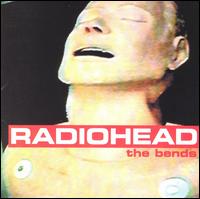
SOUNDTRACK: RADIOHEAD-The Bends (1995).

This album catapulted Radiohead out of alt-rock awesomeness into pop rock ubiquity.  It opens with “Planet Telex” which sounds like a continuation of the grungy noise of Pablo.  And yet from there, the album pushes stylistic envelopes but also works within the convention of rock songs to make fantastic singles.  The title track is still being played in concert today (which is funny since it wasn’t a single).

But it was “High and Dry” that was the first monster hit.  It was everywhere (and still sounds fresh fifteen years later).  And then “Fake Plastic Trees” basically gave a blueprint for the amusing label “mope rock” (thanks Clueless).

The album fleshed out the sound that Pablo Honey established with far more dynamic instrumentation.  But the strangest thing about the disc is that it is recorded mostly on a platform of acoustic guitars.  Even the rockingest tracks like “Just” (which gets wild and screamy by the end) is still built upon a very simple acoustic guitar motif.   “(Nice Dream),” for instance, features some screaming guitar solos over the acoustic backdrop.   Of course, the brilliant “My Iron Lung” doesn’t have acoustic guitars, it is built on a simple guitar riff until the chaos descends on it.

It’s interesting to see conventional things on the disc, like the fade in intro of “Black Star” which would be totally abandoned (often shockingly so) on later discs.  And then the disc ends with the gorgeous “Street Spirit (Fade Out)” a fairly conventional song that shows what great songwriters the bands have always been.

Despite all the high points on the disc, I tend to overlook it because of how much I love their follow-up.   But that in no way diminishes the greatness of The Bends.

[READ: December 28, 2010] “The Trojan Prince”

I was never entirely certain when this story was set, and so I have settled on the relatively distant past.  It concerns a young man and his first and future attempts at wooing a young woman.  James is a working class fellow who is on the verge of “going to sea.”  But before he leaves, he decides to visit his distant cousin Ellen.  Ellen comes from a very well off family, and James’ first steps in her house are nervous ones (he didn’t wipe off his boots before coming in and he’s afraid to see if he tracked in mud).

While he is waiting for Ellen to come downstairs, he is greeted by Connie, a girl who is slightly older than him who he grew up with.  She was a pest to him then and he is more than a little disappointed to see her here.  (The short explanation for her presence is that Connie is now orphaned and Ellen’s family has taken her in).   Despite the initial teasing she does, she quickly invites him up to the girls’ room and when he (sort of) sneaks in, he is almost overcome by the smells of a sealed-up room where to young women spent the night.  Ellen is embarrassed when he walks in, but Connie soon settles things out (blindfolding him while the girls get dressed).

The remainder of the story sees the three of them as virtually inseparable.  Although James works (and the two women don’t) he winds up spending most of his free time with them.  He resents Connie’s presence because he is interested in Ellen, but he does enjoy the time the three of them spend together.  He just can’t seem to get any time alone.  Until they all go on a picnic. (more…)

Read Full Post »

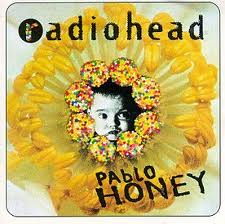
SOUNDTRACK: RADIOHEAD-Pablo Honey (1993).

I haven’t listened to Pablo Honey in years.  I think of it as an almost proto-Radiohead release with one huge single.  But as I was listening to it again recently I remembered that I used to listen to this disc a LOT, and I know all the songs very well.  I’m also really impressed with how well the album stands up to the mayhem that they unleashed later on.  It’s also pretty crazy that the album is named after a Jerky Boys skit (and not a particularly inspired one at that).

True, the album is very simple: a guitar band in the grunge era.  And yet, despite the grunge inflections of “Creep,” it’s quite apparent that there’s a lot more going on here than slacker anthems.

On first listen (17 years ago (!)), a song like “Thinking About You” sounded like a conventional ballad that goes along with this type of album, revealing a softer side to a grungy band.  But really, it’s a complicated mellow song placed right in the middle of the album and the break in styles is very nice.  Conversely, a quick rocker like “How Do You?” is certainly a simple song, and yet it shows another dimension that the band would later investigate (it also samples the Jerky Boys deep in the mix, which I never noticed before).  Even the opener “You,” is intricate and complex, with wonderful guitar riffs and solos, easily foreshadowing some of the great stuff that Jonny Greenwood would produce later on.

The more memorable songs also reveal things all these years later.  “Stop Whispering” has a real Pavement feel to it (and who knows if Radiohead had even heard Pavement (who only had one album out) at that time, but it’s some cool foreshadowing of their indie rock style).  And “Anyone Can Play Guitar,” a truly great song, is like a stripped down version of “Paranoid Android,” but with a really really catchy chorus.

By the end of the disc, it seems like Radiohead has run through its tricks although the oddly titled “Lurgee” points to future greatness as well.  It’s easy and lazy to say that this album is a blueprint for the future Radiohead, and yet it’s surprisingly true.  Not the techno stuff, obviously, but the song structures and intricacies easily foreshadow what was to come.  Yet who would have ever guessed that the “you’re so fucking special” band would turn into what they did.

It’s also foolish to dismiss this record as an early version of the band, because although the album has some slow moments, it holds up very well, and actually revealed somethings that I’m sure I missed a decade and a half ago.  Oh, and “Creep” is still awesome.

[READ: December 21, 2010] “The Tree Line, Kansas, 1934”

This is the story of two FBI agents on a stake out.  The story gets into the head of the older agent (Lee) as he listens to the endless droning of the younger agent (Barnes).

The two have been on the stake out for several days waiting for the criminal Carson to come back to his uncle’s farm, where a boot full of loot is waiting him.  They have been keeping utterly still, noting the uncle plow the barren field, taking occasional smoke breaks and really just watching the grass grow,

Barnes says t the whole stake out is futile, there’s no way that Carson is coming back here, he’ll know there are agents there, etc.  Lee, on the other hand, believes the Bureau is correct, believes that Carson will return.  I enjoyed the digression into Lee’s head about how a feeling in your gut turns into a hunch. (more…)

Read Full Post »

SOUNDTRACK: RICHARD THOMPSON-Dream Attic (2010).

I was a little disconcerted by this CD when I first listened to it.  The opening song, “Money Shuffle” has a really long sax solo.  I’m not a big fan of sax solos in general, and the fact that this was so prominent was really confusing to me.  It was only more confusing when later in the disc I noticed some clapping.  Was this a live album?  Made of songs I’d never heard before? What the hell was going on?

Well, this is an album of all news songs.  They were all recorded live in California on West Coast tour.  It’s unclear why you can occasionally hear the crowd noise.   RT’s live records have always been a place where he really shines.  He lets loose with amazing solos and just seems so less constrained than he does by his studio work.  This is  logical way for him to record an album.  And I think it’s one of his best.

So anyhow, “Money Shuffle” is one of RT’s great indignant songs about the banking industry. It rocks hard (I can get into the sax solo at this point) and it features some great angry (but intelligent vocals).  It’s also got a nice wailing guitar solo (and an electric violin solo, too!).

As with many RT discs, this one is sequenced beautifully.  The second track is the beautiful melancholy ballad “Among the Gorse, Among the Grey.”  It’s a quite track with minimal accompaniment and the melody is haunting.  It’s followed by the shuffling rocker “Haul Me Up” complete with all kinds of deep backing vocals.  It’s the perfect place for RT to put in a long guitar solo.

“Burning Man” is a slow, quiet track with a great melody line.  It’s followed by the upbeat, hugely sarcastic “Here Comes Gordie” about a puffed up guy.  It’s rather funny and has a great violin solo.  “Demons in Her Dancing Shoes” has an unexpected chorus, with a rhyme scheme that is unusual in a rock song.  I wind up singing this song all day after I hear it.  The horns play fantastic accents and the guitar solo is brief but fiery.  It ends with a great jig that feels like a different song altogether.

“Crimscene” is one of RT’s fantastic stories.  It is a slow building affair about a crime, obviously.  It opens with slow violins as the scene is set.  But it quickly reveals itself to be the kind of angry RT song that is going to feature a scorching guitar solo. And does it ever!  The only surprise is when the raging solo is over that he can get back to that earlier mellowness so seamlessly.  “Big Sun Falling in the River” is another great singalong.  The chorus is just so darn catchy (even if it’s hard to remember the words exactly).

“Stumble On” is another classic RT type of song.  It’s a slow mournful song of failure, something he does with incredible beauty.  And “Sidney Wells” is a vicious story about a serial killer. It’s 7 minutes long with dozens of verses and a solo after each verse (sax, violin, guitar–which is brutally great).  It’s a wonderfully told murder ballad (and also features an interesting jig at the end).

It’s followed by “A Brother Slips Away.”  This is a sad mournful song that RT also does very well.  I don’t really care for these songs in his catalog (I prefer the faster songs), although this one is really pretty.  After many listens, I have started to rather enjoy this song too.  He follows this ballad with “Bad Again” a stomping rocker about losing in love (if he ever had a successful relationship, he’d have no more songs!).  It’s a fun old-timey rocker, that even sounds like it might be from the fifties.

The disc ends with the amazing “If Love Whispers Your Name.”  This 7 minute song can easily sit alongside his other majestic epic tracks.  It opens with great minor chords and a dejected but not bowed RT standing up for Love.  And by the end, everyone in the house should be moved to tears.  The lyrics are simple but powerful:

If love whispers your name
Breathes in your ear
Sighs in the rain
Love is worth every fall
Even to beg, even to crawl

‘Cause I once had it all and
I once lost it all and
I won’t miss again
If the chance should come my way
If love should look my way

You can hear the aching in his voice as the song builds through several verses.  And then he lets his guitar speak for him–an amazingly aching solo if ever there was.  And how do you come out of a soul-wrenching three-minute guitar solo?  You don’t.  You let the disc end with nothing but applause.  Amen.

RT has made a really stunning album–unmistakably RT, and yet original and wholly enjoyable.  It’s never easy to say where to start when advising someone to gt into RT, and I would definitely say that this is as good a place as any.  He covers all the bases in terms of style, and the playing is simply wonderful.

[READ: December 22, 2010] “A Year of Birds”

After reading several Jonathan Franzen birding articles in a row, I wasn’t sure if I was up for another one.  But Proulx–whom I’ve never read before even though I’ve planned on reading The Accordion Crimes for years–takes a very different approach to our avian friends.

This piece is a memoir of her stay in Bird Cloud, near the Medicine Bow ranch in Wyoming.  The house that she is living in overlooks a vast gorge with a river and mountains on either side.  From her dining room window she can see a family of bald eagles who swoop around and dive for fish.  They chase away other birds of prey and, despite what the books say, they do not seem to overtly fear Proulx when she wanders around.  (The books say they will never nest within a 1/2 mile of a house).

Most of the story is taken up with her trying to figure out what the dark birds circling another area of the mountains could be.  After several months of fruitless binocular searching, she finally realizes that they are golden eagles.  Again, the books suggest that golden eagles would never nest so close to bald eagles, and yet there they are. (more…)

Read Full Post »

SOUNDTRACK: BUKE AND GASS-“Page Break” (2010).

NPR has selected the 50 best CDs of 2010.  I knew a few of them but had never heard of a bunch of other ones (about 20% are classical).  This CD with the bizarre cover has a great write up:

The wannabe tech-geek in me was initially attracted to Buke and Gass for the band’s two handmade instruments, which modify a baritone-ukulele and a guitar/bass hybrid run through heavy-duty amps (also handmade, mind you).

The problem (and perhaps its because I’m listening at Xmas time) is that the main melody line of the bridge makes me want to sing “Hark, Hear the Bells” and so this feels like a Christmas song even though it’s not.

Whoops– check that.  That melody is certainly there, but I just learned that I was listening to it in mono.  The other speaker presents all kinds of interesting things that distract from that melody (and project much more coolness).

I like the intensity of the track (and the fact that it’s under 2 minutes long).  It’s pretty heavy and the female vocals are nicely aggressive.  And by the end of the song, the syncopation is downright awesome.

It’s amazing how listening to the ENTIRE song can really change your mind.  This is definitely a cool track and will make me investigate the band more.

[READ: December 22, 2010] “One Night of Love”

I had recently gotten interested in reading Javier Marías when I was looking for information about Roberto Bolaño.  I discovered that New Directions Press, the publisher of all of Bolaño’s smaller books also published translations of all of Marías’ books too.  This story comes from his new collection of short stories While the Women Are Sleeping.  (I had also forgotten that McSweeney’s published his book Voyage on the Horizon a few years ago).

I didn’t know where Marías was from when I first started this (I assumed he was Mexican because of the New Directions connection–he’s actually from Spain).  Anyhow, when I thought he was from Mexico, I wondered if there was some kind of connection between his style and Bolaño’s, but also if he was trying to reintroduce magical realism to Bolaño (who abhorred magical realism).

Well that’s moot, (he may be doing that but not because he is from Mexico).

So this story concerns a man who is dissatisfied with his wife’s sexual appetite and performance.  He has taken to visiting prostitutes (see why the Bolaño thing rang true?), but he is concerned because the prostitutes  have grown “increasingly nervous and increasingly expensive” ([Nervous]?). (more…)

Read Full Post »

SOUNDTRACKPHISH-LivePhish 10.21.95 Lincoln, Nebraska (2007).

This Phish show is pretty unusual, even for a band whose live sets are by definition unusual.  It opens with a reprise (“Tweezer Reprise”) which is basically the end of a song.  There’s also a song that is not itself unusual but it’s one that I’ve never heard before:  an all acoustic guitar song called “Acoustic Army.”

But aside from those minor oddities, it also features the craziness of “Kung” which is more or less just nonsensical screaming.  Then Set One ends with a great cover of “Good Times Bad Times.”

Set Two is where the madness comes full bore.  After some great versions of “David Bowie” and Lifeboy” we get a 24 minute version of “You Enjoy Myself.”  After about twenty minutes the song devolves into a vocal extravaganza, with each of the four guys trying to outdo themselves with weird noises and vocals sound effects for 5 minutes.  And just when you think the nonsense is over, the band covers Prince’s “Purple Rain.”  Fish, the drummer, sings the song (rather poorly, it must be said), but the “highlight” is his vacuum cleaner solo.  Yes, vacuum cleaner solo.

I have included a video from this portion of the show to see just how odd this concert must have been (although I believe that other concerts featured similar nonsense too).  If you get bored by the noise in the beginning of the video, remember that it’s out of context and not really representative of the rest of the  show, but do fast forward to when the guy in the dress pulls out the vacuum cleaner and tell me that that’s not the best damn vacuum cleaner solo you’ve ever heard.

The set ends with Trey noodling the riff from “Beat It,” although they never play the full song.   Then there’s an encore cover of “Highway to Hell” (which rocks).  The disc comes with a bonus track, a twenty some minute soundcheck where you can hear the band experimenting with sounds and ideas for the show.  Not essential but interesting.

Lest you think this whole show is weird, there’s some great renditions of “Chalk Dust Torture” and “Guelah Papyrus.”

[READ: December 15, 2010] “The Yellow”

This story opens with a forty-something year old guy who has moved home with his parents.  To the consternation of his father (“have you turned faggot?”), he paints his attic bedroom yellow.  Who would have guessed that this (four-page) story about a sad middle-aged man would end with casual sex and zombies?

Roy is frustrated with his life (obviously).  He gets out of his parent’s house and goes for a drive.  While scanning the classic rock stations looking for the next great thing, he feels a thump and realizes that he has hit an animal.  He’s fairly certain it’s a dog. (more…)

Read Full Post »

SOUNDTRACK: PHOENIX-Tiny Desk Concert #60 (May 18, 2010).

I’m really enjoying these Tiny Desk concerts.  They’re sort of unplugged, but even less so, because they just don’t give the band room enough for more than guitars and small accessories. If you watch the video, you can see that they are literally in someone’s office!

This set comes during Phoenix’s American tour of Wolfganag Amadeus Phoenix.  They play four songs: “Lisztomania” “Armistice” and “1901” from the album.  The big surprise at the end is a cover of Air’s “Playground Love” from The Virgin Suicides.  (I can’t confirm this, but the page notes say that Phoenix (or at least the singer) was involved with the original).  All four songs sound great.  Even though the album is very electronic and very keyboard heavy, these simple stripped down acoustic versions show how wonderful the songs are.  And of course “Playground Love” is a wonderfully unexpected treat.

[READ: December 14, 2010] “Good Neighbors”

This is one of the final two pieces by Franzen that are from the New Yorker.  This (and the other) is a short story that I am fairly certain is an excerpt from Freedom.  I believe that the main character of this piece is in Freedom, but I don’t know if this passage (or story arc) is in the book.  (I’ll be reading Freedom sometime in 2011).

It’s nice to get back to Franzen’s fiction after reading so much of his non-fiction; I am forever more of a fan of fiction than non-.  This story is about Patty Berglund and her family.  They were the first white family to move to the Ramsey Hill section of St. Paul, Minn.   Despite the abuse that her family took, they stuck it out and built up their home, investing their life into it and the community.

Slowly, the neighborhood grew more affluent (ie., white).  Yet for all of Patty’s pioneering work, she was never widely embraced by the new community members.   She was accepted, of course, and people wouldn’t say anything bad about her, but she never opened up enough  for people to feel they really knew her.

And that may be the moral of the story. (more…)

Read Full Post »

« Newer Posts - Older Posts »