Feeds:
Posts
Comments

Archive for the ‘Magazines’ Category

CV1_TNY_McCall_HorseCarriage.inddSOUNDTRACK: AGES AND AGES-Tiny Desk Concert #358 (May 20, 2014).

ages I knew one song from Ages And Ages so far (the wonderful song “Divisionary (Do The Right Thing)”), and I was interested to hear what else the band did.  Well, they open this Tiny Desk Concert with a great burst of multiple harmonies and fugues—when you have 8 people in your band you can really showcase diversity in vocals (there’s only 6 here at the Tiny Desk and there’s 7 in the band photo but NPR says 8 so, your guess is as good as mine). “Light Goes Out” has that great opening and then it turns into a pretty quick indie rock song.  I really enjoy the way the different vocalists (and three guitars and one piano) really pile on the sounds.  Even the percussion elements add something to this joyful song.

“Divisionary (Do The Right Thing)” sound great in this context—the way the women play with harmonies is just fantastic.  It starts slowly, with a strummed acoustic guitar, then more and more voices join the mix.  The harmonies that the women sing (which I don’t think are on the record sound great).  “No Nostalgia” has a traditional folk sound (with that shaker as a cool percussive element).  It’s probably the most traditional sounding song of the bunch, but again those many voices of harmonies sound great.

They are one of the few bands to stretch out to 4 songs on a recent Tiny Desk, and their fourth is “Our Demons” a great song with more great voices coming in.

If I was unsure just how good Ages and Ages is, this tiny Desk Concert sold me.

[READ: June 1, 2014] “The Man in the Woods”

This is the second of a group of recently uncovered stories from Shirley Jackson’s papers which the New Yorker has published.

Even though this story is timeless–there is really no indication of when it is set, and any clues seem to be more mythological than real–when reading it I assumed it was written a while ago.  There’s something about the language that just reads “not contemporary.”  And I think that’s interesting in and of itself.

But as I said, this story feels timeless–it has a mythological/fairy tale mystique about it which starts right off the bat when we see the main character, Christopher, walking in a very deep, very dark forest.  He has been walking for countless days and the forest has been getting more and more close–as if the trees were leaning in on him.  He is all alone until a cat starts following him “trotting along in the casual acceptance of human company that cats exhibit when they are frightened.”  And thus, the two continue deeper into the woods with Christopher saying to the cat that the path must lead somewhere.

And it does, an hour or so later, they come upon a bend in the path which leads to a small house.  He approaches cautiously but is quickly welcomed by the young “not so young as he would have liked, but too young, seemingly, to be living in the heart of a forest” lady named Phyllis.  There is another lady called Circe who is making food.  The warmth of the cabin and the smell of the food warms Christopher to his core.  And the cat makes himself at home quickly as well.  But the ladies are a little odd, and Christopher dare not make himself too comfortable.  Especially when they call out the head of the house. (more…)

Read Full Post »

CV1_TNY_03_17_14Liniers.inddSOUNDTRACK: YASMINE HAMDAN-Tiny Desk Concert #359 (May 24, 2014).

Yysamineasmine Hamdan is a Lebanese singer-songwriter.  The three songs she plays here are sung in Lebanese (I assume).  Sung with just the accompaniment of one guitar, Yasmine sings and sways her way through these beautiful songs.  It’s actually fun to just see her move while she sings, she’s so loose and relaxed and yes, sensuous.

The most interesting thing is that Hamdan had only just met guitarist Gabriel Gordon when they traveled down together from New York that morning. They’d never rehearsed together, so the interesting guitar lines he’s playing sound great even though they might not be what she intended.  (I wish there was a little more information about this partnership in the blurb).

“Beirut” is a song form the 1940s and she does some interesting vocal things by using her hands around her mouth.  “Deny” and “Shouei” are beautiful songs that Hamdan has written and the two of them sound just great together.

[READ: May 27, 2014] “Long Story Short”

I have been one of those readers who doesn’t really know what to make of Lydia Davis, so I found this article very interesting and helpful.  It allowed me to appreciate her super short stories a lot more.  For yes I have mused about why “she doesn’t call them poems or fragments.”  The answer: “She prefers the deeper associations of the word ‘story’.”

I was interested that she is considered “one of the most original minds in American fiction today,” and I tend to agree that she is because no one else really writes like her.  Her Collected Stories has “some two hundred pieces” in just over 700 pages.  This is thirty years worth of work.

But I also liked seeing the succinct comment “like many things that Davis writes, [a letter] had started out sincere and then turned weird.”  In this case the letter she wrote to a frozen peas manufacturer was published as the story “Letter to a Frozen Peas Manufacturer.”

I didn’t know much if anything about Davis, so this article acted as a biography as well.  She dated writer Paul Auster and while he write his traditional stories, Davis struggled to do the same.  Her stories never came together or seemed to be about normal things, as her mother commented: “Why don’t you write about your travels or something more cheerful?”  But it was when she started reading very short stories by the poet Russell Edson (of whom I’ve never heard), that she hit upon the idea of writing very short stories and “The Thirteenth Woman” was her first successful attempt. (more…)

Read Full Post »

CV1_TNY_03_17_14Liniers.inddSOUNDTRACK: HOZIER-Tiny Desk Concert #360 (May 27, 2014).

hozierI had been cataloging the Tiny Desk Concerts from the beginning, but in recent days they have had so many good bands that I didn’t want to wait until I caught up with them.  So, for the next few posts there will be current Concerts (I have no idea what number they are, but I hope to fix them retroactively).

Hozier is responsible for the insanely catchy song “Take Me to Church.”  WXPN plays this song all the time.  I didn’t like it at first but then when I really listened to it I was hooked.  Of course I had no idea that the guy who was singing this powerful soulful song was a soft-spoken Irishman.  Hozier is Andrew Hozier-Byrne, a 24 year old from County Wicklow.  And while he’s singing this song here he makes it seems so easy to belt out those big notes.

Although it doesn’t quite reach the gravitas of the recorded version in this stripped down live session, he sounds great and the keyboard, cello and drums (and backing vocals) really bring this song to life.

The next two songs Hozier plays by himself.  “To Be Alone” is a very old-sounding blues—the sound of his guitar and the way his plays combined with the way he sings really hearkens back to early blues.  Typically I don’t especially like early blues but I do like this song quite a bit.

The final song is an acoustic ballad.  (So he plays three different guitars in this set).  It has a kind of Richard Thompson guitar feel and is a rather touching ballad.

Hozier has only released two EPs thus far, but with this amount of diversity I am looking forward to lots of other things from him.

[READ: May 29, 2014] “The Relive Box”

This story made me think of what the “Entertainment” in David Foster Wallace’s Infinite Jest might actually be like.  In Infinite Jest, the “Entertainment” is a video so intoxicating, you watch it–ignoring all other needs–until you die.  In this story, the “relive box” is a machine that plays back any memory that you have in full 3D. And people get so absorbed in their past that they forget about the present.

Specifically, the narrator is so intent on reliving that he ignores his daughter and his job.  As the story opens, the narrator’s daughter Katie says she wants to relive.  They just recently got this new relive box–it cost a fortune–and Katie wants to visit with her mother.  Her mother left them and Katie seems to have lost friends and impetus to do much else, so she would like to relive some good times.  But the narrator was planning on reliving for several hours that night, so he can’t have her hogging the machine.  So he sends her to bed, crying heavily, so he can have the machine to himself.

And what’s so important that the narrator has to relive?  After reliving his best sex moments, he goes back in time to the night he met Lisa, his first girlfriend.  She was a goth girl in a club and the narrator had the nerve to buy her a drink and ask her to dance.  Which ultimately let to sex and eventually to a relationship. And he relieves all of the highlights of their time together–something he has done several times this week already.  In fact, he has been doing this so much that he has been late for work twice and when he’s there he’s bleary-eyed and pretty much out of it.  So he says he’ll only do it once more this week.  And just for a few hours. (more…)

Read Full Post »

CV1_TNY_05_05_14Berberian.inddSOUNDTRACK: AUSTRALIAN CHAMBER ORCHESTRA-Tiny Desk Concert #40 (December 21, 2009).

chmaberThis was a very nice classical Tiny Desk Concert.  The Orchestra plays three songs.  The first two are a Ravel String Quartet, and a Kaddish based on Ravel written by one of the members of the Orchestra.

Then comes a surprise.  Composer Joseph Tawadros accompanies them on the Egyptian oud and his brother James plays percussion on Tawadros’ song “Oasis.”  I love the addition of the oud to the orchestra–it brings a wonderfully alien sound to the piece.  You can see the whole show here.

This was the final Tiny Desk Concert of 2009.

[READ: May 29, 2014] “The Naturals”

I have enjoyed just about everything that Sam Lipsyte has written and this story was no exception.  As with many of Lipsyte’s stories, the main character has an unusual name: Caperton.  Caperton works as a consultant for a marketing firm.  He is trying to secure a job for a lakefront property.  The man in charge of the meeting keeps calling the kiosk that they are going to install a “koisk” (this alone made me love the story).

Caperton has recently broken up with his girlfriend because he confirmed to her that he did not want to have children.  He’s a little bummed but not heartbroken.

But the main action of the story is that Caperton’s father is dying and his stepmother has called him to come home.  Evidently Caperton’s father has been on the verge of death many times so Caperton’s not entirely sad about the situation.  But he goes nonetheless.  And we learn that Stell, his stepmother is nice enough but has always had one rule–stay out of her refrigerator.  She is happy to fix anything for anyone as long as they keep out of the fridge.  (This also made me love the story).

(more…)

Read Full Post »

CV1_TNY_05_19_14Drooker.inddSOUNDTRACK: FANFARLO-Tiny Desk Concert #39 (December 16, 2009).

fanfarloThis is a Christmas-themed Tiny Desk Concert, with a yule log in the TV and everything.  I’ve liked most of what I’ve heard from Fanfarlo.   I think of the band as synthy, but this version is acoustic guitar and mandolin (and three backing vocalists).  The male singer has a unique voice.  “Drowning Men” sounds great and they make quite a lot of noise for just the two instruments–when the xylophone solo kicks in, it quite a nice touch.

For song two (“Comets”) they bust out a harpist–she is not part of the band, but is a friend from New York.  She plays excellent accompaniment and the melodica is a nice touch as well.   Perhaps most interesting was hearing their biographies.  The band is based in London, and they have members from Sweden, Belgium, someone who lived in Abu Dabi, Scottish/Samoan, half Polish/half English and half English half Icelandic.  Cool.

For the final song it’s a cover of Low’s “Just Like Christmas.” It’s a simple stripped down version with guitar and melodica and it is quite beautiful.  And they don’t stop until everyone sings along.

[READ: May 27, 2014] “The Waitress”

In “The Waitress,” Coover takes a fairy tale premise and brings into the contemporary world.

This is a concept that Coover plays with a lot (with different degrees of success) and I found this one to be very good.  It is only a page long, which may have had something to do with why I liked it–it didn’t overstay its welcome.

It was also not terribly ambitious.  And, as with all stories like this I kind of have to wonder what’s the point.  Nevertheless, I enjoyed it. (more…)

Read Full Post »

CV1_TNY_05_26_14Steinberg.inddSOUNDTRACK: LIGHTNING DUST-Tiny Desk Concert #38 (December 7, 2009).

lightingLightning Dust is a side project of heavy psychedelic band Black Mountain.  Lightning Dust is a kind of folk version of the band (with Amber Webber on vocals instead of Joshua Wells).  Her voice is full of vibrato (she almost sounds nervous at times).  The songs are simple, as folk songs tend to be, performed mainly on the acoustic guitar with organ backing tones.

“Antonia Jane” is very pretty, especially the tone of the organ that accompanies the acoustic guitar.  “History” has a nice unexpected chord change when the chorus rolls around.  For the final song, “I Knew”, Wells switches to 12 string guitar instead of keyboard–something he says he never does.  The song is faster and more upbeat, not necessarily because of the extra guitar, but it really broadens the sound a lot and makes it even catchier (even if it does give it a more countryish feeling).  And the backing vocals are quite wonderful.

I prefer Black Mountain to Lightning Dust but the songwriting is quite good.

[READ: May 27, 2014] “Camilo”

I don’t know Zambra’s work. This one was translated from the Spanish by Megan McDowell and I thought it was terrific.

The story is fairly simple, although it is revealed via a lot of layers which is very interesting.  It opens with a young man yelling “I’m Camilo…your daddy’s godson” and the narrator being suspicious of this statement.  But it turns out to be true.   This boy is his father’s godson.

The narrator’s father had been good friends with Camilo’s father Big Camilo.  They were best friends until they had a huge fight and never spoke again.  That was (obviously) after Camilo was born.  But in addition to this fight and lack of talking, Big Camilo later left the country all together and moved to Paris where he started a new family, leaving Camilo and Camilo’s mother back in Chile.

Soon the narrator and Camilo became almost inseparable.  Camilo was a few years older and was something of a protective presence for him.  Even the narrator’s older sister was infatuated with him.  In fact, even the narrator’s father liked him, although he did remind him a bit too much of Big Camilo.  The one difference was that Big Camilo (and the narrator’s family) loved soccer, but Camilo didn’t know a thing about it. (more…)

Read Full Post »

march2014SOUNDTRACK: HRSTA–Stem Stem in Electro [CST036] (2005).

cst036webI really like this album a lot.  It has all of the trappings of post rock (long songs which are rather epic in nature with lots of building and no standard verse chord structure), but it also feels doggedly commercial–super catchy in the way the elements combine and the choruses swell.

“…and we climb” is a simple four chord song that builds over the course of 6 minutes.  It seems like it will be just instrumental, but after almost 3 minutes a gang begins chanting about how “we climb to the light.”  The songs builds in intensity and then fades out to just voices.  “Blood on the Sun” is a guitar-based song with female vocals–echoing and pretty while the guitar plays on.  The song doesn’t vary much, but the combination of the voices and the chord changes is a really good one.  “Une infinite de trous en forme d’homme” is a swirling instrumental with a circular guitar pattern and washes of chords in the background.   “Folkways Orange” starts with strong vibrato guitars and compelling wavery vocals.  There’s some interesting chord changes but mostly the song is just a solid song that stays strong for 5 minutes.

“Swallow’s Tail” is one of my favorite songs on the disc.  It begins with a screechy noise that acts as a rhythm.  Then the great guitar melody follows along.  It’s not complex, but it is intertwining and intriguing.  At around 2 minutes a guitar chord motif begins.  It has a sort or tension in it, like it’s expecting something to come along.  And then the whispering vocals begin. The guitars roar to life for a few bars and then settle down as the vocals count out what is the Swallows Tail.  Then the music rages back in.  This is followed by “Heaven Is Yours,” a series of random noises and spacey sounds, as if resting from the catharsis of track 5.  “Gently Gently” is a short angsty song full of washes of chords.   The final track, “Quelque chose a propos des raquetteurs” opens with more great sounding guitars.  You can feel that it is going to be epic.  The violins come in after a minute to really build the song.  When the vocals come in around 5 minutes, it reminds me of the chords structure and build up at the end of Pink Floyd’s “Atom Heart Mother,” which is quite alright with me.

It’s a fabulous example of post-rock.

[READ: May 11, 2014] “The Academies of Siam”

Joaquim Maria Macahado de Assis was alive from 1839-1908, so this is not a current story by any means.  It comes from a new collection called Stories which was translated from the Portuguese by Rhett McNeil.  I don’t know the first thing about the author.

This story is a strange one.  It sets up the hypothetical question asking if you know about the academies of Siam.  It follows this question with “I am well aware that there have never been any academies in Siam, but suppose that there were…”  Huh.  He asks us to imagine that there were four of them and then gives this tale in four parts.

In the first, there is a question posed as to whether souls have a gender–is a man more feminine because he has a feminine soul?  This is asked because the king is considered quite a feminine man.  He doesn’t like war or any kind of fighting, he has honeyed eyes and a silvery voice.  Indeed, Kalaphangko is “practically a lady.”

The academics form two camps on this issue.  Those who say that souls are gendered and those who do not.  And soon enough violence breaks out over the issue.  (more…)

Read Full Post »

march2014SOUNDTRACK: SANDRO PERRI-Tiny Mirrors [CST047] (2007).

tinyThis album is mellow and jazzy.   At first listen it sounds almost cheesy.  But Perri is just peculiar enough to make this whole experience fun.  As with his amazing Impossible Spaces (which came out after this) Perri pushes the bounds of mellow music with his delicate voice and wah wah’d guitar.

There’s not a ton of diversity on this record, and of you don’t like the opening minutes there’s nothing that will convert you.  But there are some interesting musical moments here.

The guitar lines that wah wah through “Family Tree” are very cool.  “Double Suicide” is the catchiest thing called “Double Suicide” you’ll ever hear.  The guitars are pretty and Perri’s voice is just soothingly beautiful.

Perhaps the most surprising thing on the disc is the cover of “Everybody’s Talking.”  It loses all sense of the original melody.  It really sounds nothing like it.  It’s very strange but beautiful .

I love the flute on “You’re the One.”  Theres something about that flute that really brings out the pretty in Perri.   I also really like the melody and guitar/horn interplay on “Love is Real.”  The final song is an instrumental which really lets you focus on the music.

So while there is definitely the potential for cheese here, Perri manages to ride just above it, making some really pretty songs.

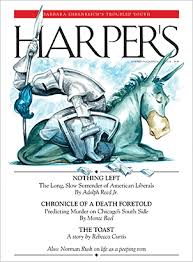
[READ: May 19, 2014] “The Toast”

Curtis is a holistic nutritionist.  She wrote an essay about that in Harper’s a few months ago.  And the main character in this story is a nutritionist.  But the story is also extremely self referential, teasing the reader about believing that a character is the author, so I’m not willing to ascribe any kind of autobiography to it.

This is the first fiction of hers that I’ve read and I have to say I absolutely loved the first half of it.  I enjoyed the end half as well, but I really loved the first half.

The story is a very simple one about a younger sister (Sonya, the narrator) having a difficult relationship with her older sister Leala.  The older sister is successful, overachieving and just about to get married.  Meanwhile Sonya has switched jobs (unsuccessfully), is in debt and is living in an attic loft with a landlord who barges in on her.

As the story opens, the narrator proves to be a snarky character who I found delightfully off putting.  At first I though that perhaps there was some mocking of holistic folks in general (there’s lots of talk of fluoride), but that would not appear to be the case.  However, when a character says this, I’m hooked:

The wedding, my sister said, would not be fancy.  However, there would be a hair-metal band, a five-course local organic vegan dinner, and a life-size fair-trade chocolate baby elephant. I’m afraid that my sister went on explaining details about the wedding and I stopped listening; this is because I caught Lyme disease five years ago and have neurological damage that makes it difficult for me to listen when people talk, especially when that they’re saying isn’t interesting.

It’s a great paragraph–we learn about the older sister and we learn that the younger sister might just use her disease as an excuse to get out of things.  She is also not afraid to say what she thinks, like when she calls her sister’s fiance a “walking pancake.” (more…)

Read Full Post »

1352113437munkeemanSOUNDTRACK: EVANGELISTA-Hello, Voyager [CST050] (2008).

helloThis is Carla Bozulich’s first “band” on Constellation. I didn’t really care for her solo album because it sounded way too all over the map.  She has brought in some great musician to rein her in somewhat and it really helps.  This album is still loose and wild and uncomfortable and at times hard to listen to and also really cathartic.  It feels like there is direction to the madness.

The first song is probably the least appealing.  It’s almost a free form poetry slam, but there’s enough incidental music to make it feel like there should be more.–the music doesn’t necessarily follow what’s going on, as if the musicians were told to do what they wanted but weren’t listening to her.

That improv feeling exists throughout the album, but the other songs feel like they have a structure and a melody which really really help.  Like “Smooth Jazz” in which the drums keep a loud steady beat which regulates the tempo and makes her screams all the more intense.  Or “Lucky Lucky Luck” in which a beautiful vocal melody and backing vocal combine with pulsing bass to make a platform for the noisy guitars.  “For The L’il Dudes ” is a creepy string quintet.  But “The Blue Room” is a full complex song with a captivating melody and strings that really work well.

“Truth Is Dark Like Outer Space” is a heavy rock song with great distortion, while “the Frozen Dress” brings back the creepy and spooky sounds. “Paper Kitten Claw” reunites those minimal sounds with a mellow melody.  It feature the great lyric (and theme) “Every time you see the word never, cross it out.”  The disc ends with “Hello, Voyager!” Crazy noises open this 12 minute ramble.  Carla sounds like a crazy preacher and by the end it’s just a free form chaotic mind fuck.  But in a good way.

It’s not always fun to see where Carla’s mind will take you but in this case the crazy trip is disturbingly fun.  Not for the faint of heart.

[READ: May 18, 2014] Munkeeman

This comic came across my desk and I was intrigued by it.  I’ve never read a graphic novel published in India (and written in English) before.  One thing that struck me about the drawing style was how dark (full of a lot of lines and very little white space) the book was.  It’s very busy, demanding a lot of attention.  I prefer my graphic novels to be a little more open and less claustrophobic (okay, I’ll say it, more “white”–racist!–meaning I like more white space in the drawings because I find the heavily drawn dark lines to be a little too busy for me).  But having said that, I enjoyed this style.  The details were always interesting to check out, especially the crowd scenes were Sharma has a lot of fun with background characters (it reminded me of Mad Magazine a bit).

At the same time I was also somewhat surprised at how conventional the story looked.  I don’t know what I was expecting–something more decisively Indian perhaps, but this could have come from an underground comic publisher anywhere.

This is all background to say how much I enjoyed this kind of twisted book.

Incidentally Sharma also directed a film called Tere Bin Laden which is a comedy about an Osama bin Laden double and which sounds quite funny.  I’m going to have to give that a try if I can find it.

So the book starts with an explanation about Munkeeman–he appeared (for real) as an unseen villain in the Hindi film Delhi-6 (which I’ve never seen).  You don’t need to see that movie to quickly learn that there was a villain (the Black Monkey) who is now getting his story told from his point of view.  Especially since the prologue fills you in that nobody ever got a full glimpse of him but he was referred to as The Munkeeman. (more…)

Read Full Post »

dec20133SOUNDTRACK: HANGEDUP-Clatter for Control [CST034] (2005).

clatterClatter for Control is Hangedup’s third and (so far) last album.  As Kicker was an evolution from their debut, Clatter feels like an evolution as well.  It feels like a more experimental work with fewer “proper’ songs proper and more soundscapes and ideas.

“Klang Klang” is a fast, yes, klanging song.  The viola is slightly discordant and the riffs are abrupt and staccato and it builds into a frenzy.  “Alarm” is more spooky sounding with tape manipulation. “A Different Kind Of Function” starts with some staccato notes and then builds into merging lines of viola and feels almost like a remix song.  “Kick-Back-Hub” is 90 seconds of squeaking bowing and metal clanking along with some very fast drums. It melds into “Eksplozije” which is 2:25 and is more feedback and big noisy drums.

“Go Let’s Go” feels like an actual song with riffs and chords, while “Derailleur” is another short piece, just under 2 minutes of noise and rattling and wildly untuned viola sounds.  “Fuck This Place” has a bass guitar although you wouldn’t necessarily know it (there is more bottom end), it feels like the viola is actually vocal samplings which is neat. “How We Keep Time” is a slower song with languorous viola sounds and sparse drumming.  “Junk The Clatter” feels like the most song like of the bunch. After a minute intro a fully realized riff comes out.  There’s some beautiful melodies and when the song ends it has a cool rocking section.

I prefer Kicker in Tow, but there’s record is a lot of fun too, full of unusual and discordant sounds–if you like that sort of thing.

 [READ: May 5, 2014] “I Can Say Many Nice Things”

I wound up reading about 3/4 of this story in one sitting and I loved it.  But when I came back to finish the end, I didn’t really like it as much.  I though the first part was engaging and complex without being convoluted.  I was interested in the direction the story was going and I was disappointed that it went where it did.  The ending ultimately makes sense within the context of the story, but I enjoyed so much of what happened before that I guess I didn’t want it to end.

So what was so great?

Fleming is an writing teacher.  A disgruntled and unpopular writing teacher.  He has been given a chance to teach a writing class… on a cruise!  A five day cruise with all expenses paid and ten well-paying students signed up for a morning and afternoon class.  Everyone he knew thought he was so lucky (colleagues pretended to be jealous)–it would certainly be an easy way to rack up positive evaluations from happy cruisers?  But Fleming is a pretty miserable guy.  He’s even more miserable because he intended to get in shape for the cruise, but in fact he got fatter, and he feels lousy about himself.

Even though at heart this is a story about teaching and writing (typically not great story topics), the set up is unusual–especially as we slowly come to realize that he is trapped on this ship. And when you add in some of the other details, I thought this was a really interesting setup.

Here’s some details that i found compelling. (more…)

Read Full Post »

« Newer Posts - Older Posts »