Feeds:
Posts
Comments

Archive for the ‘Magazines’ Category

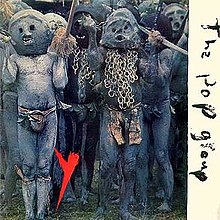
SOUNDTRACKTHE POP GROUP-“Savage Sea” (1979).

In Stuart David’s book, In The All-Night Café, he lists the songs on a mixtape that Stuart Murdoch gave to him when they first met.

Although I’ve been a fan of Belle & Sebastian for a long time, I knew almost none of the songs on this mixtape.  So, much like Stuart David, I’m listening to them for the first time trying to see how they inspire Stuart Murdoch.

In the book, David writes how much he does not like “rock,” especially music based around bluesy rock.  Most of these songs, accordingly, do not do that.  In fact, most of these songs are (unsurprisingly) soft and delicate.

I have thought that a few songs did not fit on this mostly mellow mix, but if ever there was one that stands out, it is this one.

I am unfamiliar with The Pop Group who formed in 1977.  They released two albums, then broke up.  Then they reunited in 2010 and have put out two more albums.  The Pop Group has been described as extremely influential (which inspired the reunion).  I have to assume that no one sounded anything like them at the time.

“Savage Sea” opens with a quiet piano twinkling and then a whispered voice starts speaking.  After about a minute noises start swirling and in adding discordance.  The spoken words get a bit more intense and the song gets spookier even as the piano melody remains mostly the same.  Around 2 minutes some deep moaning voices are added and then a squeaky violin spears the song with high notes.

With about fifteen seconds left, the piano starts to play a conventional series of chords, but just as it’s about to turn into something, the song ends.

I haven’t listened to the whole of Y, but of the few songs I did listen to, “Savage Sea” seems like the most listener friendly, as most of the other songs are quite noisy with screams, chants, wild guitars and all kinds of free jazz.  There’s even some funk and dub bass all played around the same time.  It’s chaos.

The name of the band is pretty hilarious

[READ: February 3, 2021] “Blushes”

I anticipate reading a  lot of stories about the pandemic in the next few months.

This one was interesting because although it was set during the pandemic, the story itself has nothing much to do with it.

Dr. Cole is a retired physician, a specialist in respiratory diseases.  But with the pandemic raging, he has volunteered to help out wherever he can.  Of course he is nervous, but he doesn’t have a lot left in his life.  The love of his life (his second wife) died recently and they had no children. He’s not depressed or anything, but he doesn’t have the familial concerns that some might have in this situation.  Honestly doing the work takes his mind off of things.

As he drives in, he marvels at the emptiness of the roads–and the re-arrival of nature (he saw six foxes the other day). (more…)

Read Full Post »

SOUNDTRACKTHE SERVANTS-“Afterglow” (1990).

In Stuart David’s book, In The All-Night Café, he lists the songs on a mixtape that Stuart Murdoch gave to him when they first met.

Although I’ve been a fan of Belle & Sebastian for a long time, I knew almost none of the songs on this mixtape.  So, much like Stuart David, I’m listening to them for the first time trying to see how they inspire Stuart Murdoch.

In the book, David writes how much he does not like “rock,” especially music based around bluesy rock.  Most of these songs, accordingly, do not do that.  In fact, most of these songs are (unsurprisingly) soft and delicate.

The Servants are a band I’ve never heard of.  They released one album in 1990, Disinterest.  Band member Luke Haines said, “It is art rock … ten years too late and fifteen years too early.”  They recorded a second album, Small Time, but it wasn’t released until twenty-one years later–following the inclusion of Disinterest in Mojo magazine’s 2011 list of the greatest British indie records of all time.

Evidently, Stuart Murdoch liked singer-songwriter David Westlake’s music so much, he wanted to start  band with him (before Belle & Sebastian).

I listened to this song on Spotify and was really surprised by the recording:

Of all the songs on here, I think this one surprised me the most.  The recording is incredibly muffled.  It all sounds like it was recorded on a cassette player.

It opens with a thumping guitar note and a buzzy bass line meandering around a subsequent guitar line.  There are drums but they are only hitting on the beat with an occasional cymbal that sounds like it’s down the hall.  Westlake’s vocals are so muffled I can’t actually tell what he’s saying, but there does appear to be an occasional harmony vocal.

Interestingly, the music is pretty catchy once it gets going, you just can’t hear any detail as to what’s going on.

Then I realized that this recording is actually an early demo that came with a reissued album.  That’s why it sounds so terrible.

Hearing the version on YouTube (which I assume is the real thing–there’s virtually no information about this song online!), Murdoch’s appreciation makes a lot more sense.

The song moves along nicely with a pretty guitar and steady bass.  Westlake’s voice is low and understated.  I like the way the chorus reveals itself, almost as the end of the first verse instead of a separate part of the song

Stay with me
please don’t go, afterglow.

The song is jangly with a few nice guitar flourishes and a rather unexpected guitar solo.

It’s also two minutes shorter than the demo (and honestly sounds like a totally different song–I feel like something is wrong somewhere).

[READ: January 30, 2021] “Nachman from Los Angeles”

Nachman is, indeed, from Los Angeles.  His friend Norbert has just introduced him to Prince Ali from Persia.  Ali has a proposition for him.  At Norbert’s suggestion, Ali would like Nachman to write Ali’s metaphysics paper for him.

Ali took the class thinking that metaphysics had something to do with mysticism.  By the time he realized it didn’t, it was too late to drop it.  He needs this class to graduate and he has no head for this sort of thing.  Norbert said that Nachman was a great writer. Norbert did not say that Nachman was a mathematician who has never read Henri Bergson.

When Ali said that he would pay him $1,000, he took Nachman’s stunned silence as an agreement.

Nachman is mad at Norbert–who doesn’t even go to school with them.  Norbert got a tattoo which upset his father so much that he cut Norbert off, so Norbert can’t afford school.  But Norbert sees this transaction as a business opportunity–$1,000 a paper, imagine that.

Nachman settled in to read Bergson.  Ali seemed concerned that Nachman was reading instead of writing.  The paper was not due for three weeks, and Nachman obviously needs to learn about what Bergson had to say. (more…)

Read Full Post »

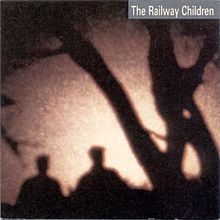
SOUNDTRACKTHE RAILWAY CHILDREN-“Brighter” (1987).

In Stuart David’s book, In The All-Night Café, he lists the songs on a mixtape that Stuart Murdoch gave to him when they first met.

Although I’ve been a fan of Belle & Sebastian for a long time, I knew almost none of the songs on this mixtape.  So, much like Stuart David, I’m listening to them for the first time trying to see how they inspire Stuart Murdoch.

In the book, David writes how much he does not like “rock,” especially music based around bluesy rock.  Most of these songs, accordingly, do not do that.  In fact, most of these songs are (unsurprisingly) soft and delicate.

A looping almost marimba-like sound opens before a jangly guitar and steady bass.  Here’s another song where the main instrument is the bass with guitar flourishes added on top.  This band reminds me of The Church (who had put outa couple of albums by now).

Singer Gary Newby has a nice crooning voice and the chorus is quite catchy.  The instrumental break allows the guitar to shine a bit with a meandering solo.  But the biggest surprise comes about 4 minutes in when there’s a drum solo of sorts–played on something like a metallic bongo.  After all of the short songs, this one pushes five minutes and is something of a surprise.

There’s some other good stuff on Reunion Wilderness, like “Gentle Sound” which I thought was a bit catchier.

[READ: January 30, 2021] “A Poor-Aunt Story”

In this story Murakami discusses a poor-aunt. I don’t know of this is a universal idea as I’ve never heard it before, although I do get where he’s coming from.

He says it was a beautiful day and he was out enjoying it when he suddenly had the idea of a poor aunt.  There wasn’t even a poor aunt around, the idea just came to him and it stuck.  He needed to write a story about a poor aunt.

He told his friend he wanted to write a poor aunt story.  She asked if he had a poor aunt.  He said no.  She said she did have a poor aunt bit didn’t want to write about her.

He admits that chances are “you don’t have a poor aunt relative, but you have seen one.”

Every wedding reception has a poor aunt.

No one bothers to introduce her.  No one talks to her.  No one asks her to give a speech.  She just sits at the table like an empty milk bottle.

When people look at the photo album they ask about her and the groom says she’s no one, just a poor aunt of mine.

He woke up the next day and a found that a poor aunt–a little one–was stuck to his back.

Nothing alerted him to her presence, he just felt it. She wasn’t heavy and didnt breathe across his shoulder. People had to look hard to see she was there.  But people did see her–she gives me the creeps, a friend said.  He said it felt like his mother was watching them.

The narrator was unable to see the poor aunt but other people cuid and they all saw her as something else–usually something unfortunate–a friend’s dog who had died.  Soon enough friends stopped calling him–they found it depressing.  But the media swooped in on him. He even made it on the show “Look What Else Is Out There.”  He tried to explain what had happened but the show tried to sensationalize him–looking for a horror story or a joke.

One of his friends said she wished it had been an umbrella stand on his back–that would be more pleasant to look at and more practical.  He could even have painted it different colors.

The poor aunt left him in autumn. He was on a train ride and watched as a mother tried to deal with her squabbling children.  The boy was teasing his sister–stealing her hat.  She was getting very upset and complaining to her mother.  The mother was trying to read and was getting angry at the daughter for bothering her. Finally the girl reached across the seat and slapped the boy’s face and took her hat, feeling very pleased with herself.

The mother was furious and made the girl sit in a different aisle–next to the narrator.  The child protested but the mother said “You’re not part of this family anymore.”  He wanted to say something to the girl, to cheer her up.  Like that she had done a good job, but he knew it would only confuse and frighten her so he said nothing.

Sometime during that interaction, the poor aunt left him.  He wasn’t aware of it, she was just gone.

This was one of Murakami’s first experiments with the short story form.  It was translated by Jay Rubin.

Read Full Post »

SOUNDTRACKJOSEF K-“Sorry for Laughing” (1985).

In Stuart David’s book, In The All-Night Café, he lists the songs on a mixtape that Stuart Murdoch gave to him when they first met.

Although I’ve been a fan of Belle & Sebastian for a long time, I knew almost none of the songs on this mixtape.  So, much like Stuart David, I’m listening to them for the first time trying to see how they inspire Stuart Murdoch.

In the book, David writes how much he does not like “rock,” especially music based around bluesy rock.  Most of these songs, accordingly, do not do that.  In fact, most of these songs are (unsurprisingly) soft and delicate.

Josef K were a Scottish band named after the main character in Franz Kafka’s The Trial.  I had never heard of them, but they are apparently hugely influential (despite releasing only one record).

Josef K are quite unlike anyone else on the mix tape thus far.  They are far darker (in a Joy Division sort of way).  I mean look what they based their name on.  And there are drums. But they are also very un-rock–playing sharp angular guitars and lead bass lines.

“Sorry for Laughing” opens with a  snapping drum and a rumbling, almost out of control bass line.  The guitars are quieter, playing sharp chords. It’s catchy in a dark sort of way.  The weirdest part comes at the end of the bridge when the bass seems to play a tiny riff that doesn’t quite work–it’s almost an anti-hook and it happens twice.

The middle of the song has a kind of bass solo while the vocals make a chk chk sound. This must have been an incredibly unique song at the time.  And you can definitely hear how a lot of bands were influenced by them.

[READ: January 20, 2021] “Bohemia”

This story, set in the 1950s, is about Willie, a young Indian man traveling to London for the first time.

He is going to London for school–an un-famous school it turns out–modeled after Oxford and Cambridge.

Willie didn’t know much about London–Buckingham Palace and Speaker’s Corner were the extent of it.  He was disappointed by both when he saw them.  He felt the Maharaja’s palace was far superior, and the people in Speakers Corner were mostly irritating.

His father had given him the names of people to get in touch with.  Willie didn’t want to do that–he wanted to succeed on his own.  But he found things very tough going.  So he looked up one of the men–a newspaper reporter.  The man was very proud of his work and very proud of his paper  But Willie knew nothing of the paper or even enough of London to know what the paper wrote about.  It was not an auspicious meeting. (more…)

Read Full Post »

SOUNDTRACK: COCTEAU TWINS-“Oomingmak” (1986).

In Stuart David’s book, In The All-Night Café, he lists the songs on a mixtape that Stuart Murdoch gave to him when they first met.

Although I’ve been a fan of Belle & Sebastian for a long time, I knew almost none of the songs on this mixtape.  So, much like Stuart David, I’m listening to them for the first time trying to see how they inspire Stuart Murdoch.

In the book, David writes how much he does not like “rock,” especially music based around bluesy rock.  Most of these songs, accordingly, do not do that.  In fact, most of these songs are (unsurprisingly) soft and delicate.

Of all the bands on the list, Cocteau Twins were the one I know (and like) best.  I’ve been a fan since 1987, so just after this album came out.  I never remember which songs are which by them, because they have titles like “Oomingmak.”

Cocteau Twins are a magical band and at the time (and perhaps even now) no one sounded like them.  Their music is so ethereal, it practically floats away both because of the shimmering echoing guitars of Robin Guthrie and Elizabeth Frasier’s high pitched vocals–often with non-intelligible words. [I honestly never knew she was actually singing words, but I see she was].

This song is the shortest song on Victorialand.  It has a fast repeating guitar line and Fraser singing softly.  Toward the end, she sings harmonies with herself in her slightly more harsh sounding vocal style.  It’s a lovely song, as all of their are.

[READ: January 20, 2021] “Touched”

Reading this right after reading the Arthur Miller story was really strange.  Because here was another thirteen year-old boy possibly having sex with an adult woman.

The story opens on Ali, the thirteen year-old.  His Bombay family has visited him in England and are now returning to India.  Ali was very sad to see them go,

Ali was most upset because his cousin Zahida was leaving. She was a year older than him.  She had pressed her lips to his and then they ran up into the attic together and then

he continued caressinuntil, making his way through intricate whirls of material, he reached her flesh and slid his hand into the top of the crack.

He was suddenly concerned about being discovered they quickly separated.

Wow. (more…)

Read Full Post »

SOUNDTRACK: THE WEATHER PROPHETS-“Almost Prayed” (1987).

In Stuart David’s book, In The All-Night Café, he lists the songs on a mixtape that Stuart Murdoch gave to him when they first met.

Although I’ve been a fan of Belle & Sebastian for a long time, I knew almost none of the songs on this mixtape.  So, much like Stuart David, I’m listening to them for the first time trying to see how they inspire Stuart Murdoch.

In the book, David writes how much he does not like “rock,” especially music based around bluesy rock.  Most of these songs, accordingly, do not do that.  In fact, most of these songs are (unsurprisingly) soft and delicate

I’ve been listening to all of these songs on Spotify.  So far, most of the songs have been deep cuts, but this one was The Weather Prophets’ number one song.

I’d never heard of them.  They put out two albums on the Creation label (in fact, Creation head honcho Alan McGee played bass in the band for a short time), and so it’s probably no surprise that they sound a but like The Stone Roses.  This is, so far, the bounciest and most immediately catchy song on the mixtape.

The guitars jangle, although not as much as in some of the other songs.  Like in most of the other songs, the singer kind of sing-speaks, although less than the others.  The biggest difference with this is that it really moves along a clip–much faster than the other songs.  A good pick me up in a mix tape.

[READ: January 20, 2021] “Bulldog”

I know that fiction is not true.  I know that.  But realistic fiction tends to be based on something.  So if this is based on something, then either Arthur Miller lived a very different life than I could imagine or things were very different in the 1920s.  I also had no idea that Arthur Miller was still alive in 2001 (he died in 2005).

This is a fairly simple story: a thirteen year-old boy sees an ad for puppies for sale.  They are brindle bulldogs for sale for $3 each.  The boy has some money (although $3 is a large chunk of it).  He bought an apple tree and a pear tree last year (30 cents each), so he is accustomed to spending money.  But his family has never had a dog–his brother even makes fun of him for wanting one.  What are you going to feed it, soup?

He travels across the city to the apartment in Brooklyn.  The woman opens the door in a robe and seems annoyed.  When he says he’s there for the dog, she loosens up and invites him in.  She asks his age and when he says 13 she seems tickled by that.

The look at the puppies.  He had looked up what the puppies should look like in the World Book, but there were no pictures of brindle bulldogs.  He thought these puppies were just brown and didn’t look like a bulldog at all.

While he was holding the puppy, she sat next to him and her robe opened.  She was naked.  She kissed him and soon they were on the carpet together. (more…)

Read Full Post »

SOUNDTRACK: FELT-“Hours of Darkness Have changed My Mind” (1985).

In Stuart David’s book, In The All-Night Café, he lists the songs on a mixtape that Stuart Murdoch gave to him when they first met.

Although I’ve been a fan of Belle & Sebastian for a long time, I knew almost none of the songs on this mixtape.  So, much like Stuart David, I’m listening to them for the first time trying to see how they inspire Stuart Murdoch.

In the book, David writes how much he does not like “rock,” especially music based around bluesy rock.  Most of these songs, accordingly, do not do that.  In fact, most of these songs are (unsurprisingly) soft and delicate.

Felt is another band I’ve never heard of.  This is especially surprising since they were together for over ten years.  Much like with The Blue Aeroplanes, this song has a kind of spoken vocal delivery–although it’s more akin to Lou Reed’s sing-speaking than say a spoken delivery.

The band emphasized jangly guitars and this song has a very old fashioned organ solo (which must have been especially jarring in the 1980s indie rock scene.

The mixture of organ and guitar and lead singer (the mononymed) Lawrence’s very British delivery really make this band stand out.  This song has a chorus melody that is quite subtle and you need to listen a few times before it grabs you.  In fact, the first song on the album Forever Breathes the Lonely Word, “Rain of Crystal Spires” is much more immediate and catchy and relishes that VU feel.

[READ: January 21, 2021] “The Old Man in the Piazza”

I enjoyed the way this story seemed to be about one thing but turned into something much bigger, much grander.

Every day at four o’clock an old man goes to the piazza.  He sits at the cafe and orders a coffee.  At 6PM he orders a beer and a sandwich.  At 8PM he shuffles home–no one knows where he lives.

During those four hours he watches the piazza as it gets busier and nouisier and people start to argue very intensely.

The arguments are varied and loud.  They range from the teleological, to the eschatological to the mundane.  Anything that there is to argue about, the people in the piazza will argue about it.  They will honk horns and rev engines just to prove their points.

The piazza has been like this–“ever since the end of the so called time of the ‘yes.'”

About forty years ago it was made illegal to argue.  Everyone was obliged to agree all the time–regardless of the proposition, one was to nod and agree.  The language itself was altered.  The word no was no longer permitted only “yes” or “for sure” or “absolutely.”

Then things get more abstract. (more…)

Read Full Post »

SOUNDTRACK: THE BLUE AEROPLANES-“Veils of Colour” (1987).

In Stuart David’s book, In The All-Night Café, he lists the songs on a mixtape that Stuart Murdoch gave to him when they first met.

Although I’ve been a fan of Belle & Sebastian for a long time, I knew almost none of the songs on this mixtape.  So, much like Stuart David, I’m listening to them for the first time trying to see how they inspire Stuart Murdoch.

In the book, David writes how much he does not like “rock,” especially music based around bluesy rock.  Most of these songs, accordingly, do not do that.  In fact, most of these songs are (unsurprisingly) soft and delicate.

The Blue Aeroplanes have been around forever, forming in 1981 and releasing their most recent album in 2017.  I feel like I’ve heard of them, but I’m not sure now.  I guess I’ve never actually heard them as this didn’t sound familiar at all.   Nor does the core lineup: the mainstays are Gerard Langley, brother John Langley, and dancer Wojtek Dmochowski.  Their wikipedia pages lists about 90 other people who have played on their records.

“Veils of Colour” opens with a quiet guitar riff that, surprisingly, progresses rather than repeats.  It’s a quiet song and when the lyrics come in, they’re mostly spoken in an almost excitable whisper.  You can certainly see why they appealed to Stuart Murdoch.

The chorus is almost sung, but the addition of horns makes the it swell beyond what you’d expect from the verses.  Indeed, the song has a kind of understated urgency, but never gets very intense.

[READ: January 24 2021] “Hansa and Gretyl and Piece of Shit”

This story was peculiar for many reasons.  Obviously the title shows that this is a twist on a familiar story.  But, wow, does it veer off form what you might expect (just as the title does).

Gretyl is a girl in high school.  She wakes with terrible stomach cramps–not the “normal” cramps a girl might feel, but something far worse.  Her mother believes she is faking because she feels like a loser at school.

She walks to school and sees a man at the bottom of the hill.  His car seems to be constantly broken and he regularly asks Gretyl for help–a scrunchie to fix his carburetor, a paper clip to connect his fan belt (she gave him one from her paper, and her teacher changed her grade from an A to a B- because it had no fastener).  Today he asks her to steer while he pushes.  When his car is free, he gives her a whistle. If you need help, blow it, maybe we’ll come.

Gretyl’s family is strapped for cash. Although her father has a yacht and her mother has expensive jewelry–they don’t seem to have money to buy new things.

Gretyl’s mother resents her: Gestating you destroyed my metabolism.  Now I can’t practice medicine (she does not mention that the mother bore Gretyl at forty). (more…)

Read Full Post »

SOUNDTRACK: YOUNG MARBLE GIANTS-“Salad Days” (1980).

In Stuart David’s book, In The All-Night Café, he lists the songs on a mixtape that Stuart Murdoch gave to him when they first met.

Although I’ve been a fan of Belle & Sebastian for a long time, I knew almost none of the songs on this mixtape.  So, much like Stuart David, I’m listening to them for the first time trying to see how they inspire Stuart Murdoch.

In the book, David writes how much he does not like “rock,” especially music based around bluesy rock.  Most of these songs, accordingly, do not do that.  In fact, most of these songs are (unsurprisingly) soft and delicate.

I’ve been aware of the Young Marble Giants forever, and yet I apparently knew nothing about them.  Like that they only put out one album (how are the so influential?) or that they were from Wales.

Young Marble Giants were a trio: Philip Moxham on bass, Stuart Moxham on guitar and organ, Alison Statton on vocals.  Yup no drums.

The songs on the record are short and seem to focus around the basslines primarily.  It’s really quite an unusual presentation–quite lo-fi and very engaging.

This song (the 12th of 15 on the album) is 2 minutes long.  It features a simple guitar riff, with a some extra detailed notes sprinkled at the end of the main riff.  Then comes a four note bass riff, with a little hammer on at the end of the riff.  After a minute, Alison quietly sings along with the melody:

Think of salad days
They were folly and fun
They were good, they were young

She sings for 15 seconds and then it’s all music until the end.  The bass drops out with 30 seconds left and the guitar plays that same melody with a few picked notes to the end.

It’s simple and delightful.  And as the start of a mix tape, it speaks volumes.

[READ: January 21, 2021] “Find and Replace” 

This story is written as a true story.  But there are plenty of little comments in the story that show how easy it is to change something in a story–maybe make it untrue?

The narrator, Ann, says her father died in hospice on Christmas Day–the day that she had left the country.  Her family was not the kind who communicated every day.

Her mother was not demanding.  She was a friendly person and had a million friends (she still wrote cards to a maid who cleaned their hotel room fifteen years ago).

Ann flew to Florida, rented a car and drove to her mother’s house.  Her mother showed her letters that she hoped Ann would help her make decisions about.  The last one was from a neighbor named Drake who asked her to move in with him.

Ann assumed it was a joke.  Then assumed her mother would laugh it off.  But indeed, she had said yes.  They might even move to Tucson. (more…)

Read Full Post »

SOUNDTRACKADITYA PRAKASH ENSEMBLE-GlobalFEST Tiny Desk (Home) Concert #135 (January 13, 2021).

Aditya Prakash EnsembleGlobalFEST is an annual event, held in New York City, in which bands from all over the world have an opportunity to showcase their music to an American audience.  I’ve never been, and it sounds a little exhausting, but it also sounds really fun.

The Tiny Desk is teaming up with globalFEST this year for a thrilling virtual music festival: Tiny Desk Meets globalFEST. The online fest includes four nights of concerts featuring 16 bands from all over the world. 

Given the pandemic’s challenges and the hardening of international borders, NPR Music and globalFEST is moving from the nightclub to your screen of choice and sharing this festival with the world. Each night, we’ll present four artists in intimate settings (often behind desks donning globes), and it’s all hosted by African superstar Angélique Kidjo, who performed at the inaugural edition of globalFEST in 2004.

The second band on the third night is the Aditya Prakash Ensemble.

Performing from their home base in Los Angeles, Aditya Prakash Ensemble highlights songs borne from South India’s Carnatic tradition. Prakash uses his voice as an instrument to tell powerful, emotive stories — which he reimagines in a fresh, dynamic way. Aditya Prakash Ensemble’s modern take on traditional music mixes in jazz and hip-hop and features a diverse L.A. ensemble.

The Ensemble is a quintet.  With Julian Le on piano, Owen Clapp on Bass, Brijesh Pandya on drums and Jonah Levine on trombone and guitar.

As “Greenwood” starts, I can’t quite tell if he’s actually singing words (in Hindi or some other language) or if he is just making sounds and melodies.  It sounds great either way.  He sings a melody and then the upright bass joins in along with the trombone.  He displays a more traditional singing and then Le plays a jumping piano solo which is followed by a trombone solo.  The ending is great as he sings along to the fast melody.

“Vasheebava” is a song about seduction.  Levine plays the guitar on this song.  It starts with gentle effects on the cymbals (he rubs his fingers on them).  Prakash sings in a more traditional Indian style and Levine adds a really nice guitar solo.

“Payoji” is a traditional devotional song and Prakash sings in a very traditional style.  But musically it’s almost a kind of pop jazz.  It’s very catchy with a nice trombone solo.

This conflation of Indian music with jazz is really cool.

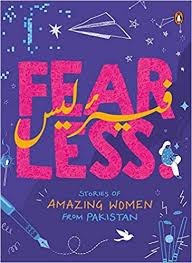
[READ: January 11, 2021] Fearless.

“If one man can destroy everything, why can’t one girl change it?”-Malala Yousafzai

This book begins with this wonderful sentiment:

Not long ago, a wave of exciting books uncovered stories of women through history, known and unknown, for young dreamers around the world.  Women who had been warriors, artists and scientists.  Women like Ada Lovelace, Joan of Arc and Frida Kahlo, whose stories changed the narrative for girls everywhere. Readers around us were thrilled to discover this treasure trove. But there was something missing. They rarely saw women of color and even fewer South Asian women in the works they were reading.

It’s a great impetus for this book which opens with a timeline of Pakistani accomplishments (and setbacks) for women.  The timeline is chronological in order of the birth years of the woman in the book.  Interspersed with their births are important events and the year they happened.

Like in 1940 when women mobilized and were arrested or in 1943 when the Women’s National Guard was formed. In 1948, a law passed recognizing women’s right to inherit property.  In 1950, the Democratic Women’s Association formed to demand equal pay for equal work (it doesn’t say if it was successful).

In 1973 the Constitution declared there could be no discetrmaton on the basis of race, religion, caste or sex.

But in a setback in 1979, the Hudood Ordinance passed which conflated adultery with rape, making it near impossible to prove the latter–and the punishment was often death.

And yet for all of the explicit sexism in Pakistan, the country accomplished something that America has been unable to do–elect a woman as leader. In 1988 Benazir Bhutto became the first female Prime Minister of Pakistan.

The woman in this book are given a one-page biography and a cool drawing (illustrations by Aziza Ahmad).  They range from the 16th century to today.  (more…)

Read Full Post »

« Newer Posts - Older Posts »