Feeds:
Posts
Comments

Archive for the ‘New Yorker’ Category

[LISTENED TO: November 19, 2013] “Reunions” podcast

podcastIn the very first New Yorker fiction podcast, Richard Ford reads a story by John Cheever from 1962.  This is an especially apt pairing because Ford explains that when he does author appearances, he often reads Cheever’s story “Reunion” before reading his own story “Reunion.”  The reason, he explains, is that the Cheever story inspired his own.  [I haven’t read the Ford story although it too appears in the New Yorker, but from the way he describes it, it doesn’t sound like it’s all that similar, just “inspired” by the Cheever piece].

I don’t know a lot of Cheever (which Ford says is a common and sad problem for American readers), but I have always loved his story “The Swimmer,” which I think is fantastic.

“Reunion” (the Cheever story) is very simple and yet it speaks a lot about family. (Both Ford and the New Yorker host talk about how remarkably short (about 1,000 words) and yet how powerfully concise it is.)  In the story, a young man has time to kill between trains in Gran Central Station.  He is en route from school and had about 90 minutes before his next train arrives. So he contacts his father to see about having lunch.  He hasn’t seen his father in about three years and he thinks this will be nice. (more…)

Read Full Post »

CV1_TNY_09_16_13Tomine.inddSOUNDTRACK: SAM PHILLIPS-Tiny Desk Concert #3 (June 25, 2008). 

Isamt took a month and a half to get the second Tiny Desk player in, but it took only 20 days to get Sam Phillips to come in after Vic Chesnutt.  Sam Phillips plays four songs (in what is sauna-like conditions apparently) all from her then new album Don’t Do Anything.

Phillips has had a couple of incarnations as a performer (first as “Leslie Phillips” Christian singer).  This incarnation sees her as a kind of folky troubadour with dramatic flair.  She played a lot of the music on the Gilmore Girls (she does the la las), so of course I’m a fan.

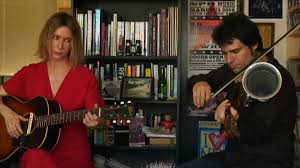
Sam is a funny performer, introducing herself (and then asking is she is allowed to talk) and later playing Bob Boilen’s cow in the can (and even questioning the way to say This is NPR).  She is accompanied by Erik Gorfain, who plays a Stroh violin which you can sort of see in this picture (there’s a better one below) and which Phillips suggests is plenty loud enough thank you.

Her first song, “Sister Rosetta Goes Before Us” opens with big strumming guitars and a bouncy melody.  It’s a great song that is a lot of fun–that violin brings great counterpoint.  “No Explanations” is a bit more rocking (with Gorfain on electric guitar).  It has a catchy chorus.  “Signal” returns to that kind of bouncy tin pan alley style which she does very well.  “Little Plastic Life” ends the set with… a screw up, which she handles wonderfully, and which makes the song seem all the better when she plays it again.

I really enjoyed this Tiny Desk and am going to have to listen to more of her work.

Check out what a Stroh violin looks like:

stroh

[READ: September 25, 2013] “By Fire”

Here’s another story about unemployment.  I had intended to post this back in September, so when I originally typed that this story is more dramatic than “yesterday’s,” I meant Lisa Moore’s story from September which was also about unemployment.

I wasn’t sure where this story took place (it was originally written in French).  The story is about Mohammed.  He graduated from University a few years ago with a degree in history.  It has been useless thus far.  When his father dies, and he is once again incapable of getting a teaching job, he gives up and burns all of his paperwork.

Then he sets out with his father’s fruit cart, determined to make some money selling fruit so he can move out of his house and in with his girlfriend.

There is ample back story in this piece.  We learn about Mohammed’s family—his mother has crippling diabetes, his brothers work but not very hard (one is downright lazy).  And we learn that the person who Mohammed’s father bought his fruit from was a crook who demands more and more money from Mohammed.

But the bulk of the story shows the daily life of Mohammed.  He is routinely harassed by the police for not having the proper paperwork or for being in the wrong place or just for being.  They start with simple harassment, but soon they turn to beatings.  Mohammed refuses to bribe anyone, even when the police give him the opportunity to turn in his former students. (more…)

Read Full Post »

[LISTENED TO: November 8, 2013] Daniel Alarcón reads “Gomez Palacio”

alarcon The New Yorker has a Fiction podcast of current authors reading a story from the New Yorker archives.  I was unaware of this podcast until I recently stumbled upon this Alarcón reading.  I am trying to find out the breadth and depth of this podcast, but I find the navigation really unclear.  It seems like there are a lot of stories in this series.  (You can see the archives list here, although I wish it was a little easier to navigate).

The podcast is 30 minutes long.  What you get is a brief interview with Alarcón, in which he talks primarily about his exposure to Bolaño and his interpretation of this story.  And then he reads the story itself.

The interview was very interesting.  He talks about reading Bolaño when 2666 had come out in Chile.  What I enjoyed hearing him talk about was the Bolaño universe and him “sampling himself.”  And also how the shorter works reference each other and different characters appear and reappear–that Bolaño has created an entire world in which all of his stories are set.  These are things that I noticed, of course, but it is always comforting to hear others confirm your ideas. (more…)

Read Full Post »

SOUNDTRACK: PHISH-Live Bait 04 (2011).

bait04This Live Bait free sampler is compiled of songs from some of their summer tours (all songs are from June-August).  And it’s a fun collection of mostly long jams.

“Scent of a Mule” dates from 1996 and has a very “old” quality, like the band doesn’t sound as full as normal (the vocals also have an unexpected country feel). There’s a bit of “Sunshine of Your Love” from the guitars while Page is doing an elaborate solo.  Indeed there’s a lot of piano on this track—much more than usual (and some of it is crazy).  There’s a Jewish music section done on both guitar and voice which abruptly ends when the song returns to “Scent”.

“You Enjoy Myself” is one of my favorite Phish songs.  This version clocks in at almost 25 minutes.  At around 21 minutes the song devolves into them making a bunch of silly rhythmic noises, which must be very fun to see.  The next track is “The Landlady” (from 1993), a wonderful instrumental that morphs into “Tweezer” which has a pretty wild and raucous jam component.  There’s also a repeated guitar motif (which I don’t recognize) that seems to be a cue for the band to do things (play loud and fast or really slow—including their impossibly slow rendition of The Simpsons theme song.  It’s a neat trip.

The next track is “Mike’s Song.”  It opens a 36 minute jam that devolves at around 18 minutes into real silliness with spacey effects and controlled laughter.  At about 20 minutes, it morphs into the simple song “Contact” and eventually into “Weekapaug Groove.” Which starts in an unusual way—instead of Mike only playing the bass, the band joins the song in progress.

“Split Open and Melt” has some loud bass—I hadn’t really noticed the bass so much before, and in this version in particular Mike seems like maybe he’s mixed a little louder and he’s playing some really funky stuff (and making quite a few errors, it must be said).  Next comes the silly “NO2” (from 1999), which duplicates the effects of the record pretty well, and the guitar solo at the end of very pretty.  “My Friend My Friend” is a pretty dark song but it starts with the very pretty guitar work until the minor keys take over.  It slowly morphs into “McGrupp and the Watchful Hosemasters,” a lyrically insane but musically great song.  Page gets a lot of solo time in this song, too.

The next song is “Twist” always a fun and energetic live track.  There’s a very slow jam in the middle of the song (which in total is 29 minutes) before it turns into a very echoey “Slave to the Traffic Light.”

The next song is a nearly 20 minute, joyous “Free”.  It morphs into a beautiful “What’s the Use” yet another or f Trey’s gorgeous rising melodies.  “Axilla” is a fast almost punky version as is the near barbershop quartet riot of ”My Sweet One” which is the fastest I’ve heard it done.  And “Run Like an Antelope” is as frenetic as I’ve heard it—the pace of this segment (from 1993!) is insane.

“David Bowie” begins but then pauses as Trey sings “Catapult” a short piece that I don’t think I’ve ever heard played before.  Then “David Bowie” resumes for the remaining 10 or so minutes and it is a fast and furious cut as well.  This great free set ends with a 15 minute “Divided Sky,” which sounds as good as ever.

Phish releases a lot of concerts, so it’s nice that they throw these free compilations to us once in a while.

[READ: October 15, 2012] “Puppy”

This story is included in George Saunders’ new collection Tenth of December.  But since I was able to find it at the New Yorker, I figured I’d read it now (this means that of all of the stories in the collection I have only not read two).

This story is dark.  Although it doesn’t seem so at first.

The story begins by looking at a married woman who has their two kids in the car with her.  She is trying to get them interested in the beautiful autumnal day but they have heard it all before.  And besides, her son is deeply engrossed in his video game Noble Baker “Not now, Mom, I’m Leavening my Loaves” (ha).  Which is better than the game he wanted, Bra Stuffer.  We go into the woman’s head and (at least in my case) pity her a little bit for trying so hard with kids who clearly aren’t interested.  Like when she read the instructions to her son’s video game so she could offer him tips while he played (and he swats her away, but at least it is “affectionately”).

She keeps her spirits up.  But every example seems more sad than nice.  When she thinks about her husband who says “Ho HO!” to anything that comes up.  Like all of the animals that they own, and how few of them are actually played with by the children.

The other day she spoke of their dog as a puppy and her daughter cried because she didn’t remember it.  So of course she had to get them a new puppy.  She saw an ad for a puppy and decided to go check it out. (more…)

Read Full Post »

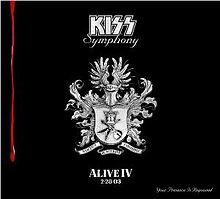
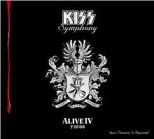
CV1_TNY_09_23_13Brunetti_spine.indd 220px-Alive_IV_KISSSOUNDTRACK: KISS SYMPHONY-Alive IV 2/28/03 (2003)

This CD is a bit out of order in the Kiss chronology, but since I’ve just looked at a few live Kiss albums and looked at “Atom Heart Mother,” the ultimate orchestra rock, it seemed like a good time to throw this in.

This is from a Kiss concert in Melbourne Australia.  The disc (and I assume the concert) is broken into three sections: regular Kiss, Kiss with the Melbourne Symphony Ensemble and Kiss with the Melbourne Symphony Orchestra.

The first six songs rock pretty hard.  It’s an interesting collection of songs from throughout their career.  “Deuce” and “Strutter” sound good.  “Let Me Go, Rock n Roll” is a surprise and one that I like a lot, (although I find it weird that Peter Criss says exactly what he said at the end of the song on Alive! –it was in audible then and it is inaudible now).  Of course I wish they hadn’t chosen “Lick It Up” but it is better than on Alive III (I like the way he turns the “I want you, I need you” into a simple plea “to clap your hands”).  It makes me laugh that Paul is still using the “rock and roll pneumonia” schtick thirty years after I first heard it to open “Calling Dr. Love”.  And then there’s the new song, “Psycho Circus,” I haven’t mentioned that album yet but it’s a new song and they play it with verve.

The one thing about the disc that is especially obnoxious is how proud of themselves they are about doing this tour with an orchestra.  Paul says, ““Some people said we were crazy to attempt this Maybe we are crazy but that’s what makes us Kiss.”  And yet, clearly it’s not an original idea (I mean even Metallica, the most obvious comparison did theirs three years earlier).

When the Ensemble comes out, they play 5 mellow songs.  The first (and most obvious) is “Beth”.  But man does it sound lousy here. Peter doesn’t seem to have any of the oomph to make it sound any good.  (The orchestra sounds good though).  The next obvious song is “Forever.”  What I find odd about these “Ensemble” songs is that it sounds like the band is using acoustic guitars which just add a strange percussive sound (since you can barely hear the guitar over the orchestra).  I understand being unplugged for the Ensemble, but it sounds weird.

The huge surprise comes with “Goin’ Blind” in which Gene sings in a quite pretty falsetto.  He sounds old (for sure), but it’s a surprisingly pleasant voice.  Another huge surprise is the inclusion of “Sure Know Something “ from Dynasty.  And then the craziest surprise of all is “Shandi.”  “Shandi” is one of those songs that I used to joke asking if Kiss played it live.  I cannot believe they played it (even with an orchestra)  I wonder if Australia especially liked the Dynasty/Unmasked era.  Of course, I love that era as well and am thrilled to hear this song live (even if Paul sounds a little stilted singing it).

Then comes the bloat.  Disc two brings in the full orchestra and the sound is…weird.  The orchestra is sort of playing along with the band (mostly like added strings to pop songs and swells as needed). The big surprise is that the strings don’t play the iconic solos—which would be frankly amazing–imagine the whole string section playing the solo to “Detroit Rock City.”  Rather, the sounds that we hear most from the orchestra are the horns, which make it sound kind of like a marching band playing Kiss.  But the real problem is that the band seems to be fighting with the orchestra.  Since the guitar and entire orchestra are playing the same thing, you can’t really hear one or the other very well.  Worse yet, by the end, both Paul and Gene seem to be screaming to be heard over the orchestra, which makes them sound quite bad.

It’s not a total disaster.  Some songs work just fine.

“King of the Night Time World” had orchestration on the album, but in this version, they just seem to be throwing in strings everywhere.  “Do You Love Me?” works great in this setting for the exact opposite reason that I didn’t work in Unplugged—the orchestra brings up the chorus to higher levels.  “Shout It Out Loud” is pretty successful with the orchestra although Gene seems really flat.  The orchestra works well on “God of Thunder” probably because the music itself is so spare that the orchestra fills in the gaps nicely.

I’m always disappointed when Paul plays around with the vocal styling in popular songs—he does it a lot in “Love Gun.”  I’m not saying that every song should sound just like the record, but it’s weird unsettling when he mixes things up in weird ways as he does here. The orchestra is good for this one though.  And, the strings work great with “Black Diamond.”

On the other side of things, It is very creepy to have a children’s choir sing to the groupie-anthem “Great Expectations” but it does sound good—until the end when Gene doesn’t even seem to care a bout the spoken words.  “I Was Made for Lovin’ You” gets less disco and a bit more rock here.   And the set ends with “Rock n Roll All Nite” which is something of a throwaway here.  It’s the inevitable conclusion to the show, with the orchestra being little more than accents.

So the orchestra is not really a very successful addition to the set.  It may have been great to see live (the orchestra in Kiss makeup and all), but the recording leaves something to be desired.  The set list, on the other hand is pretty great and I would love to have these songs in any future show that I see.

[READ: September 25, 2013] “Bad Dreams”

I’ve enjoyed most of the Tessa Hadley stories I’ve read in the New Yorker.  And most of them have had similar themes.  But this one is quite different.

I’ve been finding with a lot of stories lately that I really like the way a story starts out and that I kind of wish it would keep doing whatever the story is doing, but that the author has something else in mind.  It’s hard to complain about that because it is the author’s story, not mine, but it still bums me out a little even if I ultimately like where the author went with the story.

So in this one, a child wakes up in the dark.  We get a glimpse of the house and where she is at, but the crux of her waking up is that she had a dream about her favorite book, “Swallows and Amazons.”  The really cool and spooky thing about the dream is that she dreams an epilogue to this story that she has read so many times.  And the epilogue is disturbing—not horrifically, but just enough to freak out a young girl.  She dreams that that one of the boys drowned, that her least favorite girl, the plainest girl went on to a long happy life, etc.

This is such an interesting idea tha I couldn’t wait to see where it went.  Of course, I can’t even imagine where you could go with that, and maybe Hadley couldn’t either.  Because instead we leave the girl’s room and head to her father’s study.

We learn about her father but during her visit she decides to upend all of the furniture in the room.  Not out of malice, but in a dreamlike state.  And then she imagines her parents’ reaction to this and thinks it will be very funny.   She vows to never admit that she did it.  Then she goes back to sleep. (more…)

Read Full Post »

CV1_TNY_08_26_13Drooker.inddSOUNDTRACK: KISS “God of Thunder” (country version from MTV Unplugged) (1996).

unpluggedIn my post about Kiss Unplugged, I mentioned that there are videos online of the entire uncut show.  There’s also a video of this–a country version of “God of Thunder”

Three things: One, it’s weird how hokey Gene gets at the end–for a demon he’s quite goofy.  And two, it’s amazing how good this song sounds when turned into a country song.  On the Kiss covers album Kiss My Ass, I was surprised how much I liked Garth Brook’s rendition of “Hard Luck Woman and now I see that maybe all great Kiss songs are just country songs at heart.  And three, it absolutely does not sound like Gene singing–he does an impressive falsetto.

[READ: September 18, 2013] “Victory”

This is a simple story of infidelity.  The fact that the characters have such similar names bothered me a bit, but it wasn’t terribly confusing.  Lin Hong (the woman) finds a key which her husband Li Hanlin has secreted away in a drawer.  He is away on business, and she tries to figure out what the key is for.  Eventually she realizes it is for a drawer at his office.  I actually would have preferred that the story was mostly about the searching, which I think would have been more interesting.

When she opens the drawer she finds evidence of his infidelity—photo and letters from a woman named Qingqing.  One of the letters includes a phone number.  So she calls it.  She tells Qingqing to leave her husband alone and that she has ruined their marriage.  But Qingqing says that they wouldn’t have gone any further anyway and that she’s not really interested in Lin.

Li calls some of his friends but they deny any awareness of an affair.  Finally, she calls one of her fiends to complain and the friend gives some advice about how she should behave when Lin gets back. (more…)

Read Full Post »

CV1_TNY_09_09_13McCall.inddSOUNDTRACK: KISS-Alive III (1993).

alive iiiI’m aware that there are questions about the real “live” nature of the first two Kiss Alive albums.  This naturally makes me suspect the nature of the live-ness of this one as well.  Not that I don’t think the songs are live, but I have to question the volume of the fans, who at times sound artificially enhanced.  I’ve also read that the “I Was Made for Lovin’ You” was taken from the soundboard during soundcheck with cheers added later.  If that’s true I have to give credit to Paul for being so “into it” during soundcheck.

back in the 70s, Kiss made a point for Alive II to not duplicate any songs from Alive!.  Obviously Kiss are much more mercenary now than they were back then–duplication is part of their thing now.  But since this is the first live album since the 70s, there’s a lot of new material to choose from.  Nevertheless, this probably shows a realistic set list for the time, so there are going to be some overlap from the 70s, and that’s okay.  And the band sounds quite good (this was 20 years ago it’s hard to believe).

“Creatures of the Night” is a rousing opener.  It’s hard to imagine they didn’t open with “Detroit Rock City” and end with “Rock n Roll Al Nite”.  “Deuce” is one of their best songs, so it’s a welcome old song.  Then there’s some questionable choices.  “I Just Wanna” is a bad song with a very obvious vocal line.  But it came from the then current album and it’s got the “naughty” singalong section (which was apparently dubbed out to avoid a Parental Warning sticker).  Despite all of the entendre in Kiss, they’ve never really been explicit, so the “I just wanna fuck” seems weird for them (especially when you know how many kids have been going to their tours recently).

“Unholy” fares much better.  It’s one of their cooler new songs.  Paul introduces “Heaven’s on Fire” in a fairly amusing way (and he can still ht those notes).  I don’t especially like that song or “Lick it Up,” but they will always be their bigger hits, so they get played.  Obviously I’m delighted to hear “Watching You” which they do very well.  I dislike “domino” lyrically quite a lot and I feel like Gene’s delivery here is disinterested at best (is it possible he is as disgusted by the lyrics as I am?).  But the song rocks musically.  “I Was Made for Loving You” is updated and sounds far less discoey.  “I Still Love You” is a great concert staple and it’s nice to have it on record.

Probably the biggest surprise on the disc is that “Rock n Roll All Nite” is not the encore (or maybe it was in concert, but it’s not last on the album.  I’d be delighted to see them and have this not be the encore.  I’d also be delighted if I never heard “Lick It Up” again.  I don’t know why this song irks me so much, but it does.  And in this live version, hearing Paul state “I wanna lick you” just creeps me out.  “Forever,” cheesy ballad and all, sounds pretty great live.   but “I Love It Loud” which is a great song sounds off here—too many backing vocals or something?  “Detroit Roock City”sounds great of course, although it’s funny to hear it have an introduction.

The disc is pretty much over for me here because I don’t like “God Gave Rock n Roll to You II” although this version is fine.  And the very end of the disc is, strangely, “The Star Spangled Banner.”  It’s a whole band version (without words) but  simple cannot imagine them doing it live for any reason.

So, this proves to be a pretty decent live album.  Not quite up to the stellar heights of Alive! and Alive II, but a worthy addition to the series.

[READ: September 15, 2013] “The Heron”

This story begins with the statement that the best place to feed herons is in Frederiksberg Gardens because they are tame.  The tone is very much like Julie Hecht–all matter of fact and somewhat indignant.

The story continues to talk about herons and the strange man who often stands on the paths that lead to the Chinese Pavilion. The narrator avoids this man by walking around to Damhus Pond (where the suitcase with the woman’s body chopped up inside of it was found).  He imagines the man who found it (well, technically the dog found it) was never the same again (nor, no doubt was the dog).  Despite the grisly scene (the narrator has never found anything there) he walks out of his way by the pond to avoid the herons.  And the strange man. (more…)

Read Full Post »

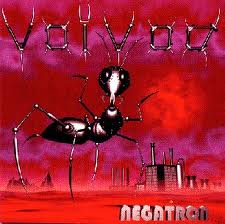
CV1_TNY_08_26_13Drooker.inddSOUNDTRACK: VOIVOD-Negatron (1995).

negatronAfter The Outer Limits failed to grab an audience, Voivod’s lead singer Snake departed the band.  With just the two original members left (and no bassist or singer), Piggy and Away decided to start again.  And they went dark and heavy.  For the first 45 second of this album, you think, wow, Voivod has made a really heavy album—with thundering riffs and, yet still, some unusual chords from Piggy (the chord progressions are definitely still weird).  Then new singer (and bassist) E-Force opens his mouth.  And that’s when a good portion of Voivod’s  prog rock fan base started weeping.

E-Force is a screamer.  He’s not unlike Snake on the first couple of albums (although without the French accent).  But there’s very little diversity.  E-Force’s voice isn’t a total failure.  It works pretty well with the heaviness of the music.  But those of us who grew used to Snake’s singing can’t help but be disappointed by E-Force’s very limited range and style.

Opener “Insects” has some very cool parts and the music is kind of interesting—Piggy is always inventive and it’s cool to hear him mix some of his weird chords with such heavy music (the style is kind of like Killing Technology era but heavier and weirder).  And there’s some sequences where the chords are just bizarre and cool.  There is a bridge in “Insects” where E-Force sounds a bit like Snake and it’s like a great heavy Voivod album of old.

Speaking of heavy, Away sounds like he is having a great time banging the hell out of his drums.  I feel somewhat surprised that after the last few albums of mellowing out that both guys could ramp up to play so fast and heavy again.  “Project X” gives E-Force some room to do some different vocal styles (like on the first bridge which is actually kind of catchy), but the song is more pounding than exciting,

“Nanoman” brings some diversity, with a standard, but cool metal riff (and double bass drums). It also has a chorus that you can sing along to (or scream along to at any rate).  “Reality?” is by now standard scream fare, but there is a chorus “upside down reality” in which E-Force shows he can actually sing and that part is quite good.  “Negatron” is over 7 minutes long, and yet there s very little prog at hand.  It does have some astonishingly noisy dissonant chords, though.  “Planet Hell” opens with a bass riff that stands out a bit on this pounding album.  But it quickly begins to sound like much else of the album.  I do like the middle of the song where it breaks down into alternating guitar and drum breaks.

Starting with “Meteor” the album gets a little more interesting.  There’s more high notes in this song, especially in the bridge—it’s still heavy and bludgeoning but there is some diversity here.  I haven’t talked about the lyrics on the albums mostly because I can’t make them out, but on this song you can actually hear the lyrics and you can tell that they’re also not really up to snuff: “I don’t fucking care, I don’t care no more, I don’t give a shit.”

“Cosmic Conspiracy” opens with a simple echoing guitar line.  It introduces a sci-fi element that the album has sorely lacked.  Between that and the heavy drums and the crunchy bass, the song sounds really promising.  Indeed, when E-Force starts singing, it’s muffled in an interesting way.  And mid way through, it breaks into just martial drumming from Away.  This is the diversity we’ve been looking for.  There’s even an impressive (an interestingly effected) drum solo.  Then the guitars that kick in are fairly traditional but actually fun speed metal.  Sadly, E-Force’s voice doesn’t work with this section and kind of ruins it, which is a shame.  There’s some interesting guitar work in the end of the song but it’s kind of drowned out by E-Froce’s screams.  “Bio-TV” has a staccato sound that breaks up the pummeling.  And the middle has a kind of pretty guitar riff (and a simplistic sing along section that sounds great amidst the chaos).

The final track is by far the most interesting and unusual.  It is called “D.N.A” which stands for “Don’t know Anything” (seriously).  But what’s unexpected is that the song is primarily written by and sung by Jim Thriwell (of Foetus).  It’s not entirely clear if Piggy’s guitar is even on it (it is so distorted beyond guitar that it could be anything), although you do hear some chords near the end.  Away’s drums are in the mix somewhere (it may indeed be all machines).  It sounds like a Ministry/Skinny Puppy hybrid, and I would have preferred that electronic direction to the fairly generic death metal sound of the album.  I’m really not sure what to make of this song.  If you like noisy industrial music, this is an unexpectedly interesting track and surely a weird place to look for something like this.

There is a degree of irony that Blacky left to play more electronic music and Voivod recorded “DNA”.  But even more ironic is that Snake left in part to start a much more heavy hardcore band (Union Made) and then the next Voivod album was the heaviest they’d done.  It’s cool that Voivod is ever evolving, but this is a weird sidestep in a career of progression.  It’s not a failure, but it takes a number of listens to find the gems within the noise.

[READ: September 17, 2013] “The Tribal Rite of the Strombergs”

This Simon Rich story is very funny.  It begins (as the picture that accompanies it shows us) with Scrabble.  Jeremy is playing his father.  Jeremy always loses to his father.  And yet, Jeremy reveals that he has been playing Words with Friends (his father doesn’t know what that is).  And through Words with Friends he has learned that words like “qat” are playable (his father doubts the word but doesn’t challenge).

It soon becomes clear (because Jeremy can see the score) that although he is losing, it’s close enough that he might, for the first time, be able to beat his father.

When Jeremy plays Ta (a word they have always used), his father challenges.  But it is useless.  Jeremy’s father has a Z and that should do it. (more…)

Read Full Post »

CV1_TNY_09_09_13McCall.inddSOUNDTRACK: BABY ISLAND-“King’s Crossing” (2013).

Ibabyisland have no idea where I downloaded this song from.  I assumed NPR but I can’t find it there.  So, I’ll just have to direct the reader to their bandcamp site where you can stream and order the whole album.

The song opens simply enough with two chords played in 4/4.  Then the vocals come in and they are gentle and slightly echoed (making them very soft).  The chorus has multilayered vocals and a beautiful melody line and a whole lot of oooohs. It has a feel like the jangly pop of the sixties (I mean, look at the cover), but the song is not terribly jangly and that angular guitar really distinguishes it from the bands that they sound like.

There’s also a keyboard that throws delicate melodies and riffs over the top of the confection as well.   It is a perfect folk rock pop song—reminiscent of Teenage Fanclub (and the sixties bands that they sound like of course).  It’s a very pretty, mellow song and I like it quite a lot.

[READ: September 12, 2013] “Walking Normally: The Facts”

I don’t always like Ian Frazier’s works, but man, this one was so funny (if you are a parent of a young child), that I not only laughed out loud, I had to immediately share it with Sarah (who also laughed out loud).

The set up is simple.  A Claim is made and the Claim is followed up by a Fact which disputes the Claim.

The first claim: “When we are at the mall you say that you have walked so much that you need to be carried, because your legs are ‘all stretched out.’”

The Fact: While hyper extension of muscles, tendons, and joints is a real and serious problem among certain demographics…it is rarely seen in anyone four and a half years old.

So you see, this is a dad talking to his son.  And each claim is very representative of a four year old’s (or even an eight year old’s) concerns.  And some hit uncannily close to home. (more…)

Read Full Post »

CV1_TNY_09_02_13Viva.inddSOUNDTRACK: TYPHOON-“Artificial Light” (2013).

typhoonartSince I mentioned “Artificial Light” the other day, I thought I’d link to it today.

The song opens with a pretty guitar melody punctuated by horns.  The singer’s vocal style is dramatic and often unexpected–especially the way he gets louder mid sentence and then drops to a whisper at other times (reminds me a bit of Wolf Parade or perhaps even Modest Mouse).

There are very pretty moments in the song (especially when the orchestration fills in).  But the horns also give it a kind of Spanish feel, which rides on top of the heavier guitars in the verses.

At about two and a half minutes, the song drops out completely.  It is picked up by some gentle guitar and horns as it builds back up.  By the end the chorus of voices builds the song to new heights and widths.

It’s interesting what you can do with so many band members in five and a half minutes.  This song really runs a breadth of ideas but remains quite pretty throughout.

[READ: September 12, 2013] “The Colonel’s Daughter”

The Kids in the Hall once made a sketch in which there was no beginning or ending, just a middle.

In the sketch, a man in a tutu slaps a man in a scuba diving suit saying.  “Stop it. stop it. I’ve got to stop you and your revolutionaries from taking over this country.”

This story is like the inverse of that sketch.  It has a beginning and an end but no middle.  Interestingly, since it is also about revolutionaries taking over a country, I now just insert that sketch into the story (I’m sure that makes Coover very happy.  I wonder if anyone else mentions this sketch in the review of this story).

I have mixed feeling about Coover’s work in general.  It often feels more style over substance.  And I fear that this one may have been playing with that somewhat. Interestingly as well, there is a lot of substance, but it is played in such as way as to make it almost seem meaningless—unless you are willing to really unpack it (which I wasn’t).

So, the Colonel is intent on overthrowing the President (the country is unnamed).  He has chosen the group of men sitting in the room with him.  Some of them know each other but not all do.  They look around and size each other up.  Indeed, 5/6 of the story is the men sizing each other up.  To me, the men are interchangeable.  I don’t know if that is lazy reading on my part or if it is indeed on purpose.

Each man gets a brief biography—the Deputy Minister, the Police Chief, the biplane pilot, the business man, the professor, the doctor and possibly someone else.

We learn a little about each man and why the Colonel would have chosen him.  We learn about his fears about the mission and who he mistrusts the most.  We also learn that one of the men is a double agent, working for the President.  Like a game of Clue, pieces of information are given that would let you know who the man is, but again, I didn’t feel like doing the work to figure it out.  I am curious to know if you can tell who it is from the story, but not curious enough to do the work (so I should not be rewarded). (more…)

Read Full Post »

« Newer Posts - Older Posts »