 SOUNDTRACK: THEE SILVER MT. ZION ORCHESTRA & TRA-LA-LA BAND-Thirteen Blues for Thirteen Moons [CST051] (2008).
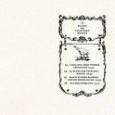 I’ve enjoyed most of the output by (A/Thee) Silver Mt. Zion (Orchestra (& Tra-La-La Band)) over the years. So, I naturally picked up this one when it came out. And I’m torn by the record.
This disc contains 4 lengthy tracks. But unlike fellow Constellation label mates Godspeed you Black Emperor, they are not orchestral pieces that ebb and flow until they reach a climax. Rather, they are almost punk-orchestral pieces. They have different sounds throughout the disc, sounds that are powerful, tender, angry and very raw.
And musically I think the album is pretty great. The problem I have, which I hadn’t noticed on previous releases, was how much I don’t like singer Efrim’s voice. He simply doesn’t have a very good or strong voice. It sounds weak and exposed, and, given the content of what he’s singing about, that is either perfectly appropriate or wildly off base. It seems to work well on “1,000,000 Died to Make This Sound” and yet for “blindblindblind” I just want him to be quiet and let the gorgeous backing choir take over.
And that’s the thing about SMZ, the backing vocal chantings are sublime: whether they are beautifully supportive or disconcertingly discordant, they are perfectly apt to the songs.
I guess when I think of SMZ I think of them as a collective band, an orchestra who works together to create their sound, and in many instances on Thirteen… Efrim just stands out too much. And who knows, maybe that’s the point, maybe that’s the punk aesthetic they wanted to bring to the album, I just think it takes a little something away from the beautiful noise they make.
[READ: March 4, 2009] “The Daughters of the Moon”
This is the first piece I have read by Italo Calvino. Calvino’s name has been around for ages, but I honestly didn’t know a thing about him.
This story was written in 1968 (and was just translated into English) and as soon as I began reading it, I knew that it was a dated piece. Not because of things like mentioning Life magazine, but because the naked women that populate the story were all referred to as “girls.” And there was something about it that made my pop culture references hit upon Woody Allen’s early 1970s movie where he calls all the women that he’s interested in “girls.” It seems strange that that stood out to me so much, but it just came across as something that a writer wouldn’t write anymore, or even pre 1960s. At least as far as naked women were concerned.
And, about the naked women…
The story concerns the disintegration, capture and removal of the moon. It is told by Qfwfq, who fills in the details of this extraordinary event. Despite the fact that the narrator is named Qfwfq and it concerns the destruction of the moon, the story is set in Manhattan.
The moon is off course, it is wobbly and disconsolate. And so are the residents of Earth. One night, when Qfwfq is passing Central Park, he sees a naked woman in the park; she has removed all of her clothes and is lying prostrate to the moon. She climbs on to his car and they race across the city to a large junkyard, where she and many other naked women support the moon with their power.
But soon a crane comes and tries to add the moon to the junkyard’s pile of old, discarded materials.
The story is a thinly veiled allegory of consumerism and disposable culture. And I suppose that the allegory is so thinly veiled that I found it a little too obvious. Maybe, it’s because the story is nearly 40 years old, and the topic is always in discussion now, but it seemed very obvious to me.

 SOUNDTRACK: JUNO Soundtrack (2007).
 Late on the bandwagon with this soundtrack. But then, I only really watch movies on TV these days, so I’m often late to the bandwagon.
 SOUNDTRACK: ELBOW-Leaders of the Free World (2005).
 So this is where Peter Gabriel has been!
 SOUNDTRACK: SUPERGRASS-Diamond Hoo Ha (2008).
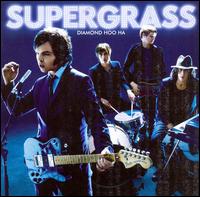 I’ve enjoyed Supergrass since they were young whipper-snappers on their first album I Should Coco. It was a mix of fast catchy pop about being young and foolish. I was even more impressed with the expanded sounds on their follow-up In It for the Money.
 SOUNDTRACK: LOVE-Da Capo (1967).
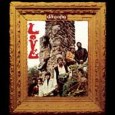 A few years ago, my friend John gave me Love’s Forever Changes. I’ve enjoyed that disc very much and decided to get some other Love music. I chose Da Capo (their second album, and the one just prior to Forever Changes) for two reasons. One: Rush did a cover of “Seven and Seven Is” on their Flashback CD and two: there’s an 18 minute song on it, and I love me an eighteen minute song.
 SOUNDTRACK: SUFJAN STEVENS–Astral Inter Planet Space Captain Christmas Infinity Voyage-Songs for Christmas Vol. VIII (2008).
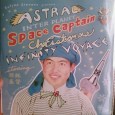 I downloaded this disc from an online source. And no I don’t feel bad about it because it wasn’t officially released, so no one is losing money. If it ever gets released I’ll surely buy it.
 This EP comes very close to being my favorite; it may even beat vol 3. In part because the disc is 35 minutes long (still short for Sufjan Stevens but longer than some bands’ full lengths).
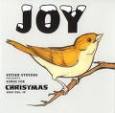 This disc has only one guest on it: Bridgit DeCook. And she adds some very nice harmonies to some of the songs. It also contains only one short (less than a minute) instrumental: “The First Noel” (which is a lot of la las and is really nice)The rest of the disc stays around the 3-4 minute mark, with no long songs.
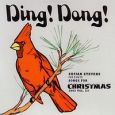 Disc Three of the Sufjan Christmas collection is my favorite. It returns to the more mellow, folksy style of the first disc (and is replete with banjo!). It opens with some thing of a reprise of “O Come, O Come Emanuel” (only a minute long). It’s piano and vocals and very pretty. It proceeds to his boppingest, Christmas song on the whole set: “Come on, Let’s Boogey to the Elf Dance” with multiple singers and lots of instruments (and a fugue pattern of voices, too). It continues with two traditional songs: “We Three Kings” (possibly the best version I heard all season) and “O Holy Night.” I’ve mentioned that “O Holy Night is one of my favorite Christmas songs, and this version is quite good, with lovely harmonies (from different people listed although, no one credited specifically for the track) and the way it builds to such a full song by the end.
 If we imagine that Sufjan had fun with vol. 1 one, then he must have had twice as much fun with vol. 2. It’s nearly twice as long and full of a lot of short ditties. “Angels We Have Heard on High” and “Hark the Herald Angels Sing” are short (less than a minute) instrumental versions (on keyboards which almost sound like a music box) of those songs (something that will become prominent throughout the series). I love his version of “I Saw Three Ships,” the instrumentation is exotic and wonderful.

