Feeds:
Posts
Comments

Archive for the ‘New Yorker’ Category

SOUNDTRACK: BISHOP MOROCCO-“White City” (2010).
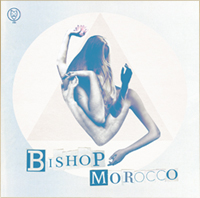
I’d never heard of Bishop Morocco.  Then they played this song on CBC Radio 3.  “White City” is a fascinating confluence of influences.  It sounds somehow late 80s/early 90s yet the the electronic drum sound is decideldy retro, early 80s.

The guitars are heavuily vibratoed.  As are the vocals.  It’s a surpiringly full sound given the limited instrumentation (it’s pretty much guitars and drums).  And it’s quite gloomy (circa The Cure’s Pornography), and yet once the chorus kicks in (still vibratoed, but now major chords) the song perks up (some).
The CBC site has 4 songs by them, and each one confirms that the early New Order/Cure sound is what they’re shooting for.  The cover of their EP “Last  Year’s Disco Guitars” really seems to encapsulate their sound (more so than their album cover does).  I enjoyed the song but after a few listens, I grew kind of bored by it.

[READ: July 4, 2010] “The Entire Northern Side was Covered with Fire”

Rivka Galchen is a completely new author to me.  This was a weird little story that I enjoyed quite a lot, because even though it seemed to be all over the place, narrative-wise, it was actually quite focused.  The narrator is an author who has a burgeoning fan base: male prisoners, who write letters. But of equal importance is that at the time that she sold her movie, her husband had just left her.  Out of the blue.

Although perhaps not out of the blue.  Because in a very humorous (darkly humorous) bit, we learn that all of her friends knew of her husband’s site: i-can’t-stand-my-wife.blogspot.com.   (more…)

Read Full Post »

SOUNDTRACK: QUICKSILVER MESSENGER SERVICE-Quicksilver Messenger Service (1968).

For me, QMS have always been mythical–like a unicorn or a gryphon–I had no real proof that they existed, but I have seen glimpses.  I think that this record, along with Steely Dan’s Aja and all of the records of Lee “Scratch” Perry were on every first page of every Columbia House ad and catalog ever.  And yet, I had never heard them or known anyone who listened to them.

Well, thank you vacation house iPod!  The first QMS album was here and I got to listen to it!  All these years I assumed that QMS, with that weird name were some kind of southern rock band like Molly Hatchet or Badfinger.  Boy was I wrong!  They are steeped in the psychedelic sounds of the late 60s (their lead singer even wrote the sixties’ anthem “Get Together”–although he never recorded it).  Much of the story about the band seems to involve the main guy’s drug bust which kept him, well, out of the band.

But anyway, the music sounds not like Jefferson Airplane, and other psychedelic bands of the era.  But I think mostly it’s the recording style more than the music (lots of echo and reverb and very tinny guitars) that keeps that sound together.  It’s a sound that I like in small doses (and in big hits) but one which I don’t enjoy a lot of–it seems like if I’ve heard it on classic rock radio, then I like it, otherwise, not so much.

The disc has a couple of long instrumental sections which are interesting.  The 12 minute “The Fool”, in particular is home to lots of exploration.  But it feels like they didn’t go far enough since none of the songs are fully instrumental.

Nevertheless, it’s nice to finally know what the band sounds like; maybe it would have been a penny well spent.

[READ: July 3, 2010] “What You Do Out Here, When You’re Alone”

This story begins in medias res.  We know that something has happened, that Max calls it the Accident and that his wife doesn’t.  Max’s wife Lilli was disliked by his brothers (they’d even had an intervention, trying to convince him to dump her), but Max was always defending her, so that was no big deal.  She always acted like she didn’t care what anyone thought of her.  Until they moved to the Oaks, when she became Martha Stewart in an attempt to fit in with everyone else.  Max didn’t try to fit in.

But that has nothing to do with the accident.  Rather, the accident concerns their son, Harley.  He did not adjust to the Oaks well at all, and he goes off and gets into trouble and has, well, an accident.  Lilli blames Max, and Max has been stuck in inertia for three weeks since it happened.

The story starts out confusing but intriguing.  The confusion was deliberate, I believe; the reader knows very little of what is going on with this accident, even when all the details are revealed.  And yet it’s the glimpses of the hidden information that keep you riveted.  Especially as more details, more horrible details, come to light. (more…)

Read Full Post »

SOUNDTRACK: JOHN PRINE-“New Train” & “Ain’t Hurtin’ Nobody” (1995).

We’re staying at a beach house for the 4th of July.  There’s John Prine on the iPod.  I’ve never heard him before, although I have of course heard of him.

We listened to several of his tracks and I enjoyed them quite a bit.  Midway through the second or third track I realized that his music is absolutely perfect for hanging around eating brunch at a beach house.  I can’t remember a single thing about these songs, and I probably couldn’t even find them again on the iPod, but they were perfect for the mood.  Okay, they were on a playlist and were easy to find, which is why they are titled now.

I can’t wait to check out Quicksilver Messenger Service!

[READ: July 3, 2010] “Here We Aren’t, So Quickly”

I enjoyed Foer’s Extremely Loud and Incredibly Close very much, although I haven’t read his first novel (or his nonfiction piece).  This short story is, not gimmicky exactly, it just feels awkward.  It is quite short (two pages), but it resolves itself quite slowly.

The opening paragraph is many sentences that start with I (“I was not good at drawing faces. I was just joking most of the time”).  The second paragraph is many sentences that start with You (You were not able to ignore furniture imperfections.  You were too light to arm the airbag”).  And the story proceeds alternating bits of data from one side to the other, back and forth.  I found it very difficult to read. (more…)

Read Full Post »

SOUNDTRACK: SELF-“Trunk Fulla Amps” (2000).

I bought an album by Self many years ago.  They had since released several other discs, but I hadn’t heard any of them.  Then, they came out with this fantastic and very vulgar song.  It reeks of one-hit wonder status and yet it is super catchy (and rather funny).

The lyrics, simply enough: “I got a trunk fulla amps motherfucker.”  But each verse showcases the main guy from Self’s vocal tricks.  “I gotta trunk fulla amps motherfucker, like E.L.O. (Mama!)” or “like Glenn Danzig (Mutherrr!)”.  Plus the song itself rocks like nobody’s business.

I don’t even remember of the rest of the album is any good, but this song will spruce up any mix CD (that’s not afraid of dirty words).

[READ: July 3, 2010] “The Pilot”

What a perfect time to read the New Yorker‘s 20 under 40 stories than a 4th of July holiday at Long Beach Island?

This first story, “The Pilot” is by one of my new favorite authors, Joshua Ferris.  This piece is a simple story about an invitation to a party.  But the twist in the story is that the invitation is sent by email, and the recipient of the email, a neurotic Hollywood guy, spends the bulk of the beginning of the story wondering whether he really should have received the invitation or if it was some kind of mass mailing mistake (since the invite was sent to a large group that was bcc’d).

The party is given by Kate Lovelt.  She’s celebrating the wrapping of the very successful third season of “Death in the Family,” a sitcom with an excellent premise that will no doubt be turned into a show in real life soon enough.   Really, read the story just for the description of “Death” and let’s see how quickly it comes true.  Lawrence is trying to put the wraps on his pilot, but he keeps procrastinating.  He’s also a recovering alcoholic. (more…)

Read Full Post »

SOUNDTRACK: ZEUS-“Kindergarten” (2010).

Continuing my march through CBC Radio 3: The radio announcer dude said that this album might make the long list for the Polaris Prize.

Zeus is a Toronto based band that has worked as a backup band for one of the guys from Broken Social Scene.  This is an acoustic guitar/quietly distorted electric guitar track that’s poppy and fairly commercial.

I wasn’t all that inspired by it, until near the end where these wild backing vocals come in (and it gets something of an Arcade Fire vibe).  The second song on Zeus’ page, “Marching Through Your Head” is much more promising.  A catchy bouncy pop track with enough weirdness to keep it interesting.

They do a cover of Genesis’ “That’s All” which is described as “raucous.”  And if you click on the link you’d be hard pressed to disagree with that assessment.

[READ: June 14, 2010] “Mask”

Hot on the heels of the New Yorker Summer Fiction Issue, I received this issue of The Walrus with their own Summer Fiction section called “Canadian Studies.”  This issue features nine authors.  They were all asked to write “the most Canadian story they could think of.”  Now, I’ll start out by saying I’m not Canadian, and I don’t want to suggest that I know what the most Canadian story should be like. At the same time, I read The Walrus, I watch a lot of Canadian TV, so I have a slight grasp of the culture.  So while I know a Canadian story isn’t going to be about igloos and elk, I’m certain that some more subtle stories will be lost on me.

Lisa Moore’s story is first in the collection.  It is quite short.   And I didn’t think it was especially Canadian, although perhaps, given one of my Vancouver friends’ proclivities, it is. (more…)

Read Full Post »

This week’s New Yorker contains a list of the 20 authors under age 40 that they predict we’ll be talking about for years to come.  Their criteria:

did we want to choose the writers who had already proved themselves or those whom we expected to excel in years to come? A good list, we came to think, should include both.

They have published eight of these authors in the current issue and are publishing the remaining 12 over the next 12 weeks.  I’m particularly excited that they chose to do this now.  Since I’m currently involved in two big book projects, it’s convenient to be able to read a whole bunch of short stories to intersperse between big posts.

I’ve read half of the authors already (likely in The New Yorker and McSweeney‘s).  And have heard of many of the others.   The list is below: (more…)

Read Full Post »

SOUNDTRACK: THE BEATLES-Help! (1965).

At last, a Beatles album that I knew from start to finish.  And here it is, another soundtrack album.  This disc is the first that starts to really embrace the diversity that The Beatles were capable of.
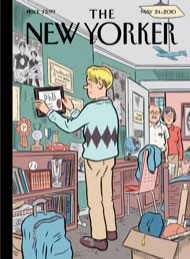
The title track starts out with the fairly shocking screams of “Help!” but it settles nicely into a poppy Beatles track.  Of course, I’ve yet to see the film of Help, so I don’t know how these songs fit in the movie. But as with A Hard Day’s Night, the first half of the songs were in the movie and the second half were not.  And somehow I’m surprised that “Act Naturally” (one of their funnier songs, even if they didn’t write it themselves) was not in the film.

Their other cover, “Dizzy Miss Lizzy” is probably my least favorite track (I just don’t like their cover choices).  But by then, the disc has well proven itself to be fantastic.

This also leads me to my first “huh?” moment with Beatles lyrics.  I have never understood “Ticket to Ride.” “She’s got a ticket to ride and she don’t care.”  Okay.  Why should I care, then?  I suppose the verses reveal more of the story, but from a chorus point of view, that’s a head scratcher.

To me, this is where The Beatles became THE BEATLES.

Oh, and did you know the semaphore doesn’t actually spell “HELP”?  They were going to do that, but the photographer didn’t like the way those semaphore letters looked.  So, he created this arrangement, which spells “NUJV.”

[READ: May 25, 2010] “please, thank you”

This story is written from the point of view of a stroke victim.  Mr Sanchez had a stroke and is hospitalized.  And we see him watching, unable to communicate, frustrated as people–nurses and others–hover around him, asking questions, turning on lights when he’s trying to sleep, and–the nerve–speaking to him in Spanish as if that was why he didn’t answer.

As the story progresses, we watch Mr Sanchez get stronger, go to therapy, feel better about himself and even, kind of, become friendly with the nurses and others who work in the hospital.

The story is basically that simple: regrowth after a stroke.  However, the writing style–the first person narrative–was absolutely compelling.  I enjoyed that the story was from his point of view, so we learned details as he felt they were worth revealing.  I enjoyed slowly learning more about his family.  And I really enjoyed learning why the story was written with no capital letters. (more…)

Read Full Post »

SOUNDTRACK: FRIGHTENED RABBIT-The Winter of Mixed Drinks (2010).

I enjoyed Frightened Rabbit’s previous disc ever so much: a twisted blend of rocking folk music and very dark lyrics.  The fact that a number of these songs were used in Chuck was a treat for me.
I’ve never heard their first disc, so I don’t know how much their songwriting changed from disc 1 to disc 2.  But there’s a pretty huge leap from disc 2 to disc 3.

The most notable track has got to be “Swim Until You Can’t See Land.”   And it’s notable for having a really rocking and catchy and undeniable chorus.  They liked it so much, they reprise it later in the disc (with new instrumentation and such) on “Man/Bag of Sand.”

The rest of the disc sounds like Frightened Rabbit, but like the full band version.  There’s just so much music, that it actually distracts a bit from the lyrics (on the previous disc, the lyrics were certainly more of the focus).  There’s even a string arrangement on “Living in Colour.”

And yet despite all of these changes, they never lose what makes FR special: that voice and that outlook.  Although I’m sure I would have enjoyed if this disc was similar to the previous one, I’m always delighted to see a band take some chances and try something different.  And here they did, and it works wonderfully.

[READ: May 19, 2010] “Ash”

On April 14, Iceland’s volcano Eyjafjallajokull erupted.  And here, barely a month later, Roddy Doyle has written a story in which that eruption plays a role.  I’m impressed enough that he could get a coherent story written in that short amount of time, but I’m amazed that it was squeezed so quickly into The New Yorker‘s fiction schedule.  Admittedly, I don’t know how The New Yorker does anything, so I don’t know if they had a slot open (doubtful) or if they had to push back other stories (unlikely) or maybe he was slotted to give them something else, and whipped this out instead?  Beats me.  Whatever the reason, I was really surprised to see this here. (more…)

Read Full Post »

SOUNDTRACK: The Beatles-With the Beatles (1963).
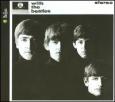
Reading the liner notes to these discs gives me a greater appreciation for what the Beatles did.  They put out these first two records in the span of eight months and recorded both of the discs in a matter of like 26 hours each.  That’s pretty amazing.

I’m also starting to think that mono may be the way to go with these early discs.  I mean I’m a stereo guy, but I’m listening to these discs in the car, and it’s weird to have all the instruments on my side and all the vocals over by the passenger seat.

As for this disc itself, again, I was surprised by how many songs I didn’t know on it.  It’s also funny to hear so many cover songs (although it makes sense this early in their career).  Especially since, for the most part, their originals are quite a bit better.  It’s also funny how many of these covers I think of as Beatles songs.  Especially, “Money.”  This disc closer is like “Twist and Shout” in that it really rocks the house down at the close of the disc.  It’s not quite as intense as “Twist” but it’s close.

The only real dud on the disc is “Roll Over Beethoven” which is remarkably stiff for a song about rock and roll.

Whether it’s the production or the amount of time they spent in the studio, this disc sounds more accomplished than the first.  And I can really see  what all the excitement must have been about.  Four good-looking guys singing about love.  What could be better than that?

[READ: May 11, 2010] “Free Fruit for Young Widows”

After reading the Holocaust-based story in McSweeney’s (post coming soon), and the Holocaust section of 2666, the last thing I was ready for was another Holocaust story.  And what a doozy this one is.

Sometimes, when reading a Holocaust based story, I worry that my emotions about the Holocaust will overshadow the quality of the story.  In other words, is it a cheap ploy, an easy setting to get a reaction from the reader.  This story definitely is not. (more…)

Read Full Post »

SOUNDTRACK: THE BEATLES-Please Please Me (1963).
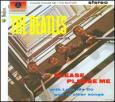
I was never a big fan of the Beatles.  I think I was too young for them.  By the time I got into music, the Beatles were passe.  I’ve always enjoyed the later psychedelic stuff, but that “rock n’ roll” stuff was never my thing.

Sarah on the other hand was a huge Beatles fan.  HUGE!  When the remastered discs came out I got Sarah all of them over a few different holidays.  And, I thought it would be worth it for me to see what this Fab Four was all about.

The first thing I noticed about this disc was how many songs I didn’t know on it!  Now, I was fairly certain that I knew every Beatles song.  I mean, I’ve listened to classic rock radio since I was about 10, so how could I not have heard every Beatles song?  But in this disc, I did not know: “Misery,” “Chains,” “Boys” (how could I never have heard Ringo’s first ever vocal attempt?), and “A Taste of Honey.”  Shocking.

I’m still not a huge fan of this period, although after listening to the disc a few times I do see what the fuss is about (the liner notes also helped contextualize for me).  For some reason, I really don’t like the harmonica sound on a number of tracks (“Love Me Do” and “Please Please Me”).

But having said that, “Please Please Me” is a really great song–the harmonies are tremendous.  And the liner notes led me to understand that this style of pop/rock n’ roll was fairly new to audiences back in 1963.  Contextually, “Twist and Shout” must have sounded like Metallica to them.  John is screaming his head off, the ah’s (in 4 part harmony) with John’s high pitched scream must have had people running in fear.  Even now, 47 years later, that song still packs a wallop.

And, man was George funny looking back then.

[READ: May 5, 2010] “Uncle Rock”

This very short story started out simply enough: Erick’s mother is clearly very hot, and she gets hit on, like, all the time.  Since his mom is single, she considers many of these suitors, and if he is dressed sufficiently well, she will even accept his request for a date.

Erick is 11 and doesn’t speak to the suitors.  He doesn’t give a reason for this (his mother says it’s because he doesn’t speak English so well, but that’s not true).   Over the course of the story, we learn that Erick’s mom has dated quite a diverse group of men, and in many ways Erick has benefited from their largesse.

It is only when we meet her new boyfriend, Roque (known as Uncle Rock) that Erick’s life appears to settle down, and the story shifts dramatically. (more…)

Read Full Post »

« Newer Posts - Older Posts »