Feeds:
Posts
Comments

Archive for the ‘Harper’s’ Category

SOUNDTRACK: LES CLAYPOOL-5 Gallons of Diesel (DVD) (2005).

I’ve loved Primus for years.  And if you love Primus, chances are you love Les Claypool.  And Les Claypool has created and released music with all manner of bands since Primus broke up (they have since gotten back together and have planned a new release for July).  I don’t love all of his solo releases, but they all have something to commend them, and he’s made some great, unheralded music during those years.

This DVD covers the years from Sausage through to 2005.  At first I was pretty excited by the DVD.  The set opens with the off the wall video for Sausage’s “Riddles Are Abound Tonight” which is followed by a mercifully short “making of” video.

Then things started to go downhill somewhat.  The rest of the DVD is live, which is fine (Les live is a thing of beauty). It’s just that for many of the videos the quality is terrible.  The audio is also not ideal all the way through (that may have been my setup, but there were certainly songs that were much quieter than others).  Now I accept that there weren’t professional film crews out for Les Claypool’s Holy Mackerel tour, and that these videos are basically bootleg, but it  seems like they may have spruced them up a bit for the DVD.

Things change with the switch to Oysterhead.  I could have watched several songs from Oysterhead and I wonder why they chose only one.  This is a professional quality mix (although it is a little dark) and I have to say that the whole song is stolen by Trey Anastasio’s guitar thing.  It’s a guitar (called the MatterHorn) but during the verses of the song it appears to be a kind of theremin on the reverse side (with a full-sized antler sticking out of the bottom) .  He holds the thing upside down and waves at it to generate noise.  It was bewitching.
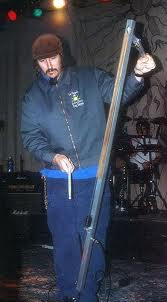
But Trey wasn’t the only one with a weird instrument. For the Frog Brigade set(s) on one of the songs, Les plays a “bass” which is just one string (called the Whamola). He hits it with a stick and changes the notes with a movable handle that he raises and lowers.  I’ve never seen anything like that, either.  Most of the Frog Brigade set is outside at a festival.  The lighting is good but the sound is awful.  In one song, the poor guy on percussion is banging away at various things and you simply cannot hear them.  Les also uses a secondary microphone (the Sandman–which has a great story behind it) but its volume is also quite low, which is a shame as you can’t hear him for quite a bit.

When Colonel Claypool’s Bucket of Bernie Brains the setting is an odd one (they appear to be on a cruise(?)).  It’s basically two lengthy jams, which is fine.  Buckethead amazes with his skills.  But the Bernie on keyboards, I can’t tell if he was screwing up or messing around during his solos.

There’s two more songs attributed to just Les Claypool, and this version of “Riddles Are Abound Tonight” is especially neat because there is a sitar playing the majority of the riff.

The DVD extras are fun.  There’s a weird set from a band called 3 Guys Name Schmo which is 2 bassists and a drummer.  The other bassist is miked very loud and it’s hard to hear Les (imagine outbassing Les Claypool!).  Then there’s the second official video on the disc for “Buzzards of Green Hill” (very low budget).  This comes with a making of the video video and a making of the audio video.  Both are interesting and brief, giving tidbits of info without overwhelming us.

The final two items come from an actual TV show called Fly Fishing the World.  I don’t fish, so I never knew this show existed.  But sure enough, there’s our Les going to two separate locations and fishing on.  The best part is that they play lots of Primus music between fishing (probably the most Primus music ever played on non-music TV), and they interview him as well (I didn’t know he had such cute kids). Despite my not knowing the show or caring about fishing, I found the whole program enjoyable and fascinating (and they catch and release as well).  It’s well worth the time.

So overall, this is a mixed bag.  There’s not a lot of video of Les’ non-Primus music out there, so in that respect this is great.  I just wish the quality was better.

[READ: March 25, 2011] “Life in Three Houses”

This is an excerpt from Suicide.  The introduction states that days after delivering the manuscript of Suicide, Levé killed himself.  I suspect that that is the main reason that this story was published here.

It opens promisingly and very interestingly in the second person.  The story tells us that you set off to play tennis with your wife, but you backtrack and go into the basement where you shoot yourself.  Your wife finds you moments later but misses the clue you set out for her (that was handled very well).

The rest of the story (and there’s quite a lot) gets confusing.  First off because it stays in the second person (even after death) but it also goes into apparent flashbacks.  Even more confusing is the addition of an I as the narrator.  An I who knows “you” but who was not present for the suicide so how could he have all these details?

The book is being published by Dalkey Archive Press.  It’s possible that the excerpts do an injustice to the full book, but I fear that I will not be reading any more by this author.

It was translated by Jan Steyn.

For ease of searching I include: Leve

Read Full Post »

SOUNDTRACK: THE VASELINES-The Way of the Vaselines (1992).

I had never heard of The Vaselines until Kurt Cobain praised them so much back in 1992.  SubPop quickly issued Way of the Vaselines, a fairly comprehensive collection of their recordings.

I bought it and thought it was okay.  Not revolutionary or anything, but decent indie pop.  And I think my lackluster response is in part because I often react the same way to what you’d call originators of a scene when I’ve already been in the scene for a while.  Once people have blown the fundamentals away, it’s hard to appreciate the fundamentals anymore.

And so I’ve given them a new listen with more appreciative ears.  I also enjoyed poppier music a lot more now than I did in 1992 (it’s funny how poppy The Vaselines are and yet how noisy Cobain was).

The songs really hold up quite well in a Velvet Underground way (“Rory Rides Me Raw”), or the left field dance anthem cover of Divine’s “You Think You’re a Man.”  They also have some fast punk songs (“Dying for It”).

Nirvana covered three of their songs, “Son of a Gun” and more famously “Molly’s Lips.”  (The Vaselines version of “Molly” is much cuter (with a bike horn in the chorus)).  And, perhaps most famously, “Jesus Wants Me for a Sunbeam” (which is pretty close to the original).

The Vaselines sang a lot about sex, (“Sex Sux,” “Monsterpussy”) that was disguised in a largely pop context.  But they also had inclinations towards fuzzy punk.

I think what’s so wonderful about this collection is that it’s four Scottish kids who had good pop sensibilities (and some talent) playing what they liked.  They’re an amateur love to the whole disc, and yet for all of their lo-fi ness, the songs sound good–even if you can’t always understand the lyrics. (Sub Pop remastered and re-released the package with bonus tracks as Enter the Vaselines, but I’ll not be getting that).

Were they, as Allmusic says, the best pop band from 1986 to 1989? I don’t know.  But they sure played some great songs.  I’m don’t think I need to hear their reunited selves, because there’s something about the charm of these Edinburgh kids playing these songs in something of a vacuum that I rather like.  It only took two listens to this record (probably the first time in ten years) for me to see how much was here.

[READ: April 16, 2011] “Underachievers Please Try Harder”

The subtitle of this article is “Indie Rock Reunites on the English Coast,” and I’m mentioning it because it got me to listen to the Vaselines record again.

It was an interesting article about the state of music and “festival” tours, specifically All Tomorrow’s Parties.  (This year’s ATP spinoff, I’ll Be Your Mirror will be in Asbury Park, New Jersey! and features Portishead, Mogwai and A Silver Mount Zion among others–were I 20 years younger, I’d be there). (more…)

Read Full Post »

SOUNDTRACK: BUKE AND GASS-Tiny Desk Concert #95 (December 6, 2010).

Buke and Gass’ album Riposte made the NPR’s 50 Favorites of 2010.  I listened to a track and liked it but I wasn’t blown away by it.  Nevertheless, I wanted to check out this Tiny Desk concert because I was sure it would be interesting.  And so it is.  And it makes me like them infinitely more–enough to check out their whole album.

The initial attraction to Buke and Gass is their homemade instruments (and if you watch the video, you can kind of see how they work, except I want to know more details (there must be foot pedals of all kinds to make these exquisite sounds)).  Arone Dyer sings and plays a modified baritone ukulele (who even knew such a thing existed) and makes incredibly squalling, cool effects come from it.  Aron Sanchez plays a modified guitar/bass hybrid (there’s bass and guitar strings-the bass are filtered through one amp, while the guitar goes through another).  And someone is playing a tambourine and a bass drum (I think it’s Sanchez with his (unseen) feet).

The songs are weird but incredibly catchy.  Dyer’s voice is wonderful, and perhaps the most amazing thing is that she seems to be playing guitar harmonies to complement her voice and it makes it sound like there are two singers.  It’s also amazing how much noise they make with these two instruments.

The whole set is wonderful and if they can do this on live, I can’t wait to see what the can do with studio magic. Now, just what the hell does their name mean?

[READ: April 15, 2011] “Why I’m a Pacifist”

I enjoyed Nicholson Baker’s earlier works quit a bit, but I have missed a lot of his more recent releases.  Nevertheless, Baker is unafraid of controversy and I enjoy reading what he has to say.

In this article he defends his belief in pacifism. What’ surprising to me is that in his biographical introduction he talks  about his earlier life as a red-blooded Young Republican.  I never would have figured that Baker has such a past, but he evidently did. When he grew out of that phase, he opened himself up to the possibilities of pacifism (which his wife thoroughly supported). (more…)

Read Full Post »

SOUNDTRACK: GUSTER-World Cafe Live December 3, 2010 (2010).

I heard that Guster was going to be on the Free at Noon show about fifteen minutes before it started (and then I had to go to work). So I missed this show.  I was pretty excited to see that it was available on World Cafe Live.  But I was surprised to see that the show (plus a fourteen minute interview!) was only about 28 minutes long.  I’ve had questions about how the World Cafe shows work.  It always seems like the show would be longer (four songs for a concert seems like more trouble than its worth).  And then I found…

This page which helps explain the World Cafe stage a bit more.  The Guster concert was a Free at Noon show for WXPN in Philadelphia. The full set list was Set List:  1. Architects & Engineers  2. Satellite  3. Hercules  4. This Could All Be Yours  5. Bad Bad World  6. Stay With Me, Jesus  7. Do You Love Me  8. Hang On.  So the World Cafe archives truncate the sets (which is what it feels like on some of the shows–at least the ones that have an audience).

But then beggars can’t be choosers (especially for a free show).  So, this download includes:  Satellite, This Could All Be Yours, Stay With Me, Jesus and Do You Love Me (plus the lengthy interview).  The set is fantastic (as you expect from Guster), their harmonies are tight and sharp, the songs sound wonderful and they are catchy as all get out.  Two of these songs are from their new album, and they work perfectly with the older ones (even if they do slow things down a wee bit).

The interview is also interesting as it reveals the guys to be smart and thoughtful and it shows a side of them that’s not always apparent from their songs.  It’s a wonderful download.  Thanks NPR.

[READ: April 16, 2011] “The Ice Worm”

This story began as one thing and then turned into something else entirely. As the story opens, Ilka Weiss is in a nursing home, and we learn that her daughter, Maggie, has come to take her home (even though the nurses think she should stay).  When we see Ilka, she is reciting the Bible from memory (the passage where King David is going to fight the Philistines).  This goes on for a page (a funny scene with the family interrupting her but her continuing unabated), but it sets a certain tone for the story.

The next scene sees Maggie getting the runaround in bureaucratic hell as she tries to arrange for a visiting nurse to come for her mother.  It is an absolute hell of misinformation.  And she is not able to secure anything for two weeks.  When they finally call back, Maggie has taken Ilka to the hospital. (more…)

Read Full Post »

SOUNDTRACK: THURSTON MOORE-in studio at KEXP, March 11, 2008 (2008).

This interview was headlined ‘Thurston Moore: Not a “Real Guitar Player”?’ which is pretty funny.  The Sonic Youth guys have been defying conventional guitar playing for years.  And then in 2008 Thurston put out a solo album called Trees Outside the Academy, a beautiful delicate album of acoustic guitar songs.

The interview covers this very subject and concludes that maybe back when they started he wasn’t a guitar player, but now, 25 years later, he certainly is.  Moore is charming and funny and relates a very amusing story about being on the cover of Guitar Player and then embarrassing himself in front of one of his idols.

But this download is all about the songs.  Thurston (and violinist Samara Lubelski–who plays great accompaniment, but doesn’t really get any on air time to speak) play four songs from Trees: “Sliver>Blue,” “The Shape is in a Trance,” “Frozen Gtr” and “Fri/End.”  He sounds great in this setting, especially under close scrutiny.  I’d always assumed that there was a lot of improv in the SY guitar world, so to hear him play these (admittedly not difficult) songs flawlessly is pretty cool.  I actually wondered if he’d be hesitant (he admits the acoustic guitar is a fairly new thing for him), but not at all (although he says he screwed up on a chorus, but I never heard it.

It’s a great set and its fun to hear Thurston so casual.

[READ: April 14, 2011] “Farther Away”

The subtitle of this essay is “‘Robinson Crusoe,’ David Foster Wallace, and the island of solitude.”  As with Franzen’s other recent essays, this one is also about birding.

Franzen explains that he is hot off the work of a book tour (for Freedom) and is looking for some solitude.  He decides to travel by himself to the island of Alejandro Selkirk, a volcanic mass off the coast of Chile.  The island is named after Alexander Selkirk, the Scottish explorer who is considered the basis for Robinson Crusoe.  As such, Franzen decides to travel to the remote island, decompress and read Robinson Crusoe while he’s at it.  The locals call the island Masafuera.

I haven’t read Robinson Crusoe as an adult, so I don’t know the ins and outs of the story.  Franzen has a personal resonance with the story because it was the only novel that meant anything to his father (which must say something about Franzen’s father, no?).  The upshot of what it meant to Franzen’s father was that his father took him and his brother camping a lot as a way to get away from everything.

However, for Franzen, on his first experience of being away from home for a few days (at 16 with a camping group), he had terrible homesickness.  He was only able to deal with the homesickness by writing letters.

When he arrives on Masafuera, Franzen’s writing really takes off.  He has some wonderful prose about this treacherous space.  Although he comes off as something of a yutz for relying on a Google map to learn about the terrain and for bringing an old GPS which has more or less run out of battery. (more…)

Read Full Post »

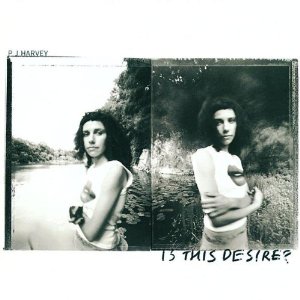
SOUNDTRACK: PJ HARVEY-Is This Desire? (1998).

After the (to me) disappointing To Bring You My Love, PJ Harvey came back with Is This Desire? This disc seems like it took the techniques she explored on To Bring and added more structure to her songs.  Harvey’s songs are by nature minimalist, and that’s why I found To Bring disappointing: it was too minimal.  She fleshes things out here–there’s a kind of Nick Cave quality to the disc as well, especially on the opener “Angeline.”  (She had sung with Cave on his then recent disc)).

These first two songs show an amazing range.  “The Sky Lit Up” has some odd guitar effects and some crazy screams later in the song.  It’s less than 2 minutes long.  As is “My Beautiful Leah,” which is over the top noisy and distorted.  It’s as sinister a song as Harvey has written.  “The Wind” has a wonderful whispered vocal, but it is dynamic and allows her quiet background music to forge its own path).  The harmony vocals are a very nice touch.

But it’s “A Perfect Day Elise” that shows that for all of Harvey’s textures and sounds, she really is a singles writer.  This is a noisy track, but the chorus is simply beautiful.  A fantastic anthem for the late 90s.

But then the disc takes a turn for the ethereal.  “Catherine” and “Electric Light” are quiet, creepy numbers that never really engage. “The Garden” tries to come out of this quiet, and manages somewhat.   “Joy” is another of Harvey’s spookier songs (she can do insane things with her voice) that is filled with anguish.

After these tracks, Harvey returns to the earlier style of the disc, with the beautiful, haunting (but not creepy) “The River.”  “No Girl So Sweet” follows with a noisy short track utilizing some techno aspects and a lot of distortion.  Harvey rocks this song very hard with some great vocals, too.

The final track is “Is This Desire?” It opens with just drums and Harvey’s voice.  It builds in complexity until it reaches a  delicate chorus.  It’s a really beautiful, if not dark, song an a nice ending to a CD that is something of a mixed bag.

[READ: March 23, 2011] “Pride”

I tend to read a lot of peculiar short stories.  So every once in a while, I really enjoy reading a story that is simply about a person or two trying to get by. And if you ever want to read stories about simple human connection, Alice Munro is the way to go!

This story confused me at first because I normally assume that the protagonist of Munro’s stories is going to be female.  This one didn’t state one way or another for a few paragraphs, so I was reading him as a girl (especially since he was talking about another girl in his town).

But no, it is about a boy.  It opens in the 1920s in a small town in Canada.  The protagonist is a poor but reasonably happy boy–with a harelip.  The girl he is talking about is named Oneida (an unusual name that did not catch on in town).  Oneida’s family is wealthy.  Like in a class by themselves wealthy.  Until, that is, her father makes a bad investment (with his bank’s money) in steam automobiles and loses more than his money. (more…)

Read Full Post »

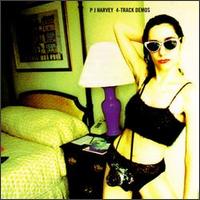
SOUNDTRACK: PJ HARVEY-4-Track Demos (1993).

After the intensity of the Steve Albini produced Rid of Me, Harvey releases this collection of demos.  The amazing thing is that these versions actually seem more intense than the Albini version. Or if not more intense, then certainly more raw.

The songs definitely have an unfinished feel about them, and yet they only vary from the final version in polish (and Albini’s stamp).

“Rid of Me” is just as quiet/loud, and has those high-pitched (and scary) backing vocals.  Speaking of scary vocals, her lead screams in “Legs” are far scarier here than on Rid of Me–like really creepy.  (Which sort of undermines that idea that this was released because Rid of Me was too intense for fans).   “Snake” actually features even creepier vocals–Harvey must have had a field day making these sounds!

I admit that I like the finished version of “50 Ft Queenie” better,”but there’s something about this version of “Yuri-G” that I like better.

The disc also has some tracks unreleased elsewhere.  “Reeling” is an organ-propelled song of female strength with the nice lyric: “Robert DeNiro sit on my face.”  “Hardly Wait” is a slow grinder that is fairly quiet for this time period.  “M-Bike” is a cool angry rocker about a guy and his motorcycle which is one of my favorite tracks on the disc.

It’s a great companion to Rid of Me.

[READ: end of February to early March]  original articles that comprise A Supposedly Fun Thing I’ll Never Do Again

As I mentioned last week, I decided to compare the articles in A Supposedly Fun Thing I’ll Never Do Again with the original publications to see what the differences were.  It quickly became obvious that there were a lot of additions to most of the articles, and it seems rather pointless (well, actually it seems exhausting and really outrageously time-consuming) to mention them all.  But what I did want to note was the things that are in the articles that have been removed from the book.   There’s not a lot but there are a few juicy tidbits (especially in the early articles) that are fun to note for anyone who read only the book and not the original articles.

My process for this was rather unthorough: I read the article and then right afterward I read the book.  If I noticed any changes, I made a note on the article version.  Many of them were surprisingly easy to note as DFW’s writing style (especially his idiosyncratic phrases) really stand out.  This is especially true in the Harper’s articles.  The academic ones were less notable, I believe, and I’m sure I missed a bunch.

I’m not sure in any way how these pieces were dealt with initially by the magazine or DFW.  I assume that DFW handed in the larger article (like we see in the book) and the magazine made suggested edits and DFW edited accordingly.  Then the book copies are probably the originals, bt which have also been updated in some way.

In most cases, it’s not really worth reading the original article, but I’m including links (thanks Howling Fantods), for the curious.

As for length, it’s hard to know exactly what the conversion from magazine article to book is.  The “Tornado Alley” tennis article is 8 pages (more like 4 pages when you take out the ads) and the book is 17.  Perhaps more accurately it seems like one Harper’s column = just under one book page.  I’ll try to figure out what the conversion is if I can.

One last note, whenever I say “article” I mean the original magazine version.  And obviously “book” means ASFTINDA. (more…)

Read Full Post »

SOUNDTRACK: DESCENDENTS-Everything Sucks (1996).

My three-year old daughter brought this CD out of the shelf of CDs in my house.  I have no idea why she did; she didn’t say.  But I decided to listen to it as I haven’t in many, many years.

The Descendents have been around for a long time and their early records were mostly 1 or 2 minute blasts of punk.  This disc (their first after a nine-year hiatus) doesn’t deviate too much from that track record.  Although the best song on the disc, “I’m the One” actually has a verse-chorus structure and feels like it’s a full length pop song (when in fact its only 2:15).

“I’m the One” more or less set the stage for the kind of pop punk that Epitaph records (who released this record) would bring to prominence with Bad Religion and Rancid (and the rise of emo).  This record offers a fun mix of ludicrously short songs (35 seconds for “Coffee Mug” and 20 seconds for “Eunuch Boy”) and slightly longer songs.  Six of the songs are under two minutes.  And it’s amazing to hear just how much song you can pack into two minutes.

I haven’t really listened to much punk in the last few years, so this is strangely nostalgic even though it doesn’t really sounded dated.  In fact, the slower songs (the 2:30 “When I Get Old”) has a real Bad Religion feel to it–and they never go out of time.  Interestingly they feel a lot longer than 2 minutes after a whole bunch of 90 second songs.

Even after all these years, “I’m the One” stands up as a great song–funny and catchy, and I’m glad to have heard it again.

[READ: February 17, 2011] “The Miraculous Discovery of Psammetichus I”

Following right after Ladies and Gentlemen, The Bible!, is this short story which “fleshes out” The Histories of Herodotus.  In fact Part I of the story is, I assume, an excerpt from Herodotus.

There are Ten Parts, and each part is designed to add more to the simple history that Herodotus gave us.   Indeed, Psammetichus I was a real King of Egypt.

Herodotus tells us that Psammetichus I was curious whether the Egyptians were the most ancient race.  So he took two children, isolated them and made sure no one spoke to them.  They were fed and cared for just not spoken to.  Finally, the children began saying a word over and over, which the wise men determined was a Phrygian word.  This obviously meant that the Phrygians were an older civilization.

The rest of the story is different examples of studies that Psammetichus I did to determine things.  Many of them are kind of funny (absurd, obviously, and sad but sort of funny): raising two children with birds or apes etc.  After a few sections, one of Psammetichus I’s queens (he had twenty-three who were all infertile (!)) asks why he’s so curious. (more…)

Read Full Post »

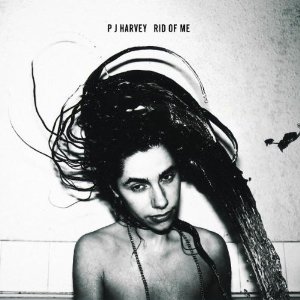
SOUNDTRACK: PJ HARVEY-Rid of Me (1993).

For Rid of Me, PJ Harvey jumped to the big leagues (relatively) by enlisting maniac Steve Albini as a producer.  And he takes the rawness of Dry one step further into a sound that is both raw and sharp.  He really highlights the differences between the highs and lows, the louds and quiets.  And man, when this came out I loved it.

Like NIN’s “March of the Pigs,” the opening of “Rid Of Me” is so quiet that you have to crank up the song really loud.  And then it simply blasts out of the speakers after two quiet verses.

“Legs” turns Harvey’s moan into a voice of distress, really accentuating the hurt in her voice.  And Harvey hasn’t lightened up her attitudes since Dry, especially in the song “Dry” which has the wonderfully disparaging chorus: “You leave me dry.”

“Rub Til It Bleeds” is a simple song that opens with a few guitars and drums but in true Albini fashion it turns into a noisy rocker.  “Man Size Quartet” is a creepy string version of the later song “Man Size” (I’ll bet the two together would sound great).  And the wonderful “Me Jane” is a great mix of rocking guitars and crazy guitar skronk.   Albini really highlights the high-pitched (male) backing vocals, which add an element of creepiness that is very cool.

For me the highlight is “50 Foot Queenie”.  It just absolutely rocks the house from start to finish.  The song is amazing, from the powerful…well…everything including the amazing guitar solo.  “Snake” is a fast rocker (all of 90 seconds long) and “Ecstasy” is a song that feels wrung out, stretched to capacity, like they’ve got nothing left.

It’s not an easy record by any means, but it is very rewarding.  This is a CD that really calls for reamastering.  Because it is too quiet by half, and could really use–not a change in production–just an aural boost.

[READ: end of February and beginning of March] A Supposedly Fun Thing I’ll Never Do Again

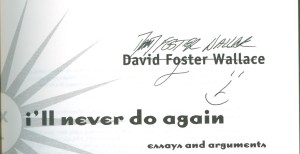
This is a collection of 7 essays that DFW wrote from 1990-1996.  Three were published in Harper’s, two in academic journals, one in Esquire and the last in Premiere.  I devoured this book when it came out (I had adored “Shipping Out” when it was published in Harper’s) and even saw DFW read in Boston (where he signed my copy!).

click to see larger

[Does anyone who was at the reading in Harvard Square…in the Brattle Theater I THINK…remember what excerpts he read?]

The epigram about these articles states: “The following essays have appeared previously (in somewhat different [and sometimes way shorter] forms:)”  It was the “way shorter” that intrigued me enough to check out the originals and compare them to the book versions.  Next week, I’ll be writing a post that compares the two versions, especially focusing on things that are in the articles but NOT in the book (WHA??).

But today I’m just taking about the book itself. (more…)

Read Full Post »

SOUNDTRACK: The 90’s Are Back, Or Whatever… NPR.  (2011).

This is a 90 minute podcast about the music of the 90s.  And, of course, it opens with “The Dream of the 90s” from Portlandia.

I don’t listen to too many full discussions on the All Songs Considered site, but since the 90s were definitely my favorite era of music, I thought it was worth a listen.  Incidentally, it’s funny that the 90s are so meaningful to me when, really I should be a child of the 80s.  But in reality, my 80s music was mostly heavy metal, because I hated all pop radio then.

This radio show (available for free download here) features four NPR music geeks talking about the music they loved during the 90s.  There are some obvious points (“Smells Like Teen Spirit,” “1979,” “Song 2,” “Loser”), but some unexpected songs as well: “Grace” (Jeff Buckley), “Long Snake Moan” (PJ Harvey).  And of course, probably the biggest surprise: Sebadoh’s “Soul and Fire as “song of the decade.”

The hosts have a lot of fun with bad songs (severe bashing on Collective Soul or hilariously cueing up “Can’t Touch This” to punk one of the speakers when they are talking about Missy Elliot–yup, it’s not all alt rock, Missy Elliott and Lauren Hill crop up along with Johnny Cash and Nusrat Fateh Ali Khan).

But let’s not forget my perennial favorite from Cornershop: “Brimful of Asha.”  And, yes, My Bloody Valentine.

These days, when I do listen to the radio, I find that the stations I prefer tend to play a lot of 90s songs, but it’s surprising to me how infrequently they play some of these really big artists (I hear a lot of Harvey Danger, but no My Bloody Valentine).  It’s funny that one of the songs they talk about, Len’s “Steal My Sunshine” I actually heard coming out of a radio at a pool while on vacation in Florida this past January (!?!).

It’s a fun segment and makes me think that although I do like a lot of new music, I’m a gonna hafta retire to Portland.

P.S. Stay till the end of the show for the hilarious impersonation of Trent Reznor.

[READ: February 17, 2011] 3 book reviews

Zadie Smith is an author whose output I fully intend to ingest one of these days.  So I figured why not read a few of her book reviews, too.

Smith reviews three new titles: Harlem is Nowhere: A Journey to the Mecca of Black America, by Sharifa Rhodes-Pitts; My Prizes by Thomas Bernhard; and While the Women are Sleeping by Javier Marías.

I’m intrigued by her review of Harlem is Nowhere.  She seemed to be rather critical of the author, especially of her mannerisms: like calling James Baldwin’s “habit of speaking to Harlem folk, having experiences, and deriving from these encounters “a metaphor about all of black existence”–“The Jimmy.”  (where others might have simply called it “writing”).  Or the fact that the author describes herself as a “single girl” as if that has anything to do with anything.

The second half of the review concedes that once you abandon wanting to known anything precise about historical Harlem, it’s a lovely book.  Smith revels in learning about James VanDerZee, Raven Chanticleer and Alexander Gumby (and her enthusiasm makes me want to investigate this book, if not their own works).

So, despite initial criticisms, she ends the review very positively and gives a thumbs up to the work. (more…)

Read Full Post »

« Newer Posts - Older Posts »