Feeds:
Posts
Comments

Archive for the ‘Harper’s’ Category

SOUNDTRACK: CIRCLE TAKES THE SQUARE Live at Black Cat Washington DC, August 31, 2011 (2011).

I had never heard of Circle Takes the Square before seeing the link to this show on NPR (Thank you, Viking!).  I like the band name (Hollywood Squares reference), and couldn’t imagine what they sounded like.

Song titles like “In the Nervous Light of Sunday” and “We’re Sustained by the Corpse of a Fallen Constellation” and even “Non-Objective Portrait of Karma” lead one in many possible directions.  But it turns out that the band is sort of pigeonholed as screamo, a post-hardcore style that allows mostly for screamed vocals.  And yet these guys also incorporate intricate playing, odd time signatures and some beautiful instrumental passages.

Even though the band plays fast, they don’t play only short songs.  The shortest songs run about three minutes but they have two songs that are over 6 minutes, with several different sections.

I listened to this show a few times and I confess I never really got into it.  I liked some of it but I was never fully able to grasp what was going on.  It could have been the recording quality.  Usually NPR shows are crystal clear, but this one was a bit muddy–which may have been intentional from the band as they are pretty raw sounding.  I did like  the split male/female vocals which added a cool depth to the songs.  But mostly I was impressed by the kind and almost sweet attitude of the lead singer.  He was polite and thankful to the audience (thanking them for braving the weather–the show was during Hurricane Irene–thanking them for coming from both far and near and talking about how excited he was about Pg. 99, the headliners.  It’s funny to hear polite thankfulness and then screaming lyrics like: “Embrace the sweet sound of self-destruction.”

I’d like to hear a studio release before passing final judgment, because there was a lot to like here.

[READ: August 29, 2012] Habibi

I saw this book in a review by Zadie Smith in Harper’s a while back.  I didn’t realize at the time that the author was the same person who did the wonderful Blankets.

This book is an amazing piece of art.  And the story is very good too.

So this massive book (almost 700 pages) is the story of  a woman born into a fictional Middle Eastern country called where the Qur’an is studied and women are more or less chattel.  As the story opens Dodola is sold by her father to a wealthy man who becomes her husband.  The scene of her deflowering, while not graphic at all, is very disturbing nonetheless.  She is afraid of this man and cowers in the fear until they gradually start to see each other as human beings.  And although their age difference is substantial (and yes, gross), she learns to appreciate him.

Until he his killed by the king’s men and Dodola is taken away to the king’s palace to be sold as a slave–her hair is tied to another girl’s hair so they cannot escape.

Through a series of events, she does escape, and when she is hiding out she manages to save the life of a black baby named Cham.  She calls him Zam after the Well of Zamzam (Arabic: زمزم‎) in Mecca, the holiest place in Islam.  And while she is only 12, she takes care of this 3-year-old boy and raises him as her own child. (more…)

Read Full Post »

SOUNDTRACK: DAN DEACON-“Call Me Maybe Acapella 147 Times Exponentially Layered” (2012).

Dan Deacon (whose twitter handle is “ebaynetflix” ha!), created a cover of Carly Rae Jepsen’s “Call Me Maybe,” for a digital album with 43 artists covering the pop delicacy.  I listened to a few samples from the album and they span the gamut from kind of serious to kind of crazy to mocking to Deacon.

Stereogum describes Deacon’s version this way: “Dan Deacon piles “Call Me Maybe” on itself over and over again, creating the most dissonant, harrowing take on Carli Rae Jepsen’s [sic] hit known to man.”

He begins with a sample from the verse, then he adds some lines from the chorus (while the verse is playing). You can hear “here’s my number, so call me maybe” a few times, but the background is growing in intensity and menace.  By 90 seconds in, you can still hear her a little bit, but she is almost entirely consumed by noise.  Then around 2 minutes, things seems to calm down a bit (she’s still plugging away at the chorus).  By 4 minutes the whole thing has seemingly collapsed in on itself.  And the whole time, there seems to be a steady beat that you can dance to.  This track may indeed produce insanity.

You can listen to Deacon’s monstrosity below, or go to the original site.

  To see the lineup for the whole album, go here.

[READ: August 22, 2012] 3 Book Reviews

I don’t quite understand how Cohen pulled this off, but in the July issue of Harper‘s right after his story, “The College Borough,” which I mentioned yesterday, he also had three book reviews.  How does one get two bylines in Harper’s?  Has that ever happened before?

Because I liked the story so much, I decided I would read these reviews too.  Cohen sets up the reviews with the idea of political gestation periods (12 months for donkeys, 22 months for elephants) and how novelists work even slower when it comes to writing about events.  Norman Mailer’s The Naked and the Dead came out 32 months after V-J Day, John Steinbeck wrote about the depression from 1937-1945.  So now in 2012 we see the “spawn of Bush’s two terms of excruciating contractions.”  Books that fictionalize the realities of post-9/11 life: “that the canniest distraction from class war is war-war.” (more…)

Read Full Post »

SOUNDTRACK: DAN DEACON-“Guilford Avenue Bridge” (2012).

I only know Dan Deacon from his “cover” of “Call me Maybe” (in which he layered the song on top of itself 147 times).  Deacon has a new proper album out and while it’s not quite as outlandish as the “Call Me Maybe” cover, it’s still pretty out there.

This is the opening track–a noisy barrage of sound set to a really catchy drum beat and bassline.  But you almost have to listen hard for that beat because it is just a wall of noise that goes on for 90 seconds until the song completely stops and is replaced by a manipulated banjo solo (I think).  This slowly morphs into pianos and then waves of delicate keyboards (all of which I’m sure is some kind of manipulated sound).  With about 30 seconds left the noise comes back and the songs ends much like it started.  Although it ends with a very happy chord.

This is definitely not for most, but the experimental nature is quite fun, and it’s definitely not something you’re going to hear on the radio very often.

[READ: August 22, 2012] “The College Borough”

I hadn’t read any Joshua Cohen before this story (he wrote the 800+ page buzz book Witz, but is NOT the author of a book called Leverage which Sarah reacted very strongly to–that would be Joshua C. Cohen, this one is Joshua A Cohen).  Also, I put it off because it was long.

Before I summarize, I want to state that this story is flipped on its own head by the final line.  The final few words completely changed how I felt about this story.  And I have to wonder what the risk is for a writer to do something like this.  For the entire story we don’t know why the narrator acts the way he does (in the present).  The flashback that the story provided is very thorough and detailed but it does not answer our pressing question.  Even when we return to the present, and the past comes to meet them, it still doesn’t explain it. It is literally the last few words that justify everything.  That’s audacious.

I’ll say more about this at the end.

It also begins with an audacious statement: “I helped build the Flatiron Building though I’ve never been to New York.”  Indeed, it seems that the narrator never wanted to go to New York.  But ow that his daughter, a junior in high school, wants to go to college in Manhattan (they hope she’ll stay in-state), he agrees for them all to go to New York City.

The narrator met his wife, Dem, in college (at in-state college).  They were both in the writing program and they’d had some classes together before they enrolled in Professor Greener’s seminar.

The beginning of the story is mostly the narrator’s complaints about New York.  I especially enjoyed this line: “I know no city can contain all the amenities you’d find at a place like our alma mater.”  Back home they have more pools, more StairMasters and their very own Flatiron Building (dubbed the Fauxiron).

Then the story pulls back so we can figure out what the hell this guy is talking about. (more…)

Read Full Post »

SOUNDTRACK: KISS-Alive III (1993).

Kiss put out Alive! after just three albums.  Alive II also came out after three albums.  Alive III has 14 albums between it and Alive II (if you count the solo albums as 4).  I guess poor sales and poorly attended concerts don’t really suggest live albums.  But Revenge revitalized them somewhat so it was time for a new one–their first with no makeup!  And it’s a pretty good one.

But it’s also like Kiss has forgotten all about being Kiss.  There’s no “You wanted the best, you got the best, the hottest band in the world…Kiss” (which would have been untrue at the time anyhow, but since when has that stopped Kiss?)  The tracklisting is pretty darn good though.  For Alive II, the band didn’t want to repeat any tracks from Alive! (that’s such an endearing thing to say about the band with 400 repackaged hits records).  Since there are tons of records since Alive II, you’d assume Alive III was all 80s songs.  But that’s not the case.  There are a few inevitable duplicates (how could there not be–all their biggest hits were from the 70s), but I’m surprised they didn’t throw more current stuff on the disc.

It opens with “Creatures of the Night” a great heavy version.  Then they go way back to “Deuce” which is a cool surprise.  Since this was the tour for Revenge, you’d think there might be more songs from it, but there’s only three: “I Just Wanna” “Unholy” and “Domino.”  “I Just Wanna” was perfectly crafted for Paul to banter with the audience and get them to sing “I just wanna fuck” (which was edited from the album I understand).  And in this live setting “Unholy” sounds great.

“Heaven’s on Fire” works well live, even if I don’t really like the song–but the band can really ham it up here.  The big surprise has got to be “Watching You,” a totally unexpected song form the past.  And even if it was on Alive!, this version is quite different (no Peter Criss cowbell).  I don’t think much of “Domino” anyhow (well, the music is great but the lyrics, ick), but in this version Gene just seems kind of bored.

Another surprise comes in “I Was Made for Lovin’ You”  true it’s one of Kiss; biggest hits but they often try to distance themselves from the “disco” era.  Nevertheless this version sounds revitalized.  And since there were no live albums in the 80s, there’s no official live recordings of it.  “I Still Love You” is another great chance for Paul to shine.  “I Love It Loud” sounds great (although the harmonies get a little sketchy at times.  But it’s weird to hear “Rock N Roll All Nite” in the middle of the set instead of at the end.  It’s also odd to start off this song with “It ain’t bullshit when you say rock and roll all nite and party every day.”   The intro to “Detroit Rock City” is also very strange “It doesn’t matter where you’re born ,it doesn’t matter where you come from, it matters where your head is at. This one;s called Detroit Rock City.”  Huh.

There’s not much you can do with a dreadful song like “Lick It Up,” and ad-libbing “I wanna lick you” doesn’t make it any better.  The disc ends with “God Gave Rock n Roll to You II,” which I don’t like, but which sounds good live, a lot of energy.  And it wraps up with a very odd thing–a guitar solo version of the Star Spangled Banner.  It doesn’t compare to Alive! or Alive II, but Alive III is a good live album from a good live band.

[READ: August 15, 2012] “From the Pencil Zone”

This is a review of the microscripts of Robert Walser, an author whom I have never heard of.  Walser was born in Switzerland in 1878 and he published several shorts and several novels (which were admired by Kafka!).

As the market for shorts dried up, so did his career, and he moved into smaller and smaller places.  Accordingly, his handwriting grew smaller and smaller, too.  Eventually he cheeked himself into a series of mental institutions.

Walser’s early novels dealt with everyday life, like the “young boyish man” who wants to become a bookshop proprietor in The Tanners.  The character (whose name we don’t learn for a long time) is effusive, praising the job to the heavens as a divine calling!  And lo he is given the job.  A week later he declares, “the entire book trade is nothing less than ghastly.”  Wasler himself had a multifaceted career: butler, inventor’s assistant, clerk, journalist.  But he was eventually diagnosed with schizophrenia and is responsible for this quotable quote: “I’m not here to write.  I’m here to be mad.”

After Walser died, people discovered a treasure trove of 526 pages of “microscripts.”  The writing was so small that these 526 pages, when written in book form came to six VOLUMES of books.  They were released as Aus dem Bleistifsebiet (From the Pencil Zone).  Galchen’s review here is for the short one volume New Directions collection called Robert Walser: Microscripts.  Interestingly, most of the stories have no title and some seem unfinished.  New Directions (and Harper’s) include images of this man’s microscopic writings (all done in pencil of course).  He wrote in Kurrent, a widely used script at the time which was a version of medieval shorthand and which dramatically reduced the number of strokes per character.  His letters were often one or two millimeters tall.  He was able to fit six stories on a postcard received from a newspaper editor. (more…)

Read Full Post »

SOUNDTRACK: KISS-Creatures of the Night (1982).

In true fair-weather fashion, Music from The Elder ended my Kiss love–and I was a HUGE Kiss fan!  Which is a shame because their follow up album–Creatures of the Night, which I wouldn’t get for many many years is one of their heaviest and strongest albums.  Although there may be just as much fun/controversy about the cover than there is talk about the music.  Ace Frehley was contractually obligated to appear on their album covers, so his face is on the (original) cover even though he didn’t play a note on the record.

The album was re-issued in 1985 in a non-makeup version.  And this album features Bruce Kulick’s photo on the cover because he was then the guitarist in the band.  However, it was actually Vinnie Vincent who played all the guitar on the record and while he is credited, he doesn’t appear on the cover of either version.

This album also features Eric Carr on drums and he pounds the hell out of them.  Carr was on The Elder, but, well, we won’t talk about that.  Peter Criss had a kind of jazzy impact on the drums, but Carr was a heavy metal drummer and it really changes the sound of the album.

“Creatures of the Night” opens with a really heavy title track sung by Paul–he’s got his aggressive vocals down very well here (a song that might normally gone to Gene but which works better with Paul).  The only problem is the little poppy section just before the guitar solo–it’s almost dancey and doesn’t really fit.  “Saint and Sinner” starts off kind of unpromising–an almost poppy song by Gene, but the chorus redeems it.  “Keep Me Comin'” has a pretty typical-by-now Kiss chorus and a fast riff.  “Rock and Roll Hell” opens with almost all bass notes (and Gene’s voice).  It’s a pretty standard rocker for the time, but it still sounded fresh coming from Kiss (and it’s about Ace Frehley who wanted out of the band so badly).

“Danger” has some unexpected chord changes and features some of Paul’s excellent vocals.  It’s also got some genuinely fast guitar work (something that most Kiss song don’t have aside from the solos).  “I Love It Loud” is the anthem that should have been huge.  Slow, ponderous and catchy, this song should be played at every sports event.  It’s followed by the impressive 6-minute sorta ballad “I Still Love You,” the kind of song that Paul shines in–he gets a place to show off his impressive range and his ability to hold long notes (especially live).  Between this and “I Want You” Paul could keep an audience entertained for 20 minutes.  What’s best about the song is that although it opens as a ballad, it gets really heavy with some great drum fills from Carr.

“Killer” opens with a guitar sound like “Makin’ Love” of old.  Simmons’ songs about women are usually pretty uninspired and lyrically this is poor, but the music more than makes up for it.  An album this good can’t possibly end strong though, can it?  Why yes, it can.  “War Machine” is another awesome heavy track.  A great riff and a fantastic chorus.  It’s a shame that this record was lost in the shuffle, it really stands tall as a great heavy metal album.

[READ: August 8, 2012] “Jonas Chan”

I loved looking at the author name and the title of this story and having literally no idea what to expect.  I couldn’t even imagine what nationality the name Pylväinen was.  The first character introduced was named Uppu Rovaniemi (nor could I fathom what nationality that was).  And then the main character is Chinese and is named Jonas.  Woah.

Well, it turns out the story is about Finnish people.  I assume that means that Pylväinen is Finnish, although her website only says she is from suburban Detroit.

I have never read anything about Finnish people, I don’t believe.  So this was a wonderfully unique story for me.  And then to narrow the focus even more, Uppu and her family practice Laestadianism, a kind of Lutheranism that I had never heard of (Wikipedia is pretty informative about its convoluted history).  Her family is pretty lax about her (they have nine kids and she gets lost in the shuffle), but they are very strict about her religious upbringing (her father is a preacher).  And Uppu hates that.

Uppu is the ninth child of the fabled Rovaniems, the well-known family in the community, full of intelligent people, all of whom Uppu intended to show up.  She was confident and smart and seemed immune to everyone.  She flies through her exams.  She even recognizes that Jonas was a violin player who switched to viola (she could tell by the amount of weight he put on his bow).  Cool.

Jonas Chan was new to the school, but of course he knew who Uppu was as well.  He couldn’t imagine ever talking to her.  I love this description of him: “He wasn’t nerdy enough for the nerds, no one cared that he came from California, and there were exactly enough Asians for him to be different without being interesting.”  And yet one day Uppu linked arms with him and said “Let’s be friends.”  And so it was. (more…)

Read Full Post »

SOUNDTRACK: RICHARD THOMPSON-Grizzly Man Soundtrack (2005).

This is a largely instrumental soundtrack by Richard Thompson.  It features some wonderful guitar work (no surprise there).  There are several slow acoustic numbers (“Tim & the Bears,” “Foxes”–which is in the style of his old traditional folk ballads) there’s also the slow impassioned electric guitar solo (set over a simple beat) of “Main Title.”  “Ghosts in the Maze ” is a dark piece, the exact opposite of “Glencoe” a traditional-sounding song, both of these are under two minutes long.  “Parents” adds a cello, which means a sombre song.  “Twilight Cowboy” is one of the longer pieces, and it really conveys an openness of nature.

“Treadwell No More” is a slow six-minute dirge type song.  “That’s My Story” has spoken dialogue by Treadwell, over a simple unobtrusive guitar.  But as the title of the record says, Music composed and performed by Richard Thompson.  Which means there are other musicians on the soundtrack too.  “Small Racket” is where things start to get noisy and a little uncomfortable.  There’s some squeaks and slashes of sound, but it’s mostly a tense guitar feel.  Then comes the darker, scarier stuff.  “Bear Fight,” is a series of cello noises and swipes.  “Big Racket” is indeed that, with guitar from Henry Kaiser and noises from Jim O’Rourke.  “Corona for Mr Chocolate” is all Jim O’Rourke, it’s also odd noises and moods.  None of these three songs are terribly off-putting but they reflect a very different tone.

The album ends with “Main Title Revisited,” which is what it says and “Coyotes” by Don Edwards which has some coyote yodels.

It’s a good soundtrack, really conveying what the movie is about, and while not essential Richard Thompson, it is still some great guitar work

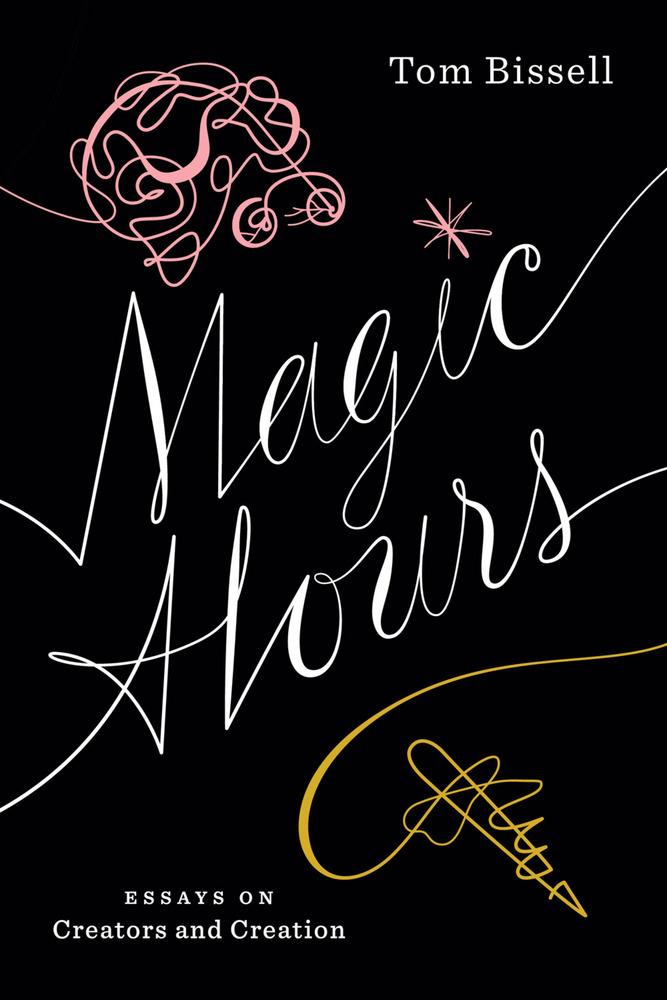
[READ: July 23, 2012] Magic Hours

I thought that I had never heard of Tom Bissell, but I see that I have read three of these articles already (I guess I don’t always pay attention to the author’s name).

This collection of essays comes from the last eleven years (2000-2011).  The articles have appeared in The Believer & The New Yorker (these are the ones I have read) and Boston Review, Harper’s, New York Times Magazine, Virginia Quarterly Review, New York Times Book Review and Outside (which I am starting to think I should really check out more).

Primarily they are articles about writing–he looks at fiction, non-fiction, film or a combination of them.  Bissell is a strong writer and he does not hold back when he sees something he likes or dislikes.  I found his articles (all of which are quite long–about 30 pages each) to be engaging, funny and very persuasive.  I’m really glad I read the book (and was even glad to re-read the articles that I had read before). (more…)

Read Full Post »

SOUNDTRACK: PHISH-Live Bait Vol 6 (2011).

Yesterday was my coworker Jay’s last day here, so I’m writing about this Phish bootleg set in his honor.

So these Live Bootleg Series are fun in that they’re a free sample of live songs–warts and all–from various shows in the band’s touring history.  These shows are primarily 1993-1996, with a 1988 song and two from 2003 thrown in for good measure.  The opening of “The Curtain” into “Tweezer” is from Red Rocks.  In fact, the first 8 songs are from Red Rocks at different times in their career (I like that they meld the shows together like this).  From 1996, “The Curtain” sounds amazing, so it’s really surprising how badly Trey messes up the opening guitar riff of “Tweezer.”  It’s so bad I would have thought he might have considered starting over!  But after an ugly beginning the band settles in for a 17 minute version.  “Split Open and Melt” also comes 1994.  The band sounds great on this song.  This is one of my favorite jam sections–it goes in a really weird direction.  And, there’s great bass and a guitar solo.  “It’s Ice” and “The Wedge” are from 1993 (touring their 4th official release!).  They sound really on for these songs.

Next comes a trio of songs from 1995 that always go together: “Mike’s Song” (everybody’s favorite), “I am Hydrogen” and “Weekapaug Groove.”  The middle of the “Mike’s Song” jam gets a little weird (some of their slow sections can sound very strange especially if people overhear them out of context), but they bring it back very nicely.

“The MOMA Dance’ and “Limb by Limb” are from 2003.  And they are fantastic.  “McGrupp and the Watchful Hosemasters” actually comes from the Colorado ’88 CD, but it’s a fun addition within this set.  It certainly sounds older than the others, but not radically out of place.  It’s followed by “Ghost” from 1997.   “David Bowie” has a lot of fun in the intro–the begin playing several different songs, including “Mike’s Song” and several other intros before finally settling into “DB.”  The jam also gets pretty dark, but I love at the end when the conventional shredding solo keeps getting interrupted by a strange minor key riff.  Similarly, “Wilson” takes a really long time to get going, including a nice little nod to “The Simpsons” in the intro.  And then there’s a really long pause before the “blap boom” part comes in.  It’s a fun version of the song.  The disc ends with a wild version of “Run Like an Antelope” from 1993.

It’s a pretty great set, and not bad for free.  You can download it here.

[READ: May 25, 2012] “The Bank Robbery”

I’ve never read Richard Ford.  I have a copy of Independence Day but I never read it. I hear it’s great.

So, here’s this excerpt from Ford’ new novel called Canada.  As has been said before, you can’t really write a review of  an excerpt.  However, a excerpt can get you excited about a book.

And that’s what this did.  It doesn’t make me want to pre-order Canada or anything, indeed, I’m not even sure how this excerpt can relate to the rest of the story as it’s pretty self-contained, but I loved the way it was written and the tone and pacing that Ford employs.

This excerpt opens with the narrator recollecting what he knows about the bank robbery.  The one that his parents committed.  His parents are pretty normal people, except for one thing—they actually thought they could pull of a bank robbery.  I love this section:

Conceivably many of us think of robbing a bank the same way we lie in bed at night and delicately plot to murder our lifelong enemy….  [details excised].  After which we conclude that though it’s satisfying to think we could murder our enemy in ambush…only a deranged person would carry out such a plan.  That is because the world is set against such acts…At which point we forget about our plan and go to sleep….  But for my parents this kind of thinking didn’t occur. (more…)

Read Full Post »

SOUNDTRACK: HELLBENDER-Con Limón (1997).

Con Limón was Hellbender’s final CD.  It shows a lot more depth and variation than one would have expected from the debut.  “Fake I.D.” opens really really quietly for two verses so that you have to turn it up loud.  And then the song kicks in and explodes your speakers.  There are more such dynamics on this song, including the verse ending on a high guitar note and pause that adds a bit of quiet punch to the otherwise fast song.  “You Gutted Me with a Switchblade Shaped Like a Telephone” opens with some quietly spoken words (which I have not as yet been able to understand), but the verses and chorus have quite an emo feel.   “Long Distance Phone Bill Runner” has a catchy chugging riff with some screamy vocals.  “Untrusted You” introduces acoustic guitar (and a cool off-key note).  The vocals sound like Bob Mould.  Indeed the whole thing has a kind of Hüsker Dü feel to it.  “I-95 is Tattooed on My Brain” also opens slowly, with dark, quiet lyrics and a cool riff once the guitar kicks in.  The guys clearly have a way with song titles.

“Song About Some Girls” is perhaps one of the cheesiest songs I’ve heard in a long time (although as one reviewer points out, it does anticipate radio friendly emo by about a decade).  Coming from Hellbender it is super-cheese.  I’m surprised they allowed it to be released (and I’m surprised it wasn’t a huge hit).  Check out the lyrics (and this coming from a band with two lyricists who are currently published authors): “This is a song that I wrote about some girls/That I met at the beach back when I had the Jeep.”  Really.  And the chorus is a series of staggered “Right” “Right” “Right” “Right.”  It is so insanely catchy–I hate myself for liking it so much.  (The lyrics to their other songs are much better).

“Graveyarded” returns to the more angry type of song, dark with interesting riffs.  It’s a fitting ending to the last release by this under appreciated (they don’t even have an entry in allmusic?) band.  Oh wait, there’s a bonus song on the disc.  After a few seconds of silence, there’s a strange bass-heavy riff (and kind of dancey drums).  The lyrics are all spoken (I won’t say rapped).  It sounds nothing like them, but I’ll bet they had fun making it.

[READ: May 21, 2012] “Fun Won”

Sometimes a title confounds you until you see it in the context of the story.  I couldn’t even figure out how to say the title (which isn’t hard, but looks so peculiar) until I read it from one of the characters.  I also had no way of anticipating what this story might be about.

Imagine my surprise that it was about the 90s, and about a woman who worked for Conde Nast, when money and drugs were plentiful and the fun never stopped.

It’s funny how context is everything.  If I had read this story in the 90s, I would have hated everyone in it for their glamorous life, their quarter pound of weed, their expense accounted fancy dinner and even the fact that they work for a fashion magazine (Gaultier and Naomi Campbell are name-checked).  And yet now that the bubble has burst and the fun has stopped and I never got to be a part of it (not that I would have…but still), I read this story almost wistfully.

This story is set up in a tricky way.   Meaning that it starts out by talking about marriage but then shifts gears.  The marriage discussion is all about how her friends married such squares in the 90s (while now women marry interesting men who have job but are defined by their hobbies).  And it is a nostalgia piece for the 90s (“when you could still dream of being a writer, when writing for magazines and then writing books and all of that added up to a good life.”) [Sigh].

For background we learn that the narrator, her brother and their father were big dopers (their mother abstained–from the dope and the family).  Her brother Ed is visiting from California with a quarter pound of awesome pop (this was before everyone had access to awesome pot).  The bulk of the story concerns this visit.  Ed and the narrator get high, then they share the pot with Marni (who is famous, although whose actual title is unstated–she’s the one who calls Gaultier).  They end up all going for dinner at a fancy restaurant (with shaved truffles).

They also meet the narrator’s boyfriend who is a real estate mogul–he sells building for tons of money (and yes, is likely the reason the bubble burst).  And then they go to a record studio to hear a famous singer make her album and watch it get mixed. (more…)

Read Full Post »

SOUNDTRACK: TRACY THORN & JENS LEKMAN-“Yeah! Oh Yeah! from Score! 20 Years of Merge Records: The Covers (2009).

This cover makes me think that I like The Magnetic Fields for their songs, but not really for their singing or arrangements.  This song is pretty hilarious (every yeah oh yeah is in response to something awful (Do you want to break my heart?  Yeah, yeah, Oh yeah!).  The cover by the wonderful Tracy Thorn & Jens Lekman is much more understated than the original, with simple instrumentation.

The original is a chiming, kind of noisy track.  While the cover has Thorns beautiful voice languorously singing the lines while Lekman chimes in.  The backing music is delicate and almost sweet (a nice contrast to the lyrics).  I think the song is fantastic, but once again, I like the cover more than the original.  This is especially surprising as the cover is actually slower than the original.  But, really, it’s hard  to pass on Jens Lekman.

[READ: April 30, 2012] “Borges on Pleasure Island”

When I browsed for Rivka Galchen articles the other day, I found a few published works that were not in Harper’s or The New Yorker.  So, yes, I’m going to write about them here.  And since I’m caught up with the end of Gravity’s Rainbow, these short non-fictions were a nice balm.

I have been encountering a lot about Borges lately.  Roberto Bolaño loves him, there was a recent article in Harper’s about him (a review of some new translations called “The purloined Borges: Translation and traduction” by Edgardo Krebs) and now I get this article.  This article is a strange one–and I’m not entirely sure where it would have appeared in the Times.  It’s strange because it’s kind of a review of a new collection of Borges’ work (this one called On Writing, the first of three Borges’ related works published that month).  Although really she only talks about one essay, “Literary Pleasure.” (more…)

Read Full Post »

SOUNDTRACK: MEGAFAUN-Live from the World Cafe, November 9, 2011 (2011).

I loved the Megafaun song “Get Right,” a trippy 8 minute workout.  So I was interested to hear them in this live setting.  There’s a lengthy interview with WXPN’s Michaela Majoun (full of all kinds of details about Bon Iver–whom they used to play with before they broke up and he became Bon Iver–and about, North Carolina and Wisconsin and lutefisk).  And the band plays three songs, too.

“Real Slow” opens with a banjo (and it is real slow).  It has a very Grateful Dead feel to it and beautiful harmonies.  After the freak out of “Get Right” I was quite surprised to hear such a traditional folky song from them.  “Second Friend” is a but more upbeat–bright guitars and more beautiful harmonies.  It’s a simple song.  “State/Meant” has a bit more electric guitar, but it continues in the folkie vein.

I admit I didn’t enjoy this set as much as I expected.  The songs were really nice, but they didn’t really push any envelopes sonically, especially compared to “Get Right.”  But at the same time, what they do, they do very well.

You can hear it here.

[READ: April 23, 2012] “The Investigation”

This is an excerpt from a novel called The Investigation which is coming out in English (translated by John Cullen) in July.

I don’t know what the story is all about because this excerpt is really bizarre and wonderful, but it’s certainly not any indication of what the storyline will be.  However, it is a huge indication (I imagine) of what the story will be like.

The word “Kafkaesque” is thrown around a lot (well, in my house it is anyhow), but this excerpt is really and truly Kafkaesque.  The Investigator wakes up in a tiny hotel room to the sound of a telephone ringing.  He is naked and has no idea how he got there. And the telephone appears to be attached to the ceiling.  He has a confusing conversation on the phone that opens more questions about his situation. (more…)

Read Full Post »

« Newer Posts - Older Posts »