Feeds:
Posts
Comments

Archive for the ‘Harper’s’ Category

julySOUNDTRACK: JENNY HVAL-“Innocence is Sexy” (2013).

hvalI saw this video on Stereogum.  I was actually intrigued by her last name: Hval.  Then I read a bit more about her–she’s an experimental Norwegian singer with four albums out (two under the name Rockettothesky).

I watched the video and was so mesmerized by it that I didn’t even really notice the music the first time through.  In the video, Jenny has her body filmed in all manner of unexpected angles and poses–she is shaving parts of her body, strategically positioning other parts of her body.  And pressing and squeezing her flesh in ways that are not often shown.  She is also jogging (both in a jogging outfit and in a dress–the juxtaposition is fascinating.  And then there’s the dress that appears to be made of latex.  At a time when men (Justin Timberlake and Robin Thicke) are making videos of naked women, Jenny makes us question what we see and why.  It’s very cool.

It’s also interesting musically.  The first words of the song are: “That night I watched people fucking on my computer.”  The song has an interesting guitar riff playing behind her spoken words until she starts singing with a vaguely operatic Middle Eastern tonality.  After a more mellow verse, Jenny ends a with a fascinating little scale of notes.

The same confrontational style of singing occurs at the end when the music stops and she keeps singing “in and out and in and out” in a less then pleasing manner.

As I say I am fascinated by her.  Although I can’t help but wonder if this would be a case of more exposure being less satisfying.

[READ: July 11, 2013] ”Outside T-Club”

In this story, which an excerpt from a novel called Necessary Errors the narrator, Jacob, pulled out some significant pages about Eastern Europe from a travel guide. He hid the rest of the book in the garbage, keeping only the pages on gay life in Czechoslovakia.

He was living in Boston, but was heading to Prague.  This was after his boyfriend moved away to start a new job for a men’s magazine.  He had sent Jacob a postcard which tried to make it seem like Jacob would be on a  fun adventure, and he imagined Jacob hooking up with a tall dark Russian guy.

Turned out Czech men were neither tall nor dark. (more…)

Read Full Post »

julySOUNDTRACK: BECK-“I Won’t Be Long” (2013).

beckSo Beck has a new song out, too (on NPR they’ve been saying this is the year of the cicadas–bands are resurfacing after years of dormancy).  I’ve actually heard this a few times on WXPN, but I never realized it was Beck and it has left no impression on me.

It’s tough to say it doesn’t sound like Beck since every album is different, but this song really doesn’t sound like him.  The drums are cheesy drum machine drums (like from the early 80s), the keyboards are cheesy keyboards (like from the early 80s), and the song is really really simple (with a strange instrumental break in the middle).  And its five minutes long.  It just doesn’t make a big splash like Beck usually does.

This is all leading me to say I don’t love it.  I usually really like Beck’s gamut of music, but this is a little too bland for me (the last minute or so adds some more details which are more interesting).  I suspect if it wasn’t Beck it wouldn’t get played at all.  I wonder if this is going to be a whole album of this style of music.

[READ: July 11, 2013] “Mini Ching”

This is an excerpt from “How to Be Good When You’re Lost.”  In it, Heti interprets six of the sixty-four hexagrams that comprise the I Ching.  I don’t know exactly what the I Ching is.  I mean, I know vaguely what it is but not exactly.  I assume that there is no real explanation for the hexagrams?

The four excerpted here are #53 Gradual progress; #24 Return  #49 Revolution #33 Retreat.

Again, I don’t know how many others have “interpreted” these mystical hexagrams.  But Heti creates are wise fortune cookie-sounding advice for each one. (more…)

Read Full Post »

julySOUNDTRACK: PEARL JAM-“Mind Your Manners” (2013).

mannersAfter Eddie Vedder released an album of ukulele songs, it seemed like perhaps he was putting aside his heavier ways.  Well, nothing could be further from the truth.

This new song (album out in October) plays up their faster side, with short fast chords (think “Spin the Black Circle”).  It starts out heavy, and when the verse proper starts the band really kicks in.  The chords are heavy, but the bridge is fairly light and breezy.

The end features some chanted vocals (seldom used by Pearl Jam but effective here).  But to me the real standout moment comes from Mike McCready’s solo.  It is noisy and weird–he seems to be experimenting with all kinds of sounds in these 20 seconds or so.  It’s unexpected from him and very interesting.

I do not like how the song ends, which seems almost abrupt by accident.  Perhaps the released version gets cut off a few seconds early.  Nevertheless, I’m pretty excited about the new album (and tour).

[READ: July 11, 2013] “Other Types of Poison”

This is credited as memoir.  It is three short “stories.”  All of which I enjoyed immensely–but especially the first.

The first is called The Ink.  In this tale, Makkai’s  ancestors were hiding out in a little lake house when soldiers came to the door.  I loved that no one can remember the details of whether the soldiers were German or Russian or if that even mattered.  The important part is that the soldiers hung around and made themselves at home.  (The old lady was too old and scary to try anything with and the boy was too young).

Then they ran out of booze and one of the soldiers, noticing an inkwell, said he would drink that.  The inkwell was a gift to the boy, because the old woman was a writer.  And although the cost was dear, the soldier drank the whole thing.  Then he stumbled out of the house, face completely blackened.  From then on, the old woman claimed that had she killed a soldier with ink.

I love Makkai’s ending: She says she doesn’t of the details are correct, but “If this were your family legacy—this ridiculous assertion of the might and violence o ink , this blatant and beautiful falsehood—could you change it? Would you dare?” (more…)

Read Full Post »

julySOUNDTRACK: THE FLAMING LIPS–Live from SXSW 2013, playing all of Yoshimi battles the Pink robots.

yoshimiThe day before their main set, which featured songs from their newest album, The Flaming Lips did a surprise set in which they decided to play Yoshimi in its entirety–something they had never done before.

Indeed, there are a few songs from the album that they say they have never played live before.

They have an hour to do the deed.  But, Wayne being Wayne, he can’t stop talking between songs long enough for them to actually complete the album and they are left without playing the final track.  (I haven’t heard of that happening to other bands).

The set sounds pretty good.  It is quite different from the album in that the live unit plays all kinds of interesting sounds effects and updated keyboards and whatnot, it alters things in small and large ways although it doesn’t make it sound completely unlike the album.

Wayne’s voice is not as great as it used to be and he can’t hit all the notes anymore, which is a little disappointing (and may explain why the newer albums are not quite so soaring).  But they are clearly enjoying themselves, as is the audience.

The only bad thing about this set (you can stream the video at NPR) is that the volume is very low.  It sounds good, but is a little too quiet to be fully enjoyable.  And, of course, you don’t get to hear “Approaching Pavonis Mons by Balloon (Utopia Planitia).”  Although you do get to hear how they came up with the title “Ego Tripping at the Gates of Hell.”

[READ: July 11, 2013] “Blood Spore”

This was a Folio in the center of the July issue of Harper’s.  The Folio is a lengthy article that’s printed on a different type of paper.  The Harper’s Folios are usually quite good.  And so was this one.

This essay is about the life and death of Steven Pollock.  Pollock was into mushroom.  Really into them.  He believed that they held cures to many different ailments and he set about trying to prove it.  He had a fully functioning lab and he did extensive tests on the different types of mushrooms and spores that he collected.  (Some of the tests simply included ingesting them, but he also used scientific methods).  He ordered manure and other kinds of bases and then he set about growing and testing different genus of mushrooms.

True, he was also interested in their psychedelic powers, but he believed they could do much more.

In order to make money he sold paraphernalia in High Times.  He was very successful (his company name and color ad in the magazine was quite a hit and he made an astonishing amount on the quasi legal market).  Most of his money went back into research.  He believed that when he made $2 million, he could get a proper lab.

The whole article was really interesting—seeing what Pollock did, seeing how some of the mushrooms he cultivated lasted throughout the years and how he managed to get some to spread (by getting spores in various materials in time for a Hurricane to blow them all across the South).  Pollock’s personal favorite mushroom, which he described as being the most amazing trip he’d had, was on the verge of extinction.  And he died believing that it was no more.  Fortunately somehow made it to Amsterdam where now it is a very common (and very popular) strain of the fungus.

Shame he was murdered under mysterious circumstances and the author began researching this article because he received a tape that someone claimed showed who was guilty of his death. (more…)

Read Full Post »

julySOUNDTRACK:DRUG CHURCH-“Reading YouTube Comments” (2013).

drugchurchI enjoyed the really noisy chaos of another Drug Church song that NPR played (“Deconstructing Snapcase”), but I really like the name of this one (although I can’t tell if it has anything to do with the lyrics–as the lyrics talk about walking with canes and using wheelchairs).

The song starts with thudding drums and angry vocals which are all about the singer’s ailments.  The chorus is fast and kind of repetitive, but fun to sing along to (decline, decline).  I enjoy the song for its aggressive, distorted sound–not quite metal, although I think it needs a bit more…something.

[READ: July 2, 2013] “May I Touch Your Hair?”

I recognized the name Julie Hecht but I couldn’t place her.  It was only after I read this whole story that I looked back at a review of something else I had read by her and I was pleased to see that I felt the exact same way about her narrator then as I did this time.

Hecht writes fiction with that seems like non-fiction.  Her narrator is first person and everything that she writes about seems very real–opinionated enough that you think she’s telling non-fiction.  Indeed, at times I had to confirm that it wasn’t simply an essay.

This story looks back at the narrator’s childhood.  Much of the story spends time at their beach house looking at all of the families who lived around them there.

There is not a lot to this story except really the narrator’s tone.  Little things come through like “Elinor was in her own upper-teenage world of grown-up girls in college.  She was studious as well as boy-crazy.”  That “boy-crazy” note is a bit of a judgment.  The narrator is very judgmental.  Like: “she got married at a young age, then made the mistake of having a baby right away.”  Or, “My mother told us she’d heard that Elinor had said to her three-year old child, ‘Your parents are young and want to go out, and you can’t expect us to be with you all the time.  We have our own lives.’  This was thought to be a bad thing to say to a child.”  I love that last line. (more…)

Read Full Post »

harpers maySOUNDTRACK: LAURA VEIRS-“Sun Song” (2013).

lauraI know of Laura Veirs from her work with The Decemberists, but as she’s mostly a backup singer (and occasional lead), I couldn’t really say I knew her very well.  So I was delighted to hear this song that she had written and to see just how great it is,.

The song begins with a simple folk guitar and pizzicato pluckings. Veirs’ voice has an innocence that I really love—gentle but clean.  The chorus brings an unexpected harmony vocals and vibrato but nothing prepares you for the feedback squalls that the new electric guitars bring in.

The song doesn’t get faster, just a little noisier—it reminds me of the best Sarah Harmer tracks.   Then the electric guitar goes away and the song feels fuller somehow.  The end of the song introduces a  kind of call and response which adds a cool new element until it all relaxes back into its original mellow style.

I really like this song and need to hear more from Veirs.  And I see that she has released a whole bunch of albums, so there’s a lot to choose from.

[READ: May 30, 2013] “Loyalty”

This story begins with a pretty straightforward sentiment: “As much as I love her, I blame Astrid.  Astrid told my wife, Corinne, that she could achieve happiness if only she’d leave me.”  Indeed, Astrid made a regular suggestion out of it–leave him, be free.  And so finally Corinne did–she left him alone with their son, Jeremy.  Initially Jeremy wrote to Corinne but eventually the replies were fewer and further between and he gave up.

Wes was crushed, but soon after he fell in love with Astrid and they got married.  I love the way it is presented:

The minute Corinne was gone, Astrid showed up. I don’t recall that, prior to that day, we had so much as exchanged a moody, sparking glance. She took me into her expert arms. It was consolation and sympathy at first, I guess. I didn’t question it. In about the time it takes to change the painted background in a photographer’s studio from a woodland scene to a brick wall, she had left her boyfriend and was presenting me with casseroles and opened bottles of cold beer.

We never really learn if Astrid had planned this all along.  It seems like it, but it’s not like Wes is a huge catch.  Corinne’s divorce request went though with no trouble or custody problems.  And soon he and Astrid had a new child, a daughter, Lucy.  Then they saw Corinne on TV, on a show about runaway moms–Wes asks, what would make her do such a thing–and no reasonable answer is given. (more…)

Read Full Post »

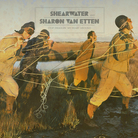
harpers maySOUNDTRACK: SHEARWATER & SHARON VAN ETTEN-“Stop Dragging My Heart Around” (2013).

Shearwater-Sharon_RSDEverybody knows this song.  It was  way overplayed (overplayed enough that Weird Al parodied it in 1983).  So I can’t say I was all that excited to hear this cover.

What’s nice about it though is that if you’ve heard a song a million times, hearing a slightly (not radically) different version can reintroduce it to you in a new way.

It’s noisy and clunky in the music–giving a more folkie vibe.  And while Sharon sounds a bit like Stevie Nicks—she gives that same raspy quality to it–she’s definitely not trying to be Stevie.  The Shearwater vocalist does moderate mimic of Petty—enough to show that he knows what the original sounds like without duplicating it.  The whole feel has a kind of tossed off, less polished vibe that really works with the lyrics.

It turns out that this version is live and it was released on a  7″ single (but NPR gives it to us for free).  I like this version quite a bit although I do miss the “Ah ha has” and “Hey hey heys” in the bridge.

[READ: May 29, 2013] “The Gift”

This was a very strange little story.

In it, a woman wakes up after her house has flooded.  Not entirely, but there was certainly a few feet of water (she can see the residue marks).  What’s also strange is that she had not left her apartment for five days and she had just spent nearly $90 (the bulk of her grocery money) ordering a box of glacé apricots from Australia–in gold foil at extra cost–no less!

She feels guilty… but they just looked so good in the catalog.  Of course, so did the mosquito netting–but really what use had she for that?

She spent some time thinking about the Australians working in the glacé apricot factory–did they ever steal an apricot?  Were they hungry? Somehow she imagined them enshrouded in the mosquito netting.

She was awoken from her reverie by the water rushing around her living room–and the piglets grunting around in the mud. (more…)

Read Full Post »

mystrugglSOUNDTRACK: TRICKY-“Christiansands” (1996).

christiansandsThis book is set in Kristiansands, and so naturally this song was ringing through my head the whole while I was reading it.  I’ve known this song for ages, but had no idea that Chirstiansands was an actual place in Norway.

This song is dark and tense.  Over a slinky beat, a spare guitar riff introduces Tricky’s voice as he rasps (his voice is slightly modified to give him a weird echo).  And while he’s reciting his verses, the gorgeous voice of Martina Topley-Bird, repeats what he’s saying in a whispered voice until she sings out the chorus “I met a Christian in Christiansands.”

The verses repeat with Tricky emphasizing, “master your language and in the meantime I create my own.  It means we’ll manage.”

I honestly don’t know what the song is about, and it feels like it never properly ends–that riff, at once menacing and gripping never seems to conclude.  It’s a masterful track and hard to forget once you’ve heard it.

[READ: May 11, 2013] My Struggle Book One

I read an excerpt of Book Two from this series in Harper’s.  And despite the fact that nothing really happened in it, I was drawn in by the writing style.  This first novel is very similar in that not a lot happens but the voice is very captivating.  The translation is by Don Bartlett and it is fantastic–I can only assume the original Norwegian is just as compelling.  So, despite the fact that this autobiographical series contain six books (six!) and totals over 4,000 pages (how could this be if Book one is a mere 400?  Books 4-6 are over 1,000 pages each), I decided to give it a try.  (Incidentally, Book Two has just been translated into English this month).

This series has caused some controversy because it is given the same title as Hitler’s Mein Kampf (Min Kamp in Norwegian), and also because he says some pretty means stuff about people who are still alive (like his ex-wife).  Although there isn’t much of that in Book One.

death in the familyIndeed, Book One basically talks about two things–a New Year’s Eve party when Karl Ove was youngish and, as the bracketed title indicates, the death of his father.  (The title A Death in the Family is the same book as My Struggle Book One–from a different publisher.  It has a totally different cover but is the same translation.  I don’t quite get that).  But indeed, these two events take 430 pages to write about.

How is this possible?  Because Karl Ove writes about every single detail.  (I assume this why the books are considered novels, because there is no way he could remember so much detail about every event).  I’m going to quote a lengthy section from a New Yorker review (by James Wood) because he really captures the feeling of reading the book:

There is a flatness and a prolixity to the prose; the long sentences have about them an almost careless avant-gardism, with their conversational additions and splayed run-ons. The writer seems not to be selecting or shaping anything, or even pausing to draw breath….  There is something ceaselessly compelling about Knausgaard’s book: even when I was bored, I was interested. This striking readability has something to do with the unconventionality of “My Struggle.” It looks, at first sight, familiar enough: one of those highly personal modern or postmodern works, narrated by a writer, usually having the form if not the veracity of memoir and thus plotted somewhat accidentally, concerned with the writing of a book that turns out to be the text we are reading.  But there is also a simplicity, an openness, and an innocence in his relation to life, and thus in his relation to the reader. Where many contemporary writers would reflexively turn to irony, Knausgaard is intense and utterly honest, unafraid to voice universal anxieties, unafraid to appear naïve or awkward. Although his sentences are long and loose, they are not cutely or aimlessly digressive: truth is repeatedly being struck at, not chatted up.

That idea of being bored but interested is really right on–and it may sound like a bad thing, but it’s not.  You can read along thinking that there’s no way he is going to give so much unimportant detail.  But you get this description of drinking a cup of tea: (more…)

Read Full Post »

HarpersaprilSOUNDTRACK: DUCKTAILS-“Letter of Intent” (SXSW, March 22, 2013).

ducktailsDucktails is a side project from the guy from the band Real Estate.  I liked some Real Estate songs, but this is the first I’ve heard of Ducktails.  The write up on NPR talks about them being an experimental  live band, so I was anticipating something wild.

But this proves to be a very sedate, kind of dull synth heavy track–the guitars are kind of tossed on there in a very 80s new wave fashion, and there’s very little beyond the washes of synths.  There’s really nothing here I’d want to hear again.

It’s available here.

[READ: March 19, 2013] “Not Interested”

I’m always mixed about Lydia Davis’ stuff.  She writes very very short pieces and most of them seem to be not so much stories as observations, ideas or even things that just seem to pass through her mind.  Some of them are amazing–insightful or funny–which convey a lot in a concise piece of writing.  And others seem just kind of flat.  This is one that I am utterly ambivalent about (which is maybe the point?).

It’s not often that you read something that starts, “I’m simply not interested in reading this book.” (more…)

Read Full Post »

HarpersaprilSOUNDTRACK: THE AFGHAN WHIGS-“I’m Her Slave” (Live at the Bowery Ballroom 2012).

whigs

 I really liked some of The Afghan Whigs’s songs back in the 90s.  There was other stuff I didn’t love by them–when they were on, they were amazing.  Of course, I feel like the Whigs were pretty much all the work of Greg Dulli–charismatic frontman with the intriguing voice.

When they disbanded or broke up or whatever, I didn’t mind so much.  But they have reunited recently and my friend Joe posted this video from last year’s tour.  I don’t really know this song that well (although I do have the Congregation album i was more of a Gentlemen fan), but it sounds great.  And apparently this is one of the songs they were trotting out (they played it on Fallon, but the video has been taken down).

Dulli’s voice still has that wonderful quality and the band sounds tight and loud here.  Seems like a good reunion.

[READ: March 19, 2013] “Limhansfältet”

This excerpt comes from Knausgaard’s (also spelled Knausgård’s) second volume of his six-volume autobiographical novel (wow!).  I have no idea who the guy is or why we’d want to read it.  Evidently Knausgård is quite famous in his native Norway.  Don Bartlett translated this from the Norwegian.

So this excerpt shows a very short time in the writer’s life (knowing it’ autobiographical makes it different somehow).  The writer is married, a father of four three (although evidently now, he is divorced and his first wife is mad to her portrayal in the books).  The first few paragraphs just kind of talk about what’s going on around him (but it is more compelling than that sounds somehow).  I liked the scene where he is sitting so still in the garden that a hedgehog crept past him (but then I like hedgehogs).  But the crux of the action occurs at Limhansfältet, a grassy area outside of town where men gather every Sunday to play football.  They have gathered since the 60s and the men range from 18 to 80.

On this one occasion his family came with him. They watched for a bit but then wandered off.  And they missed him get injured.  Injured so badly that he had to go to the hospital. (more…)

Read Full Post »

« Newer Posts - Older Posts »