Feeds:
Posts
Comments

Archive for the ‘Library Related’ Category

SOUNDTRACK: GREAT LAKE SWIMMERS-Live at Massey Hall (July 8, 2014).

I don’t know all that much about the Great Lake Swimmers.  I have heard of them (for years), but never actually heard them, I guess.

They are a five piece who play thoughtful folk songs.  Their tempo is varied with some upbeat songs and a few slower ones.

The lead singer is Tony Dekker and when he is joined by violinist Miranda Mulholland on vocals their harmonies are quite lovely.

“Think That You Might Be Wrong” is a slower song with a kind of sad violin and great harmonies.

“Put There By the Land” has a kind of fun build up with everybody “warming up” making strange sounds especially the guitar and drums, before the song kicks in properly.  The addition of the pizzicato violin really elevates the song.  I love the way in ended kind of noisily with some thundering drums as it segues into “Pulling on a Line.”

“Your Rocky Spine” opens with a banjo (Erik Arnesen) and changes the tone of the music–Dekker’s voice seems a bit higher too.

“Everything is Moving So Fast” opens with a cool mini drum solo (Joshua Van Tassel)–not a show off solo just a cool rhythmic exploration that leads to the quiet thoughtful lyrics.   There’s some wonderful harmony vocals from Miranda at the end as well as a little upright bass solo (Bret Higgins).

They brought in a string quartet to play with them, although I can’t tell if it make much of a difference since they already have a violin.

They end with “I am Part of a Large Family” which opens with another “warming up intro” which is fun.  It’s builds to a wild and fun climax with a ripping violin solo.  An excellent show ender.

These guys should certainly be in heavier rotation on folk shows.

[READ: March 20, 2018] Evil Librarian

Sarah was reading the sequel to this book (Revenge of the Evil Librarian) and I thought it sounded pretty funny.  So she encouraged me to read the first one.

I really enjoyed the combination of teen romance and demonic villianry.  There’s an obvious antecedent in Buffy, but this goes in very different directions.

I also enjoyed the way the story was paced.  The book felt very long–which I know is a contradiction–and could have been a lot shorter.  But I think the stuff that fleshed it out was what made it so much fun, so I’m glad it wasn’t shorter

It opens on our heroine Cynthia.  She is crushing hard on Ryan.  Ryan is like TV sitcom architect/kindergarten teacher–jobs that people have that work well in sitcoms but that no one really has in real life).  He is a jock who loves musical theater.  He hangs out with all of his jock friends.  But he has an amazing voice and is the lead in the school’s upcoming production of Sweeney Todd.

And he’s single! (more…)

Read Full Post »

SOUNDTRACK: THE 1975-Tiny Desk Concert #302 (September 10, 2013).

I sort of know The 1975 but I can’t decide if I like them or not.  It seems like every song sounds different.  But I did really like this stripped down Tiny Desk Concert.

The blurb notes the distinction:

The 1975 knows its way around bigness, [with songs of full of brash-but-winsome, electronics-tinged pop-rock]. But, when asked to strip his band’s sound down to fit the intimate confines of the Tiny Desk, Healy didn’t hesitate to transform both his songs and himself. Performing solo with a guitar — he even goes fully acoustic for his two hits — he’s reborn as an earnest troubadour, while his songs now register as melancholy musings. They’re remarkably sturdy in any form, as this bit of left-field sweetness amply demonstrates.

This performance is just Matthew Healy singing and playing guitar.  And he turns these songs into little folkie ballads, with Healy’s cracking and accented voice (you can really hear his accent when he sings) making the songs sound more earning and aching.

The original of “Sex” is pretty rocking, with a middle section that strums pretty hard.  This version slows it down dramatically, making it much more poignant.

“Chocolate” is a bouncy electronic song with an angular sound, radically different from this stripped down acoustic ballad (I much prefer this version).  He introduces this song by saying “I’ve only done this twice so I apologize if I mess it up.”  I’m not sure what he means by that.  Surely he has played this song more than twice.  Anyhow, it too has a yearning quality and his whispered vocals work perfectly with his gentle playing.

He finishes that by saying “Those two songs are like our singles.  I didn’t know what else to play so this song is called “Woman.”  It’s about that prostitute… but she was lovely [chuckles from the audience] and I was far too young–so nothing happened.

He switches to a gently echoed electric guitar.  It doesn’t vary too much from the original–a plaintive yearning song about sex.

[READ: July 31, 2016] Sex Criminals Volume 3

Book three of the series seems to have polarized some readers.  There’s not a lot of plot advancement,which upsets many, and there’s a lot of meta-jokes which also upsets many.  Of course, I really like that sort of thing and happen to think that this book was outstanding.  So pffft.

The book opens with someone we’ve never seen before.  He takes care of his mom, he works in an old folks home.  He’s a pretty decent guy.  But he has a secret.  It’s related to the whole time-stoppage thing (although it proves to be a bit different).

And there’s a few amusing panels.  Like when Matt states that Chip would being drawing all kinds of funny Pan-Asian jokes in the Pan-Asian supermarket.  The panels would be full of double entendre puns.  But rather than making him do all of that hard work, we’ll jut have to imagine them. (more…)

Read Full Post »

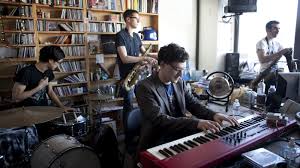
SOUNDTRACK: THE DISMEMBERMENT PLAN-Tiny Desk Concert #323 (December 2, 2013).

I always think that The Dismemberment Plan is a loud punk band (understandably with that name).  But this Tiny Desk Concert sees the band with acoustic guitar, keyboards and brushes on the drums.  What I didn’t realize was that the band had broken up and reunited and had made a new album in 2013:

When the newly re-formed band finally did make its way to our offices — on the heels of Uncanney Valley, its first album in 12 years — it unsurprisingly made for an odd fit.  According to the group, these particular arrangements of songs from Uncanney Valley were sorted out just a day before this Tiny Desk Concert.

“Let’s Just Go To The Dogs Tonight” is a fun bouncy song full of mildly amusing wordplay and naughtiness.  There’s a call and response section: “when I say ‘Outta’ you say ‘Luck’ and when I say ‘Cluster you’ say ‘Fuck'” (singer Travis Morrison flubbed the call-and-response portion of “Let’s Just Go to the Dogs Tonight,” he professed nervousness at making the NPR staff holler F-bombs. (No one seemed to mind)).   I like the simplicity of the guitar chords, but I really like the fun bass line–not funky exactly, but just meandering around in a really tuneful way.

“Lookin'” is a slow ballad with a simple guitar melody.  It’s a plaintive song that’s lightened by a bouncy bass line and some cool synth sounds near the end.

For the final song, “Daddy was a Real Good Dancer,” Morrison switches to keys and the keyboardist switches to guitar.  They say that the guitar is brand new for the show–“we went to Guitar Center for you guys.”  Bob says they need to break a string to break it in.  This song is lighthearted and a bit goofy, about a dad who used to dance until he had him.  Once again, the bass line really makes the song (and the drums are pretty great, too.

It’s a lighthearted and fun concert–surprisingly so for a band with dismember in their name.

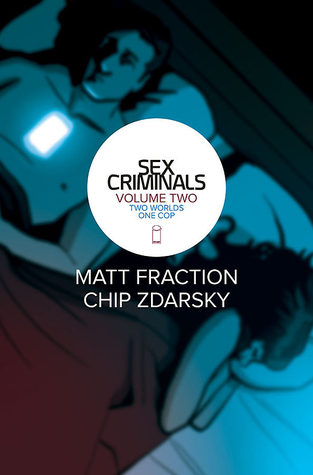
[READ: June 6, 2016] Sex Criminals Volume 2

I really enjoyed Volume One of this series.  I was shocked to see that it had been almost two years since I’d read it.  And I was thrilled to see Volume 2 in the library.

The only problem with Volume 2 is that it assumes you have just finished volume 1, so there’s no playing catch up if you read it two years ago.

Especially since Book 6 opens with Suzie saying “So I’ve been digging in to pull off a fundraiser to make up the difference and keep the place open, so uh… The end?”  But of course it is not the end.  And when Jon tells us that things aren’t over, he pulls down his pants to show that he has nothing there–he’s like a Ken doll.  What happened?  In book 1 these two were going at it like rabbits.

It turns out that the Sex Police had a kind of tracking device–a Cumpass–that monitored everyone who had an orgasm and entered The Quiet (see book 1 review to figure out what the hell I’m talking about).  Things get really stressed out for Jon over the next few days and he begins seeing symptoms of something–which he looks up online and decides is canceraids (it isn’t). (more…)

Read Full Post »

  desmondSOUNDTRACK: FATHER FIGURES-Tiny Desk Concert #273 (April 29, 2013).

fatherBob Boilen describes Father Figures as “It was brash, zany, brainy, scary and danceable.”  The band formed in NYU around 2007 with Adam Schatz on sax and effects, Jas Walton on sax, Spencer Zahn on upright bass, Ian Chang on drums and Ross Edwards on keyboards.

“Doomed To Fail” is fast and rocking but very jazzy.  The two saxes play fast romping riffs while the keys play along.  Then things slow down as the bass and keyboards play a trippy, spacey-sounding melody (with occasional accents from the saxes).  The middle is noisy and skronky with some great rock bass and drums holding it down.  The song builds and builds to a shrieking climax at which point the drummer gives  few clicks on his snare before the song resumes again for a brief coda

“This Is The Way We Mean” opens with the 2 saxes playing off of each other before the bass comes in and lays a rhythm down.  Then it slows down with more cool, echoing synth sections.  One of the sax players starts playing percussion—including things all over Bob’s desk.

The first two songs are about 5 minutes each, but the last one is ten.  “Where Did You Come From?” opens slowly  and kind of trippy but it slows even further at the 3 minute mark to just some taps on the snare and bass notes.  Saxes come in around six minutes but it’s really fun to watch Chang on drums as he’s quite animated.  This song is interesting because although it keeps building and building, there is no extravagant climax, it fades quietly as it began.

[READ: July 5, 2016] Desmond Pucket and the Cloverfield Junior High Carnival of Horrors

By now, the Desmond Pucket series is in full swing (how can Tatulli write these books as well as a daily comic strip?).  Desmond is headed to 7th grade.  I like that the events of the summer (the previous book) have a huge impact on this book and that things aren’t simply stagnant in the Pucket-verse.

Like the other two books, this one is a really fast read (it’s over 200 pages but feels like it’s about 50).  And it’s chock full of fun illustrations (that are by “Desmond”) as well.

In fact even though Desmond is heading back to the same school, this year he’s a 7th grader–he’s weirded out about being in the same building but in a different hallway (and the dorky outfit he has to wear for going back to school).

When he gets to the first class–writing, their teacher tell them to write something original about what they did that summer–but they can do in whatever style they want.  And so Desmond creates a graphic novel. I love that the graphic novel recaps the previous summer in a great fashion and sets us up for this action of this book.  He gets a B+and is pretty happy about that.  But he is unhappy about the note at the end of the book: The Cloverfield Jr High Carnival of Horrors is to be cancelled this year.

In sum: the junior high principal was awesome. She was open to all kinds of things and realized that the school could make a lot of money with a good haunted house.  And the money they raised went to the library (this book loves libraries so much, I have to sing its praises even more). (more…)

Read Full Post »

pipSOUNDTRACK: DANIEL BACHMAN-Tiny Desk Concert #256 (December 9, 2012).

dan-bach Lars Gotrich, an NPR music dude, loves metal and weird music but also amazing Americana folk guitarists.  Daniel Bachman was an early-twentysomething when he recorded this Tiny Desk Concert.  And he is very impressive indeed.  Lars explains:

His approach to the American Primitive style of acoustic guitar — a sonically vivid fingerpicking technique developed by John Fahey and expanded by the likes of Robbie Basho and, later, Jack Rose and Glenn Jones — is conversational and uplifting, much like the man himself. After a rousing performance of “Honeysuckle Reel” from a forthcoming seven-inch single, however, Bachman turned beet-red in the NPR Music office and said, “I’m not going to lie. I’m pretty nervous.”

He only plays two songs, although each one is about 7 minutes long.  Lars says, “Strap on a pair of heavy boots and “Honeysuckle Reel” becomes an ecstatic dance tune or, at the very least, a foot-stomping good time.”  And he’s right.  It’s really amazing to watch him playing.  He uses a thumb pick and the low notes are constantly going–an incredibly fast rhythm, in contrast to the slower melody he’s playing on the higher strings while finger picking.  It’s a very pretty melody.

The second piece, “Seven Pines,” is slower and more reflective.  It comes from one of two albums he put out in 2012). The simple melody “dives in and out of low-string chord crashes and tumultuous swirls of dizzying fingerpicking.”

The sound he gets from his guitar is really fantastic and while I don’t tend to listen to guitar music like this, I really enjoyed this a lot and would like to hear more from him.

[READ: February 3, 2016] Ava and Pip

Since Tabby and I loved Ava and Tacoocat so much, we knew we had to read the prequel Ava and Pip as well.

This book is set up exactly as Tacocat is (I know that this book came first but since I read the other one first I’m comparing things backwards).

There are diary entries and it starts with Ava on her first day of school.  When she gets home she says that she is the only Ava in her class (which is frankly shocking as there are about 5 in my daughter’s grade).  Then we learn all about the Wren family and their love of palindromes.

Bob and Anna Wren had two daughters named Pip Hannah and Ava Elle.  And her diary entries wind up being chock full of spelled out palindromes (some obvious, others not). (more…)

Read Full Post »

tacocaoSOUNDTRACK: CANADIAN BRASS-Tiny Desk Concert #220 (May 26, 2012).

brass I hadn’t realized that Canadian Brass part of the institution of Canadian Brass.  They’re not only part of it, they are it.  Indeed Canadian Brass

led by its avuncular tuba master (and sole original member) Chuck Daellenbach, essentially put the idea of the brass quintet on the map.  Then there are the recordings — more than 100 of them, selling more than two million albums total.  Daellenbach and his fresh-faced players, each with red-striped sneakers and matching outfits, strolled into the NPR Music offices, took their places behind Bob Boilen’s desk and started blowing as if they’d played this peculiar gig a hundred times.

They began with a version of J.S. Bach’s intricately woven “Little Fugue in G minor,” an impressive staple that stretches back to the band’s first recording. In those days, precious little was available for brass quintet (two trumpets, horn, trombone and tuba), so the band relied on making arrangements of existing music. Since then, Canadian Brass has transcribed and commissioned more than 200 works, including “Tuba Tiger Rag,” Luther Henderson’s lighthearted tribute to Dixieland jazz. It’s a showpiece for Daellenbach, who twirls his tuba (while playing) and lands on a final note of such subterranean depth that you feel it more than hear it.

The players closed with another favorite, Rimsky-Korsakov’s dizzying “Flight of the Bumblebee,” in an arrangement by Canadian Brass trumpeter Brandon Ridenour. Although the music buzzes past in less than two minutes, players get plenty of opportunities to shine — as in the lightning-fast runs negotiated by trombonist Achilles Liarmakopoulos, the newest member of the group.

The band consists of   Christopher Coletti, trumpet; Brandon Ridenour, trumpet; Eric Reed, French horn; Achilles Liarmakopoulos, trombone and Chuck Daellenbach, tuba.

The band sounds amazing playing these familiar songs in a way that is–unexpected–but still right on.

J.S. Bach: “Little Fugue In G minor” is probably one of my favorite classical pieces.  I really enjoy Bach’s fugues a lot and this one is just perfect–and the arrangement here is great–everyone gets a chance to explore the phrasing.  It starts with the tuba and then the trombone and then the horn and finally the tuba.

Luther Henderson: “Tuba Tiger Rag”  Introducing this piece he says that in Bach everyone is equal, but he felt they needed a tuba song.  He says that while this song might be low art for other instruments it is high art for a tuba.  And yes he does spin it around while playing it. He uses that instrument to make roaring sounds and incredibly deep notes.  This is a medley, I think, because while the trombone and tuba play, the other three sing “hold that tiger / tuba tiger.”  How on earth does he reach that super low note?

Before the final song Bob says that his tuba doesn’t look brass.  And Chuck replies that there’s an old joke: “How old do you have to be to play the tuba and the answer is old enough to be able to carry it but young enough to still want to.”  He still wants to so he’s been  so he;s lightening the horn with carbon fiber.

For the final song Nikolai Rimsky-Korsakov: “Flight Of The Bumblebee” he tells us that the two trumpets play very fast–it must be easy for them. But the trombonist Achilles didn’t know what was coming when they had him play along.  Chuck says you’ll never see anyone play this song this fast on this instrument.

And it is amazing.  The song flies past–a blurry of fingers.  And I love that at the end, one of the trumpets sings the triumphant final high note.

You wouldn’t expect a band as old and legendary as Canadian Brass to be so funny and good-natured, but they sure are.  And that makes these familiar songs even more fun.

[READ: February 7, 2016] Ava and Tacocat

Sarah brought this book home, in part because Clark’s reading group called themselves tacocat which is a palindrome.  Turns out that Clark wasn’t interested in the book, so Tabby and I got to read it together, which was really fun.

The whole book is a language lovers’ dream, chock full of big spelling words and all kinds of palindromes littered throughout.

It was a few chapters into the book before we realized that this is actually the second book of a series (the first one is called Ava and Pip) and that this book references things that happened in book one without exactly explaining what happened.  That’s a little annoying for us, but it certainly made us want to read the first book.

The book is set up in diary form with Ava writing in it on most days.  I like that she loves palinromes so much (S-E-N-I-L-E-F-E-L-I-N-E-S) and every time she mentions one in the book, they spell it out like that. (more…)

Read Full Post »

americusSOUNDTRACK: FLY PAN AM-Sédatif en fréquences et sillons EP [CST011] (2000).

330px-SedatifsEnFrequencesCover This is an EP that works as a kind of remixes and deconstructs further the debut. There are three songs, the first is fourteen minutes, the second is 11 and the final is 4.  As the Constellation site describes the disc:

This 3-song EP of fractured, tape-infested experiments is an intransigent slab of self-referential auto-criticism. The band was sticking to its agenda of acutely self-conscious musical manipulations, re-working its own materials and assumptions to yield new compositions of uncompromising formalism. Side A is a medley of sorts, consisting of phrases and fragments reconfigured and replayed from their self-titled debut (Fly Pan Am). Various melodies are reassembled and played off of one another, creating an extended live remix with blissful passages of layered guitars, drones, sampled backing vocal lines, and the requisite incidental noise break in the middle of the piece. The result is something like a ‘Stars On 45’-style musical encapsulation of the entire debut record.

“De cercle en cercle, ressasser et se perdre dans l’illusion née de la production de distractions et multiplier la statique environnante!” (“From Circle to Circle, Rehash and Get Lost in the Illusion Born of Production and Increase the Static Distractions Surrounding!”) opens with the sounds of machinery rumbling and then slowing to a stop. The song proper opens with a rapid bass line and squalls of feedback.   Some beautiful guitars play over the noise. More guitars come in along with all kinds of crazy noises—scrapes and scratches, radios and distortion.

The propulsive music stops around 3 and half minutes in and the noise takes over. There’s loud noises and static and all kinds of things. Then the noise shifts to what sounds like someone emptying a bag of ball bearings onto a metal table.  And then maybe making microwave popcorn.  About five minutes later (seriously) a drum starts playing in the background and then a guitar line that references the debut album starts up.  It sounds a bit like the two note guitar from “Dans ses cheveux soixante circuits” with the voices from “Nice est en feu!” thrown on top.  And then at 11:20 that two note half-tone thing from “Dans ses cheveux soixante circuits” resumes, but it’s only for 20 or so seconds before different sounds come to take away the repetitiveness (although the guitars do continue that until the end of the song).  It seems like the band wanted to revisit their debut but also wanted to make sure that it was properly buried under chaos as well.

The second song “Éfférant/Afférant” (“Unrelated / Related”) (11 minutes long) is described as “somnambulist clockwork repetition.” The bass and drums are kinda funky with some simple guitar chords playing in the background. While things do change somewhat throughout song (including notes that seem inappropriate at times), the main source of change is the weird electronic sounds that play over the top. The noise starts to grow louder and louder around 9 minutes and just when it gets unbearable it fades out to the end of the song.

“Micro Sillons” (“LPs”) is only 4 minutes long and it opens with static and noises—different ones in each ear.  After about three minutes of that, the noise mutates into a kind of machine-like hum.

This is definitely a challenging listen.  There are rewards to be had, and it s amazing what good songwriters these guys are, if they’d ever let their songs stay unmolested.

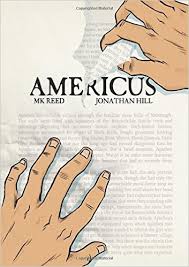
[READ: December 17, 2015] Americus

I didn’t really have any idea what this book was about–the title Americus evokes many different things.

So imagine my surprise to find out that this First Second graphic novel [go First Second!, #10yearof01] tackles the idea of banning books in schools.  It looks at religion, freedom of speech and middle school.

The story is about Neil Barton, an unpopular kid who loves fantasy and books, especially the Apathea Ravenchilde series (such a great name). Neil and his friend Danny race to library after school because the latest volume is out.  Neil is bummed that his library could only afford one copy of the book (budget cuts!) and Danny gets it first.  And as he starts reading, the artistic style switches to the Ravenchilde world (I loved that).

Then we meet Neil’s and Danny’s families.  Neil’s parents are divorced.  He lives with his mom who is harried and exhausted.  Danny’s family is an intact nuclear family, with two younger siblings.  And we learn soon enough that his mother (and father to a degree) are very Christian. (more…)

Read Full Post »

[ATTENDED: January 30, 2016] Indigo Girls

2016-01-30 22.57.42When I was a radio DJ in college, I received a promo disc by a band called the Indigo Girls, which I listened to because Michael Stipe sang on one of the songs.  I really enjoyed the sampler.  The Girls’ harmonies were outstanding and the lyrics were clever and funny and very very smart.

And I’ve enjoyed them intermittently for twenty some years.  I even saw them at Newport Folk Festival back in 1998 when they put on a fantastic show.

Sarah has been a fan of the band for a long time as well.  She saw them at an even more unusual venue–at the American Library Association Convention in 2002.

Neither one of us had seen them in a “proper” venue and thought it would be cool to see them in this small theater in Montclair.

And man, did they sound fantastic.  Their first album came on in 1989 and their voices sound exactly the same.  Emily can hit the high notes and Amy still has that great gravelly sound (despite claiming to be ill and on steroids to get her voice to actually work–I never would have guessed).  And their harmonies are still perfect together. (more…)

Read Full Post »

dq25SOUNDTRACK: ARCHER PREWITT-“O, KY” (2005).

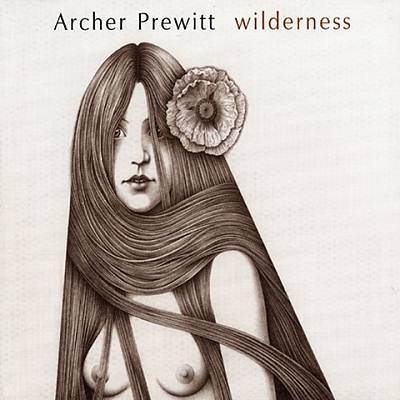
wikldernessArcher Prewitt formed The Coctails (a kitschy lounge act) in the early 90s, several years before the lounge revival.  Then he joined The Sea and Cake and has been making amazing music with them.  And he has also released several solo albums.

He has also published some comics (Sof’ Boy) with Drawn & Quarterly.

This song comes from his album Wilderness.  The title of the song is clever, too.

It’s upbeat and folky with a little psychedlia and rock thrown in.  I like Prewitt’s voice quite a bit–it’s simple but really strong.  But the selling point on this song (and others from this album that I have listened to) is the composition and arrangement of these songs.

I like the way this one goes from simple guitar to orchestration (although presumably not a real orchestra) for the chorus.  And how post chorus there are flutes and other instruments to pick up the momentum which adds a vaguely psychedelic feel to it.

At four minutes (the song is five) it changes direction entirely and turns into a nearly new song with big guitars and drums. And it rather rocks.

And just to make Archer the all around dude that he is.  He also drew the cover art.  Jeez.  He’s probably super nice and friendly, too.

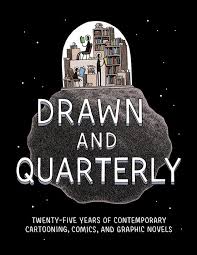
[READ: January 3, 2016] Drawn and Quarterly: Twenty Five Years 

I have liked a lot of D+Q books for a long time, although I never really considered a comprehensive look at their publishing house.  This book–about 775 pages long–is about as comprehensive as it gets.

This book contains a few previously published cartoons and excerpts as well as a whole slew of previously unpublished pieces.  There are essays and histories and reminiscences and love love love for the little Montreal graphic novel publisher.

I didn’t know much about the history of D+Q–that Chris Oliveros started the publisher in 1989 out of his house.  That he was the only employee for years.  And that he was essential in getting the term “graphic novel” used by everyone–including the library of congress!

He weathered distribution problems, he weathered the rise and fall of indie comics in the late 90s and he has come through with some of the most beautiful books published.  D+Q has also brought attention to foreign artists as well as out of print artists.

Really, if you have any respect for graphic novels (that aren’t superhero-based) you owe thanks to D+Q. (more…)

Read Full Post »

1963SOUNDTRACK: RESTORATIONS-Tiny Desk Concert #462 (August 14, 2015).

restor I don’t know Restorations, although I understand that they usually play pretty big loud guitar rock.   For the Tiny Desk they are stripped down (I guess) to the three guitars, but no drums or bass.  Lead singer Jon Loudon has a powerful and excellent voice.  On “Separate Songs” there are two guitars and a keyboard and wonderful harmonies.  The keyboardist sings backing vocals in the beginning of the song, so that when the lead guitarist joins in later, it’s even more impressive.

The guys are very friendly and funny.  The joke about the “desk” and about their constant tuning needs.

For “Tiny Prayers” all three play guitars and there some wonderful melodies that they play together.  The Future” is the slowest song of the three, but it contains all of the same elements–cool guitar sounds and wonderful harmonies.

The band has a great sense of melody.  And yet for all that I liked t his set, there was nothing that really stood out for me about the band.  They are simply a good rock band, and that’s not a bad thing.

[READ: November 29, 2015] The Complete Peanuts 1963-1964

The drawing style of Peanuts that I most associate with the strip has been pretty consistent by this point.  And most of the characters look “right” (although Snoopy will continue to morph over the years).

Why does Charlie Brown keep going?  Despite all of the abuse Charlie gets, this one strip seems to sum up his strengths: “adversity is what makes you mature…the growing soul is watered best by tears of sadness.”

I feel like Schulz was either looking up facts to write about for some of this year.  Because we get things like this: Lucy: “You have to have [a note excusing you from school] otherwise the school can’t collect its state-aid money.”  Is that true or has Lucy hoodwinked Linus and me?  Later Charlie tells Lucy “when cranes and herons stand on one leg they can’t be injured by ground lightning.”  Later, Linus tells Sally that birds “have muscles in their feet which automatically contract when they fall asleep (which is how they sleep on a limb without falling off).  He then says the same principle applies with Snoopy’s ears.  Is this true?

In July 1963, there must have been an eclipse as the strip spends several days telling everyone how to safely watch it.

Linus’ blanket continues to occupy a lot of attention, with Lucy continually yelling at him about it.  His blanket hating grandma returns and even takes it away (she gives him a dollar bill which he tries to snuggle with).

Linus is full of ambition in these years.  He wants to be a rancher for several weeks in 1963.  Although, horror of horrors, he doesn’t make the honor roll in March of 1963.  But that doesn’t stop him.  And in a big surprise in 1964, he runs for school president (and has but one failing…and it’s not his blanket).

Schroeder continues to dismiss Lucy, this time even saying the chances are a googol to one (and then writing out how many zeros that is) of them getting married.  In July 1963 she complains that Beethoven never made it on any bubble gum cards.  Later when Lucy asks him why he doesn’t like her, Schroeder gives a very simple answer.  She replies, “I hate reasons.”

Rachel Carson returns in Feb 1964 with Lucy saying “we girls need our heroines.”  Of course Lucy also gets this quotable moment: “The crabby little girls of today are the crabby old women of tomorrow.”

Attacks on consumerism continue with a shoddy baseball about which Charlie says “this is what is called ‘planned obsolescence.'”

Speaking of baseball, there’s plenty of it.  I enjoyed the Sunday strip where Charlie using Snoopy to show how to break up a double play.  In 1964, Charlie suffers from Little Leaguer’s Elbow (and the team does great without him).  And when Lucy hurts her elbow (and refuses to call it Washerwoman’s elbow) she says she’ll sue Babe Ruth, Ty Cobb and Willard Mullin (Mullin was a sports cartoonist).

In August 1963, we see the first mention of Charlie Brown’s baseball hero Joe Shlabotnik (and the very distressing moment when Lucy won’t give let Charlie have his card).

I got a real kick out of Schulz returning to the McCovey joke from last year (in January!) saying “or why couldn’t McCovey have hit the ball even two feet higher?”

In 1963’s National Library week, Sally gets her library card this time and she is even more excited than Linus was.  She even has the line: “Happiness is having your own library card.”

Sally also addresses helicopter parents of 1963: “My mother is watching me out of the window.  Mothers feel secure when they see a child of theirs playing in a sandbox.  Sigh.  She’s secure and I’m bored to death.”

The little red-haired girl is obsessed over from time to time. Especially during Charlie’s lonely lunches.

Frieda has definitely dwindled by now–even if she never really did much.  She does abuse Snoopy about chasing rabbits but in one strip, we seem him playing with bunnies and four sleeping on his stomach on top of his doghouse.  This seems to set in motion Snoopy’s love of all other animals.

Later, there’s a really funny strip with Snoopy trying to fill his water bowl from a tap.  Then it rains on him.  The punchline “That’s one I’m going to have to think about for a while” is hilarious.

And…Snoopy goes to the hospital for a couple weeks! (nothing serious).  Charlie says he has a private room “he has a health insurance policy that pays forty dollars a day!”

In September of 1963, there’s a joke about ZIP Codes (Snoopy forgets his) and then shortly after a new character named 5 is introduced.  He explains, “My dad says we have so many numbers these days we’re all losing our identity.  He’s decided that everyone in our family should have a number instead of a name.”  His sisters 3 and 4 look like Peppermint Patty (who hasn’t arrived yet).  ZIP codes were introduced in 1963.

At Halloween in 1963 Linus slips about the Great Pumpkin and says “if he comes” (like in the TV show).  He’s doomed!

In February of 1964 a whole set of strips focuses on the existence of the humane society.

And in May of 1964 we get the classic bit from the movie when Charlie puts a coin in Lucy’s can and she sings “Boy what a sound.  How I love to hear that ol’ money plink!  That beautiful sound of cold hard cash!  Nickels! Nickels! Nickels!”

In June of 1964 there is a very touching Father’s Day strip.  (Although it wasn’t officially recognized until 1966 and signed into law as a official day by Nixon in 1972).

I really enjoyed the series of strips where they clean out Snoopy’s house and the dimensions (which we never see) are enormous!  There’s stairs, a pool table and all kinds of cool things.

For years now, Peanut has had strips where charters hold up signs–sometimes for Beethoven’s birthday, or national library week.  But in Sept 1964 it gets a bit more surreal with a bird holding a sign that has  ! on it.  Later another bird’s sign says ; and ?   A fight breaks out about it.  It’s very funny.

And in October 1964 Lucy pulls away the football despite given Charlie a signed document… “it was never notarized.”

And the year ends with something of cliffhanger.  Charlie has to do a report on Gulliver’s Travels over his holiday break, but he keeps putting it off… what will happen in 1965?

The foreword was written by Bill Melendez.  Melendez first met Schulz when they collaborated on an animated commercial for the Ford Falcon in 1960.  In 1963, they worked together on a documentary about Schulz using more animation.  Then in 1965 Coca Cola contacted him to see if Schulz would like to make a Christmas special.  They had 5 days to write the outline.  They used the kids from the Ford commercial as the voices. And they had six months to make the move.  It first aired on December 9, 1965.

Melendez raves about their work (rightfully) and then talks about the many other specials the made together–a Veterans’ Day one called What Have We Learned, Charlie Brown, and a show about cancer called Why Charlie Brown, Why?   In total they made fifty network specials and 4 feature films.  He talks about how great it was that they found Vince Guaraldi for the music and that they used real kids and no laugh track.  It’s hard to believe that special is so old!

Read Full Post »

« Newer Posts - Older Posts »