Feeds:
Posts
Comments

Archive for the ‘Inventions’ Category

lioSOUNDTRACK: RHEOSTATICS-El Mocambo, Toronto ON (November 1987).

ElMo-Nov1987After re-listening to some of the Rheostatics most recent shows, I checked the Rheostatics Live site and found out that he has added some really old shows.  This show is the oldest show on the site, dating back to 1987.  A brief Rheos history shows that in the earlier incarnation, it was Dave Bidini, Tim Vesely and Dave Clark.  They were joined by the Trans Canada Soul Patrol and played mostly R&B and funk.  Around 1985 the Soul Patrol left and Martin Tielli joined.  Around the time of this show, they had released Greatest Hits.  And then they broke up (circa 1988).  Then they reformed in 1991 with an entirely different sound.

So this is from what I guess you’d call he Mach II era: no Soul Patrol but before the breakup.  Interestingly, only two songs from this how appeared on their debut album, although many appeared on earlier demos.

They play 11 songs, including what I assume is an improvised rap from Dave Clark (the really silly one of the band).  And the songs are dominated by a smooth guitar sound and often times a funky bass.  Perhaps the most amazing thing about this set is the prominence of Tim.  He sings many of the songs and Dave includes him in many jokes.  Martin is almost non-existent.

“National Pride” dates back to 1983 and starts as a kind of goofy rap song but then turns into the funky version from the demo.  Martin Tielli also released a solo song called “National Pride” which is nothing like this.  They follow this with the “Greensprouts Theme Song” (which they played at the AGO almost 30 years after this show).  Dave Clark calls it the “silliest song ever written,” although in the years hence they have made a few challenges to that claim.

“Good on the Uptake” is a song I’ve heard in a few places before.  Tim sings lead and there’s a kind of funky bass line with lots of guitar harmonics.  I think Martin is singing backup (and probably playing the harmonics).

Tim breaks a string and Dave Clark shouts, “This song is called Rheostatics learn how to string their guitar.”  With a broken string they play an impromptu version of “Red Dog Ray” taught to them by Reverend Ken and the Lost Followers “about the beer strike in 1983.  We were all pissed off because we had to drink Old Milwaukee and Rolling Rock and all that shit.”  This song has come up in their sets in the early 2000s.

It segues right into “Ditch Pigs” from Greatest Hits and sung by Martin.  The middle section devolves into a chant of “I want an egg salad sandwich and a glass of Coke.”

For “Four Upright Walls” Bidini introduces David Clark as the Poet Laureate of Etobicoke.  This is a rap of sorts in which the band does response to Dave’s rap (with all kinds of crazy sound effects and even some beatboxing (!)).

“Crystal Soup” is very much a Tim song–it sounds a lot like a song he would write now–there’s a surprise guitar riff in the middle of the verses that sounds a bit like Rush.  At the end of the song Dave introduces “Mr. Nigel Tufnel,” although I’m not sure to whom he is referring.  “Sue’s Mining Song” (also sung by Tim) has a kind Rush feel although the lyrics are very un-Rush (“woman,” “girl” and a line about “buzzards on your Steely Dan”).  It also features Tim screaming a high note!  It’s a pretty heavy song (especially at the end).

It’s funny that they follow-up with “a nice song,” Martin’s sung “Crescent Moon” a very, very new wavey song that Bidini wrote, and which leads of Greatest Hits.  They follow with a fun and fast rocking “People’s Republic of Dave” in which Dave encourages Tim to make silly faces.  And Tim growls that he wishes his name was Dave.  This seems like a great show ender, but they’ve got one more song.

“Chemical World,” has a kind of discoey guitar opening and lots of slap bass.

[READ: January 5, 2016] Zombies Need Love Too

I prefer to read series like this in order, but sometimes you can only get the books that you can get (and you don’t get upset).  For reasons I don’t understand, my library only had the first two books (which were also collected in Liō’s Astonishing Tales which they also have) and the two most recent books.  There’s maybe two books in between, as far as I can tell.

The good thing is that there’s not a lot of forward narrative in these stories–except perhaps for the new pets that Liō acquires.

So after four years what is Tatulli writing about?  Well, largely the same stuff, which is fine with me. (more…)

Read Full Post »

feynman SOUNDTRACK: LARA ST. JOHN-Tiny Desk Concert #530 (May 9, 2016).

laraWhen Lara St. John released her first CD it made ripples because of the way she appeared on it (presumably topless).  But if that was a stunt to get people to listen, it was a good one because the music on it was phenomenal (and the disc sold very well).  St. John is masterful on the violin and has released a dozen or so CDs of herself playing.

I have never seen her play before and it is a marvel watching her fingers  fly (and slide) all over the neck of the violin (including some absurdly high and fast notes).

The first piece is “Czardashian Rhapsody.”  It is an amazing mashup of two songs by Martin Kennedy: Czardas, the most familiar Hungarian melody for violin and Hungarian Rhapsody No. 2, the most familiar Hungarian melody for piano.  He merged them into a real barnstormer.  It’s 6 minutes of switching back and forth between the familiar melodies and very gypsy-esque sections (and some very long held notes).

The song is 6 minutes of musical acrobatics.

Although this is billed as St. John’s show, much recognition must go to her pianist Matt Herskowitz who is also magnificent.

St. John clearly has a sense of humor since she named her new album Shiksa.  She says the album actually has ten different titles because every culture has a word for “big Canadian chicks” like herself.

The second piece is “Sari Siroun Yar” by Serouj Kradjian.  She says it was the first song she heard when she went to Armenia in the lat 1980s.  It is a bittersweet Armenian troubadour song.  While this song is much more mellow than the first, it still showcases some amazing playing on both musicians’ parts.  The opening notes she plays high on the fret board which gives the violin a very different sound–almost breathy.  And the main melody is quite lovely.

The final song is once again a wild one.  “Oltenian Hora” is one that St. John arranged herself.  It plays off a catalog of violin tricks, St. John explains, practiced by traditional Romanian gypsy fiddlers: rapid-fire whistles, bird calls and slithery harmonics, all in a variety of off-kilter rhythms.  I’ve never seen some of the things she does on the violin (those bird calls are amazing).  And by the end she is bowing so hard the bow seems about to break.  It is way intense and really awesome.

I’m not sure I’ve ever seen a violinist get out of breath from playing so hard before, but she deserves all of the applause.

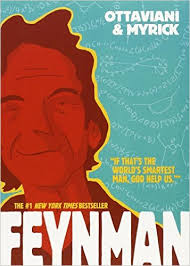
[READ: March 15, 2016] Feynman

This is a graphic novel biography of Richard Feynman.  Ottaviani worked as a nuclear engineer, programmer and reference librarian, so you can trust him.

I have respected Richard Feynman for years.  I have a few of his books, although I can’t say I have read them intensely.  I knew that he was considered an amazing professor–making really intense subjects easier for the layman to understand.  And many of his lectures are available as audiobooks.

But there was so much about him that I didn’t know.  And this biography (which runs nearly 300 pages and is jam packed with information) covers nearly all of it.  Including excerpts from his own publications and attaching a massive bibliography for more works by and about Feynman. (more…)

Read Full Post »

silentSOUNDTRACK: HOSPITAL SHIPS-Tiny Desk Concert #177 (November 23, 2011).

hospital shipsHospital Ships is a band created by Jordan Geiger, who was in the band Shearwater, among others. In 2011 he released his second album as Hospital Ships.  The blurb describes the album as “packed with poppy folk songs and brash rockers enhanced with instrumental flourishes and bursts of guitar feedback,” but for this recording, they strip everything down to the basics: a guitar, banjo, ukulele and a drum with a towel over it to muffle the sound.

Geiger has a rather high-pitched, delicate, almost talking-singing voice and his songs are rather pretty.  The band plays 3 songs in just over ten minutes.  The first one, “Phantom Limb,” (once my lover, now my friend, you are my phantom limb) has a recurring motif of them saying/singing “ha ha” which is rather catchy.

“Carry On,” features a four-letter word (technically a seven letter word), which might be one of the first times on a Tiny Desk Concert that such a word is uttered.  It’s especially funny given how sweet the band sounds.  The sentiment of the song is nice though: “To all the women I’ve loved, When I was with you I would say I was better off….  And when I’m gone, carry on, carry on.”  There were harmonies in the first song, but they are more prominent in this one (three part) and are quite nice.  The banjo player also does a whistling solo.

“Let Me In” made me laugh because he uses the word baby a lot (which Ben Folds said in his Tiny Desk that he has never said in real life, so why would he put in it a song?).  But this song is very gentle and sweet–just Geiger on his guitar singing “baby, let me in.”

Geiger’s voice reminds me of a few different people–Ben Gibbard from Death Cab for Cutie especially on the final track; perhaps the Mountain Goats or the Weakerthans.  And his songwriting is very good.

[READ: December 26, 2015] Silent But Deadly

I really enjoyed the first Liō collection, and was pretty excited that I could find the second collection so quickly (my library doesn’t have any more collections for some reason, so I’ll have to track the rest down elsewhere).  This book collects the strips from February 25, 2007 – December 2, 2007.

Not much has changed from that book to this one, but I think Tatulli’s comic chops have gotten even better.

The strip won me over immediately with the first one in the book. Lio draws a monster and it comes to life.  He looks at the marker and it says “magic marker” and he gets a big grin and goes back to work.  So simple yet so funny.

It is that big grin–wide open-mouthed just unfettered mischievous delight that occurs in nearly every strip. (more…)

Read Full Post »

lio1 SOUNDTRACK: JOE HENRY-Tiny Desk Concert #176 (November 21, 2011).

joe henryI had never heard of Joe Henry, so imagine my surprise to find out that he was releasing his 12th album in 2011.  For this Tiny Desk, it’s just him at a stool playing his guitar.  He has a very easy vibe, telling stories between songs and playing them with very little fuss.

He opens the show by saying this is, “not exactly like Woody Guthrie playing for the union members but you are working people.”

He plays four songs, “Sticks and Stones,” After the War,” “Odetta” and “Piano Furnace.”

Between the first two songs, he says he first became aware of Tiny Desk Concerts when his friend Vic Chesnutt was on the show (amusingly, he was the second person on the show).  He says he has a song on his new record about Chesnutt (Chesnutt had recently died).  He doesn’t play it though.  At first it seems like he might not be allowed to play it, but then it seems like maybe he just doesn’t get to it.

Rather he plays “After the War” where his guitar sounds like it has an incredible echo on it.  That echo is also present on the third song.  After which Bob asks him about his guitar.

Joe says he’s had the guitar for 6 years.  But the guitar dates back to 1932.  He says that he heard things differently with this guitar.  It’s got a smaller body and was actually sold as a budget guitar by Gibson (for $19 in 1932).  He also jokes that it’s black and looks a bit like a World Wrestling Federation belt.

Then someone asks him about Sam Phillips.  Joe says he sold her husband a guitar about 20 years ago.  She and her husband have split and Sam got the guitar and has been playing only that guitar for the last 20 years.  He says that he loves that she doesn’t plug in her guitar.  She plays into a microphone where you can hear the whole guitar and which makes the other players lean in to hear her.

I love the chords he plays in the final song, “Piano Furnace,” even if I don’t know what the song is about.  Henry’s voice is familiar.  I think he sounds a bit like a number of different singers.  And overall, nothing really stands out in his performance, except that everything sounds great and hiss songwriting is really solid.  That’s not a bad thing.

[READ: December 20, 2015] Happiness is a Squishy Cephalopod

Mark Tatulli is the author of the Desmond books.  I liked the stories, but I didn’t love the drawing style so much.  Imagine my surprise to find out that Tatulli has been drawing comics featuring this little boy Liō since 2006 (going forward, I’m leaving off that line over the o, because it’s a real pain).

And even more surprising is that I like the drawing style in the comic quite a bit–it is slightly refined over the Desmond books and is all the better for it.

I am also really surprised to find out that this strip appeared in newspapers across the country.  I’ve certainly never heard of it (but then I don’t read newspapers anymore, either).

So Lio is strip about a boy named Lio.  Lio is a dark, dark kid.  He has a pet squid, he loves monsters and he’s delighted by chaos. (more…)

Read Full Post »

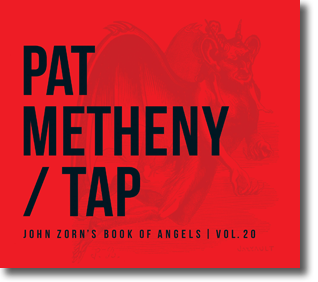
5.20SOUNDTRACK: PAT METHENY-“Mastema” (2013).

Itap-cd-cover don’t know all that much about pat Metehny.  I know he’s a jazz guitarist held in high regard by some and in less high regard by others.  This song is Metheny playing a John Zorn composition–indeed, it comes from an entire album of Zorn covers called Tap: John Zorn’s Book of Angels, Vol. 20.  I have been a huge fan of Zorn for decades, and yet some time ago I had to stop following him–his output is just too huge.  So this Book of Angels series by the Masada String Quartet is unfamiliar to me.

Knowing what I do about Zorn, this piece is quite an interesting statement–it’s got a lot of the wildness that Zorn throws into his music, but it’s also got the pretty melodies that Zorn writes as well as the Jewish melodies that saturate the Masada albums.

Strangely enough this song reminds me more of Frank Zappa than John Zorn.  That may have to do more wbecause it’s a guitar and not a sax, but it also has something to do with the bass guitar that is playing along–it’s got a very Zappa sound to it.

I feel like I’d rather just listen to Masada, but I’d have to really compare the two to see how this holds up.  It’s a pretty wild guitar workout though, if you like that sort of thing.

[READ: May 16, 2013] “Vision Quest”

The five brief pieces in this week’s New Yorker are labeled as “Imagined Inventions.”  And in each one, the author is tasked with inventing something.

Karen Russell is the first of the five authors whom I did not recognize (although I have read a few short pieces of hers in the New Yorker).  She describes her last invention, which was for the seventh grade science fair. It was called the Roller Solar Cream—she poured sunscreen on a roll-on deodorant stick.  It got a C+.  So she explains that she’s not much of an inventor, but she’s going to give it a try.  She also states that she doesn’t know how any of these inventions would work, nevertheless she proposes four.

Number 1 is a “Trapster” for social situations.  The original trapster is an app to alert you to speed traps and the like (I’ve never heard of that).   Her app would alert you when you are heading into a socially dangerous situation (be careful what you say around this person, her dad is famous).  Number 2 is called “Last Wishes Glasses” which upon wearing allow you to know what your dead relative would actually think of your plans/ideas (“she would have wanted it this way” is no longer needed).  I have to admit I find this invention to be pretty nonsensical.  Number 3 is the one I like most.  It’s called “Baby Roshambo” and it’s a program that allows you to see what a baby’s life will be like depending on what name you give him or her—see how Ashley, Bubbles, La’Dynasty and Gertrude would turn out differently just because of their names.

(more…)

Read Full Post »

5.20SOUNDTRACK: BLACK ANGELS-Evil Things (2013).

blackangelsThis song has a 70s era metal sound (with a heavy early Black Sabbath feel).  It opens with a big riff and surprisingly quiet vocals (the vocals are not really sung loudly, they’re almost whispered, and they are very clean–it’s a nice contrast to the big buzzy guitars).  But for al the buzzy guitars (and the wonderfully dated to 1967 keyboard sound), there are passages that are quiet and almost gentle.  Indeed, there’s a lot going on in this song.  It’s a nice marriage of heavy metal and psychedelia.

I love the way the end seems like it’s uncontained–like they couldn’t control the feedback.  It’s interesting that Bob and Robin on NPR relate this more to psychedelic bands of the late 60s and yet I hear more Black Sabbath–of course, Sabbath was a lot more psychedelia than we let on.

I’d like to hear more from these guys

[READ: May 16, 2013] “Cats Robo-Cradle”

The five brief pieces in this week’s New Yorker are labeled as “Imagined Inventions.”  And in each one, the author is tasked with inventing something.

Since Atwood wrote Cat’s Cradle, I wasn’t sure what to expect from this piece—the title of which was just kind of odd.  As with many magazine titles, I feel like perhaps she didn’t come up with the title because that’s not what she calls her invention–someone just tried to tie it into her famous novel.

Anyhow, she begins her piece by talking about the fascinating-sounding Museum of Failed Products in Ann Arbor, Michigan.  She says that there are so many interesting things there, some of which she feels must be better than her own invention, and must be better than Pop-Tarts.  She says she predicted the failure of Pop-Tarts because when her family first tried it, the jam exploded all over the toaster.  So she knows from good and bad ideas.

Her idea has to do with the death of so many birds and rodents from feral cats.  Recall that birds are predators of insects so their dwindling number is affecting forests and garden.  When cats kill the birds (and the rodents that larger birds eat), they are permanently impacting the climate.  Her idea is for a safe (to the cats) trap which she calls the Robo-Coyote. (more…)

Read Full Post »

5.20SOUNDTRACK: ELEKTRA-“I Don’t Do Boys” (2009).

elektraI found out about this band and video because of my recent reading of the Icelandic magazine Séð og Heyrt and this post on I Love Icelandic Music.

This song was listed as one of Iceland’s musical scandals because of the aggressively lesbian imagery.

The song is simple enough.  Piano chords play slowly until the tone changes for the bridge and the very simple chorus (which reminds me of Blur’s Boys and Girls in a way, although it doesn’t sound anything like them): “I don’t do Boys, I just do Girls, I just do girls with style and class. I don’t do boys I just do girls I just do girls with kissable ass”). It’s poppy but a little more aggressive than a typical pop song (and not as metal as a pop metal song).  There’s an interesting style to the backing vocals that seems to make it more than a pop song as well.  I’m not saying it’s good, but it’s more than typical.

As for the video, I can’t tell if this is male fantasy lesbianism or what, but since this story is all about kissing, here’s a video that’s all about kissing.  See if it’s as scandalous as Iceland thinks.

[READ: May 16, 2013] “Leaning In”

The five brief pieces in this week’s New Yorker are labeled as “Imagined Inventions.”  And in each one, the author is tasked with inventing something.

Mindy Kaling is always funny, especially when you’re not sure how serious she is.  As when she begins her essay, “One of the perks of my job is that I regularly get to kiss men—often married men—with zero repercussions for anyone involved.”  Of course she’s talking about acting, but as she says—who is to know if she slips out of character while kissing?

She explains that kissing new people is one of the great joys in life and, while being in a committed relationship is also wonderful, she feels that removing the joy of kissing new people is a terrible drag.  She agrees that marriage is a serious business but kissing is not.  “Kissing in and of itself can’t create offspring or cause life-threatening disease.”  She offers an example of how if you just kissed someone you would never be stuck having to listen to his post-coital ramblings afterwards. (more…)

Read Full Post »

5.20SOUNDTRACK: IGGY AND THE STOOGES-“Job” (2013).

iggyNickelodeon’s favorite dad has just released a new album.  In the lead up to this song on NPR, Bob Boilen said that the live show that NPR streamed from Iggy and the Stooges was a matinée and there were kids as  well as adults there.  Who takes a kid to see Iggy Pop? Even if he was on The Adventures of Pete and Pete?

So this song is a dopey punk song and I love the guitars as the song starts–just classic punk sound and riffage. And then Iggy’s unmistakable voice “I gotta job…but it don’t pay shit.  I gotta job… and I’m sick of it.”  Is there any sentiment less authentic than Iggy Pop singing this?  Probably not.  And yet it’s a fun song for any working class guy to sing along to

And it’s frankly amazing that Iggy and the Stooges are still putting records out.

[READ: May 16, 2013] “Just Drive”

The five brief pieces in this week’s New Yorker are labeled as “Imagined Inventions.”  And in each one, the author is tasked with inventing something.

Shteyngart’s is clearly the most practical and is based on something the he knows already exists. He explains that he is unabashedly a terrible driver: “My greatest failure in life has been my inability to drive a car safely between two locations.”  This is despite the fact that he has always loved cars.  Right from the day that his father bought their first car and he saved up to buy a similar matchbox car (more similar when they painted it the same color), he has loved t he freedom that cars represented.  And I loved the idea that he and his family felt that although America was a large country, the road atlas made it seem like you could drive anywhere.

But Shteyngart’s driving problem seem to be more fundamental—an inability to tell left from right (the way his father tried to teach him is quite funny… if misguided).  And now that Shteyngart lives in the country, he needs to drive more than ever. (more…)

Read Full Post »

« Newer Posts