Feeds:
Posts
Comments

Archive for the ‘Huh?’ Category

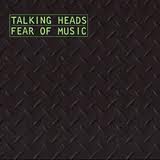
SOUNDTRACK: TALKING HEADS-“Life During Wartime” (1979).
I ain’t got time for that now.

Talking heads were many things, a weird band, a noisy band, a new wave band with poppy hits, and underneath it all, a punk band that rocked.  If you know Talking Heads from their great later songs, it might be hard to imagine how raw this song is. Byrnes’ voice is intense, the melody is staggered and frantic and the whole enterprise just feels like it could fall apart at any moment.

It’s a great rocking song, and if you haven’t heard it for a while it’s worth checking out again.

Heard about Pittsburgh, PA?

[READ: Week of July 23, 2012] JR Week 6

This week’s read was the first time so far that I found a section tedious.  True, it could have been the time of night that I read it, but the whole section with Gibbs and Tom (which I call the “God damn” section) while providing some recap–and some very useful stuff at one point), was also rather redundant, both internally and in the story as a whole.  It was also quite a downer.  (Infinite Zombies has a post about this book being a comedy or a drama, so I won’t get into that here–I will get into it there though).  Although as with most Gaddis, it was a very accurate portrait of two men wallowing (and would probably be funny to hear out loud), I was happy when Tom finally left the scene.

When we left off last week, Gibbs was coming into Bast’s room holding a bottle.  Bast was just finishing up his videophone conversation with JR (Bast says he was just talking to himself).  Gibbs says he is meeting a man named Beamish here in a little bit. But he interrupts himself “Listen!”  Bast explains that the tub is running non-stop as well.  And Gibbs launches into a poem:

Through caverns measureless to, where the hell…   Bosom where the bright waters meet, like living in Pittsburgh Bast  –confluence of the Mongahela [sic–should be Monongahela] and the vale in whose bosom the bright waters meet to form the mighty Ohio (383).

I’m not entire surely where all of this comes from although As the vale in whose bosom the bright waters meet comes from a Thomas Moore song. (more…)

Read Full Post »

SOUNDTRACK: WEEN-Push th’ Little Daisies (1992).

So Ween broke up back in May (this is the year of seemingly one-hit-wonder bands breaking up after decades of playing).  I have a bunch of Ween’s earlier stuff, but stopped listening after their hits.  I’m told some of their later records are quite good.  This song from the album Pure Guava was my introduction to them, and it is weird and kind of irritating and strangely catchy and perfectly encapsulates Ween.

The melody is simple and poppy, but the vocals are, if not sped up, then crazily falsettoed.  And the repeated refrain of “push the little daisies and make em come up” is, if not annoying, certainly infectious (in many senses of the word).

The other fun thing about Ween is that in addition to pretty much none of their albums sounding alike, pretty much none of their songs sound alike.  So you can’t tell if you’ll like any other Ween songs based on this one.  A nice trick, that.

And if, like me, you haven’t see the video in twenty years, check it out

And there is a tangential tie in to JR with this post, by the way.

[READ: Week of July 16, 2012] JR Week 5

I realized that, unlike in previously long weekly posts, I haven’t been including tangentially related photos (I rather liked putting them in the Gravity’s Rainbow posts).  I blame it all on my time constraints.  There also aren’t quite as many picture-worthy things in this book.  GR had lots of locations and historical photo-op type things.  JR is more about money and sex, and the internet doesn’t have many pictures of either, right.   So instead, it’s all block text.

When we left off, JR was trying to persuade Bast to help him out some more.  And, holy, he needs Bast to meet Mister Piscator out by the Egyptian stuff in the museum (JR can’t do it himself obviously–I love that he is using a handkerchief on the phone and everyone asks if there’s connection troubles).  Bast barely says anything but JR is on a roll: he got him the briefcase and that alarm clock (which runs backwards) and the business cards (which Simon pointed out I’ve been missing the typo on) and “I’ll call up that Virginia and fix it up where you get her to take telephone calls at the cafet…” (302).  JR is also going on about the kind of massive tax breaks he (and Bast) will be able to declare.  I can’t decide if he’s right or not (or if it simply won’t be relevant for what he has–indeed, a lot of this financial stuff, it seems like JR is more knowledgeable than anyone else because he has actually read the material–something nobody does.  And Bast is a musician, what does he know about money, right?).  Although his ultimate plan (potentially ingenious, but practically preposterous) is that they buy one share of all the big stocks, get their prospectuses and read them all.  And if anyone is doing anything illegal they can file a class action suit like they did with Diamond Cable. (more…)

Read Full Post »

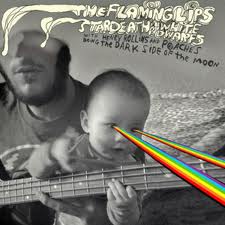
SOUNDTRACKTHE FLAMING LIPS AND STARDEATH AND THE WHITE DWARF WITH HENRY ROLLINS AND PEACHES-“Money” (2011).

I’ve already mentioned this full length album, but how can you not talk about JR without mentioning this song.  (I probably could have dine a post a week about all of the covers of it).

This is one of the most famous songs certainly by Pink Floyd on one of the most popular album s of all time.  So how do you cover it?  You can’t lose the bass line, it’s way too important to the song.

But aside from that the song is pretty different–the vocals are machine tuned almost out of recognizability.  And that’s when you realize that although this is a pretty faithful cover, it’s also a goofy cover.  Not silly, not really disrespectful but not entirely right either (notes are out of tune and flubbed).  It’s very mechanized, as if they are talking about the auto-tuned nature of making hit songs.

  Henry Rollins takes the roll of the random punters ranting at the end of the song, and that’s pretty fun.

The whole thing is kind of  a trifle.  It works better in context of the album because you can understand what the group is doing.  On its own it’s a bit of  shock.

[READ: Week of July 9, 2012] JR Week 4

This week continues where last week left off–in the middle of trying to get Dan to convince Ann to drop the lawsuit against the school (for firing Bast). Whiteback tries to speak for Vern, but Vern will have none of it–Whiteback, despite being president of the school and the bank, is proving to be more and more of a pushover as the story goes along.

Vern gives his take on the school:

The function of this school is custodial.  It’s here to keep these kids off the streets until the girls are big enough to get pregnant and the boys are old enough to go out and hold up a gas station, it’s strictly custodial and the rest is plumbing.  If these teachers of yours strike just sit still and keep the doors open, by the time these kids have been lying around the house for a week their parents will march the teachers back in at gunpoint (226).

Dan interrupts the proceedings to talk to Whiteback about his mortgage (Vern magnanimously tells Dan to go ahead and conduct personal business during work hours).  Dan’s mortgage is not working out so well because the studs in his house are too far apart–causing it to be less insurable and causing him to pay a lot more. When Whiteback commends Major Hyde’s house for being spectacularly built Dan says that he was surprised to see that Hyde was moving.  Hyde doesn’t know what he’s talking about.  Dan tells him that there was a moving van in his driveway taking all of his things out.  There’s some chaos (and a stolen car) when JR comes in and tells them that Buzzie (who was sent down for possession) has taken off down the hall. (more…)

Read Full Post »

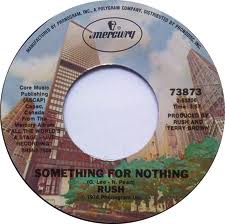
SOUNDTRACK: RUSH-“Something for Nothing” (1976).

This song comes from Rush’s 2112 album.  Since I’ve started reading JR, the refrain keeps popping into my head.  People talk of the influence of Ayn Rand on the band at this time and this song fits the bill.  When you think about the themes of most rock songs (carefree sex and partying) the lyrics to this song are totally conservative: “You don’t get something for nothing, you can’t have freedom for free.”  Rush has always been a hard working band, so this attitude makes sense.

And the song also resounds with the capitalists in this story–make your money (and other people’s money) work for you.  “Countless ways you pass the day.”

The song starts quietly but man it rocks hard with some really heavy guitars.  And the solo is intimidatingly noisy.

Oh and as for Rand, “What you own is your own kingdom.”

Of course, there is a little less capitalism as the song ends: “in your head is the answer, let it guide you along, let your heart be the anchor and the beat of your song.”  So, the message is not one of greed, but that to make your dreams come true you have to work for it.  Not bad advice, really.  Unless you were born into money of course.  In which case, never mind.

[READ: Week of July 2, 2012] JR Week 3

My JR posts are proving to be a day late (but not a… nope I won’t say it). It’s not the reading that’s hard it’s finding time to write these up.  So, apologies for those waiting with bated breath.

The week’s section opens with sex, specifically, Polaroids of sex.  Mr Angel, Stella’s husband, gets a call from Coen at the hospital (he got into an accident because of his broken glasses (ha–it was not reckless driving).  Then he starts talking with Terry about sprucing up the place–nice paneling, some plants–she thinks that’s a great idea (and actually buy a plant with her own money later).  They are interrupted by Mr Angel’s worker Leo who presents him with a stack of photos of the same Terry engaging in various graphic sexual positions (the boys in shipping had them).  With multiple men.  And although none of the men work in the office, the pictures are taken in this very office.  Mr Angel suggests that the photos could be doctored, to which Leo replies, “You’d have to have a picture of her eating a cucumber to paste onto this one, that’s some doctor” (151).   Childish but very funny.

Mr Angel goes off to Dayton to deal with some business and we see that quickest passage of time yet in the book.  Most of the book so far has been set in a day or two, but as we stay with the secretaries, several days pass in Mr Angel’ absence.  Terry and Myrna move their things into the same area so they can talk and listen to the radio while they work.  So there’s the gossip and the radio chatter vying for attention (the radio comes in Spanish as well as English) and the scene stays with them over a few days and through weekend.  Although this book doesn’t shy at all from potty humor, I enjoyed this little exchange before he leaves: Mr Angel say that she’s left the letter “s” off the word scrap on one of the documents.  She’s so embarrassed!

Terry also says she has something to tell Mr Angel about Leo…but that never gets said aloud, even when he returns and reminds her. (more…)

Read Full Post »

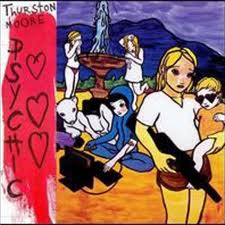
SOUNDTRACK: THURSTON MOORE-“Patti Smith Math Scratch” (1995).

I couldn’t find any archives of Patti and Thurston playing together, so the next best thing is this song named after her.

For a band as dissonant as Sonic Youth and a guy who plays as chaotically as Thurston Moore, it’s amazing how he/they are able to recreate their studio noise live.  There are dozens of versions of this song available on YouTube and while they don’t sound identical, they all sound reasonably close to each other.  And they sound reasonably close to the original studio version.

This is a pretty straightforward song: a simple riff repeated.  It doesn’t have too many crazy guitar pyrotechnics although the solo is pretty awesome.  Especially live.  No idea what the lyrics are about–much like with Patti Smith.

[READ: July 3, 2012] “Patti Smith”

This article just solidified the coolness of my job.  I’ve always enjoyed the JSTOR articles that get passed around here.  Mostly they’re esoteric studies of unexpected topics.  But this one, from BOMB magazine–who even knew JSTOR saved BOMB magazine?–has just boosted JSTOR’s coolness cred by a magnum.

This is an interview with Patti Smith conducted by Thurston Moore.  Already that’s pretty awesome.  What’s even more awesome is that the interview is done in the car while they are driving back from a show in Massachusetts–it’s just Thurston and Patti talking (although obviously edited).

The opening of the article is an introduction by Thurston, which is interesting in and of itself.  He talks about how he got to know Patti’s music (he grabbed her ankle at a concert when he was a teenager) and then how he got to know her .  I didn’t know she was from South Jersey or that she was Robert Mapplethorpe’s lover.  I also never really put together that she married someone with the same last name as her.

First off, it’s very cool to be reading an interview from fifteen years ago in which both musicians are still alive and producing great work. (more…)

Read Full Post »

SOUNDTRACK: BUILT TO SPILL-“Carry the Zero” (1999).

For a time, before the bands each took off, I lumped Built to Spill, Death Cab for Cutie and Modest Mouse into a pile of bands I really liked but wasn’t always sure who was who.  They each have melodic sections, noisy sections and high pitched singers.  (It also turns out that both Modest Mouse and Death Cab for Cutie cite Built to Spill as a big influence).  The big difference between the three is that Built to Spill’s Doug Martsch is a guitar god—he does amazing solos which is why his songs are so long (their Live album features a 20 minute version of Neil Young’s “Cortez the Killer.”

I have no real idea what this song is about, but I love it.  It’s catchy and fun with a great melody.  And, in this case it kind of ties in to JR, because JR is all about making money but his basic math is shaky.  In the same way, carrying the zero won’t do anything in basic math.  Although “you have become a fraction of the sum” is a nice refrain.

This was the song and album that introduced me to Built to Spill and I love it.  Great 90s alt rock.

[READ: Week of June 25, 2012] JR Week 2

And since there are no paragraph breaks, week two picks up mid-flow.  However, this proved to be a good breaking point because almost the entire read for this week is about Mrs Joubert and her class on their field trip to the New York Stock Exchange.  And Edward Bast is steamrollered into doing (and paying for) everything.   Gaddis’ style completely allows for the miscommunication and ease with which Bast is overtaken by Joubert and Gibbs.  While it certainly calls into question Bast’s ability to stand up for himself, it also shows how easily one can be pushed into doing things (although in real life I suspect you’d just say “wait a minute, I can’t,” at some point).  It’s still very funny and the action moves along so quickly that it works perfectly with the flow.

The scene begins with Mrs Joubert herding the kids onto a car and then talking to Mr Bast.  He apologizes for what happened yesterday,  Of course, he is talking about his disastrous TV meltdown but she thinks he means the loss of the bag of money and its turning up 3 pennies short.  Through a series of unsubtle hints from Mrs Joubert, Mr Bast winds up joining their trip to the city.  He had business to conduct in Manhattan so he was going in anyway, but now he’s roped in with the kids.  There’s a lot of sexual tension on this trip–the boys are watching women bend over and Mr Bast keeps pressing his body again “her unyielding thigh.”

Then we get our first really big scene with JR.  In this scene he and a friend (unnamed as far as I can tell) are going through all of their free mail publications and doing trades.  Everything the boys try to trade is a load of crap (a word count on “crap” would be very high indeed). So the kids start looking through their brochures: K’ung-p’a, piano lessons, rare coins, scientific method builds powerful muscles,government surplus (a Tank that turns out to be an airplane gas tank (ha)), How to Make Big Profits Overseas, selling shoes, etc.  There’s some very funny back and forth as smart-assed kids will do (he really has young kids’ dialogue down very well), like :What are you gonna do where it says “married” or what are you gonna do when it says shoe size and you put yours? (more…)

Read Full Post »

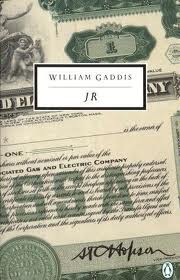
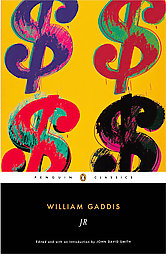
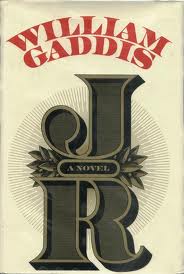
The edition I’m using.

SOUNDTRACK: RICHARD WAGNER-“Ride of the Valkyries” (1856).

Possibly the most famous piece of music from any opera (known for a billion reasons other than the opera itself).  This song was introduced to be by Bugs Bunny.  And then cemented in my consciousness in Apocalypse Now.

It’s really impossible for me to listen to it without seeing helicopters dropping napalm.

I’ve never seen it performed before.  Most of us think of it as an instrumental, but there are vocals, and they add a lot to the performance.  I also didn’t realize that the whole first minutes is a prelude to the third Act–with a darkened stage.  I just watched this version by the Danish Royal Opera in which the setting is updated.  The Stage is amazing and it’s a pretty powerful image, that won’t leave me head too soon.  And of course, the women sound phenomenal.

Smells like victory to me.

[READ: Week of June 19, 2012] JR Week 1

And so begins the saga of JR.  A little of my background:

I read JR about a decade ago.  I recall the structure and some of what happens, but not enough to actually remember anything ahead of time, plotwise.

Usually for these weekly group reads, I post fairly detailed recaps of the book.  And usually I do that because there’s so much going on in a large book, that it’s one way for me to keep track.  JR is going to be a little different.  If you’ve gotten this far in the book, you’ll notice that there’s not a lot of plot going on.  There’s a few scenes with lots of dialogue and maybe something comes of it, maybe not.  So, I’m certainly not going to try to recap everything that happens in the dialogue, nor am I even going to try to figure out who said what or even who is in every conversation–I’m not even sure that’s possible.  But I am going to talk about each scene a bit and see if I can pick out anything that seems important.

The book strikes me as being like an unedited film.  Or like a Picasso–Gaddis wants to show you everything, and let you pick out the important bits.  And so the book feels like a boom mike has been inserted into a room or scene.  We’re not really sure who everyone is, or even who is talking at a given moment.  But we hear everything that’s said. And then the boom mike pulls out and the camera pans somewhere else and the boom mike goes down and we hear some more.  It’s not always clear even that a scene has shifted–although usually a dense paragraph of prose indicates a shift in scene.

As far as characters, it’s not clear if anyone mentioned early on is going to stay with us through the book.  It’s clear that JR will be here (although his first real scene is right after my spoiler line for this week).  There’s also the Bast family who will no doubt play some ind of important role.  Then there’s a lot of teachers as well. (more…)

Read Full Post »

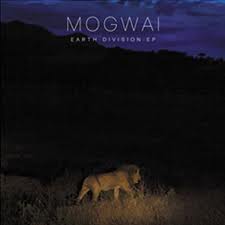
SOUNDTRACK: MOGWAI-Earth Divison EP (2012).

Oh wait, this isn’t the Mogwai EP.  What CD did I put in?

Holy crap, it IS the Mogwai CD.  And it opens with a beautiful piano and violin ballad called “Get to France.”  While it’s true that Mogwai has always been about melody (under the noise), I never expected this.  It sounds like a gorgeous soundtrack to a sad film.  It’s followed by “Hound of Winter” a gentle ballad of acoustic guitars and strings.  I know that Mogwai has a softer side, it’s just surprising to hear it all at once like this!

“Drunk and Crazy” is more like it.  It opens with a wall of guitar noise which…vanishes after about two minutes into a gentle, dark string section (strings are by Luke Sutherland of Bows and Long Fin Kille).  And while the distortion never entirely goes away (it’s evident in the piano), it is certainly pushed to the background until about 90 seconds later when it begins to overtake the track again.  It’s nowhere near as dynamic as their best stuff, but it really showcases what Mogwai can do in just over 5 minutes.

The EP ends with “Does This Always Happen?”  While it reintroduces electric guitars, it’s still a mellow song–a pretty electric guitar riff repeated while piano stabs and chords flesh out the tune and strings make it a fuller song.

None of  these songs will become “classics” (although Does This Always happen?” sounds the most like  a Mogwai song).  But it’s always great to hear them expand what they can do.   And these EPs give them a chance to show off some new styles.

To learn more about these tracks, read Stuart’s explanation of them at The Guardian.

[READ: May 25, 2012] “The Proxy Marriage”

I love Maile Meloy and I was crazy excited when I saw that she had a story in this issue.

Meloy writes stories that seem simple—they avoid a lot of the trappings of contemporary stories, indeed, they often feel like they are set in the past, even if, like in this one, they are very current.  Part of that is setting.  She tends to write about people and family interactions, which don’t require a time frame.  She also tends to set her stories in unlikely places—Montana, for instance, where not too many stories are set.  Of course, this one is set in Montana for a good reason.  It is the only state that allows double proxy marriage.  Which is what?  In a proxy marriage, if your beloved can’t make it, you can have a stand-in for him or her do the speaking and signing.  In a double proxy marriage, neither person is present but they agree to let proxies serve for them.  Why on earth would you do this?  Well, this is common in military cases, where one member is serving overseas and the other doesn’t live in Montana—this allows the non-military person to get all of the military benefits that a spouse is entitled to.  Since Montana allows this, and since this story is set soon after the 9/11/01 attacks, it all jibes.

But this story is really about unrequited love.  And I have to say, now that I’m an adult, that unrequited love sucks.  I mean, true it sucks when you’re in it too, but I hate stories that romanticize the idea that you should hold fast to the belief that this person who doesn’t  think about you that way will somehow come around. It happens a lot in stories (and always swells the heart) but when have you ever heard of it happening in real life?  Most of the time the person isn’t worth it , but realistically, once you have left school (it always happens in school) that person has found someone new and that’s the end of it.

This story’s unrequited lover is William, a shy awkward boy who plays the piano.  The girl he pines for is Bridey Taylor, with golden curls and dreams of being an actress.  William never asked her out.  Bridey was popular and other boys asked her out—and William suffered through every one.   But they were friendly—she sang while he played piano, and he helped her with school work.   Then the 9/11 attacks happened.  And this is where the story gets interesting.  Because although neither of  the main characters are not directly involved in the attacks, when the requests start coming in for proxy marriage, Bridey’s father, who was willing to perform them, asked William and Bridey to be the proxies. (more…)

Read Full Post »

SOUNDTRACK: EFRIM MANUEL MENUCK-Plays “High Gospel” [CST078] (2011).

Efrim Manuel Menuck was a co-founder of Godspeed Your Black Emperor and the main force behind A Silver Mt. Zion.  In some ways it seems odd that he would release a solo album, but I guess Silver Mt Zion is enough of a collective for him to want to do his own thing.  Efrim has been singing a lot more on Silver Mt Zion records, and I find his voice to walk a fine line between interesting and annoying–well, not so much annoying as inappropriate to the music he makes.  For this solo disc, though, there’s something different about the music that works well with his voice.  There’s eight songs on the disc.  Some of them are pretty much unlistenable, but others are really enjoyable.  The opener “our lady of parc extension and her munificent sorrows” is 7 minutes long and has the kind of epic feel of his previous bands, but there’s a lot more keyboard (making cool space sounds).  Meanwhile, “a 12-pt. program for keep on keepin’ on” is described as a “hauntingly processed field recordings and ominous tape-delayed sound-sculpture.”  That’s true for the first minute or so, but after that it’s mostly just an unpleasant cacophony…that lasts nine minutes!  And while it’s great that it was all done with analogue equipment, that doesn’t make it any more listenable.

“august four, year-of-our-lord blues” is a much more enjoyable instrumental, slow vibrated notes, a real western sound.  Efrim sings again on “heavy calls & hospital blues” and his angsty, hesitant voice works very well on this piano ballad.  “heaven’s engine is a dusty ol’ bellows ” is a 2 minute instrumental/introduction that sounds a lot like the guitar opening from Radiohead’s “Electioneering.” “kaddish for chesnutt” is a slow, mournful dirge.  It’s quite moving.  It’s 7 minutes long, and the length is saved by the second half where the chanted vocals bring the song back from the edge.

“chickadees’ roar pt. 2” is mostly feedback noises and squeaks.  It’s less unpleasant than other instrumentals, but it’s not something you’d seek out.  Although it does work as an introduction to the closer: “i am no longer a motherless child.”  After about 2 minutes of dissonant introduction, the group begins singing an uplifting ending hymn.

So this boils down to a self-indulgent solo project, with a few tracks that are among his best.  You can stream it here.

[READ: May 22, 2012] “Mrs Blue”

I really enjoyed Joshua Ferris’ first novel.  So I thought I’d see what else he had written. He has a number stories published but most of them are unavailable for free reading at this time.  Thanks to my JSTOR account I was able to read this one from The Iowa Review.

This was  pretty confusing story–and since its one of his first, I don’t really know what else to compare it to in his work.  There’s all kinds of disturbing images and as you delve more deeply into the story, the images turn more disturbing but in different ways.

It opens with a youngish boy being seduced by Mrs Blue, a teacher in his school.  He warns her about the dangers of unprotected sex and she says that she’s the one who convinced the PTA to hire the guy who gave the lecture, so she knows all about it.  He’s 13 and he keeps telling her he doesn’t want to (her locations of choice include under a railroad car and in a burned out building).  Each paragraph or so is set off by a star, indicating a new section.  So section 2 has the narrator and Gus (friend? brother?) go to the track where Mrs Blue runs laps. Gus walks his dog, Mr Yackley, while the narrator (whose name is Woodrow Williams) talk about Cole Porter and how she’s looking for a new “daddy.” (more…)

Read Full Post »

SOUNDTRACK: PET BENATAR-Gravity’s Rainbow (1993).

During the early 80s, I liked Pet Benatar well enough.  Her songs were catchy and easy to sing along to and she was ll over MTV.  So maybe I didn’t “like” her so much as I couldn’t escape her.  It bothered me that she was preposterously skinny, and I didn’t like the way she moved in her videos, but I could still rock out.  Then she did “Hell is for Children” and it rubbed me the wrong way (I was 14 and easily offended).  So I have more or less disliked her ever since—based on nothing really.

When searching for images of Gravity’s Rainbow, well, this one comes up a lot.  I didn’t want to listen to it.  I really didn’t.  But I felt I would be remiss if I left any avenue of GR unturned.  What if it offered some kind of insight?

Well, it doesn’t.  It’s offers 40 minutes of bland arena rock.  There was a drum sound I liked on one of the tracks, but mostly it’s Benatar trying too hard.  Or maybe that’s how she always sings, I don’t know.  The titles suggest that maybe they have something tenuously related to the book.  But they could also just be generic rock angst.  I’m not willing to find out.  Read the book, it’s more enjoyable.

[MULLED: Week of May 7] Gravity’s Rainbow

After these big, time-consuming novels, I like to take a week and mull.  And, quite often, I’ll read what other people have said about the book to see if I can get everything straight in my head.

I was just reading back to my re-assessment of 2666 at the end of the read—wow, I pondered a lot for that one.  But I find that for Gravity’s Rainbow, I don’t really have a lot to update or think about.  Even though it was difficult in some senses, it doesn’t seem like it was the kind of difficult that could resolve itself after thinking about it.

The thread at Infinite Zombies has been helpful with ideas and opinions, but there also didn’t seem to be any major revelations that made me rethink what I was confused about.

I enjoyed the review of the book in The New York Times, mostly because it was written at the time of the book’s publication.  It offers a few insights that I simply wouldn’t have in 2012. And I believe he even gets a fact or two incorrect. (more…)

Read Full Post »

« Newer Posts - Older Posts »