Feeds:
Posts
Comments

Archive for the ‘History’ Category

SOUNDTRACK: PETER BJORN AND JOHN-SXSW May 26, 2009 (2009).

This brief set at SXSW (available from NPR & KEXP) showcases the band’s (then) new record Living Thing.  The album was just about to be released, so these are all previews of the album (“New music is the best music”).  The album itself is very sparse and these live songs are equally sparse, but are slightly different in construction (some songs have different instrumentation live than on record).

The crowd is very responsive, and the band is really funny.  During “Just the Past” there’s a section where the song sounds like it ends, but it is just a pause, and the band tsk tsks the audience for applauding too early.  There’s also a joke about John being Joaquin Phoenix and taking up a career in rap.

It’s a wonderfully lively set, even if it is a bit short (the gripe with almost every SXSW download).  It’s a good introduction to the album and a great introduction to a band who has been around for ten years and just started making inroads into American consciousness a few years ago.

[READ: April 16, 2011] Five Dials #1

Five Dials is an online magazine.  It is free to subscribe (and to download).  All previous issues are available on the site in PDF format.  I learned about it because they printed the eulogies for David Foster Wallace in Issue 10.  But the magazine looked interesting in itself, so I decided to go back and read the whole run (the most recent issue is #18).

The only real complaint I have with the magazine is that they don’t put a publication date anywhere on it.  Which is a shame if you’re anal retentive like me. According to Wikipedia, the inaugural issue came out in June of 2008.   It’s a monthly (ish) publication and, although I originally thought it would be a literary magazine, it proves to be very much of a magazine-magazine.  And a good one at that.

There’s a letter from the editor, there’s Current-ish Events, there’s essays, reviews and even fiction.  There’s also a “classic” letter from a “classic” author.  The magazine also has some very cool black and white art in it.  The style is very crisp and one that I find quite agreeable. (more…)

Read Full Post »

SOUNDTRACK: SONIC YOUTH on NPR [interviews and stories] (2006-2009).

While I was finding all of these awesome downloadable shows on NPR, I also found that there are hundreds of downloadable NPR stories about all kinds of bands.  But I was especially interested in the Sonic Youth ones because, well, I’m a fan of the band, but also because it seemed so incongruous to me to hear Peter Sagal introducing a story about Sonic Youth (with noise rock in the background).

The three downloadable shows cover the period from 2006-2008.  It’s no coincidence that this is the Rather Ripped period, where the band is at its most commercial.  And yet it is still pretty neat to hear them play samples of the noisier music as well.

The first one, A 25-Year Experiment in Artful noise (June 12, 2006) appeared on All Things Considered.  It is an interview from WHYY (but with the Peter Sagal intro!).  Joel Rose asks the band about their longevity as well as the history of their sound (this is where Thurston admits that their unusual tunings were because their crappy thrift store guitars sounded very bad in normal tuning).  This interview also revealed to me that Thurston and Kim were married in 1984.  I knew they were an item forever, but didn’t know they were official for that long.  Well done!

The interview also mentions their appearance on the beloved show The Gilmore Girls.  They watched the show with their daughter, Coco and heard Sonic Youth mentioned a few times (by cool chick Lane).  So they got in touch with the producers and were invited on set (I wonder if the actress who played Lane liked them as much as Lane did?).  And they played a fun “troubadour” version of one of their songs on the show (with Coco on bass).

The second download, Story of a ‘Kool thing’ (June 13, 2008) is more of an interview with David Browne, whose book Goodbye 20th Century:  A Biography of Sonic Youth, I have not read (although it sounds good).  This interview delves into their earlier music a bit more (how cool to hear Tom Violence on an NPR show–admittedly this show is The Bryant Park Project, so it’s not quite All Things Considered).  This segment is a general overview of the band’s history and of the book itself (but unlike the book, this offers snippets of music!)

The third one has a rather snarky title: “Turning ‘Sonic Youth’ Fans Into Readers” (January 27, 2009). It’s not so much about the band as it is about a book curated by Peter Wild called Noise: Fiction Inspired by Sonic Youth.

It’s a brief segment which delves into the inspiration for the book and for Wild’s own story “Radical Adults Lick Godhead Style.”  There’s a strangely credulous tone to the whole piece which makes it seem like they don’t really like the book.  I’m curious about the book as there are a few well-recognized writers on board, but I’m not sure if I’ll ever get around to reading it (although Amazon sells used copies for $2.50).

Contributors include:

Hiag Akmakjian • Christopher Coake • Katherine Dunn • Mary Gaitskill • Rebecca Godfrey • Laird Hunt • Shelley Jackson • J. Robert Lennon • Samuel Ligon • Emily Maguire • Tom McCarthy • Scott Mebus • Eileen Myles • Catherine O’Flynn • Emily Carter Roiphe • Kevin Sampsell • Steven Sherrill • Matt Thorne • Rachel Trezise • Jess Walter • Peter Wild

[READ: April 18, 2011] 826 NYC Art Show Catalog

This item is always for sale pretty cheap at the McSweeney’s site.  It recently was marked down to $3 so I figured I’d check it out.  This is a collection of art prints.  Each one is on a stocky paper just under  8 1/2″ x 11″.  The prints are reproduced beautifully (there’s about an inch and a half border (making them suitable for framing).  The back side of the print has a review of the print.  And, most amusingly, the reviews are by 6 to 8 year olds.

The art is hard to summarize, as it covers a lot of ground.  There’s a ton of different styles as well, from straight ahead photography to line and pencil drawing to painting.  These artists each have one page: (more…)

Read Full Post »

SOUNDTRACK: FLEET FOXES-Live at The Black Cat, Washington, DC, July 7, 2008 (2008).

I still love the Fleet Foxes debut album, and I listen to it quite often.  One of the most impressive aspects of the band is their amazing harmonies.  So how does a band that is so vocal-centric perform live?

In an interview included with the concert, Bob Boilen asks that question.  They explain that the bigger venues are a bit harder because they have to crank up their monitors.  They also try to stay close to each other to be able to hear the harmonies clearly.  Well, they did something right because the harmonies sound very impressive here.

The main problem comes because lead singer Robin Pecknold is sick.  As in, just getting over a major cold, sick. As in, he admits that their last few shows were something of a rip off for the attendees.  Tonight’s show, he says is half a ripoff.  And that is most evident in my favorite Fleet Foxes song, “Mykonos” in which Pecknold’s voice cracks with abandon.  I would feel bad for the audience if the band wasn’t so personable and friendly and generally cool.  They make the best of a rough situation, and again, the backing vocals sound fantastic.

There are also a ton of delays in this show.  Most of them seem technical, although there seems to be a lot of tending to Pecknold’s voice, too.  But as I said, the band is engaged with the audience, telling stories (someone in the band is from DC and he asks if anyone went to high school there), and generally keeping everyone entertained.  It’s probably not their best show ever, but it still sounds great.  You can listen and download at NPR.

[READ: March 27, 2011] Miss Peregrine’s Home for Peculiar Children

Quirk Books, publishers of mash-ups like Pride & Prejudice & Zombies (as well as many other, well, quirky, titles) has published this fantastically exciting novel.

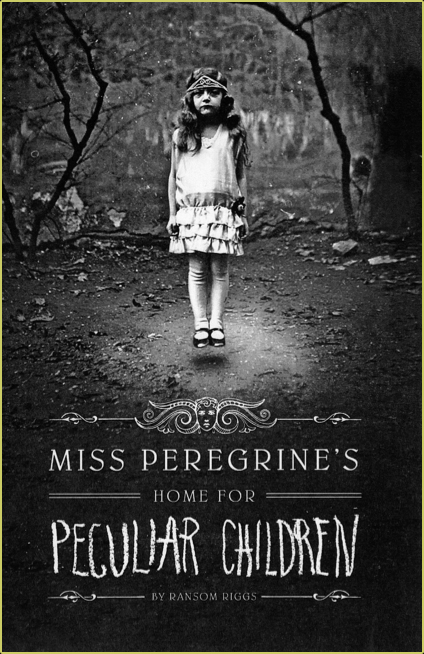
The cover depicts a creepy girl who is hovering off the ground.  But the girl herself is SO creepy that I didn’t even notice the hovering part.  She is just one of the peculiar children within the book.  And this picture is one of 50 included within the book (I’m only bummed that two pictures were not available in my copy).

So the story opens with Jacob Portman talking about his grandfather.  His grandfather (Abe) was a young boy in Poland during the 1940s.  When the Nazi’s invaded, his family was killed and he was sent to Wales, to the titular Miss Peregrine’s Orphanage (not widely known as a home for peculiar children).  But as details emerge from his grandfather’s version of the tale, things seem not right.

Abe talks about the monsters that chased him out of Poland–but he wasn’t describing Nazis, he was describing actual monsters, with multiple tongues and horrifying faces.  They followed him to Wales and were actually chasing him to that very day, in America.  And when he talked about Miss Peregrine’s house, he talked about the special kids who live there: the girl who could call forth fire out of thin air, the girl who could levitate, and the boy who had bees living inside of him.

Of course, that was all nonsense, just post traumatic stress from being attacked by Nazis, right?

That explanation works until the night that Abe is murdered.  He calls Jacob for help (they think he is going senile).  When Jacob gets to his house, he finds the screen door torn open and Abe missing.  The follow a trail and find Abe, bleeding in the woods.  Jacob thinks he can see the same kind of monster that Abe had always described lurking right nearby in the woods.  Although Jacob’s friend (who drove them to Abe’s house), didn’t see anything.

And now, Jacob’s dreams are plagued by scary monsters.  And he can’t get his grandfather’s cryptic last words out of his head.  Time to see a therapist, obviously. (more…)

Read Full Post »

SOUNDTRACK: BLACK FLAG-Damaged (1981).

I’ve liked Black Flag since I bought Loose Nut on vinyl way back when (1985, the year punk broke for me).  And those four bars were iconic to me even before I had heard a note (although I just learned they are supposed to represent a flag waving).

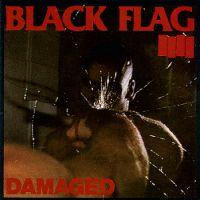
And this is where their legend really took off.  So a few things I never knew about this album until I looked them up recently.  1) That’s Rollins on the cover punching the mirror.  2) He didn’t really punch the mirror (it was smashed prior and the blood is fake).  3) I knew that Black Flag existed for a while before Rollins’ arrival and that they’d had a series of singers before him.  But I didn’t realize what a their first EP (Nervous Breakdown–Keith Morris on vocals) came out in 1978, their second EP (Jealous Again–Ron Reyes on vocals–credited as Chavo Pederast (he left the band in the middle of a live show, so they changed his name to that rather offensive one)) came out in 1980.  Their third EP (Six Pack –Dez Cadena on vocals) came out in 1981.  Rollins joined a few months after that and Damaged–their first full length–came out in December 1981.

“Rise Above” is a wonderfully angry song.  The gang vocals of pure empowerment work so well with the chords.  It’s still effective thirty years later.  “Spray Paint” goes in the other direction: rather than an uplifting, catchy chorus, it’s a deliberately angular chorus that’s hard to sing along to (even for Rollins).

“Six Pack” represents the more “popular” side of the band.  And it is a wonderfully funny single.  I just can’t decide if it’s serious or ironic (see also “TV Party”).  These two dopey songs are great to sing along to and are simply awesome.  (Fridays!)

The rest of the album turns away from the lighthearted tracks.  “What I See” is a really dark moment on this album.  And the negativity is unusual especially given Rollins’ later penchant for lyrics about fighting back.  True, Rollins didn’t write these lyrics.

“Thirsty and Miserable” is a blast of noise with some of Ginn’s first real guitar solos (which Guitar World says is as one of the worst guitar solos in history…and I say really? that’s the solo they pick?  Ginn has done some pretty outlandishly bad solos over the years…of course the whole list is questionable at best).  “Police Story” is a simple but effective description of the punks vs cops scene at the time.

“Gimme Gimme Gimme” seems childish, but that’s clearly the point.  “Depression” is a super fast track.  (Trouser Press considered Black Flag America’s first hardcore band).  “Room 13” is an odd musical track, with pretty much no bass.  It’s just some roaring guitars and drums and Rollins’s screams.  This track stands out because Chuck Dukowski’s bass propels most of the songs here.

“No More” sounds “typically” hardcore: very fast with the chanted chorus of “No More No More No More No More.”  “Padded Cell” is also fast (and is pretty hard to understand) except for the “Manic” chant, but the following track “Life of Pain” features what would become a signature Greg Ginn sound…angular guitars playing a riff that seems slightly off somehow.  Compelling in a way that’s hard to explain.

It’s funny that a band that plays as fast as they did also released some pretty long songs. “Damaged II” is almost 3 and a half minutes long.  It has several different parts (and a pretty catchy chorus).  And the final song “Damaged I” is a kind of crazed rant from Rollins;  It’s one of his scariest vocal performances; he sounds really deranged.  Especially when it sounds like he just cant think of anything else to say so he just screams maniacally.  But his vocals are mixed behind the music as if he’s trying really hard to get heard.  There’s very little else on record like it.

It’s a wonderful end to an intense disc, and the beginning of a brief but powerful career.

[READ: March 25, 2011] The Life of Polycrates

I’ve been reading Connell for a few years now.  In fact, the first time I posted about his work came with a blistering dismissal of his story “The Life of Captain Gareth Caernarvon” in McSweeney’s 19.  That story is included here, and upon rereading it, I learned two things:

  • One: context is everything.
  • Two: I was totally and completely wrong in that original review, and I take it back.

But before I explain further, some background about this book.  This is a collection of eleven stories, eight of which have appeared elsewhere.  Unfortunately there’s no dates of publication included so I don’t know how old any of these stories are.

The other thing I’m fascinated about is Connell himself.  I’m not the kind of reader who wants to know a ton of details about the author, but I like a little bit of bio (or a photo) when I read someone.  The only bio that is consistently presented about Connell is that he was born in Santa Fe, New Mexico.  I’m fascinated by this because so many of his stories are set in Europe.  So I have concocted a master biography about Connell’s life and how he has lived and toured extensively in Europe, studied theology (and found it wanting) and investigated all of the world’s darker corners.

It’s this latter aspect that really altered my perception of Connell’s writing.  I’ve liked the last few things that he’s written, but I fear that I was not looking at him through the proper lens.  And this relates back to bullet point one above.

Connell writes in a world not unlike H.P. Lovecraft–a world that is unconventional, dark and more than a little twisted.  And yet, unlike Lovecraft, there is very little of the fantastical in his stories.  Rather, his characters reside in our own world (with a little chymical help from time to time), but they are all real.  They’re just not characters most of us choose to associate with.  So, reading that first story in McSweeney’s, where it was so different from all those others, I found it really distasteful.  In retrospect, I’m not going to say that it is meant to be distasteful, although some of his stories are, but it was certainly not a pleasant story by any means.

The other fascinating thing to note about this book is that all of the stories are written in short, Roman Numeraled segments.  So the title story has 35 segments.  But even some of the shorter ones has twelve or thirteen segments (sometimes a segment is just a few lines long).    I actually enjoy this style (especially when the segments introduce something totally new into the story–which many of these do). (more…)

Read Full Post »

SOUNDTRACK: MOGWAI-Ten Rapid (1997).

The release of this disc hot on the heels of Young Team rather confused me, especially when trying to keep track of which discs were “real” and which ones were compilations.  This one is a compilation.  It’s subtitled: (Collected Recordings 1996–1997).  And the fact that it has ten songs on it tells you just how much they released in those two years.  (It appears that they released 4 or 5 singles, although all the songs don’t seem to appear on Ten Rapid, and there seems to be a song or two unaccounted for.  Wikipedia also suggests that some of the songs were re-recorded for Ten Rapid.  Gosh, what’s a completist to do?).  And given all that they released back then, it’s also a surprise at how short this collection is  (just over 30 minutes).

The amazing thing is how much the disc sounds like a complete recording and not a collection of singles.  It is mostly Mogwai’s slower, quieter pieces, and the overall tone is one of “mood” rather than “songs.”  And, for those of us who thin of Mogwai as a really loud band, the prominent use of glockenspiel comes as something of a surprise (as does the quiet singing on two of the tracks).

The opener “Summer” is not the same as “Summer [Priority Version]” on Young Team.  This one is a beautiful track with glockenspiel while the YT version is much heavier and darker. “Helicon 2” (also known as “New Paths to Helicon, Pt. 2”), is a wonderful track with an interesting riff and texture.  On a recent live disc, it was expanded greatly. “Angels vs Aliens” and “Tuner” are the two tracks with vocals.  They’re both rather quiet and kind of soothing.

“I am Not Batman” is mostly washes rather than a riff based song.  “Ithica 27ϕ9” is one of their best early songs. It’s also the one track here that really experiments with sound dynamics.   It opens with a beautiful melody that swirls around for a bit.  Then the loud guitars come screaming out until it returns to that melody (and all in under 3 minutes).

The final track “End” is an entirely backwards recordings.  Wikipedia says that it is “Helicon 2” backwards, and I’ll take their word for it.

Ten Rapid is a really solid collection of songs showing just how good Mogwai was from the start.

[READ: March 8, 2011] Donald

This book is a speculative piece of fiction that answers the question: what would happen if Donald Rumsfeld was sent to Guantanamo Prison.  Note also that the cover is a parody of the cover of Rumsfeld’s own memoir (released around the same time).

The main character is clearly Rumsfeld, although he is never mentioned by his full name, always “Donald.”  But his description and his biography make it obvious that it is him.  There is a Note at the end of the book which states that the information about Donald is as accurate as possible.

First we see Donald in a library, presumably working on his memoirs.  He is accosted by a young kid who asks him questions.  Donald is annoyed by the kid and more or less blows him off.  Donald then has a fancy dinner with his wife and “Ed and Peggy” (two people who I can’t place historically).

That evening, masked people break into Donald’s home and haul him off to a prison (he is bound and his head is covered so he doesn’t know where).  The rest of the book sees him taken from one prison to the next, tortured in various ways (nothing too graphic, most of the torture consists of thinks like disrupting sleep, keeping the temperature really hot or really cold, and asking him lots and lots of questions, sometimes for 20 hours at a time.  There is no physical torture (again, it’s not graphic). (more…)

Read Full Post »

SOUNDTRACK: MOGWAI-Young Team (1997).

When Mogwai released Young Team there was quite a bit of buzz around them.  I remember when I bought the album, that I had no idea where they were from.

With the Asian-looking characters on the cover and a picture of Fuji Bank (and no band members names listed) I assumed they were Japanese.  Of course, a closer listen reveals a lot of Scottish voices quietly chatting away during some of the songs (which doesn’t necessarily mean they are Scottish…but indeed, they are).

Young Team is a great debut and Mogwai shows a lot of versatility.  It opens with a spoken word bit about Mogwai (If the stars had a sound it would sound like this).  It’s a slow instrumental, actually quite pretty, with picked guitar and continual bass and even harmonics.   It gets loud by the end, yet even that is restrained.  But just when you think that Mogwai is going to be another post rock instrumental chill out band, they hit you with “Like Herod.”

“Like Herod” is one of the more amazing songs in instrumental rock.  It plays with loud and soft dynamics like nobody’s business.  Opening with a slow rumbling bass, the guitars pick out intricate melodies.  Then at 3 minutes, all hell breaks loose in the form of big guitar chords and screaming guitar notes.  Things slow to a crawl about 6 minutes into the song. But we’re only half way done.  And those quiet notes are once again blown away by those same chords and screaming notes.

You could pretty much end the disc right there and call it a success.  But “Katrien” shows off another side of the band: a spoken word side.  Behind some gorgeous melodies there’s something of a rant.  It’s followed by “Radar Maker,” a 90 second piano-based instrumental.  It’s quite delicate and it leads right into “Tracy” a beautiful 7 minute song with a pretty melody and lovely washes of sound.

The middle of the album has two shot songs: “Summer [Priority Version]” is a condensed version of that quiet/loud dynamic that Mogwai does so well.  And “With Portfolio” plays havoc with a pretty piano song by throwing in washes of noise and sound effects which completely take over by the end.

The unfortunately titled “R U Still In 2 It” belies its bad name with some beautiful quiet guitar work played behind a vocal turn by Aidan Moffat.  There’s even a sung chorus!

“A Cheery Wave from Stranded Youngsters” is a two-minute sort of intro to the final track on the disc, the amazing “Mogwai Fear Satan.”  A 16 minute instrumental that is quite beautiful as it opens: distorted chords that don’t overpower the melody.  They bolster it as it builds and builds until it reaches a moment of silence which is filled by…a flute (!).  The song continues to build with a gorgeous repeating motif.  Then it slows down again to let the flute really sync with the song until it reaches its beautiful end.

It’s a great debut, deserving all of the praise that was heaped on it.

[READ: March 3, 2011] To Ruhleben and Back

This is a true account of one man’s escape from Ruhleben prison in Germany during WWI.  I admit that I had never heard of Ruhleben before (and frankly I’m really surprised I never have, as roughly 4,000 British citizens were interned there from 1914-1918).

This story was published in 1916 as one man’s account of his escape from the prison.  And then it quietly went out of print. McSweeneys’ Collins Library has now (well, in 2002), seen fit to get it reissued once again.

The introduction explains the historical veracity of the book, and also promises a rather ripping yarn.  And indeed, Pyke does not disappoint.

Well, maybe a little in the beginning.  The early parts of the book are a little slow.  It explains who he was and how he wound up in Germany during the war.  The short version is that he was a journalist who was frustrated that he wasn’t hearing proper news from the war, so he volunteered to go to Germany (even though at this point all English men and women were being incarcerated).  He moved there and since he spoke fluent German, he was able to blend in.  Until he was caught. (more…)

Read Full Post »

SOUNDTRACK: DESCENDENTS-Everything Sucks (1996).

My three-year old daughter brought this CD out of the shelf of CDs in my house.  I have no idea why she did; she didn’t say.  But I decided to listen to it as I haven’t in many, many years.

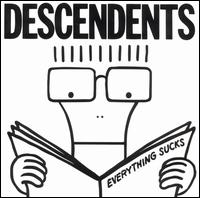
The Descendents have been around for a long time and their early records were mostly 1 or 2 minute blasts of punk.  This disc (their first after a nine-year hiatus) doesn’t deviate too much from that track record.  Although the best song on the disc, “I’m the One” actually has a verse-chorus structure and feels like it’s a full length pop song (when in fact its only 2:15).

“I’m the One” more or less set the stage for the kind of pop punk that Epitaph records (who released this record) would bring to prominence with Bad Religion and Rancid (and the rise of emo).  This record offers a fun mix of ludicrously short songs (35 seconds for “Coffee Mug” and 20 seconds for “Eunuch Boy”) and slightly longer songs.  Six of the songs are under two minutes.  And it’s amazing to hear just how much song you can pack into two minutes.

I haven’t really listened to much punk in the last few years, so this is strangely nostalgic even though it doesn’t really sounded dated.  In fact, the slower songs (the 2:30 “When I Get Old”) has a real Bad Religion feel to it–and they never go out of time.  Interestingly they feel a lot longer than 2 minutes after a whole bunch of 90 second songs.

Even after all these years, “I’m the One” stands up as a great song–funny and catchy, and I’m glad to have heard it again.

[READ: February 17, 2011] “The Miraculous Discovery of Psammetichus I”

Following right after Ladies and Gentlemen, The Bible!, is this short story which “fleshes out” The Histories of Herodotus.  In fact Part I of the story is, I assume, an excerpt from Herodotus.

There are Ten Parts, and each part is designed to add more to the simple history that Herodotus gave us.   Indeed, Psammetichus I was a real King of Egypt.

Herodotus tells us that Psammetichus I was curious whether the Egyptians were the most ancient race.  So he took two children, isolated them and made sure no one spoke to them.  They were fed and cared for just not spoken to.  Finally, the children began saying a word over and over, which the wise men determined was a Phrygian word.  This obviously meant that the Phrygians were an older civilization.

The rest of the story is different examples of studies that Psammetichus I did to determine things.  Many of them are kind of funny (absurd, obviously, and sad but sort of funny): raising two children with birds or apes etc.  After a few sections, one of Psammetichus I’s queens (he had twenty-three who were all infertile (!)) asks why he’s so curious. (more…)

Read Full Post »

SOUNDTRACK: THE COCKSURE LADS-The Greatest Hits of The Cocksure Lads 1963-1968 (2010).

At last, The Cocksure Lads have released a greatest hits collection on CD.  These songs have been unavailable to anyone since the late sixties and it’s wonderful to be able to enjoy them again or for the first time.

Dusty Fosterboard, Reg Topping, Derek Millwood and Blake Manning wrote some charming rock back in the late 60s.   Their music was certainly forward looking.  Check out the rocking song (with keyboards–perhaps a Beach Boys influence?) “You’re a Cocksure Lad’ coming out in 1963 (while The Beatles were still doing fairly standard rock n roll songs and covers).  “You Gotta Stay Cocksure” (1964) sounds a bit more Beatlesesque, although perhaps a little more adventurous than Beatles songs at the time.

“A Case of the Dropsies” (1965) was a silly, almost novelty song (with a siren in the background), although it features a cool low-end guitar solo (and great harmonies). “Mushy Peas” seems like it would be a novelty, but it is a really a sadly passionate song of loss when the protagonist stops of for the titular dinner before heading for America.

“Ship’s Ahoy” (1968) comes from their concept album of the same name and while not as musically adventurous as any of The Beatles records, was certainly a fun (and different) song for the band–was that “oregano” joke a sly drug reference?  “Admiral Trafalgar” comes from this album too (and even mentions Hitler!–a political song in 1968?)

The charming and trippy “Umbrella Girl” also has some cutesy asides (I think a lobster bit my ‘and) and a cool autoharp as a major instrument.  “Ticky Boo” is a cute little romp: “Mrs Eng-a-land, a pack of crisps and me.”  They were even forward thinking on “That’s Any Good” in which one of the things that’s good is “when your country wins the arms race.”

There’s definitely some novelties here.  “A Car Boot Light That Never Quite Shuts Off” is an organ and voice song (with a crazily long note held at the end).  “I’ve Already Been Loved” opens with a very randy sounding “Wellllllll” but turns into a delightful, poppy number.  Of course, the final song, “Wellies in the Bath” is the obligatory goofball song (the “Ringo” song if you will).  And it is cute (especially at only 43 seconds).

The songs are charming and nostalgic, and even if you don’t remember them.  It’s a nice trip down memory lane[1]

[READ: February 20, 2011] “April Foolery”

I found this story because after reading The Ask, I looked up Lipsyte and Wikipedia said he has two short stories in collections (and no other short fiction pieces published–although I know The Dungeon master was in The New Yorker). Indeed, this was one of two.  I looked up The Revolution Will Be Accessorized up on Google books, and his entire story was available!  (It’s only two pages).

Looking at the rest of the authors, I do wonder if I’d like to read the whole thing. I’ll have to see if it’s in our library.  (It isn’t, but I’m going to interlibrary loan it).

Anyhow, this absurdly brief story is a sort of history of April Fool’s Day with modern suggestions for making it more fun).  It begins with the generally accepted premise that April Fool’s Day is tied to the adoption of the Gregorian calendar.  People were punished who did not know that this new calendar had updated the new year.  And this spirit of prankishness lives on.

Given that bit of background, Lipsyte offers six pranks for April Fool’s. (more…)

Read Full Post »

SOUNDTRACK : PHISH-Live Bait: Vol 2 (2010).

Phish has been releasing live concert downloads  for years now.  And now that they’ve started touring again, they have a whole bunch of new ones.  I’m not going to be downloading new shows, (I have a  bunch of old ones that I really never listen to).  But what I like is that they are giving away a few tracks from these shows.  And what I love is that they’re calling the freebies, Live Bait.

This set is a few tracks from shows recorded in August of 2010.  There’s nine tracks  ranging from 90 seconds (“NO2” ) to 17 minutes (“Twenty Years Later”).

Although this show is from 2010, this bait contains only two songs from their last album, Joy. The older songs are fan favorites (“Wilson, “Possum”) and weird interludes (“Kung”).  The band sounds fresh and really into what they’re doing and the old songs sound rejuvenated and fun.

Nevertheless, since most of the other live releases are older, it’s so nice to have the two new songs.  You can’t be choosy on a free sample, but I’d have loved to hear them do “Time Turns Elastic.”  If you’re new to Phish, this is a good place to get a free sample of their live shows.  Three volumes of bait have been released so far.

[READ: February 16, 2011] Ladies and Gentlemen, The Bible!

I discovered this book when I read the short story “Samson and Delilah in The Walrus.  I liked, but didn’t love, the short story, but I was intrigued enough to want to see how the other Bible stories would stack up.  And since we had the book on the shelf, I decided to check it out.

So this book is a retelling of several stories from the Old Testament.  What Goldstein does is create a backstory for these biblical characters who are really just sketches.  The stories are funny, serious, weird and often enjoyable.

The introduction is a very funny kvetch about at being a Jew and having dinner in the Grey Derby; waiting online for hours with so many other Jewish families, eating kosher food with your own family, fighting over the check, pointing fingers, calling each other names and, ultimately, leaving by 5:30 PM.  It made me laugh out loud in the best Woody Allen tradition.

With no real introduction, he moves right into his new versions of Bible stories.

The biblical stories that Goldstein updates include:

  • Adam and Eve
  • Cain and Abel
  • Noah and the Ark
  • The Tower of Babel
  • Jacob and Esau
  • The Golden Calf
  • Samson and Delilah
  • King David
  • part 1: Goliath
  • part 2: Bathsheba
  • part 3: Absalom
  • Jonah and the Big Fish
  • My Troubles (A Work in Progress, by Joseph of N–) (more…)

Read Full Post »

SOUNDTRACK: RHEOSTATICS-Double Live (1997).

After mentioning the two live shows that comprise the majority of this disc, I figured I’d mention the disc itself.  Rheostatics are a great and engaging live band: Dave Bidini has wonderful repartee with the audience and Martin Tielli’s live guitar work is amazing. The band sounds tight but not stiff and there are a number of tracks here that are goofy (but not throwaway) like the acoustic version of “Bread, Meat, Peas & Rice” and the weird and wonderful “People’s Republic of Dave.”

The songs that were taken from the two Bathurst Street concerts have been professionally mixed and mastered (of course) so even if you’ve listened to the bootleg concerts, you’re going to hear a different quality (and mix, as boots tend to be recorded from one side, usually missing some aspect).

My only gripe is something that they’d never really be able to accomplish live anyway.  It’s in “King of the Past” which is one of my favorite Rheos songs.  On the album, after the break, there’s an electric violin (or something) that plays a really cool dramatic melody.  But live they never play it like that, they rely on Tielli’s guitar.  The guitar sounds fine, but that majestic string section provides such a great contrast that the live version lacks just a little.

On the other hand, the live version of “Horses” is stunning.  As are “A Midwinter Night’s Dream,” “Palomar,” and “Christopher.”

[READ: February 8, 2011] Tropic of Hockey

I bought this book when I was in Toronto sometime in 2001.  I was pretty excited to get another book by Dave Bidini.  And then I proceeded to not read it for a decade.  Hey, these things happen.

But I have to say in many ways I’m glad I waited this long to read it.  The book was written pre 9/11 and as such it has a kind of sweetness about international travel that I miss now.  And I can appreciate it all a lot better with a decade’s distance from everything.  As of 2011, I know that I never want to go to the UAE, but reading Bidini talk about the UAE circa 1999 it sounds like a really fun place to go.

So anyhow, this book, as the subtitle suggests, is Bidini’s attempt to find hockey in weird places around the globe.  Bidini has gotten tired of the NHL: it is bloated, is it full of obnoxious rock anthems during stoppage and the spirit of the game has been overwhelmed by the Almighty dollar (specifically the American dollar).  And so, he wanted to see if he could find people who played hockey the way he and his pickup team play on the weekends: for the love of hockey.  And he was amazed to find hockey fans in these four unexpected places: Hong Kong, China, The United Arab Emirates and Transylvania.

The book is really three things though: it is the story of hockey in different places, it is a chance for Bidini to play hockey in these places and write about the experience and it is a history of Canadian hockey. (more…)

Read Full Post »

« Newer Posts - Older Posts »