Feeds:
Posts
Comments

Archive for the ‘Ghosts’ Category

[LISTENED TO: December 29, 2013] A Christmas Carol

patAfter enjoying the play of A Christmas Carol, we decided that since we were on a longish trip for Christmas, that we’d listen to the audiobook and see what was different.  The kids were certainly less engaged than a more kid-friendly book, and that’s understandable—the language is pretty opaque from time to time.  But I was pleased at how they were able to tell where we were in the story (as compared to the place) most of the time.

I felt that the play was different, so i was listening for them.  I don’t know anything about the adaptor of the play and his choices to change things—I don’t even know if the version we saw is a standardized version of the play (I feel like next year we should see it somewhere else for comparison).  But there were more than a few things that were changed. (more…)

Read Full Post »

fivedials_no28SOUNDTRACK: PHINEAS AND FERB-The Twelve Days of Christmas (2010).

phineasWhile The Bird and the Bee has become my new favorite serious version of The Twelve Days of Christmas, this Phineas and Ferb version is my new favorite silly version of the song.  Sure it’s especially funny for fans of the show but, as anyone who has seen the show knows, Dr. Doofenshmirtz is comedy gold and so his wishes for Christmas and his updates and concessions (and the fact that he is a traditionalist) absolutely make this worthy of repeat listens.

[READ: December 19, 2013] Five Dials Number 28

Five Dials #28 is vaguely thematic–about heroes.  Some items are literal (the writers-as-heroines drawing), some are speculative (my favorite conceit–the stories of quickly killed side characters in movies), and some are unrelated at all–the guy who helped out Will Self.  This issue was launched from Sydney, Australia.

CRAIG TAYLOR-A Letter from the Editor: On Heroes and Convicts
Taylor talks about everything mentioned above and then talks about Robert Hughes’ The Fatal Shore and his primer on modern art: The Shock of the New (which has an accompanying documentary series). (more…)

Read Full Post »

[ATTENDED: December 20, 2013] A Christmas Carol

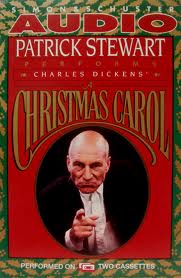
headerI had never seen A Christmas Carol performed.  I was, of course, familiar with the story–from the original (the Patrick Stewart audiobook is amazing) and from the many, many versions of it that have been performed in cartoon and live action formats.

We took the kids as this is a holiday classic and we thought it would be fun for all of us.  And we were right.  Except–this version is at times quite scary and (as my son pointed out) quite loud.  I didn’t find it terribly loud, although the scary bits were considerably louder than other bits.  And yes, the ghosts were certainly scary.  (I had actually warned him that the ghost of Christmas Future would be very scary, but it proved to not be the case, although it was really frikkin cool).

And I must say I was charmed immediately–as soon as the kids ran out on stage in period costume, singing songs and being very Christmassy, I was hooked.  (more…)

Read Full Post »

school spiritSOUNDTRACK: PINK FLOYD-Live BBC 1970-1971 (1970/1971).

pink-floyd-paris-theatre-london-bbc-archives-back-cover-17638Since I am delving deeply into early Pink Floyd, I came across this bootleg of Floyd on the John Peel show.

The first show is Live at Paris Cinema, London 07-16-1970, just before the release of the album Atom Heart Mother (which we know because Peel says the song will be on their forthcoming album).  The first set includes “Embryo” (which only ever appeared on their compilation Works, in a much shorter version), “Fat Old Sun” (from AHM), “Green is the Colour” (from the More soundtrack), “Careful with that Axe, Eugene” (available on Relics and in live formats), “If” (from AHM) and “Atom Heart Mother.”

The version of “AHM” here is interesting  because the cello solo is played by a horn instead.  The reason for this is because it allowed them to have fewer musicians on tour.  It’s the same theme but the horn brings a very different feel than the cello did.  It’s also interesting to hear that the horn players are nowhere near as polished as they might be.  (In Geesin’s book he does talk about the lack of rehearsal the orchestra had for their live shows).

The second show is Live at Paris Cinema 09-30-1971, just over a year later.  They once again do “Fat Old Sun” but in 1970 it was 6 minutes and in 1971 it is now 15 minutes long with a lot of jamming and keyboard stuff thrown on top.  Next up is “One of These Days” (from the forthcoming Meddle) a favorite of mine. From this set I learned that the distorted voice that says “one of these days I’m going to cut  you in to little pieces” is actually that of Nick Mason (and interestingly, in this version, the quote comes at the end of the song rather than the middle).  Then they play “Embryo” again (it was clearly a concert favorite even if it never got a proper release (same length for each show and not drastically different).  Then comes “Echoes,” the big side long epic from Meddle.  And the set ends with “Blues,” which is indeed a blues.  I don’t really expect to hear a blues from Pink Floyd, but here it is, and it’s a good one (Gilmour clearly can jam to anything).

The video below contains the two complete shows running at over 2 hours.

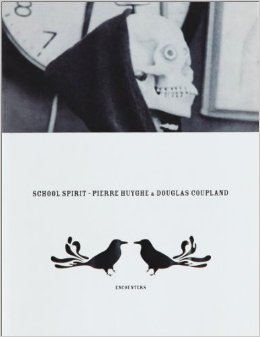
[READ: September 29, 2013] School Spirit

This is the final obscure Douglas Coupland book that I’m aware of and will be the final DC book that I need to hunt down for this blog (I have three other proper novels that I haven’t posted about, but those are proper books and will be dealt with in turn).

This book has about the least amount of information about it that I’ve seen in a book.

The (I assume) official description of the book (which I get from Amazon and Google Books) says

Dis Voir’s Encounters series invites a well-known contemporary artist to choose a subject for a book. The artist also selects a person with “elective affinities”–someone with whom he or she would like to share this exchange. The resulting collaborative volumes serve as an artistic and political laboratory of the present. For this first installment, French artist Pierre Huyghe choose Canadian writer Douglas Coupland, author of Generation X, for the influence that Coupland has had on his generation, and on Huyghe’s own work. Using a high school yearbook as scaffolding for their meditations, they discuss the construction of character, narrative techniques based on chance and the political dimensions of Coupland’s work–themes that are also fundamental questions for Huyghe’s projects.  Using a high school yearbook as the framework for a meditation on memory.

But my copy (which has a different cover and limited publication information so may possibly be a different version) does not have anything to say at all about “the construction of character, narrative techniques based on chance and the political dimensions of Coupland’s work.” (more…)

Read Full Post »

42SOUNDTRACK: IRON MAIDEN-Iron Maiden (1980).

Steve Harris was on That Metal Show recently.  Harris is the baimssist and primary songwriter for Iron Maiden and has been since their first album in 1980.  When I was in high school Iron Maiden was my favorite band hands down.  I had all their albums, I had all their singles, all their hard to find British vinyl 12 inch singles, even a few pictures discs.  Wonder if they’re valuable?

Every album was an epic event for me–I even played “Rime of the Ancient Mariner “off of Powerslave to my English class (not telling anyone it was 13 minutes long).

And then, after Somewhere in Time, I just stopped listening to them. Almost full stop.  I did manage to get the first four albums on CD, but the break was pretty striking.  I actually didn’t know that they’d had personnel changes in the ensuing years.  I’d vaguely heard that Bruce Dickinson  left, and that others followed, but I don’t think I quite realized that they were back to their big lineup these days.

Anyhow, Harris was so earnest and cool that I had to go check out some of their new stuff. Which was okay.  I’d need more time to digest, but then I had to listen to the first albums again.

And wow I had forgotten how much the first Iron Maiden album melds punk and prog rock into a wild metal hybrid.  There’s so much rawness in the sound and Paul Di’Anno’s vocals, not to mention the speed of some of the tracks.  And yet there’s also some epic time changes and starts and stops and the elaborate multipart Phantom of the Opera….  Wow.

The opening chords of “Prowler” are brutal.  But what’s surprising is how the second song “Remember Tomorrow” is a lengthy song that has many ballad-like qualities, some very slow moody sections–although of course each chorus rages with a great heavy riff and a blistering solo.  On the first two albums Paul Di’Anno was the singer.  He had a fine voice (it was no Bruce Dickinson, but it was fine).  What’s funny is that Bruce does the screams in “Remember Tomorrow” so much better in the live version that I forgot Paul’s vocals were a little anemic here.

However, Paul sounds perfect for the rawness of “Running Free” a wonderfully propulsive song with classic Harris bass and very simple metal chugga chugga riffs.  And this has one of the first real dual guitar solos–with both players doing almost the same riff (and later Harris joining in on bass).

“Phantom of the Opera” is the band’s first attempt at an epic multi-secton kinda-prog song.  It opens with a memorable, if slightly idiosyncratic riff and some wonderfully fast guitars/bass.  There’s a great slow bit that morphs into an awesome instrumental soloing section with bass and twin guitars playing a wonderful melody.

“Transylvania” is an instrumental that is challenging but probably not one of the best metal instrumentals out there, although again when Dennis Stratton and Dave Murray play in synch solos it’s awesome.  This track segues into “Strange World” a surprisingly trippy song (with effects that seem like keyboards but which aren’t).  It’s slow in a “War Pigs” kind of way, but it doesn’t entirely break up the album, because there are other slow bits on the disc.  It is a little out of place though.

Especially when “Sanctuary” blasts forth.  True, it wasn’t originally on the album (in the UK), but man, blistering punk or what!  “Charlotte the Harlot” was always one of my favorite songs (it taught me what a harlot was after all), it’s quite proggy, with a lot of stuttered guitar work and a middle section that features some loud and complex bass.  The disc ends with the by now almost immortal “Iron Maiden.”   A great raw riff opens the song, a harmony guitar partners it and the band blasts forth.  Who even knows what the lyrics area about, the song just moves and moves–There’s even a great chaotic bass/drum break in the middle.  And listening to the guitar noises in the solos at the end.  Amazing.  It’s quite the debut.

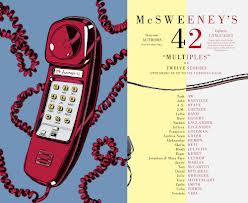
[READ: June 7, 2013] McSweeney’s #42

I have made it a point of (possibly misguided) pride that I have read every word in every McSweeney’s issue.  But this issue has brought that to an end.  As the title states, there are twelve stories in the book.  But there are also sixty-one authors writing in eighteen languages.  And there’s the rub.  One of my greatest (possibly misguided) shames is that I don’t speak any other languages.  Well, I studied Spanish and German, I know a few dozen words in French and I can read the Greek alphabet, but none of these would help me read any of these stories.  So, at least half of this book I didn’t read.

But that’s kind of the point.  The purpose of this book is to make a “telephone” type game out of these stories.  Stories are translated from one language to another and then re-translated back into English.  The translators were mostly writers rather than translators and while some of them knew the second language, many of them resorted to Google Translate or other resources to “read” the story.  Some people read the story once and then rewrote it entirely, other people tried to be as faithful as possible to the original.  And so what you get are twelve stories, some told three times in English.  Some versions are very similar and others are wildly divergent.

I normally write about the stories in the issues, but that seems sort of beside the point as the original stories were already published and were selected for various reasons (and we don’t even see any of the original stories).  The point here is the translation(s).  So, in a far less thorough than usual way, I’ll list the contents below. (more…)

Read Full Post »
220px-The_Invention_of_Morel_1940_Dust_JacketSOUNDTRACK: RODRIGUEZ-“Sugar Man” (1971).

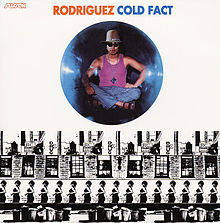
RodriguezcoldfactThis song was played a lot on WXPN, and when I first heard it I couldn’t imagine what new artist was talking about “sweet Mary Jane.”  So it turned out that this song was over 40 years old but it had been resurrected for a movie called Searching for Sugar Man, which is a documentary about Sixto Rodriguez and how he released two albums and then disappeared.

There’s something extremely catchy about this song–the loud down strums that stand out over the quieter strumming, the crazy high frequency sound that sails throughout the song and that hint of horns that gives more depth to this simple folk song.   All of these elements make this song more complex than it might have been.  In fact, the song seems like it’s going to end after about two minutes but there’s the instrumental section full of crazy sounds and electronics.

And even though it seems over after that there’s one more verse and chorus to go.  And then the song just drifts away echoing into nothingness.  It’s quite a catchy little number.

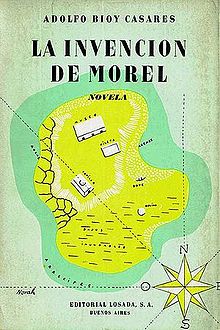
[READ: June 4, 2013] The Invention of Morel and Other Stories

Roberto Bolaño recommended this main story (the other ones as well, I assume).  He’s a big fan of Bioy Casaraes.  But also, Jorge Luis Borges has a prologue to the story in which he states of “The Invention of Morel”

“I have discussed with the author the details of his plot.  I have reread it.  To classify it as perfect is neither an imprecision nor a hyperbole.”

Holy crap.

I can’t say exactly that it I perfect although it is quite fine.  It deals with all kinds of interesting issues and is inspired by (maybe that’s not exactly the right word) The Island of Dr Moreau.  The funny thing is that Morel is neither the main character, nor even a major character for half the book.

The story starts on an island with the narrator writing this book down to leave a  record of “the adverse miracle.”   We learn that the narrator is a fugitive and he was told by an Italian rug seller in Calcutta that the only possible place for a fugitive like him is an uninhabited island.  And on this particular island in 1924 a group of white men built a museum, a chapel and a swimming pool.  But no one dares to go there—not Chinese pirates, not even the Rockefeller Institute because there is a fatal disease located on the island—anyone who has visited there has been found later dessicated. (more…)

Read Full Post »

McSweeney’s #13 (2006)

13SOUNDTRACKPARTS & LABOR-Stay Afraid (2006).

partslaborParts & Labor have changed t heir style over the years going from noisemakers who have a melody to being melodious noisemakers.  This album is one of their earlier releases when noise dominated.  Right from the opening you know the album is going to be a challenge.  The first song has pounding drums (electronics that sound like bagpipes) and heavy distorted shouty vocals.  By the end of the songs there is squealing feedback, punk speed drums and screaming distorted vocals (complete with space sound effects).  It’s an aggressive opening for sure.  Song two opens with a long low rumbling and then “Drastic Measures” proves to be another fast-paced song.

“A Pleasant Stay” is 5 minutes long (most of the rest of the album’s songs are about 3 minutes).  It continues in this fast framework, although it has a bit more open moments of just drums or just vocals.  The way the band plays with feedback in the last minute or so of the song  very cool.

“New Buildings” has a hardcore beat with a guitar part that sounds sped up.  “Death” is a thumping song (the drums are very loud on this disc), while “Timeline” is two minutes of squealing guitars.  “Stay Afraid” has a false start (although who knows why–how do these guys know if the feedback sounds are what  they wanted anyhow?).  The song ends with 30 seconds of sheer noise).  The album ends with the 5 minute “Changing of the Guard” a song not unlike the rest of the album–noisy with loud drumming and more noise.

The album is certainly challenging, it’s abrasive and off putting, but there;s surprising pleasures and melodies amidst the chaos.   Indeed, after a listen or two you start to really look forward to the hooks.  If you like this sort of thing, this album s a joy.  It’s also quite brief, so it never overstays its welcome.

[READ: April 15, 2011] McSweeney’s #13

I have been looking forward to reading this issue for quite some time.  Indeed, as soon as I received it I wanted to put aside time for it.  It only took eight years.  For this is the fabled comics issue.  Or as the cover puts it: Included with this paper: a free 264 page hardcover.  Because the cover is a fold-out poster–a gorgeous broadside done by Chris Ware called “God.”  And as with all Chris Ware stories, this is about life, the universe and everything.  On the flip side of the (seriously, really beautiful with gold foil and everything) Ware comic are the contributors’ list and a large drawing that is credited to LHOOQ which is the name of Marcel Duchamp’s art piece in which he put a mustache on the Mona Lisa.  It’s a kind of composite of the history of famous faces in art all done in a series of concentric squares.  It’s quite cool.

So, yes, this issue is all about comics.  There are a couple of essays, a couple of biographical sketches by Ware of artists that I assume many people don’t know and there’s a few unpublished pieces by famous mainstream artists.  But the bulk of the book is comprised of underground (and some who are not so underground anymore) artists showing of their goods.  It’s amazing how divergent the styles are for subject matter that is (for the most part) pretty similar: woe is me!  Angst fills these pages.  Whether it is the biographical angst of famous artists by Brunetti or the angst of not getting the girl (most of the others) or the angst of life (the remaining ones), there’s not a lot of joy here. Although there is a lot of humor.  A couple of these comics made it into the Best American Comics 2006.

There’s no letters this issue, which makes sense as the whole thing is Chris Ware’s baby.  But there are two special tiny books that fit nearly into the fold that the oversized cover makes.  There’s also two introductions.  One by Ira Glass (and yes I’d rather hear him say it but what can you do).  And the other by Ware.  Ware has advocated for underground comics forever and it’s cool that he has a forum for his ideas here.  I’m not sure I’ve ever read prose from him before. (more…)

Read Full Post »

SOUNDTRACK: KISS-Hot in the Shade (1989).

Before this album came out, Paul Stanley did a little club tour.  My friends Matt and Nick and I got to see him in Wilkes Barre, PA. It was a pretty great show, and intimate in a way that Kiss shows can never be.  So we were pretty psyched for this new album.  And yes, this album holds special memories or me because we used to listen to it a lot after the show.

The biggest problem with this album is bloat.  I don’t have any kind of evidence to back this up, but this was the first Kiss album that took advantage of the compact disc’s length.  And so it’s easily twenty minutes longer than most Kiss albums (and the later albums had some filler on the already).  Plus it’s  almost longer than Kiss’ first two albums combined.     That’s just too much.

Even Kiss’ weaker albums usually start with a good song.  Not so much Hot in the Shade.  “Rise to It” is pretty generic even by mid 80s Kiss standards.  They try to make it fun with the Ri–e i-e-i part, but it doesn’t quite make it.  “Betrayed” is a bit more of a rocker and is quite a good song.  Lyrically it’s not so great (it’s funny to think of Gene Simmons trying o be down with the common man), but it rocks pretty hard.  My friend Matt and I liked “Hide Your Heart” quite a bit when it came out.  The chorus: Ah ah ah ah, hey hey hey do do do do do do do do do” is pretty bad though.  “Prisoner of Love” musically sounds like Kiss of old, until the verses come in.  “Read My Body” is really catchy until you realize it sounds just like “Pour Some Sugar on Me.”  That’s embarrassing.  Although the metaphor is well done, at least.  “Slap in the Face” might as well be “Let’s Put the X in Sex” from Thrashes Smashes and Hits.

Then comes the cheesiest ballad in Kiss’ history—actually written by Michael Bolton, yes Michael Bolton.  And man do I love it.  Paul is in full voice, he sounds great, the harmonies are spot on.  It is the cheesiest metal ballad ever, but I never get tired of it.  It even has an acoustic guitar solo—pre-made for Unplugged!  “Silver Spoon” is a good rocker, with a fun chorus.  Although the gospel singers at the end are a bit overkill—it seems silly to have invited them in for 90 seconds of singing.  “Cadillac Dreams” is just a bit too close to a Beatles song for my liking.  “King of Hearts” is a decent song, and “The Street Giveth and the Street Taketh Away” (were Kiss really hard up for money?  what’s up with these lyrics?).  We had an in-joke on my dorm floor, so I can never take this song seriously (that may also be because they steal the “Hey man” right out of David Bowie’s mouth).  Love Me to Hate You” is pretty generic although catchy.  “Somewhere Between Heaven and Hell” is also a decent song.

“Little Caesar” is the first (and only, really) song that Eric Carr sang lead vocals on.  As a singer he’s a really good drummer.  The song is pretty generic too and is unfortunately given the same name as a bad pizza company.  “Boomerang” has a good fast pace (once again, not unlike a Van Halen song).

[READ: August 11, 2012] “The Cryptozoologist”

This is yet another short story broken down into lots of little sections.  What’s neat about the way that this one is done is that because the narrator is a cryptozoologist, each section is headed by a cryptid (animals whose existence has not been proven).  But in addition to discussing these animals, the sections also describe a history of the narrator’s life.  His life in this field started when his grandfather told him about a snake which latched onto the end of its own tail and rolled away from its pursuers (section title: Hoop Snakes).  His grandfather never lied, so it had to be true.

It proceeds through The Mušhuššu (a serpent dragon spoken of in ancient Babylon), through the Jenny Hanivers (jeunes d’Anvers), into The Wolf of Ansbach (believed to be an old Bürgermeister who was transformed into a werewolf), and on to The Batutut, a monkey man in Laos.  Most of these sections describe the origins of the cryptids (and his lack of success at spotting them), but The Batutut section is also about himself and how he was in the war when this particular cryptid entered his life.

Then we move on to The Altamaha-Ha in Southeastern Georgia, while Giglioli’s Whale, which had two dorsal fins dates to 1867.  The Mongolian Death Worm, said to live in the sands of the Gobi desert is a cryptid that he actually experienced in the American desert.  he didn’t see it, but he could feel its presence.  The Madagascar Tree is a killing tree–it looks like a pineapple and eats sacrifices.  This story was told by two adventurers who saw the tree eat a woman.  The best part of is that there is no proof that the two men who are credited with telling the story actually existed themselves. (more…)

Read Full Post »

SOUNDTRACK: “TNT” – A Minecraft Parody of Taio Cruz’s “Dynamite” (2011).

How do you top Clark’s favorite song?  By making a parody of it in the style of his favorite game!  This song and video are based on the game Minecraft, Clark’s most recent obsession.  The song is funny, mostly.  It’s got to be hard to think up a full songs worth of parody material–one verse is easy, Sarah and I do that all the time.  But the chorus is a good one: “I shoot my arrows in the air sometimes/saying ay-oh, creeper’s KO’d.”

The music is pretty good (although the vocals aren’t quite as strong as the original).  But the video is really quite funny, and well crafted.

So, enjoy the video:

By the way, Clark hasn’t seen this yet…I’m kind of afraid he’ll never leave the computer if he does.

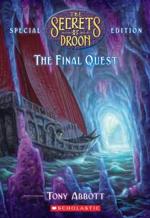
[READ: mid-June 2012] The Secrets of Droon: SE8

After 44 books the saga has ended.

Will the kids rescue Eric?  Will the kids stop Gethwing?  Will the kids stop Ko?  And what will happen to the kids if they do save Droon?  Does this mean their quest, and their adventures in Droon, are at an end?

As this book opens we are reminded of the ancient prophecy that Gethwing is immortal.  Gethwing has even told of the prophecy himself:

Five shall pass away, four shall wear the crown, three shall fall, two shall rise together and one…

What about the one?

What can this prophecy mean?  Gethwing knows: The five are the cycles of Droon’s millennial calendar.  The four are  the Crown of Wizards–Sparr, Neffu, Ungast and Gethwing; The three include Ko (who has fallen to his death) and Zara (long dead).  And the two are Eric (as Ungast) and Gethwing, rising together.  But the funny thing about prophecies is that they can be read different ways (and there’s a wonderful payoff to the prophecy at the end of the book). (more…)

Read Full Post »

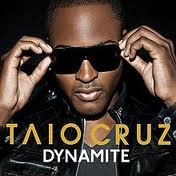
SOUNDTRACK: TAIO CRUZ-“Dynamite” (2010).

Anyone who reads this blog knows that I love music–all kinds of music.  So how did I wind up with a seven-year old who is indifferent to music.  It took going to Cub Scouts, gym class and a friend who is far more opinionated than he is to finally get a song that he liked.  Taio Cruz’ “Dynamite.”

I don’t know anything about Cruz.  I think I had vaguely heard the song at some point (parts sound familiar but it’s not a terribly original song so it could have been anything).  I also had no idea this song was two years old.  I assumed it was a 2012 hit.  Huh.

So, it may not be the greatest song in the world, but hearing my son sing first the melody to himself while he played and then singing the lyrics when he figured them out and then even dancing around a little bit to them (showing off a bit for our friends–a major breakthrough), it makes this song pretty important to me too.

I even noticed him expressing interest in thudding bass notes coming out of a passing car (god help me).  But hey, I throw my hands up in the air sometimes saying Ay oh, gotta let go.

I just hope he doesn’t see the video for a few more years.

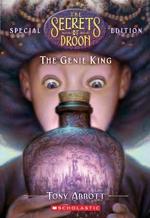
[READ: mid-June 2012] The Secrets of Droon: 35, 36 & SE7

These are the final few books of the Droon Series (except for Special Edition 8 which actually ends the series).  Clark and I were pretty excited to get to these two final-numbered books.  And it was worth the build up.  And, of course, it was wonderful to see a whole book devoted to Neal.

Book #35 is The Lost Empire of Koomba.  The cover drawing is really quite beautiful.  I haven’t talked about the art much in the series. It’s kind of cartoony (which works for the tone), but this cover and the next are striking in their realism. It’s very cool.  At one point I think I noticed a change in style of the art within–I didn’t like it quite as much.  But the covers, wow.

At the End of SE#6, Eric told the kids that they had 5 Droon days before Gethwing would begin his all-out assault on Droon.  So, they have five days to get the elixir that will be the antidote to his poison, they need to find the Moon medallion.  Oh and they need to find Galen, and, geez, stop every outpost in Droon from being destroyed.

So who would have guessed that this book would be located primarily in a place we’ve never seen before—the lost Empire of Koomba.  Koomba was a beautiful city in the desert.  But over the years the city disappeared and all that is left is a star-shaped dune and a small trading post.  But it’s more like the Bermuda triangle with travelers getting lost and things going missing every time anyone approaches. (more…)

Read Full Post »

« Newer Posts - Older Posts »