Feeds:
Posts
Comments

Archive for the ‘Games (Non Video)’ Category

lemocello[LISTENED TO: November 5, 2014] Escape from Mr. Lemoncello’s Library

We were looking for an audiobook for a recent trip and I decided to get Escape from Mr. Lemoncello’s Library.  I didn’t know anything about it, but the title sounded fun, especially for two librarians.

Well, I had no idea how much fun it would be for two librarians (and for others, too, I assure you).

So Mr Lemoncello is a game maker.  He has hundreds and hundreds of board games and in this universe, everyone loves playing them.  In the very first scene, Kyle Keeley and his brothers are playing Mr Lemoncello’s Indoor-Outdoor Scavenger Hunt (which is just what it sounds like).  In an attempt to finally beat his brothers, Kyle tries to sneak back into his house through a basement window (thereby saving the time of going down the stairs.  He inadvertently breaks the window and is grounded or a week (although he did win, so that’s something–and it shows just how intensely they play games in that family).

The next chapter opens up on the finishing touches of the brand new library in Kyle’s town.  Alexandriaville, Ohio has not had a library for 12 years and Mr Lemoncello’s gift to the town is the coolest most state of the art library ever built.  (Seriously, it is practically every librarian’s fantasy library with books and books and books (rooms coded by dewy number) and all kinds of high tech gadgetry to go with it.  I would love to see this place built).

Kyle is bummed about being grounded.  And to make matters worse, he forgot about the extra credit essay contest “Why I am excited about the new public Library.” At the last minute he throws together a lousy essay (which consists of “Balloons. There might be balloons,” and he is laughed at by just about everyone.  But when the essay winners are announced (12 of them), he is the final winner–how could that be? (more…)

Read Full Post »

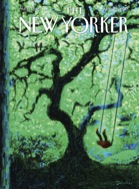
CV1_TNY_01_06_14Ware.inddSOUNDTRACK: BROWNOUT presents Brown Sabbath (2014).

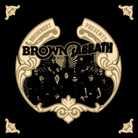
brownout_cvrI was intrigued by the premise of this album: Brownout is a nine piece jazz band and they play a selection of Black Sabbath covers.  The NPR site (where you can stream the album this week) explains:

They played a residence at an Austin club where they devoted a week each to the repertoire of artists like Black Sabbath to break the monotony of a long club gig.  Audience response, not to mention the fun the band had on stage reworking Sabbath classics, led to a full-length album.

So, this band plays a number of Black Sabbath classics, with, oftentimes, the horns standing in for Tony Iommi’s guitars or Ozzy Osbourne’s voice. Although there are also times when the (various) singers in the band try out their inner Ozzy (and often succeed).  They get pretty heavy for the heavy parts (and there are guitars so the do have appropriate guitar sounds from time to time).   But they also play some of the groovier songs too (like “Planet Caravan.”)

Other songs include “The Wizard” (probably my favorite here), “Iron Man” (which is very different from the iconic song, and is only vaguely recognizable as the song, but is very good nonetheless).  They also do “N.I.B.” a bass heavy song which takes on a different style (perhaps a bit too much like Dread Zeppelin).  “Black Sabbath” has no vocals, just a guitar playing the lines–and the horns in the beginning add a suspenseful accent. “Hand of Doom” plays that slinky dark sound very well (I just like the original so much that this one can’t quite compare).  And “Into the Void” which also has no vocals, but sounds a little too marching band here (but the middle instrumental section is really trippy).

So I enjoyed this take on classic Sabbath.  Although I don’t need to listen to it more than once.

[READ: June 13, 2014] “First Husband”

Looking back, I see that I have enjoyed a lot of Antonya Nelson’s stories.  And I enjoyed this one too.  She seems to have a great eye for little details, or interesting aspects of family life that are fun to unravel.  The thing I really liked about this story was the simple construction of the character relationships.

Lovey is married to William.  It is both of their second marriages.  But Lovey’s first husband was married before he married Lovey–she was his second wife.  Lovey’s first husband had several daughters, including Bernadette.  So for a time, Lovey was Bernadette’s stepmother (even though she was close in age to the oldest daughter).  Then when Lovey and her first husband split up, she was no longer Bernadette’s step mother.  But because the marriage lasted for more than a few years, the girls grew close to her, especially Bernadette.  When they divorced, Bernadette actually chose Lovey over her father.  So now Lovey is her ex step mother.  And William is something to Bernadette that there’s not a word for.

I love that.  Even though it’s probably not that uncommon, it is such a linguistic mess that its clear no one was ever prepared for that.

I especially liked that that level of detail is included even though it is not the crux of the story.  It is relevant, but it is not the crux.  The crux is that Bernadette’s husband (whom no one likes) is out drinking.  Again.  Bernadette is nervous about him coming home drunk and the fight they will have so she wonders if she can bring the kids over to Lovey’s house.  It is 2AM.

Lovey doesn’t mind.  Lovey doesn’t have children of her own–she feels that her first husband (Bernadette’s dad) deliberately kept her from having children during her prime years and now she is stuck.  And even though these children are technically nothing to her, their ex- step-grandmother, she still cares them.  And Bernadette’s oldest boy, Caleb, is the reason she is named Lovey–it was something that he could say when he was little.  So when the children come crashing over, Lovey welcomes them without waking William (who needs to be up early for his doctor rounds). (more…)

Read Full Post »

CV1_TNY_08_26_13Drooker.inddSOUNDTRACK: VOIVOD-Negatron (1995).

negatronAfter The Outer Limits failed to grab an audience, Voivod’s lead singer Snake departed the band.  With just the two original members left (and no bassist or singer), Piggy and Away decided to start again.  And they went dark and heavy.  For the first 45 second of this album, you think, wow, Voivod has made a really heavy album—with thundering riffs and, yet still, some unusual chords from Piggy (the chord progressions are definitely still weird).  Then new singer (and bassist) E-Force opens his mouth.  And that’s when a good portion of Voivod’s  prog rock fan base started weeping.

E-Force is a screamer.  He’s not unlike Snake on the first couple of albums (although without the French accent).  But there’s very little diversity.  E-Force’s voice isn’t a total failure.  It works pretty well with the heaviness of the music.  But those of us who grew used to Snake’s singing can’t help but be disappointed by E-Force’s very limited range and style.

Opener “Insects” has some very cool parts and the music is kind of interesting—Piggy is always inventive and it’s cool to hear him mix some of his weird chords with such heavy music (the style is kind of like Killing Technology era but heavier and weirder).  And there’s some sequences where the chords are just bizarre and cool.  There is a bridge in “Insects” where E-Force sounds a bit like Snake and it’s like a great heavy Voivod album of old.

Speaking of heavy, Away sounds like he is having a great time banging the hell out of his drums.  I feel somewhat surprised that after the last few albums of mellowing out that both guys could ramp up to play so fast and heavy again.  “Project X” gives E-Force some room to do some different vocal styles (like on the first bridge which is actually kind of catchy), but the song is more pounding than exciting,

“Nanoman” brings some diversity, with a standard, but cool metal riff (and double bass drums). It also has a chorus that you can sing along to (or scream along to at any rate).  “Reality?” is by now standard scream fare, but there is a chorus “upside down reality” in which E-Force shows he can actually sing and that part is quite good.  “Negatron” is over 7 minutes long, and yet there s very little prog at hand.  It does have some astonishingly noisy dissonant chords, though.  “Planet Hell” opens with a bass riff that stands out a bit on this pounding album.  But it quickly begins to sound like much else of the album.  I do like the middle of the song where it breaks down into alternating guitar and drum breaks.

Starting with “Meteor” the album gets a little more interesting.  There’s more high notes in this song, especially in the bridge—it’s still heavy and bludgeoning but there is some diversity here.  I haven’t talked about the lyrics on the albums mostly because I can’t make them out, but on this song you can actually hear the lyrics and you can tell that they’re also not really up to snuff: “I don’t fucking care, I don’t care no more, I don’t give a shit.”

“Cosmic Conspiracy” opens with a simple echoing guitar line.  It introduces a sci-fi element that the album has sorely lacked.  Between that and the heavy drums and the crunchy bass, the song sounds really promising.  Indeed, when E-Force starts singing, it’s muffled in an interesting way.  And mid way through, it breaks into just martial drumming from Away.  This is the diversity we’ve been looking for.  There’s even an impressive (an interestingly effected) drum solo.  Then the guitars that kick in are fairly traditional but actually fun speed metal.  Sadly, E-Force’s voice doesn’t work with this section and kind of ruins it, which is a shame.  There’s some interesting guitar work in the end of the song but it’s kind of drowned out by E-Froce’s screams.  “Bio-TV” has a staccato sound that breaks up the pummeling.  And the middle has a kind of pretty guitar riff (and a simplistic sing along section that sounds great amidst the chaos).

The final track is by far the most interesting and unusual.  It is called “D.N.A” which stands for “Don’t know Anything” (seriously).  But what’s unexpected is that the song is primarily written by and sung by Jim Thriwell (of Foetus).  It’s not entirely clear if Piggy’s guitar is even on it (it is so distorted beyond guitar that it could be anything), although you do hear some chords near the end.  Away’s drums are in the mix somewhere (it may indeed be all machines).  It sounds like a Ministry/Skinny Puppy hybrid, and I would have preferred that electronic direction to the fairly generic death metal sound of the album.  I’m really not sure what to make of this song.  If you like noisy industrial music, this is an unexpectedly interesting track and surely a weird place to look for something like this.

There is a degree of irony that Blacky left to play more electronic music and Voivod recorded “DNA”.  But even more ironic is that Snake left in part to start a much more heavy hardcore band (Union Made) and then the next Voivod album was the heaviest they’d done.  It’s cool that Voivod is ever evolving, but this is a weird sidestep in a career of progression.  It’s not a failure, but it takes a number of listens to find the gems within the noise.

[READ: September 17, 2013] “The Tribal Rite of the Strombergs”

This Simon Rich story is very funny.  It begins (as the picture that accompanies it shows us) with Scrabble.  Jeremy is playing his father.  Jeremy always loses to his father.  And yet, Jeremy reveals that he has been playing Words with Friends (his father doesn’t know what that is).  And through Words with Friends he has learned that words like “qat” are playable (his father doubts the word but doesn’t challenge).

It soon becomes clear (because Jeremy can see the score) that although he is losing, it’s close enough that he might, for the first time, be able to beat his father.

When Jeremy plays Ta (a word they have always used), his father challenges.  But it is useless.  Jeremy’s father has a Z and that should do it. (more…)

Read Full Post »

hpl;oveSOUNDTRACK: NO AGE-“No Ground” (2013).

An ObjectI’ve been hearing a lot about No Age lately, but I don’t really know much about them.  I keep thinking they are a different, older band (although I can’t think of which one for some reason).  Anyhow, this new song from their new album is a simple, propulsive rocker.  It starts out with some echoing guitar notes until the fast, fast bass comes in.

It’s followed by some quickly strummed guitars and low sung, almost chanted vocals.

The song feels like it builds speed throughout, although I don’t think it actually does.  I didn’t realize that there were only two guys in the band—and that explains their limited musical sound.  But unlike a number of other two person bands that I’ve really enjoyed as of late, this song feels a little flat.  There is some appeal to it, but overall I want a little bit more.

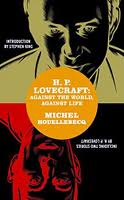
[READ: June 16, 2013] H.P. Lovecraft: Against the World, Against Life

I have been “into” H.P. Lovecraft for about thirty years.  Interestingly, I had never read anything by him in that time.  I got into him via Dungeons and Dragons which had a whole selection of monsters from the Cthulhu mythos.  And then Metallica did a song called “The Call of Cthulhu” and even though I bought several of his paperback collections and proudly displayed them, I never read them.  When McSweeney’s imprint Believer Books published this little title by the practically Lovecraftianly named Michel Houellebecq, I was excited to read it, too (because at this time I had assumed that I had actually read some Lovecraft).  But like my Lovecraft books, it languished on the shelf.

Until now.

I decided that it was time to finish off some of those McSweeney’s books that have been sitting on my shelf for years.  And this was on the top of my list. (more…)

Read Full Post »

penumbraSOUNDTRACK: FIONA APPLE-The Idler Wheel is Wiser than the Driver of the Screw and Whipping Cords will Serve You More than Ropes Will Ever Do (2012).

fionaFiona Apple released the album with the longest title a few years ago.  The title of this new album (also taken from a verse of Apple’s) doesn’t quite match in terms of length, but the music absolutely delivers in terms of quality.

When the Pawn… was full of big numbers–it was loud and brash and gorgeous.  The Idler Wheel is much more subdued and initially I didn’t think it was as exciting.  But this subdued music draws you in and gets you to really absorb everything that’s going on.  Musically, this album takes notes on the orchestration from her previous album Extraordinary Machine, but it scales  everything back  to what amounts to just Fiona’s voice (often multitracked) and minimal instrumentation.

Like “Every Single Night” which opens with beautiful bells/glockenspiel as Fiona sings.  “Daredevil” is almost all percussion and loud piano.  Indeed, the main sounds of the song is a quick shuffling followed by short piano chords.  It is so stark but her voice just sails through the open space beautifully.

The meandering piano of “Jonathan” is great–at turns minor and sad but then come chords and beauty.  More drums fill “Left Alone” as the opening twenty or so seconds are all drums followed by a menacing piano riff and the amusing lyric, “How can I ask anyone to love me when all I do is beg to be left alone” (and with each subsequent repeating of this chorus she sounds more and more exasperated).

“Periphery” is also mainly percussion.  But in this case, the percussion sounds like feet scraping on gravel–rhythmically of course.  This leads to a great vocal turn by Fiona, one that climaxes in a big roaring almost shouting section.  Speaking of roaring, just listen to the rawness that Fiona reaches on “Regret.”  It is spine tingling.

“Anything We Want” opens with more odd percussion, which I’m led to believe came from Fiona tapping on things on her desk–and it sounds like it–not instruments, but found objects.  Indeed, read the list of instruments that she and her compatriot used on the album: For “Feedy”: Artwork, Celeste, Composer, Dancer, Field Recording, Keyboard Bass, Loops, Percussion, Piano, Primary Artist, Producer, Stomping, Timpani, Vocals and for “Seedy”: Autoharp, Baritone, Bouzouki, Cora, Dancer, Drums, Field Recording, Guitar, Marimba, Percussion, Producer, Stomping.

The final song is just Fiona and tympani as she sings a line about hot knives and melting butter.  Then the piano and second voice (her sister) sings a fugue as the lines repeat over each other.  It’s a crazy, daring song to end an album with and it sounds like nothing else on the radio today.

I have never been disappointed by an album from Fiona.  Each album is different, taking new chances having wilder experimentation   And this one is up there with the best.  It’s easily one of the best records of 2012.

[READ: January 16, 2012] Mr Penumbra’s 24-Hour Bookstore

I saw an ad for this book in The Believer (I believe) and I thought it looked great.  Sarah said she had already put it on hold.  And when it came in from the library, I grabbed it first.

This book is really great.  It’s a story full of intrigue and secret societies  it embraces old books and modern technology; it’s a romance and a puzzle.  And it’s all done in a very comic style.

What is surprising is how different the book is from what I initially expected.  True, I didn’t know anything really about the book before reading it, but the book opens with an overeducated and underemployed guy, Clay, getting a job in the titular bookstore.  But it’s no normal bookstore.  First, it’s open 24 hours a day (that’s 8 hour shifts for three clerks because they really don’t have many customers).  Second, it’s very narrow and very tall–Penumbra has a massive ladder that rolls along all of the shelves and there’s a chapter dedicated to using it properly.  Third, although there are books for sale in the front (an esoteric lot based mostly on Penumbra’s whims), the back section of books (the tall shelves called the Waybacklist) are not for sale–indeed, they are not even real books per se.

There is a small group of local readers (called the Unbroken Spine) who come to the store, give Clay a code, return a book and check out a new one.  Part of Clay’s job is to write down every detail he can about them each time they come in.  But he is not supposed to open any of these wayback books.  Those are really the only rules of the store.

Clay has two roommates, one of whom is Mat, a guy who works for Industrial Light and Magic as a miniaturist (he is building a miniature city in their living room called Matropolis).  He also has an old friend, Neel, with whom he played a Dungeons and Dragons like game called Robots and Warlocks.  Neel has since become a very wealthy programmer (his job is very funny).  Clay and Neel both loved the The Dragon-Song Chronicles, a trilogy of nerdiness by the author Clark Moffat (incidentally, later in the book a character is named Tabitha–this is now the SECOND book in which both of my children’s names are included and both of them are good guys.  Hooray!  So obviously I loved this book).  I love that later in the book, Clay is making an mp3 version of the books because they were only available on cassette!  (I was equally outraged with him).

When Clay’s friends visit the store, they are enchanted by it and can’t believe that he hasn’t looked at any of the books.  So, he does.  He breaks the rule and flips through a book.  But he can’t make much out of it as it has been encoded.

Soon after, a pretty young girl named Kat Potente enters the store (because of a Google ad that he placed trying to get people into the store–she fit every quirky demographic he could dream up).  Kat works for Google, recognizes that Clay is a kindred soul and, in the whirlwind way of people who know what they want, she sets up a date with him.  They hit it off immediately, especially when she sees that he’s working on a program to graph the checkouts of the books that the Unbroken Spine take out.  (Yup, there’s programming in the book–in Ruby).  The graph suddenly starts taking shape and Clay believes that a pattern is slowly emerging.  And when it does, it is like no pattern you have ever seen! (more…)

Read Full Post »

SOUNDTRACK: PINK FLOYD-Alan’s Psychedelic Christmas (1970).

I’ve always loved Pink Floyd’s Atom Heart Mother.  I have no recollection of how I stumbled upon this live bootleg, but when I saw that it contained one of the few live recordings of “Alan’s Psychedelic Breakfast” I had to give it a listen.

So this show is from 1970 and was recorded in Sheffield just before Christmas (Nick Mason evidently introduced the show while wearing a Santa Claus suit).  The sound quality is pretty good given that it is 40 some years old.  There’s a bunch of hiss, and the quieter talking bits are hard to understand, but the music sounds fine.

So the show opens with “Alan’s Psychedelic Breakfast” and what is so silly (and I assume funny to watch (a little less funny on bootleg) is that the band made and ate breakfast on stage.  As Collectors Music reviews writes: “This is the only known live recording of ‘Alan’s Psychedelic Breakfast’ but also hosts an amazing performance by the band which included them making morning tea on stage which is audible. Just like most of their earlier performances, the performance of “Alan’s Psychedelic Breakfast” slightly differs from the album version due to some nice jamming done by the band, especially Gilmour with his delay pedal.” As I said, some of the audio is static and hard to make out in this song–the band is conversing during their tea, but who knows what they are saying.  And who know what is o the radio.

Then the band gets down to business.  One of things I love about this period Floyd which is so different from their later work is that the played really long spacey jams often with very few lyrics.  So we get a 12-minute version of “The Embryo” (the only available studio version is a very short one on Works which is quite a shame as the song is really good).  A 14-minute workout of “Fat Old Sun” which is usually only about 5 minutes.

There’s a great version of “Careful with that Axe Eugene” and “Set the Controls for the Heart of the Sun” (15 and 12 minutes respectively).

Then in a killer version of “Saucerful of Secrets,” just as they get to the end, there’s a power failure (at least according to the song title).  The band is rocking out just hitting the climax when suddenly all you can hear are un-miked drums.  Ha. After a couple of minutes, power comes back and they pick up from just before where they left off.

Then the band launches into a full 31-minute version of “Atom Heart Mother” complete with horns and choir  of voices.  It sounds quite good (the horns seem a little sketchy but that might be expected with such staccato music).

The set ends and the band needs an encore.  Apparently they couldn’t remember anything else because they just re-do the last few minutes of “Atom Heart Mother” again.

One of the things that cracks me up about these shows in the 70s in England, is that the audience is so polite. Their applause sounds like a classical theater rather than a rock show.  And with a bootleg you know they didn’t try to make the audience sound bigger than they are.

The whole package is a fun trip.

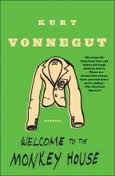
[READ: August 17, 2012] Welcome to the Monkey House

So this book is Vonnegut’s second collection of short stories.  But there’s a twist.  This collection contains all of the short stories from Canary in a Cat House except one. It also contains many of the stories he had written since then as well as stories not collected in Canary.  So you get basically 18 years worth of stories here.  And it’s interesting to see how much he has changed over those years (during which he wrote 5 novels, but not yet Slaughterhouse Five).

Since I read Canary a little while ago (see comments about the stories here), I knew that his 50’s era stories were influenced by WWII.  So it’s interesting to see how his stories from the 690s are not.  They deal more with day to day things and, of course, abstract concepts about humanity, although politics do enter the picture again once Kennedy is elected .

  • Where I Live (1964)

This was a good story to open with because it shows the then-later-period Vonnegut’s mindset and location.  This story is about Barnstable Village on Cape Cod (where I assume Vonnegut lived since there are a number of stories set on the Cape).  This is a very casually written story about an encyclopedia salesman who goes to the local library and sees that their two encyclopedias are from 1910 and 1938.  I enjoyed this line: “He said that many important things had happened since 1938, naming among others, penicillin and Hitler’s invasion of Poland.”  He is told to talk to the library directors who are at the yacht club.  I love the attitude that Vonnegut creates around the village which “has a policy of never accepting anything.  As a happy consequence, it changes about as fast as the rules of chess.” For really, this story is about the Village more than the encyclopedia salesman, and it’s an interesting look at people who move into a new place and want it to never change. (more…)

Read Full Post »

SOUNDTRACK: ST. VINCENT-Actor (2009).

I had seen St Vincent on Austin City Limits, and her juxtaposition of waif-singer with noise mongering guitar player blew me away.  So I was a little disappointed when this album opened up with this gentle, practically 1950s sounding vocal and string line in “The Strangers.”  It takes two and a half minutes, but the noise eventually comes and it totally changes the texture of the song.  Of course now, “make the black hole blacker” is a fun thing to sing along with (and the lyrics in general are pretty great).  “Save Me from What I Want” is another quiet song with a catchy chorus.  “The Neighbors” has a great melody with interesting strings over the top of it.  “Actor Out of Work” brings in some stranger sounds to the album.

There’s something interesting about the songs on this album, like the way “Black Rainbow” has these sweet string sections but for the end half builds a crescendo of tension. I also love that a seemingly delicate song can be called “Laughing with a Mouth of Blood.”  Perhaps the strangest song on the disc is “Marrow” which has a strange horn section and the chorus: “H.  E.  L.  P.  Help Me Help Me.”  “The Bed,” “The Party” and “Just the Same But Brand New” continue in this vein–like a Disney princess song with a horrible threat underneath: “Don’t Mooooove, Don’t Screeeam.”  But that sense of princess who are slightly askew really resonates on this record.  It’s not as willfully dissonant as her first record, but lyrically it’s a knife covered in cotton candy, it’s still a gem.

[READ: March 20, 2012] McSweeney’s #39

One of the bad things about having a job with actual work is not being able to write complex posts about compilation books.  It’s hard to have your book open while bosses walk by.  So, its been a while since I read this and I’ll do my best to remember it all.  Incidentally, if you’re keeping track I skipped 38, but I’ll get to it.

Issue #39 is a hardcover and a pretty one at that. It has a front cover photo (as well as many interior photos) taken by Tabitha Soren.  Yes, forty-somethings, THAT Tabitha Soren, from MTV who has a new career as a photographer.

This issue continues with the recent return of the Letters column (as the magazine and front matter become more serious the return of the Letters adds an air of silliness). (more…)

Read Full Post »

SOUNDTRACK: SQUAREPUSHER-“Dark Steering” (2012).

Hot on the heels of a review of LMFAO I get to the other side of the spectrum in electronic music—Squarepusher.   There’s no big choruses, heck there’s no words, but this music shares something with LMFAO.  Well, actually it really doesn’t—except maybe keyboards.

Squarepusher play dark angular music. It’s very electronic and alien (and sounds like it may have been used in the background of Skinny Puppy songs back in the day). It’s abrasive and the sounds are otherworldly and yet in this song, there’s a melody to it.  I have but one Squarepusher CD—that’s probably enough for me.  But I am always interested to hear new music by him.  It’s impressive the way he can take a song that starts out so noisy and get it to sound like real music by the end.  It like the science fiction of music.

[READ: June 5, 2012] “Forward Thinking”

I have read only one book by China Miéville—Perdido Street Station.  I found it to be quite challenging for a bunch of reasons and figured I wouldn’t read more by him.  And yet I find that images from that book stay with me to this day (at least ten years on).  So maybe it’s time to give him another shot.  But where to start?

This entry in the New Yorker’s Sci-Fi issue is written as an “E-mail sent back in time to a young science-fiction fan.”  And I loved it.  I enjoyed how it started (with the author knowing that E-mail doesn’t exist at the time the recipient will get this—so who will it show up?)  And I loved the central question: “How did you get into this stuff?”  The sender knows that the kid will get asked this a lot, but the question should be turned around: “How did you get out of it?”  Because all kids love sci-fi concepts.  It’s just that some move away from it as they get older.

Miéville includes a few key moments in (his) sci-fi history: Page 40 of “The Tale of Mr. Jeremy Fisher” by Beatrix Potter.  What?  Indeed, for this is the first time that (you) will be ware of knowing something the protagonist doesn’t—that there’s  fish coming up to get him.

Next is Chapter 13 of Golem100 by Alfred Bester.  I have never heard of this book.  Although Miéville does warn us about it—he read it far too young and there’s some sadistic violence in it, what attracted him (and me, now) is the disrespect for text—part of the story is a musical score, another is a picture.  It sounds cool.  And of course it is long out of print. (more…)

Read Full Post »

SOUNDTRACK: THE SWELL SEASON-Strict Joy (2009).

I bought this disc for Sarah after it came out.  I didn’t think that I would enjoy it that much because while I loved the movie Once, I wasn’t sure if I needed more from Glen and Marketa.  But then I found a whole slew of free concerts from NPR and I became hooked on the band.

The disc opens with “Low Rising” (what I think of as the “Van Morrison” song).  It gets better with each listen.  It’s a slow ballad which is followed by “Feeling the Pull,” a more up-tempo song that really highlights Marketa’s beautiful harmonies.  “In These Arms” is a gorgeous song.  The verses are downbeat and somber “if you stay…with that asshole…it will only lead to harm” but again the harmonies are gorgeous.  “The Rain” is a more rocking tune (within reason, of course).  It has an interesting middle section that quiets down, but it’s a solid folk rocking song.

“Fantasy Man” is Marketa’s first lead vocal song on the disc.  I like her voice but sometimes I find her lead songs to be a bit too wispy, too quiet.  I like this song, but it feels long (and at 5 minutes, it is).  “Paper Cup” is one of Glen’s quiet ballads.  It’s a pretty song.  “High Horses” is one that I didn’t know from the live sets, I guess it’s not too popular with the band, but I think it’s strong.  It runs a little long but that’s because it has a cool middle section that keeps building and building with more instruments and voices.  “The Verb” is another song that I didn’t know.  It has a cool intensity to it and while it doesn’t stand out as a hit, it’s certainly an enjoyable song.

“I Have Loved You Wrong” is another pretty Marketa song, but again it’s very slow and very long.  I don’t think I could buy her solo album because although her voice is lovely and her melodies are nice, they’re just so ephemeral I can’t really get into them.  “Love That Conquers” is an interesting song.  It sounds nothing like The Swell Season (must be the banjo).  It’s a nice addition to the album and should maybe have been placed a little earlier to break up the sound style a bit more.  “Back Broke” ends the disc very strongly.  Although I think the song works better live (with audience participation), the melody and tone of the song are somberly beautiful.

There are moments of this disc when it turns out to be what I feared the whole disc would be–bland folkiness. But overall this is an enjoyable album for a rainy day.  And Hansard really has an amazing voice.  However, I really like them better live.

[READ: December 26, 2011] Third Reich

I was pretty excited when I heard about this book, although I must admit I was a little concerned by the title.  Bolaño has a kind of weird Nazi fascination.  There is Nazi Literature in America and then a whole section of 2666 is given over to Nazi Germany.  He doesn’t like Nazis or anything but he writes about them a lot and it can be a little exhausting.  So it was with some relief that I learned that Third Reich is the name of a game that the main character plays.  It is a kind of historical reimagining kind of game (I guess like Risk but more specific and with more at stake).  It is set during the time of the Third Reich and the players represent various countries (or perhaps even powers).

I am giving up on explaining the game from here on because a) there’s a lot about the game in the book and b) I’m not sure if it wasn’t explained very thoroughly or if I just missed out on exactly what was happening.  During the book he talks about Hexes 65 through 68 and so on.  So I assume the map of the world is a hex grid.  But he never gives any context (or even a picture!–and this makes sense as it’s written as the diary of a well-regarded player who is not trying to teach us the game).  So while I understand the general tenets and play of the game (there’s a die (or dice) and tokens that reside on the board), the specifics are completely nebulous.  But that’s okay.  Because the game specifics don’t impact the book, but the game overall is at the heart of the book.  I think it’s neat that Bolaño invented a game (and several others games are named, but no details are given).  He is clearly very gifted at inventing people, games, things.

But as I said, the game is only a part of the book and in fact, the game details don’t enter into the book until about half way through. (more…)

Read Full Post »

SOUNDTRACKBABE THE BLUE OX-“Basketball” (1998).

This was the first song I’d ever heard from Babe the Blue Ox, and I was hooked (sadly, The Way We Were, where this song is from was their last album).  This is also my favorite songs about sports (and it will never be played in an arena).

It opens with this great funky keyboard over a cool walking bass line.  And after a verse about playing basketball, we get the gorgeous bridge: “pass it to me, I am free, look there’s no one guarding me) sung by one of the women in the band (who sounds vaguely like Edie Brickell).  When the chorus kicks in “And when she gives it to me, I am as high as can be” both singers harmonize wonderfully.

There’s even a cool instrumental break.

Everything about this song is catchy and wonderful.  And it should have been huge.

[READ: December 21, 2011] Grantland

McSweeney’s seems to keep trying to push me away.  Or maybe they are just trying to push me out of my comfort zone.  First they publish Lucky Peach, a magazine about cooking (with recipes that contain ingredients that I couldn’t find anywhere).  I don’t read cooking magazines, but I loved this one.  Now they publish Grantland, a book about sports.  I don’t follow sports.  At all.  I used to play sports and I used to watch sports, and then when I got out of college, I did neither.  I have a very good knowledge of most sports (so I can still follow any game that’s on), but as for actual people playing the games right now–I’m ignorant.  So, why on earth would I want to read this book about sports?

I was pretty sure I would finally not be getting this book until I read the author list: Chuck Klosterman, Colson Whitehead (!), Malcolm Gladwell (?)  I knew this was going to be no ordinary sports book.

So it turns out (and I didn’t know this until just now) that the book is a collection of works from the website Grantland, which is created and run by Bill Simmons.  I haven’t explored the site but it sure looks interesting enough–longish articles about sports and culture and all kinds of interesting things.  And evidently this issue is a sort of best of the website.  The whole Grantland experience, including this book, are connected to ESPN, indeed, ESPN gets a copyright for the book, McSweeney’s is just the publisher.

And this volume was wonderful.  I couldn’t put it down.  I even wound up putting aside a book I was in the middle of to read it.  None of the articles are terribly long and, despite the basketball textured cover (which is very cool–no one can walk by and not touch it) the variety of sports covered is wonderful: from boxing to cricket!  And there are short stories and essays about the entertainment industry as well (articles on Shia LeBeouf and Amy Winehouse (!)).

If I had one complaint about the book it’s that many of the articles don’t give a time from when they were written.  I assume they are all fairly recent but since I don’t follow sports I can’t say for sure.  The other problem is that several of the stories end with a game/match unresolved.  Clearly they have been resolved since then, but even one line saying what happened would be comforting for those of us not glued to ESPN. (more…)

Read Full Post »

« Newer Posts - Older Posts »