Feeds:
Posts
Comments

Archive for the ‘Funny (strange)’ Category

SOUNDTRACK: RHEOSTATICS-Night of the Shooting Stars (2001).
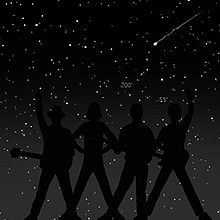
This was the first CD by The Rheostatics that I bought as it was released.  I had gotten into them in 1999 or so, and I remember being very excited that this disc was coming out.  I ordered mine from Maple Music (and it was even autographed!) and I recall the evening it came in the mail and I sat in my kitchen rocking out to it.  Night is probably their most accessible disc. There’s a bunch of tracks from Tim Vesely, (who writes the sweet melodies) and although Martin Tielli’s wonderful weirdness is present, it’s more weirdness within conventional songs rather than unconventional song structures.

The disc also features a lot of heavy guitar work.  The disc opens with a heavy guitar riff which morphs into an upbeat poppy number.  Of course, how many pop numbers are titled “These Days Are Good for the Canadian Conservative Youth Party Alliance,”  (Tielli, of course).  There’s a catchy repeated bridge “these days are good for us now” even if the chorus (chorus?) features the bizarre line: “I chipped my eyetooth on the back of a urinal.”

It’s followed by two of the catchiest, poppiest, most wonderful songs the Rheos have done “Mumbletypeg” a delightful ditty sung by Dave Bidini with (again) a wonderful chorus.  And, “P.I.N.”, (Tielli) too catchy by half, and featuring the wonderfully weird lyrics, (in a great descending melody): “You’ve got the key to my heart; you’ve got the P.I.N. to my guts”

“Superdifficult” is sung by Tim Vesely, and sounds a lot like the kind of songs he would later writer for The Violet Archers (he has the most delicate pop sensibility in the band).  Tim also sings “We Went West.”  It kind of slows the pace of the record down, but it is a beautiful song (done with different guitars in each headphone).

“The Fire” is a charming ditty sung by Tielli.  It continues the mellowness of “We Went West” and runs with it until Bidini takes over vocals and adds some heavy guitars.  They end the song with some beautiful harmonies and some screaming guitars.

The next two songs, Vesely’s “In It Now” and Bidinis’ “Here to There to You” are slight songs which are more charming than catchy.  They’re followed by the last three tracks which end the disc with a bang.

“The Reward” has a cool slinky riff and great vocals for Tielli. It’s also sprinkled with some heavy guitar pyrotechnics late in the song.  “Remain Calm” is a calming song from Vesely.  It seems perfectly located between the craziness of “The Reward and the wonderful rocking nonsense of “Satan is the Whistler.”

I always think that “Satan is the Whistler” is a much longer song (it’s six minutes) because there are two official parts to it.  The first 3 minutes are slow and moody, then half way through it bursts into a tremendously heavy riff (complete with whistles!).  It’s a great ending to the disc.

There are also two previously recorded tracks here in new form: “Song of the Garden” is from The Story of Harmelodia, done in a slightly more rocking version here.  And “Junction Foil Ball” (Tielli) was on their odd Nightlines Sessions release.  It opens with some odd effects and guitars and evolves into an incredibly, incredibly catchy riff.  The version here is not vastly different, but it’s a bit cleaner.

I’ve really loved this disc.  And even if the middle is a bit slow, it still rocks.

[READ: March 11, 2011] “Barnyard Desires”

This was a surprisingly odd and twisted story.  And for The Walrus, it was quite long, as well.

It opens with Leona hearing noises in her ceiling.  She suspects that the noises are from rats.  She has called the landlord out several times, but he hasn’t seen any rats.  In fact, he has stopped coming out because he thinks she’s crazy.  She imagines what the rats are up to up there: procreating mostly.  Eventually, she notices a kind of brown stain on the ceiling, which she is convinced is the rats mating and urinating.  The stain grows larger and larger, and it is right above her bed.  She also believes it is taking vaguely human shape.

Meanwhile, we learn about her upstairs neighbor.   The first time they met was in their building’s elevator.  He proudly (and very closely) admittedly that he was recently born again.  She made a quiet comment, turned away and hadn’t really spoken to him since. (more…)

Read Full Post »

SOUNDTRACK: THE TRAGICALLY HIP-Live at Austin City Limits Music Festival 2006 (2006).

I hadn’t heard of this album until I stumbled across it on the Yahoo! music page.  As far as I can tell it hasn’t been released on CD.  Or if it was, it’s no longer in print.  But you can download all of these songs from your online retailer.

Austin City Limits has brought out some great performances, but if the cover photo is to be believed, this is the outdoor music festival and not the usual intimate setting that you see on TV.

This is a seven song EP. I’m not sure if it covers their whole set or not.  But it does touch on many of their high points.  “Courage,” easily one of their best songs,  sounds a bit strained here.  Downie’s voice sounds like he can’t hear the rest of the band (although I suspect he was just being intense).  “The Lonely End of the Rink” sounds great, though. A really solid performance.  “Gus,” one of my personal favorites, also sounds fantastic.  These big anthemic songs work very well in this large setting.

They quiet things down a bit with “Bobcaygeon.”  I’ve always felt that this song really shines live, an it certainly does here.  But there’s little downtime when they rock out with the great “Poets.”  “At the Hundredth Meridian” also rocks really hard, but as with “Courage,” Downie seems less than excited to be singing it.  It just doesn’t have the attention to detail that he brings to the other songs.

The set ends with “Blow at High Dough” and unlike the other older songs, Downie seems to be having a lot of fun with this one.  He plays fast and loose with some lyrics, but the stuff he adds is his usual bizarre stuff.  It was a treat to find this recording, even if it isn’t their best live showing.

[READ: March 9, 2011] “Jackie”

As soon as the story opens, you know it’s going to be unusual: “I made a girlfriend a while ago. String, wax, some chemicals.”  And, indeed, the narrator has made a woman, not an inert sculpture, but a full-fledged woman, who eats and speaks and of course has sex.  He names her Jackie.

After her introduction, we learn about him.  He is an engineer and a pro soccer referee.  She enjoys going to the games.  But aside from the amazing sex (he built her well), she seems mostly disinterested in him.  He senses this but, since he made her, he assumes the best (although he does wish she’d get a job as it’s expensive doing all the fun things she wants to do.

So she gets a job at Imovax, and she is very secretive about her work.  He tries to find out even what the company does but she more or less just blows him off. (more…)

Read Full Post »

SOUNDTRACK: MOGWAI-My Father My King (2001).

Yet another EP release from Mogwai, this is a twenty-minute song that is everything that Mogwai does best.  It’s a slow builder that grows into a loud, epic track; it’s not only noisy and chaotic, but features some really catchy parts as well.

This song was produced by Steve Albini (which makes the Mogwai noise crispy and sharp and modifies their brand of waves of noise).  It’s a kind of companion to Rock Action.

It opens with a kind of middle eastern flair–Wikipedia says it was based on the melody of the Jewish prayer Avinu Malkeinu. Hear the original here.  [Man Wikipedia loves Mogwai, there are lengthy writes ups about nearly every song they’ve done.]

Even without knowing where the melody comes from, it’s a great song with wonderful structure, building and receding (in what is by now a kind of Mogwai pattern).   Twenty minutes rarely sound this good.

[READ: March 13, 2011] “Going for a Beer”

I’m currently reading Robert Coover’s A Child Again, which is a collection of short stories.  For the most part I haven’t really enjoyed it that much.  Nevertheless, I really enjoyed this one page story.  Part of me wonders, simply, if Coover works much better in much much shorter pieces.

So this story is a time-bending crazy quilt of reality.  And, indeed, the story is a lot more style over substance (which is kind of the point).

It opens in third person present with this mind-shredding sentence: “He finds himself sitting in the neighborhood bar drinking a beer at about the same time that he began to think about going there for one.” I admit I read this sentence three times before I gave up and accepted that he was fucking with me.

And, indeed he is. (more…)

Read Full Post »

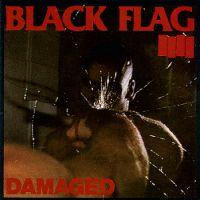
SOUNDTRACK: BLACK FLAG-Damaged (1981).

I’ve liked Black Flag since I bought Loose Nut on vinyl way back when (1985, the year punk broke for me).  And those four bars were iconic to me even before I had heard a note (although I just learned they are supposed to represent a flag waving).

And this is where their legend really took off.  So a few things I never knew about this album until I looked them up recently.  1) That’s Rollins on the cover punching the mirror.  2) He didn’t really punch the mirror (it was smashed prior and the blood is fake).  3) I knew that Black Flag existed for a while before Rollins’ arrival and that they’d had a series of singers before him.  But I didn’t realize what a their first EP (Nervous Breakdown–Keith Morris on vocals) came out in 1978, their second EP (Jealous Again–Ron Reyes on vocals–credited as Chavo Pederast (he left the band in the middle of a live show, so they changed his name to that rather offensive one)) came out in 1980.  Their third EP (Six Pack –Dez Cadena on vocals) came out in 1981.  Rollins joined a few months after that and Damaged–their first full length–came out in December 1981.

“Rise Above” is a wonderfully angry song.  The gang vocals of pure empowerment work so well with the chords.  It’s still effective thirty years later.  “Spray Paint” goes in the other direction: rather than an uplifting, catchy chorus, it’s a deliberately angular chorus that’s hard to sing along to (even for Rollins).

“Six Pack” represents the more “popular” side of the band.  And it is a wonderfully funny single.  I just can’t decide if it’s serious or ironic (see also “TV Party”).  These two dopey songs are great to sing along to and are simply awesome.  (Fridays!)

The rest of the album turns away from the lighthearted tracks.  “What I See” is a really dark moment on this album.  And the negativity is unusual especially given Rollins’ later penchant for lyrics about fighting back.  True, Rollins didn’t write these lyrics.

“Thirsty and Miserable” is a blast of noise with some of Ginn’s first real guitar solos (which Guitar World says is as one of the worst guitar solos in history…and I say really? that’s the solo they pick?  Ginn has done some pretty outlandishly bad solos over the years…of course the whole list is questionable at best).  “Police Story” is a simple but effective description of the punks vs cops scene at the time.

“Gimme Gimme Gimme” seems childish, but that’s clearly the point.  “Depression” is a super fast track.  (Trouser Press considered Black Flag America’s first hardcore band).  “Room 13” is an odd musical track, with pretty much no bass.  It’s just some roaring guitars and drums and Rollins’s screams.  This track stands out because Chuck Dukowski’s bass propels most of the songs here.

“No More” sounds “typically” hardcore: very fast with the chanted chorus of “No More No More No More No More.”  “Padded Cell” is also fast (and is pretty hard to understand) except for the “Manic” chant, but the following track “Life of Pain” features what would become a signature Greg Ginn sound…angular guitars playing a riff that seems slightly off somehow.  Compelling in a way that’s hard to explain.

It’s funny that a band that plays as fast as they did also released some pretty long songs. “Damaged II” is almost 3 and a half minutes long.  It has several different parts (and a pretty catchy chorus).  And the final song “Damaged I” is a kind of crazed rant from Rollins;  It’s one of his scariest vocal performances; he sounds really deranged.  Especially when it sounds like he just cant think of anything else to say so he just screams maniacally.  But his vocals are mixed behind the music as if he’s trying really hard to get heard.  There’s very little else on record like it.

It’s a wonderful end to an intense disc, and the beginning of a brief but powerful career.

[READ: March 25, 2011] The Life of Polycrates

I’ve been reading Connell for a few years now.  In fact, the first time I posted about his work came with a blistering dismissal of his story “The Life of Captain Gareth Caernarvon” in McSweeney’s 19.  That story is included here, and upon rereading it, I learned two things:

  • One: context is everything.
  • Two: I was totally and completely wrong in that original review, and I take it back.

But before I explain further, some background about this book.  This is a collection of eleven stories, eight of which have appeared elsewhere.  Unfortunately there’s no dates of publication included so I don’t know how old any of these stories are.

The other thing I’m fascinated about is Connell himself.  I’m not the kind of reader who wants to know a ton of details about the author, but I like a little bit of bio (or a photo) when I read someone.  The only bio that is consistently presented about Connell is that he was born in Santa Fe, New Mexico.  I’m fascinated by this because so many of his stories are set in Europe.  So I have concocted a master biography about Connell’s life and how he has lived and toured extensively in Europe, studied theology (and found it wanting) and investigated all of the world’s darker corners.

It’s this latter aspect that really altered my perception of Connell’s writing.  I’ve liked the last few things that he’s written, but I fear that I was not looking at him through the proper lens.  And this relates back to bullet point one above.

Connell writes in a world not unlike H.P. Lovecraft–a world that is unconventional, dark and more than a little twisted.  And yet, unlike Lovecraft, there is very little of the fantastical in his stories.  Rather, his characters reside in our own world (with a little chymical help from time to time), but they are all real.  They’re just not characters most of us choose to associate with.  So, reading that first story in McSweeney’s, where it was so different from all those others, I found it really distasteful.  In retrospect, I’m not going to say that it is meant to be distasteful, although some of his stories are, but it was certainly not a pleasant story by any means.

The other fascinating thing to note about this book is that all of the stories are written in short, Roman Numeraled segments.  So the title story has 35 segments.  But even some of the shorter ones has twelve or thirteen segments (sometimes a segment is just a few lines long).    I actually enjoy this style (especially when the segments introduce something totally new into the story–which many of these do). (more…)

Read Full Post »

SOUNDTRACK: ANGST-“The Weather’s Fine” (1988).

I recently rediscovered the band Angst.  They were part of the second wave of SST bands (the ones who never went anywhere and were summarily dropped with no forwarding address).  I know of Angst from their song on The Blasting Concept Volume II (which I love).  I decided to investigate Angst a little further and my good friends at YouTube came through with a number of Angst tracks that I’d never heard.

Like this one.

Angst is a kind of jangly pop band.  This song in particular would not be out of place on the radio in 1992 or indeed now.  It has an early R.E.M. feel, but I think what makes it stand out somewhat is that the chorus feels kind of short–you kind of expect Peter Buck to sing a second part of the chorus, but that never materializes.

Angst is a band that could have been huge (SST was not much for marketing).  And as far as I can tell all of their discs are utterly out of print.  Pity.  This is some good stuff.

Tap your feet along!

[READ: March 22, 2011] The Meowmorphosis

I received this book as an Advance Reader’s Copy.  I absolutely loved Pride & Prejudice & Zombies.  I didn’t read Quirk Classics’ other mash-ups: Sense & Sensibility & Sea Monsters or Android Karenina (although I love the title of that one).  Nor did I read any of the other mash-ups that Quirk Press did not print.  It became rather passe after one great idea.

But this one seemed different somehow….  In part, Kafka.  But also, it’s not a classic novel plus horror.  It’s more horror plus…cats.  And the opening line is wonderful:

One morning, as Gregor Samsa was waking up from anxious dreams, he discovered that he had been changed into an adorable kitten.

Anyone who has read The Metamorphosis knows that it’s about 85 pages long.  So, how did Coleridge Cook (which is a pseudonym, FYI) get 200 pages out of it?  Well, it’s not simply The Metamorphosis.  It incorporates aspects of  The Trial and the short story “Little Woman” (and quite possible some other things as well).

And in that respect, it’s pretty neat.  He takes these three separate Kafka stories and interweaves them, all keeping with the same basic structure of The Metamorphosis with Gregor as a cat.

And so, as in the original, Gregor is abused by his family.  But unlike the original, he eventually escapes outside where he meets Josef K. and is put on trial.  He is eventually let go and returns home where he imagines the tearful return he will have with his sister.

But here’s the problem.  Unlike P&P&Z which made a whole new plot and added so much excitement to the original story, all that this mash-up does is to change him from a cockroach into a kitten.  So really, the story is exactly the same but instead of scenes with creepy, gross cockroach detail, we get scenes with cute and cuddly kitten details.  And as such, it’s hard to understand exactly why the family is so creeped out by him. (more…)

Read Full Post »

SOUNDTRACK: THE COCKSURE LADS-The Greatest Hits of The Cocksure Lads 1963-1968 (2010).

At last, The Cocksure Lads have released a greatest hits collection on CD.  These songs have been unavailable to anyone since the late sixties and it’s wonderful to be able to enjoy them again or for the first time.

Dusty Fosterboard, Reg Topping, Derek Millwood and Blake Manning wrote some charming rock back in the late 60s.   Their music was certainly forward looking.  Check out the rocking song (with keyboards–perhaps a Beach Boys influence?) “You’re a Cocksure Lad’ coming out in 1963 (while The Beatles were still doing fairly standard rock n roll songs and covers).  “You Gotta Stay Cocksure” (1964) sounds a bit more Beatlesesque, although perhaps a little more adventurous than Beatles songs at the time.

“A Case of the Dropsies” (1965) was a silly, almost novelty song (with a siren in the background), although it features a cool low-end guitar solo (and great harmonies). “Mushy Peas” seems like it would be a novelty, but it is a really a sadly passionate song of loss when the protagonist stops of for the titular dinner before heading for America.

“Ship’s Ahoy” (1968) comes from their concept album of the same name and while not as musically adventurous as any of The Beatles records, was certainly a fun (and different) song for the band–was that “oregano” joke a sly drug reference?  “Admiral Trafalgar” comes from this album too (and even mentions Hitler!–a political song in 1968?)

The charming and trippy “Umbrella Girl” also has some cutesy asides (I think a lobster bit my ‘and) and a cool autoharp as a major instrument.  “Ticky Boo” is a cute little romp: “Mrs Eng-a-land, a pack of crisps and me.”  They were even forward thinking on “That’s Any Good” in which one of the things that’s good is “when your country wins the arms race.”

There’s definitely some novelties here.  “A Car Boot Light That Never Quite Shuts Off” is an organ and voice song (with a crazily long note held at the end).  “I’ve Already Been Loved” opens with a very randy sounding “Wellllllll” but turns into a delightful, poppy number.  Of course, the final song, “Wellies in the Bath” is the obligatory goofball song (the “Ringo” song if you will).  And it is cute (especially at only 43 seconds).

The songs are charming and nostalgic, and even if you don’t remember them.  It’s a nice trip down memory lane[1]

[READ: February 20, 2011] “April Foolery”

I found this story because after reading The Ask, I looked up Lipsyte and Wikipedia said he has two short stories in collections (and no other short fiction pieces published–although I know The Dungeon master was in The New Yorker). Indeed, this was one of two.  I looked up The Revolution Will Be Accessorized up on Google books, and his entire story was available!  (It’s only two pages).

Looking at the rest of the authors, I do wonder if I’d like to read the whole thing. I’ll have to see if it’s in our library.  (It isn’t, but I’m going to interlibrary loan it).

Anyhow, this absurdly brief story is a sort of history of April Fool’s Day with modern suggestions for making it more fun).  It begins with the generally accepted premise that April Fool’s Day is tied to the adoption of the Gregorian calendar.  People were punished who did not know that this new calendar had updated the new year.  And this spirit of prankishness lives on.

Given that bit of background, Lipsyte offers six pranks for April Fool’s. (more…)

Read Full Post »

SOUNDTRACK: LOW-“Try to Sleep” (2011)

This was NPR’s song of the day for March 2.  I don’t really know Low all that well.  I know they play very slow music (which I’m typically not a fan of –slow music, not Low specifically).

I think I have been kind of frightened off of Low as being so soporific that it would make me sad.  But this song is a delight.  It’s not particularly slow and there’s a very cheery bell motif that pecks out the gorgeous melody.

The vocals are very nice harmony between the male voice (which reminds me a bit of lower register Damon Albarn–in fact the song gives of kind of an Albarn vibe) and the high-register female vocals.   It’s a really beautiful song.

In fact, this song has really changed my opinion of Low, and I may have to check out more by them.

[READ: March 2, 2011] “Backbone”

This is an excerpt from DFW’s forthcoming posthumous novel The Pale King.  Wallaceheads have already heard and/or read a variant on this piece which DFW read aloud at the Lannan Foundation.

I was reluctant to read this piece for a couple of reasons:  The Pale King is coming out in a little over a month.  I have read/listened to this particular piece not terribly long ago.  And, I didn’t love it all that much.

Well, it turns out that much like any draft or work in progress, with a bit of tweaking and editing, the passage can be made very strong and quite enjoyable.  This finalized version also intercuts a lot more information about other characters than was in the original version, making it a far more compelling piece of fiction in toto. (more…)

Read Full Post »

SOUNDTRACK: PJ HARVEY-“Let England Shake” [Live on the Andrew Marr Show] (2011).

PJ Harvey has a new album out.  I’ve listened to it free on NPR, and in the introduction, they mention this live version on the Andrew Carr show.  Harvey (solo) plays an autoharp, and the melody is provided by a sample of the original version of “Istanbul (Not Constantinople)”  (done by The Four Lads).

The album version doesn’t use the sample, although the melody is the same.

I loved PJ Harvey back on her first few albums, but I didn’t even get White Chalk.  Harvey has undergone a bizarre transmogrification, where not only is she no longer a rocking guitar woman, her voice has lost its growling edge and his been replaced by an amazing falsetto.

This version also differs from the official release in that this one is shorter (probably time constraints on the show) and has fewer verses.  It also has Harvey singing the “Istanbul” chorus which isn’t on the disc.  So, this is a unique interpretation of the song, one that likely won’t be available anywhere else.

I wasn’t expecting to like this as much as I did.  It’s not the PJ I know, but this new PJ is certainly interesting.

[READ: January 31, 2010] Lemon

Krauser hand-scribbled the covers of all 10,000 extant copies of this book.  So if nothing else, the covers are all unique!  (Click here for a larger scan).

This is one of the first half-dozen or so books that McSweeney’s published and to me it speaks volumes about the kind of absurdist books that they initially released.  Those early titles were weird and possibly ironic and maybe post modern and were kind of interesting but not necessarily enjoyable.  Thankfully, they have since published very very readable books, but everyone has growing pains, right?

That sounds like I didn’t like this book, which is not exactly true.  I was bemused by it, but mostly I kept thinking I can’t believe that this guy did this much research about lemons, he was practically as obsessed about lemons as his main character.  For indeed, that is what this book is about: a man’s obsession with lemons.  Or, specifically, one lemon. (more…)

Read Full Post »

SOUNDTRACK: MONEEN-The World That I Want to Leave Behind (2010).

I’ve liked Moneen’s discs; they played an interesting mix of grungey noisey rock and incredibly poppy emo.  And their song titles were really long and often funny (“The Frightening Reality Of The Fact That We Will All Have To Grow Up And Settle Down One Day,” “There Are A Million Reasons For Why This May Not Work… And Just One Good One For Why It Will”).

The first sign that The World I Want to Leave Behind is different is that their song titles are all really short.  The longest one is the title of the album–which is the shortest song: a 2 minute quiet intro that features some noisy guitars at the end.   The rest are 1-3 words long.  Now, perhaps you can’t judge a band by that; however, their music, like thier song titles, has eschewed complexity and embraced pop.  (“Believe,” “Waterfalls,” “Lighters”).

Okay Moneen always had this component to it.  So it’s not like suddenly the band is all pop.  Take “Are We Really Happy with Who We are Right Now?” from the album of the same name .  The song is all emo vocals (including harmonies) but the music is punky and noisy.  It’s also got a lot of dissonance.  Similarly, “The Start to this May be the End to Another” (from their debut), opens with really blasting noise and then turns into a heavy emo track with loud and quiet sections.  They are certainly poppy, but there’s at least nods to noise.

This album removes all of that noise and chaos and settles into to some tried and true emo.  If you hate emo, you will hate this album.  There’s virtually no dissonance on the disc at all.

Okay, that’s not entirely true.  The second song, “Hold That Sound” opens with some noiy aggressive guitars (and interesting noisy effects) and “The Long Count” has some noisy heavy opening chords which propel through the track.  But unlike earlier records, the noise gets pushed to the background pretty quickly.  “The Monument” also shows some remnants of heaviness–there’s even screaming vocals at one point.

And yet, the aforementioned “Wateralls” and “Lighters” sound like Guster-lite (and I like Guster quit a bit).

The final song, “The Glasshouse” does rock pretty hard (although the harmonies are all still there and the emo certainly seeps in by the end with a piano break and the final 2 minutes being all gang vocals).

Okay so in fairnes to the band, they haven’t smoothed off all the rough edged, but the polished bits are really polished now.  The thing is, I kind of like emo, so despite my tone, I don’t really dislike this record.  I’m always diasppointed when a band moves more commerical, especially if they cut off their more interesting bits, but Moneen make good emo (if you allow that such a thing exists).  I don’t like all emo bands, but there’s still enough interesting stuff here to keep me coming back to it.  In fact, for all of its poppiness, “Believe” is a really fantastically catchy alt rock song which should be in heavy rotation somewhere, if it’s not already.

[READ: February 13, 2011] A Place So Foreign and 8 More

When I saw that Cory Doctorow had a book of short stories out, I was intrigued. I’ve enjoyed two of his books quite a bit, so what could he do with short fiction?

This is some of his earliest work and I found it a mixed bag.

The first story “Craphound” was great (and the origin of his website name).  It concerns going to flea markets and buying all kinds of crap.  When you do it a lot, you become a craphound.  But when you take a fellow craphound’s crap of choice for yourself, you break the unwritten rule.  That’s all well and good.  But in this story one of the craphounds is an alien, like from another planet.  And what he trades for his crap is pretty wild.  But why would he break the unwritten rule?  The story is a fun look at what happens when extra-terrestrials are a part of your life.

“A Place So Foreign” was my absolute favorite story in the book, and one of my favorite short stories in quite some time.  I’m happy to say that I read it last, so it totally ended the book on a high note. Despite the cover picture with an “alien” hand holding a suitcase, the story has nothing to do with that at all. (more…)

Read Full Post »

SOUNDTRACK: LIGHTS-“February Air” (2006).

Lights is a Canadian singer who is managed by Jian Ghomeshi.  She is a young cute pop singer and this was her second hit (I think–Wikipedia says it was used in an Old Navy ad).  I admit that I’d never heard of her before seeing her on Jian’s page.

I think of everything that Jian touches to be unique and always interesting.  And although this is certainly poppy and catchy, it’s only mildly  interesting and is kind of indistinguishable from a lot of other poppy catchy songs (the middle section stands out a bit, admittedly).

She’s received a number of accolades (best new artist at the 2009 Junos), so good for her (and Jian).  But I think I’ll be passing on her discs.

[READ: January 10, 2001] “Minnows”

This very short story (two pages) is dark and quite twisted.  Both in content and in structure.

The story opens with a woman seeing her daughter at the door.  We quickly learn that the daughter is not happy, but when the visit turns violent it’s unclear whether the older woman is crazy or hallucinating or if the violence is really happening.

Then we get some background story about their relationship.  Which sets things straight (sort of). (more…)

Read Full Post »

« Newer Posts - Older Posts »