Feeds:
Posts
Comments

Archive for the ‘Funny (strange)’ Category

tpk1SOUNDTRACK: PALE KING-“An Airing” (2013).

paleNope, I never heard of the musician Pale King until I searched for a song to put here.

This song begins as a piano instrumental (with some keyboards layered over).  It swells and lifts through some simple chord changes.  A martial beat comes in from time to time to give it some urgency.

This might actually work as a the opening credits to the never-to-be made movie of The Pale King, or perhaps a soundtrack to §1 (which is a short prose poem type of thing).

At about 1:45, some guitars burst through (adding some drama), and the drums grow louder.  It builds slowly until it starts to taper off and ends much like it began

I don’t know much or anything about the artist except that he’s from Toronto and he has a bandcamp site where you can hear this track.

[READ: July 14, 2014] Pale Summer Week 1 (§1-§9)

In other Summer Reading Group posts, I have tried to summarize chapters, make connections between characters that I may have missed in earlier readings of the book and, just tried to be more microscopic about my reading.  I don’t usually philosophize too much about the stories, but I do wax poetic from time to time.  Having said all that, The Pale King presents its own unique challenges because the book is unfinished.  So it’s not always clear if any connections can be made from chapters that are elliptical. DFW in particular likes to write scenes without naming characters, giving the reader something to discover later on, perhaps.  So you may have a scene that has no named people in it, but their speech patterns or details are referenced later, allowing you to piece things together.

There is definitely some of that piecing going on here, but as I said, when a book is unfinished, and this one was largely pieced together by editor Michael Pietsch, it’s not clear if you are missing something or if it simply isn’t there.  So there will be some speculation, and some omissions for sure, but we press on.

A further complication is the collection of Notes and Asides at the end of the book.  Some reveal information about characters that is not necessarily evident in the book, some talk about things that might have happened or even might have been removed if DFW had played around with the text more.  In general I am not going to read these now, so as to avoid spoilers.  But I may insert them later (with spoiler warnings) to make it easier to make sense of the book later.

The primary setting for the book is the IRS Regional Examination Center in Peoria, IL set in 1985.  Editor Michael Pietsch (in his thoughtful and helpful Editor’s note which is mandatory reading if you are going to read the novel) says that DFW described the book as “torandic,” with elements coming in and going out over and over.

The other key question is just how unfinished is this?  We have no idea.  It feels like it could go on for a ton longer, and yet it no doubt would have been edited down to a more manageable size afterwards.  There are sections that seem like they could have more and others that seems like they would have been trimmed a lot.  And then of course, there could be other things that never even saw the light of day.  None of that should keep anyone from reading the book though. (more…)

Read Full Post »

CV1_TNY_12_23_13Blitt.inddSOUNDTRACK: MALI MUSIC-Tiny Desk Concert #366 (June 21, 2014).

maliMali Music is one man, born in Savannah, GA, but with a somewhat Jamaican vibe.  He plays three songs in this Tiny Desk Concert and each one is quite different.

In the first track, “Fight for You,” he raps over a beat and sample mix played by his DJ (DJ Slow Motion, who is behind the desk with him).  It’s interesting in that he raps with himself (his voice is played by the DJ as well, not looped).  His singing voice in this song tends towards the whiny which I don’t care for, especially since his main voice is so powerful.

The second track, “Make It In” he plays on an acoustic guitar.  The song is clever with lots of amusing asides and slight laughs in the lyrics too.  he more or less raps the verses but sings the chorus.

For the final song, he switches to keyboard (he says he learned piano at a very young age) and he plays a simple, uplifting ballad called “Beautiful.”  There’s a funny moment when he asks the crowd to sing along and then the DJ plays a sample of a crowd singing a long, which makes Mali laugh.

Mali is a pretty positive guy–he talks about things getting better and about himself really making a difference through his music.  It sounds like prideful boasting (and it will be interesting to see if he really does take off), but he also seems sincere in his desire for happiness.  The set reminds me a little of K’naan, at least in spirit.

[READ: June 19, 2014] “The Christmas Miracle”

After really enjoying “The Toast” a few months ago, I was delighted to get another story from Rebecca Curtis and her bristly narrator.

The story opens with the comment that cats were dying, “This happens, of course.”  But in this case they were dying in gory ways not to mention the cats belonged to her nieces.  The girls had seen the dead cats.  The narrator also points out that it is now Christmas, “The most magical, horrible, spiritual, dark, and stressful time of the year.”

Like with another Curtis story, this one is being told to someone, in this case, someone named K, a Russian Communist and “Jewish person who doesn’t believe Jesus was the son of God.”

The narrator explains her situation–she was teaching creative writing but hadn’t written anything herself in years  She had contracted Lyme disease (does this all sound familiar from her other stories?). The disease causes inflammations and bouts of madness and “frank or rude speech, usually set off by eating carbohydrates.”

I love the way that Curtis writes although I’m unclear what Curtis herself believes because her narrator is just so contrary.  Like this awesome sentence:

“If cake was nearby I wasn’t always able to prevent myself from having one bite, then the sugar fed the Bartonella bacteria, which commanded me to eat more, and I would, and then I’d go insane.”  So she asked her sister not to have any sugar filled treats at Christmas.  Which her sister ignored, of course. (more…)

Read Full Post »

arcSOUNDTRACK: HARI KONDABOLU-Waiting for 2042 (2014).

hariI knew Hari Kondabolu from the much missed Totally Biased with W. Kamau Bell (in fact the liner notes even have Hari thanking Kamau for employment—although at the time of this release, that employment was terminated).

As Hari jokes at one point during this show (recorded in Oakland, CA in 2013), he is “obsessed with race.” And how could he not be. To be alive in 2014, you should be obsessed with it, especially if you are paying attention. And his jokes about race are not only salient, they are different. Like the first one on the disc, “My White Chocolate Joke.” The set up is simple, chocolate is dark and creamy and delicious, why would anyone need to make a white version of it? This leads to a punchline that if you like white chocolate you are racist. But as with most of Kondabolu’s jokes, the punchline is just a set up for a much deeper joke—this one having to do with White Jesus. It’s very funny and really well done. “A Feminist Dick Joke” is self referential and funny, especially when he criticizes his own joke for not going far enough. “Moving to Canada,” pokes fun at Americans who say they are leaving for political reasons and then pokes fun at Canada for not being the panacea these people say it is anyway.

I loved “Environmentally Friendly Pollution Machines” which is about how eco-tourism is encouraging us to see things before the tourism industry destroys them.  “Toby” is such a wonderfully extended joke in which people like me who don’t get the initial joke are gently upbraided until the joke is fully revealed to us and even though we just had a joke explained to us, it was still funny. And the call back at the end of the disc is genius.

“Weezer Broke My Heart” is a very unpolitical joke about the band Weezer and that their fan base demographic has not changed in a decade–and how that’s really creepy.

There’s a lot of race jokes in the next few pieces. The title track about how in 2042, whites will be the “minority” is simply hilarious (whites are only the minority if you consider that the races are “whites” and “everyone else”).  And then the hilarious joke about how “Asians are Well-Behaved” (the Chinese restaurant bits are awesome) and the wonderful dichotomy of Mexican stereotypes (stealing our jobs but also being lazy). There’s also the very funny joke about how minorities never get to time travel for real (referencing the Martin Lawrence movie Black Knight and Back to the Future just to show how current and hip he is) because there would be some real changes.

There are also a number of jokes about homosexuality, and how heterosexuals are totally flamboyant even though they don’t realize it (showing off your spawn is pretty flamboyant, frankly). And the extended riff in “Matthew McConaughey on Tolerance” is just terrific.

Jokes dealing with all of these topics are bound to be inflammatory, but Hari is also not afraid of the deadly curse words, (he actually makes me uncomfortable in one joke with how many times he says the word fuck, although is very funny).

All in all this is a very funny standup show from a comedian who is very funny and will, with any luck, find a wider audience. (Of all races).

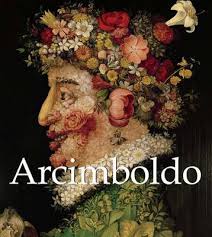
[READ: June 20, 2014] Arcimboldo

Giuseppe Arcimboldo was a phenomenal painter who is best known for his paintings of people’s portraits which are made out of fruit.  But he was also a master of detail in realistic sketches, drawings and painting as well.  This tiny book (270 pages) with a paragraph of text on every other page, is a wonderful introduction to the man beyond the fruit.

Perhaps the most amazing thing about his work is that it was done in the 16th century.  I think many of us tend to lump him in with the surrealists or the modern period.  But he worked in this style long before.  For context, his father was friends with a student of Leonardo da Vinci.

Arcimboldo was born in 1527 to nobility.   Interestingly, there are variations on the spelling of his name: Acimboldi, Arisnbolde, Arcsimbaldo, Arzimbaldo and Arczimboldo.  Giuseppe even signed his first name in different ways as well: Giuseppe, Josephus, Joseph or Josepho.  The book doesn’t indicate if this was some kind of intentional obfuscation.

The first dozen or so pages contain amazing illustrations by Arcimboldo–primarily studies of nature, both flora and fauna. They have a distinctively 15th/16th century style, and they are amazingly detailed.  A little later, Arcimboldo began doing studies in deformed creatures–birds with three legs , goats with weird hooves.  Whether this was just because he wanted to explore nature in great detail or because he liked weird things, the book doesn’t say. (more…)

Read Full Post »

CV1_TNY_McCall_HorseCarriage.inddSOUNDTRACK: AGES AND AGES-Tiny Desk Concert #358 (May 20, 2014).

ages I knew one song from Ages And Ages so far (the wonderful song “Divisionary (Do The Right Thing)”), and I was interested to hear what else the band did.  Well, they open this Tiny Desk Concert with a great burst of multiple harmonies and fugues—when you have 8 people in your band you can really showcase diversity in vocals (there’s only 6 here at the Tiny Desk and there’s 7 in the band photo but NPR says 8 so, your guess is as good as mine). “Light Goes Out” has that great opening and then it turns into a pretty quick indie rock song.  I really enjoy the way the different vocalists (and three guitars and one piano) really pile on the sounds.  Even the percussion elements add something to this joyful song.

“Divisionary (Do The Right Thing)” sound great in this context—the way the women play with harmonies is just fantastic.  It starts slowly, with a strummed acoustic guitar, then more and more voices join the mix.  The harmonies that the women sing (which I don’t think are on the record sound great).  “No Nostalgia” has a traditional folk sound (with that shaker as a cool percussive element).  It’s probably the most traditional sounding song of the bunch, but again those many voices of harmonies sound great.

They are one of the few bands to stretch out to 4 songs on a recent Tiny Desk, and their fourth is “Our Demons” a great song with more great voices coming in.

If I was unsure just how good Ages and Ages is, this tiny Desk Concert sold me.

[READ: June 1, 2014] “The Man in the Woods”

This is the second of a group of recently uncovered stories from Shirley Jackson’s papers which the New Yorker has published.

Even though this story is timeless–there is really no indication of when it is set, and any clues seem to be more mythological than real–when reading it I assumed it was written a while ago.  There’s something about the language that just reads “not contemporary.”  And I think that’s interesting in and of itself.

But as I said, this story feels timeless–it has a mythological/fairy tale mystique about it which starts right off the bat when we see the main character, Christopher, walking in a very deep, very dark forest.  He has been walking for countless days and the forest has been getting more and more close–as if the trees were leaning in on him.  He is all alone until a cat starts following him “trotting along in the casual acceptance of human company that cats exhibit when they are frightened.”  And thus, the two continue deeper into the woods with Christopher saying to the cat that the path must lead somewhere.

And it does, an hour or so later, they come upon a bend in the path which leads to a small house.  He approaches cautiously but is quickly welcomed by the young “not so young as he would have liked, but too young, seemingly, to be living in the heart of a forest” lady named Phyllis.  There is another lady called Circe who is making food.  The warmth of the cabin and the smell of the food warms Christopher to his core.  And the cat makes himself at home quickly as well.  But the ladies are a little odd, and Christopher dare not make himself too comfortable.  Especially when they call out the head of the house. (more…)

Read Full Post »

march2014SOUNDTRACK: SANDRO PERRI-Tiny Mirrors [CST047] (2007).

tinyThis album is mellow and jazzy.   At first listen it sounds almost cheesy.  But Perri is just peculiar enough to make this whole experience fun.  As with his amazing Impossible Spaces (which came out after this) Perri pushes the bounds of mellow music with his delicate voice and wah wah’d guitar.

There’s not a ton of diversity on this record, and of you don’t like the opening minutes there’s nothing that will convert you.  But there are some interesting musical moments here.

The guitar lines that wah wah through “Family Tree” are very cool.  “Double Suicide” is the catchiest thing called “Double Suicide” you’ll ever hear.  The guitars are pretty and Perri’s voice is just soothingly beautiful.

Perhaps the most surprising thing on the disc is the cover of “Everybody’s Talking.”  It loses all sense of the original melody.  It really sounds nothing like it.  It’s very strange but beautiful .

I love the flute on “You’re the One.”  Theres something about that flute that really brings out the pretty in Perri.   I also really like the melody and guitar/horn interplay on “Love is Real.”  The final song is an instrumental which really lets you focus on the music.

So while there is definitely the potential for cheese here, Perri manages to ride just above it, making some really pretty songs.

[READ: May 19, 2014] “The Toast”

Curtis is a holistic nutritionist.  She wrote an essay about that in Harper’s a few months ago.  And the main character in this story is a nutritionist.  But the story is also extremely self referential, teasing the reader about believing that a character is the author, so I’m not willing to ascribe any kind of autobiography to it.

This is the first fiction of hers that I’ve read and I have to say I absolutely loved the first half of it.  I enjoyed the end half as well, but I really loved the first half.

The story is a very simple one about a younger sister (Sonya, the narrator) having a difficult relationship with her older sister Leala.  The older sister is successful, overachieving and just about to get married.  Meanwhile Sonya has switched jobs (unsuccessfully), is in debt and is living in an attic loft with a landlord who barges in on her.

As the story opens, the narrator proves to be a snarky character who I found delightfully off putting.  At first I though that perhaps there was some mocking of holistic folks in general (there’s lots of talk of fluoride), but that would not appear to be the case.  However, when a character says this, I’m hooked:

The wedding, my sister said, would not be fancy.  However, there would be a hair-metal band, a five-course local organic vegan dinner, and a life-size fair-trade chocolate baby elephant. I’m afraid that my sister went on explaining details about the wedding and I stopped listening; this is because I caught Lyme disease five years ago and have neurological damage that makes it difficult for me to listen when people talk, especially when that they’re saying isn’t interesting.

It’s a great paragraph–we learn about the older sister and we learn that the younger sister might just use her disease as an excuse to get out of things.  She is also not afraid to say what she thinks, like when she calls her sister’s fiance a “walking pancake.” (more…)

Read Full Post »

13SOUNDTRACK: JACK BLACK-The Goodbye Song (2009).

jbI love that Jack Black is a terribly terribly profane man, and yet he has also made a huge career out of doing kids shows and movies.  True Tenacious D are practically child men anyhow, but to think that the guy who sang some of those really dirty songs is also Kung Fu Panda?  Or the sweet guy saying goodbye to everyone in Yo Gabba Gabba land?

This song is, like most Yo Gabba Gabba songs, incredibly simple and repetitive (it’s mostly chorus singing goodbye) but each verse has one of the characters from the show singing a simple verse and JB saying something in return.

There’s nothing especially great about this song (you want it more for the visuals), it’s just always fun to hear Jack be funny and silly–and to rock out at the end.

[READ: May 9, 2014] File Under: 13 Suspicious Incidents

I knew that his book was coming out and I was pretty sure it was Book 3 in the All the Wrong Questions series because, well, because it came out during the series and it was illustrated by Seth.  But it is not part of the series at all.  Well, that’s not true.  It is sort of part of the series.

It is set in Stain’d by the Sea.  Lemony Snicket is there with his mentor S. Theodora and all of the characters we have met so far in the series are here as well.  But this is a series of unfortunate incidents in which Lemony Snicket helps to solve some crimes or, if not crimes, at least possible crimes.  Thing of it as a short story interlude from All the Wrong Questions.  And yet, even though that seems dismissive, it is a great and fun read.

So despite being a little disappointed that this wasn’t the next book in the series (I’m quite hooked) I really enjoyed these short “cases.”  It also turns out that the “bonus” story that came in the Barnes & Noble edition of Book 2 is one of these incidents.  I didn’t enjoy it that much as a “bonus” story, but I found it far more enjoyable this time in the context of Snicket trying to figure things out here. (more…)

Read Full Post »

march2014SOUNDTRACK: VALENTINA LISITSA-Chasing Pianos: The Piano Music of Michael Nyman (2014).

Inym,an don’t listen to a lot of classical music, but I do like it. I also enjoy some modern composers, in particular I have a strong fondness for Michael Nyman. Yes, yes, he’s a soundtrack composer, blah blah, but I find his music to be very pretty and often delightfully eccentric.   His music reminds me of Phillip Glass, in its repetitive nature, but he goes beyond the minimalism that Glass was trying to create by implementing inventive melodies and expansive sounds.

 Valentina Lisitsa is a 44 year old Ukrainian pianist and she tackles music from throughout Nymans’ soundtrack career.  Nyman came to prominence with The Piano, which is a beautiful score.  And this is where this album starts out.

I’m not going to talk about each piece.  Rather, the album overall has a consistent feel–piano versions of Nyman’s music.  Nyman isn’t the most difficult composer, but he has his own style and so the entire album has a nice flow (although it does get a little slow by the end).

She plays songs from eleven of his soundtracks (which I’ve listed at the end).  Many of them get only one track, but Wonderland gets two and The Diary of Anne Frank gets 5 cuts.  I actually don’t know either of those two scores.  The bulk of the disc is, unsurprisingly, from The Piano which has ten cuts here.

I actually know his older soundtracks a lot better, so it was interesting to hear these piano versions of many of these familiar tracks.  Like “Time Lapse” from A Zed & Two Naughts and “Chasing Sheep is Best Left to Shepherds” (ne of my favorite pieces by him) from The Draughtman’s Contract.

Stripping down Nyman has an interesting effect because you can really hear how pretty the melodies are.  Although the real pleasure I get from his songs is the weird embellishments he puts on them, like the interesting sounds (horn and didgeridoo?) in “Here to There” from the Piano (which are absent here).

Although it has the feeling of a piano concerto the end (with several songs from The Piano in a row) is a bit samey.  It was smart to end the disc with a reprise of the opening.

There’s also songs from Drowning By Numbers, Carrington, The End of The, Man with a Movie Camera, The Claim and Gattaca

[READ: April 3, 2014] “On Nudity” and “The Trees Step Out of the Forest”

I am linking these two essays because I read them very close to each other and they are almost diametrically opposed in their content. And I thought it would be an interesting contrast.

“On Nudity” is a very simple essay about nudity. When Norman Rush was a kid–9 or 10–his father was really into nudism. He always wanted to go to nude beaches, he was very lax with nudity around the house and he tried to get his wife to join him. She was reluctant. Indeed, she didn’t really seem to like her husband very much and it seems they only got married because she was pregnant (and he may not have thought that was a good enough reason, to be honest).  She tried her best to make him unhappy because of this, and that seemed to involve declining his nudity bug.

So there were copies of Sunshine and Health (the premiere nudist magazine) hidden in the house (although Norman knew where they were), and yet, despite this access, he couldn’t get enough.  Rather than sating his needs, he was more obsessed than ever.  He wanted the real thing, whether it was getting his cousin to play strip poker or trying to spy on women in changing rooms.  He talks about the various hings he did just to get a peek of flesh.  And as the essay comes to close he apologizes to the two women whose privacy he invaded by spying on them.  The guilt about what he did to these women made him stop, although the women likely never knew what had happened to them. (more…)

Read Full Post »

when di dSOUNDTRACK: BECK-Scott Pilgrim vs the World (2010).

220px-Scott_Pilgrim_soundtrackI somehow missed Beck’s next album, Modern Guilt.  Whether I was bummed about not loving The Information or that Iwas just out of the loop, I’m surprised I wasn’t all over this collaboration with Danger Mouse.  But I plan to give it a closer listen soon.

After that, Beck wrote several songs for Sex Bob-Omb, the band in the movie Scott Pilgrim vs the World.

In a confusing annotation, he wrote 4 songs that Sex Bob-Omb play on the soundtrack.  Three of those songs, Beck also performs on the deluxe version of the album.  Beck also recorded two versions of a song that he wrote for the soundtrack.  And, according to Spin, there are four more unreleased tracks that you can listen to on their site.

I’m only going to mention the officially released tracks here.

“We Are Sex Bob-Omb” is a great punky fuzzed out rock song (as all four turn out to be).  It has a very Stooges feel and at only 2 minutes (including the intro) it’s quite the punk anthem.  Beck doesn’t do a version of this one.

“Threshold” is a punk blast (less than 2 minutes).  Beck’s version is fuzzed out with all kinds of interesting noises swirling around.  The chorus is very traditional punk (ie. surprisingly catchy).  The Sex Bob-Omb version is very close to the original.  It’s actually a little cleaner (you can understand most of the lyrics), but I think all of the noises are the same, so maybe its the same music with different vocals?  Well, according to the movie Wiki, the actors played the music, but of the three it’s the closest musically to the original.  There’s also an 8-bit version of the song which sounds like a warped video game playing along to the melody.  It’s created by Brian LeBarton.

“Garbage Truck” is a big dumb slow track.  In Beck’s version, there’s more fuzzed out guitars and it sounds more 70s rock than punk.  There’s big drums and dumb lyrics.  It’s great.  The Sex Bob-Omb version sounds quite different in the recording.  It’s a wee bit slower, and once again the vocals are much cleaner, but the music is wonderfully fuzzed out again.

“Summertime” is the same style of song–fuzzy and simple (Beck must have had fun writing these).  This one is the longest of the songs, at just over 2 minutes. Beck’s voice is once again super distorted.  The Sex Bob-Omb version feels slower, but maybe that’s just because the vocals are so much cleaner.

Although I thought I’d enjoy the Sex Bob-Omb versions more, I side with the Beck versions on all of them.  None of the songs are great, but they’re not supposed to be (Sex Bob-Omb isn’t meant to be a great band).  But they are a lot of fun, especially if you like garage punk.

There are two versions of “Ramona” on the disc.  The acoustic one is just a minute long and is Beck strumming and singing the word “Ramona” a few times.  It sets the stage for the full version which has strings and actual lyrics.  It’s a pretty song, reminiscent of the string style of Sea Change.

So this is an interesting collection of songs for Beck fans.  And, in fact, the entire soundtrack is quite good.

[READ: March 16, 2014] When Did You Last See Her?

I enjoyed Book 2 in this series a lot more than I remember enjoying Book 1.  And it was great to get back into the fun writing style of Lemony Snicket novels.

The first book left us with the quest for the Bombinating Beast sculpture which, as the story ended, was taken by Ellington Feint, a girl who Snicket was just starting to like.  The first book was full of (intentionally) confusing writing in which Snicket knows that the things he did were wrong, and things like the true nature of what happened were written in a weird way.

There was some of that in this book, but the focus was more on the story than the weirdness of Snicket’s situation (which I’m still not entirely clear on).  Without dwelling on book 1 too much, suffice it to say that Lemony Snicket is an apprentice to the terrible mentor S. Theodora (we still don’t know what the S. stands for).  We also don’t even exactly know what they do, in other words what his he apprentice-ing in?  He claims it’s not detective work.

Despite the disappointment of losing the Beast statue, there is a new problem in Stain’d by the Sea, which Snicket and S. have not left yet.  It turns out a girl, heir to the Knight fortune, has gone missing.  Cleo Knight, budding chemist, and girl with a plan to save the dying town of Stain’d by the Sea was last seen leaving town in her indestructible car, the famous Dilemma.  And yet, she was also seen (by the proprietor of Partial Foods (ha!)) leaving in a taxicab.  When Snicket and S. Theodora investigate the house, they find that the Knight parents are being sedated by a Dr. Flammarion–who seems very suspicious.

(more…)

Read Full Post »

nola3SOUNDTRACK: BECK-The Information (2006).

infoAfter Guero, Beck released Guerolito, a remix album.  I’ve basically given up on remix albums, so I don’t know anything about that one.

His next proper album was The Information which I have recently read was recorded at the same time as Guero. I remember when it came out that it had a whole bunch of stickers that you could put all over the cover (which was made like graph paper) so that each cover could be personalized.  Sadly I remembered that more than the music.  I hadn’t listened to the album in a long time either.  So when I played it the other day, after the first song I was afraid I didn’t remember any of it.

And even after a few listens, that first song, “Elevator Music” just never grabbed me.  Then came “Think I’m in Love” which was a reasonably big hit (surprisingly, not the first single from the album).  It’s what you expect from Beck–a cool bassline, catchy vocals and a great melody.  This one is a mid-paced song, but the chorus has a lot of bounce.  The next song, “Cellphone’s Dead” sounds a bit like “Hell Yes” with that watery staccato funky bass.  It’s definitely a fun song, and there’s a “sample” that I have to wonder if it’s not a sample at all–a neat idea to have something that sounds like sample but actually not be one).

“Strange Apparition” is a folkie song.  And this is the first song which made me realize what’s wrong with the album.  The sound quality of the whole disc is really flat.  It’s very sleek and smooth, so even though there’s some great guitars on this track, it’s the same loudness as the vocals.  And the drums are kind of lost in the mix too, it renders it really bland.  Which is shocking coming from Beck.  It’s also a shame because with a better mix this would be a great song.  Same with “Soldier Jane.”  The bass line is really fun, but it just gets lost in the muddle of everything else–which is not to say it sounds muddied, it’s just all the same.  “Nausea” was the first single from the album and I can see why–it’s funky and bouncy and has a catchy chorus an a cool bass.  But then it slowly dawns that this is basically a slightly less successful version of “Black Tambourine.”

“New Round” sounds pretty different for a Beck song–there’s layered waves of vocals and a lot of different sounds going on, including an interesting piano.  And I want to like it more, but it also seems to get lost in the washes of sound.  “Dark Star” rises above the washes with its slow and sultry sound.  It’s got a very cool 70s bass sound.  I wish there were a few more peaks on the song, but then it probably wouldn’t be so spacey.  “We Dance Alone” has some great sounds as well–again, that bass is very cool, but it just feels too smooth.

“No Complaints” brings back Beck’s old slightly out of tune guitar sound.  It stands out in this muddy middle of the album and is definitely a highlight.  “1000 BPM” is one of Beck’s weird skittery songs. There’s wild sounds and a seemingly improvised rap.  This would have probably sounded great on Odelay, but it feels odd to me here.  “Motorcade” has more acoustic guitar but by the time the chorus comes in, the only melody is on Beck’s vocals, while the strange music is almost a distraction from the melody.  There’s some cool sounds in “The Information” which is certainly an enjoyable song (and a lengthy end section of weird trippy vocals that foreshadows the very long bonus track).  “Movie Theme” opens with keyboards.  It’s nice, but just sort of meandering.

Which leads to the 10 minute final track “The Horrible Fanfare/Landslide/Exoskeleton.”  This is sort of a recap of the whole album, with samples from different songs, long drawn out instrumental passages and dialogue.  There’s some interesting riffs, especially in the middle section (about 3 minutes in).  The third section of the song is dialogue between Dave Eggers and Spike Jonze, talking about space and other things.  One wonders where Beck got this or if he just asked them to talk for the record.  It’s a weird ending and feels like a bonus track but actually isn’t.

There’s a bonus version of the disc which I do not have.  It has some more songs and a DVD.

So overall this is the first Beck CD that I just didn’t love, especially coming on the heels of the excellent Guero. There’s definitely some good songs here, I just want it to be crisper.

[READ: March 14, 2014] Nolas’ Worlds #3

Nola’s World concludes with this book, which was also translated by Erica Olson Jeffrey and Carol Klio Burrell.

I loved the first two books of this series quiet a lot, but felt like the third one fell a little flat.  The ending felt like it was solved too quickly especially after the hugely lengthy set up.

The first nearly 50 pages are all a way to lead up to the ferrets finally meeting Damiano and Ines (with the inevitable we-can’t-tell-you-everything delays.  Then we finally get the explanation that Alta Donna is a town between the Human World and the Land of Stories.  Since Damiano and Ines escaped from the Land of Stories, they have messed everything up.  We learn all about how the ferrets control Alta Donna (the details of this are quite neat).

But the big thing missing from all of this is Pumpkin.  And Nola knows it, too. (more…)

Read Full Post »

univSOUNDTRACK: BECK-Mutations (1998).

mutationsThis is the first album that shows a wholly different side to Beck. It is pretty much an entirely traditional album.  There’s no samples, just consistently strong songwriting.  The overall feel is mellow and it comes as quite a shock after the chaos of Odelay!

Although the album has a very consistent vibe, it’s not all samey.  There’s a lot of different instrumentation like the harpsichord on “Lazy Flies,” and the old-timey piano and slide guitar on “Canceled Check” which has a very country feel.  It’s not all simple and normal though, as “Check” ends with a strange musical breakdown that keeps it from being a smooth song.  “We Live Again” is a very mellow track with Beck singing sweetly over the waves of music.

As befits the name “Tropicalia” has a very tropical feel, it’s totally danceable and was a very wise choice as a sample.  “Dead Melodies” has a classical music feel (with vocals of course).  “Bottle of Blues” is, unsurprisingly, a somewhat rowdy blues song.  “O Maria” is a slow but upbeat piano song that also feels old timey.  “Sing It Again” has a melody that is similar to “Norwegian Wood,” but the song is nothing like that Beatles classic.  This is gently sung and played acoustic guitar number.  And “Static” is a quiet disc ender.

This disc also feature a “bonus” track, and this is the first one that is actually enjoyable.  It is a fleshed out song (and a good one at that). It is comparatively rambunctious and noisy and quite different from anything else on the disc.  It’s called “Diamond Bollocks” and has a great bass line and cool backing vocals.  This song could easily have been a hit if it weren’t tucked away at the end of the disc.  (Well, and there are some weird moments to, but overall, easily a hit).

Despite all that Beck is known for his crazy songs and samples, Mutations is an extremely cohesive record with enough diversity to keep it from ever getting dull.  It’s a great record and is somewhat overlooked in his catalog.

[READ: March 16, 2014] The Unknown University

This is a collection of almost all of Roberto Bolaño’s poetry.  Some (but not all) of the poems from his collection The Romantic Dogs are included here, although some of those are apparently modified a little.  It also includes what was earlier released as Antwerp but is here called “People Walking Away.”  (I found Antwerp and “People” to be quite unusual and would never remember what is the same in the two.  But translator Laura Healy says that she more or less uses Natasha Wimmer’s translation of Antwerp for the parts that are the same (a task which must have been harder than it sounds if the two pieces weren’t exactly the same).

This book is 830 pages with facing pages of Spanish and English.  According to the publisher’s note, this collection was found on Bolaño’s computer as is—a collection of all of his poems from throughout his career.

Most of the early poems were written when Bolaño was young (in his 20s).  Even at such a young age, he writes powerfully.  Not all of his poems are great of course (how could they be when there are so many) but there are dozens and dozens of poems that I thought were fantastic.  I’m going to include some below, but I also wanted to get some criticisms out of the way too.

He tends to revisit ideas quite a lot, which is normal for a poet, but it seems weird to revisit an idea in subsequent poems (especially when the poems are just a few lines long each).  It almost feels like he fixated on a subject and thought of a number of ways to work with it and rather than make one long poem, he made several short ones.  Like this strange occurrence: (more…)

Read Full Post »

« Newer Posts - Older Posts »