Feeds:
Posts
Comments

Archive for the ‘Funny (strange)’ Category

murakamiSOUNDTRACKRHEOSTATICS–The Media Club, Vancouver, BC, (October 23, 2004).

media clubEvery year, the Rheostatics would perform what they called Green Sprouts Week in Toronto.  In 2004 they did a West Coast version. Five nights in a row at The Media Club (with each show being crazier than the last).  There aren’t always recording available for these shows, but on this leg there are recordings from the third, fourth and fifth nights.

This recording is the best of the 3 available shows.  Although in the notes, Tyson reveals that he had technical difficulties and was only able to record about an hour of the show.  In addition to the songs he missed for technical difficulties, there were also some quieter acoustic songs “Don’t Say Goodnight and “Joey” which he couldn’t get.

And yet, this is an amazing set of music–outstanding by any barometer, with great sound quality (aside from a few drop outs) and an amazing collection of songs. The final night of a run is usually really long, so it’s fun to imagine how much more they would have thrown into this set.

The 7 songs included are “Shaved Head” which is slow and amazing.  A raw and raging “Feed Yourself” with a dash of The Jam’s “Eton Rifles” and The Tragically Hip’s “Bobcaygeon” thown in.  “Saskatchewan” is broody but also great.  “Horses” is intense and goofy at the same time, with someone on the voice modulator doing a computerized “Play that funky music, white boy” recitation.

Torben Wilson from the Buttless Chaps plays drums on “Claire.”  “A Midwinter Night’s Dream” is one of those rare songs that the band throws out once in a while, and it sounds great here.  They invited the crowd on stage to sit around campfire style.

And “Fan Letter to Michael Jackson” is great here too.

It’s a fantastic collection of songs, leading me to think the entire show must have been amazing.

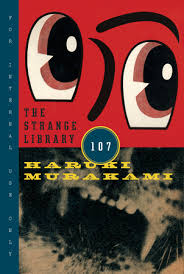
[READ: May 11, 2015] The Strange Library

I saw this book when we were in a bookstore in Denver.  I mentioned it to Sarah and she clearly bought it then and gave it to me for my birthday.

It wasn’t exactly risky because it is by Murakami with art direction and design by Chip Kidd (how could you go wrong?) but the book was shrink wrapped in the store, so you couldn’t flip through it.

Imagine my surprise when the slipcase proved to be not a slipcase at all, but a double flip cover that does not get removed but opens up like a secret document.  And every (or every other) page is chock full of art from Kidd.  My guess is that all of the art is found (rather than created) by Kidd as it appears to be old Japanese pictures and designs.  And they reflect (more or less) the action of the story.

The story itself is one of Murakami’s more surreal ones. (more…)

Read Full Post »

dotaSOUNDTRACK: ASIA-Asia (1982).

asiaI’ll finish off this run through Yes with one final offshoot project–Asia.  Geoff Downes (who had only been on Drama) and Steve Howe joined forces for this pop outfit with a hint of prog.  Indeed, this is an album that is just chock full of poppiness–despite all of the trappings of prog rock–synths, connections to Yes, a cover by Roger Dean and Carl Palmer from Emerson Lake & Palmer on the drums.

This album was huge in 1982 & 1983.  They had so many hits from it (okay well, only 3 singles, but surely everyone knows this entire album, right?).

“Heat of the Moment” opens with nice big ringing guitars.  And while the drums aren’t fancy, they are quite distinctive.  The synth isn’t too dated sounding, and the middle part with the guitar slide still sounds cool.  And of course, the chorus is practically irresistible.  “Only Time Will Tell” has a totally recognizable keyboard riff.  While the riff itself hasn’t been copied, the sound has and yet at the time, Asia made it seem fresh.  This song is so simple as it starts with just keys and drums and John Wetton’s voice.  There’s great harmonies in the chorus and dramatic keyboard splashes.  And once again, Carl Palmer’s drums are big and loud yet understated.

“Sole Survivor” opens with some darker chords nut some interesting noodling going on, too. (I always thought t was interesting that Blue Oyster Cult released a song called “Sole Survivor” the year before).  Despite the darkness of the lyrics and the music the chorus is also very catchy (I also like how nearly every verse ends with a different keyboard sound or riff).  This song also has an interesting break where things get quiet and feel very wasteland like.

“One Step Closer” has a some interesting riffs and another catchy chorus.  This is probably my least favorite track on the disc even if it’s got a good chorus.  “Time Again” has a cool dramatic opening and then a nice speedy bassline to start off with.  I like the way the chorus leads to some quieter moments of unusual guitar and keyboard sounds.

Side two has some slightly longer, sightly less poppy songs. And yet to me all the songs on this side are really good as well.  “Wildest Dreams” is a song that is a bit over the top (as all prog should be).  I remember loving the dramatic “We fight” section.  It seems a but silly but it was still fun to sing along to.

“Without You” is a slower darker song but with another big chorus.  It also has the most prog rock sounding keyboard solos of the 1980s.  There’s some time changes and even a big bell!  “Cutting It Fine” opens with some mellow guitar and then a really interesting guitar sequence.   It moves along quickly and dramatically and then stops for a quiet piano solo section (with a build up of strings, martial drums and horns–the drama seems like it is leading to something big but it just kind of fades out, which is a bummer.

“Here Comes the Feeling” ends the disc in more dramatic fashion.   I love the way the bridge builds and builds (with the “now i can…” section that leads to the long held sung notes.).   The solo section has some very yes-like moments from Howe and over all ends the disc with some wonderful prog moments.

As with apparently every progressive rock band of the era, this one was full of lineup changes too (don’t even get me started on King Crimson).  The four stayed together for the next album, Alpha, but Steve Howe left after that and then various other incarnations have toured in one form or another to this day (in fact they’ve released about 20 albums over the years.  Who knew?).

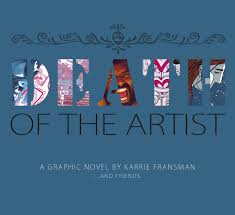
[READ: May 29, 2015] Death of the Artist

I grabbed this book from work because it looked interesting.  And it was.  I was more than a little confused as to how much is true.  And that was clearly the point.  Fransman totally pulled the wool over my eyes and I love her for that.

The premise of this book is that five artists are getting together for a weekend of debauchery.  They were friends in art school in Leeds when they were in their 20s.  Now, ten years later, they are reuniting in hopes of sparking creativity again.  Of the five only one is still doing anything “creative,” and they are all looking to reignite that spark.

And this book is the result of their week.

All five artists draw (or something) a story inspired by that weekend.  And in what turns out to be a pretty cool twist, Fransman has shaped the stories into a narrative. (more…)

Read Full Post »

atwq3SOUNDTRACK: YES-Tales from Topographic Oceans (1974).

Tales_from_Topographic_Oceans_(Yes_album)After the huge success of Fragile and Close to the Edge (with its 18 minute suite), what could Yes do next?  Well first they would release a triple live album, which I’ll get to later.  And then?  Why they would release a double album with only 4 songs on it!  That’s right 4 songs each around 20 minutes long!  And it would be ponderous and pretentious and it would be reviled by everyone!

The album shipped gold (because their previous records were so popular) and then sales plummeted.  The album is much maligned and, frankly, deservedly so.  Now, I love me a good prog rock epic.  So, four 20 minutes songs is pretty heavenly for me.  But man, these songs just don’t really have any oomph.

My CD’s recording quality is a little poor, but I don’t know if the original is too.  The whole album feels warm and soft and a little muffled.  You can barely hear Anderson’s vocals (which I believe is a good thing as the lyrics are a bunch of mystical jiggery pokery).  But despite the hatred for the album, it’s not really bad.  It’s just kind of dull.

Overall, there is a Yes vibe…and Yes were good songwriters–it’s not like they suddenly weren’t anymore.  There are plenty of really interesting sections in the various songs.  It just sounds like they have soft gauze between them.  Or more accurately, it sounds like you get to hear some interesting song sections and then the song is overtaken by another song that is mostly just mellow ambient music.

Without suggesting in any way that this album influenced anyone, contemporary artists are no longer afraid to make songs that are super long (see jam bands) or songs that are just swells of keyboards (see ambient musicians).  Yes just happened to put them all in the same song–way before anyone else did.

The album is very warm and soft—rather unlike the last couple of Yes albums which were sharp and harsh.  There are washes of keyboards and guitars and Anderson’s echoing voice. But what you’ll notice is that I haven’t really mentioned Chris Squire.  He’s barely on the album at all, and when he is, it’s usually to provide very simple bass notes–bass notes that anyone could play–it’s such a waste!  And while Alan White is no Bill Bruford (who was off rocking with King Crimson then), he’s also barely there.  In fact, Rick Wakeman himself is barely there–the king of elaborate classical riffs is mostly playing single notes at a time.  According to Wikipedia,

Wakeman took a dislike to the album’s concept and structure from the beginning. He made only minimal musical contributions to the recording, and often spent time drinking at the studio bar and playing darts. [During the recording session] he played the piano and synthesiser on the Black Sabbath track “Sabbra Cadabra”.

Evidently Anderson wanted a pastoral feeling in the studio

According to Squire, Brian Lane, the band’s manager, proceeded to decorate the studio like a farmyard to make Anderson “happy”.  Wakeman described the studio, “There were white picket fences … All the keyboards and amplifiers were placed on stacks of hay.” At the time of recording, heavy metal group Black Sabbath were producing Sabbath Bloody Sabbath in the studio next door.  Ozzy Osbourne recalled that placed in the Yes studio was a model cow with electronic udders and a small barn to give the room an “earthy” feel. Anderson recalled that he expressed a wish to record the album in a forest at night, “When I suggested that, they all said, ‘Jon, get a life!'”

So we have an earthy pastoral album.  But what about the four sides?  Steve Howe describes it:

“Side one was the commercial or easy-listening side of Topographic Oceans, side two was a much lighter, folky side of Yes, side three was electronic mayhem turning into acoustic simplicity, and side four was us trying to drive the whole thing home on a biggie.”

Despite Wakeman’s complaints, he did have some nice thing to say about it.  he said that there are

“very nice musical moments in Topographic Oceans, but because of the […] format of how records used to be we had too much for a single album but not enough for a double […] so we padded it out and the padding is awful […] but there are some beautiful solos like “Nous sommes du soleil” […] one of the most beautiful melodies […] and deserved to be developed even more perhaps.”

And if Rick Wakeman says an album is padded, you can just imagine what the rest of the world thought!

The lyrics (and mood) are based on Jon Anderson’s vision of four classes of Hindu scripture, collectively named the shastras, based on a footnote in Autobiography of a Yogi by Paramahansa Yogananda.  So if I read this correctly–he wrote 80 minutes of music based ona  footnote!

The four songs are

“The Revealing Science of God (Dance of the Dawn)” [which Howe says is the commercial or easy-listening side] builds slowly and eventually adds vocals.  And then come the drums and a decent keyboard riff.  There’s some noodling on the keyboards.  The riff is catchy but not immediate (which might be the subtitle for the album).  At nearly 4 minutes a faster section kicks in and there’s a catchy vocal part, which seems like where Anderson might normally soar but he holds back.  The “must have waited all our lives for this moment moment moment” is catchy, but again I can’t help but feel it would have been much more dramatic sounding on an earlier record.  At 7 minutes there’s a nice jump to something more dramatic—good drums, but the bass is mixed very low (poor Squire).  There’s some good soloing and such but it is short lived and things mellow out again.  It resolves into a new riff at 9 minutes, but resumes that feeling of washes and noodling guitars.  At 11 minutes there’s an elaborate piano section and the song picks up some tempo and drama. Especially when the bass kicks in around 12 minutes.  The most exciting part happens around 17 minutes when the whole band comes to life and adds a full sound, including a good solo from Wakeman.  And while this doesn’t last, it recycles some previous sections which are nice to hear.

Track 2 “The Remembering (High the Memory)” [which Howe described as the much lighter, folky side of Yes] has a slow, pretty guitar opening with more harmony vocals.  The whole first opening section is like this—layers of voices and keys. Then come some keyboard swells and more vocals.  Some bass is added around 6 minutes. And then around 8 minutes the tone shifts and there is a lengthy slow keyboard solo that reminds me of the solo in Rush’ “Jacob’s Ladder” (released 6 years later).  At around 9 minutes there’s a more breezy upbeat section with a cool riff.  At 10:40 a new section comes in with some great bass lines and guitars and an interesting vocal part. It could easily have been the structure for a great Yes song (vocals are singing “relayer” which of course is their next album’s title). But this is all too brief (it thankfully returns again) and then it’s back to the gentle keyboards.  At 12 minutes there’s a new medieval type section with some great guitar work.  When the “relayer” part returns around 13 minutes there’s a whole section that is great fun.  And even though it doesn’t keep up, the song feels rejuvenated. By around 17 minutes there some interesting soloing going on and then the band resumes to bring it to the end (with a reprise of an early section). And the final section is quite lovely.

Track 3 “The Ancient (Giants Under the Sun)” [Howe: electronic mayhem turning into acoustic simplicity] is probably the most interesting.  It opens with some clashing cymbals and then a fairly complex percussion section and mildly dissonant guitar riff.  There’s even some staccato bass line. The vocals come in around 4:30 and the song shifts to a less aggressive sound, but the big bass continues throughout the beginning of the song until a fast riff emerges around 6 minutes. But more unusual Yes-type riffage resume briefly before segueing into the next part with lots of percussion.  While the staccato bass and drums continues, Howe solos away.  Then around 12 :30 the whole things shifts to a pretty, slow acoustic section with a classical guitar and vocals.  This entire end section sounds like it could easily have been its own song and it is quite lovely.  Howe’s acoustic work is great and there’s even a lengthy solo.

Track 4 “Ritual (Nous Sommes du Soleil)” [Howe: us trying to drive the whole thing home on a biggie] is also quite good.  It’s probably the most fully Yes track of the four, with many sections of “full band” material.  There’s a noodly guitar intro switching to an interesting dramatic minor key movement.  There’s a pretty, if simple, riff (done by guitar and voice) that is quite lovely.  Around 4:30 the guitar solo brings in a riff from a previous Yes song. By 7 minutes, the song settles into a fairly conventional sounding Yes song (with actual bass and drums and…sitar!).   Around 11 there’s a bit of Wakeman soloing (he did show up for some of the album after all) and then some wild guitar and bass work.   The crazy percussion resumes and there’s a wild keyboard solo on top of it. The end of the guitar solo even has a bit of “Born Free” in it.

I hadn’t listened to this record in probably 25 years.  And so I listened to it 4 times in the last few days.  And I have to say that I thought it was bloated and awful at first, but it slowly grew on me.  I found some really interesting sections and some very cool riffs.  If these pieces could have been truncated into individual songs they would be quite good.  The biggest problem for me is that so much of it is so slow and mellow–like it’s building up to a big climax which never arrives.  On previous albums, Yes had made quite a show of being insane musicians, and that just isn’t here.

So even though I have come around on these songs, they certainly aren’t my favorites.  But if you’re at all interested in Yes, there’s some gems hidden away in these monstrosities (just don’t think too much about what Anderson is talking about).

Since almost every Yes album had different personnel, I’m going to keep a running tally here.  The band stayed together after Close to the Edge, but this was too much for Wakeman who left after the recording:

Chris Squire-bass
John Anderson-vocals
Alan White (#2)-drums
Rick Wakeman (#2)-keyboards
Steve Howe (#2)-guitar

[READ: June 20, 2015] Shouldn’t You Be in School?

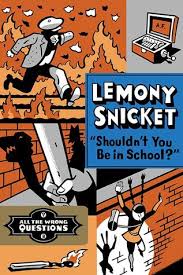
I am finding this series to be ever more and more confounding.  And I know that is its intent, but it is still a challenge.  Whenever anyone asks a question someone else replies that it is the wrong question.  But they never say what the right question should be (deliberately confusing!).  There are also so many threads and confusing characters, that if Snicket didn’t make the story funny and strangely compelling, it would be incredibly frustrating.

In this story, Hangfire, having been thwarted in his previous endeavor to capture children (for what end we do not know) is back with a new plan to capture children.  Also, the mysterious (and presumably wicked, but who can be sure) Ellington Feint has returned as well to help or hinder as she sees fit.

The other characters are back too, of course: Moxie is back taking notes, Jake Hix is cooking delicious foods at Hungry’s (in fact there are even some recipes that sound pretty yummy–Snicket himself makes a passable tandoori chicken).  S. Theodora is still his mentor (and the pictures by Seth of her are hilarious).  Late in the book Pip and Squeak show up.  And naturally the policemen and their bratty son Stewie are there too.  And we are still wondering what in the heck is going on with the bombinating beast.

There’s also some new characters, like Kellar Haines, a young boy who when we first meet him is typing up something in the offices of the Department of Education (with posters all over the walls that say Learn! Learning is Fun, etc).  And his mother is also becoming quite chummy with S. Theodora.

The danger in this book is fire.  Building after building is being burnt down.  The Stain’d Secondary School is engulfed.  Even the library is at risk!  And that’s when S. Theodora solves the crime!  She gets the library Dashiell Qwerty arrested for setting the fires.  And even though it is quickly determined that he did not do it (a building was burnt down while he was in custody), that doesn’t stop S. Theodora and her new friend Sharon Haines (in matching yellow nails) from partying.  It also doesn’t stop Qwerty from being taken to prison.

This story is a bit darker than the other ones (which were admittedly pretty dark).  Every kid is being drugged with laudanum which makes you sleepy.  We’re unclear exactly what they are being drugged for, but Snicket has a plan to stop it.  Snicket himself winds up getting beaten up–pretty badly–from Stew and others.

And for the first time, S. Theodora is kind to Snicket (more or less) and apologizes for her behavior (sort of).

By the end of the book a plan is hatched, a bunch of people join the V.F.D. (as seen in A Series of Unfortunate Events) and someone is taken to jail. There’s even a mysterious beast who is living in the fire pond.

As in previous books there is ample definition building–either from people saying they don’t know what a word means so that it can be defined or from Snicket himself simply defining a word.  As in “my brother and I played an inane game” “inane is a word which here means that my brother and I would pretend we couldn’t hear each other very well while we were talking.”  This game actually sounds fun:

What do you think of the weather this morning?
Feather? I’m not wearing a feather this morning.  This is just a hat.
Just a cat? Why would you wear a cat on your head?
A Bat in your bed etc etc.

The artwork by Seth is once again fantastic and noirish.

And the end of the book has a fragmentary plot “a great number of people working together, but they plotted together in such a way that nobody knew exactly what the other people were doing”  And finally we learn what the right question is, but it’s the unsatisfying: “Can we save this town?”  We’ll have to find out in the concluding book 4.

You can also check out the website for some fun.

Read Full Post »
2015_03_16-400SOUNDTRACK: RHEOSTATICS-Snooks Pirate Radio: Raise A Little Band (2003).

snooksThis is one of the more unusual items on the Rheostatics Live site.  It is an evening of pirate radio by a guy named Snooks.

This is the explanation directly from Snooks as to what this is:

Hello,
In 2003 I had this hair-brained idea to run a radio station out of my bedroom. Two years previous, I attended Acadia University where I became the program manager of a thing called Radio Acadia nestled in the beautiful Nova Scotia Annapolis Valley, and was well aware of how to operate an online station. So, I set things up and ended up producing a show in my kitchen all about my favorite band, the Rheostatics. I had done numerous shows on them before, and I think I did a pretty good job with this one. I advertised the show on the Rheostatics yahoo list, but ended up with just one listener in Ontario I think.

Sadly, due to my rather busy work schedule, plans to take over the world with a pirate radio station that would change every music listener, and crush every commercial radio station into oblivion, had to be scrapped. Enjoy.

So this is 2 hours of Rheostatics music with some introductions by Snooks.  Snooks provides general information about the band, some chronology and band member lists.  But I think the best part is when he talks about meeting some of the guys and some personal anecdotes (especially about Tim Vesely).

I like the way he groups the songs thematically: History (songs from their early days and about the record industry), Acoustic Times (their more mellow numbers), Tim and I (songs by Tim), Bruce Willis and the Rheostatics (a great title if ever there was), Art (their more outlandish songs) and Reflective (their more reflective songs).  I am surprised that “Horses” didn’t make it, though.

There’s nothing new here–it’s all songs from the albums (including Double Live)–but it’s fun to hear them played in this order.

[READ: March 25, 2015] “All You Have to Do”

It’s 1972 and Sid Baumwell, aged sixteen,  is looking for more from his small town.  He was handsome and had a lot of potential (his teachers said so).  He genuinely believed he could be president.

One day at the grocery store he saw a card table offering a contest.  The man at the table asked him if he felt like a winner and Sid said yes.  The contest was for a lifetime supply of aluminum foil.  And the man at the table, Bill Baxter, said that Sid looked like winner. Bill smiled at him.  He gave him some sound if clichéd advice about school and made a slightly suggestive sexual joke.   And then Sid left.

On the way home, Bill pulled up next to him in his car and offered him a ride home.  Sid said sure.  They started talking about cars.  Bill laughed about his own car and after a few comments, Bill said that if Sid played his cards right the car could be his.  Sid is confused and Bill doesn’t really clarify.

As Bill drops him off, he suggests that Sid will want to get out of this town.  When Sid says it’s a nice town, Bill snidely remarks that nice is the kiss of death.  Sid if offended, but it makes him think about his town. (more…)

Read Full Post »

houseSOUNDTRACK: LAURA VEIRS-Tiny Desk Concert #49 (March 1, 2010).

lauraI have decided to contradict myself.  I simply cannot keep up with the regular release of Tiny Desk Concerts (sometimes 3 a week), so I’m going to focus on these older recordings for a while and occasionally devote a week or two to new ones.  we’ll see how that works out.

I only know Laura Veirs’ name, but not really anything she’s done.  So I wasn’t really sure what her “solo” work would sound like.  Well, she has a delightful voice and she writes really pretty songs.

She also offers one of the most dramatic screw ups I’ve seen in a live performance. She opens her song “Carol Kaye” with this lovely melody–just her and her guitar.  And then after about a minute, her band comes in with a beautiful harmony–in the wrong key!  The introduction of their voices is so dramatic (to go from her gentle voice to this huge chorus) was really amazing.  So much so that I didn’t quite realize they were in the wrong key at first.  Turns out that Laura put her capo on the wrong fret and it wasn’t until the keyboardist played the right note that they all sounded off.  And his mouth drops opens as he stares at Laura.  She laughs and says “you looked like this terrified Muppet.”

They play the song again, this time perfectly–and the harmonies are truly lovely.  As is the violin that swirls throughout the song.

“When You Give Your Heart” is another lovely song in which Viers’ voice and the violin play the same lilting melody.

“Sun is King” has some more lovely (that’s the word to describe her, clearly) harmonies–she has picked a tremendous backing band.  And they sound great in this small setting.

It’s hard to believe that the whole set (miscue and all) is only ten minutes long.

[READ: May 1, 2015] House of Leaves

I read this book when it came out in 2000.  I had the “2 Color” edition which the t.p,. verso explains has as features: “either house appears in blue or struck passages and the word minotaur appear in red (I had the blue version).  No Braille.  Color or black & white plates.”

The Full Color edition (which is the same price, amazingly) differs in this way:

  • The word house in blue, minotaur and all struck passages in red
  • The only struck line in Chapter XXI appears in purple
  • XXXXXX and color plates

So basically the full color edition isn’t really that big a deal although the three or four full color plates are much nicer.

Why do I have both?  Well, I bought the two color when it came out and then I won a free book at the library and there was this full color edition, so I brought it home.  I was amused to find that the previous owner had deciphered a clue in the back of the book (the first letters of sentences spell out a secret message).  She (it looks like woman’s handwriting) wrote out the secret message, which I appreciated as I didn’t feel like figuring it out.

ANYWAY.

This book had a huge impact on me when I read it.  Although I forgot a lot of the details, the overwhelming effect of the book has stayed with me an I never forgot the central conceit of a house that opened secret passages and expanded or contracted at will.  For, make no mistake about all of the accolades, this is a horror story.  One accolade, from Bret Easton Ellis: “One can imagine Thomas Pynchon, J.G. Ballard. Stephen King and David Foster Wallace bowing at Danielewski’s feet, choking with astonishment, surprise, laughter awe.” [Ellis will not be bowing apparently, and actually I can’t imagine Pynchon bowing before anyone].  It’s a very cool horror story with all kind of textual experimentation and twists and turns, but it’s still a pretty damned scary story.

The experiments are many and varied and they begin right from the start, as the title page lists Mark Z. Danielewski’s House of Leaves by Zampanò with an introduction and notes by Johnny Truant. The forward from the editors notes: “The first edition of House of Leaves was privately distributed and did not contain Chapter 21, Appendix II, Appendix III or the index.

This is all nonsense of course. (more…)

Read Full Post »

elephantSOUNDTRACK: DAN DEACON-Tiny Desk Concert #422 (February 25, 2015).

dandeacDan Deacon is a trip and a half.  I only know him from NPR (and they love him).  He is a weird dude, that’s for sure.  He plays some super weird electronic music.  But more importantly, he really really gets the crowd into his show.  Indeed, this is one of the few Tiny Desk Concerts where the audience features more than the performer.

His opening mantra is that you will close your eyes and enter the consciousness of Martin Lawrence’s character in Bad Boys II.  This is apropos of nothing of course.

“Feel the Lightning” is amazing.  He has his synth set up to control an acoustic piano (you can see the keys playing).  Deacon plays some really catchy music (an amazing amount of noise and layers) but with a beautiful piano melody over the top.  And he sings.  But his voice is utterly and utterly processed.  There are high harmonies added to it and frankly I have no idea what he’s singing most of the time.  It’s catchy and alienating at the same time.  It’s amazing to watch the piano playing by itself–wailing–at the end.

Deacon himself is a pretty weird dude as well, as I said. He starts talking about filing down solenoids and other technical details about what he did and then he shifts gears and tells them to form a circle for a dance contest.  He prattles on and on (and is quite funny).  The contest rules: be sassy, after 5 seconds, pick the next person to go in, imagine you’re a T-Rex in Jurassic Park.

“Sheathed Wings” opens with the wrong song and then when the song proper starts the dance contest begins.  And how fun to watch the NPR staff dancing along (and to see how big their office is).

The final song “Learning to Relax” is nearly 7 minutes and it also features a group interpretive dance (with captains).  As with the previous dance off, everyone is brought out one at a time (including Bob and Robin!) for a dance off.  Always maintain eye contact with your team otherwise you won’t know if your dance moves sucks.

And while all this is going on, he’s singing along, pressing all kinds of weird (homemade) gadgets.  I love watching him “conduct” the piano during the slow part.

As the show ends, you hear Bob say it’s heart-healthy NPR (and Dan asks if there’s a shower in the building).

I don’t even have all that much to say about the music–which is hyper and dancey, but man, I’d like to see him live sometime.  It’s a show one won’t soon forget.

This is a must see.

[READ: January 6, 2015] An Elephant in the Garden

I didn’t realize until after I read this that this play was an adaptation from a novel (I’m curious to read the novel now).  Or that the novel was actually a children’s novel ( I just saw on amazon).

This is a simple story of a girl, her mother and an elephant.

As the play opens, it is 1989 and Lizzie is visiting the recently torn down Berlin Wall.  Then it flashes back to her life in Dresden.  She as born in 1929.

Set in 1945 in Dresden, Germany (yes, you know what is going to happen), Lizzie and her family are a Christian family who do not approve of Hitler or his plans.  They have relatives who support Hitler (and who blame the Jews for their losing World War I) and who call Lizzie’s father a Jew-loving pacifist (!). (more…)

Read Full Post »

zooboxSOUNDTRACK: THE NOT-ITS-“Nose in a Book” (2014).

notitsIs it okay for parents to enjoy children’s music?   Like, even if your kids don’t really care about it?  I heard this song on the radio the other day and I thought it was so much fun.  My kids weren’t even in the room but I sang along anyway.

The song starts out with an interesting bass riff and feedback!  The guitar is nicely fuzzy–this is not a typical kids song.

Then the lyrics start–“Dad told me to turn out the light, but I just wanna read a couple more pages.”  The music in the verses is cool and even a little dark.  The chorus, on the other hand, is very poppy and fun to sing along with.

The bridge is a chant of Chapters 1-8, and the end of the song really rocks out.  It’s a totally great song, and clearly, I can relate.

Check it out at their bandcamp site.

[READ: March 26, 2015] The Zoo Box

As part of my decision to read all of the First Second publications (which I have been doing I just haven’t had a chance to post many of them recently), I knew that I wanted to read this book.  But I was delighted to see that Sarah brought it home to read to the kids.  And it seems like a good book to talk about for Easter.

The Zoo Box opens with two parents going out for the night.  They leave their older daughter in charge of their younger son.  There’s no fighting–the daughter is happy to be in charge, but the son isn’t upset by it.  And if they promise to be asleep when the parents get back, they will go to the zoo the next day.

As soon as the parents leave, the daughter suggests they play dress up in the attic.  I love that this is the idea she has and that he is excited by it.  And I love even more that dress up consists of full sized tiger and ape costumes.  It’s fantastic.  The kids growl and play (the attic is locked, but it seems very nice with a bed and plenty of space) and then they discover a box that says Do No Open. (more…)

Read Full Post »

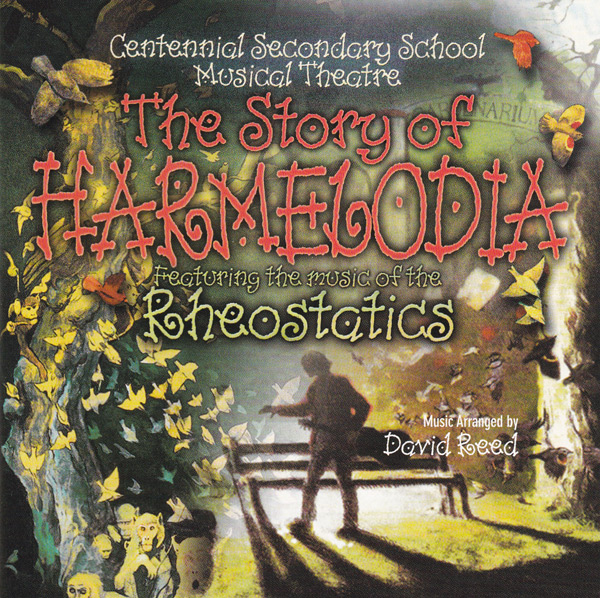
sardineSOUNDTRACK: CENTENNIAL SECONDARY SCHOOL MUSICAL THEATRE-The Story of Harmelodia (2000).

Cover-CSSMT-HarmelodiaAs mentioned in yesterday’s post.  The Centennial Secondary School and Choir released their version of The Story of Harmelodia. This CD (which to the best of my knowledge is no longer available for purchase anywhere) is newly available from the Rheostaticslive website.  While the (very cool) cover is there, there’s no information about the musicians.

The disc is about 35 minutes long and it recreates most of the music from the original CD.  For reasons which I’m sure have to do with rights, they do not include “Monkeybird” (everyone’s favorite song) and the songs about the Wingophone.  Those songs were all written by Kevin Hearn. I’d be very surprised if Hearn didn’t give them the rights to the songs, so there must be something else at play.

They also do not include the narration.  This of course makes the story a lot less clear–although at this point I feel like the songs are just fun and sweet, even if they story is lost.

The school’s version is quite good.  The band sounds great (with a whole host of instruments).  While the opening music on the first track sounds a bit high school bandish (perhaps because it so spare) as soon as the choir kicks in it really ratchets up the quality of the music.  And it stays high throughout.

The choir is outstanding, and the variety of instruments (I can hear all the brass, an autoharp, synths (there’s some fun spacey keyboard sounds on “I am Drummstein”) and some electric guitars) makes for a really compelling collection of songs.

One of the biggest difference is that many of the songs have horns playing the main melodies. “Invisible Stairs” has a flute as the lead instrument.  It’s very pretty and I like that it plays the “twinkle twinkle” melody as a counterpoint to the proper melody. It’s a very pretty version.  I also love the way “The Music Room” came out.  And the mostly instrumental “The Sky Dreamed” sounds really lovely.

I don’t know how many lead singers there are (or what their names are, although judging by the concert, I assume it is the same kids).  The female lead as featured on “Home Again” is great.  I like the male lead a little less.  He sounds a but too stiff to me.  Although I do like that on many songs he gives his own reading of the material.

The final song, “Song of the Garden,” sounds terrific.  I love the way the two singers harmonize and the way they place a cool horns section (which reminds me of The Beatles) as the song trails out.

I am of course curious why the couldn’t release those missing songs.  But I’m more impressed that the school (presumably with different people) performed a stage version of the show in 2004 which was played live in several places.

[READ: December 5, 2014] Sardine in Outer Space 2

Sardine is a children’s book published by First Second.  It was originally published in France (and in French) and was translated by Sasha Watson.  There are six Sardine books out.

This time the inner flap says “No Grownups Allowed (Unless they’re pirates or space adventurers),” and I found that I enjoyed book 2 quite a bit more than book 1. Perhaps the jokes just appealed to me a bit more–there were a number that I thought were very funny.

I enjoyed the double cross (well they pretty much all have a double cross) in The Brainwashing Machine.  But I really got a kick out of The Cha-Cha Fly.  When the fly bites you, you get stupid dance songs stuck in your head.  Nice premise–even funnier that the flies are named Britney, Christina, Justin and Clay. (more…)

Read Full Post »

first yearSOUNDTRACK: T-PAIN-Tiny Desk Concert #400 (October 29, 2014).

tpainA while back I was writing about all the Tiny Desk Concerts.  Then they started airing new ones several times a week and I realized the goal was futile.  Of course, since I like to complete projects, I may go back to it again, but not for a while.  Nevertheless, while I was looking up the Tiny Desk Contest winners I came across a list of superlatives from 2014 Tiny Desk Concerts.  And the one that struck me was that the T-Pain Tiny Desk Concert had been viewed over 6 million times (3 times more than the previous high water mark).  It was over 7 million when I watched it). So I decided to check it out.

I don’t know anything about T-Pain other than that he is associated with auto tune and even has an auto tune microphone for sale (which I would totally buy if I saw it for cheaper than retail). I don’t think I’ve ever even heard a T-Pain song.  So I assumed he couldn’t sing.  Which is a pretty common reaction: “People felt like I was using it to sound good,” says T-Pain.  “But I was just using it to sound different.”

And indeed. T-Pain has a beautiful voice.  The Tiny Desk Concert is just him and a keyboardist (named Toro). They play 3 songs
“Buy U A Drank (Shawty Snappin’),” “Up Down (Do This All Day),” “Drankin’ Patna.”

I don’t know what the originals sound like (given the spelling, I assume they are not as sweet and tender as these versions were). But these are very simple, stripped down songs.  The music is just keyboard notes, no rhythm tracks or any effects.  And then T-Pain singing.

He is charming because the setting is so weird to him (as I imagine it is) and he even “censors” a line in a very funny way. I’m not going to be buying a T-Pain CD or anything, but I was delighted by this Tiny Desk.

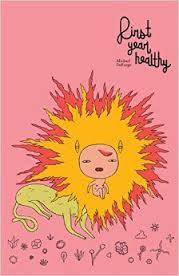
[READ: March 2, 2015] First Year Healthy

I saw the cover of this book at work and decided I had to see what it was all about.

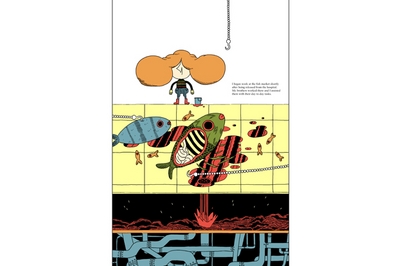
The artwork in this book is so bizarre–delightful and creepy at the same time.  For instance, the cover image up there is a baby and a cat (I love that the cat’s eyes are “sideways”).  Even more interesting is the way the main character looks.

That image below is the main character.  That is all her hair.  So weird and yet so interesting at the same time.

firstThe story is a bit less sweet than the drawings.  But it is no less unusual than the drawings.

(more…)

Read Full Post »

Connell Dr.Black jacketSOUNDTRACK: KODAGAIN-“King of Curls” (2014).

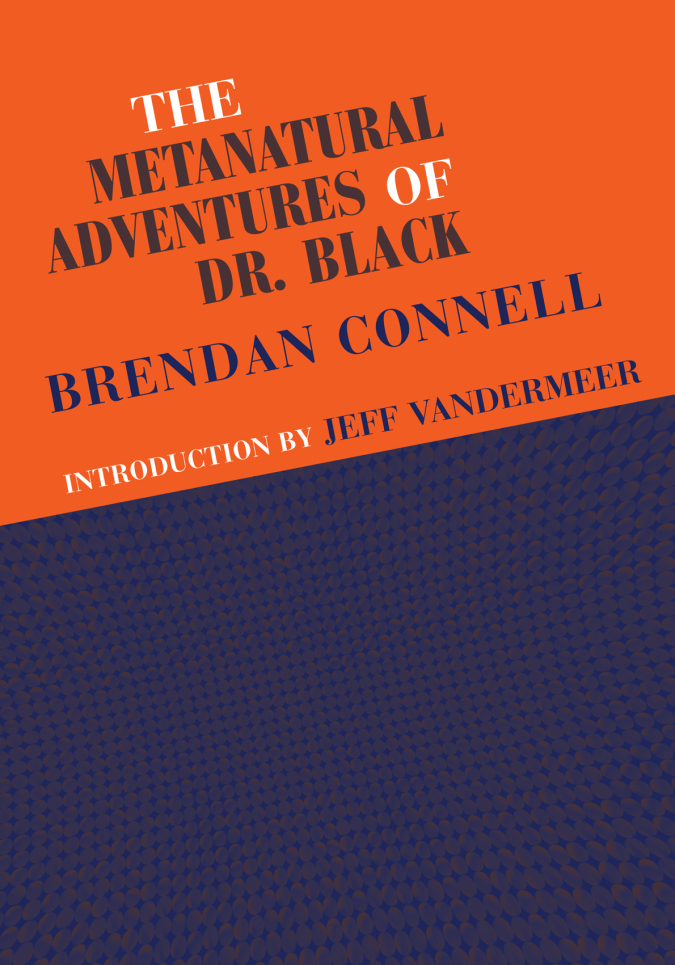
supernaturalWhen I looked for a picture of this book cover, I was connected to Connell’s blog which has links to many songs by Kodagain. After some more work, I learned that Kodagain features music by Saša Zorić Čombe and lyrics by Brendan Connell!

It was hard to find any real details about Kodagain (they have a media presence, but it is rather abbreviated), until I saw their soundcloud page which gives these nuggets of information

  • Kodagain formed in 1985 in Knjazevac, SE Serbia, where it’s hard to be alternative but easy to be alone.
  • Kodagain writes and records songs with English lyrics because English is more musical than Serbian.
  • Kodagain has a miniaturist approach to pop music, channelling influences from Henry Purcell, through Dean Martin, to Roxy Music, into short compositions combining a bubblegum-pop concern for melody with lo-fi experimentalism, resulting in songs as soulful as they are playful.
  • Many of the lyrics have been provided by the existing poetry of famous poets such as Dorothy Parker, Oscar Wilde, Chu-I Po (Bai Juyi), Lord Byron, Ogden Nash, Sara Teasdale, Louisa Stuart Costello and Robert Creely.
  • Since 2007, Kodagain has also been using … original lyrics from the writer Quentin S. Crisp; since 2012, Kodagain has similarly collaborated with the writer Brendan Connell.  Brendan Connell says: “My ultimate goal is to write a vast number of lyrics about natural wonders, public parks, lost watches, Indian villages, hidden love, birds, trees, mountain passes, fake Taoists, imperceptible colors, rhetorical mysteries, and flowers. Ideally these would be compounded into a ‘Guide for Modern Life’ which could be used to build better relations between workers and their bosses, the various sexes, and those whose religious beliefs differ.”
  • Their songs and videos can be found in generous supply on YouTube and SoundCloud. Albums include: Speed Up, The Nowhere Land’s Echoes, A Drink With Something In It, 000, Vranje, Letters From Quentin, Time to Get Ready for Love, My Fear of His Fear of Death, and Supernatural.

Since encountering Kodagain, I have become totally transfixed by them.  The melodies are simple and lovely and Zorić Čombe’s voice is gentle but wise.  Lyrically the songs are certainly all over the place, and most of the songs are under 2 minutes long.  The instrumentation is simple–usually a gentle guitar, steady drums and multi-tracked voices.

It was really hard to pick a song to talk about because there are so many.  But I decided to pick “King of Curls,” in part because the video is fantastic, and so are the lyrics

If I ruled the world
I’d call myself
The King of Curls

If I were king
I’d change damn near
Everything

If I ruled the world
My army wouldn’t fight wars
But rather eat chocolate bars
And move to the beat
In shorts
While my advisors wise
Would do jazzercise

(and that’s just the first part!)

Zorić Čombe’s voice sounds a bit to me like a smoother Jens Lekman (although that could just be the enunciation style).  I find his songs utterly enchanting.

And if you look on YouTube, you’ll find dozens of videos–most of which are masterpieces of found footage.

[READ: February 20, 2015] The Metanatural Adventures of Dr Black

About 7 years ago, I read a novella called Dr Black and the Guerrillia and I liked it quite a lot.  I liked that Connell created this character, with no apparent context (at least none given in the story) and that it was so amazingly detailed and “real” and yet so seemingly unreal–an unsatisfying word which Connell has corrected for me with the title of this collection–Metanatural.

This book is something of a collection of short stories about Dr. Black, but it is far more than that.  It collects some of the adventures that Dr. Black has been on as well as some of the patents and other ephemera and fashions a kind of narrative (although a very sketchy narrative) about the life he leads.

Before I even get to the “plot” of the book, I need to say just how much I enjoyed reading this book. I was absolutely captivated by Connell’s voice.  Over the years I have known that Connell was an accomplished writer with an unparalleled attention to detail and to choosing the precise word.  But somehow in the Dr. Black stories Connell’s details and specifics push the narrative to real heights.  Perhaps it is because Dr Black seems so real that when anything “metanatural” happens to him, it is entirely believable–drawing you into his exploits even further.  I really wanted to read more and more.

Having said all that, while this book is certainly his most accessible, it is still not light reading.  Connell challenges the reader with his extensive vocabulary, his lack of compunction about throwing in some obscure sections of text (that I won’t pretend I understood, but which didn’t bother me at all) and his willingness to defy reality, which may lose some readers.  But the rewards of the stories are worth it. (more…)

Read Full Post »

« Newer Posts - Older Posts »