Feeds:
Posts
Comments

Archive for the ‘Funny (ha ha)’ Category

laurenSOUNDTRACK: PIXIES-“Bagboy” (2013).

pixies-bagboyThe first Pixies song in nine years…doesn’t feature Kim Deal on it.  Which is kind of a shame.  She was with them for a lot of the recent tours, but she went back to the Breeders recently.  I assume that everyone else from the lineup is still in the band.

But the real question is what does the song sound like?  Well, to me it doesn’t sound like the Pixies.  It sounds very much like a 90s song, but by… some other bands of the time.  Even Frank Black’s (or is it Black Francis’) voice sounds different—less brittle (despite the brittleness of what he is saying).

The song begins with keyboards and a kind of dance (electronic) drum sound.  I actually thought I clicked the wrong link when it started.  There’s chanted backing vocals while Black is singing/talking.  It all sounds very familiar but not like the Pixies.  Even the guitars sound different–less bright with a bit more flash in the solos.

The part that does sound like the Pixies is the chorus which has soaring guitars and a female singer (unknown to me at this point but she sounds a lot like Deal) singing “bagboy” while Black shouts the same.  The chorus is a comforting reminder of the Pixies’ sound.

I understand that in nine years (and countless Frank Black albums) the Pixies are going to sound different.  And while the tone is definitely Pixies, something is missing from the track, which I hope the rest of the album (should there be one) replaces.

[READ: June 28, 2013] Someday, Someday Maybe

I’ve been a fan of Lauren Graham the actress since I had a major (age appropriate) crush on her during The Gilmore Girls.  I haven’t seen everything she’s been in, but I also enjoy Parenthood quite a bit and initially tuned in because of her.  And now she’s written a book.

This book is pretty far from my usual thing (and in an interview on Huffington Post she says she doesn’t think many men will read the book).  I gather they won’t but I’m glad I did.

Set in 19995, Graham creates a wonderfully flawed character in Franny, a struggling actress who has moved to New York City and has given herself three years to become successful.  At the end of the three years, if she hasn’t made it, she’ll move back to Chicago to be with her long-term boyfriend, Clark.

She lives in Brooklyn with her best friend who is also in the business but as a production assistant (it’s nice to have them not be fighting for the same jobs).  They recently added a new roommate Dan, a writer who seems oblivious to the women (he is so focused on his screenplay that he doesn’t even seem to notice them watching TV).  It seemed apparent from the get go that there was going to be a romantic interest there.  And there was.

But first we get to see Franny’s trials and tribulations starting two and a half months until her deadline.  She’s still taking acting classes, and while she hasn’t gotten offered anything yet, she seems to be well-regarded in class.  And, she has the big showcase coming up—the performance when agents come to watch them do their thing.

And then, hurrah! (more…)

Read Full Post »

neglectfulSOUNDTRACK: TWO INCH ASTRONAUT-“Spank Jail” (2013).

two-inch-astronaut-cover-de5df21ccbfbcb75c6d6c83315becf109f32f74e-s1Two Inch Astronaut resuscitate some great dissonant sounds of the 1990s.

This song packs abrasive chords and unusual riffs.   But there is also so much going on in these three and a half minutes, that if it weren’t for the recurrent riff it might be several different songs.

This song opens with a brittle guitar playing an odd riff.  Then the band jumps in all playing that same fast, odd riff.  By thirty seconds, a pounding riff takes over until the verses start–spoken/shouted words (like great punk of the 80s) over a pulsing bass.  But then comes the great big melodic chorus–giving you something to latch on to in all the chaos (which comes back right after the chorus with guitars that sound practically unhinged).

The second verse is not spoken, but yelled, changing the song once again.  As does the third verse which is primarily bass with guitar accents and a few quiet moments.  But the guitar solo is just as fast as might be expected from the band.  What’s unexpected is that the guitar solo leads to a closing riff, and no more vocals.

This is challenging, harsh music designed to keep you off-balance.  And it’s a welcome sound that I’ve missed over the last few years.

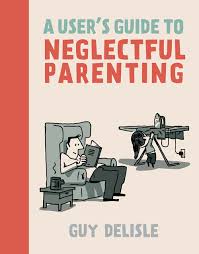
[READ: June 21, 2013] A User’s Guide to Neglectful Parenting

This book came into my pile of new books at work. Since I’ve often wondered if I am a neglectful parent I thought maybe I could learn a trick or two from this User’s Guide.

Well, I read the whole thing in about ten minutes.  There are about twelve twenty page cartoons included.  Each one is a little saga of bad (and hilarious) parenting.

The first is about the tooth fairy (which in this version is a mouse—Delisle is Canadian…where does the mouse come from?).  It, of course has to do with every parent’s tooth fairy woe—when they forget to have the tooth fairy show up.  The punch line is quite good on this one.

One of the premises of the strip is that the dad is a Manly Man—and he thinks his son is a wimp.  So, when he sees a punching bag he encourages his son to be a man and hit it.  No, not like that…really hit it.  I know, pretend you’re hitting your sister.

WHAM WHAM WHAM.

Or perhaps the “here son, try out this chainsaw” strip.  The son, sensibly doesn’t want to.  The dad says he’s ½ Canadian, he’ll have to do it.  Then he tries a practical joke.  Practical joke with chainsaw.  The son freaks out, but the punchline is even better.  Very twisted. (more…)

Read Full Post »

CV1_TNY_06_10_13Schossow.inddSOUNDTRACK: SHIGETO-“Ringleader” (2013).

shigeto-0caa8a419820269d8ca02d9c5e6508d195563bba-s1The cover of this album gives you an idea of what lies within–and yet the complexity in this one song alone makes me wonder just how much is hidden by those clouds.

The song opens with delicate bells and a persistent pinging metronome.  Then come a series of complex notes—seemingly rando…but not.  Add to this some watery sounds.  And then some buzzing percussion.  That’s the first minute of this six-minute instrumental.

The song begins with a  very delicate vibe, and yet once the tribal drums come to the fore the song takes on a very different feel.

By the middle of the song that original sound is more or less gone, replaced by a more classic “new age” sound.  But again, things change around 3:45 when the song quiets down a bit, allowing new percussion to enter and giving it a kind of world music feel.

I enjoy how at the end, when the drums stop it actually sounds like real drumsticks clattering together—as if the whole song were played by a drummer and not a machine.

[READ: June 17, 2013] “From the Diaries of Pussy-Cake”

This is labelled as a memoir, so I assume it is true (and I wonder if he is writing his memoirs, or if this is just an amusing story for this issue).  Gary talks about his life a teen when he was in love with a girl named Pamela (not her real name).  She was an urban hermit and an unreformed shoplifter.

She was totally in control of the relationship because he was utterly smitten. He sums up their relationship with a typo that he sent her.  He left out the “at” and wrote: “I am your disposal.” (HA).  And so their relationship was very much like that.

She had an ex-boyfriend whom she couldn’t (or wouldn’t) finish it up with–his parents loved her and she wanted to keep up pretenses, so she would be with him quite often.  Although the rest of the time she was with Gary, and that’s because she was always in charge with when she was with him.  I loved this description: (more…)

Read Full Post »

speakSOUNDTRACK: STONE GOSSARD-“I Need Something Different” (2013).

stonegossardmoonlanderStone Gossard is the rhythm guitarist for Pearl jam.  He’s also one of their major songwriters.  He has one or two songs that he sings with the band.  This is a solo effort which indicates that he might be a heavier influence on the band.

Stone Gossard last released a solo album 12 years ago.  There’s a new Pearl Jam album in progress and Stone’s other band Brad put out an album not too long ago, so why not release a solo album?

I don’t know how much Gossard does on this song, but I rather imagine he plays everything (the solo is fine but not amazing and the drums are solid but don’t really standout).  And while that sounds dismissive, it’s not meant to be.  Gossard creates a solid sound of simple rock.

The guitars are loud and bouncy.  Stone’s voice is rough and workmanlike—there’s a reason he’s not a lead singer.  But his voice works great for this aggressive slice of rock.

The riff is continuous and non stop, while he sings I need something different.  And then at the mid way part the keyboards start—perhaps this is the something different.  The keys break the propulsion with a poppiness that you wouldn’t expect in the song.

Then the song returns to its original style.  It’s not a terribly original song, but it would be a fun bar anthem.

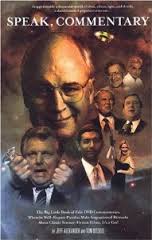
[READ: June 10, 2013] Speak, Commentary

When this book first came out I was pretty delighted.  What a funny concept—overblown writers and political pundits do DVD commentary about films they had nothing to do with.  It seemed like it would be very funny indeed.

And here’s the thing.  It is. For a few pages. But each one of these things feels as long as the actual movie they are commenting on.  Alexander and Bissell have done their research—they know what these figures will say.  And say.  And say.

As I said the premise is awesome, check out these wonderful combinations:

  • NOAM CHOMSKY & HOWARD ZINN on The Fellowship of the Ring
    ANN COULTER & DINESH D’SOUZA on Aliens
  • TERRY DWIBBLE & STEVEN McCRAY on Start Trek II: The Wrath of Khan
  • JERRY FALWELL & PAT ROBERTSON on Planet of the Apes (1968)
    WILLIAM BENNETT & DICK CHENEY on Star Wars Episode I: The Phantom Menace

[Terry Dwibble & Steven McCray are (presumably) fictional characters—die hard Trekkies who are thrilled to be able to add this commentary and, frankly, this is the best one of these pieces.]

I think part of the problem with the book is the sequencing.  The first piece is incredibly dry.  I recall reading this when I first got it.  I don’t know if I read all the way through Chomsky and Zinn.  And I know I didn’t make it through all of the second one (Coulter and D’Souza)—my d0g eared page failure still lingers to this day.

But I finished this time. (more…)

Read Full Post »

CV1_TNY_06_03_13Hall.inddSOUNDTRACK: DEAFHEAVEN-“Dream House” (2013).

deafheavenNPR’s Lars Gotrich always picks songs that I like–even if I would never have found them any other way.

His favorite album of the year so far is by this band Deafheaven whom I have never heard of.  The song is 9 minutes long and it combines big loud guitars, super fast crashing drums, and cookie monster vocals (mixed so low in the mix that they almost sound just like noise–a neat trick).  The waves and layers of sound give it a kind of My Bloody Valentine feel.

For the first half of the song, the drums are absolutely speed metal fast–pounding and pounding with wild cymbals.  But they too are mixed low in the mix–setting a beat but not dominating the song.  For really this song seems to be all about the guitar–which is not exactly playing along with them.  Sure, there are fast  moments, and the guitar is largely distorted and noisy.  But the tone of the guitar is very bright–especially when he starts playing some simple but pretty riffs (amid the noise).

And then about half way through, the noise drops away and the music become quiet and pretty.  Two guitars interweave slow melodies.  Until the music crashes back in, but with a different tempo and a feeling like Explosions in the Sky or Mogwai.

I know many will be turned off by the vocals (I think I might even like it more if it were purely instrumental), but the way they are mixed, shows that the music is the dominant sound, and I can get behind that.

[READ: June 12, 2013] “Company Man”

I always enjoying reading a David Sedaris Personal History (interestingly I haven’t read all of his books—I seem to stick to the articles instead).  This one is about having a  guest room.  He considers it a true sign of aging gracefully that his new house has a guest room (with its own bathroom).

Their previous house in Normandy had nothing of the sort and he gives typically humorous anecdotes about being embarrassed for the guests who don’t have any privacy in the bathroom (“we’ll be going out for about twenty minutes if you need anything.”)  But now they have this new space.

Which means of course that they have guests.  I enjoyed the part when Hugh’s friends come to visit–based on his father’s behaviors, David is allowed to leave in the middle of a conversation because he is not the one entertaining the guests).  But the bulk of the second half concerns David’s family.  (more…)

Read Full Post »

43SOUNDTRACK: IRON MAIDEN-Killers (1981).

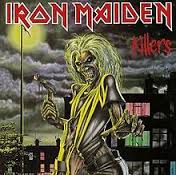
killersKillers picks up right where Iron Maiden left off–indeed many of these songs were written at the same time as the first album.  The difference is new guitarist Adrian Smith.

It opens with the great (but simple) instrumental “Ides of March” which segues into the blistering “Wrathchild.”  And it’s on this song that you can tell some of the rawness has been removed from the recording.  The guitars sound a wee bit more polished.

And you can tell the band are getting a bit more symphonic with the bass harmonics that intro the wonderful “Murders in the Rue Morgue” a song that feels long but actually isn’t.  It has several parts that all seem to signal the end until Clive Burrs drums come pounding in to restart the song.  Very cool.  “Another Life” is another fast punky song, and while I like it, it is probably one of the weaker songs on the album.  But that’s okay because it is followed by one of Maidens greatest instrumentals–“Genghis Khan” which has beautiful symphonic soaring solos over a cool propulsive beat.

“Innocent Exile” opens with another great noisy slappy bass riff that only Harris was doing at the time.  “Killers” is a classic track: fast and yet complex, with a very cool riff.   “Twilight Zone” sees Di’Anno reaching for higher more operatic notes.  He makes it, but you can just tell that the band needs more from their vocalist.  “Prodigal Son” opens with a pretty acoustic guitar intro.  I used to like this song quite a bit (whatever Lamia is), but I can see that it’s actually quite long and meandering (maybe this one is more like “War Pigs”).  It’s pretty but could probably be a bit shorter.  “Purgatory” sounds like track off the first album–fast raw and punky with screaming riffs.  “Drifter” ends the disc with a cool bass line and some more thrashing.  It’s a solid ending for an album that overall works pretty well, but which kind of shows that the band had to either do something big on the next album or get stuck in a rut.

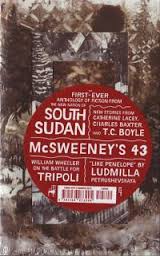
[READ: June 1, 2013] McSweeney’s #43

And with this issue I am almost all caught up with my McSweeney’s.  More impressively, I read this one only a few days after receiving it!

This issues comes with two small books.  And each book has a very cool fold-out/die cut cover (which is rather hard to close and which I was sure would get caught and therefore ripped on something but which hasn’t yet).  The first is a standard collection of letters and stories and the second is a collection of fiction from South Sudan.  Jointly they are a great collection of fiction and nonfiction, another solid effort from McSweeney’s.

Letters (more…)

Read Full Post »

42SOUNDTRACK: IRON MAIDEN-Iron Maiden (1980).

Steve Harris was on That Metal Show recently.  Harris is the baimssist and primary songwriter for Iron Maiden and has been since their first album in 1980.  When I was in high school Iron Maiden was my favorite band hands down.  I had all their albums, I had all their singles, all their hard to find British vinyl 12 inch singles, even a few pictures discs.  Wonder if they’re valuable?

Every album was an epic event for me–I even played “Rime of the Ancient Mariner “off of Powerslave to my English class (not telling anyone it was 13 minutes long).

And then, after Somewhere in Time, I just stopped listening to them. Almost full stop.  I did manage to get the first four albums on CD, but the break was pretty striking.  I actually didn’t know that they’d had personnel changes in the ensuing years.  I’d vaguely heard that Bruce Dickinson  left, and that others followed, but I don’t think I quite realized that they were back to their big lineup these days.

Anyhow, Harris was so earnest and cool that I had to go check out some of their new stuff. Which was okay.  I’d need more time to digest, but then I had to listen to the first albums again.

And wow I had forgotten how much the first Iron Maiden album melds punk and prog rock into a wild metal hybrid.  There’s so much rawness in the sound and Paul Di’Anno’s vocals, not to mention the speed of some of the tracks.  And yet there’s also some epic time changes and starts and stops and the elaborate multipart Phantom of the Opera….  Wow.

The opening chords of “Prowler” are brutal.  But what’s surprising is how the second song “Remember Tomorrow” is a lengthy song that has many ballad-like qualities, some very slow moody sections–although of course each chorus rages with a great heavy riff and a blistering solo.  On the first two albums Paul Di’Anno was the singer.  He had a fine voice (it was no Bruce Dickinson, but it was fine).  What’s funny is that Bruce does the screams in “Remember Tomorrow” so much better in the live version that I forgot Paul’s vocals were a little anemic here.

However, Paul sounds perfect for the rawness of “Running Free” a wonderfully propulsive song with classic Harris bass and very simple metal chugga chugga riffs.  And this has one of the first real dual guitar solos–with both players doing almost the same riff (and later Harris joining in on bass).

“Phantom of the Opera” is the band’s first attempt at an epic multi-secton kinda-prog song.  It opens with a memorable, if slightly idiosyncratic riff and some wonderfully fast guitars/bass.  There’s a great slow bit that morphs into an awesome instrumental soloing section with bass and twin guitars playing a wonderful melody.

“Transylvania” is an instrumental that is challenging but probably not one of the best metal instrumentals out there, although again when Dennis Stratton and Dave Murray play in synch solos it’s awesome.  This track segues into “Strange World” a surprisingly trippy song (with effects that seem like keyboards but which aren’t).  It’s slow in a “War Pigs” kind of way, but it doesn’t entirely break up the album, because there are other slow bits on the disc.  It is a little out of place though.

Especially when “Sanctuary” blasts forth.  True, it wasn’t originally on the album (in the UK), but man, blistering punk or what!  “Charlotte the Harlot” was always one of my favorite songs (it taught me what a harlot was after all), it’s quite proggy, with a lot of stuttered guitar work and a middle section that features some loud and complex bass.  The disc ends with the by now almost immortal “Iron Maiden.”   A great raw riff opens the song, a harmony guitar partners it and the band blasts forth.  Who even knows what the lyrics area about, the song just moves and moves–There’s even a great chaotic bass/drum break in the middle.  And listening to the guitar noises in the solos at the end.  Amazing.  It’s quite the debut.

[READ: June 7, 2013] McSweeney’s #42

I have made it a point of (possibly misguided) pride that I have read every word in every McSweeney’s issue.  But this issue has brought that to an end.  As the title states, there are twelve stories in the book.  But there are also sixty-one authors writing in eighteen languages.  And there’s the rub.  One of my greatest (possibly misguided) shames is that I don’t speak any other languages.  Well, I studied Spanish and German, I know a few dozen words in French and I can read the Greek alphabet, but none of these would help me read any of these stories.  So, at least half of this book I didn’t read.

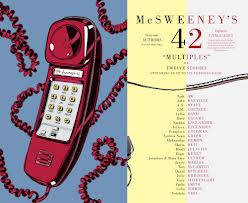
But that’s kind of the point.  The purpose of this book is to make a “telephone” type game out of these stories.  Stories are translated from one language to another and then re-translated back into English.  The translators were mostly writers rather than translators and while some of them knew the second language, many of them resorted to Google Translate or other resources to “read” the story.  Some people read the story once and then rewrote it entirely, other people tried to be as faithful as possible to the original.  And so what you get are twelve stories, some told three times in English.  Some versions are very similar and others are wildly divergent.

I normally write about the stories in the issues, but that seems sort of beside the point as the original stories were already published and were selected for various reasons (and we don’t even see any of the original stories).  The point here is the translation(s).  So, in a far less thorough than usual way, I’ll list the contents below. (more…)

Read Full Post »

220px-The_Invention_of_Morel_1940_Dust_JacketSOUNDTRACK: RODRIGUEZ-“Sugar Man” (1971).

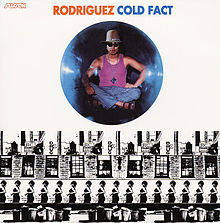
RodriguezcoldfactThis song was played a lot on WXPN, and when I first heard it I couldn’t imagine what new artist was talking about “sweet Mary Jane.”  So it turned out that this song was over 40 years old but it had been resurrected for a movie called Searching for Sugar Man, which is a documentary about Sixto Rodriguez and how he released two albums and then disappeared.

There’s something extremely catchy about this song–the loud down strums that stand out over the quieter strumming, the crazy high frequency sound that sails throughout the song and that hint of horns that gives more depth to this simple folk song.   All of these elements make this song more complex than it might have been.  In fact, the song seems like it’s going to end after about two minutes but there’s the instrumental section full of crazy sounds and electronics.

And even though it seems over after that there’s one more verse and chorus to go.  And then the song just drifts away echoing into nothingness.  It’s quite a catchy little number.

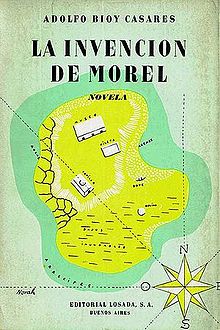
[READ: June 4, 2013] The Invention of Morel and Other Stories

Roberto Bolaño recommended this main story (the other ones as well, I assume).  He’s a big fan of Bioy Casaraes.  But also, Jorge Luis Borges has a prologue to the story in which he states of “The Invention of Morel”

“I have discussed with the author the details of his plot.  I have reread it.  To classify it as perfect is neither an imprecision nor a hyperbole.”

Holy crap.

I can’t say exactly that it I perfect although it is quite fine.  It deals with all kinds of interesting issues and is inspired by (maybe that’s not exactly the right word) The Island of Dr Moreau.  The funny thing is that Morel is neither the main character, nor even a major character for half the book.

The story starts on an island with the narrator writing this book down to leave a  record of “the adverse miracle.”   We learn that the narrator is a fugitive and he was told by an Italian rug seller in Calcutta that the only possible place for a fugitive like him is an uninhabited island.  And on this particular island in 1924 a group of white men built a museum, a chapel and a swimming pool.  But no one dares to go there—not Chinese pirates, not even the Rockefeller Institute because there is a fatal disease located on the island—anyone who has visited there has been found later dessicated. (more…)

Read Full Post »

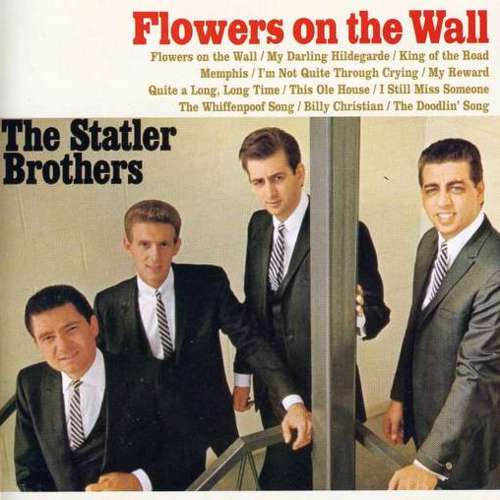
200px-FatesWorseThanDeathSOUNDTRACK: THE STATLER BROTHERS-“Flowers on the Wall” (1965).

flowersonthe Vonnegut mentions this Statler Brothers song in Palm Sunday as well.  I know this from Pulp Fiction–a song that I found very amusing and never would have guessed was a classic country song.  Country music was very different in 1965 than it is now.  I don’t even know if there was a folk or bluegrass category back then, and this song, with its banjo and bouncey acoustic guitar is a great example of the kind of country music I like.  And those harmonies!

This song certainly seems to be about insanity–about a man counting flowers on the wall, playing solitaire with a deck of 51 cards, smoking cigarettes and watching Captain KAN Kangaroo.  Don’t tell him he’s nothing to do.  What a weird little song.  And man is it catchy.  No wonder it was a #1 hit.

[READ: May 31, 2013] Fates Worse Than Death

After reading Palm Sunday I learned that Fates Worse Than Death was a kind of autobiographical sequel to that non fiction book.  I also learned that the two essays that make up Nothing is Lost Save Honor which is impossible to find (and for which I can’t even find a cover) are available in FwtD.  However, since there is no real contents or index, you do have to read the whole thing to find out which chapters contain the essays.  Or you can just look here and see that “The Worst Addiction of Them All” (which was published in The Nation) is in Chapter XIV and “Fates Worse Than Death” appears in Chapter XV.

The last time I read a bunch of Vonnegut together I got a bit burnt out on him and the same thing happened here.  The problem with Vonnegut’s nonfiction is that he tends to repeat himself.  A lot.  And while this book is ostensibly about the 1980s, he talks an awful lot about his family and his friends from the war and his other literary acquaintances., like he did in Palm Sunday.  In a number of places, he says that he doesn’t like to read himself in English, and it would seem that he doesn’t proofread to see if he said something already either.

This is not to say that the book is not worth reading.  Indeed, if you read Palm Sunday in the 80s and then this one in the 90s, you might not remember all of the details that pop up again, but when you read them days apart…well. (more…)

Read Full Post »

PalmSundayFrontandBackSOUNDTRACK: THE STATLER BROTHERS-“Class of ’57” (1972).

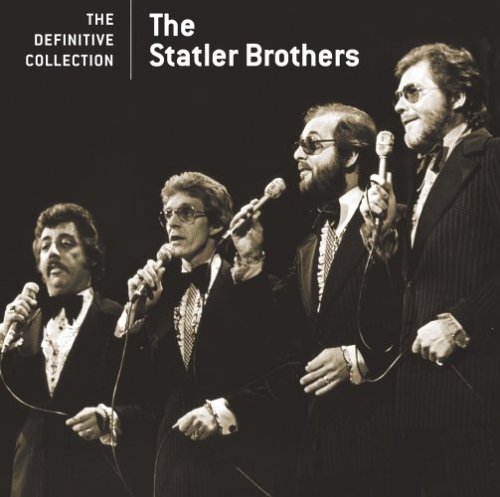
stalerI don’t know much about The Statler Brothers.  They are considered country, although this song is hardly country–it’s more folk with some bluegrass and, the real selling point–great harmonies (especially the bass singer with the big mustache).

The song is a wonderful coming of age song, sad and funny with a list of what happened to everyone in the class of ’57.  Like:

Betty runs a trailer park, Jan sells Tupperware,
Randy’s on an insane ward, Mary’s on welfare.
Charlie took a job with Ford, Joe took Freddie’s wife,
Charlotte took a millionaire, and Freddie took his life.

John is big in cattle, Ray is deep in debt,
Where Mavis finally wound up is anybody’s bet.

But the kicker comes at the chorus:

And the class of ’57 had its dreams,
Oh, we all thought we’d change the world with our great words and deeds.
Or maybe we just thought the world would change to fit our needs,
The class of ’57 had its dreams.

And then at the end:

And the class of ’57 had its dreams,
But living life from day to day is never like it seems.
Things get complicated when you get past eighteen,
But the class of ’57 had its dreams.

Vonnegut quotes the entirety of this song in the book and I’m glad he did, it’s a very moving song and really captures American life.

[READ: May 26, 2013] Palm Sunday

After writing several successful novels, Vonnegut paused to collect his thoughts.  And Palm Sunday begins: “This is a very great book by an American genius.”  It is also a “marvelous new literary form which combines the tidal power of a major novel with the bone-rattling immediacy of front-line journalism.”  After all the self praise, he decides that this collage–a collection of essays and speeches as well as a short story and a play which is all tied together with new pieces (in TV they would call this a clip show)–this new idea of a book should have a new name and he chooses: blivit (during his adolescence, this word was defined as “two pounds of shit in a one-pound bag.”  He proposes that all books combining facts and fiction be called blivits (which would even lead to a new category on the best seller list).  Until then, this great book should go on both lists.

This book is a collection of all manner of speeches and essays, but they are not arranged chronologically.  rather they are given a kind of narrative context.  What’s nice is that the table of contents lists what each of the items in the book is (or more specifically, what each small piece is when gathered under a certain topic).

Chapter 1 is The First Amendment in which he talks about Slaughterhouse Five being burned and how outraged he was by that–especially since the people so anxious to burn it hadn’t even read it (and the only “bad” thing is the word motherfucker).  The first speeches included are “Dear Mr. McCarthy” to the head of the school board where his books were burned and “Un-American Nonsense” an essay for the New York Times about his book being banned in New York State.  The next two are “God’s Law” for an A.C.L.U. fund raiser–it includes his confusion as to why people don’t support the A.C.L.U. which is working for all of our own civil liberties. (more…)

Read Full Post »

« Newer Posts - Older Posts »