Feeds:
Posts
Comments

Archive for the ‘Fashion’ Category

mc mcSOUNDTRACK: CHEYENNE MIZE-Tiny Desk Concert #289 (July 20, 2013).
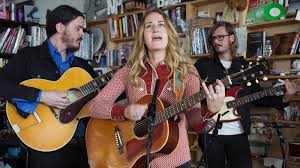
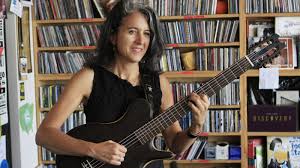
Cheyenne Mize is yet another musician I’d never heard of performing behind the Tiny Desk.  The blurb tells us:

Behind Bob Boilen’s desk at the NPR Music offices, Mize — a multi-talented singer, instrumentalist and music therapist — reduces her band to a duo for three songs from Among the Grey. Naturally, this entailed showcasing some of the album’s quieter, moodier moments (the slinky “Raymaker,” the dreamy “Whole Heart”) before closing with the more forceful “Wait for It.” But along the way, Mize’s voice rings out assertively in every style and setting.

As it turns out, her voice was the problem for me and I can’t really place why.  I like her voice and I like her music I just feel like they don’t go together somehow.

For “Raymaker,” it’s just her on a 4 string guitar and her partner on a box drum.  I really love the sound she gets out of that little four string guitar and he gets some great sounds out of the box drum.  I can’t decide if maybe with a fuller musical sound I’d like her singing more.

For “Whole Heart” she plays a hollow-bodied electric guitar and the drummer plays an electric guitar.  The song is quieter (presumably because of no drums).  I like this song a bit more–the chorus is especially nice–and I feel like her voice works a bit better here.  The guitar interplay in the middle is really delightful as well.

For the final song, “Wait for It,” she switches to violin.  She says it’s both a blessing and a curse I’ve never been able to decide which instrument to play.  “Sometimes it’s helpful and sometimes it just means I have to carry a lot of instruments around.”   She gets a great raw scratchy sound out of the violin.   The drummer stays on the same guitar and adds little background notes.  This song has a great rocking vibe.  And again, the chorus is a neat chord change.  And yes I think her voice works good here too, so it must have been that first song.

And yet for all that I really like the sounds her instruments make more than anything else .

[READ: April 27, 2016] A True Story Based on Lies!

I was unfamiliar with the artists McDermott & McGough.  But I really liked the cover and title of this piece.  I have since learned from Wikipedia that

David McDermott and Peter McGough are best known for using alternative historical processes in their photography, particularly the 19th century techniques of cyanotype, gum bichromate, platinum and palladium. Among the subjects they approach are popular art and culture, religion, medicine, advertising, fashion and sexual behavior.

This particular collection plays around with time–they create works that seems like they are older than they actually are.  And in fact, this is something the artists did in their daily life as well:

From 1980 through 1995, McDermott & McGough dressed, lived, and worked as artists and “men about town”, circa 1900-1928: they wore top hats and detachable collars, and converted a townhouse on Avenue C in New York City’s East Village, which was lit only by candlelight, to its authentic mid-19th century ideal. “We were experimenting in time,” says McDermott, “trying to build an environment and a fantasy we could live and work in.”

This collection looks at advertising from the 1950s and updates it with contemporary additions.  I assume that they are actually painting and re-creating the earlier ads and not simply using the originals.  In their titles they indicate the date that the painting could have been created and then the date that it was created. (more…)


Read Full Post »

SOUNDTRACK: MARGO PRICE-Tiny Desk Concert #582 (November 28, 2016).

It is my fervent hope that I will wake up this morning and the world will say April Fools, and that these last few months will all have been a prank.  Or that this day marks the first day in formal steps to get the buffoon out of the White House before more people get killed.

Barring that, I can post these Trump-based pieces.

Margo Price is beloved by NPR.  I find her a wee bit too country for my tastes.  And yet, once again, a Tiny Desk Concert changed my opinion of her.

Price came to NPR on the day after the election.  I was in a fog of disbelief that day.  I can’t imagine how she managed to play and sing.  Here’s the intro:

When I greeted Margo Price in the NPR garage before her Tiny Desk performance, tears were streaming down her face. It was Wednesday morning, Nov. 9, the day after the 2016 election. For her — as for many Americans — it was a stunning and bewildering moment in time, a day when life and the everyday took on new meaning. And so when she and her band began to play “All American Made,” a song she’s sung many times before, those words about America’s changes and failures in the 21st century seemed even more powerful.

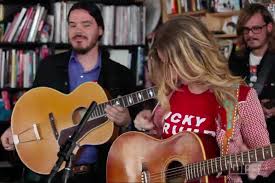
As this Tiny Desk progresses, even “Four Years Of Chances,” her song of a love gone wrong, feels less about a lousy husband and more about presidential politics. She dedicates her third and final song, “About To Find Out,” to Donald Trump; she says it was originally written about a “musician acquaintance of mine who’s a complete sociopath.” When the song ends, she rips open her red cowboy shirt to reveal a T-shirt with the words “Icky Trump”— a play on the title of The White Stripes’ song “Icky Thump,” which criticizes the U.S.’s immigration policies. She smiles, wipes a tear away: It seems cathartic, but temporary.

The music includes piano, guitar (of course), some slide guitar and harmonica.

“All American Made” plays down the twang in her voice and the lyrics are great.  It was written for her previous band Buffalo Clover.

1987, and I didn’t know I then
Reagan was selling weapons to the leaders of Iran
well it won’t be the first time and it wont be the end
They were all American made.

I was just a child
Unaware of the effects
Raised on sports and Jesus
and all the usual suspects

It’s a slow folk song with harmonica and a nice guitar solo.

“Four Years Of Chances” is actually about a failed relationship.  And we can all only hope that we don’t have to wait as long as she did in this song before ending this relationship.  It’s a faster song with good slide guitar work.  There’s a guitar solo, a piano solo and I like the way it goes up two steps after the solo.

I gave you four years of chances
But you threw em all away
I gave you one thousand, four hundred sixty-one days

“About To Find Out” seems so uncannily about Trump it is hard to believe it was written about someone else (as it says, it was originally written about a “musician acquaintance of mine who’s a complete sociopath”).

Well I’ve had about enough of your two-cent words
And the way you’re running your mouth
No you haven’t got a clue or another thing to do
Except to take another picture of yourself
You’re living high on the hog looking down at us all
You may have come so easy and happened so fast
But the harder they come, they fall

You have many people fooled about your motivation
But I don’t believe your lies
You blow so much smoke it’s bound to make you choke
I see the snakes in both of your eyes
But you wouldn’t know class if it bit you in the ass
And you’re standing much too tall
You may have come so easy and happened so fast
But the harder they come, they fall

Tell me what does your pride taste like honey
Or haven’t you tried it out?
It’s better than the taste of a boot in your face
Without any shadow of a doubt
You better learn where the line is
You missed a lot you’ve gotta learn about
How’s it gonna feel to be put in your place
Well I guess you’re about to find out

Some folks today have got nothing to say
Except to talk about their wealth
But the poor’s still poor and the war’s still war
And everybody wants more for themselves
Like a rich man’s child you never walked a mile
One day you won’t have nothing to sell
You may have come so easy and happened so fast
But the way I see it you fell

Uncanny.

So yes, this Tiny Desk Concert has totally won me over to Price.  Although I really need to never hear “Hurtin’ (On the Bottle)” again–it is just waaay to twangy for my sensitive ears.  But more importantly, I hope she hasn’t given up the fight.

[READ: March 12, 2017] “It Is I Who Styles Donald Trump…”

My only other exposure to Crosbie was in the April 2012 issue of The Walrus, in which she wrote a couple of short pieces.

Obviously, I am all for hating on Trump, for ridiculing him and making him look as pathetic as he actually is.  And this entire issue was more or less devoted to the horror that is Trump.  So having a story that mocks him is something I can appreciate.

But, as with the comedians who mock Trump’s hair or skin rather than his racism, bigotry, lack of knowledge of the world, lying and everything else, this story is strangely superficial, and overall, just kind of strange.

It begins amusingly enough: “Last night I dreamt I went to Mar-a-Lago again.  I stood shuddering at the gates–was I to be the mistress of an estate named in colloquial Spanish?”

It even seems like it might go for an interesting angle: “as he sleeps his lips purse, and his hands fly our, defensively.”

But, as the title states (so I guess I was expecting too much), this is mostly about Trump’s hair: she “quickly took over this industry.” (more…)

Read Full Post »

SOUNDTRACK: DONNY McCASLIN-Tiny Desk Concert #590 (January 9, 2017).

Donny McCaslin’s band was responsible for the jazzy music that propelled David Bowie’s final album.  As the Tiny Desk blurb says:

David Bowie had long wanted to make a record with a jazz band, and on Jan. 8 of last year, he realized his dream with the release of Blackstar. Two days later, he was gone. Donny McCaslin’s band helped him make that record, and now, a year later, we pay tribute to Bowie and Blackstar by bringing McCaslin’s band

As a bandleader and sax player, [McCaslin’s] put out a dozen albums, the most recent of which is Beyond Now, with musicians Tim Lefebvre on bass, drummer Mark Guiliana and keyboardist Jason Lindner.

Beyond Now was recorded after Blackstar, features a few Bowie covers and stretches the band’s own usual boundaries. For this Tiny Desk concert, you can hear an extraordinary group playing extraordinary music — including an instrumental version of “Lazarus,” from Blackstar.

The band plays three pieces.  “Shake Loose” is 7 and a half minutes.  The music is great behind the sax—dramatic and interesting.  I think I just don’t care for the sound of saxophones as much these days, because I love the bass thumping and the great sounds from the keys but the soloing doesn’t excite me.  I love in the middle of the song that there are really cool spacey sound on the keys.   And the whole middle section where it’s the keys playing weirdo stuff and the drums keeping a groovy jazz beat–that’s awesome.

So I may be the only person in America who has not heard the whole of Blackstar.  I actually don’t even really like the one song I did hear (I don’t care for the jazzy parts).  So I can’t compare this six-minute instrumental version to the original of “Lazarus.”  I love that the keyboard is playing a very convincing grungy guitar sound.  I’m not sure if the sax is doing a vocal line or just playing around, but I love the music for this song a lot.

“Glory” is about the glory of the creation of the beautiful world that we live in “that will hopefully be intact as we move forward.”  This is an 11 minute song with all kinds of great swirling keyboard sounds.  I really like this song—the bass and keys together are great.  And either I’ve grown more used to the sax or its mixed a little lower, but it works so much better with the music.  About three minutes in there’s a lengthy trippy mid-70s Pink Floyd echoing synth solo.  Which is pretty cool.  So overall, I really enjoyed this set.  And maybe I need to go give Blackstar a listen.

[READ: March 25, 2016] Around

I really enjoyed Phelan’s Bluffton.  The story was interesting and I really enjoyed Phelan’s artwork–subtle with delicate coloring and very thin, expressive lines.

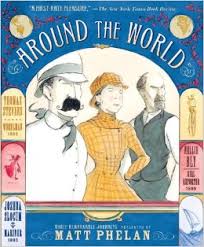
This book also contains Phelan’ wonderful artwork and the story (or stories) are also really interesting.  For this is a book about three remarkable journeys around the world.

Phelan gives a fictionalized (but accurate) history of the adventures of Thomas Stevens (Wheelman in 1884), Nellie Bly (Girl Reporter 1889) and Joshua Slocum (Mariner 1895).

I hadn’t heard of the two men and I found their stories quiet fascinating.  I knew of Bly’s journey but I didn’t know all of the details and I found it equally interesting. (more…)

Read Full Post »

dressSOUNDTRACK: IMANI WINDS-Tiny Desk Concert #277 (May 29, 2013).

windsFor some reason this video and audio has been removed from the NPR site (no explanation is given).  But I found it elsewhere and was able to really enjoy it.

But they have left up the blurb:

When Igor Stravinsky began composing The Rite of Spring, his ballet for vast symphonic forces, he could hear the music in his head but couldn’t quite figure out how to write it down. It was just too complicated.

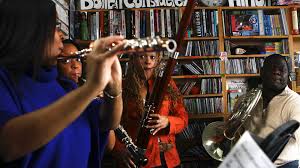
Today, 100 years after The Rite‘s premiere, the fearless musicians of Imani Winds make it all sound remarkably easy, given that they’ve condensed Stravinsky’s massive walls of sound down to just five instruments: bassoon, clarinet, flute (doubling on piccolo), oboe and French horn.

Make no mistake: Many of the jagged rhythms and crunching chords remain viscerally intact, albeit on a more intimate scale. As the group huddled behind Bob Boilen’s desk, bassoonist Monica Ellis noted the opposing ratios, saying, “It’s apropos in some strange way that we are playing one of the most massive pieces in some of the smallest instrumentation in one of the smallest settings that it could possibly be played in.”

The setting might be small, but in this clever arrangement by Jonathan Russell, we learn that a wind quintet, when called upon, can make a mighty and sonorous wail. Just listen to how the Imanis cap off “Dances of the Young Girls” with the entire quintet in full cry (at about 4:30 into the video). The bassoon repeats a fat bass line while the clarinet runs its snaky scales. The piccolo, in piercing chirps, serves as a foil to a frenzied oboe and snarling “whoops” from the French horn.

But not everything in The Rite is all pound and grind. Stravinsky’s transparent introduction, almost impressionistic, is a fluttering aviary of winds — even in the original — with individual colorings for each instrument. It’s all rendered beautifully here by Imani Winds, musicians brave enough to play David to Igor Stravinsky’s imposing Goliath.

This concert is fascinating to watch (and listen to) because even though this piece is familiar (to me) in theory, it’s apparent that I don’t really know it.  And I can see why this piece was so controversial when it came out–it is weird and chaotic and almost random at times.  I imagine that seeing it as a ballet might make it more cohesive, but it’s still pretty out there.

I love that the bassoon seems to be the primary instrument–one that doesn’t typically take center stage.

The group breaks up their selections into three primary chunks.

Selections from The Rite of Spring:

For “Introduction” the bassoon is the primary instrument playing the initial melody.  Then the clarinet and oboe give the whole thing an unsuaul sound–to say the least.  The French horn actually works as the the bass for this part.  It’s also neat watching the flautist switching between flute and piccolo.  I’m not sure when the second part “Augurs of Spring” begins, but I assume it’s when the bassoon repeats that initial melody and then the French horn plays a staccato bass note. The music sounds kind of threatening but whimsical at the same time.

Somewhere in here “Dances of the Young Girls”  begins.  I assume once the piccolo starts chirping and swooping.   And then the band grows very loud before abruptly stopping.

The second segment she describes as incredibly picturesque. “Ritual of Abduction” begins nosily with almost total chaos from all the instruments–the piccolo stands out as sharp and piercing.  As with the other segments, I’m not sure when “Spring Rounds” begins, but I have to wonder if this is when the music seems to go circular and then slow down. There are low notes from the French horn while someone is playing accent notes that sound, not off, but dissonant–providing stark contrast with the rest of the slow movement.  There are some blares of music from the French horn as well.

I’m guessing that “Dancing Out of the Earth”  begins with the fast bassoon melody: up down up down up down up down with trills and swirls from the flutes and clarinet.  It rises and rises very dramatically and then stops.

They tell us that it’s not possible to play the entire ballet so they have taken the “greatest hits” and for this show it’s the greatest hits of the greatest hits.  Consider it a deconstruction with five instruments. But it still evokes the spirit of this sacrificial dance.

She talks about how controversial this was in 1913, “when ballet was meant to be about… I was going to say flamingos…. fairies swans, the other water animals.”   This is the final moment the virgin who sacrifices herself dances herself to death.  And they are going to exemplify trombones and timpani and all that loud stuff (the French horn player laughs and says “Grr I am trombone”).

“Sacrificial Dance: The Chosen One” begins with a three note melody–again it is somewhat threatening.  There’s lots of little fast runs by the French horn with accents from everyone else.  It stops dramatically at one point and then resumes with so many different melodies.  And then comes the surprise ending with a rising flute line and then a low end from the horn.

Without taking away anything from Imani Winds, I ‘m sure this performance doesn’t do the whole thing any justice.  But it is amazing to imagine how much more there is to it.  And it is amazing that these five instruments can evoke so much.  It’s an uncomfortable and somewhat shocking first listen.  It’s amazing that is over 100 years old, although it sounds so contemporary.

I don’t know why it’s not on NPR any more. I found it on YouKu (whatever that is).  I have been able to watch it twice but on two other times I was unable to watch it.  So keep trying, it’s worth the effort.

[READ: May 5, 2016] The Boy in the Dress

David Walliams is best known (if he is known at all) as the tall one on the sitcom Little Britain.

I had no idea he wrote books (he has done over half a dozen children’s books), and I was happy to start with this, his first one.

This book is illustrated by Quentin Blake, who is best known (if he is known at all) as the illustrator for the Roald Dahl books.  So his simple, somewhat sloppy, style might look familiar.

The story is, as the title suggests, about a boy who wears a dress.  And the story is very funny–not because it makes fun of him for wearing a dress, oh no.  In fact, I love the story for going out of its way to show that it is normal that a boy might want to wear a dress. (more…)

Read Full Post »

tny 5.26.08 cvr.indd SOUNDTRACK: KEVIN MORBY-Tiny Desk Concert #554 (August 1, 2016).

morby

I didn’t know Kevin Morby before listening to this concert.  He was in two bands that I’ve also never heard of: Woods and The Babies.

Morby plays a kind of smooth folk (but somehow not really folky because the low end feels a bit more rocking).  I found at least the song “Dorothy” to be kind of like Lou Reed–same style of delivery and groove, but on an acoustic guitar (and sounding far less like a disaffected New Yorker).

He plays three songs and his band consists of a drummer a bassist and a lead guitarist.  He sings and plays acoustic guitar.

“Cut Me Down” is a mostly acoustic-feeling song (you can barely hear the electric guitar).  He even takes the few leads that are there.  The song has  some good dramatic pauses, and then about half way through, it shifts to a new melody–the bassist and the electric guitar playing similarly high notes.

“Dorothy” is a much more interesting song to me.  Even if I do feel lit sounds bit like Lour Reed.  It’s on this song that guitarist Meg Duffy shines more.  Her guitar has a cool echo effect on it.  And while she’s not playing loud or hard, she’s got a cool sound, especially when she plays lead.  On this song her lead guitar “substitutes” for other instruments.  He sings that he could “get that piano” or “that trumpet” to play something like… and she gives a little solo (I particularly like the “trumpet” one).  She also gets a chill proper  solo.

But it’s the final song, “I Have Been to the Mountain” which is the most dramatic and interesting.  In addition to the minor keys chords he plays, the bass comes in with a cool riff.  And the chorus is intense.  With good reason.  The song is about the 2014 chokehold death of Eric Garner at the hands of a New York City police officer:

 That man lived in this town / Till that pig took him down / And have you heard the sound / Of a man stop breathing, pleading?

But it’s not overstated or melodramatic.  And Meg gets a cool solo in the middle as well.

[READ: February 23, 2016] “Over, Around, and Through, Your Highness”

I have gotten to the point where I pretty much don’t even read the New Yorker’s Shouts & Murmurs column anymore.  Most of the pieces are an extended joke that could best be summed up by a few paragraphs rather than a whole page.  But there are some authors who I will always give time to and Woody Allen is one of them.

His short funny pieces are not musings on a joke, they are actual stories that develop and usually reflect back on themselves by the end.

This piece opens with a movie producer bemoaning the state of things.  In typical Woody Allen fashion, he plays with pop culture, talking about the latest film “Mourning Becomes Electra on Ice.” He notes that if he’s not careful his next job will be an easy one in which he answers the questions “Did you work last week?  Did you look for work?” (more…)

Read Full Post »

talkingSOUNDTRACK: HOSPITALITY-Tiny Desk Concert #212 (April 30, 2012).

hospitalHospitality are a four piece band from New York.  They play fairly quiet, kind of delicate music.  Most of the songs have a delicately picked out guitar line on the electric guitar and strummed chords on the acoustic.  Amber Papini is the lead singer and rhythm guitarist.

“Sleepover” the first song, starts out even more quietly, with Papini picking out notes on the acoustic guitar while singing in what is practically a whisper.   There’s an interesting part in the middle where both guitars are picking out melodies and its the bass that is playing the most prominent line of the melody.

“The Birthday” picks things up a bit with a relatively more intense song.  The chords are louder and Papini sings more intensely.  This song ends with a whole series of “la da de das.”  Some songs can’t pull that off, but it works perfectly with this one–especially when the bassist adds harmony vocals–it’s super catchy.

“Betty Wang” opens with just the acoustic guitar and drums as Papini sings.  She won me over immediately with the echoed and rising notes of “so shy so shy so shy.”  With the electric guitar bursts and rather loud drumming this song is practically raucous.

The band is quite but their melodies are really catchy.

[READ: December 28, 2016] Talking as Fast as I Can

I was so excited that they were making a continuation of Gilmore Girls.  And while it was no doubt hard to live up to all the expectations of all of the fans, I thought the new series was great.  It captured the old show very nicely even though everyone had moved on ten years.

I wasn’t expecting a new book from Graham, and certainly not a memoir.  But, with some down time, she was able to push this book out as well as doing everything else she’s been doing lately.

For a memoir, this book is a little skimpy (208 pages), and yet, if that’s all she had to say I’m glad it wasn’t padded out with a ton of fluff.  Plus, Graham doesn’t tell us everything about everything.  She talks about her childhood, about acting, about being single and about Parenthood and Gilmore Girls.  It’s all done in what has become Graham’s trademark style (although since we are reading it and not hearing her, the pace is probably much slower). (more…)

Read Full Post »

2016-12-05-21-06-09SOUNDTRACK: JANET FEDER-Tiny Desk Concert #233 (August 6, 2012).

I’d published these posts without Soundtracks while I was reading the calendars.  But I decided to add Tiny Desk Concerts to them when I realized that I’d love to post about all of the remaining 100 or shows and this was a good way to knock out 25 of them.

federJanet Feder is an amazing guitarist.  I enjoyed the simple act of her picking out the notes in a chord and simultaneously using her pinky to play harmonics on two different strings.
But beyond that she has a great sound. In part it’s the guitar which is a nylon-string baritone electric! But it’s also because of the way she prepares her strings—she gets interesting bell sounds and other rattling noises.  These aren’t the focus of the song,  just the accents of them.

The first song is not an instrumental, it’s called “Angles And Exits.” She says that she was used to not singing since she primarily played classical music.  But she has enjoyed adding voice to her songs.  Her voice is soft and delicate.  The song works with words, but it would probably be fine without them.

It looks like she has some kind of thing on the first fret on the high strings—so an open notes gets that bell sound.  She says that these additions to the guitar have allowed her to have fun playing the guitar again.

She describes what she does on the second song “Heater.”  She puts a device on her string to make a great sound.  Although even after she describes it I don’t understand how it works.  She begins the song by pulling on what sounds like an uncoiled guitar string ratcheting it tighter ad tighter.  When she finally gets to the melody, her playing is excellent—all over the guitar but not really flashy, just interesting.  The melody in the slow part at the end is enchanting.

“I Hear Voices” opens with harmonics and a rattling on the strings—a neat combination of heavenly notes and noise from an alligator clip on the strings.  It’s a mesmerizing and very cool sound and a beautiful song too.

[READ: December 16, 2016] “The Heaviest Dress”

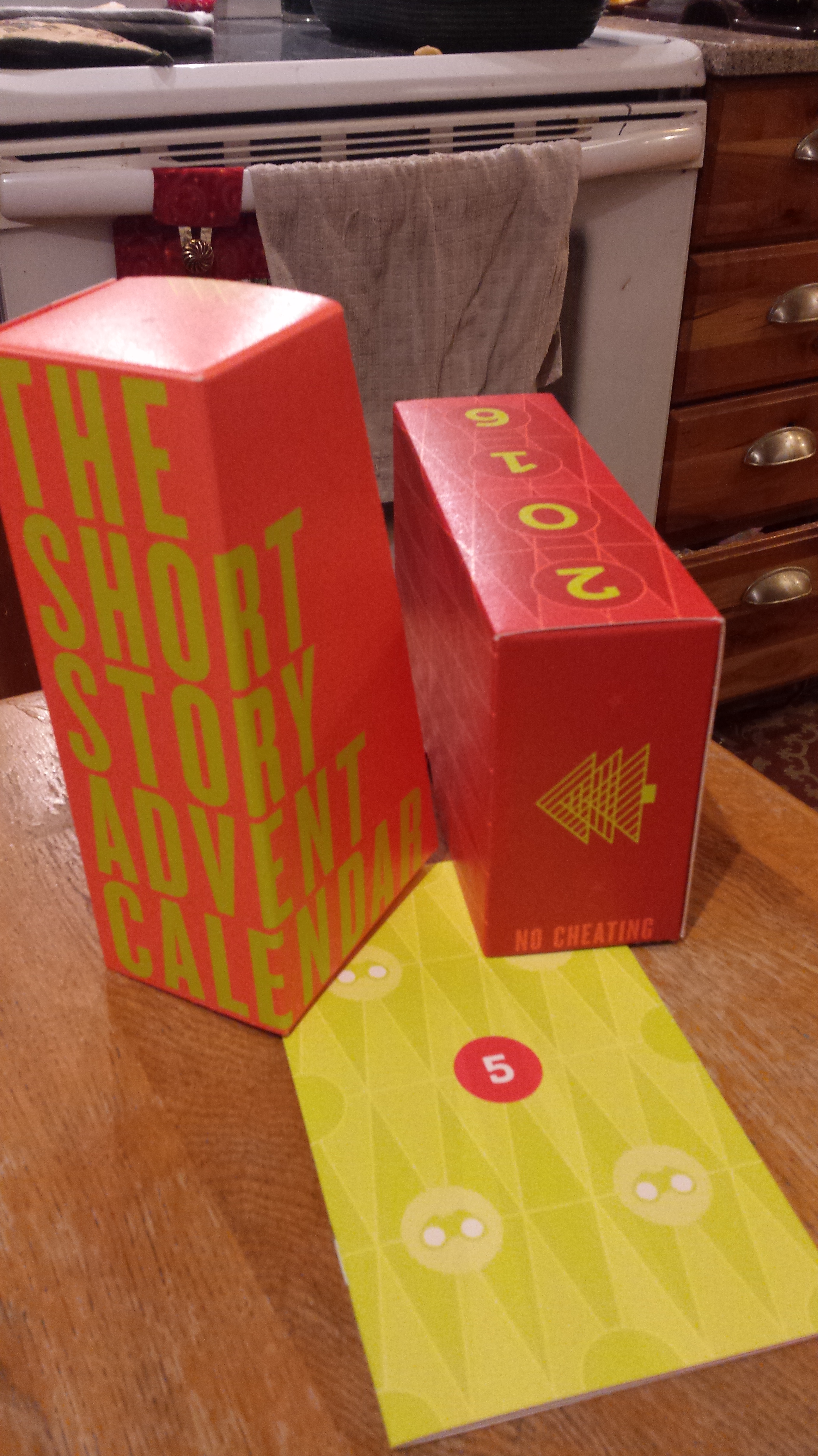
Near the end of November, I found out about The Short Story Advent Calendar.  Which is what exactly?  Well…

The Short Story Advent Calendar returns, not a moment too soon, to spice up your holidays with another collection of 24 stories that readers open one by one on the mornings leading up to Christmas.  This year’s stories once again come from some of your favourite writers across the continent—plus a couple of new crushes you haven’t met yet. Most of the stories have never appeared in a book before. Some have never been published, period.

I already had plans for what to post about in December, but since this arrived I’ve decided to post about every story on each day.

This is the story of a young Jewish girl returning to her home in Montreal after some time in New York City.

The girl’s parents died when she was five and she had lived with her Aunt Rita and Uncle Mort ever since.  She felt that their house was never hers, and so it never grew mundane.  In the past year she had moved to New York City to go to fashion school. (more…)

Read Full Post »

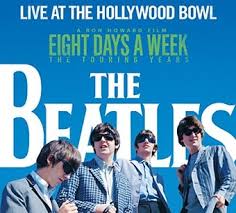
bibSOUNDTRACK: THE BEATLES-Live at the Hollywood Bowl (2016).

beatlesThis disc was released this year.  It is technically the soundtrack to the film Eight Days a Week: The Touring Years.  But regardless of the film, these are newly mastered recordings from two Beatles concerts at the Hollywood Bowl in 1964 and 1965 (which were released in 1977).  This disc has 7 songs from 1965 and 6 from 1964 (not including the four bonus songs).

The concerts were legendary for the shrill screams that the audience made during these shows–so loud that the recordings were practically inaudible and, apparently, even the band members had a hard time hearing each other.  Sounds like a nightmare, frankly.

Well, George Martin’s son has used some technology to make these recordings listenable.  They have reduced the shrill screams to a kind of low-level, high-pitched sound and, even better, they have fleshed out the band so they don’t sound like they are playing in a tin can.

Here’s some fascinating things about that Hollywood Bowl Concerts. Tickets cost $5.50 in 1964 and $3 in 1965.  WHAT?  In 1965, the band played for 33 minutes.  That’s it–not sure how long they played in 1964.

The band had no monitors on stage–those things that musician are always pointing at and asking the mixer to turn up.  So on many shows they couldn’t even hear themselves.  The fact that their harmonies are so good is really impressive.  The notes suggest that the open roof of this show meant that the shrill crowd noise was somewhat dissipated allowing them to hear each other a little better for these shows.

Evidently the track listing for this disc consists of the best original recordings from the two shows.  I’m not sure why they’re not played in sequential order, but whatever.  Perhaps the energy of the opening “Twist and Shout” (all 90 seconds of it) is a pretty great way to start.  While the band is spot on in their playing (sometimes it’s easy to forget that they are laying instruments as well as singing, since the voices are the big thing) you can hear Paul’s voice straining on “Can’t Buy Me Love” (which is cool).  Or John saying he thinks the next song “Things She Said Today” is on the new album over here.  This song–quieter and less dancey sounds pretty great and you can kind of hear the audience paying attention to it, so that when the band gets to the loud part the crowd really erupts.

I’m surprised at how many covers the band plays.  I realize these songs are picked from two set lists, but there are dozens of serious hits that they could have played instead of say “Roll Over Beethoven” or, and this is the most surprising thing to me, ending their 1964 set with “Long Tall Sally” rather than one of their huge hits.

It’s funny how crazy the crowd goes for Ringo when he sings lead on “Boys.”

I enjoy hearing them talk about their films–one we made in black and white, the other in color.  “Hard Days Night” sounds great but even more impressive is “Help!”.  John intros the song by saying, “we’d like to do another film song from a different film–coz we’ve made two.”  “Help!” is really impressive the way the band launches right into their harmonies on that first note–it sounds incredible all the way through the song.  Even when John strains hard at the end.

There’s not a lot of stage banter, but I did enjoy this one from 1964: “This next song is an oldie, some of you older people might remember it.  It’s from last year.  It’s called “She Loves you.”  I like hearing the rocking guitar line more prominently and the fact that they don’t go “ooooh” during the first time it’s supposed to appear, but when they do the next time, the crowd goes nuts.

As the disc ends, Paul asks, “We all hope you enjoyed the show.  Have you enjoyed the show?”  Apparently they have.

I’m not sure why the final four songs are listed as “bonus tracks.”  The inclusion of “I Want to Hold Your Hand” can’t be a bonus!  But the four songs (two from 1964 and two from 1965) also sound great.  The harmonies on “Baby’s in Black” are fantastic.

John Lennon said the fans didn’t come to listen, they came to love.  Regardless, the band played wonderfully and gave a great performance.  It’s nice to be able to hear it.

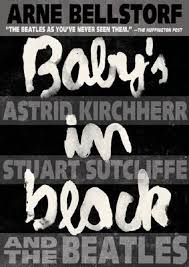
[READ: March 10, 2016] Baby’s in Black

This story is about The Beatles before they became THE BEATLES.

I didn’t know all that much about the early Beatles.  I knew that they were in Germany (although I don’t really know why, and I still don’t). But I didn’t know about all of the trials and excitements that happened to them there.

What I loved about this story is that while it is about The Beatles, it’s actually about Stuart Sutcliffe and his girlfriend Astrid Kirchherr and their impact on the nascent Beatles.

The story begins with Astrid’s ex boyfriend Klaus Voormann running to Astrid to tell her about this band that he just heard down at the Reeperbahn.  He said they all dressed the same and they really rocked (or whatever they would have called it back then).

The Reeperbahn was sketchy place at the best of times, so it was unlikely that anyone other than sailors and thugs would have seen this band iinitially.  But Klaus was so insistent that Astrid agreed to go.  And she was mesmerized by them.  She was especially taken with bassist Stuart Sutcliffe (although none of the fans knows their names at this point).  The band consisted of John, Paul, George, Pete Best on guitar and Stuart on bass. (more…)

Read Full Post »

may16 SOUNDTRACK: SUZANNE VEGA-Tiny Desk Concert #336 (February 10, 2014).

vegaSuzanne Vega is practically a one hit wonder except that she has released a half-dozen great albums that are full of wonderful songs.  I stopped listening to her some time in the mid 90’s, so I missed her 2000s comeback, but this four-song show from 2014 has her two most famous songs and two songs from her then about t o be released album Tales from the Realm of the Queen of Pentacles.

As the Concert opens, she asks “for real?” and the hits the Tiny Desk gong (with quite a flourish).

Then she launches into “Luka.”  She plays acoustic guitar and sings.  Her voice sounds pretty much exactly as it did twenty years ago.  In part, sure, it’s because her singing voice is practically a whisper, but it’s amazing how good she sounds.  She has a second guitarist, Gerry Leonard, with her (on electric guitar) who plays a great sounding solo in the middle of the song.

The first new song is “Crack in the Wall.”  She says that it  describes when a crack appears allowing you to see into the spiritual world.  In this version (I don’t know the studio version), it sounds a lot like an old song–stripped down and simple, with Vega’s interesting gentle acoustic guitar chords and voice.  There’s also a cool echoed electric guitar solo.

For “I Never Wear White” she takes off the acoustic guitar.  It’s just her singing and Leonard playing.  And his guitar his rough and distorted.  It is pretty shocking for a Vega song, but it works really well with her voice.  I really like this song a lot.

She ends with “Tom’s Diner.”  She was going to say the one and only, but says they’ve done so many different versions of it.  So this is their latest.  She sings parts a capella but the guitar plays some wonderful washes of sounds (looped) with different parts layered.  He also plays a percussive sound that makes the song kind of danceable.  And when she mentions the bells of the cathedral, Gerry plays some cool harmonic notes that are echoed and sound like clock chimes.  It’s very cool.

Vega’s speaking voice sound a little like Hillary Clinton’s (especially during the thank yous at the end).  But it’s nice that her singing voice still sounds the same and that 2014 album seems like it might be interesting.

[READ: July 6, 2016] “High Maintenance”

The May 16, 2016 issue of the New Yorker had a series called “Univent This” in which six authors imagine something that they could make go away. Since I knew many of them, I decided to write about them all.  I have to wonder how much these writers had to think about their answers, or if they’d imagined this all along.

I’ve never read Mary Karr, I only know her peripherally as connected with David Foster Wallace.  This may not have been the best introduction to her, although since she mostly writes memoirs, maybe this is the perfect introduction.

Mary Karr would like to uninvent high heels.  And while she does speak of this with some humor, the entire article just reeks of vanity and foolishness.  (The fact that she even mentions she can still squeeze into a size 4 should tell you all you need to know about this essay). (more…)

Read Full Post »

hiltonSOUNDTRACK: BECK/RECORD CLUB-SKIP SPENCE: Oar (2010).

skipOf the four Record Club discs, this is the only one I don’t own.  Although I do have a different covers collection called More Oar (which Beck also appears on). I may have never heard any of the original songs on this disc, so I can’t even compare them.

For those who don’t know (as I didn’t), Skip Spence was one of the founders of Moby Grape, a band who was vaguely successful in the late 60s and then sort of fell apart (especially when Spence tried to kill his bandmates and was put in an asylum for a year).

Beck doesn’t have anything special to say about why they picked this album.  But he must have been very excited that Wilco and Feist were around to play on it.  He says

This one took place last June when Wilco was in town for the release of their new eponymous album. They came by after a long day filming a TV appearance and still managed to put down 8 songs with us. Jamie Lidell was in the studio with me working on his new record. Leslie Feist happened to be in town editing her documentary and heard we were all getting together. Recording took place at Sunset Sound Studios in the room where the Stones did a lot of Exile On Main Street (and looking at the records on the walls it appeared that the Doobie Brothers recorded most of their output there too). Sitting in on drums, we had James Gadson, who’s played on most of the Bill Withers records and on songs like ‘Express Yourself’ and ‘I Will Survive.’ Jeff Tweedy’s son Spencer played played additional drums. Also, Brian Lebarton, from the last two Record Club sessions is back.

And if you don’t know what Record Club is, see the summary on yesterday’s post.

Wilco plays on 8 tracks (of 12) and they sound great.  Indeed, overall this is the most “professional” sounding recording.  Which is not to say that they don’t have fun. It sure sounds like they do.

Little Hands (2:59).  This has a traditional folk band sound.  It’s a great recording.
Cripple Creek (4:14).  This is not THAT “Cripple Creek,” by the way.  “Jamie takes the lead and Gadson gets behind the kit, while Beck and Brian back them.”  There’s a funky drum breakdown in the middle.
Diana (3:48).  Another good sounding song.
Margaret/Tiger Rug (2:27). This song is a little boppy and slightly silly sounding, but not really that silly.
Weighted Down (The Prison Song) (4:58) “Feist takes the lead this week with Nels Cline arpeggiating some ridiculous 64th notes on a toy guitar.”  Feist adds some beautiful vocals to this song.
War In Peace (5:04).  This begins a little slow and shambolic but it soon builds into a full band that gets even crazier when they start playing “Sunshine of Your Love.”  It was fun to hear them let loose.
Broken Heart (3:39).  This sounds like a traditional song.  A little drunken and fun–a nice duet with Feist.
All Come To Meet Her (2:02).  This is a simply beautiful harmonized a capella rendition.
Books Of Moses (7:21) “Gadson lays down the heaviest RC beat ever, while Jamie loops his voice into a voice army and Brian plays some kind of octagon shaped synth.”  This had a kind of Primus-y weird synth opening.  But as Jamie loops his voice over and over it sounds really good, although it is too long.
Dixie Peach Promenade (Yin For Yang) (3:56).  This is a synthy bouncy song.  It’s a little silly, especially with th Ace of Base coda at the end.  But it sounds good.
Lawrence of Euphoria (5:17).  The lyrics of this song are very silly. This version has a fake cowbell and  funky bass but is otherwise just electronic drums and vocals.
Grey/Afro (7:35).  This has echoed vocals and noisy bass.  It’s hard to figure out what’s going on here, especially at the chaotic ending. But it’s nice to hear them all let loose a bit.

As I said, I don’t know how this compares to the original, but I really enjoyed it.

[READ: March 23, 2014] White Girls

This book was madly hyped and I was pretty excited to read it (even though to be honest I didn’t know if it was fiction or non-fiction–and wasn’t even entirely sure as much as half way through the first piece).  I knew Als’ name from the New Yorker, although I wasn’t really conscious of having read anything by him.  It turns out I read one of these essays in McSweeney’s 35 about four years ago.  The fact that I didn’t remember reading that essay does not speak all that well about it.  But overall I enjoyed most of the essays in the book quite a lot; however, the two longest ones I found, well, way too long.  And I honestly don’t understand the title.

Overall the book is a collection of essays (often told from an interesting perspective, like from the dead person’s first point of view).  The problem with pretty much every essay in the book at least for me was that Als presupposes a base knowledge of these people.  Without that, the essays can be frustratingly vague and unclear.  But again, these people are all famous enough that it seems likely that one would have that base knowledge (even if I don’t).  I do wish there was a small bio or even a photo with these essays (as there was with the Truman Capote one) as I feel that grounded me nicely.

I was a lot more confused by his essays that were more personal.  I didn’t really understand the context for what he was talking about, since i know very little about him.  And as you’ll see from the first essay, he covered a lot in a very un-straight way. (more…)

Read Full Post »

« Newer Posts