 SOUNDTRACK: QUASI Live at SXSW, March 8, 2010
 I really enjoyed a few Quasi albums back around the turn of the century, and then I kind of forgot about them. But this set is really great. The always excellent Janet Weiss on drums and harmonies and the wonderful Sam Coombs on guitar and vocals. Around the time of this album, American Gong, they added Joanna Bolme on bass which really fills out their sound. The first song, “Repulsion,” rocks harder than any of their older stuff (which was more keyboard based). Indeed this album was apparently much rockinger than any of their earlier releases–I must check it out.
This set was recorded during SXSW from the Gibson Showroom in Austin. They play five songs in about 20 minutes. “Never Coming Back Again” has a far more country feel (especially the backing vocals which have a real twang. The lengthy instrumental section of “Black Dogs and Bubbles” is great–especially check out Weiss’ drumming. “Little White Horse” is a shambolic rave of a song–fun and noisy.
The set ends with the inspiring Rise Up, a short stomper that encourages you to, yes rise up. Weiss and Coombs both have other bands that they play in, so Quasi never seems like a full-time project. But that seems to make their music all the better. Listen here.
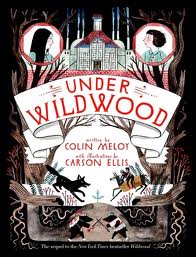
[READ: November 1, 2011] Under Wildwood
I enjoyed Wildwood, but I wasn’t blown away by it. So I admit I wasn’t totally excited to read this one (especially since I had some other books lined up). But Sarah managed to get it from the library (I guess it was not as a big a deal as I assumed it would be?) and I decided to give it a go.
I found it a little slow at first, but after about 40 pages, the book totally took off and I was fully engrossed. Whether it was because there was less exposition since this was a sequel or because the story itself was more exciting, I couldn’t put the book down. And, more importantly, the book did not feel like its 550 pages were excessive. He really filled up every page with story.
But I was a little concerned because part of the story is set in an orphanage–a setting rife for cliché. But Meloy has some great ideas and although he does use the orphanage as a scary setting (and employs some clichés from all orphanages) he transcends the conceit with some great characters and some evil owners who use demerits to completely move the story along outside of the orphanage–a great plot idea.
But let’s back up. (more…)





















 I Just Read About That...