Feeds:
Posts
Comments

Archive for the ‘Fantasy’ Category

liofriends SOUNDTRACK: RHEOSTATICS-Railway Club, Vancouver, BC (November 1987).
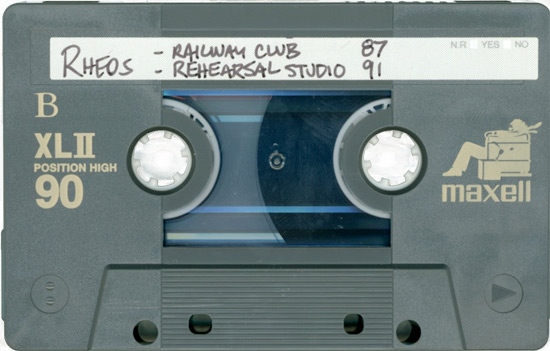
RailwayClub87-PROD91It’s pretty impressive that this show (ostensibly from the same month as the previous show) has such a different setlist.  Between the two shows they play 22 songs and only four are repeated.  And this time five of the songs come from their debut album, Greatest Hits.

This tape begins with a recording of “Indian Arrow” by the 13 Engines.  It sounds very different from the other songs on the tape–the audience is very loud and you can hear a woman say “I wanna sing this one” (!).  I know this song from a Martin Tielli solo tour (and indeed, he sounds pretty much solo here–although there is a piano, too).

The rest of the tape all has the same audio quality but sounds different from the first song.  “Crescent Moon” begins mid-song (as if it was recorded over by “Indian Arrow”).   “Sad Sad World” is more upbeat than the title suggests with a “vocal solo” introduced with Dave and Tim chanting M-R-T-I-N in time with the music.  An upbeat “Ditch Pigs” leads to some silly banter during the guitar solo.  “Churches and Schools” sounds a lot like Talking Heads.  “Bridge Came Tumbling Down” is a Stompin’ Tom Connors song–they really had been playing him since forever.  Then they play a good version of “Higher and Higher” (from Greatest Hits).

It’s their last night in Vancouver, apparently which leads to a lengthy talk about he next song–a funky version of “Good on the Uptake” with lots of screaming at the end (from Tim).

The band plays the full version of “The Ballad of Wendell Clark” (with a some jokes about “Joel” whoever that is).  It’s rollicking and stomping and Martin starts playing “O Canada” as part of the solo.  Bidini stops the song and asks him to play it again, so Martin plays it on a good echoed effect (and Dave Clark shouts “alright Joel!”)  There’s some inappropriate jokes before Martin launches into a delicate version of The Beatles’ “Across the Universe-“-not the best version I’ve heard but still nice.

The final song is a romping stompin “PROD”–the only song The Rheostatics play in G#.  It has a fun shambolic end and it ends the set with them saying they’ll be back to play some Menudo tunes after a short break (which we never do hear).

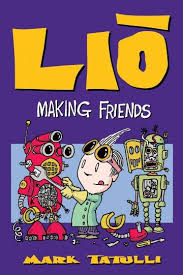
[READ: January 15, 2016] Making Friends

It’s unsettling to me that the Liō books come in different shapes.  This one is even hardcover!  The contents of these stories are not unsettling to me though, even if they are to some readers (looking online, you can find gripes).

Liō continues to be a strange kid who loves zombies and squids and spiders and playing pranks.  This is his latest book (and I just confirmed to see that he is still publishing daily, so a new book must be coming soon, right?).

Tatulli still has some great gags.  And this format book has some of the strips in color. (more…)

Read Full Post »

imperiumSOUNDTRACK: PAT BENATAR & NEIL GIRALDO-Tiny Desk Concert #407 (November 24, 2014).

benatarI never liked Pat Benatar.  Back in the day she was all over MTV (and even in Fast Time at Ridgemont High) and I just didn’t like her.  I’m not sure why, although I was particularly bitter about “Hell is for Children” (being a child myself).  Of course, I still know all of her singles really well.

But I haven’t thought about her in probably a decade.  And then  around 2014 that she was playing with Neil Giraldo in some kind of acoustic tour.  I recognized his name but didn’t know they were married or anything like that.

And so here they are doing a Tiny Desk Concert–all acoustic–with him playing guitar and contributing backing vocals.  Over the decades, Benatar’s voice has changed a bit–she sounds gruffer and it really suits her. (more…)

Read Full Post »

lioSOUNDTRACK: RHEOSTATICS-El Mocambo, Toronto ON (November 1987).

ElMo-Nov1987After re-listening to some of the Rheostatics most recent shows, I checked the Rheostatics Live site and found out that he has added some really old shows.  This show is the oldest show on the site, dating back to 1987.  A brief Rheos history shows that in the earlier incarnation, it was Dave Bidini, Tim Vesely and Dave Clark.  They were joined by the Trans Canada Soul Patrol and played mostly R&B and funk.  Around 1985 the Soul Patrol left and Martin Tielli joined.  Around the time of this show, they had released Greatest Hits.  And then they broke up (circa 1988).  Then they reformed in 1991 with an entirely different sound.

So this is from what I guess you’d call he Mach II era: no Soul Patrol but before the breakup.  Interestingly, only two songs from this how appeared on their debut album, although many appeared on earlier demos.

They play 11 songs, including what I assume is an improvised rap from Dave Clark (the really silly one of the band).  And the songs are dominated by a smooth guitar sound and often times a funky bass.  Perhaps the most amazing thing about this set is the prominence of Tim.  He sings many of the songs and Dave includes him in many jokes.  Martin is almost non-existent.

“National Pride” dates back to 1983 and starts as a kind of goofy rap song but then turns into the funky version from the demo.  Martin Tielli also released a solo song called “National Pride” which is nothing like this.  They follow this with the “Greensprouts Theme Song” (which they played at the AGO almost 30 years after this show).  Dave Clark calls it the “silliest song ever written,” although in the years hence they have made a few challenges to that claim.

“Good on the Uptake” is a song I’ve heard in a few places before.  Tim sings lead and there’s a kind of funky bass line with lots of guitar harmonics.  I think Martin is singing backup (and probably playing the harmonics).

Tim breaks a string and Dave Clark shouts, “This song is called Rheostatics learn how to string their guitar.”  With a broken string they play an impromptu version of “Red Dog Ray” taught to them by Reverend Ken and the Lost Followers “about the beer strike in 1983.  We were all pissed off because we had to drink Old Milwaukee and Rolling Rock and all that shit.”  This song has come up in their sets in the early 2000s.

It segues right into “Ditch Pigs” from Greatest Hits and sung by Martin.  The middle section devolves into a chant of “I want an egg salad sandwich and a glass of Coke.”

For “Four Upright Walls” Bidini introduces David Clark as the Poet Laureate of Etobicoke.  This is a rap of sorts in which the band does response to Dave’s rap (with all kinds of crazy sound effects and even some beatboxing (!)).

“Crystal Soup” is very much a Tim song–it sounds a lot like a song he would write now–there’s a surprise guitar riff in the middle of the verses that sounds a bit like Rush.  At the end of the song Dave introduces “Mr. Nigel Tufnel,” although I’m not sure to whom he is referring.  “Sue’s Mining Song” (also sung by Tim) has a kind Rush feel although the lyrics are very un-Rush (“woman,” “girl” and a line about “buzzards on your Steely Dan”).  It also features Tim screaming a high note!  It’s a pretty heavy song (especially at the end).

It’s funny that they follow-up with “a nice song,” Martin’s sung “Crescent Moon” a very, very new wavey song that Bidini wrote, and which leads of Greatest Hits.  They follow with a fun and fast rocking “People’s Republic of Dave” in which Dave encourages Tim to make silly faces.  And Tim growls that he wishes his name was Dave.  This seems like a great show ender, but they’ve got one more song.

“Chemical World,” has a kind of discoey guitar opening and lots of slap bass.

[READ: January 5, 2016] Zombies Need Love Too

I prefer to read series like this in order, but sometimes you can only get the books that you can get (and you don’t get upset).  For reasons I don’t understand, my library only had the first two books (which were also collected in Liō’s Astonishing Tales which they also have) and the two most recent books.  There’s maybe two books in between, as far as I can tell.

The good thing is that there’s not a lot of forward narrative in these stories–except perhaps for the new pets that Liō acquires.

So after four years what is Tatulli writing about?  Well, largely the same stuff, which is fine with me. (more…)

Read Full Post »

dirkSOUNDTRACK: ANTHONY D’AMATO-Tiny Desk Concert #398 (October 20, 2014).

damatoI’d never heard of Anthony D’Amato before this Tiny Desk Concert, and yet his music sounds vaguely familiar.  D’Amato sings fast, upbeat acoustic folk rock with a full band behind him.

“Was a Time” starts out with just him and his guitar.  But after the first verse the whole band kicks in and the song really takes off.  There’s some harmonica between verses and a big Whoo! before the end of the song.  The song is a fun romp, fun to sing along to until you realize the chorus: “there was a time that I loved you / I don’t love you any more.”

He introduces the second song “Good and Ready” and says “we’ll start whenever Derek is… good and ready.”  This song sounds very different as it opens with a cool soulful bassline.   After that opening the song proper begins with Amato’s acoustic guitar and the electric guitar playing a loud slide guitar riff.  This song is a bit more positive, despite the repeated line of I don’t wanna wake up,” the chorus is “I don’t wanna wake up if it ain’t next to you.”

All three of these songs use the same verse style with the first words of every line being repeated over and over.  In the first song, every libe starts, “There was a time….” In the second, each line begins “I don’t wanna wake up….”  The final song, “Ludlow,” changes things a little bit although each verse stats with the opening “First the…  then the….”

I felt a little  for his backing vocalist Katy Pinke, because while everyone else is doing things, she’s just standing there occasionally sinking a word or two.  Although for “Ludlow” he and Katy sing a quiet duet.

D’Amato writes catchy, rather pleasing songs.  I wonder why I haven’t heard of him before.

[READ: July 2, 2016] Delilah Dirk and the King’s Shilling

Much like I wrote about the first book: I enjoyed this story quite a lot.  Cliff’s drawing style which was peculiar but ultimately very satisfying.  And more importantly, he tells a great story.

But this book was even more satisfying than the first.  I have also changed my opinion of Cliff’s artistic style somewhat in that I think it is really fantastic.  It is definitely unusual–realistic but not exactly–and he has such amazing control of expressions.  Even moreso in this book in which Delilah goes into polite society and so much must be conveyed through expression.

Plus there’s a lot of action, too. (more…)

Read Full Post »

nameless SOUNDTRACK: TWEEDY-Tiny Desk Concert #391 (September 22, 2014).

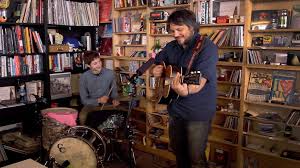
tweedyI’ve recently become a major fan of Wilco and Jeff Tweedy’s songwriting.  This band is Jeff Tweedy and his son Spencer (on drums).  They usually perform with a full band, but here it’s just father and son.

The songs sound very much like Wilco (Tweedy’s voice is unmistakable), but there is a different, almost patient feel to these songs that makes them seem not-Wilco.  Spencer’s drumming is not flashy (that wouldn’t work here anyway), but it is right on the beat with occasional flourishes.

“Wait for Love” is a sweet ballad.  “New Moon” is a bit more upbeat.  There are 20 songs on the record.  After the second song, Jeff says he doesn’t know how many songs they’re supposed.  Bob says they’re supposed to play til 6″ (it appears to be early afternoon).

Jeff says they can stay till six, There’s nothing happening in the world, right? Bob states, “There is no news today.”  Jeff smiles and says that later “Spencer and I are going to reveal our strategy for ISIS, so it’s a good thing you’re here.”

“Low Key” is more rocking with some cool chord change progressions in the middle (ans a little drums-only section).

Before the final song, he says he wrote it for Mavis Staples (She didn’t sing it when I saw her…bummer).  He says that “Spencer didn’t play on that record… but we know how to play it together.”  He pauses and says, “We know how to play all of our songs together.”  Pause  “I’m such a good front man” (to much applause from everyone).

Jeff laughs and says that Spencer is gonna get a microphone and “you’ll have to talk to people.”

“You’re Not Alone” is a bit more complex and powerful than the others and that repeated refrain of “open up this is a raid” is really great.

The Wilco Tiny Desk Concerts have been raucous and fun.  This one is much more low-key and shows off a different side of Tweedy.

There’s a sweet moment at the end of the set where Spencer give his dad a hug.

[READ: April 20, 2016] The Nameless City

Faith Erin Hicks has been consistently excellent with her graphic novels.  I was pretty excited to see that she had a new book coming out.  And I was even more excited to go to the library and see that Sarah had requested it already.

I dove right in to this story.

It begins with some unnamed people riding down the River of Lives and going into a city.  They ask several different people what the name of the city is and they get several different titles.  They determine that this is the nameless city.

It turns out that every civilization that has conquered the city (which happens every thirty years or so) renames the city.  And, depending on which invaders you like best, that would be the name you would choose to call the place.  We later learn that most of the conquerors only conquer the main walled city proper and that the houses and markets on the other side of the wall pretty much just go with the flow.  The people who live outside hate everyone who is in charge and just try to keep their heads down to survive. (more…)

Read Full Post »

silentSOUNDTRACK: HOSPITAL SHIPS-Tiny Desk Concert #177 (November 23, 2011).

hospital shipsHospital Ships is a band created by Jordan Geiger, who was in the band Shearwater, among others. In 2011 he released his second album as Hospital Ships.  The blurb describes the album as “packed with poppy folk songs and brash rockers enhanced with instrumental flourishes and bursts of guitar feedback,” but for this recording, they strip everything down to the basics: a guitar, banjo, ukulele and a drum with a towel over it to muffle the sound.

Geiger has a rather high-pitched, delicate, almost talking-singing voice and his songs are rather pretty.  The band plays 3 songs in just over ten minutes.  The first one, “Phantom Limb,” (once my lover, now my friend, you are my phantom limb) has a recurring motif of them saying/singing “ha ha” which is rather catchy.

“Carry On,” features a four-letter word (technically a seven letter word), which might be one of the first times on a Tiny Desk Concert that such a word is uttered.  It’s especially funny given how sweet the band sounds.  The sentiment of the song is nice though: “To all the women I’ve loved, When I was with you I would say I was better off….  And when I’m gone, carry on, carry on.”  There were harmonies in the first song, but they are more prominent in this one (three part) and are quite nice.  The banjo player also does a whistling solo.

“Let Me In” made me laugh because he uses the word baby a lot (which Ben Folds said in his Tiny Desk that he has never said in real life, so why would he put in it a song?).  But this song is very gentle and sweet–just Geiger on his guitar singing “baby, let me in.”

Geiger’s voice reminds me of a few different people–Ben Gibbard from Death Cab for Cutie especially on the final track; perhaps the Mountain Goats or the Weakerthans.  And his songwriting is very good.

[READ: December 26, 2015] Silent But Deadly

I really enjoyed the first Liō collection, and was pretty excited that I could find the second collection so quickly (my library doesn’t have any more collections for some reason, so I’ll have to track the rest down elsewhere).  This book collects the strips from February 25, 2007 – December 2, 2007.

Not much has changed from that book to this one, but I think Tatulli’s comic chops have gotten even better.

The strip won me over immediately with the first one in the book. Lio draws a monster and it comes to life.  He looks at the marker and it says “magic marker” and he gets a big grin and goes back to work.  So simple yet so funny.

It is that big grin–wide open-mouthed just unfettered mischievous delight that occurs in nearly every strip. (more…)

Read Full Post »

lio1 SOUNDTRACK: JOE HENRY-Tiny Desk Concert #176 (November 21, 2011).

joe henryI had never heard of Joe Henry, so imagine my surprise to find out that he was releasing his 12th album in 2011.  For this Tiny Desk, it’s just him at a stool playing his guitar.  He has a very easy vibe, telling stories between songs and playing them with very little fuss.

He opens the show by saying this is, “not exactly like Woody Guthrie playing for the union members but you are working people.”

He plays four songs, “Sticks and Stones,” After the War,” “Odetta” and “Piano Furnace.”

Between the first two songs, he says he first became aware of Tiny Desk Concerts when his friend Vic Chesnutt was on the show (amusingly, he was the second person on the show).  He says he has a song on his new record about Chesnutt (Chesnutt had recently died).  He doesn’t play it though.  At first it seems like he might not be allowed to play it, but then it seems like maybe he just doesn’t get to it.

Rather he plays “After the War” where his guitar sounds like it has an incredible echo on it.  That echo is also present on the third song.  After which Bob asks him about his guitar.

Joe says he’s had the guitar for 6 years.  But the guitar dates back to 1932.  He says that he heard things differently with this guitar.  It’s got a smaller body and was actually sold as a budget guitar by Gibson (for $19 in 1932).  He also jokes that it’s black and looks a bit like a World Wrestling Federation belt.

Then someone asks him about Sam Phillips.  Joe says he sold her husband a guitar about 20 years ago.  She and her husband have split and Sam got the guitar and has been playing only that guitar for the last 20 years.  He says that he loves that she doesn’t plug in her guitar.  She plays into a microphone where you can hear the whole guitar and which makes the other players lean in to hear her.

I love the chords he plays in the final song, “Piano Furnace,” even if I don’t know what the song is about.  Henry’s voice is familiar.  I think he sounds a bit like a number of different singers.  And overall, nothing really stands out in his performance, except that everything sounds great and hiss songwriting is really solid.  That’s not a bad thing.

[READ: December 20, 2015] Happiness is a Squishy Cephalopod

Mark Tatulli is the author of the Desmond books.  I liked the stories, but I didn’t love the drawing style so much.  Imagine my surprise to find out that Tatulli has been drawing comics featuring this little boy Liō since 2006 (going forward, I’m leaving off that line over the o, because it’s a real pain).

And even more surprising is that I like the drawing style in the comic quite a bit–it is slightly refined over the Desmond books and is all the better for it.

I am also really surprised to find out that this strip appeared in newspapers across the country.  I’ve certainly never heard of it (but then I don’t read newspapers anymore, either).

So Lio is strip about a boy named Lio.  Lio is a dark, dark kid.  He has a pet squid, he loves monsters and he’s delighted by chaos. (more…)

Read Full Post »

walkerSOUNDTRACK: THE CIVIL WARS-Tiny Desk Concert #137 (June 27, 3011).

civilMany Tiny Desk performances just show the band playing.  But there’s evidently a lot of time before hand where the band sets up and has fun.  I love seeing that, and it’s kind of a shame they cut so much of it out.

As this show starts, Joy Williams is holding the film clacker with Bob.  He tells her to give it a loud clack.  She kind of lets it go on its own accord and then says she didn’t do a good job.  John Paul White then says “I could have done it so much better,” to much laughter.

The Civil Wars are Joy and John Paul and they have terrific chemistry.  The first song is “Barton Hollow,” John Paul plays a loud percussive resonator guitar and the two sing great harmonies.  He sings loudly with her nice harmonies, but the middle part is quieter with her gorgeous voice singing out the lyrics.   I really like the down step chords in the “walking and running” section at the end of the song.

Before “Twenty Years” Bob asks if they ever had a desk job.

Joy says no: daycare, rock climbing.   John Paul says No: forklift driver, seed cleaning, (she asks what that means, but he doesn’t hear her which is a shame as I’d like to know too) cleaning out chicken houses.  He pauses…. I wanted a desk job.

For the song, John Paul switches to a simple acoustic guitar and plays less percussively for this somewhat quieter song.

It’s really fun to watch the two of them play together.  As the blurb notes: “There’s blissful, swooning chemistry as they stare into each other’s eyes and sing magnificently together.”  So it’s a bit of shock that they are not married to each other (they each have spouses, though).  Turns out that they met at a songwriting session at a Nashville studio in 2008.

Before “Poison & Wine” John Paul asks if they are all so quiet and respectful or if Bob rules with an iron fist.

Joy plays the keyboard for this song while John Paul plays a quiet guitar.  This song has wonderful harmonies in the beautiful if puzzling chorus , “I Don’t Love you, I always will.”

I didn’t know The Civil Wars before this set and I am really hooked.

[READ: February 2, 2016] The Unsinkable Walker Bean

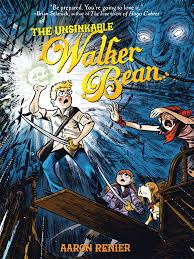
This book has some pretty great blurbs attached to its (from Brain Selznick and Jeff Smith) but I found that I couldn’t really get into it.

A lot of the problem was the artwork.  Interestingly, the artwork on the cover (which I assume is also one by Reiner since it looks like his style) is really great.  But the interior art feels like a sloppy version of this cover art.  And while it’s not sloppy, of course, it just doesn’t look as nice as it might.  Couple that with text that is hard to read, a story line that is full of weird little details and twists and it all wound up being a story that felt way too long for what it was.

There was a lot that I did like about it.  I liked the general premise and I liked two of the crew members that Walker Bean befriends, and of course I loved the various gadgets that they created.  I just didn’t enjoy the story all that much. (more…)

Read Full Post »

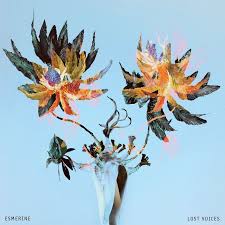
dirkSOUNDTRACK: ESMERINE-Lost Voices [CST116] (2015).

esmerine 2Esmerine’s previous album was recorded in Istanbul and featured a lot of Middle Eastern instruments.  This album was recorded in France and has an incredibly different tone than the previous one.   It doesn’t really have any unusual instruments.  Well, except for the darbuka (a drum) and the riq (a kind of tambouine), both of which appear on the track “Funambule.”  And these interesting items: the ekonting (a West African lute) and the sarod (an Indian lute).

This album has moments that rock a lot harder and louder than anything they’ve done before, but it also has some lengthy mellow moments too.

“The Neighbourhoods Rise” opens the disc with staccato strings and bass.  Then the cello and violin come in.  The song builds and grows more dynamic as drums enter the song, but at 3:30 the song bursts forth with big chords and loud drums.  There’s a great violin melody running through the exuberance.  Then the music all falls away leaving a lovely, sad cello and violin melody to take the song out.

“A River Runs Through This Town” opens with the most conventional sound of an Esmerine record–simple (loud) drumming and an acoustic guitar melody.  More instruments come in, adding complexity. I love that each instrument that comes in–marimba, cello–adds a new layer of notes to the mix until about 3 minutes in when it switches over to big chords.   The song works back and forth between these two styles and rocks much harder than any of their other songs.

“Pas Trop Pas Tropes” is a song of quiet marimba and lots of strings–the cello and violin are once again rather mournful, but very cinematic.  It doesn’t travel very far in its four minutes but it’s beautiful while its there.

“19/14” (can that be a reference to the time signature?) opens with marimba and drums and a deep upright bass (and I believe plucked cello).  When the staccato guitar (or is that the cello?) starts picking out notes the song gets even more interesting.  And then at 3 minutes an electric guitar solo bursts through the melody.  It’s probably the loudest thing the band has recorded yet.  Until the end of the song which gets even louder with pounding drums.  It’s fantastic.

After that, the album mellows out somewhat.

“A Trick of the Light” is but 2 and a half minutes.  It’s washes of keyboards and quiet cello/violin parts.  And then comes–a first for Esmerine, I believe–piano (played by Becky Foon).  The piano is simple but it stands out so dramatically on this track that it sounds amazing.

“My Mamma Pinned a Rose on Me” opens with a cool marimba melody and some ominous keyboard chords.  Some of the middle eastern instruments mentioned come out on this song.  It plays with variations on that simple marimba pattern with different instruments taking turns playing simple chords the top of it.  Somewhere round 5 minutes the song gets so mesmerizing that it nearly puts me in a trance.

“Funambule (Deux Pas de Serein)” opens with some thumping bass and rocks drums along with the Middle Eastern drum playing some cool accompaniment.   And then the nearly 8 minute song is off.   This song revisits the Middle Eastern sounds of the previous record, but with a difference–the drums make the song feel bigger and more intense until about 2 minutes in when the song shifts to a kind of screeching solo.  And then the song resumes with a much faster rhythm.  By 4 minutes the whole song is thudding away, powerful drums and a wall of sound.  When the wall wears itself out, the song’s denouement is more layers of cello and violin–beautiful intertwining melodies.

The final two songs are short.  “Our Love We Sing” is 3 and half minutes of synths and slow cello.  This song also features Becky Foon’s voice, singing wordless passages.  It builds and builds but has no grand climax.   The disc ends with “Lullaby for Nola” a simple piano twinkling and then strings accompany the lovely voice to create this slow, beautiful lullaby.

This album is not as cohesive as the previous one, but it really lets the band explore lots of different avenues.  I’m certainly looking forward to whatever they come up with next.

[READ: February 2, 2016] Delilah Dirk and the Turkish Lieutenant

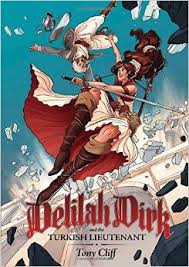
I enjoyed this story quite a lot.  Cliff’s animation which was peculiar but ultimately very satisfying.  And more importantly, he tells a great story.

It opens in Constantinople in 1807.  The King has just begun a game in which the strongest men fight for as much gold and riches as they can grab

Then Chapter 1 shows us Delilah Dirk in prison.  And the guard Selim is reading off the extravagant list of charges against her.  These include–marksman, acrobat, swordsman, world traveler (alone!) and a woman with the ability to fly.  As we flashback to her meeting Selim in prison, we see her being quite cross at getting caught and just about to tell him.  Until she tastes his tea.  Then she reappraises him.

Turns out that Selim’s quite the man with a pot of spices.

As he relates Delilah’s exploits to the king, the king bursts out laughing–primarily because Delilah is a woman.  He doesn’t even think twice that she might try to escape until (and wee see this behind the scenes) she bursts through the wall to her rescue.  And takes Selim with her. (more…)

Read Full Post »

sculptorSOUNDTRACK: ESMERINE-Dalmak [CST096] (2013).

dalmakI really enjoyed Esmerine’s previous record–it was a delightful surprise from a band I didn’t know.  Since then, they have put out two albums.  Dalmak is a Turkish verb with many connotations: to contemplate, to be absorbed in, to dive into, to bathe in, to rush into, to plummet.

The album was recorded in Istanbul and after laying down the basic tracks, they added local musicians who contributed some great sounding Middle eastern and Turkish instruments–bendir (a drum), darbuka (another kind of drum), erbane, meh, barama and saz (a stringed instrument)–on tracks 2, 3, 4, 6, and 7.

“Learning to Crawl” opens the disc and consists of 3 minutes of beautiful swirling cellos and violins that create a wonderful atmosphere.  “Lost River Blues Pt 1” comes in next and it changes the whole tenor of the album with the first of the Turkish instruments.  The marimba keeps a musical rhythm as the other droning instruments play layers of music–creating an unexpected tension.  The repetitions of the rhythm is a wonderful undercurrent to the lovely cello and violin that play washes of music over the top.  Their melody adds a great deal of drama.  It is a 7 minute song and once it’s over it jumps right into “Lost River Blues Pt 2.”

Part 2 opens with some stringed instruments playing a great middle eastern melody alternating with some loud choruses of instruments.   The song grows quiet in the middle and the flute like instrument (the meh?) plays a melody before all of the drums kick in again (there are so many drums) the song grows more intense.

“Barn Board Fire” opens with some Middle Eastern strings again (the saz, I gather) and a simple two note bass to back in up. When the drums kick in the song really feels full.  There’s a cello solo that runs throughout the song and it’s quite lovely.  When the cello matches the rest of the music, there’s few measures that play with loud and soft and it’s quite cool.  It builds to a raucous ending before echoing out

“Hayale Dalmak” opens with some waves of keyboards, almost like a new age song.  it works as something of an intermission before the intense cello melody of “Translator’s Clos Pt 1.”  This time the first part is the shorter one, as the drums and cello play a great melody and rhythm together.  Again, it’s so scenic and evocative.  It builds to a great closure before switching to Pt 2 which opens with a great percussion intro (I need to know how they made those popping sounds).  This part is a little slower than the first, although the drums are still pretty intense.  In fact, even though there is a lot of cello in this song, the drums are really the highlight with all kinds of awesome percussion going on.  The middle of the song introduces the first vocals on the record–I assume they are in Turkish or Persian.

“White Pine” sounds like a western melody played on an Eastern instrument and a mournful violin played over the top.  It’s a neat twist. The final track “Yavri Yavri” opens with glockenspiel and strings.  The song swirls around before vocals come in again.  It stays like this for five or so minutes–always remaining somewhat mellow but never easy.

I really enjoyed this album.  And it gets better with each listen–the combination of Western and Eastern instruments works so well in these songs.  And of course, Becky Foon and Bruce Cawdron write some amazing melodies as well.

[READ: February 20, 2016] Sculptor

I know Scott McCloud from his excellent Understanding Comics, which does a great job in explaining how comics work to novices but also shows keen insight for fanboys as well.

I never really considered that he had created his own comics (even though the above book is also full of his drawings).  He had created a series called Zot!, but really not all that much more.

The premise of this book is fairly simple, but the details and twists and the psychological depth are really staggering.  As is the beauty of McCloud’s drawing. (more…)

Read Full Post »

« Newer Posts - Older Posts »