SOUNDTRACK: PJ HARVEY-Live at the Warfield Theater, San Francisco, April 14, 2011 (2011).
NPR was given permission to share this PJ Harvey concert. However, they were only allowed to share about half of it. The show is fairly short to begin with (about 75 minutes) but the downloadable portion is barely 40 minutes. It turns out that NPR was given the rights to all of the songs from the new album, Let England Shake.
Now, I have no idea how things like this work, why they are only given access to these songs as opposed to the other ones, or why an artist (or management) would not let her fans hear the ten or so other songs she played that night. Legal restrictions are weird and usually stupid. But as I’ve mentioned before, you shouldn’t complain about free stuff.
So, what we get here is a spliced together concert (it sounds seamless, although they have removed all of the banter (if there was any)). The album is played in its entirety (although we were not given “Written on the Forehead” which happens to be the song they are playing the most on the radio here), but it’s not played in order. It was also interspersed with older songs “The Devil” and “Silence” from White Chalk, “The Sky Lit Up” and Angeline” from Is This Desire, “Pocket Knife” from Uh Huh Her, “Down by the Water” and “C’mon Billy” from To Bring Her My Love, (I’d like to hear how she handles the older songs, now that’s she’s singing primarily in the higher register). And, “Big Exit” from Stories from the City.
It’s pretty clear that Harvey is no longer the young woman who made those first couple albums. And she sounds strong and confident here. It’s a great set; the autoharp never sounded better.
[READ: April 20, 2011] Five Dials Number 5
I have been enjoying all of the Five Dials, but this issue is easily my favorite so far. The “theme” of this issue is translation. Translators are the unheralded workers in literature, and while I have been trying to give them credit in my posts, I don’t always pay them enough attention (except when a translation is awkward or clunky).
But in addition to the theme (and the really cool interviews with some translators, I thought the fiction was outstanding and I loved Alain de Botton’s Advice column. The whole issue was great. (more…)
SOUNDTRACK: THE VASELINES-The Way of the Vaselines (1992).
I had never heard of The Vaselines until Kurt Cobain praised them so much back in 1992. SubPop quickly issued Way of the Vaselines, a fairly comprehensive collection of their recordings.
I bought it and thought it was okay. Not revolutionary or anything, but decent indie pop. And I think my lackluster response is in part because I often react the same way to what you’d call originators of a scene when I’ve already been in the scene for a while. Once people have blown the fundamentals away, it’s hard to appreciate the fundamentals anymore.
And so I’ve given them a new listen with more appreciative ears. I also enjoyed poppier music a lot more now than I did in 1992 (it’s funny how poppy The Vaselines are and yet how noisy Cobain was).
The songs really hold up quite well in a Velvet Underground way (“Rory Rides Me Raw”), or the left field dance anthem cover of Divine’s “You Think You’re a Man.” They also have some fast punk songs (“Dying for It”).
Nirvana covered three of their songs, “Son of a Gun” and more famously “Molly’s Lips.” (The Vaselines version of “Molly” is much cuter (with a bike horn in the chorus)). And, perhaps most famously, “Jesus Wants Me for a Sunbeam” (which is pretty close to the original).
The Vaselines sang a lot about sex, (“Sex Sux,” “Monsterpussy”) that was disguised in a largely pop context. But they also had inclinations towards fuzzy punk.
I think what’s so wonderful about this collection is that it’s four Scottish kids who had good pop sensibilities (and some talent) playing what they liked. They’re an amateur love to the whole disc, and yet for all of their lo-fi ness, the songs sound good–even if you can’t always understand the lyrics. (Sub Pop remastered and re-released the package with bonus tracks as Enter the Vaselines, but I’ll not be getting that).
Were they, as Allmusic says, the best pop band from 1986 to 1989? I don’t know. But they sure played some great songs. I’m don’t think I need to hear their reunited selves, because there’s something about the charm of these Edinburgh kids playing these songs in something of a vacuum that I rather like. It only took two listens to this record (probably the first time in ten years) for me to see how much was here.
[READ: April 16, 2011] “Underachievers Please Try Harder”
The subtitle of this article is “Indie Rock Reunites on the English Coast,” and I’m mentioning it because it got me to listen to the Vaselines record again.
It was an interesting article about the state of music and “festival” tours, specifically All Tomorrow’s Parties. (This year’s ATP spinoff, I’ll Be Your Mirror will be in Asbury Park, New Jersey! and features Portishead, Mogwai and A Silver Mount Zion among others–were I 20 years younger, I’d be there). (more…)
[READ: September 24, 2001 & May 9, 2011] Talk of the Town
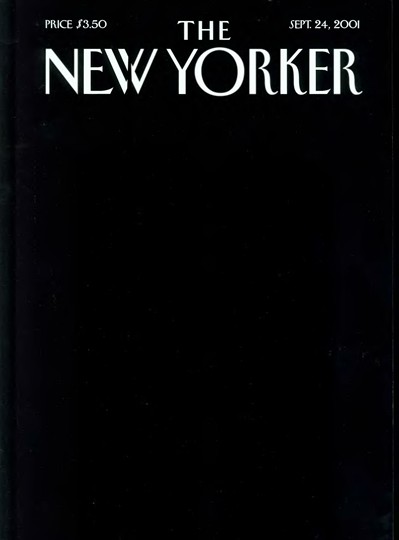
After 9/11, I read everything about the incident (like the multiple comics that came out). About a week after 9/11 my friend Al and I went down to Hoboken and absorbed the decay (and I can’t help but wonder if that’s why I’ve developed adult asthma). My 9/11 story is no more compelling than anyone else’s and may even be far less compelling (you can read a snippet at Al’s blog, should you care to). Anyhow, when this issue of The New Yorker came out (with the amazing cover that you can’t really see here–the towers are in a shiny black that reflects the light), I read all of these accounts and recollections.
I came upon them again recently when I was doing a New Yorker search for Jonathan Franzen. I recently read all of his New Yorker entries, but when I saw that he had one that was part of this 9/11 issue, I decided to put it off. It was reasonably close to the ten-year anniversary of 9/11, and I told myself I’d wait until then to reread and see what I thought.
And then President Obama gave the order to capture and kill Osama bin Laden (hooray!) and that seemed like a far more propitious reason to go back and re-read these articles. Now I can feel a bit lighter about the whole thing (just a bit, but a bit can be a lot). And so, here’s a somewhat facile reaction to these reactions.
I’ll preface by saying I can’t imagine what it must have been like to write something, anything at that time. Some people respond well to pressure and tragedy and perhaps that’s what happened here. I can’t help but wonder how paralyzing it must have been for other writers (as it was for most people). So that these writers had the wherewithal to write anything coherent is pretty amazing. And the fact that the could express the range of emotions that they do is extraordinary. (more…)
SOUNDTRACK: KANYE WEST-My Beautiful Dark Twisted Fantasy (2010).
Before buying this album I really only knew of Kanye West as a loudmouthed guy who tweeted a lot and told off George Bush. But then everyone was raving about this album (Pitchfork gave it a 10 out of 10!). So I decided to check it out. And I can’t get over how great an album it is.
Now I’m going to start this review by mentioning a few things I dislike about rap as a genre. 1) I dislike all of the “guests” that appear on a record–I bought the album because for you, not your friends. 2) I dislike excessive use of “unh” and “yeah” at the beginning of a track; when you have nothing to say–let the backing music flow, save your voice for actual words. 3) Rap is still terribly misogynist and vulgar–I’ve nothing against vulgarity per se (I do have something against misogyny) but excessive use is lazy, and it stands out much more in a rap song since you’re saying the words not singing them.
The Kanye West album is guilty of all three of these things, and yet I still think it’s fantastic. The first reason is because it goes beyond a lot of rap by introducing real musical content into the songs. This is not an “all rap is just a beatbox” dismissal of rap, it’s an observation that rap tends to be more about the lyrics and the musical accompaniment can get kind of lazy. West’s songs have (beautiful) choruses, strings, and samples that augment the rest of the song, as opposed to samples that ARE the song. And Kanye West’s voice is great. His delivery is weird and twisted, a little cocky but more funny, with a twisted attitude that is really cool–and to my rather limited palate of rappers, it’s original.
The opening of the disc “Dark Fantasy” has a chorus singing “Can we get much higher” which is catchy and cool (and is used in the promo for The Hangover 2). The switch from this opening to the rapping works well (aside from the FOUR “yea”s). Although I don’t love the yeahs, I love his delivery, and that he occasionally ends lines with these weird “hunh” sounds, that are wonderfully emphatic.
The guests start showing up on track 2, but even the guests can’t detract from the excellent guitars of the song (and the cool solo). And I’ll say about the guests that I like some of them, but for the most part I’d rather hear Kanye.
“Power” samples King Crimson’s, “21st Century Schizoid Man”; anyone who samples King Crimson is alright with me. But to use it so perfectly, to make it part of your song is real genius. It works musically as well as within the overall concept of the album.
“All of the Lights” (with the pretty piano intro) features scads of guests including John Legend, The-Dream, Elly Jackson, Alicia Keys, Fergie, Kid Cudi, Elton John (!), and Rihanna. I can hear some of these people but not Elton John (why would he agree to be on a track where you can’t even hear him?). It is a beautiful pop track nevertheless.
“Monster” is a monster of tracks with yet more guests (I like that some of these guests break with the typical guest, like Bon Iver (!)). And I really like Nicki Minaj’s verse. [I’m not familiar with her work at all (in fact I keep wanting to say Minja instead of Minaj) but her verse with the wonderfully crazy vocal styling she displays is weird and cool and very powerful–I would like to check out her solo album, but the samples I heard weren’t that interesting]. It also has a great repeated chorus of being a “motherfucking monster.”
It’s followed by the even more catchy “So Appalled” (with FIVE guest rappers–some of whom I’ve never heard of but who do a good job. I love Cyhi da Prince’s lyrics: “I am so outrageous, I wear my pride on my sleeve like a bracelet, if God had an iPod, I’d be on his playlist” or “So call my lady Rosa Parks/I am nothing like them niggas baby those are marks/I met this girl on Valentine’s Day/fucked her in May/she found out about April so she chose to March” or this line, “y’all just some major haters and some math minors.”
“Devil in a New Dress” opens with a bunch of “unhs” (which I dislike) but this is nice ballad in the midst of all of the noise (and it has some clever lyrics). It morphs right into “Runaway” one of the more audacious singles I can think of. The piano melody is so simple (a single note to start) and the lyrics show Kanye as a loser in relationships. It’s a surprisingly thoughtful song for a song with a chorus that goes: “Lets have a toast for the douchebags, let’s have a toast for the asshole; a toast for the scumbags every one of them that I know. You been putting up with my shit for way too long…runaway fast as you can.” It gets even more audacious when you realize the last 4 minutes of the song are a solo with distorted voice. And the video…the video is 35 minutes long!
The sentiment of that song is erased by the next one, “Hell of a Life”. It opens with a great distorted guitar riff and lyrics about sex with a porn star. “Blame Game” is a surprisingly honest song about being nasty to your girlfriend (“I’d rather argue with you than be with someone else”). It features a sample of Aphex Twin’s (!) “Avril 14th”. And it’s quite a sad but lovely track. It ends with a very long skit by Chris Rock. I like Chris Rock, but this dialogue is kind of creepy because the woman who Rock is talking to (about the great sex she gave him) seems to be a robotic sample–why not have an actual woman talk to him?
The final track, “Lost in the World” has a lengthy intro by an auto-tuned Bon Iver. It’s one of my favorite tracks on the disc, especially the end, where the processed vocals get even weirder but accent the beat wonderfully. This track morphs into what is the actual final track, “Who Will Survive in America” which is basically a long recitation from Gil-Scot Heron. It works great as an album closer.
So, despite several things I don’t like about the disc, overall, it’s really an amazing release. And I can overlook the few things I dislike because the rest is so solid. I can’t decide if it’s worth looking for his earlier releases. How can they live up to this one?
[READ: May 6, 2011] McSweeney’s #37
This is the first McSweeney’s book where I’ve had to complain about the binding. The glue peeled off pretty quickly from the center cover. Fortunately, the back cover held up well. I’m guessing it’s because there’s an extra book tucked into the front cover which prevents the book from closing nicely when it’s removed.
But aside from that, the design of the cover is very cool. It is meant to look like a book (duh), but actually like a 3-D book, so the bottom right and top left corners are cut on diagonals (this makes for a very disconcerting-looking book inside–with triangles cut across the top). The artwork inside is also cool. In keeping with this appearance, each two page spread looks like a book with a spine drawing in the gutter of the pages). And the bottom of each page has lines making it look like the bottom of a book. (The illustrated margins are by SOPHIA CARA FRYDMAN and HENRY JAMES and there are interior paintings by JONATHAN RUNCIO).
The front matter is wonderful. Although it gives the usual publishing information, the bulk of this small print section is devoted to counteracting all the claims that the book is dead. It offers plenty of statistics to show that not only are the public reading, they are reading more than ever. The introduction also goes a long way towards arguing against the idea that people are reading less now than in the past. When was this “golden age” of readers? There’s also the wonderfully encouraging news that 98% of American are considered literate.
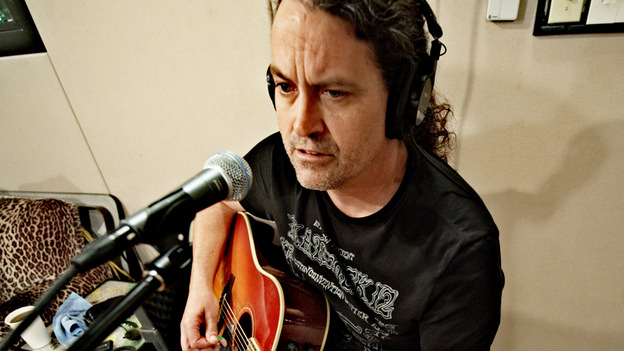
SOUNDTRACK: MEAT PUPPETS-KEXP in studio November 10, 2009 (2009).
According to my stats, this is my 1000th post. Wow!
I had liked the Meat Puppets somewhat when I was into SST back in the 80s, then I really got into them in the late 90s (when Nirvana introduced us to them). I thought Too High to Die was a great album. But they kind of fell from those heights (and Cris Kirkwood fell into serious trouble–drugs and jail) by the end of the decade. So Curt Kirkwood continued without Cris and I kind of didn’t care anymore.
This session from 2009 sees the return of Cris (who came back for their 2007 album) with songs taken from their 2009 album, Sewn Together. I don’t know what the album sounds like but this session is heavy on the country feel. The new songs seem quite mellow, and a bit less bizarre than some of their earlier songs.
They sound good though. Even with the drummer playing garbage cans and recycling bins. As a sort of encore, they play “Plateau” (a Nirvana cover, ha ha). About midway through, Curt messes up the lyrics and gives up singing. But they play the extended coda regardless.
Curt doesn’t come across as the nicest guy in the world, but he’s been through enough to not give a toss what anyone thinks. I’m glad the Puppets are back together and recording, but I don’t think I’ll be delving too deeply into their new stuff.
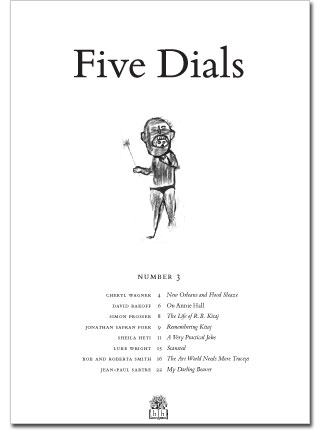
[READ: April 19, 2011] Five Dials Number 3
Five Dials Number 3 ups the page quantity a bit (26 in total) and also includes several art print reproductions from Margaux Williamson, an artist who is mentioned in one of the articles. This issue really solidifies the quality of this magazine. It also introduces the possibility of correspondence with the readers.
CRAIG TAYLOR-On Alibis and Public Views
As mentioned, this letter introduces the idea that people are writing to the magazine. Sadly there is no letters column (even if Paul F. Tompkins hates letters to the editor, for this magazine, I thought they’d be interesting).
CHERYL WAGNER-Current-ish Event: “The Ballad of Black Van.”
This is a true account of Wagner’s life in post-Katrina New Orleans, where a man in a black van is squatting in abandoned properties and selling everything imaginable. And there’s no cops to help. It’s a sad look at the state of New Orleans.
DAVID RAKOFF-A Single Film: Annie Hall
I haven’t read much David Rakoff, but he persist in amusing me whenever I do (hint to self: read more by David Rakoff). This is an outstanding piece about the beloved film Annie Hall. It’ s outstanding and goes in an unexpected direction too. (more…)
I can’t believe it took me all these years to learn that Ricky Gervais was in a synth pop band in the 80s. The band was called Seona Dancing and they released two singles (four songs in all). This is the first song I heard from them and I really like it. (I may be biased, but I also went in expecting to mock, I mean look at him!).
In one of the Extras episodes, David Bowie makes a guest appearance. And you can tell that he’s been influenced by Bowie since the beginning. This song could be a David Bowie B Side (and who knew that the man with that girlie laugh has such a deep baritone singing voice.) I kept expecting the song to turn cheesy but it never did. In fact, the riff from verse into chorus is really cool. The “block” sounds in the middle remind me of Tears for Fears, and really so many other synth bands from the 80s.
There’s two videos on YouTube. The 2 minute one (below) is an actual video. The other clip is 6 minutes long and is some kind of extended version.
I’m fascinated! Much of everything that you need to know about Seona Dancing is here.
[READ: March 27, 2011] two book rviews
This is the second month in a row that Zadie Smith has done some book reviews for Harper’s. I’m not sure if this is going to be a long-standing assignment or if she was just especially excited to talk about these books. But regardless, I’m willing to mention them here.
Even though I was intrigued by last month’s books, I haven’t sought any of them out (The Pale King is coming/out as I write this). But now here are two more books that I would be interested in looking at (although I probably wouldn’t actually read either one in full). (more…)
SOUNDTRACK: PETER BJORN AND JOHN-SXSW May 26, 2009 (2009).
This brief set at SXSW (available from NPR & KEXP) showcases the band’s (then) new record Living Thing. The album was just about to be released, so these are all previews of the album (“New music is the best music”). The album itself is very sparse and these live songs are equally sparse, but are slightly different in construction (some songs have different instrumentation live than on record).
The crowd is very responsive, and the band is really funny. During “Just the Past” there’s a section where the song sounds like it ends, but it is just a pause, and the band tsk tsks the audience for applauding too early. There’s also a joke about John being Joaquin Phoenix and taking up a career in rap.
It’s a wonderfully lively set, even if it is a bit short (the gripe with almost every SXSW download). It’s a good introduction to the album and a great introduction to a band who has been around for ten years and just started making inroads into American consciousness a few years ago.
[READ: April 16, 2011] Five Dials #1
Five Dials is an online magazine. It is free to subscribe (and to download). All previous issues are available on the site in PDF format. I learned about it because they printed the eulogies for David Foster Wallace in Issue 10. But the magazine looked interesting in itself, so I decided to go back and read the whole run (the most recent issue is #18).
The only real complaint I have with the magazine is that they don’t put a publication date anywhere on it. Which is a shame if you’re anal retentive like me. According to Wikipedia, the inaugural issue came out in June of 2008. It’s a monthly (ish) publication and, although I originally thought it would be a literary magazine, it proves to be very much of a magazine-magazine. And a good one at that.
There’s a letter from the editor, there’s Current-ish Events, there’s essays, reviews and even fiction. There’s also a “classic” letter from a “classic” author. The magazine also has some very cool black and white art in it. The style is very crisp and one that I find quite agreeable. (more…)
SOUNDTRACK: THURSTON MOORE-in studio at KEXP, March 11, 2008 (2008).
This interview was headlined ‘Thurston Moore: Not a “Real Guitar Player”?’ which is pretty funny. The Sonic Youth guys have been defying conventional guitar playing for years. And then in 2008 Thurston put out a solo album called Trees Outside the Academy, a beautiful delicate album of acoustic guitar songs.
The interview covers this very subject and concludes that maybe back when they started he wasn’t a guitar player, but now, 25 years later, he certainly is. Moore is charming and funny and relates a very amusing story about being on the cover of Guitar Player and then embarrassing himself in front of one of his idols.
But this download is all about the songs. Thurston (and violinist Samara Lubelski–who plays great accompaniment, but doesn’t really get any on air time to speak) play four songs from Trees: “Sliver>Blue,” “The Shape is in a Trance,” “Frozen Gtr” and “Fri/End.” He sounds great in this setting, especially under close scrutiny. I’d always assumed that there was a lot of improv in the SY guitar world, so to hear him play these (admittedly not difficult) songs flawlessly is pretty cool. I actually wondered if he’d be hesitant (he admits the acoustic guitar is a fairly new thing for him), but not at all (although he says he screwed up on a chorus, but I never heard it.
It’s a great set and its fun to hear Thurston so casual.
[READ: April 14, 2011] “Farther Away”
The subtitle of this essay is “‘Robinson Crusoe,’ David Foster Wallace, and the island of solitude.” As with Franzen’s other recent essays, this one is also about birding.
Franzen explains that he is hot off the work of a book tour (for Freedom) and is looking for some solitude. He decides to travel by himself to the island of Alejandro Selkirk, a volcanic mass off the coast of Chile. The island is named after Alexander Selkirk, the Scottish explorer who is considered the basis for Robinson Crusoe. As such, Franzen decides to travel to the remote island, decompress and read Robinson Crusoe while he’s at it. The locals call the island Masafuera.
I haven’t read Robinson Crusoe as an adult, so I don’t know the ins and outs of the story. Franzen has a personal resonance with the story because it was the only novel that meant anything to his father (which must say something about Franzen’s father, no?). The upshot of what it meant to Franzen’s father was that his father took him and his brother camping a lot as a way to get away from everything.
However, for Franzen, on his first experience of being away from home for a few days (at 16 with a camping group), he had terrible homesickness. He was only able to deal with the homesickness by writing letters.
When he arrives on Masafuera, Franzen’s writing really takes off. He has some wonderful prose about this treacherous space. Although he comes off as something of a yutz for relying on a Google map to learn about the terrain and for bringing an old GPS which has more or less run out of battery. (more…)
SOUNDTRACK: DC3-“Theme from an Imaginary Western” (1985).
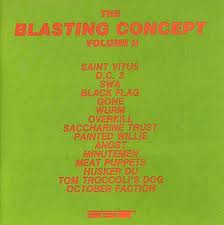
This song comes from the SST compilation The Blasting Concept Volume II, which came out in 1985. I bought it on vinyl and was psyched when it came out on CD. This version of an old Mountain song was one of my favorite songs on the disc (I don’t even know the Mountain version very well).
DC3 was the brainchild of Dez Cadena, former singer for Black Flag. They put out a couple of albums and then disappeared. And yet all these years later this song has stayed with me. For a singer from Black Flag, this song is remarkably poppy (and features a lengthy keyboard solo!). The real treasure of this song for me comes at the first chorus. When the band sings “Oh the sun was in their eyes…” the vocals begin in a disparate, perhaps minor key harmony, and then merge into a perfect harmony. It gets me every time.
DC3’s records have never been released on CD, and the vinyl is out of print. There’s a live CD out, but I’ve never heard it. So, as far as I can tell, this is the only studio song available in the world. Maybe the albums are terrible, but DC3 will always be great because of this one track.
Oh, and someone posted it on YouTube
Thanks!
[READ: March 22, 2011] Consider David Foster Wallace [essays 13-16]
This is the final batch of essays from this collection about David Foster Wallace. The first is about Oblivion and the last three are about his non-fiction. Perhaps it’s because I have been reading his non-fiction a lot lately (or maybe I enjoy reading essays about nonfiction more than fiction) but I found these to be the most enjoyable essays in the book.
As I’ve stated with each post, because I don’t have a lot to say about the pieces (I’m not an academic anymore), I’m only going to mention things that I found puzzling/confusing. But be assured that if I don’t mention the vast majority of the article it’s because I found it interesting/compelling/believable. I don’t feel comfortable paraphrasing the articles’ argument, so I won’t really summarize. (more…)
SOUNDTRACK: MOGWAI & MAGOO-Do The Rock Boogaloo (2002).
This split CD features a song each by Magoo and Mogwai. Both songs are Black Sabbath covers, with Magoo doing “Black Sabbath” and Mogwai doing “Sweet Leaf.” This was released by Fierce Panda records and it’s clearly kind of a joke (the top of the disc says: two sonic scratches of the big bad rock arse”).
And yet despite the jokey nature of the project, the covers are actually quite faithful. I’ve never heard of Magoo in any other context so I don’t know anything about them. But their version of “Black Sabbath” is pretty right on. The big difference is that it seems like Magoo have no bass in their band. Everything from guitars to vocals is much more tinny than anything Black Sabbath put out. In fact, when the really fast part at the end comes up, you can hear the bass, but it sounds like perhaps just more guitar notes. The vocalist is also far less than scary. And yet for all of that, the song isn’t really jokey, it just doesn’t sound scary like the original.
Mogwai’s cover of “Sweet Leaf” seems even more jokey. It opens with a pretty heavy sounding riff and then stops after a few seconds so someone can say “give me the microphone.” There’s also a lengthy conversation going on throughout the background of the song. The vocals are quite fascinating. They are utterly understated, bordering on spoken. As such, there is a notable Scottish accent for the verses.
After the main body of the song, they never quite get to the heavy drum part at the end, in fact, the song kind of just fades out while the lengthy (drunken?) conversation (and burping) continues for over a minute.
No one is going to say this is an essential recording, although it’s good for a laugh, I suppose.
[READ: February 28, 2011] Consider David Foster Wallace [essays 10-12]
More than half way through the essays, we’re moving away from infinite Jest era and into the Brief Interviews era. These articles look at sincerity, love and footnotes.
Because I don’t have a lot to say about the pieces (I’m not an academic anymore), I’m only going to mention things that I found puzzling/confusing. But be assured that if I don’t mention the vast majority of the article it’s because I found it interesting/compelling/believable. I don’t feel comfortable paraphrasing the articles’ argument, so I won’t really summarize. (more…)
 SOUNDTRACK: PJ HARVEY-Live at the Warfield Theater, San Francisco, April 14, 2011 (2011).
 NPR was given permission to share this PJ Harvey concert. However, they were only allowed to share about half of it. The show is fairly short to begin with (about 75 minutes) but the downloadable portion is barely 40 minutes. It turns out that NPR was given the rights to all of the songs from the new album, Let England Shake.