Feeds:
Posts
Comments

Archive for the ‘End of the World’ Category

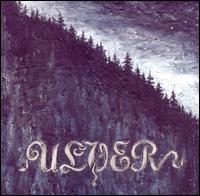
SOUNDTRACK: ULVER-Bergtatt (1994).

Ulver has some music in the soundtrack to Until the Light Takes Us and my friend Lar pointed me to a location where you could download a bunch of their music (this was before Spotify of course). 

So I grabbed a few of their albums expecting to hear some brutal death metal.  And I kind of did, but I also heard classical guitar, flute solos and chanting.   So this album’s full title is Bergtatt – Et eeventyr i 5 capitler (“Taken into the Mountain – An Adventure in 5 Chapters”) and it comes in at a whopping 35 minutes–not bad for an epic.

The opening track (“I Troldskog faren vild” (“Lost in the Forest of Trolls”)) is fascinating–a kind of chanting vocals over a quietly-mixed-in-the-background black metal.  The music is so quiet (and yet clearly black metal) that it almost comes across as ambient noise, especially over the multilayered chanting (I have no idea what language they are singing in).  It ends with a pretty acoustic guitar passage that segues into a very traditional sounding heavy metal section–with a catchy solo that takes us to the end.

“Soelen gaaer bag Aase need” (“The Sun Sets Behind Hills”) opens with, of course, a flute solo.  It’s a minute long and quite melancholy before blasting into the fastest of heavy black metal complete with growling vocals and nonstop pummeling.  But after a minute of that it’s back to the layered chanting like in the first song.  The song ends with a conflation of the two–the chanting metal with the growling black metal underneath.  It’s quite a sound.

Track three “Graablick blev hun vaer” (“Graablick Watches Her Closely”)opens with a lengthy acoustic guitar intro–not complicated, but quite pretty and unlike the poor recording quality of the metal, it seems to be recorded with high quality equipment.  After about 45 seconds that gives way to more black metal.  In a strange twist, the black metal section just fades out, replaced by more acoustic guitar and what seems like the end of the song.  But instead, there is a strange quiet section–not music, but sounds–like someone walking around in the cold forest with crunchy noises and little else.  For almost two minutes.  Until the black metal comes back with a vengeance.

Slow guitar with slow chanting opens track 4 “Een Stemme locker” (“A Voice Beckons”) (the shortest at only 4 minutes).  And the amazing thing is that it doesn’t change into something else.  It is a nice folk song.

The final song “Bergtatt – Ind i Fjeldkamrene” (“Bergtatt – Into the Mountain Chambers”) has a blistering opening followed by some of the most intricate acoustic guitars on the record.  It morphs into a very urgent-sounding black metal section which lasts about 5 minutes.   But just to keep us on our toes, the song (and the disc) end with more classic acoustic guitar.

There is a story here (allmusic says it is a Norse legend about maidens being abducted by denizens of the underworld) and that might help explain the music madness.  But as a musical composition it works quite well.  The chanting over the black metal is really effective and the acoustic instruments bring a nice sonic change from the pounding metal. 

This is not for everyone obviously, but the diversity makes this an interesting introduction into the black metal scene.  Baby steps. 

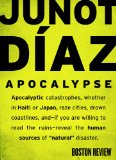
[READ: November 4, 2011] “Apocalypse”

This is the final non-fiction essay of Junot Díaz that I could find online.  The other one comes from GQ and is called “Summer Love”, but there’s no access to it online. 

In this essay, Díaz looks at the impact of the earthquake that devastated Haiti now that it has been over a year.  Díaz was born in the Dominican Republic which has a long and very brutal history with the people of Haiti–they share a land mass after all.  But rather than looking only at Haiti and how it was devastated, Díaz takes this as an opportunity to see what the earthquake reveals about our country and the state of the world.

The essay is broken down into eight parts.  The first revisits what happened.  The second discusses the meanings of apocalypse, which sets up the “theme” of this essay.  The First: the actual end of the world (which for the thousands of people who died, the earthquake was); Second: the catastrophes that resemble the end of the world (given the destruction of Haiti and the devastation that still lingers, this is certainly applicable); Third: a disruptive event that provokes revelation.

Díaz is going to explore this third option to see what this earthquake reveals. 

What Díaz uncovers is that the earthquake was not so much a natural disaster as a social disaster–a disaster of our creating.  The tsunami that hit Asia in 2004 was a social disaster because the coral reefs that might have protected the coasts were decimated to encourage shipping.  Hurricane Katrina was also a social disaster–years of neglect, the Bush administration’s selling of the wetlands to developers and the decimation of the New Orleans Corp of Engineers budget by 80 percent all contributed to a situation where Katrina could be so devastating.

Then he talks looks at the history of Haiti.  I had known some of this story, but not as much as he provides here–the constant abuse of the citizens, the constant abuse of their finances (both from simple theft and from French and American planning that changed their economy).  There’s also the story of “Papa Doc” Duvalier.  Basically Haiti was a disaster waiting to happen. 

Díaz goes into great detail about the global economy and how it impacted the poor in Haiti and he shows that it doesn’t take a lot of extrapolation to see it reflected in the rest of the world as well.  With the constant rise in standards for the wealthy and the constant abuse that the poor take, it’s not hard to see that Haiti could easily happen here.  If not in our lifetime, then certainly in our childrens’.

But Díaz has hope.  (more…)

Read Full Post »

[WATCHED: August 22, 2011] “The Calamity Song”

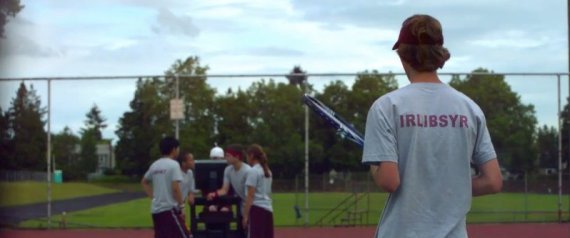
I woke yesterday to the news that one of my favorite bands had made a music video which was a tribute to one of my favorite books, Infinite Jest. Colin Meloy was a reader during the Infinite Summer project (one of the more high profile readers, although he didn’t really contribute beyond the first week).  When I saw him at BEA, I asked him if he finished the book and he said that indeed he had. Weill according to this story from The New York Times, Colin liked the book so much that he wanted to use one of the great scenes from the book as the basis of a music video.  And since The Calamity Song has the line “In the Year of the Chewable Ambien Tab” which is an allusion to Infinite Jest‘s Subsidized Time, well why not use that as the song.

The video was directed by Michael Schur (a huge Infinite Jest fan) who is a major figure behind Parks and Recreation. The video is a bare-bones retelling of the Eschaton sequence from the novel. For those who have not gotten to that scene yet, Eschaton is a game of global annihilation played on a tennis court. There are strategic places you are supposed to hit from across the court (so it’s a physical game, not just an academic one) with your 5 megaton tennis balls.   The scene is challenging to read because there’s so much going on, but the video does a very good job of giving you the essence.

Sure, diehards will have lots to quibble about (it’s raining, not snowing; Ann Kittenplan (the girl who gets hit with the ball) is totally hot–not so much in the book; and the scene doesn’t end with someone’s head crashing through a computer monitor).  Most of the quibbles are addressed in the Times article but some are easily answered anyhow–it was filmed in two days, it’s a flat screen monitor (you can’t put your head through that), and why not have a hot Ann Kittenplan, it’s a music video, right?   (more…)

Read Full Post »

SOUNDTRACK: RUSH-The Fifth Order of Angels (bootleg from the Agora Ballroom,Cleveland, 26 August 1974) (1974).

I have mentioned this concert before, but I played it again today, and was struck by a couple of things.

1) According to the liner notes, Neil Peart had been in the band about two weeks.  How did they decide that their new drummer was going to be doing a drum solo during the show?  I mean, by now, everyone knows that the solo is its own song.  But, he’s been in the band two weeks.  It’s obvious he’s a good drummer, better than their original drummer, but a drum solo?  Is that just what rock bands did back then?

2) I’m struck by how much this show sounds like early Kiss.  I never really thought that  their first album sounded like Kiss, but in this live setting, a number of the songs, or perhaps just  the way they are recorded make me think of early Kiss.  In particular, during the crazy “one, two, three, FOUR!” of “In the End,” when the guitars kick back in, it sounds like a Kiss show from circa Alive!.

3) It’s amazing how guitar-centric the band was back then.  The mix is a little rough so it’s not entirely clear how insane Geddy is on the bass (when he gets a few solo notes, the bass sounds really tinny).  But the concert is like a showcase for Alex’s solos.  True, the whole first album really demonstrates what a great soloist he is, but it’s really evident here that Alex was the star.

4) Their earlier songs are really not very good.   I mean, every Rush fan knows that the first album is almost not even a real Rush album, but it’s shocking how pedestrian these songs are compared to even what would show up on Fly By Night.  Still, circa 1974 I’ll bet this show kicked ass.

It’s available here.

UPDATE: The missing content has been added!

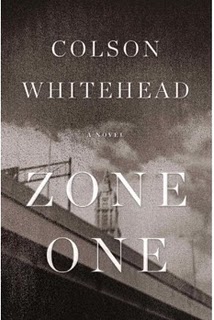
[READ: August 9, 2011] Zone One

After reading the excerpt from Zone One in Harper’s I decided it was time to read the book (which is due to be published in October).

I admit I haven’t read Whitehead’s other works, but I have read excerpts, and I thought I knew the kind of things he wrote.  So it came as a huge surprise when the excerpt ended the way it did. I didn’t want to spoil anything when I wrote the review of the excerpt, but since the entire book is set in the dystopian future and since it explain what has happened right on the back, I can say that Zone One is set in the aftermath of a kind of zombie apocalyptic plague.  And I can’t help but wonder if the rousing success of McCarthy’s The Road has more or less opened up the field of literature to more post apocalyptic, dare I say, zombie fiction.  [I haven’t read The Road, so there will be no comparisons here].

Actually there will be one.  Sarah read The Road and complained that you never learned just what the hell started the end of the world.  Indeed, in this book you don’t either.  There is an event called Last Night, and after that, there’s simply the current state of affairs.  I suppose you don’t really need to know, and since the story is all about dealing with the zombies, I guess it doesn’t really matter how it all started, but I think we’d all like to know.

Now what makes this story different from the typical zombie story is that for the most part there aren’t all that many zombies (or whatever these undead people are called) in the story.  There are some of course, and they are inconvenient to the main characters, but unlike a story like Zombieland, (which was awesome) or the more obvious Night of the Living Dead, the story isn’t really about fighting zombies, it’s more about the rebuilding of the country in a post-zombie world. (more…)

Read Full Post »

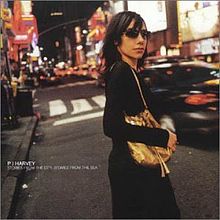
SOUNDTRACK: PJ HARVEY-Stories from the City, Stories from the Sea. (2000).  

When this disc came out it was greeted with rounds of praise.  And it’s easy to see why.  It’s a mature album and it seems very New York City (or, perhaps, more specifically, it seems very Patti Smith–“Good Fortune” practically has Smith singing–I mean the way she says “Little Italy” could have been sampled from Smith).

And after the somewhat wispy Is This Desire and the stopgap Dance Hall at Louse Point, it was great to hear PJ back in full swing. These songs are stripped down (but not raw like her early albums) and most of them pack a punch.  And I just read this quite from PJ  in Q Magazine:

I want this album to sing and fly and be full of reverb and lush layers of melody. I want it to be my beautiful, sumptuous, lovely piece of work.

And it is.  It’s very commercially successful. And it was commercially successful without compromising herself.

“Big Exit” and “Good Fortune” are wonderful rockers, catchy without being predictable.  “A Place Called Home” continues in this vein, with a somewhat slower, moodier piece.  It also exhibits some of her higher register (in the bridge), but for the most part she sings in the deep voice she’s been known for (Uh Huh Her came next, and then she switched over to the higher pitch on White Chalk).

“One Line” even made it on the Gilmore Girls (paragons of good musical taste).

“Beautiful Feeling” is a slow brooding number.  Typically, I find that I don’t like these songs from PJ, but this one is fantastic.  It’s followed by the noisy “The Whores Hustle and the Hustlers Whore” which is very dark lyrically.

Midway through the disc, we get a surprise Thom York from Radiohead sings the lead vocals on “This Mess We’re In” (PJ does backing vocals) and it shows that Yorke sounds great doing anything.  It’s a great song.  “You Said Something” is the first real upbeat moment on the disc, with some nice acoustic guitars.  And it’s followed by the absolutely rocker, “Kamikaze” which harkens to some of the noisier aspects from her earlier records (especially her screaming vocals).

The back half of many PJ albums seem to lose momentum, but not this one: “This is Love” is another great single, catchy with some simple but cool sounding guitars.

“Horses in My Dreams” is one of long (5 minute), slow numbers.  It is a kind of languid piece, which I admit I don’t like all that much.  (I find that PJ’s slow pieces aren’t dynamic enough).  But the album closer “We Float” (at 6 minutes, I think the longest track she’s done) is the kind of moody piece that Harvey does right.  There’s some simple drums and piano that comprise the verses, but when she gets to the chorus, the song perks up with her gorgeous singing “We Float.”

Confusingly, the whole album seems like it is more from the “City” than the “Sea” (“We Float” being the exception), but that’s okay.  It’s a wonderful album and the start of another great decade for PJ.

[READ: late March 2011] discussing The Turing Test

Occasionally things converge in my reading life. And sometimes things converge rapidly.  I had just read an article by Adam Gopnik in the New Yorker that discussed machines becoming (or surpassing) humans.  The timing of this coincides somewhat with the appearance of Watson on Jeopardy! so it’s not entirely surprising to see it.  Watson proved to be very good on Jeopardy!, but that seems mostly because it can buzz in more quickly.  The real test for a computer’s “humanity” is what has been termed “The Turing Test.”

Gopnik’s summary of the Turing Test:

If a program could consistently counterfeit human language in an ongoing exchange, then, many theorists have argued, the threshold of language would have been crossed, and there would be no need for more games to conquer. This is the famous “Turing test,” named for Alan Turing.

The next night I read a story by Ryan Boudinot (in The Littlest Hitler).  The story is not current at all, and yet he also mentions the Turing test.

The third article is another book review.  The subtitle is “What will happen when computers become smarter than people?”  Again, given everything that’s happening in the world technology-wise, it’s not a total surprise, and yet the items are all quite different and it was interesting to read them all so close together. (more…)

Read Full Post »

SOUNDTRACK: RADIOHEAD-The King of Limbs (2011).

I finally had a chance to really listen to this CD and I have some mixed feeling about it.  It doesn’t excite me as much as previous Radiohead releases have and yet, at the same time I can’t stop listening to it.  But I find that I’m listening to it a lot as background music, so I haven’t been able to fully appreciate what’s happening on all the tracks.  Now that I’ve really listened, my appreciation for the disc is higher, although I don’t find it as overall exciting as In Rainbows.

The opener, “Bloom” is a really spare song.  And although I like it, there’s a part of me that wonders almost what’s the point of making an electronica song that is so spare when many others have done much the same.  (It’s interesting to me that iTunes declares that this album is in the genre Electronica).  Of course, with some closer listening, there are some interesting Radiohead things happening, but for me the album doesn’t really start until “Morning Mr. Magpie,” a wonderful weird little song with a great opening guitar riff and excellent use of noisy drumming.  The drumming is really amazing.  It seems to be off-beat and then it speeds up to get on the beat–in every line!  Disorienting and compelling.  But it’s the guitar, I think, that was really missing from the opener.  (Of course, having said that I did like Radiohead’s previous forays into electronica that was sans guitar).

“Little By Little” proves that you can make a weird electronica song that is full of crazy noises and still have a supremely catchy chorus too.  “Feral” is, as far as I can tell, an instrumental (there are lots of sounds that could be voices, but I’m not sure).  It also features one of the great spooky keyboard type sound in a Radiohead song.  Its pretty cool.

“Lotus Flower” is the “obvious” single from the disc (and the radio by me is actually playing it!).  Even though it’s not radically different from the rest of the album, it stands out as the most melodic, the most catchy, the most, well, “single.”  It’s really great.

“Codex” slows things down with, if not a traditional piano ballad, something of a traditional Radiohead piano ballad.  My 5-year-old son made his first venture into music criticism when this song came on.  He said: “Why are you listening to a sad song?”  And when I asked if he liked sad songs he said, “No, sad songs make me feel sad.”  This is a pretty sad song, but it has Thom Yorke’s vocals of redemption pulling through at the end, even while the song retains its sadness.

My son really liked “Give Up the Ghost” though.  He said it sounding like the music at the end of a film, in fact, he was certain it was the music from the end of The Land Before Time movies. (That song is actually a James Horner song, sung by Diana Ross called “If We Hold On Together”).

The final song is a more drum filled track.  Yet despite the manic percussion, the song itself is actually kind of mellow and slow.  It’s pretty much a quintessential late Radiohead song.  Clark’s final review came with this song: “I love this song!  It sounds like someone bonking bananas on your head.”  So there ya go.

So overall, I enjoy the album, but I don’t think it will have as much staying power for me as their other discs.  It’s also surprisingly short (about 35 minutes–although just the other day they released two more tracks).  However, having said that, I’ve since listened again, and I find that I notice something new with each listen, so maybe it will continue to grow and grow on me.

Two of the more interesting things on the album though are the liner notes.  I can’t imagine what inspired, “A big thank you very much indeed to Drew Barrymore”.  And I’m intrigued at “Fluegelhorn on “Bloom” and “Codex” performed by Noel Langley and Yazz Ahmed.”  I’m intrigued that a) there is a fluegelhorn and b) that they needed two people!

[READ: April 10, 2011] The Universal Sigh

This “newspaper” was distributed at some record stores around the world as a tie-in to the new Radiohead album’s release in hard format.  I found out about it from my friend Lar.  He comments that he is too old to be hanging around in the streets waiting for this kind of titbit, and I couldn’t agree more.  He is too old.  As am I.  So it’s nice that there’s a digital version of the paper available.  (Remember when Radiohead snuck little things like this into the backs of their CD cases?)

Now just what is this thing?  Well, it is a newspaper of sorts.  There is a tenuous connection to Radiohead (in other words if you didn’t know they made it, you wouldn’t find out from looking at it). But the main focus seems to be environmental causes.  (Which means that since I printed out the PDF, I have undermined the band’s intention of producing a low carbon footprint product–but hey at least I printed it double-sided). (more…)

Read Full Post »

SOUNDTRACK: THURSTON MOORE-World Cafe Studio, November 16, 2007 (2007).

This World Cafe set is a nice contrast to the all-acoustic performance mentioned yesterday (even if it was recorded earlier).  Thurston has a full band with him (including Steve Shelly on drums).  Samara Lubelski from the other session is here too.  The band brings new dimensions to what are mostly the same set of songs.  Both sets included “The Shape is in a Trance,” and “Fri/End” but this one also includes “Honest James.”  The contrast is striking though.  The songs are bigger with the band (and allow for more intricacies) but they are still intimate.

  The interview is also interesting.  David Dye is a fantastic interviewer and he gets some great (and funny) answers out of Thurston. The whole description of how the lyrics to “Fri/End” came about is really cool (if unlikely).

Thurston and NPR: perfect together.

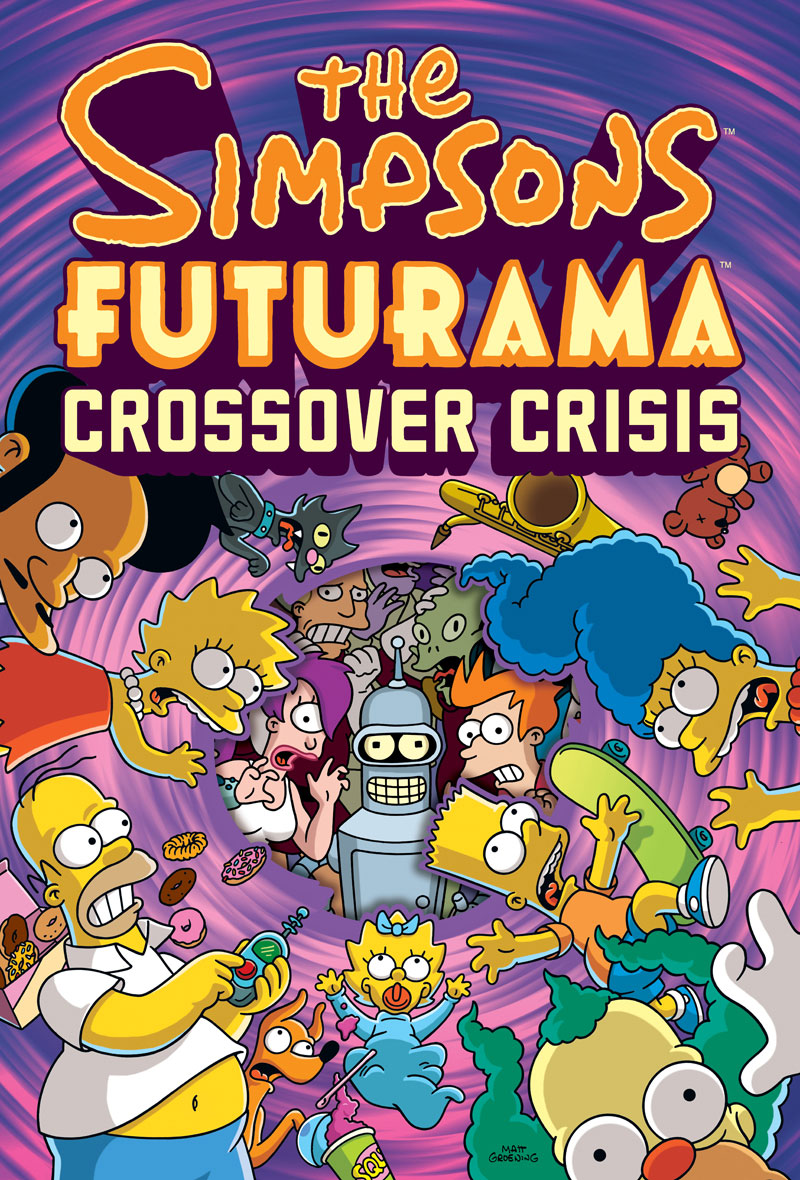
[READ: April 15, 2011] The Simpsons Futurama Crossover Crisis.

This was a wonderful Christmas surprise from Sarah this year.  It is a beautifully packaged (slipcase with a cut-away opening) hardcover edition of the 2002 & 2005 Simpson/Futurama crossover comics issues.

Despite all of my fondness for The Simpsons and Futurama, I never really got into the comics (gotta draw a line somewhere).  But they have Matt Groening’s seal of approval, and they play jokes with things that the show never really touches (not to mention, the shows never tries a crossover event–I can’t even imagine how that would work). (more…)

Read Full Post »

SOUNDTRACK: MONEEN-The World That I Want to Leave Behind (2010).

I’ve liked Moneen’s discs; they played an interesting mix of grungey noisey rock and incredibly poppy emo.  And their song titles were really long and often funny (“The Frightening Reality Of The Fact That We Will All Have To Grow Up And Settle Down One Day,” “There Are A Million Reasons For Why This May Not Work… And Just One Good One For Why It Will”).

The first sign that The World I Want to Leave Behind is different is that their song titles are all really short.  The longest one is the title of the album–which is the shortest song: a 2 minute quiet intro that features some noisy guitars at the end.   The rest are 1-3 words long.  Now, perhaps you can’t judge a band by that; however, their music, like thier song titles, has eschewed complexity and embraced pop.  (“Believe,” “Waterfalls,” “Lighters”).

Okay Moneen always had this component to it.  So it’s not like suddenly the band is all pop.  Take “Are We Really Happy with Who We are Right Now?” from the album of the same name .  The song is all emo vocals (including harmonies) but the music is punky and noisy.  It’s also got a lot of dissonance.  Similarly, “The Start to this May be the End to Another” (from their debut), opens with really blasting noise and then turns into a heavy emo track with loud and quiet sections.  They are certainly poppy, but there’s at least nods to noise.

This album removes all of that noise and chaos and settles into to some tried and true emo.  If you hate emo, you will hate this album.  There’s virtually no dissonance on the disc at all.

Okay, that’s not entirely true.  The second song, “Hold That Sound” opens with some noiy aggressive guitars (and interesting noisy effects) and “The Long Count” has some noisy heavy opening chords which propel through the track.  But unlike earlier records, the noise gets pushed to the background pretty quickly.  “The Monument” also shows some remnants of heaviness–there’s even screaming vocals at one point.

And yet, the aforementioned “Wateralls” and “Lighters” sound like Guster-lite (and I like Guster quit a bit).

The final song, “The Glasshouse” does rock pretty hard (although the harmonies are all still there and the emo certainly seeps in by the end with a piano break and the final 2 minutes being all gang vocals).

Okay so in fairnes to the band, they haven’t smoothed off all the rough edged, but the polished bits are really polished now.  The thing is, I kind of like emo, so despite my tone, I don’t really dislike this record.  I’m always diasppointed when a band moves more commerical, especially if they cut off their more interesting bits, but Moneen make good emo (if you allow that such a thing exists).  I don’t like all emo bands, but there’s still enough interesting stuff here to keep me coming back to it.  In fact, for all of its poppiness, “Believe” is a really fantastically catchy alt rock song which should be in heavy rotation somewhere, if it’s not already.

[READ: February 13, 2011] A Place So Foreign and 8 More

When I saw that Cory Doctorow had a book of short stories out, I was intrigued. I’ve enjoyed two of his books quite a bit, so what could he do with short fiction?

This is some of his earliest work and I found it a mixed bag.

The first story “Craphound” was great (and the origin of his website name).  It concerns going to flea markets and buying all kinds of crap.  When you do it a lot, you become a craphound.  But when you take a fellow craphound’s crap of choice for yourself, you break the unwritten rule.  That’s all well and good.  But in this story one of the craphounds is an alien, like from another planet.  And what he trades for his crap is pretty wild.  But why would he break the unwritten rule?  The story is a fun look at what happens when extra-terrestrials are a part of your life.

“A Place So Foreign” was my absolute favorite story in the book, and one of my favorite short stories in quite some time.  I’m happy to say that I read it last, so it totally ended the book on a high note. Despite the cover picture with an “alien” hand holding a suitcase, the story has nothing to do with that at all. (more…)

Read Full Post »

SOUNDTRACK: THERION-Theli (1997).

I bought this disc when I was living in Boston and I immediately fell for it.  I seem to recall I was doing a lot of driving at the time, and this mix of extreme metal, orchestral accompaniment and twinned vocals was very captivating.  It was also really fun to play very loud on a dark highway.

I’d read a very good review of this disc that claimed it was a big step forward in styles of thrash/black metal (and if you Google reviews for this album they are pretty universally great).  The disc is exemplified by the track “To Mega Therion” which is almost entirely a full choir singing what I guess is the chorus.  The verses are populated by a guy screaming in a guttural voice who is answered by an almost mechanically twinned voice which sounds great but is even harder to understand.  Follow this with a beautiful piano (!) solo not unlike something Randy Rhoads put together for Blizzard of Oz, and add a pounding double bass drum all the way through (truth be told the album could be a little heavier in the bass) and you get a crazy mix of styles which is catchy and creepy at the same time.

It’s hard to match a song like that.  And, admittedly, the band doesn’t quite manage to do so, but the rest of the album keeps up this orchestral death metal throughout.

Reading about Therion has taught me that this album is something of  touchstone for a new genre of metal, called variously symphonic or operatic metal (I suppose we have this to blame for the Trans Siberian Orchestra?).

In addition to the choirs and guitars there are a lot of keyboards. They are disconcerting when you’re thinking death metal and yet really they add an even fuller sound, even if at times they are not as grand or powerful as anything else.  At times the album seems cheesey, but that may have more to do with thirteen years distance than the music itself.

Anyone who has seen The Exorcist knows that choirs can be spooky.  And when you mix it with the heavy guitars and guttural vocals, you get a really cool sinister yet catchy (and possibly uplifting) album.  There are certainly a lot heavier albums, but this one is pretty stellar.

[READ: Summer of 2010, finished December 12, 2010] Lords of Chaos

My brother-in-law gave me this book for my birthday this year.  I was familiar with it as it is fairly well-known in heavy metal circles as a fascinating read.  And so it was.

This book is basically a history of black metal in Norway and how some bands’ antics went beyond music into burning churches and even murder.  The authors present a pretty neutral account of the story.  They let the main participants (criminals) have their say and the interviews don’t comment on their answers, they just let them tell their side of the story.  The authors also know a lot about the music scene.  Of course, in the end, the authors (thankfully) disapprove of the violence.  It makes for an interesting and somewhat conflicting read. (more…)

Read Full Post »

SOUNDTRACK: BAD BRAINS-I Against I (1983).

I don’t remember buying this album, but I remember getting it because of the connection to SST records (not because Bad Brains were an amazing hardcore band–I didn’t know that yet).

All of these years later, this album is still pretty astonishing.  The heavy punk blends so well with the reggae-inspired jams.  Perhaps the biggest band where Bad Brains influence is evident is Fishbone (especially their later metal songs).  But you can hear t hem in Faith No More and many other mid 90’s bands as well.

The disc opens with a great off-beat instrumental (“Intro”) which leads into the amazing yell-along “I Against I.”  “House of Suffering” follows with some more speedy hardcore.  Then it all slows down with “Re-Ignition,” the first indication that this is an album unafraid to take risks.  Although the thumpy riff and heavy beats are still there, the vocals are more of a reggae style (especially towards the end).  “Secret 77” follows with a kind of funk experiment (but those drums are still loud and stark–Earl is a maniac!).

Darryl’s bass work is tremendous throughout the disc, and Dr. Know’s guitar is amazing–speeding fast soloing, heavy punk riffs and delicate intricate reggae sections intermingle with ease.  And, of course, we can’t forget about H.R.’s vocals.  He has several different delivery styles from the speedy punk to the reggae deliveries and the all over the place (including high-pitched shrieks on “Return to Heaven”).

The second half of the disc experiments with more diversity, and it is somewhat less punk sounding (although not by much).

Historically, it’s hard (for me) to place exactly how influential they were.  Listening to  the disc today (which doesn’t sound dated in any way) it sounds utterly contemporary in stylistic choices.  Did they come up with the mosh break?  They certainly are the first punk band the embrace Jah (that’s a trend that never really took off though, eh?), but their funk metal sound predates the popular Faith No More style by over a decade.

[READ: November 21, 2010] “The Kids Are Far-Right”

I know I subscribed to Harper’s when this article was published (I distinctly remember the jelly bean portraits of Reagan), but I’m pretty sure I didn’t read it then because the whole idea of it sounded depressing (the subtitle: “Hippie hunting, bunny bashing, and the new conservatism”) was just too much for me in 2006 (and was almost too much for me in 2010).

And so our correspondent (not long after his trip through the Bush/Cheney volunteer minefield) heads out to the twenty-eighth National Conservative Student Conference.  He meets exactly what you would expect: right-wing campus types (several from ultra-religious schools) who are there to learn to hate liberals even more than they already do (and boy do they).

Wells’ article is full of details about all of the speeches and programs, as well as biographical information about some of the attendees.  Most of them just want to get rid of liberals on campus, but some want to go into politics themselves someday (they are viewed with suspicion here).  Many also hate George W. Bush because he raised taxes.  In hindsight what we have here is the origins of the tea party.

The only comforting news to come from the article is that only 400 people attended (but they were willing to spend a few hundred dollars and give up a week of their summer vacation, so it’s still a pretty high number). (more…)

Read Full Post »

SOUNDTRACK: HURON-“Corktown” (2010).

Huron‘s “Corktown” opens with a guitar riff that sounds like classic 70s rock (hello Thin Lizzy!).  But when the song kicks in for good, the verses are a light, jangly pop.  It makes for a really interesting mix of styles and it works really well.

Some of the other tracks include the screaming rock of “Big Dig” (which has chord progressions of Neil Young but sounds nothing like Neil Young).  It also features some wonderfully stupid fat bass sounds as the song nears its conclusion.  “Bloodfire” has another great guitar solo.  And the vocalist sounds an awful lot like one of the guys from Sloan (who knew Sloan could be so influential?)

Thanks CBC Radio 3 for introducing me to this great band.

[READ: June 15, 2010] “Sun Na, Bird”

This final piece is at the same time the bleakest and yet most hopeful story of the group.

It is the near future and in this suburban Canadian town, all the humans have fled, with no intention of returning (the TV is still on in the house where the story takes place). (more…)

Read Full Post »

« Newer Posts - Older Posts »