Feeds:
Posts
Comments

Archive for the ‘Drinking’ Category

CV1_TNY_06_10_13Schossow.inddSOUNDTRACK: GAUNTLET HAIR-“Bad Apples” (2013).

stillsThis was the third song that NPR played in their summer preview show and I was a little concerned about the state of summer music because I didn’t love any of the first three songs.

Gauntlet Hair (what a crazy name) plays a kind of early-sounding Depeche Mode music with rather sedate and uninspired vocals.  I liked the second half more than the first half, probably because there was more instrumental music.

Indeed, as the song ends and the Depeche Mode-vibe comes to the fore, I rather got into it.  Especially the pianos at the end.

Shame about the vocals.

[READ: June 18, 2013] “Happy Trails”

I haven’t read a lot by Sherman Alexie, but I have enjoyed what I’ve read.

This story was quite short and was all about the disappearance and presumed death of his Uncle Hector.

One day Hector said he was going to hitchhike to Spokane.   He walked out the door and was never head from again.  The narrator says that Hector was his favorite relative (although he later says that he really wasn’t that great of a guy).

As the story picks up, it is four decades later and the narrator has decided to have a funeral for him.  His mother says that she doesn’t think he’s actually dead but the narrator says that it has been forty years, he could have come back or written a letter.  Or called. (more…)

Read Full Post »

[LISTENED TO: June 7, 2013] Hard Magichardmagic

My sister-in-law Karen raved about this book and then gave it to me for Christmas.  And holy cow.  I.  LOVED.  IT.

And before I even get into the story I have to say that a major reason why I loved it is because of the reader–Bronson Pinchot.  Yes, Balki from Perfect Strangers.  Yes, that goofy “foreigner” from the show has an utterly mesmerizing speaking voice.  It is amazingly deep–when he first started speaking the menacing drawl of Jake Sullivan, I was blown away.  And then he pulled out a couple dozen more characters, women and men–German, Japanese, Okies, military men, New Yorkers.  He brought this story to absolutely real life.

I have made a point of looking for anything else that he reads (although I see that he mostly reads books about war (which is not my thing))–but I see a Flannery O’Connor in there and–YES–he reads book two of the Grimnoir series (called Spellbound) and it’s already out!

Okay enough about Pinchot.  No, not enough.  He was stellar!

Okay, now enough.  What’s the story about?  Well, the best thing is that the story itself is also amazing.  It is set in the 1930s, in an alternate reality Untied States.  And in this reality, random people have been gifted with magic.  And there’s all kinds of magic–fades (people who can walk through walls); torches (people who can make and stop fires), mouths (people who can put thoughts in your head); brutes (people who are crazy strong and who can actually bend gravity to their will) and movers (people who can jump from place to place).  There’s also healers and cursers and cogs–really smart people–and other with more mysterious powers.

Each chapter opens with a quote from a real (in our world) person talking about how the magic or the people with magic–the Actives–impacted society.  So Einstein was a cog, and military leaders used brutes to fight in wars, etc. (more…)

Read Full Post »

42SOUNDTRACK: IRON MAIDEN-Iron Maiden (1980).

Steve Harris was on That Metal Show recently.  Harris is the baimssist and primary songwriter for Iron Maiden and has been since their first album in 1980.  When I was in high school Iron Maiden was my favorite band hands down.  I had all their albums, I had all their singles, all their hard to find British vinyl 12 inch singles, even a few pictures discs.  Wonder if they’re valuable?

Every album was an epic event for me–I even played “Rime of the Ancient Mariner “off of Powerslave to my English class (not telling anyone it was 13 minutes long).

And then, after Somewhere in Time, I just stopped listening to them. Almost full stop.  I did manage to get the first four albums on CD, but the break was pretty striking.  I actually didn’t know that they’d had personnel changes in the ensuing years.  I’d vaguely heard that Bruce Dickinson  left, and that others followed, but I don’t think I quite realized that they were back to their big lineup these days.

Anyhow, Harris was so earnest and cool that I had to go check out some of their new stuff. Which was okay.  I’d need more time to digest, but then I had to listen to the first albums again.

And wow I had forgotten how much the first Iron Maiden album melds punk and prog rock into a wild metal hybrid.  There’s so much rawness in the sound and Paul Di’Anno’s vocals, not to mention the speed of some of the tracks.  And yet there’s also some epic time changes and starts and stops and the elaborate multipart Phantom of the Opera….  Wow.

The opening chords of “Prowler” are brutal.  But what’s surprising is how the second song “Remember Tomorrow” is a lengthy song that has many ballad-like qualities, some very slow moody sections–although of course each chorus rages with a great heavy riff and a blistering solo.  On the first two albums Paul Di’Anno was the singer.  He had a fine voice (it was no Bruce Dickinson, but it was fine).  What’s funny is that Bruce does the screams in “Remember Tomorrow” so much better in the live version that I forgot Paul’s vocals were a little anemic here.

However, Paul sounds perfect for the rawness of “Running Free” a wonderfully propulsive song with classic Harris bass and very simple metal chugga chugga riffs.  And this has one of the first real dual guitar solos–with both players doing almost the same riff (and later Harris joining in on bass).

“Phantom of the Opera” is the band’s first attempt at an epic multi-secton kinda-prog song.  It opens with a memorable, if slightly idiosyncratic riff and some wonderfully fast guitars/bass.  There’s a great slow bit that morphs into an awesome instrumental soloing section with bass and twin guitars playing a wonderful melody.

“Transylvania” is an instrumental that is challenging but probably not one of the best metal instrumentals out there, although again when Dennis Stratton and Dave Murray play in synch solos it’s awesome.  This track segues into “Strange World” a surprisingly trippy song (with effects that seem like keyboards but which aren’t).  It’s slow in a “War Pigs” kind of way, but it doesn’t entirely break up the album, because there are other slow bits on the disc.  It is a little out of place though.

Especially when “Sanctuary” blasts forth.  True, it wasn’t originally on the album (in the UK), but man, blistering punk or what!  “Charlotte the Harlot” was always one of my favorite songs (it taught me what a harlot was after all), it’s quite proggy, with a lot of stuttered guitar work and a middle section that features some loud and complex bass.  The disc ends with the by now almost immortal “Iron Maiden.”   A great raw riff opens the song, a harmony guitar partners it and the band blasts forth.  Who even knows what the lyrics area about, the song just moves and moves–There’s even a great chaotic bass/drum break in the middle.  And listening to the guitar noises in the solos at the end.  Amazing.  It’s quite the debut.

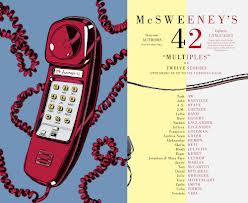
[READ: June 7, 2013] McSweeney’s #42

I have made it a point of (possibly misguided) pride that I have read every word in every McSweeney’s issue.  But this issue has brought that to an end.  As the title states, there are twelve stories in the book.  But there are also sixty-one authors writing in eighteen languages.  And there’s the rub.  One of my greatest (possibly misguided) shames is that I don’t speak any other languages.  Well, I studied Spanish and German, I know a few dozen words in French and I can read the Greek alphabet, but none of these would help me read any of these stories.  So, at least half of this book I didn’t read.

But that’s kind of the point.  The purpose of this book is to make a “telephone” type game out of these stories.  Stories are translated from one language to another and then re-translated back into English.  The translators were mostly writers rather than translators and while some of them knew the second language, many of them resorted to Google Translate or other resources to “read” the story.  Some people read the story once and then rewrote it entirely, other people tried to be as faithful as possible to the original.  And so what you get are twelve stories, some told three times in English.  Some versions are very similar and others are wildly divergent.

I normally write about the stories in the issues, but that seems sort of beside the point as the original stories were already published and were selected for various reasons (and we don’t even see any of the original stories).  The point here is the translation(s).  So, in a far less thorough than usual way, I’ll list the contents below. (more…)

Read Full Post »

CV1_TNY_05_06_13Schossow.inddSOUNDTRACK: BOY-“Little Numbers” (Live at The Current, April 6, 2013) (2013).

boyI am totally hooked by this single–a song which sounds like the next huge Feist hit.  It’s got a great piano melody that just grabs on and won’t let go.

So how does the song hold up on acoustic guitars?  In a recent interview the two Swiss/German band members, Valeska Steiner and Sonja Glass, say that the song was originally written in this slower more acoustic vein.  On first listen this version is not very appealing–there’s something so bubbly and bouncy and joyous about the single version.

The immediacy of the song is gone and the “woah-o” section seems more mournful than joyous.  I suppose it is actually more true to the original intent of the song (I read your name on every wall, is there  cure for me at all).  Although this version features Boy’s beautiful harmonies, especially the concluding moments, I still prefer the more upbeat single version.

[READ: May 21, 2013] “The Gray Goose”

When this story started, I was a little concerned that it was going to be another story about a repressed childhood under the thumb of an oppressive Jewish mother.  It begins by telling us that Miraim’s father left in 1948, when she was little.  One of the only presents she had been given was an album by Burl Ives.  And that album could be played on her family’s hi-fi/radio housed in a rosewood cabinet—“the most fantastical item of furniture in their lives.” Her father hated that they gave into consumerism to buy such a thing, but it was revered.  And all vinyl was held very delicately, as if a breath of air might warp it.

“The Gray Goose” was her favorite song and she listened to it often, trying to scrutinize the songs—just what was this gray goose that could not be killed, Lord, Lord, Lord.  (The traditional meaning of the gray goose that could not be killed appears to have something to do that with the hunter went hunting on the Sabbath, so the goose could not be killed). Although in the story, Miriam’s mother, Rose, says that the goose represents the heart of the working class.  For Rose and her husband, Albert were fiercely Communist.  We learn about Rose and Albert’s marriage—they were passionate about their beliefs, and this passion seemed to transmit to each other.  And then Rose got pregnant, so they married.  And then Rose had a miscarriage, but now they were stuck with each other so they decided to have a child—Miriam.  (His parents didn’t approve of any of it, especially Rose).

Then Albert was offered a job back in Germany—the only Jew to return to Germany so soon, and Rose and Miriam were on their own.  Well, Miriam was on her own, Rose had many many suitors, although none could stay the night.

That’s all back story for the evening of the action—the evening that Miriam and some friends have gone to Greenwich Village to a jazz club.  Miriam is precocious, having finished school a year early and started college (and apparently already dropped out).  She is out with some friends, the wonderfully named Rye Gogan, the horn-rimmed glasses-wearing Porter, assorted girlfriends and Miriam’s boyfriend who is referred to hilariously as Forgettable.  As in “of course Forgettable weighed in with, ‘What?’” (more…)

Read Full Post »

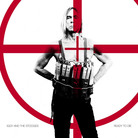
5.20SOUNDTRACK: IGGY AND THE STOOGES-“Job” (2013).

iggyNickelodeon’s favorite dad has just released a new album.  In the lead up to this song on NPR, Bob Boilen said that the live show that NPR streamed from Iggy and the Stooges was a matinée and there were kids as  well as adults there.  Who takes a kid to see Iggy Pop? Even if he was on The Adventures of Pete and Pete?

So this song is a dopey punk song and I love the guitars as the song starts–just classic punk sound and riffage. And then Iggy’s unmistakable voice “I gotta job…but it don’t pay shit.  I gotta job… and I’m sick of it.”  Is there any sentiment less authentic than Iggy Pop singing this?  Probably not.  And yet it’s a fun song for any working class guy to sing along to

And it’s frankly amazing that Iggy and the Stooges are still putting records out.

[READ: May 16, 2013] “Just Drive”

The five brief pieces in this week’s New Yorker are labeled as “Imagined Inventions.”  And in each one, the author is tasked with inventing something.

Shteyngart’s is clearly the most practical and is based on something the he knows already exists. He explains that he is unabashedly a terrible driver: “My greatest failure in life has been my inability to drive a car safely between two locations.”  This is despite the fact that he has always loved cars.  Right from the day that his father bought their first car and he saved up to buy a similar matchbox car (more similar when they painted it the same color), he has loved t he freedom that cars represented.  And I loved the idea that he and his family felt that although America was a large country, the road atlas made it seem like you could drive anywhere.

But Shteyngart’s driving problem seem to be more fundamental—an inability to tell left from right (the way his father tried to teach him is quite funny… if misguided).  And now that Shteyngart lives in the country, he needs to drive more than ever. (more…)

Read Full Post »

mystrugglSOUNDTRACK: TRICKY-“Christiansands” (1996).

christiansandsThis book is set in Kristiansands, and so naturally this song was ringing through my head the whole while I was reading it.  I’ve known this song for ages, but had no idea that Chirstiansands was an actual place in Norway.

This song is dark and tense.  Over a slinky beat, a spare guitar riff introduces Tricky’s voice as he rasps (his voice is slightly modified to give him a weird echo).  And while he’s reciting his verses, the gorgeous voice of Martina Topley-Bird, repeats what he’s saying in a whispered voice until she sings out the chorus “I met a Christian in Christiansands.”

The verses repeat with Tricky emphasizing, “master your language and in the meantime I create my own.  It means we’ll manage.”

I honestly don’t know what the song is about, and it feels like it never properly ends–that riff, at once menacing and gripping never seems to conclude.  It’s a masterful track and hard to forget once you’ve heard it.

[READ: May 11, 2013] My Struggle Book One

I read an excerpt of Book Two from this series in Harper’s.  And despite the fact that nothing really happened in it, I was drawn in by the writing style.  This first novel is very similar in that not a lot happens but the voice is very captivating.  The translation is by Don Bartlett and it is fantastic–I can only assume the original Norwegian is just as compelling.  So, despite the fact that this autobiographical series contain six books (six!) and totals over 4,000 pages (how could this be if Book one is a mere 400?  Books 4-6 are over 1,000 pages each), I decided to give it a try.  (Incidentally, Book Two has just been translated into English this month).

This series has caused some controversy because it is given the same title as Hitler’s Mein Kampf (Min Kamp in Norwegian), and also because he says some pretty means stuff about people who are still alive (like his ex-wife).  Although there isn’t much of that in Book One.

death in the familyIndeed, Book One basically talks about two things–a New Year’s Eve party when Karl Ove was youngish and, as the bracketed title indicates, the death of his father.  (The title A Death in the Family is the same book as My Struggle Book One–from a different publisher.  It has a totally different cover but is the same translation.  I don’t quite get that).  But indeed, these two events take 430 pages to write about.

How is this possible?  Because Karl Ove writes about every single detail.  (I assume this why the books are considered novels, because there is no way he could remember so much detail about every event).  I’m going to quote a lengthy section from a New Yorker review (by James Wood) because he really captures the feeling of reading the book:

There is a flatness and a prolixity to the prose; the long sentences have about them an almost careless avant-gardism, with their conversational additions and splayed run-ons. The writer seems not to be selecting or shaping anything, or even pausing to draw breath….  There is something ceaselessly compelling about Knausgaard’s book: even when I was bored, I was interested. This striking readability has something to do with the unconventionality of “My Struggle.” It looks, at first sight, familiar enough: one of those highly personal modern or postmodern works, narrated by a writer, usually having the form if not the veracity of memoir and thus plotted somewhat accidentally, concerned with the writing of a book that turns out to be the text we are reading.  But there is also a simplicity, an openness, and an innocence in his relation to life, and thus in his relation to the reader. Where many contemporary writers would reflexively turn to irony, Knausgaard is intense and utterly honest, unafraid to voice universal anxieties, unafraid to appear naïve or awkward. Although his sentences are long and loose, they are not cutely or aimlessly digressive: truth is repeatedly being struck at, not chatted up.

That idea of being bored but interested is really right on–and it may sound like a bad thing, but it’s not.  You can read along thinking that there’s no way he is going to give so much unimportant detail.  But you get this description of drinking a cup of tea: (more…)

Read Full Post »

#20SOUNDTRACK: SUGAR-File Under: Easy Listening (1994).

fuelI  always thought File Under: Easy Listening was a very funny title.  But it’s possible that people took it too literally as it didn’t sell all that well. And in Mould’s autobiography he says he didn’t have much time to write songs for this disc and he thinks it suffered.  Of the three Sugar discs, this is definitely the weakest, although there are some great moments on it.

The disc opens with “Gift” which has some ragged distorted guitars. It’s got some noises and grungy sounding solos showing that FU:EL was a joke.  Although, the overall sound is kind of a cleaner version of the angry songs on Beaster.  “Company Book” is kind of a pounder, until the voice comes in and you realize…it’s not Mould!  It’s got a catchy chorus, but after the kind of underwhelming opener, it’s a strange place for a song that’s also not so dynamic.  Especially when it’s followed by “Your Favorite Thing” another great pop song from Mould—not top tier but a really strong second tier (although that bright, simple guitar solo is a real winner).  “What You Want It To Be” is a another decent song (the addition of that extra guitar playing the melody line really makes the song shine.  “Gee Angel” is also a high point.  A catchy song, but which never quite reaches the heights of the previous albums.

“Panama City Hotel” has the same feel as the opening of Beaster: bright acoustic guitars and a similar riff.  But it never really goes anywhere, and the 4 minutes seem.  The “do do do do’s” that open “Can’t Help You Anymore” are certainly the brightest spot on the album, and a big pop song as well.  “Granny Cool” has a nicely abrasive riff although it seems kind of mean spirited.  It’s funny that he tucked “Believe What You’re Saying” at the end of the album.  It’s a minor song but it sounds so bright on this album after the other songs. It’s really quite pretty.

And the closer, “Explode and Make Up” is one of Mould’s great angry songs.  Unlike Beaster, this one has a happy acoustic field—bnright guitars with that raging distorted guitar underneath.  It’s a great slow burner of a song and at five minutes it ends a somewhat lackluster album in a great way.

[READ: March 31, 2013] McSweeney’s #20

McSweeney’s #20 is an issue that I have read before.  At least I think I have.  My recollection is that it was the last one I read before I started writing about them on this blog.  I was hesitant to read it soon again, which is why I waited until now.  And while I remember the issue itself (with all of the art), I didn’t remember the stories.  So who knows if I actually read it six years ago.

Anyhow, this issue comes jam-packed with art.  Every fourth page has full-color artwork on it–many of them are quite famous.  It makes for a very beautiful book.

In between these artworks are a number of stories–ranging in size from 2 pages to 30-some pages.  There are no letters, and the explanatory and copyright information is on the cover of the book–which would be fine, except that it is covered up by a kind of 3-D artwork.  I wonder if the whole text is available anywhere?

The book also comes with a separate pamphlet–an excerpt from Chris Adrian’s Children’s Hospital.  I intend to read the novel eventually so I didn’t read the excerpt–although maybe if I put off the novel for six years I should just read the excerpt now. (more…)

Read Full Post »

peach6SOUNDTRACK: FOO FIGHTERS “Overture” (Rock and Roll Hall of Fame, 2013).

ffhofOn April 19th, Rush was inducted into the Rock and Roll Hall of Fame.  I don’t particularly care about the Hall of Fame, but I love to see Rush celebrated.

And I love to see Dave Grohl celebrate with people.  So, as only Dave and co. can do, they donned white kimonos and wigs and set out to rock the HoF with a great cover of 2112’s “Overture.”  They didn’t get into “Temples of Syrinx” (I was curious to see if Dave would try that falsetto), but they were joined by the original trio for the end of the song with Geddy stating that the meek shall inherit the earth.

FF do a great job, they sound heavy and they got all of those odd time signatures down right.  Dave does an admirable job with Alex’s challenging solos.  All in all, it was a pleasure to see.  Evidently this will be broadcast officially on May 18, but for now there’s a shaky cam version floating around the web.  I found it on Stereogum.  You can also see Dave Grohl’s very cool induction speech there too (although the picture no longer seems to be on cameltoe.org).

And check out the commitment (even with Tyler’s moustache) and the real set behind him.

ffhof2

[READ: April 21, 2013] “The Tandoor”

An unexpected title for this story in which the tandoor plays a very small role.  The story felt like there could have been a lot more to it, for while there was a lot of backstory and the story did feel complete, I could have read a lot more (which I think is a great complement).  It starts out in a rather mundane fashion with a girl in the backseat of a car being belligerent because her mother took away the iPad (so she could do Sudoku).  The family is driving to Texas to see the Hole.  Before we learn what the Hole is, we learn more about the family.

The husband and wife are fighting (as usual).  The daughter has taken the father’s side because he’s the underdog.

It turns out that the father has opened another restaurant (this is the fifth one, the other four have failed).  It is also not doing very well and the wife resents not only the failing business but also the fact that he has been given money to try five businesses.   She also resents the woman that he husband admitted he lusts after (at least he admitted it in his sleep).  And she seems to have taken that as an invitation to sleep with someone else as well.  (There’s a lot more to it and the details are wonderful). (more…)

Read Full Post »

between heaven SOUNDTRACK: ALTAR OF PLAGUES-“Scald Scar of Water” (2013).

aopI never think of death metal coming from Ireland.  I think of punk and metal and obviously the Pogues, but noise metal?  Unlikely.   And yet here is some.  And why shouldn’t Ireland produce music like this?  There are fans everywhere.

I heard this from good old Lars at NPR.  I’ve come to expect the unexpected from Lars’ picks.  And this is no exception.  The song is six minutes long.  It has some traditional death metal stuff–growling vocals, incessant drumming and lots of noise.  But there’s a lot more going on here.  It opens with electronic noise and thudding drums.  The drums are punctuated by alternating abrasive guitar riffs.  The song meanders along until it settles down to some heavy heavy verses (I have no idea what the man is screaming about).  After returning to the buzzsaw riffs, and repeating the verse, the song suddenly stops.

At 4 minutes the whole thing stops.  There’s some scratchy noises and then some slow pulsing bass and suddenly the whole song turns into  kind of alternative metal song, complete with chanting.  It’s pretty unexpected.  I can’t imagine what the rest of the album is like.

[READ: April 17, 2013] Between Heaven and Here

This was another book that I did not like in the beginning. Well, that’s not exactly true, I enjoyed the beginning but I really didn’t like the middle and really wanted it to end soon.  Not a good way to feel about a book. The reason I didn’t stop is because it was so short.  It turns out that an excerpt from this book was in a McSweeney’s issue that I recently read (and which I haven’t posted yet).  I didn’t “get” the excerpt then, and while it makes more sense in context I still felt the section was really hard to follow.

And so was much of the book.

This is the story of Rio Seco, an area of California, and the citizens who live there.  As the story opens we learn that Glorette Picard is dead.  Glorette was a crack whore, the kind of girl who would get killed and no one would miss her.  Except that people would miss her.  She had a lot of friends and relatives who cared about her.  She even had a son, Victor, who is 17 and studying his ass off to be able to go to college.  When a boy in town finds Glorette’s body dumped in a shopping cart, he feels compelled to move her, to bring her to her Uncle Enrique because he knows that the police won’t care if some crack whore was killed.  So he moves the body and that sets in place the rest of the story.

What was confusing to me was that the novel was constructed like a series of short episodes–different people and how they knew Glorette and how Glorette affected them.  That’s not a problem, except that there’s very little indication that that’s what was happening.  It felt increasingly difficult to know who was the main character was in each section, especially since so many characters overlapped.  Which again wouldn’t have been a problem except that I really couldn’t tell which person was the narrator or at least focus of each section.  Sometimes they were never identified, other times only after several pages.  The chapter that was excerpted in McSweeney’s has virtually no names in it, it is just dialogue.  And sure the dialogue was interesting and with the novel’s context made some sense, but I’m still not sure who was in the conversation. (more…)

Read Full Post »

2007_04_02_p139SOUNDTRACKMETZ-“Wet Blanket” (Live at SXSW, March 20, 2013).

metzIt’s amazing how much different two bands can sound (comparing Haim from yesterday to Metz from today).  Obviously, they play very different styles of music, but Metz is just three guys and they are loud and bass heavy and raucous. Whereas Haim, with their four members, have practically no low end at all.  It’s an amazing look at how different bands can be while playing basically the same instruments.

Anyhow, Metz are a noise rock trio from Canada.  I’d never heard of them before this song.  There’s a lot of noise as the song opens, but once the groove starts, it’s fast and heavy with pounding drums and a persistent, fast bass.  The band, who are dressed nicely (the singer guitarist has a button down shirt open over his T-shirt), are really abrasive and punky.  And the singer/screamer is a wild man–climbing on the bass drum to wail his solo, feedbacking the guitar from the amps and not even playing the guitar as he screams into the microphone (but there is noise, so I wonder if he has an echo effect on).  At one point someone in the audience even holds the microphone closer to him while he screams as he seems to be having trouble with it.

It’s an intense set and I’d like to hear more from them.  Their debut came out last year (on Sub Pop).

You can watch this song here.

[READ: March 26, 2013] “Teaching”

Another story from Doyle, this one is a dark story about being an old and near-retirement teacher (Doyle was himself a teacher).

The story opens with a girl saying that he, the teacher, knew her mother.  This has been happening more and more now that the students he taught when he was young have had children who are now as old as they were.  The girl says her mom fancied him and he makes a poor joke wondering if the girl can believe it, but he’s just made uncomfortable by the exchange.

In fact, he mostly just seems to want to try to get through the day.  It’s only September and he has a whole school year ahead of him.  He never drinks at school, that is a rule he will always abide by, but that doesn’t mean he won’t drink after school.   Which he does.  Although to describe him as an alcoholic (which I guess he is) kind of takes something away from the thrust of the story.  The alcohol is a part of who he is but it doesn’t impact the story, exactly. (more…)

Read Full Post »

« Newer Posts - Older Posts »