Feeds:
Posts
Comments

Archive for the ‘Dreams’ Category

harpersaugSOUNDTRACK: TINDERSTICKS-Donkeys 92-97 (1998).

donkeysDonkeys is a collection of singles, rarities and unreleased recordings.  It came out just before Simple Pleasure, and has tracks from the era of the first four discs.

With the reissue of those first four discs (and all the bonus tracks therein) and the Greatest Hits collection, it’s not really necessary to get this for these rare tracks.  (I admit that I haven’t actually checked to see if all of the tracks here are now available elsewhere…there seems to be a number of different mixes and versions of songs, so I’ll let someone else do the legwork).

However, if you’re disinclined to get the reissued discs for whatever reason, this is a great collection of songs that are worth having for any Tindersticks fan.  And, interestingly, it works quite well as an introduction for the newbie: it features several of the most accessible songs from the first few discs.  But, for fans, the highlights include their great cover of “I’ve Been Loving You Too Long.”  Also “Plus de Liaisons” a French version of  “No More Affairs.”  It also has the fabulous duet with Isabella Rossilini (“A Marriage Made in Heaven”) and another version of “For Those”  (I’m not entirely sure how many versions of that song exist, but there’s got to be about 3 or 4.

This disc is probably easy to track down cheaply since all the tracks are available elsewhere now (although my copy came from my friend Lar and has the Euro symbol on the Used sticker to prove it). Or, maybe it’s now totally rare and out of print and is hugely expensive.  Either way, it’s still a great collection of tracks.

[READ: November 5, 2009] “Too Much Happiness”

It’s a little lame to lump these two pieces together, but the Charles Foran article isn’t something I would review on its own.  Nevertheless, it is a very interesting look at Alice Munro’s hometown, and the Self-Guided Tour of Points of Interest in the Town of Wingham Relating to Alice Munro sounds like a fun thing to do if you’re in Ontario.  (Even if Munro herself is never actually there).

But onto Munro’s story.

I’ve only read a few stories by Alice Munro (they’ve all been reviewed here).  And yet, I’ve come to think of her as writing a certain type of story.  And this one does not conform to any of my notions of a Munro story.

First, it’s rather long. Second, it’s not set in Canada.  And third, it’s a historical piece about a real person.  There’s an author’s note at the end of the story which informs us that she learned about Sophia Kovalesky when she was looking up something else in the Encyclopedia Britannica (which I find charming in and of itself).  So, all of this seems to be something of a departure for her (at least from what I’ve read). (more…)

Read Full Post »

uriSOUNDTRACK: TINDERSTICKS-Waiting for the Moon (2003).

moonThis Tindersticks disc shows a bit of a departure for them.  Two of the first three songs are not sung by Stuart Staples (which is nice for diversity, but it is shocking to hear the first sung words on a Tindersticks disc be in the relatively high register of Dickon).  Not to mention, the song opens with lines about killing someone (!), which is a bit more drastic than most of their lovelorn lyrics.

The fourth song “4.48 Psychosis” is the most guitar heavy/rocking song in the band’s catalog, I think.  And the rest of the disc falls into a fairly traditional Tindersticks camp.

I’ve read a lot of reviews of this disc that describe it as a grower.  It’s entirely possible that I haven’t allowed this disc to grow on me enough, but I’m not as enamored of this one as I am with the rest.  The problem for me is that the first batch of discs are so magical that it just feels like this one is simply not as exciting.  Of course, any Tindersticks record is a good one, this one just isn’t quite as good as the rest.

Mayhaps I need to go back and try it a few more times?

[READ: October 31, 2009] Etidorhpa

I found out about this story when a patron requested it.  I’d never heard of it, and when I looked for it, it was very hard to find in our library system.  But when I Googled it, it was available as a Google Book.  They had scanned the entire thing and (since it was old and out of copyright) it was available free online!  Awesome.

I printed out the whole thing (double sided) and figured I would read it fairly quickly.  [Oh, and just to ruin my cool story about Google books, I see now that it is available in paperback for about $10 from Amazon.  Doh!]

Of course, I’m not just going to read something because it’s available as a Google Book.  The patron said that it was like Jule’s Verne’s Journey to the Center of the Earth.  I had just read “Symmes Hole” in McSweeney’s #4, so Hollow Earthers were already floating around my mind.  It all seemed to work out quite well.

By the time I started reading it, I had forgotten about the Hollow Earth ideas.  Which is fine, since the first 100 pages or so are given up solely to the ideas of occult sciences.  But, let me back up a bit first.

First there is a Preface.  Lloyd claims to have found this manuscript which was hidden by Llewellyn Drury.  Before he gets to the manuscript, though, he gives a little background about himself.   He also relates a lengthy story about the value of libraries and shared knowledge.  He concludes with speculation about Drury, and the revelation that although he is unwilling to specify how he came into possession of the manuscript, he has had it for seven years (as of 1894) and is finally convinced that it’s time to get it published.

My edition also contains a Preface about Daniel Vaughn. Vaughn is mentioned as a character in the story (but he was a real person as well).  In the story, Drury sought Vaughn’s assistance with some scientific matters.  So there’s a brief biography about the man.

AND THEN, there is a section called “A Valuable and Unique Library” which is another preface about the value of libraries.  I’m not even clear about who wrote it, if it’s supposed to be a plug for this book itself or if it’s just an ad for something.

Finally, the story proper begins.  But not without a preface by Drury himself, giving his own life story (his full name is Johannes Llewellyn Llongollyn Drury) but he decided to remove those two ugly names. (more…)

Read Full Post »

createdSOUNDTRACK: ONE RING ZERO-As Smart as We Are (2004).

orzI had this CD sitting around my house for about 4 years.  I had received it as a promo disc from Soft Skull Press (along with several other books on CD) and I just never put it on.  Then one day I was going through all these promos to see if any were books I wanted to listen to.  It was then that I actually read the disc label and saw that it was a band with lyrics written by some of my favorite authors.

I liked the disc so much I wound up buying it because the packaging is truly cool.  It’s a little booklet and it features an interview with the band and some really cool insights into how the songs came about, how they got the writers to submit lyrics, and the cool fact that One Ring Zero became McSweeney’s house band, accompanying writers during their weekly readings.

One Ring Zero is comprised of two guys (and guests).  And for this disc they split the tracks in half and one of them wrote melodies for 8 songs and the other guy wrote melodies for the other 8.  I’m not sure that I could tell the song writers apart by their styles, though.

But sure, the lyrics are probably great, but what does the band sound like?  Well, in the introduction, they are described as specializing “in the sort of 19th century, gypsy-klezmer, circus-flea-cartoon music you mainly hear in your dreams.” And, yep, that is a good summary of things.  The band uses water pipes, claviola, slide whistle and a theremin (among other homemade instruments).

And so, as with other McSweeney’s things, I’m going to list all of the lyricists with their titles.  But lyrically it’s an interesting concoction.  The authors were asked to write lyrics, but not necessarily songs.  So some pieces don’t have choruses.  Some pieces are just silly, and some pieces work quite nicely.  But most of them are really poems (and I can’t really review poems).  They’re fun to read, and it is fun to see what these authors made of this assignment.

PAUL AUSTER-“Natty Man Blues”
A rollicking opening that lopes around with the nonsensical lyrics, “There ain’t no sin in Cincinnati.” This one feels like a twisted Western.

DANIEL HANDLER-“Radio”
A supremely catchy (and rather vulgar) song that gets stuck in my head for days.  “Fucking good, fucking good, fucking good…”

DARIN STRAUSS-“We Both Have a Feeling That You Still Want Me”
A Dark and somewhat disturbing song that is also quite fun.

RICK MOODY-“Kiss Me, You Brat”
A delicate twinkly piece sung byguest vocalist Allysa Lamb *the first female vocalist to appear) .  Once the chorus breaks in, it has an almost carnivalesque tone to it.  This is the only song whose lyrics were written after the music.

LAWRENCE KRAUSER-“Deposition Disposition”
A twisted song that works as a call and response with delightful theremin sounds.  It has a very noir feel.

CLAY McLEOD CHAPMAN-“Half and Half”
This is a sort of comic torchy ballad.  Lyrically, it’ a bout being a hermaphrodite (and it’s dirty too).  Vocals by Hanna Cheek.

DAVE EGGERS-“The Ghost of Rita Gonzalo”
This has a sort of Beach Boys-y folky sound (albeit totally underproduced).  But that theremin is certainly back.

MARGARET ATWOOD-“Frankenstein Monster Song”
This song begins simply with some keyboard notes but it breaks into a very creepy middle section.  It’s fun to think of Margaret Atwood working on this piece.

AARON NAPARSTEK-“Honku”
This song’s only about 20 seconds long.  It is one of a series of haikus about cars, hence honku.

DENIS JOHNSON-“Blessing”
The most folk-sounding of all the tracks (acoustic guitar & tambourine).  It reminds me of Negativland, somehow.  It is also either religious or blasphemous.  I can’t quite be sure which.

NEIL GAIMAN-“On the Wall”
A tender piano ballad.  The chorus gets more sinister, although it retains that simple ballad feel throughout.  It’s probably the least catchy of all the songs.  But lyrically it’s quite sharp.

AMY FUSSELMAN-“All About House Plants”
An absurdist accordion-driven march.  This is probably the most TMBG-like of the bunch (especially when the background vocals kick in).

MYLA GOLDBERG-“Golem”
This song opens (appropriately) with a very Jewish-sounding vibe (especially the clarinet).  But once that intro is over, the song turns into a sinister, spare piece.

A.M. HOMES-“Snow”
This song opens as a sort of indie guitar rock song.  It slowly builds, but just as it reached a full sound, it quickly ends.  The song’s lyrics totally about twenty words.

BEN GREENMAN-“Nothing Else is Happening”
This song has more of that sinister carnivalesque feel to it (especially when the spooky background vocals and the accordion kick in).  The epilogue of a sample from a carnival ride doesn’t hurt either.

JONATHAN AMES-“The Story of the Hairy Call”
This song has a great lo-fi guitar sound (accented with what sounds like who knows what: an electronic thumb piano?).  It rages with a crazily catchy chorus, especially given the raging absurdity of the lyrics.

JONATHAN LETHEM-“Water”
This track is especially interesting. The two writers each wrote melodies for these lyrics.  So, rather than picking one, they simply merged them. It sounds schizophrenic, but is really quite wonderful.  The two melodies sound nothing alike, yet the work together quite well.

[READ: Some time in 2004 & Summer 2009] Created in Darkness by Troubled Americans

This was the first collection of McSweeney’s humorous stories/pieces/lists whatever you call them.  Some of the pieces came from McSweeney’s issues, but most of them came from McSweeney’s Internet Tendency.

The humor spans a great deal of categories, there’s some literary, some absurd, some nonsensical and, most amusingly, lists.  The back of the book has an entire selection of lists, but there are also some scattered throughout the book as well (I don’t know what criteria was used to allow some lists to be in the “main” part).

As with the other McSweeney’s collections, I’m only writing a line or two about each piece.  For the lists, I’m including a representative sample (not necessarily the best one, though!)

Overall, I enjoyed the book quite a lot (which is why I re-read it this year).  There are puns, there are twisted takes on pop culture, there are literary amusements (Ezra Pound features prominently, which seems odd).  It spans the spectrum of humor.  You may not like every piece, but there’s bound to be many things that make you laugh. (more…)

Read Full Post »

amelia1SOUNDTRACK: FEIST-Let It Die (2004).

let itdieI’ve recently discovered Feist through Broken Social Scene.  I know that she is huge (and “1,2,3,4” is a really great song that we used for our son’s 4th birthday video), but it took me a while to catch on.

This first album (technically her second, but her first was released only on tour in 1999 and is out of print) is, to me, shocking that it catapulted her into fame.  Not because it’s bad, but because of what a strange amalgam of songs, none of which are indie rock, are on this “indie rock” record.  The opening songs are sort of mellow rock, but really they strike me as more of a mellow jazz or maybe torch singer-style.  And then there’s all that disco!

The exception is “Mushaboom” which is an amazingly catchy song that defies categorization, at least on this record.  It’s sort of folky but dancey and has an absurd but defiantly fun chorus.  After some folky bits and some jazzy torch songs, the disc morphs into something of a disco album.  Not modern R&B but actual 70’s disco.  I mean “Leisure Suite” sounds like it could be played in the background while men with thick mustaches lie in front of the fireplace with their woman of choice.  And then there’s the genuine disco song: a cover of the Bee Gees’ “Inside and Out.”

I was really taken aback by the disc because it was nothing like what I expected.  But once I got used to what the style actually was, I found the album really compelling.  Feist has a great voice. feist2 It’s seductive and very pretty. In many ways the disc reminds me of Fiona Apple (although I think Fiona has a stronger more interesting voice and a better selection of background instrumentation).

But comparisons aside, this is a really solid record, one that I have enjoyed many times.  Oh, and once again, the British cover is more interesting.

[READ: January 2007 (and earlier)] Amelia Rules

I first discovered the Amelia Rules comic at The Joker’s Child in Fairlawn, NJ, (one of my favorite comic book shops).  There was something about the art work…a weird amalgam of simple lines and computerized coloring that really grabbed my attention.  But it’s the story that kept me coming back.

Amelia is a young girl whose parents are getting a divorce.  Amelia and her mom move to a new town in the country, away from the city where she grew up.  She winds up spending time with her Aunt Tanner, a former rock goddess (and there’s a cool subplot about that later on) turned country recluse.

amelia2Amelia tries to make friends in the new neighborhood.  And the boys she hangs out with are Reggie (whose goal is to become a superhero) and Pajamaman (the one unrealistic character in the story, although he does achieve more depth than just the “weirdo who wears pajamas all the time” as the comic continues).  Amelia also gains a nemesis, Rhonda, who has a thing for Reggie but who is generally too cranky to do anything but snark about everything). (more…)

Read Full Post »

walrus1I found out about The Walrus while watching an interview with Noah Richler on Book Television (back when I had Canadian satellite).  During the interview, they mentioned that the first issue of this cool new magazine, The Walrus, had just come out.  I was very intrigued; amazingly, the local Barnes & Noble had a copy!  I was delighted.  And since then The Walrus has become one of my favorite magazines.

In fact, in comparison to similar magazines (Harper’s, maybe The New Yorker) it is the only magazine that I read cover to cover.  I’m not sure why I insist on this (it’s probably got to do with it being an import from Canada, but really it’s just so well written that I enjoy everything), but I never regret reading every piece.

The magazine has recently had a face lift, a new cover design and, what seems to me to be a little more white space…it feels like each issue is a little less text-heavy.  Which is obviously a little disappointing, and yet when you have a lack of free time, as I do, it makes it a bit easier. (more…)

Read Full Post »

inf sum

Okay, now that I’ve had time to digest the book (and to cope with the ending) I wanted to give some final thoughts on the book.  I also wanted to tie up some loose ends by posting my original response to the Salon.com questions as well as my letter to the posted article (keeping all my IJ stuff in one place).  I also found a map of Enfield that places things nicely in context.  I’ve included that at the bottom of the page.

But on to the book:

My previous post ended with what feels like a somewhat bitter taste in my mouth.  And yet I the disappointment I felt at the end of the book was not so much at what was said, but was actually a sort of disappointment that the book is over.

The book, the world, these characters became a part of my life.  I know for a fact that I have never spent this much time and effort on a book before (I didn’t even spend as much time on Ulysses, which I’ve read twice for a class).  And I think having the book left so open keeps the characters floating around in my head without actually letting them rest.  (Wraith-like if you will).

When I finished the book, the first thing I did was to go back to the beginning and re-read the Year of Glad section (now, for the third time!) [And I now I’m not the only person to have done so….just how many posts will say that that’s what they did?]. And I know that’s sort of the set-up of the book, like Finnegans Wake or even Pink Floyd’s The Wall.  And, in re-reading, even more gaps were filled in.  And that is, of course, why people read it multiple times.  And yet, do any of the multiple-times readers come any close to filing in the gaps of that lost year, or do they just find more and more awesome details to obsess over (or both)?

But before I get wrapped up in trying to “figure out what happened” I have to mention just how much I enjoyed the book.  I’ve never read anything like it.  The details, the quotes, the laughs, the pain.  It all sounds so trite (“It was better than Cats!”)  And yet, whether it’s the work itself or the amount of time spent on it, these characters are now with me.

So, I had read IJ when it came out.  And sometime in 1997 or 1998 after DFW published A Supposedly Fun Thing… he did a promotional tour stop in Boston.  And I recall getting up there and getting his autograph and saying how much I loved IJ and how it has stayed with me two years later. And that was true then (of course, if you’ve read me fumbling around and not remembering anything, you’ll know the details didn’t stay with me for 13 years, but that’s okay…the writing and the imagery stayed there somewhere.)

I think also, given the amount of time I spent on the book, and the amount of effort I expended keeping track of things, having this vacancy (both in the fact that the book is over and in the gap of one year) is really weird.  I’ve since read a bunch of reviews of IJ and the one thing I cannot imagine is how anyone with an advanced readers copy of this book could hope to read it in a few days (typical reviewer turnover time) and actually have something useful to say about it in time for a slated book review date?  I would think that if you weren’t following quite so closely you wouldn’t feel the sense of loss at the end of the book.

But enough pontificating.

Let’s think about what happened from 11/20 YDAU to Whataburger in late November, Year of Glad. (more…)

Read Full Post »

finSOUNDTRACK: SONIC YOUTH-“Rather Ripped” (2006).

rippedWhen Rather Ripped came out, I was really excited by it.  It rocked heavy, it was catchy and it featured a lot of Kim.  I listened to it all the time, and would have said it was my favorite SY disc of this era.  However, listening to Sonic Nurse reminded me how much I liked that one too, so I’m unclear now which one I like better.

Jim O’Rourke left the band, so they’re back to a 4 piece.  And the overall sound of the album is more minimal. There’s less squalling feedback (although there are noisy parts).  And the song structures are tighter.  It sounds more like a punk album that a jazz album.  It’s a great release.

“Reena” is so instantly catchy, it’s an amazing opener.  And it’s followed by “Incinerate” which might be even more catchy.  A simple guitar riff and a beautiful chord progression.  “Do You Believe in Rapture?” is a delicate guitar-harmonics filled song.  The only thing that keeps it from being totally poppy are the off-kilter harmonics between verses.

It’s followed by the screaming noise guitars of “Sleepin’ Around.”  This has some amazing tom-filled drums from Steve Shelley which really propel the song along.  It eventually morphs into a pretty straightforward chugga-chugga song until the noise solos in the middle.  “What a Waste” is a lo-fi rocker with Kim singing angrily.  It’s followed by Kim’s more delicate/sexy “Jams Run Free,” a rather tender guitar line.  And, with Kim playing more guitar, I’m wondering if she’s writing these more delicate guitar riffs?  They seem kind of bass-like rather than the complex lines that Lee typically writes.  I’ll never know.

“Rats” is a noisy Lee song that I’m quite fond of.  It’s immediately followed by an even more delicate Kim song, “Turquoise Boy.”  This is a slow ballad that is quite surprising.  “Lights Out” continues the quiet mood with Thurston’s own brand of sinister/seductive singing.

“The Neutral” continues Kim’s delicate singing.  While “Pink Steam” is a beautiful six minute near-instrumental that Thurston reins in with great vocals at the end.  “Or” ends the disc in a quiet frame of mind.

I’m still undecided if I like Nurse or Ripped better.  But I am delighted by this new style that SY has been playing with.

[READ: September 17, 2009] Infinite Jest (completed!)

Hal is remembering the ’98 blizzard (which I actually tried to remember if I had been in Boston for and then realized that ’98 came after the book was written…Doh!)

It was the year that E.T.A. opened and they moved from Weston to E.T.A.  The Moms was attached to the Weston house so she dragged things out. (more…)

Read Full Post »

ijestSOUNDTRACK: SONIC YOUTH-Sonic Nurse (2004).

nurse

After the glorious Murray Street, SY return with an even better disc: Sonic Nurse.  This is probably their most overtly catchy (and therefore in my opinion wonderful) record since the Goo/Dirty period of 1991.  (Can it really be 13 years between these discs?).

This disc features Jim O’Rourke as well.  I’m led to believe that he has been playing bass with the band in order to free Kim up to do other things.  Although what she is doing I can’t really imagine.

“Pattern Recognition” opens with the most catchy guitar line in Sonic Youth memory.  Such a great and easy guitar riff.  Kim’s voice is sultry and wondrous.  And Steve Shelly really gets a chance to shine with some fun drum parts.  And, as is typical lately, the catchy songs get some lengthy end treatments, so this song ends with a 2-minute noise fest.  But it’s a good one.  “Unmade Bed” is one of Thurston’s special mellow-singing songs but the guitar solo is weird and wonderful.

“Kim Gordon and the Arthur Doyle Hand Cream” was originally called “Mariah Carey and the…” (and I have no idea if the original was different).  Is one of those noisy Kim-sung jams that SY are known for. But it also features a “Hey hey baby” sing along chorus too.

“Stones” continues this midtempo catchiness with another amazing guitar riff that runs throughout the song.  While “Dude Ranch Nurse” is another mellow Kim piece that has a great riff and wonderfully noisy bridges.  And of course, Lee is awesome on “Paper Cup Exit,” yet another fatastic song.  The cool breakdown in the song is a nice unexpected twist.

“I Love You Golden Blue” may be the most beautiful song the band has ever done.  Kim’s voice is delicate and delightful as she whisper/sings over a gorgeous guitar line.  The final song is another of Thurston’s beauties: “Peace Attack” a slow builder, complete with verse ending guitar solos.

Sonic Nurse is a beuaty.

[READ: Week of September 14, 2009] Infinite Jest (to page 949)

Flying in the face of potential spoilers, I was looking for any evidence of there ever being a “unedited Director’s Cut” version of Infinite Jest.  There is, supposedly, one copy of the full text floating around, and I’m actually quite surprised no one has tried to capitalize on DFW’s death by releasing it (I’d rather see that than another “This is Water” type publication).

But while looking around, I got this pleasant surprise from the Howling Fantods–these are comments on a first draft of IJ (without too much unpublished work shown).  But there’s also this disturbing (to me) item:

(N.B.: Wallace made numerous corrections for the paperback edition of 1997, so that edition is the one scholars should use. Put a Mylar cover on the pretty hardback and leave it on the shelf.)

Great. So I read the wrong copy?  Twice??

ijdot1
I haven’t said very much in any of these posts regarding DFW himself.  I don’t feel it is my place to comment on the man or his situation.   However, through a nice shout out to me, I found this really cool site: The Joy of Sox.  It’s primarily about the Red Sox but it has a delightful side venue in DFW information.  There’s not a ton, and he quotes extensively from others who have done more research than he–he’s a fan of DFW, but this is a sports blog after all.  But it is a delightful collection of miscellanea.  And he pointed me to this article, “Democracy and Commerce at the U.S. Open“, which I had never read (so thank you!).   So, do check out the site, he’s not doing Infinite Summer, but he’s likely going to read IJ again in the fall.

ijdot1
As this almost-final week opens, the book is flying downhill like an AFR wheelchair, paralleling Gately’s literal inability to talk with Hal’s metaphorical? literal? we’ll see? one.  But it really is the Gately show.  We learn more and more about him, and his back story makes him more and more likable.  Who ever would have guessed? (more…)

Read Full Post »

ijSOUNDTRACK: THE MIGHTY MIGHTY BOSSTONES-Don’t Know How to Party (1993).

mmbI’ve always had a thing for ska (although even I got sick of it when No Doubt took over the airwaves, thanks Gwen).  When ska gets added to blistering metal, well, it’s hard to resist.  And so we get Boston’s own Mighty Mighty Bosstones.

This was the first Bosstones’ record I’d heard and I fell for it immediately.  I also really appreciated the aggressively green plaid that the band sported at the time (although they have since denounced the look).

A horn section can be a tricky thing in a rock band, with many using it to very poor effect. But the Bosstones used it wonderfully, complementing the heaviness and adding a cool skanking sound to the metal chops. And the songs are fantastic and fun.  “Someday I Suppose” is just one of the great rocking anthems from the 90s.  “Illegal Left” is wonderfully catchy and funny.  And “Issachar” is just blistering punk.  These three songs show the rocking and skanking range on the disc.  All of this is wrapped around Dicky Barrett’s rough, growling, heavily-smoker-sounding voice.

The Bosstones would go on to write some hugely popular tunes after this disc (with each disc getting progressively more recognition and sales) but for me, this is what ska is all about.

[READ: Week of September 7, 2009] Infinite Jest (to page 876)

Infinite Tasks drew my attention to a new comment regarding the Joelle timeline that we’ve been concerned about.  Greg Carlisle responded to it at Infinite Summer. And so Infinite Tasks updated an older post here.  I’m willing to accept Carlisle’s word as he did write Elegant Complexity after all.

And yet there’s another interesting time line issue that I bring up below about a chapter heading and an electronic calendar that Hal looks at.

ijdot1I’ve also decided that, since the story is steamrolling to an end, and since so many of the end days are coming along, I’m going to update my own calendar (but just the November info).  I’m putting it at the end of the post to include this week’s information.

In general, I’m a little bummed to see so many people have completed the book early, tempting as it is to do so (although obviously that’s better than not finishing at all, right?).  I’m nevertheless enjoying my routine and I think I’ll actually miss it when it’s over.

ijdot1

elizThis week’s reading is almost entirely focused on Gately in St Elizabeth’s Trauma Wing.  He is stuck staring at the ceiling which is breathing at him.  It reminds him of a holiday in Beverly, Ma in which the beach house that they rented had a hole in the roof. The hole was covered by a plastic sheet which flapped and pulsed with the wind.  His crib was placed under the hole and it freaked him out (although what is a 4 year old doing in a crib?  Well, Gately’s mom is clearly not the best parent.) (more…)

Read Full Post »

dfwSOUNDTRACK: SONIC YOUTH-NYC Ghosts & Flowers (2000).
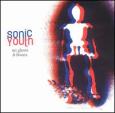
nycIn the midst of all of the experimentation with the SYR discs. Sonic Youth released this “proper” release.

At the time, it was actually the impetus for me to stop buying Sonic Youth records.  Between the experimental discs and the expanding palate of 1,000 Leaves, it felt like Sonic Youth were sort of drifting away from rock altogether.  It was certainly a way to alienate fans of Goo and Dirty.

You get two two songs over seven minutes and three over five (there are two short blasts in the middle which add some heaviness to the proceedings). But for the most part, this is a very spare, almost atmospheric affair.

Prior to recording the disc, the bands custom gear was stolen.  So they started from scratch for this recording.  And that may have something to do with the ambient, almost spatial sound.  It is quite mellow, (although still angular and dissonant) with a number of spoken word/beat poetry vocals.

Whether it’s pretentious or artsy depends on your take for recited lyrics (and SY’s lyrics are inscrutable anyhow).  Although Lee’s piece “NYC Ghosts and Flowers” seems to fit the style best (he has done a number of spoken vocal pieces in the past).  And “Nevermind (What Was It Anyway)” has a sort of commercial appeal.  The closing tack “Lightnin'” even features a trumpet, which I assume is played by Kim.  It’s the most noisy piece on the disc, with all kinds of fun sound effects showing up.

I’ve been listening to this disc a lot lately.  I think because I’ve revisited the experimental discs, this one makes more sense.  It’s not what I’d call a typical Sonic Youth album, or even the best Sonic Youth album.  It is certainly their most jazzy/mellow experiment (especially compared to the noise of says the SYR discs) and is about as far from their commercial peak as they could get.

The strangest thing to me though is that, despite all of the experimentation and slow-building songs, the whole disc is under 45 minutes.  So, they aren’t just making noise to fill space.

[READ: Week of August 31] Infinite Jest (to page 808)

In all of the talk about DFW’s “psychic” abilities with regard to technologies, one thing no one has mentioned–that I’ve seen–is his love of Venus Williams. Her name keeps popping up (I’d say at least a half dozen references so far).  And in many ways one doesn’t think too much of it (she is the #3 player right now, bested by her sister Serena who is #2).  But the amazing thing about his embrace of Venus is that as venusof 1996, when the book was published, she had barely played any pro tournaments.

Look a these tidbits from Sports Illustrated:

October 31, 1994: Venus wins her first pro match, defeating Shaun Stafford at the Bank of the West Classic in Oakland. … Venus faces Arantxa Sanchez Vicario, the No. 2 player in the world, in her next match. Venus races out to a 6-3, 3-1 lead but then folds as Sanchez Vicario wins 11 consecutive games. In an interview after the match, Venus is asked how the loss compares with previous defeats. She answers bemusedly that she has never before lost a match.

May 22, 1995: Reebok announces it has signed Venus to a five-year, $12 million deal. Thus far, Venus has played in one pro tournament.

Although much has been speculated (by me and others) about when he was actually writing this book (and when he was able to send in last minute changes), she would not break into the Top 20 until 1998.  He clearly saw something in her.

ijdot1

I write these posts as I go along.  So, I read the day’s pages take notes and then type them up.  This is why I get moments of speculation in the posts.  But mostly it means that when I start writing I don’t know how much there will be in total.  This is now the second week in a row where the early reading started off, if not slowly, then certainly without all too much happening.  The notes I took were very simple, along the lines of: Marathe in Ennet House or Kate & Marathe talk.  I knew I could remember what they were talking about, but there wasn’t a lot of notable moments.

And then, we get the trifecta of Endnotes and Tine’s interview. Holy cow, a torrent of information flooding out at once.  It doubled my word count almost immediately. Phew.

ijdot1
As this week’s reading starts out we see Marathe trying to check into Ennet House.  Okay, actually he’s there as the final part of his recon looking for the veiled girl who was in the Entertainment and is now in rehab.

His new-eyes-looking-at-the-place is rather enlightening as I hadn’t realized just how dreary and drab the House is (nor just how weird most of the residents would be).  The supporting cast is in good form: some of them sleeping, some of them talking loudly, others just staring.  And Marathe takes it all in. (more…)

Read Full Post »

« Newer Posts - Older Posts »