Feeds:
Posts
Comments

Archive for the ‘Depression’ Category

SOUNDTRACK: BOOKWORM-Jeffrey Eugenidies: The Marriage Plot (December 1, 2011) (2011).

Since “Just Kids” mentions  Eugenides’ book, and since Eugenides happened to appear on Bookworm at around the same time as I read this article, it seemed like a good pairing.

Obviously, from the title of the episode you can tell that this is all about Eugenides’ new book, The Marriage Plot.  Michael Silverblatt raves about this book like no other book I have heard (granted I haven’t listened to all that many episodes of Bookworm, but still).  In fact while listening to this episode, I put The Marriage Plot on hold at the library.  I always planned to read it but figured I’d just get around to it some day.  Now I feel more of a sense of urgency.

They talk at length about the state of marriage in the 21st century.  Not as in its decline but in how it differs so much from classic literature in which women had to get married by 21 or risk spinsterhood.  Eugenides set out to write a book about people getting married without having the trappings of classical literature.

It sounds wonderful.

The reason I mention this interview at all is because in the article below, Hughes talks about contemporaries of DFW using DFW as the basis for a character in their books.  So, in Franzen’s Freedom, there is character who is very much like DFW (I haven’t read Freedom yet so I can’t say). 

And in The Marriage Plot, there is a character who resembles DFW.  When I read the excerpt of this story in The New Yorker, I had to admit he did seem an awful lot like DFW–a tobacco chewing, bandanna wearing philosopher.  Eugenides had been mum about it for a while, but now, under the gentle nudging of Michael Silverblatt, he comes clean. 

He admits that there are some characteristics of DFW in the character.  However, he says that he didn’t know DFW all that well and the character has been kicking around since he went to college (long before he knew DFW).  Tobacco chewing was rampant at Brown in the 80s apparently.  But it’s a nice revelation and it ties in very well with the article.

You can listen to the show at KCRW.

[READ: December 7, 2011] “Just Kids

I have always grouped together certain authors in my head.  When there were a bunch of Jonathans publishing, I kind of lumped them together.  I think of Mark Leyner and Bret Easton Ellis in the same breath.  It’s fairly common, I suppose.  But I never really thought of David Foster Wallace in terms of a group of authors.  He seems so solitary that it’s funny to even think of him as having friends.   But according to Hughes, many of today’s established authors prove to have been a part of a kind of nebulous writer’s circle.  A kind of 1990’s update of Dorothy Parker’s vicious circle.  But more insecure.

The article bookends with Jeffrey Eugenides.  In 1983 he and Rick Moody drove to San Francisco with the intent of being writers.  Five years later with no written works, Eugenides moved to Brooklyn, alone.  In that same summer, Jonathan Franzen was in Queens, also feeling alone (even though he was married–unhappily) and desperate for friends and peers.  And then Franzen got a fan letter from David Foster Wallace (that’s after he had written Broom of the System, but before Girl with Curious Hair) praising The Twenty-Seventh City

Franzen and DFW became friends.  To this friendship was added William T. Vollman, and David Means, also Mary Karr (whom DFW dated) and Mark Costello (who co-wrote Signifying Rappers with DFW).  Later they would connect with Eugenides, Rick Moody and Donald Antrim.  (more…)

Read Full Post »

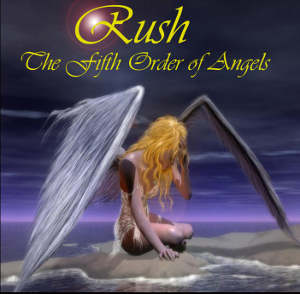
SOUNDTRACK: RUSH-The Fifth Order of Angels (bootleg from the Agora Ballroom,Cleveland, 26 August 1974) (1974).

I have mentioned this concert before, but I played it again today, and was struck by a couple of things.

1) According to the liner notes, Neil Peart had been in the band about two weeks.  How did they decide that their new drummer was going to be doing a drum solo during the show?  I mean, by now, everyone knows that the solo is its own song.  But, he’s been in the band two weeks.  It’s obvious he’s a good drummer, better than their original drummer, but a drum solo?  Is that just what rock bands did back then?

2) I’m struck by how much this show sounds like early Kiss.  I never really thought that  their first album sounded like Kiss, but in this live setting, a number of the songs, or perhaps just  the way they are recorded make me think of early Kiss.  In particular, during the crazy “one, two, three, FOUR!” of “In the End,” when the guitars kick back in, it sounds like a Kiss show from circa Alive!.

3) It’s amazing how guitar-centric the band was back then.  The mix is a little rough so it’s not entirely clear how insane Geddy is on the bass (when he gets a few solo notes, the bass sounds really tinny).  But the concert is like a showcase for Alex’s solos.  True, the whole first album really demonstrates what a great soloist he is, but it’s really evident here that Alex was the star.

4) Their earlier songs are really not very good.   I mean, every Rush fan knows that the first album is almost not even a real Rush album, but it’s shocking how pedestrian these songs are compared to even what would show up on Fly By Night.  Still, circa 1974 I’ll bet this show kicked ass.

It’s available here.

UPDATE: The missing content has been added!

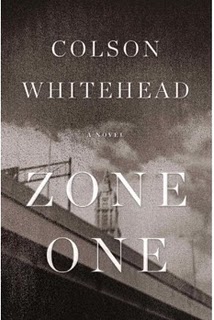
[READ: August 9, 2011] Zone One

After reading the excerpt from Zone One in Harper’s I decided it was time to read the book (which is due to be published in October).

I admit I haven’t read Whitehead’s other works, but I have read excerpts, and I thought I knew the kind of things he wrote.  So it came as a huge surprise when the excerpt ended the way it did. I didn’t want to spoil anything when I wrote the review of the excerpt, but since the entire book is set in the dystopian future and since it explain what has happened right on the back, I can say that Zone One is set in the aftermath of a kind of zombie apocalyptic plague.  And I can’t help but wonder if the rousing success of McCarthy’s The Road has more or less opened up the field of literature to more post apocalyptic, dare I say, zombie fiction.  [I haven’t read The Road, so there will be no comparisons here].

Actually there will be one.  Sarah read The Road and complained that you never learned just what the hell started the end of the world.  Indeed, in this book you don’t either.  There is an event called Last Night, and after that, there’s simply the current state of affairs.  I suppose you don’t really need to know, and since the story is all about dealing with the zombies, I guess it doesn’t really matter how it all started, but I think we’d all like to know.

Now what makes this story different from the typical zombie story is that for the most part there aren’t all that many zombies (or whatever these undead people are called) in the story.  There are some of course, and they are inconvenient to the main characters, but unlike a story like Zombieland, (which was awesome) or the more obvious Night of the Living Dead, the story isn’t really about fighting zombies, it’s more about the rebuilding of the country in a post-zombie world. (more…)

Read Full Post »

SOUNDTRACKTINDERSTICKS-Claire Denis Film Scores 1996-2009: White Material [CST077] (2009).

White Material is the most recent soundtrack that the Tindersticks created for Claire Denis.  It was recorded between their “reunion” album The Hungry Saw and their latest album Falling Down a Mountain.

This is a very moody soundtrack.  The guitars set a brisk but desperate-sounding pace.  There are feedback squalls that echo for even more tension.  The feedback could be any number of things as well: squeaky machines, industrial noise, or simply disconcerting sounds.

There is a repeated motif throughout the score that morphs and blends with the tone.  The overall feel of the soundtrack is unified but it never sounds like you’re listening to the same few notes repeated (which is actually what it is, the songs use a very limited palette).

For such a limited palette of music, they really manage to give a diverse picture of the movie.  The way “Andre’s Death” builds, using those same few notes and feedback is truly amazing.  The tension that has been building throughout the score really comes to a head in those 2 minutes.  Contrarily, the flute that plays over those same notes in “Children’s Theme 2” is a haunting exploration of the theme.

This soundtrack isn’t as industrial/weird as L’intrus, but it is probably more intense and spooky.  It’s amazing how evocative these guys are.

[READ: June 22, 2011] Merit Badges

Sarah brought this book home, but she didn’t read it.  It sounded pretty good (I mean it won the 2009 AWP Award for the Novel), so I decided to give it a go.

The book seemed strange to me in the way it was set up: it seemed to have a very specific structure but it didn’t always follow it exactly. So, there are four main protagonists who write chapters of the book.  But they don’t each get a turn, in fact one, Barbara doesn’t really have much to say until much later when her story becomes very compelling.  It also advanced over the years with no real explanation of pacing or even of when a new narrator has jumped ahead several years.

I assumed this was going to be a story of four people looking back on their high school years.  But indeed, it’s about four people looking back on their whole lives, as they grow together, drift apart, come back into each others lives and then disappear again.  In that way, it was also a bit hard to get my bearings.  It was also hard for me to keep all of the characters straight.  Because even though there are four narrators there are many many more kids introduced in the beginning of the story.

Each chapter opens by stating who the narrator is.  The first few narrators are Chimes Sanborn (Prologue), Quint (Woodwork), Slow Slocum (Cooking), Chimes (Drafting), Barb Carimona (Music), Quint (Mammals), Quint (Crime Prevention) etc.  So it’s not consistent.

But also, as you can see, all of the chapter titles are named after Merit badges (which I liked quite a bit).  The subtitle describes what you have to do to achieve the badge (and the chapter does indeed kind of work within that stricture).

So far so good, but we’re also introduced to ancillary characters who appear quite often: Dickie Burpee, Pooch Labrador, Smash Sarnia, and a psychopath named Tulep.  With all of the nicknames and rotating narrators, I admit to losing track of who was who, which I fear lessened the impact of some of the events.

Of course, that’s all structural.  And while I felt like I probably missed out on moments of impact, the overall storyline was not hard to follow.  And, indeed, complaints aside, the story was pretty intriguing.  It is set in the (fictional) small suburb of Minnisapa, Minnesota.  It feels very true to me (having lived in a small town, myself) as do the choices (bad and good) that the kids make. (more…)

Read Full Post »

SOUNDTRACK: SONIC YOUTH on World Cafe, August 21, 2006 (2006).

Travelling back even further on the NPR timeline, Sonic Youth appeared on World Cafe in 2006 to promote Rather Ripped.

This is a brief session (only three songs) but as with the interview with Thurston Moore, David Dye does another great interviewing the band here.  Although it must be said that saying the band is once again a four piece (when clearly there are five people in the picture and in the studio and when he later says two guitars, two basses and drums–which I also think is incorrect, as I’m pretty sure Kim switched to guitars at this point, although I don’t know if she did during this set) is not a great way to start the interview.

Facts aside, the interview is informative and interesting and provides a glimpse into the band’s psyche all these years into their career.

The set is also good (although Thurston’s voice sounds a little off on the opener “Incinerate”).  The surprising thing about the set is that even with the five of them, the feeling is one of restraint. True, the songs on Rather Ripped are not as noisy as previous records, but this feels like they are trying not to wake anybody up the NPR folks.  It’s a weird feeling for a Sonic Youth set, but the plus side to it is that you can really hear everything clearly.

The other two songs are sung by Kim: “Jams Run Free” and “What a Waste” (why do they never promote any of Lee’s songs??).  And there’s the very amusing comment that the first time they played “What a Waste” Thurston and Kim’s daughter said it sounded like the theme from Friends.  Ha!

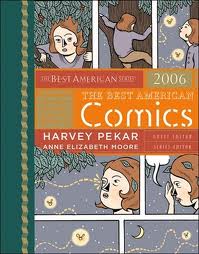
[READ: April 15, 2011] The Best American Comics 2006

I just recently learned about this series from The Best American line of books.  I had known about the Best American Short Stories and Essays and even Non-Required Reading (which I have not yet read).  But once I found out about the best comics, I knew I had to check it out.

The first issue came out in 2006.  The series editor is Anne Elizabeth Moore and the Guest Editor for this volume was Harvey Pekar.  Each of them has an introductory essay in the book.  To me the amazing thing about Pekar”s essay is how aggressively defensive he sounds (a sort of, “you may not like this one, but try this one” attitude) about these comics and comics in general.  I don’t know much about Pekar’s work.  I know he’s a kind of underground icon, but I seem to have missed him.  My impression of him is that this sort of antagonistic/defensive attitude seems to go along quite well with his comics, so I guess that makes sense, but I didn’t find it very welcoming.

But that’s okay, because I really enjoyed the comics.  And quite a few were by artists that I had never read before, which is even better! (more…)

Read Full Post »

SOUNDTRACK: PJ HARVEY-“Let England Shake” [Live on the Andrew Marr Show] (2011).

PJ Harvey has a new album out.  I’ve listened to it free on NPR, and in the introduction, they mention this live version on the Andrew Carr show.  Harvey (solo) plays an autoharp, and the melody is provided by a sample of the original version of “Istanbul (Not Constantinople)”  (done by The Four Lads).

The album version doesn’t use the sample, although the melody is the same.

I loved PJ Harvey back on her first few albums, but I didn’t even get White Chalk.  Harvey has undergone a bizarre transmogrification, where not only is she no longer a rocking guitar woman, her voice has lost its growling edge and his been replaced by an amazing falsetto.

This version also differs from the official release in that this one is shorter (probably time constraints on the show) and has fewer verses.  It also has Harvey singing the “Istanbul” chorus which isn’t on the disc.  So, this is a unique interpretation of the song, one that likely won’t be available anywhere else.

I wasn’t expecting to like this as much as I did.  It’s not the PJ I know, but this new PJ is certainly interesting.

[READ: January 31, 2010] Lemon

Krauser hand-scribbled the covers of all 10,000 extant copies of this book.  So if nothing else, the covers are all unique!  (Click here for a larger scan).

This is one of the first half-dozen or so books that McSweeney’s published and to me it speaks volumes about the kind of absurdist books that they initially released.  Those early titles were weird and possibly ironic and maybe post modern and were kind of interesting but not necessarily enjoyable.  Thankfully, they have since published very very readable books, but everyone has growing pains, right?

That sounds like I didn’t like this book, which is not exactly true.  I was bemused by it, but mostly I kept thinking I can’t believe that this guy did this much research about lemons, he was practically as obsessed about lemons as his main character.  For indeed, that is what this book is about: a man’s obsession with lemons.  Or, specifically, one lemon. (more…)

Read Full Post »

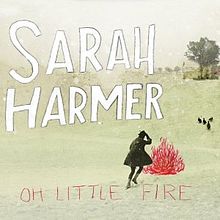
SOUNDTRACK: SARAH HARMER-Oh Little Fire (2010).

I found Sarah Harmer when she had a left field hit (“Basement Apt”) in the states.  I went back and discovered her band Weeping Tile (who are quite good and recorded a version of the song on their EP Eepee) and have been following her continued solo career.

Since that first record, she released a killer second disc, followed by a re-release of an intimate 1999 record she made for her dad which let her revel in her country roots.  She followed this up with I’m a Mountain, a very country, but very catchy album.  Finally, four years later, she put out Oh Little Fire.

Although she hasn’t lost her country roots, this album returns to more of the rock sound that first attracted me to her.  It’s not hard or heavy by any stretch, but it’s moved beyond the country of I’m a Mountain.

Sarah and I listened to this album a lot at night when it first came out, and it slowly seeped into my system.  I had kind of forgotten about it for a while, and upon rediscovering it I was delighted to hear that the melodies were fresh and still with me.  The album seems like a simple indie folk or the work of an adult alternative singer songwriter, but the thing with Harmer is that she has that wonderful background with Weeping Tile, a band that was always slightly off-center.  So, she writes beautiful melodies but puts little grace notes into them to keep them from being disposable.  And yet they are still super catchy.

The only hard thing about this disc is wondering which song will be stuck in your head after listening to it.

[READ: January 7, 2011] L. M. Montgomery

I’ve never read any L. M. Montgomery (although I’ve seen the miniseries of Anne of Green Gables) and I’ve never read any Jane Urquhart (but I love her name!).

This biography is so radically different from the other three I’ve read so far.  I wondered immediately if it was because Montgomery (and Urquhart) are women.  It deals with subjects that the other books didn’t at all: lost loves, mental incapacitation, family crises.  But it becomes clear through the book that these issues were THE issues that a woman at Montgomery’s time would have dealt with.  Unlike the men in the other books, Montgomery did not have a professional life (outside of being an author, which she did at home).  She was hardly a public figure, and since she was a woman, she was always in danger of losing what she had.

This biography is also vastly different from the others in the way it is constructed.  You can tell by some of the chapter headings: Her Death (the first chapter), Orphan, Sorrow, Madness.  You can also tell by these chapter titles that Montgomery did not have a happy life.

Indeed, between a husband who believed he was destined for Hell (he was a preacher!) and children whose life choices she disapproved of, not to mention terrible insomnia coupled with nightmares, her late adult life was nothing but torment.  But, sadly for her, her early life was nothing but torment either.  Her mother died when she was two, she was sent to live with her aunt and uncle (which was never a happy place).  But the most depressing of all of these events is when she lost her dearest friend at a terribly young age, a death she never really recovered from.

So how is it possible that Montgomery wrote such charming stories?

The answer to that (and the basis for most of this biography) is in her diaries.  Montgomery kept meticulous diaries (which she wrote and rewrote and then rewrote with posterity in mind).  She wrote about her childhood and her life as (sort of) an orphan.  She wrote about the places where she lived and the beautiful outdoors which impressed her.  She wrote about the sadness and the happiness.  Nothing was lost on her, and she saved it all (she also took photos of everything she loved, which are a beautiful and sometimes contradictory records of her diaries), and there are many published volumes that we can read to learn even more about her.

To me, the most fascinating (and horrible) part of the story was when she finally had Anne of Green Gables published.  The publishers took complete advantage of her.  They forced her to write sequels that she didn’t want to (although they are still quite good) and even compiled a final book from castoffs of the previous books (Return to Avonlea) that they published in her name.  Eventually the case was settled in her favor, phew, and she was able to write new characters that inspired her.

Montgomery had a rough life, and as her diaries come to an end, she stopped writing about things.   It’s hard to know exactly what she went through towards the end, but it doesn’t seem very positive.  And yet for all of her disappointments in life, she left us with some engaging and memorable stories.

The last chapter is a fascinating personal account of how Montgomery’s stories impacted Urquhart’s family.  It was incredibly touching and convinced me that Urquhart’s fiction would be enjoyable too.  Some day, some day.

This was a really enjoyable (but major downer) biography.  And, more than anything it has really inspired me to read Montgomery’s stories (and even one or two or Urquhart’s).

And, here’s a shameless plug to the folks at Penguin Canada–I will absolutely post about all of the books in this series if you want to send me the rest of them.  I don’t know how much attention these titles will get outside of Canada, but I am quite interested in a number of the subjects, and will happily read all of the books if you want to send them to me.  Just contact me here!

Read Full Post »

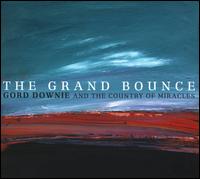
SOUNDTRACK: GORD DOWNIE AND THE COUNTRY OF MIRACLES-The Grand Bounce (2010).

I knew I was going to write about Canadian musicians for this series of Extraordinary Canadians, but I wasn’t sure who would get matched to whom. I figured I’d match Gord Downie to Mordecai Richler, but when I saw this in the liner notes to this disc, I knew I’d made the right choice:

Thank you to the Richler Family for the font you are presently reading.  The Richler font, not publicly available, was created and named for the great Mordecai Richler.  It was commissioned by Louise Dennys, designed by Nick Shinn and graciously made available by Florence Richler.  I am grateful for this honour.

So Gord Downie is the driving force behind The Tragically Hip.  I’m always curious when a guy who pretty much runs a band needs to do a solo album (or three).  And in this case, since the last Hip album was much more mellow and almost country, it seemed like he got some of his less rocky side out on that disc, so what’s the need?  Unless, of course, it’s just the need to play with some other folks once in a while.

Well, whatever the reason, this disc finds Downie in incredible form.  In fact, I think I like this disc better than the last Hip disc (which I did like, but which was a little too mellow overall).  The songs are all great, from the simple folk tracks to the more elaborate rockers.  And, yes, while the disc never rocks as hard as some Hip songs tend to, this is not a simple acoustic guitars and solo vocals record.

“The East Wind” is a wonderful starter.  It’s fairly simple with awesomely catchy lyrics.   I learned that the lyrics are from a quote by Todd Burley.  And they are an awesome way to describe a hostile and violent wind: it’s lazy, because “it doesn’t go around you, it goes right through you.”  Fantastic.

“Moon Over Glenora” sounds a lot like a Hip song.  Downie’s lyrics are almost mumbled and understated until he gets to the end of each verse when he raises his voice an octave for maximum effect.   The stops and starts in the bridge are also great.  “As a Mover” is also smoothly catchy with a wonderful rising chorus.

“The Dance and the Disappearance” is another great conceit.  This song is inspired by a quote from Crystal Pite: “Dance disappears almost at the moment of its manifestation.”  It is suitably dramatic with some great verses.  “The Hard Canadian” is a gentle acoustic number that would not be out of place on the more recent Hip records.  “Gone” feels like a continuation of “Heart,” almost like the slightly more rocking second half of it.

My favorite track is “The Drowning Machine” (I seem to like anything that Downie writes that’s about the sea).  It’s a minor chord wonder, dark and mysterious and wonderfully catchy.  The rock comes back on the rather simple “Night is For Getting.”  It’s probably the least essential track on the disc except that once again the chorus/bridge is really great and memorable.

The last three tracks bring on the mellow, which is a fitting ending for the disc, although since the three t racks take up about 12 minutes, it makes the end drag a bit.  “Retrace” is a country-tinged (steel guitar) mellow track (again, Downie’s voice brings out the excitement) .  “Broadcast” has an extended outro of gentle guitars and piano that for all the world sounds like the end of a disc, so I’m always surprised that there’s a final track after it.   And so the final track “Pinned” feels like filler.  It has a movie projector clicking sound and gentle piano with almost inaudible vocals.  It’s actually a pretty song, but it feels almost discarded here.

One of things I’ve always liked about Downie’s lyrics is that they are atypical of rock songs.  They’re not “about” sex or rock or drugs or swagger or anything like that.  In this case they are about locations and events.  And it really paints a picture.  And speaking of painting, Downie painted the cover art.  The beautiful simplicity of the painting is not unlike the beautiful simplicity of the music on the disc.

Oh and my copy is autographed too! (although I wasn’t there when he autographed it, so it could have been anyone who scribbled on the cover).

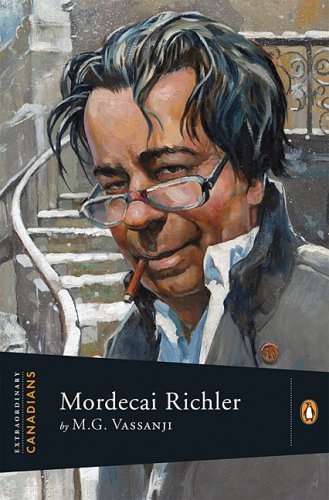
[READ: November 15, 2010] Mordecai Richler

I don’t know a lot about Mordecai Richler, although I feel like whenever I read about him it’s in hushed tones (a neat trick, that).  Nevertheless, for a number of reasons I have wanted to read him for many years but have just never done it.  Now, the stars are aligning with me for Richler.

There’s this book, there’s the cover of the October 2010 issue of The Walrus and the recent filming of his book Barney’s Version (the filming of which is discussed in the same issue).  And then a patron asked for the film of The Apprenticeship of Duddy Kravitz.  So, it’ about time to read one of his books.  But here’s the rub…do I start with the great books or do I start at the beginning and work my way through his career?  And, there’s also a huge new biography coming out (the review of which mentions a wonderfully offensive event in which Richler absolutely dismisses his Jewish audience).

This book was written by M.G. Vassanji.  I feel that I’ve heard of him but I’ve never read him.  And yet listen to this incredible biography:

M.G. Vassanji was born in Kenya and raised in Tanzania.  He attended University in the United States, where he trained as a nuclear physicist, before coming to Canada in 1978.  Vassanji is the author is six novels and two collections of short stories…and he has twice won the Giller Prize.

Damn.

Since I read this right after Coupland’s McLuhan it’s tempting to compare them.  And yet, as I said in that review, it seems quite apparent than Coupland’s book will be like no one else’s, so I won’t say much about that.  Instead, Vassanji opens the book by talking about the similarities between himself and Richler and their few awkward but pleasant meetings.  (In this respect yes, it is sort of like Coupland’s book in that the author puts himself into the text). (more…)

Read Full Post »

SOUNDTRACK: SHAD-TSOL (2010).

I first heard Shad on CBC Radio 3 online.  The track was “Yaa I Get It” and I really enjoyed it.  I haven’t listened to a lot of rap in the last few years; I’ve more or less grown bored by the genre, especially all the violence.  So, I was happy to hear this track, which was boastful but funny.

I decided to get the whole disc, and I wasn’t disappointed.  “Rose Garden” features a sample of “I Never Promised You a Rose Garden” which sets some of the tone of the disc.  But it’s on the next song “Keep Shining” that Shad’s uniqueness shines through.  This song is about women.  But not in any way that I’ve heard in rap before: “I can’t speak for women.  We need more women for that.”  And the inspiring final verse:

My mom taught me where to keep my heart.
My aunt taught me how to sing two parts.
My sis taught me how to parallel park,
and tried to teach me math but she way to too smart.
My grandma in the 80’s is still sharp.
My girl’s cousin is in activism in art.
They taught there’s no curls to tight, no mind too bright, no skin too dark to keep shining.

Later on the disc is “We Are the Ones” an oddball jam that sounds like one of those bizarre Atlanta rap tracks (funky vocals and all) and an amusing line about being Lost like Matthew Fox.  But his name checks aren’t all pop culture (Moredcai Richler gets a mention as does Glenn Beck (he “better duck like foie gras”).

And of course, there’s the wonderful “Yaa I Get It.”  With great horn blast samples and all kinds of noise competing for our attention.  Yet, throughout the lyrics stand out: “Maybe I’m not big cus I don’t blog or twitter…Dawg, I’m bitter.”  And there’s this wonderful couplet: The precision of my flows in terms of tone and diction/Is akin to that of the old masters of prose and fiction.”  Or take this lyrics from “Call Waiting,” “But what they say is hard for a pimp is harder for a man of faith.”

“Listen” has some great scratching on a heavy rocking track.  It’s followed by “At the Same Time.”  This is a mellow, sad song, which I don’t really like, yet which I find very affecting.  And lyrically, it’s great: “I never laughed and cried at the same time… Until, I heard a church pray for the death of Obama.  And wondered if they knew they share that prayer with Osama.”

The disc ends with “We, Myself and I” another noisy rocker and the one minute “Outro” an acapella rant.

Shad is a great rapper, doing interesting things and trying to make a difference.  He’s worth checking out.

[READ: November 1, 2010] “Marshall McLuhan”

I learned about this book because I’m a fan of Douglas Coupland.  And, as it turns out I’ve always had a vague interest in Marshall McLuhan, so it seemed like a sure thing. The problem was that the book was not readily available in the U.S.  So, I had to order it from Amazon.ca.  And, since you can’t get free shipping to a U.S. address from amazon.ca, I thought it would make sense to order 6 titles in the series, all of which I’ll post about this week.

So, here’s a shameless plug to the folks at Penguin Canada–I will absolutely post about all of the books in this series if you want to send me the rest of them.  I don’t know how much attention these titles will get outside of Canada, but I am quite interested in a number of the subjects, and will happily read all of the books if you want to send them to me.  Just contact me here!

Each book in the series has an introduction by John Ralston Saul, in which he explains the purpose of the series and states globally why these individuals were selected (“they produce a grand sweep of the creation of modern Canada, from our first steps as a democracy in 1848 to our questioning of modernity late in the twentieth century”).  It also mentions that a documentary is being filmed about each subject.

Perhaps the most compelling sentence in the intro is: “each of these stories is a revelation of the tough choices unusual people must make to find their way.”  And that’s what got me to read thee books.

This volume was probably a bad place to start in the Extraordinary Canadians series if only because it appears that Coupland’s volume is markedly different from the others.  Coupland being Coupland, he has all manner of textual fun wit the book.  The other authors seem to write pretty straightforward books, but you know something is up right away when you open the book and the first six pages comprise a list of anagrams of “Marshall McLuhan.”

On to Marshall McLuhan.  The Medium is the Message.  That’s about all anyone who has heard of McLuhan knows about him (and that he has a hilarious cameo in Annie Hall).

When I was a freshman in college, I took a class in Communications which focused an awful lot on Marshall McLuhan.  I didn’t like the teacher very much, but the message stayed with me all these years.   And so even though I’m not a student of McLuhan or anything, I was happy to relearn what I should have known about the man and his ideas.

(more…)

Read Full Post »

SOUNDTRACK: RADIOHEAD-OK Computer (1998).

The Bends showed amazing maturation for Radiohead, but OK Computer was like going from black and white to color.  It opens with “Airbag” a blast of music, oddly off kilter and unsettling but which immediately brings you into a great riff.  About midway through, the song splits in stereo with two competing solos vying for attention.   It ends with a loud stretched out chord.  And then comes one of the most bizarre singles around.  A nearly 7 minute multi-segmented song which, the first time I heard it, I couldn’t even find a melody.  I rather wish I could go back to that naive time, because my mind was blown away by the outlandishness of the song.  Now I know all the melodies and I think it’s just brilliant.

The minor chords of “Subterranean Homesick Alien” are accented with outer space sounds and yet despite its subject (alien abduction), the song is pretty well grounded: a simple, easy rocking track.  It’s followed by “Exit Music (for a Film)”, a gorgeous building minor chord song that opens with simple acoustic guitars and slowly builds to a scorching rocker (when the drums kick in at nearly 3 minutes, it’s like a wake up call).

“Let Down” is another slow builder, although it features a much more singable verse and chorus structure (it’s incredibly catchy).  It’s followed by “Karma Police” another catchy monster of a song.  It starts with a pleasant enough piano riff and features the politely sung threat: “this is what you get when you mess with us” and the beautiful falsettoed apology: “for a minute there I lost myself.”

It segues into the odd 2 minute computer-voice-recited (and barely listed as a track) “Fitter, Happier.”  This song foreshadows future Radiohead experiments.  It seems like a blow-off track, a filler, and yet like so many of the newer Radiohead songs, it works like glue holding the big hits together.  Check out how weird, wild and intricate the music behind the voice is.

“Electioneering” is one of the noisiest, most raucous songs in the Radiohead catalog.  It opens with this steel guitar sounding riff and crashes in with loud, distorted guitars and all kinds of drums.  Thom Yorke’s vocals are really loud in the mix, so when he gets to the bridge it’s practically a wall of noise, but listen to the great ascending and descending guitar riffs behind his vocals.  They’re really intriguing.  As is the skronking noisy guitar solo.

“Climbing Up the Walls” has all kinds of insane sound effects going on in the background of one ear (as befitting the title).  It’s a drum-heavy track with eerie almost unadorned vocals (until the very end when Yorke goes berserk).  It segues into the most delicate track on the disc, “No Surprises.”  The chorus of “no alarms and no surprises, please,” has always been very affecting.  And the delicate bells that adorn the verses are a very nice touch.  The penultimate track, “Lucky” is a sort of optimistic track, despite its mellow music and, I suspect, really not very optimistic ending. But the utterly uplifting scream of “it’s going to be a glorious day, I feel my luck could change” is spine tingling.

I feel like “Lucky” is such a great ending song that I tend to forget the final track, “The Tourist”.  It’s a slow, drawn out  track…”idiot, slow down.”  It’s probably my least favorite song on the disc, but it’s kind of a good ending after all of the high points of the disc.

And with the final bell of the final song, Radiohead became untouchable.

[READ: December 29, 2010] “Escape from Spiderhead”

George Saunders must live in a dark, dark world.  His comedy is dark (but very funny) yet I feel he is often quite under-served when people refer to his as a funny storyteller.  This story, which actually has many funny elements, is incredibly dark.  And even though I laughed out loud at a few things, no one comes away from this story happy.

One of the great things about Saunders is his almost obsessive mockery of corporate/medical culture.  He has more trademarks in his story than anyone I’ve ever read (even if they are all for things he has made up).  Now to me, that’s funny in itself (especially the names he gives them), but it serves a much more telling purpose: a portent of a very dark future.

This story is set in a lab, where the main character, Jeff, is being communicated with by Mr Abnesti (a very hard name to keep straight).  Jeff is in a room with Heather, and both are being fed the experimental drug ED556, a shame inhibitor.  And so they rip off their clothes and have at it (he was obviously given some Visistif™ because they do it three times).  They are also given some Verbaluce™ which helps them elucidate their experience (from more than just grunts and moans).  This Verbaluce™ is essential to all of their experiments because without their comments, the proceedings are undocumented. (more…)

Read Full Post »

SOUNDTRACK: THERION-Theli (1997).

I bought this disc when I was living in Boston and I immediately fell for it.  I seem to recall I was doing a lot of driving at the time, and this mix of extreme metal, orchestral accompaniment and twinned vocals was very captivating.  It was also really fun to play very loud on a dark highway.

I’d read a very good review of this disc that claimed it was a big step forward in styles of thrash/black metal (and if you Google reviews for this album they are pretty universally great).  The disc is exemplified by the track “To Mega Therion” which is almost entirely a full choir singing what I guess is the chorus.  The verses are populated by a guy screaming in a guttural voice who is answered by an almost mechanically twinned voice which sounds great but is even harder to understand.  Follow this with a beautiful piano (!) solo not unlike something Randy Rhoads put together for Blizzard of Oz, and add a pounding double bass drum all the way through (truth be told the album could be a little heavier in the bass) and you get a crazy mix of styles which is catchy and creepy at the same time.

It’s hard to match a song like that.  And, admittedly, the band doesn’t quite manage to do so, but the rest of the album keeps up this orchestral death metal throughout.

Reading about Therion has taught me that this album is something of  touchstone for a new genre of metal, called variously symphonic or operatic metal (I suppose we have this to blame for the Trans Siberian Orchestra?).

In addition to the choirs and guitars there are a lot of keyboards. They are disconcerting when you’re thinking death metal and yet really they add an even fuller sound, even if at times they are not as grand or powerful as anything else.  At times the album seems cheesey, but that may have more to do with thirteen years distance than the music itself.

Anyone who has seen The Exorcist knows that choirs can be spooky.  And when you mix it with the heavy guitars and guttural vocals, you get a really cool sinister yet catchy (and possibly uplifting) album.  There are certainly a lot heavier albums, but this one is pretty stellar.

[READ: Summer of 2010, finished December 12, 2010] Lords of Chaos

My brother-in-law gave me this book for my birthday this year.  I was familiar with it as it is fairly well-known in heavy metal circles as a fascinating read.  And so it was.

This book is basically a history of black metal in Norway and how some bands’ antics went beyond music into burning churches and even murder.  The authors present a pretty neutral account of the story.  They let the main participants (criminals) have their say and the interviews don’t comment on their answers, they just let them tell their side of the story.  The authors also know a lot about the music scene.  Of course, in the end, the authors (thankfully) disapprove of the violence.  It makes for an interesting and somewhat conflicting read. (more…)

Read Full Post »

« Newer Posts - Older Posts »