Feeds:
Posts
Comments

Archive for the ‘Demons’ Category

SOUNDTRACK: DAN ZANES-“Wonderwheel” (2002).
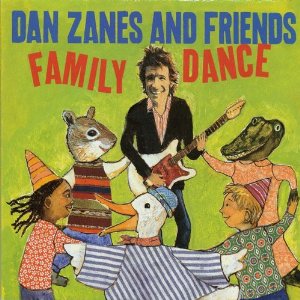
This track comes from Zanes’ Family Dance album and from the For The Kids compilation.

Dan Zanes is a wonderful troubadour of kid’s folk rock.  The funny thing about many of his songs, like this one, is that it’s not really a kid’s song–there’s nothing about the lyrics that says “only children will like this.”  It’s just a generally happy song that is safe for all ages.

The song opens with a simple accordion melody and is about riding a wonderwheel (I’m not sure what that is actually–a ferris wheel?).  The melody is great and there’s a nice female vocal harmony.  The song reminds me of a poppier, happier version of a Richard and Linda Thompson song.  It feels olde, like a classic song that people have been singing forever, and yet it’s brand new.

Dan Zanes is going to be playing a show around here in February and I’m pretty excited to go.  He’s one’s of my favorite kid’s music makers.  His songs are clever and catchy and never pander to the lowest common denominator.

[READ: November and December 2011 and January 2012] The Secrets of Droon, Books 1-12

Every night, my wife and I read picture books to my kids before bed.  Once in a while I would read chapter books to my son (they’re usually a little too much for my daughter to focus on). Clark is 6, Tabitha is 4.

We had been reading The Magic Tree House (which both kids love) and then I hit upon The Secrets of Droon.  I knew of the series from the library, but I didn’t know a thing about it.  I thought that Clark might read it himself, but he asked me to read that first book to him (it may indeed be too much for him to be able to read and fully enjoy).  I’m glad he did, because it has begun a special evening ritual for us.
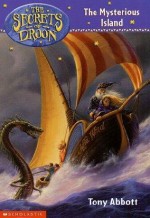
We try to read three or four chapters of a Droon book a night.  And he really follows along well.  There are times when he guesses what will happen, and he certainly remembers more about what happened than I do.  Sure there are a few things he doesn’t quite get–some of the books in the teens are, if not intense, then certainly mind-boggling: I don’t think a 6-year-old can really grasp time travel or the apparition of a character who has disappeared, but he certainly likes the good vs evil story and he thinks that Neal, the comic relief, is really funny.

We started with Book 2 (Book 1 wasn’t at the library), and continued through Book 6 before going back and reading #1.  He thought #1 would be boring because we’d gotten so far beyond that already, but even that book was good–and filled in a few questions that I had.

There are 36 books in the series (as well as 6 Special Edition books (we haven’t read any of those yet so I don’t know what that means)).

The first twelve books form a kind of arc.  I suppose it’s official as an arc (at least it seems to be in all of the official info about the series), because a problem runs through all the books and is then solved.  However, there’s no real mention of it as an arc in the books, the kids “finish” that task, but simply continue to go back for a new adventure in Book 13.

So, just what is this series about? (more…)

Read Full Post »

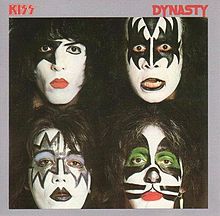
SOUNDTRACK: KISS-Dynasty (1979).

I was pretty excited to buy this album when it came out–a new Kiss album that wasn’t solo albums!  Woo hoo!  And the fact that it was disco?  Well, even though I said I “hated disco,” I didn’t really know what disco sounded like then (and really, aside from the middle “I Was Made for Lovin’ You” it’s not really a disco record) and plus my other favorite band was the Village People (and really, that makes a lot of sense–tw0 bands in over-the-top costumes talking about sexuality that I totally didn’t understand).

So, this album is hard for me to be critical about because it was such an essential part of my childhood, especially “I Was Made for Lovin’ You.”  I love it, and yet I can listen critically and appreciate that it’s really not that good.

But I’ll move on to the other songs.  “Sure Know Something” and “Magic Touch” really don’t seem that out of place chronologically with, say, the Kiss solo albums–they sound an awful lot like something off of Paul’s album.  So, despite the sort of slinky 70’s bass on “Sure Know Something”, they can’t have been that much of a surprise.  The guitar solos are short but have some interesting Ace sounds (I like the harmonics on “Magic Touch”).  It seems that while the other guys were embracing disco, Paul was keeping the Kiss sound alive.

Then there’s the Ace songs.  “2,000 Man” made total sense as an Ace song. I had no idea it was a Rolling Stones cover until fairly recently (and I like Ace’s version much better).  “Hard Times” feels like the sequel to “New York Groove.”  Not the music so much although maybe a little, but the lyrics–now that he’s in the city here’s what happened–the gritty reality. It’s one of Ace’s great, lost songs.  And check it out, Ace sings on three songs here!  (Guess having a #1 hit wasn’t lost on the Kiss powers).  “Save Your Love” has a cool descending chorus and a nice bass feel to it.  Ace certainly wins on this record.

Peter got only one song, “Dirty Livin'”.  In fact, this is the only song that Peter had anything to do with (his drums were re-recorded by Anton Fig).  It reminds me (in retrospect) of the Rolling Stones disco era even more than “2,000 Man,” the backing vocals remind me of something like “Shattered.”  I always liked this guitar solos on this (cool feedback).  Although I liked the song (along with the rest of the album), I don’t think it holds up very well.

Gene only gets two songs.  It amuses me how little he has to do with these late 70s albums even though he is always the leader of the band.  I always liked “Charisma” (I had to look the word up back then) even though it is, admittedly, rather discoey and really not very good.  It is fun to ask “What is my…charisma?”  But “X-Ray Eyes is the better Gene song on this record.  It harkens back to earlier Kiss songs and even has a bit of menace in it.

So, Dynasty was a huge hit for the band.  And they even got to mock it in Detroit Rock City the movie.  Cynical marketing ploy or genuine fondness for disco?  Who would ever know.

[READ: November 1, 2011] “The Brief Wondrous Life of Oscar Wao”

Readers of this blog know that after finding an author I like, I will try to read everything that he or she has written.  Close readers will know that if a writer is reasonably young and reasonably unpublished, I will try to read his or her uncollected work as well.  Well, I really enjoyed Oscar Wao the novel, so I decided to see what else Díaz had written. There’s really not a lot, to be perfectly frank.  There’s his short story collection Drown and a few fiction pieces published here and there (mostly in the New Yorker) and a few non-fiction pieces as well.

So this “short story” from the New Yorker (with the same title as the novel) is in fact an early, mostly the same, version of the Oscar story in the novel.  The thing here is to note the date: 2000(!).  The novel came out in 2007.  So, Junot had been working with this character for easily five years (giving time for the publishing industry to get a book out and all). The remarkable thing the is just how accomplished and polished this piece is and how much of it was used in the novel.

I’m curious to know whether this was written as a short story (it’s quite a long short story) or if it was always intended as a part of a novel.  Interestingly, when you read this story by itself and you realize that it is pretty much all of Oscar’s story in the novel, you realize just how little of Oscar is actually in the novel.  The novel is about Oscar, obviously, but it is really about his family and the fukú that was placed on them by the Trujillo clan.  Oscar is sort of the touchstone for the fukú, and the person whom the narrator knows most intimately but his story is also brief. (more…)

Read Full Post »

SOUNDTRACKSUPERCHUNK-Superchunk (1990).

Some time ago, I reviewed all of the Superchunk EPs.  After progresing to their most current music, returning to their first album is a bit of a shock.  Superchunk’s first full length album is incredibly raw, with lots of screaming (two vocalists at once, even) and a very grungy attitude.  It has a DIY aestethic, in keeping with the undeground scene at the time.

The first four songs fly past in a pretty quick blur of adrenaline (the longest is just over 3 minutes).  The fifth song, the aptly named “Slow” slows things down and strecthes things out with a five minute track of slow distorted chords and a long solo.

Of course, the pinnacle comes with the next song “Slack Motherfucker” one of the best grunge anthems of all time. 

The last four tracks speed things up again with the bratty attitude that Superchunk is so good at (see especially “Down the Hall”).  But it’s not all just blistering speed.  The band has some dynamics down and there are a couple of tempo changes as well.

The album is a lot of fun to listen to, especially if you’re lookig for grunge before it became Grunge.  Although there’s very little indication that they would become the indie superstars that they eventually became you can clearly hear proto-Superchunk chunks–Mac’s voice is as it ever was and the noise is present but not overpowering.  There are even hints of melody (although nothing as catchy as later albums).  And yet for all that it sounds like a criticism, the album is really quite solid.

[READ: June 15, 2011] The Hollow Planet

Yes, THAT Scott Thompson, from The Kids in the Hall.  I found out about this comic book from my good friend Jessee Thorne at The Grid.

The backstory is that Scott Thompson had been working on this story for years and years.  He imagined it as a movie (starring him, of course).  When that didn’t pan out, he decided to sell it is a comic book.  And while he was recovering from cancer, he worked on it extensively with Kyle Morton–character likenesses and whatnot.  And now we have a cartoon rendering of Scott Thompson!

This story focuses on Scott’s character Danny Husk…

The book opens with Danny and his wife and kids at a carnival.  After a few moments, Danny’s son gets lost on the merry-go-round.  In the next scene we see just how much his wife is estranged from him (she may even be cheating on him), and how little his daughter thinks of him.  Soon after, Danny goes to work, inserts a disc into his laptop and more or less brings down his company.

So far nothing out of the oridnary for this type of  story–henpecked husband on a quest for revenge that he doesn’t know he wants yet.

Then Danny visits with his old friend Steve.  They talk, they bond over Danny’s concern about his wife.  And Danny feels better.  Until he gets home.  After a scene which I won’t spoil, the story suddenly takes off with a high speed car chase (no kidding) and with Danny entering the titular hollowness of the planet. (more…)

Read Full Post »

SOUNDTRACK: RHEOSTATICS-2067 (2004).

This was the Rheostatics’ final release.  I’m not sure if they knew this would be their last disc, but it kind of feels like they are throwing everything they can into it.

It opens with a delicate song from Martin which reminds me of Jane Siberry (the “row upon row” section).  Although at about 4 minutes it starts rocking out.  It’s a kind of meandering song, which is odd to open an album with.

It’s followed by “Little Bird Little Bird” a great folky song form Bidini.  But the disc really come alive with “Marginalized” a song that reminds me in some ways of “Horses,” as it is rocking and a little twisted (it seems surprising that it came from Tim Vesely).  It’s got some great guitar and an impressive keyboard solo (!) from new member Michael Phillip Wojewoda.

“The Tarleks” follows (with some fun frog noises). It opens slowly (as Martin songs tend to do) but once it really takes off, its got a great riff with his wonderful dramatic pauses and really funky sound from the bass/keyboards.  Then we get the wonderfully odd “Power Ballad for Ozzy Osbourne.”  It’s a kind of joke (but not really) about rock performers aging gracefully.  Bidini gets a bunch of songs on this disc, and here he gets two in a row, with the bizarrely wonderful “I Dig Music.”  The subtitle is “The Jazz Animal” and it tells you a lot about the song…it is indeed a kind of high-octane jazz.  But it has many different segments (and a lyric that references Squarepusher).

“Here Comes the Image” is a 6 minute track from Vesely which sounds very much like his more mellow tracks.  I’m not sure his tracks belong in the middle o f a disc because they tend to really bring the momentum to a halt.  Although it is a pretty song, it’s quite mellow (the organ solo at the end is pretty sweetly retro).  It’s followed by the five-minute slow instrumental “Who is This Man and Why is He Laughing?”  It really feels like an album ender.

So when “The Latest Attempt on Your Life” comes in, it revitalizes the sleepiness that those two songs imbue.  This track has the wonderful repeated chant “Everyone hates you, you sing like a woman”).  “Polar Bears and Trees” follows and it’s another kind of crazy song from Bidini.  It has such simple verses but the chanted “hey hey ho ho” rocks hard and is wonderfully fun.  (The lyrics are clever too).

Vesely returns with the beautiful, wonderfully catchy “Making Progress” which has another great retro keyboard solo at the end. The final track “Praise This Mutilated World” is one of the most beautiful songs in their output.  It starts as a fairly simple acoustic track (Bidini knows a good melody).  At about two minutes in, the band joins in with amazing harmonies.  The quiet parts keep coming back only to be overwhelmed by the harmonies once again.  The last two minutes are a spoken section.  It goes on a bit long, but is redeemed by another gorgeous chorus.

There’s a bonus track which is a very electronic version of  “Record Body Count.”  So this disc is definitely overly long in some places.  There are some great parts to the disc, but it feels like it could have used a good editor.  Nevertheless, since it’s the band’s final release, respect is due.

[READ: March 15, 2011] “Water Spider”

This very short (three-pages) story turned very dark rather quickly.

It opens with an African man, Bokarie, settling into his life as a convenience store clerk in Ottawa.  We learn that he was granted asylum, and that he has the scars to prove it.  He was quite nervous about leaving his country, and he still puts cinder blocks behind his door, to discourage uninvited guests.

At the same time, the action of the story concerns the accidental drowning of Caitlin, a young girl who presumably got too close to the creek when it overflowed.  The town is obviously distraught that one of their youngest and most innocent kids was killed, and they are planning a memorial service.  They are encouraging everyone to wear pink to the service and are even hoping to get a wreath put on the town’s crest.

Bokarie looks on this entire scene with a kind of bemusement.  His life in Africa was full of death.  Most of it horrifying.  So he seems somewhat unsure of what to make of the town’s outpouring for one lost child.  And then the story slowly reveals a shocking truth.

The truth is NOT that he killed Caitlin.  That’d not how the story is going (I didn’t really think it would go there, but it was a possibility).  Rather, the truth comes out about Bokarie himself, and his life back in Africa.  And it’s frankly horrible.

As the story draws to a close, Bokarie makes a decision that is going to impact the community.  It’s a little unclear what his motivation is, but it opens so many possibilities, that it really brings out a whole new realm to the story,

In some ways this story reminded me of Damon Galgut’s “An African Sermon (from The Walrus July/Aug 2004)  which also had an African character whose past has a hidden element and which turns out to be much darker than originally laid out.

Read Full Post »

SOUNDTRACK: FLEET FOXES-Live at The Black Cat, Washington, DC, July 7, 2008 (2008).

I still love the Fleet Foxes debut album, and I listen to it quite often.  One of the most impressive aspects of the band is their amazing harmonies.  So how does a band that is so vocal-centric perform live?

In an interview included with the concert, Bob Boilen asks that question.  They explain that the bigger venues are a bit harder because they have to crank up their monitors.  They also try to stay close to each other to be able to hear the harmonies clearly.  Well, they did something right because the harmonies sound very impressive here.

The main problem comes because lead singer Robin Pecknold is sick.  As in, just getting over a major cold, sick. As in, he admits that their last few shows were something of a rip off for the attendees.  Tonight’s show, he says is half a ripoff.  And that is most evident in my favorite Fleet Foxes song, “Mykonos” in which Pecknold’s voice cracks with abandon.  I would feel bad for the audience if the band wasn’t so personable and friendly and generally cool.  They make the best of a rough situation, and again, the backing vocals sound fantastic.

There are also a ton of delays in this show.  Most of them seem technical, although there seems to be a lot of tending to Pecknold’s voice, too.  But as I said, the band is engaged with the audience, telling stories (someone in the band is from DC and he asks if anyone went to high school there), and generally keeping everyone entertained.  It’s probably not their best show ever, but it still sounds great.  You can listen and download at NPR.

[READ: March 27, 2011] Miss Peregrine’s Home for Peculiar Children

Quirk Books, publishers of mash-ups like Pride & Prejudice & Zombies (as well as many other, well, quirky, titles) has published this fantastically exciting novel.

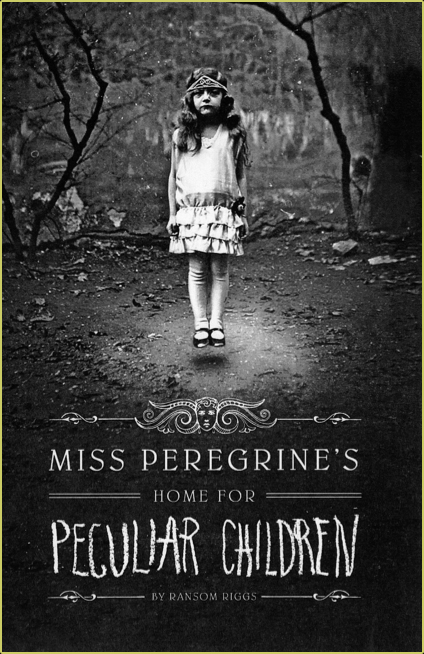
The cover depicts a creepy girl who is hovering off the ground.  But the girl herself is SO creepy that I didn’t even notice the hovering part.  She is just one of the peculiar children within the book.  And this picture is one of 50 included within the book (I’m only bummed that two pictures were not available in my copy).

So the story opens with Jacob Portman talking about his grandfather.  His grandfather (Abe) was a young boy in Poland during the 1940s.  When the Nazi’s invaded, his family was killed and he was sent to Wales, to the titular Miss Peregrine’s Orphanage (not widely known as a home for peculiar children).  But as details emerge from his grandfather’s version of the tale, things seem not right.

Abe talks about the monsters that chased him out of Poland–but he wasn’t describing Nazis, he was describing actual monsters, with multiple tongues and horrifying faces.  They followed him to Wales and were actually chasing him to that very day, in America.  And when he talked about Miss Peregrine’s house, he talked about the special kids who live there: the girl who could call forth fire out of thin air, the girl who could levitate, and the boy who had bees living inside of him.

Of course, that was all nonsense, just post traumatic stress from being attacked by Nazis, right?

That explanation works until the night that Abe is murdered.  He calls Jacob for help (they think he is going senile).  When Jacob gets to his house, he finds the screen door torn open and Abe missing.  The follow a trail and find Abe, bleeding in the woods.  Jacob thinks he can see the same kind of monster that Abe had always described lurking right nearby in the woods.  Although Jacob’s friend (who drove them to Abe’s house), didn’t see anything.

And now, Jacob’s dreams are plagued by scary monsters.  And he can’t get his grandfather’s cryptic last words out of his head.  Time to see a therapist, obviously. (more…)

Read Full Post »

SOUNDTRACK: BLACK FLAG-Damaged (1981).

I’ve liked Black Flag since I bought Loose Nut on vinyl way back when (1985, the year punk broke for me).  And those four bars were iconic to me even before I had heard a note (although I just learned they are supposed to represent a flag waving).

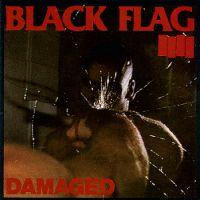
And this is where their legend really took off.  So a few things I never knew about this album until I looked them up recently.  1) That’s Rollins on the cover punching the mirror.  2) He didn’t really punch the mirror (it was smashed prior and the blood is fake).  3) I knew that Black Flag existed for a while before Rollins’ arrival and that they’d had a series of singers before him.  But I didn’t realize what a their first EP (Nervous Breakdown–Keith Morris on vocals) came out in 1978, their second EP (Jealous Again–Ron Reyes on vocals–credited as Chavo Pederast (he left the band in the middle of a live show, so they changed his name to that rather offensive one)) came out in 1980.  Their third EP (Six Pack –Dez Cadena on vocals) came out in 1981.  Rollins joined a few months after that and Damaged–their first full length–came out in December 1981.

“Rise Above” is a wonderfully angry song.  The gang vocals of pure empowerment work so well with the chords.  It’s still effective thirty years later.  “Spray Paint” goes in the other direction: rather than an uplifting, catchy chorus, it’s a deliberately angular chorus that’s hard to sing along to (even for Rollins).

“Six Pack” represents the more “popular” side of the band.  And it is a wonderfully funny single.  I just can’t decide if it’s serious or ironic (see also “TV Party”).  These two dopey songs are great to sing along to and are simply awesome.  (Fridays!)

The rest of the album turns away from the lighthearted tracks.  “What I See” is a really dark moment on this album.  And the negativity is unusual especially given Rollins’ later penchant for lyrics about fighting back.  True, Rollins didn’t write these lyrics.

“Thirsty and Miserable” is a blast of noise with some of Ginn’s first real guitar solos (which Guitar World says is as one of the worst guitar solos in history…and I say really? that’s the solo they pick?  Ginn has done some pretty outlandishly bad solos over the years…of course the whole list is questionable at best).  “Police Story” is a simple but effective description of the punks vs cops scene at the time.

“Gimme Gimme Gimme” seems childish, but that’s clearly the point.  “Depression” is a super fast track.  (Trouser Press considered Black Flag America’s first hardcore band).  “Room 13” is an odd musical track, with pretty much no bass.  It’s just some roaring guitars and drums and Rollins’s screams.  This track stands out because Chuck Dukowski’s bass propels most of the songs here.

“No More” sounds “typically” hardcore: very fast with the chanted chorus of “No More No More No More No More.”  “Padded Cell” is also fast (and is pretty hard to understand) except for the “Manic” chant, but the following track “Life of Pain” features what would become a signature Greg Ginn sound…angular guitars playing a riff that seems slightly off somehow.  Compelling in a way that’s hard to explain.

It’s funny that a band that plays as fast as they did also released some pretty long songs. “Damaged II” is almost 3 and a half minutes long.  It has several different parts (and a pretty catchy chorus).  And the final song “Damaged I” is a kind of crazed rant from Rollins;  It’s one of his scariest vocal performances; he sounds really deranged.  Especially when it sounds like he just cant think of anything else to say so he just screams maniacally.  But his vocals are mixed behind the music as if he’s trying really hard to get heard.  There’s very little else on record like it.

It’s a wonderful end to an intense disc, and the beginning of a brief but powerful career.

[READ: March 25, 2011] The Life of Polycrates

I’ve been reading Connell for a few years now.  In fact, the first time I posted about his work came with a blistering dismissal of his story “The Life of Captain Gareth Caernarvon” in McSweeney’s 19.  That story is included here, and upon rereading it, I learned two things:

  • One: context is everything.
  • Two: I was totally and completely wrong in that original review, and I take it back.

But before I explain further, some background about this book.  This is a collection of eleven stories, eight of which have appeared elsewhere.  Unfortunately there’s no dates of publication included so I don’t know how old any of these stories are.

The other thing I’m fascinated about is Connell himself.  I’m not the kind of reader who wants to know a ton of details about the author, but I like a little bit of bio (or a photo) when I read someone.  The only bio that is consistently presented about Connell is that he was born in Santa Fe, New Mexico.  I’m fascinated by this because so many of his stories are set in Europe.  So I have concocted a master biography about Connell’s life and how he has lived and toured extensively in Europe, studied theology (and found it wanting) and investigated all of the world’s darker corners.

It’s this latter aspect that really altered my perception of Connell’s writing.  I’ve liked the last few things that he’s written, but I fear that I was not looking at him through the proper lens.  And this relates back to bullet point one above.

Connell writes in a world not unlike H.P. Lovecraft–a world that is unconventional, dark and more than a little twisted.  And yet, unlike Lovecraft, there is very little of the fantastical in his stories.  Rather, his characters reside in our own world (with a little chymical help from time to time), but they are all real.  They’re just not characters most of us choose to associate with.  So, reading that first story in McSweeney’s, where it was so different from all those others, I found it really distasteful.  In retrospect, I’m not going to say that it is meant to be distasteful, although some of his stories are, but it was certainly not a pleasant story by any means.

The other fascinating thing to note about this book is that all of the stories are written in short, Roman Numeraled segments.  So the title story has 35 segments.  But even some of the shorter ones has twelve or thirteen segments (sometimes a segment is just a few lines long).    I actually enjoy this style (especially when the segments introduce something totally new into the story–which many of these do). (more…)

Read Full Post »

SOUNDTRACK : PHISH-Live Bait: Vol 2 (2010).

Phish has been releasing live concert downloads  for years now.  And now that they’ve started touring again, they have a whole bunch of new ones.  I’m not going to be downloading new shows, (I have a  bunch of old ones that I really never listen to).  But what I like is that they are giving away a few tracks from these shows.  And what I love is that they’re calling the freebies, Live Bait.

This set is a few tracks from shows recorded in August of 2010.  There’s nine tracks  ranging from 90 seconds (“NO2” ) to 17 minutes (“Twenty Years Later”).

Although this show is from 2010, this bait contains only two songs from their last album, Joy. The older songs are fan favorites (“Wilson, “Possum”) and weird interludes (“Kung”).  The band sounds fresh and really into what they’re doing and the old songs sound rejuvenated and fun.

Nevertheless, since most of the other live releases are older, it’s so nice to have the two new songs.  You can’t be choosy on a free sample, but I’d have loved to hear them do “Time Turns Elastic.”  If you’re new to Phish, this is a good place to get a free sample of their live shows.  Three volumes of bait have been released so far.

[READ: February 16, 2011] Ladies and Gentlemen, The Bible!

I discovered this book when I read the short story “Samson and Delilah in The Walrus.  I liked, but didn’t love, the short story, but I was intrigued enough to want to see how the other Bible stories would stack up.  And since we had the book on the shelf, I decided to check it out.

So this book is a retelling of several stories from the Old Testament.  What Goldstein does is create a backstory for these biblical characters who are really just sketches.  The stories are funny, serious, weird and often enjoyable.

The introduction is a very funny kvetch about at being a Jew and having dinner in the Grey Derby; waiting online for hours with so many other Jewish families, eating kosher food with your own family, fighting over the check, pointing fingers, calling each other names and, ultimately, leaving by 5:30 PM.  It made me laugh out loud in the best Woody Allen tradition.

With no real introduction, he moves right into his new versions of Bible stories.

The biblical stories that Goldstein updates include:

  • Adam and Eve
  • Cain and Abel
  • Noah and the Ark
  • The Tower of Babel
  • Jacob and Esau
  • The Golden Calf
  • Samson and Delilah
  • King David
  • part 1: Goliath
  • part 2: Bathsheba
  • part 3: Absalom
  • Jonah and the Big Fish
  • My Troubles (A Work in Progress, by Joseph of N–) (more…)

Read Full Post »

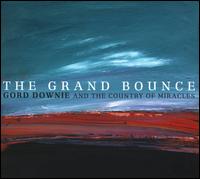
SOUNDTRACK: GORD DOWNIE AND THE COUNTRY OF MIRACLES-The Grand Bounce (2010).

I knew I was going to write about Canadian musicians for this series of Extraordinary Canadians, but I wasn’t sure who would get matched to whom. I figured I’d match Gord Downie to Mordecai Richler, but when I saw this in the liner notes to this disc, I knew I’d made the right choice:

Thank you to the Richler Family for the font you are presently reading.  The Richler font, not publicly available, was created and named for the great Mordecai Richler.  It was commissioned by Louise Dennys, designed by Nick Shinn and graciously made available by Florence Richler.  I am grateful for this honour.

So Gord Downie is the driving force behind The Tragically Hip.  I’m always curious when a guy who pretty much runs a band needs to do a solo album (or three).  And in this case, since the last Hip album was much more mellow and almost country, it seemed like he got some of his less rocky side out on that disc, so what’s the need?  Unless, of course, it’s just the need to play with some other folks once in a while.

Well, whatever the reason, this disc finds Downie in incredible form.  In fact, I think I like this disc better than the last Hip disc (which I did like, but which was a little too mellow overall).  The songs are all great, from the simple folk tracks to the more elaborate rockers.  And, yes, while the disc never rocks as hard as some Hip songs tend to, this is not a simple acoustic guitars and solo vocals record.

“The East Wind” is a wonderful starter.  It’s fairly simple with awesomely catchy lyrics.   I learned that the lyrics are from a quote by Todd Burley.  And they are an awesome way to describe a hostile and violent wind: it’s lazy, because “it doesn’t go around you, it goes right through you.”  Fantastic.

“Moon Over Glenora” sounds a lot like a Hip song.  Downie’s lyrics are almost mumbled and understated until he gets to the end of each verse when he raises his voice an octave for maximum effect.   The stops and starts in the bridge are also great.  “As a Mover” is also smoothly catchy with a wonderful rising chorus.

“The Dance and the Disappearance” is another great conceit.  This song is inspired by a quote from Crystal Pite: “Dance disappears almost at the moment of its manifestation.”  It is suitably dramatic with some great verses.  “The Hard Canadian” is a gentle acoustic number that would not be out of place on the more recent Hip records.  “Gone” feels like a continuation of “Heart,” almost like the slightly more rocking second half of it.

My favorite track is “The Drowning Machine” (I seem to like anything that Downie writes that’s about the sea).  It’s a minor chord wonder, dark and mysterious and wonderfully catchy.  The rock comes back on the rather simple “Night is For Getting.”  It’s probably the least essential track on the disc except that once again the chorus/bridge is really great and memorable.

The last three tracks bring on the mellow, which is a fitting ending for the disc, although since the three t racks take up about 12 minutes, it makes the end drag a bit.  “Retrace” is a country-tinged (steel guitar) mellow track (again, Downie’s voice brings out the excitement) .  “Broadcast” has an extended outro of gentle guitars and piano that for all the world sounds like the end of a disc, so I’m always surprised that there’s a final track after it.   And so the final track “Pinned” feels like filler.  It has a movie projector clicking sound and gentle piano with almost inaudible vocals.  It’s actually a pretty song, but it feels almost discarded here.

One of things I’ve always liked about Downie’s lyrics is that they are atypical of rock songs.  They’re not “about” sex or rock or drugs or swagger or anything like that.  In this case they are about locations and events.  And it really paints a picture.  And speaking of painting, Downie painted the cover art.  The beautiful simplicity of the painting is not unlike the beautiful simplicity of the music on the disc.

Oh and my copy is autographed too! (although I wasn’t there when he autographed it, so it could have been anyone who scribbled on the cover).

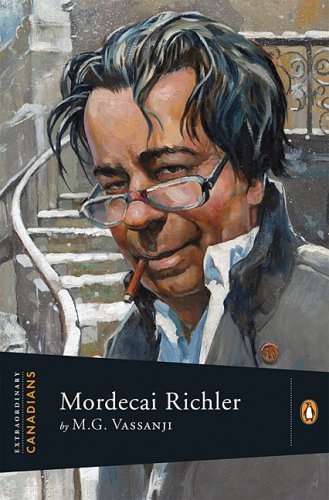
[READ: November 15, 2010] Mordecai Richler

I don’t know a lot about Mordecai Richler, although I feel like whenever I read about him it’s in hushed tones (a neat trick, that).  Nevertheless, for a number of reasons I have wanted to read him for many years but have just never done it.  Now, the stars are aligning with me for Richler.

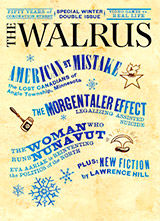
There’s this book, there’s the cover of the October 2010 issue of The Walrus and the recent filming of his book Barney’s Version (the filming of which is discussed in the same issue).  And then a patron asked for the film of The Apprenticeship of Duddy Kravitz.  So, it’ about time to read one of his books.  But here’s the rub…do I start with the great books or do I start at the beginning and work my way through his career?  And, there’s also a huge new biography coming out (the review of which mentions a wonderfully offensive event in which Richler absolutely dismisses his Jewish audience).

This book was written by M.G. Vassanji.  I feel that I’ve heard of him but I’ve never read him.  And yet listen to this incredible biography:

M.G. Vassanji was born in Kenya and raised in Tanzania.  He attended University in the United States, where he trained as a nuclear physicist, before coming to Canada in 1978.  Vassanji is the author is six novels and two collections of short stories…and he has twice won the Giller Prize.

Damn.

Since I read this right after Coupland’s McLuhan it’s tempting to compare them.  And yet, as I said in that review, it seems quite apparent than Coupland’s book will be like no one else’s, so I won’t say much about that.  Instead, Vassanji opens the book by talking about the similarities between himself and Richler and their few awkward but pleasant meetings.  (In this respect yes, it is sort of like Coupland’s book in that the author puts himself into the text). (more…)

Read Full Post »

SOUNDTRACK: THE DEARS-Live on QTV (2008).

The Dears are a wonderful band from Montreal. They create epochal noise, make concerts that are unholy messes (and yet totally amazing) and they seem perpetually about to self-destruct.   Murray Lightburn, the singer and song writer of the band is has an amazing voice and great songwriting skills.  They create full blown orchestral rock, but they’re not afraid to totally rock out (see the 20-minute live version of “Pinned Together Falling Apart” on their live album.)

These three tracks are acoustic and totally stripped down.  It’s just Murray on guitar and his bandmate (and wife) Natalia singing backing vocals.  These three songs come from the album Missiles.  Although I am partial to their over the top renditions, these stripped down version showcase how great the songs themselves are.

Dream Job” is a slow track with limited backing vocals.  “Lights Out” is a bit faster with some really great chord changes.  And finally, “Money Babies” is an amazing duet, really letting Natalia harmonize brilliantly.

You can hear more songs from The Dears at All Songs Considered.

[READ: January 11, 2011] “Meet You at the Door”

This is easily my favorite story in The Walrus in years, possibly ever.  It’s also one of my favorite stories that I’ve read in a long, long time.  It has so much to recommend it: it is wonderfully paced and it is really engaging.

The basic story is of a twenty-something black man who must travel to Gull Lake, Saskatchewan to start a job at a railroad junction house.  But that simple plot doesn’t do any justice to the multifaceted aspects of the story’s construction.

First, the position requires excellence in typing (relays that come from the main train location must be typed on an old manual typewriter in carbon.  With no typos.  And they must be typed fast!  Split second decisions must be made and any errors could be fatal.  So the employee must be smart and skilled (there’s a 75% failure rate on the test).

When the narrator passes the test he must ship off to Gull Lake that night.  And, this being “in the age of dinosaurs” the narrator is carrying his portable typewriter, a guitar and a huge afro.  And he needs a place to stay.  Fast.

He’s obviously not well received at first, until we meet the lady who will take him in.  And she is the second great aspect of this story.  She is a wonderful character (and could easily have many more pages written about her, but Hill is concise which really moves the story along).  She sizes him up, deems him worthy, and lets him have the spare room. (more…)

Read Full Post »

SOUNDTRACK: LIGHTS-“February Air” (2006).

Lights is a Canadian singer who is managed by Jian Ghomeshi.  She is a young cute pop singer and this was her second hit (I think–Wikipedia says it was used in an Old Navy ad).  I admit that I’d never heard of her before seeing her on Jian’s page.

I think of everything that Jian touches to be unique and always interesting.  And although this is certainly poppy and catchy, it’s only mildly  interesting and is kind of indistinguishable from a lot of other poppy catchy songs (the middle section stands out a bit, admittedly).

She’s received a number of accolades (best new artist at the 2009 Junos), so good for her (and Jian).  But I think I’ll be passing on her discs.

[READ: January 10, 2001] “Minnows”

This very short story (two pages) is dark and quite twisted.  Both in content and in structure.

The story opens with a woman seeing her daughter at the door.  We quickly learn that the daughter is not happy, but when the visit turns violent it’s unclear whether the older woman is crazy or hallucinating or if the violence is really happening.

Then we get some background story about their relationship.  Which sets things straight (sort of). (more…)

Read Full Post »

« Newer Posts - Older Posts »