Feeds:
Posts
Comments

Archive for the ‘Demons’ Category

SOUNDTRACK: A HOUSE-I am the Greatest (1991).

A House were a Dublin band that released a number of great songs and a few good albums from the mid 1980’s until the late 1990s.  I loved A House (but never knew whether to file them under A or H).  They were a smart, often sarcastic, occasionally poppy college rock band who played dissonant songs more often than not and wrote lyrics which could be off-putting more often than not, but which, in the right mind frame, were simply, as the album says, the greatest.

It opens with a nice jangly guitar which is quickly interrupted by a strange feedback sound and Dave Couse’s somewhat unsettling voice.  And he gives a litany of things about which he does not care, but mostly because nobody else does.  It’s followed by the sweet tender ballad “Too Young.”  The next track was the single, of all things.  “Endless Art” a simple riff which name checks dozens of dead artists that bridges with Beethoven’s Fifth.  It gets tedious after about 200 listens, but since I haven’t heard it in a while, I found myself really grooving to it again.

In keeping with the “let ’em guess” attitude of the disc, the next song is a plaintive moan of longing called “When I First Saw You.”  I’m fairly certain he’s singing out of tune for the whole track.

“Take It Easy on Me” opens with a great wah-wah’d guitar sound that should have been a left-field hit like The Flaming Lips had.  But it’s their simple acoustic songs that pack the most punch like “I am Afraid.”  It’s followed by what sounds like a Tindersticks song, until Couse’s voice kicks in, and we get a great questioning song about religion called “Blind Faith”.

He seems back to his old tricks on “I Lied” (“When I said that I loved you, I lied.”) Then the full band kicks in (with great harmonies) “When I said, when I vowed, I don’t love you anymore, I lied.  I adore you!”

The rest of the songs play with this formula: off kilter yet poppy, harmonies on top of dissonant leads.  The pace never slackens, and the albums stays strong through the brilliant final track, “I am the Greatest” (a spoken word folk track that is all smackdown which devolves into a bunch of blokes shouting “I am!”).

Check out the fantastic stop motion video for “Endless Art” on YouTube, and let me know if you can find a version that’s better than this one.

[READ: Week of August 23, 2010] Ulysses: Episodes 16-17

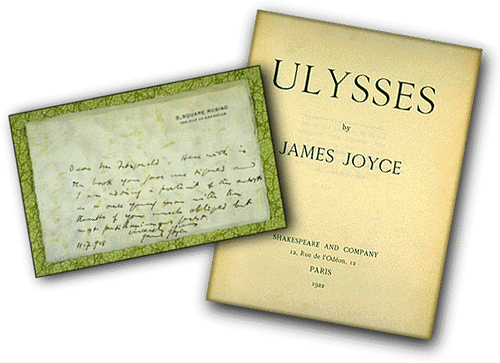
Nearing the end of the book, still recuperating from the insanity of the Circe episode, we get two episodes that are considerably mellower.  I enjoyed the beginning of Episode 16, but felt a little at sea when it was hijacked by the sailor.  Episode 17 on the other hand is definitely my favorite.  Even though I love the surrealism of Circe, there’s something about the catechism of Episode 17, with its question and answer format–its own sort of surrealism–that I find fascinating, funny and surprisingly informative.  It fills in a ton of details that were left out of the beginning (or that were hidden) and yet still retains a bizarre stream of consciousness. It also offers incredible insight into the man who is Leopold Bloom. (more…)

Read Full Post »

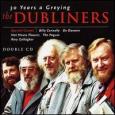
SOUNDTRACK: THE DUBLINERS-30 Years A-Greying (1992).

The Dubliners were an Irish folk grew founded in 1962.  Probably the most notable thing about the band was lead singer Ronnie Drew’s voice, which out-gravels Tom Waits in depth and impact.

I don’t know a heck of a lot about them as a band or their impact on traditional Irish music, but Wikipedia tells me that they were a major force in the export of trad music.  So there.

So if you like traditional Irish music (that’s not as “pretty” as some artists).  The Dubliners are a good resource.)

When I bought this album many many years ago, I was under the impression that it was a greatest hits with extras.  In fact it’s not (although there are a number of classic trad songs here).  The selling point is that there are a lot of guest vocalists (The Pogues, of course, among others).

But I think a cheaper, shorter compilation would be the way to go, (you’d definitely want “Finnegan’s Wake” for instance).  And I have to say I was a bit surprised by the inclusion of “The Rose” (even if The Hothouse Flowers are on it, too).

Nevertheless, if trad Irish music is what you’re after, The Dubliners are your man.  And they’re named after the Joyce book, too.

[READ: Week of July 19, 2010] Ulysses: Episodes 4-6

I would be remiss if I didn’t include a link to the Infinite Zombies discussion about Ulysses. There’s some great stuff there!

This week’s reading introduces us to Leopold (Poldy) Bloom.  We meet his wife Molly and learn about their daughter Milly (who is away) and their son Rudy who died in childbirth.  The most notable thing about these three Episodes is that, despite the continued use of interior monologue, they sound so different.  Whereas Stephen’s was very intellectual (ineluctable modality of the visible, and all), Leopold’s is much more visceral.  He focuses quite a lot on excrement and organs.  And of course, there’s Bloom’s very introduction:

Episode 4 “Calypso”
“Mr Leopold Bloom ate with relish the inner organs of beasts and fowls” (45). (more…)

Read Full Post »

SOUNDTRACK: SAID THE WHALE-“Gentleman” (2009).
This song starts out simply enough, a folky bouncey song.  It’s an almost harmless song, almost easily forgotten.  And yet there’s something about it that raises it above songs that typically sound like this.  Enough, that is to make me want to listen to it again.

When I investigated the Said the Whale page on CBC Radio 3, I learned that they’re from Vancouver.  But more importantly I learned that they have a number of songs with great titles.

Delightfully, “Wanting like Varuna” lives up to its title.  It’s evidently on their 2009 Christmas EP.  It’s a wild rollicking song with an awesomely catchy chorus, “everybody wants: they want, they want, they want, they waaant.”  And about half way through, the song switches directions completely: a new time signature, from a slow pop song to a wild syncopated jazzy motif.

That song appears to be an anomaly as the third song I chose was their most popular on the station: “This City’s a Mess.”  It starts again as a slow folky number.  But it gradually gets louder and more chaotic.  It’s very catchy, and also more interesting than “Gentleman.”

I’m not sure I’d set out to listen to them, but I enjoyed hearing the songs.

[READ: June 15, 2010] “Billy Bennett”

These stories continue to get darker and darker.  What does this say about Canadian writers, or people’s opinions of their homeland?

Billy Bennett is a ne’er do well.  He has a criminal record, several smashed cars in his recent past and a drinking problem. (more…)

Read Full Post »

SOUNDTRACK: THE DECEMBERISTS-“The Mariner’s Revenge Song” (2005).

This was the hardest week for music tied to Moby-Dick. (I’m saving Mastodon for the grand finale).  I don’t really have anything that relates directly to the book.   I have a number of nautical-themed songs, but very little in the way of albums.  And, it’s true that this song doesn’t have anything to do with Moby-Dick directly.

However, it’s a 9 minute song about a mariner getting swallowed by a whale just for revenge.  So, it’s sort of related.

The Decemberists are one of your more nautical bands (and I’ve reviewed all of the albums here somewhere).  Their first album, Castaways and Cutouts featured an album cover with a ship with ghosts drifting from it.

This song has an accordion fueled shanty feel as we follow the tale of a young lad who seeks revenge on the rake who used and abused his mother and left her a poor consumptive wretch.  After fifteen years, he finally hears tale of the rake–he’s now a captain at sea.

So the lad hires on with a privateer and hunts down the captain’s ship.  As he is about to fire muskets upon him, a giant whale crashes on their ships, swallowing the two men whole (tell me, Ishmael, what kind of whale might do that?).

And it’s from inside the whale the we hear this tale.  The lad’s mother’s dying words echoing among the ribs of the beast:

“Find him, bind him
Tie him to a pole and break
His fingers to splinters
Drag him to a hole until he
Wakes up naked
Clawing at the ceiling
Of his grave
*sigh*”

And it’s catchy as all heck, too!

[READ: Week of June 21, 2010] Moby-Dick [Chapters 87-110 ]

Pirates!  I didn’t expect pirates in the book.  Week 5 opens with Ishmael discussing pirates in the low shaded coves of Sumatra.  Ahab intends to sail right through those piratical waters to get to Java because sperm whales are known to frequent the area.  And indeed they do.  A whole fleet of sperm whales is seen but at about the same time, the pirates come out and give chase.  My notes in the margins are a little diagram of a fleet of whales with an arrow and then a tiny Pequod and another arrow and then a jolly roger.

The Pequod easily outruns the pirates and still manages to keep the whales in sight.  So, they jump into the fray and start harpooning away.  However, as the saying goes, “The more whales the less fish” (389). (more…)

Read Full Post »

SOUNDTRACK: RHEOSTATICS-Whale Music (1992).
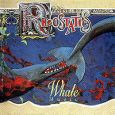
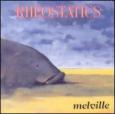
The Rheostatics are from Etobicoke Canada.  Their second album was called Melville (named after a town in Saskatchewan, but it has a whale on the cover so…).  Their third album (this one) is called Whale Music (inspired by the novel by Paul Quarrington).  When they made a film of Whale Music, the Rheostatics were asked to make the soundtrack for it, which they released as Whale Music.  So, the band have 2 albums called Whale Music and one called Melville.  Perfect soundtrack to Moby-Dick.

The album is chock full of all kinds of music: country tracks, folky tracks, metal tracks, and hooks galore.  And it’s all wrapped up in the oddity that is the Rheostatics.  This album features guest spots by the Barenaked Ladies and Neil Peart as well as horns, strings, spoken word parts, and “power tools”.

“Self Serve Gas Station” is a great opening.  It begins with swirling guitars and a beautiful solo (Rheostatics guitar lines sound so elemental as to seem like they’ve always been around).  But just as the vocals begin, the song becomes a sort of country track: a folkie song about adolescnece.  But it returns to a good rocking (and falsetto fueled) rock track.
“California Dreamline” is a wonderfully weird track, with more gorgeous guitar melodies.  It also has a disjointed section with squealing guitars.   While “Rain, Rain, Rain” opens with a lengthy percussion section (played by Neil Peart of Rush) with a weird time signature.  It’s a fun singalong.  “Queer” meanwhile has some great chugga guitars that turn into a rocking tale of an ostracized brother (and features the great line: “But I wish you were there to see it/When I scored a hat-trick on the team/That called you a fucking queer.”

“King of the Past” is another great track, with a wondrous string sound near the end.  It’s a gorgeous song with (again) different sections conveying shanties and jigs (and you can dance to it).  Like Moby from last week, Rheostatics, also bust out a fast metal track, but this one works well: “RDA (Rock Death America)” has a major hook and name checks everyone from The Beatles to The Replacements.
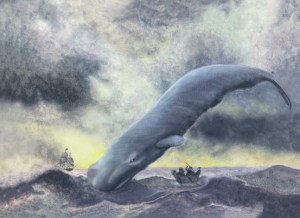
“Legal Age Life at Variety Store” is a great folky singalong (and features the piercing harmonies of Martin Tielli).  “What’s Going On Around Here?” is the most traditional song of the bunch, a poppy little ditty which avoids complacency with a rocking coda.

“Shaved Head” is a moody piece, wonderful for its roller coaster sensibilities, which is followed by the beautiful Tim Vesely sung ballad “Palomar.”  This track is followed by the humorous (but serious) shouted-word piece “Guns” which also features Neil Peart.

“Sickening Song” is an accordion based shanty song.  Followed by another pretty, poppy-sounding track, “Soul Glue.”  Drummer Dave Clark sings “Beerbash,” an upbeat song.  And tye final track is the epic, “Dope Fiends and Boozehounds.”  It opens with a beautiful acoustic intro and a wonderfully catchy wheedling guitar solo.  It ends delightfully: “Where the dope fiends laugh And say it’s too soon, They all go home and listen to
The Dark Side of the Moon.”

I had been listening to the band live a lot recently, and they play these songs a lot.  So it was quite a treat to go back and hear the original with all its full instrumentation.

[READ: Week of June 14, 2010] Moby-Dick [Chapters 62-86]

I never thought I’d ever say this, but I really enjoyed Moby-Dick this week.  So far, these twentysome chapters have been my favorite (even the gruesome whale sections), there weren’t any chapters that I thought really dragged.  So, good for me!

This week’s read begins with Ishmael stating that harpooners should not have to paddle and then be expected to harpoon as well.  They should save their strength for that last, all important act.  And that seems logical to me, although one also expects that the harpooners would feel kind of bad while everyone else is paddling. (more…)

Read Full Post »

SOUNDTRACK: MOBY-Everything is Wrong (1995).
I suppose that everyone knows that Moby (the musician) is Herman Melville’s great- great- great- grandnephew.  And that’s why he has the middle name Melville and had the nickname Moby.

Moby started out as a techno guy. He even made the Guinness Book for the fastest bpm ever recorded (since then, many have surpassed that) with the song “Thousand.”  It’s an interesting song, although more for its novelty than anything else.  He also had a cool hit called “Go” that sampled music from Twin Peaks.  And in 1999 he took over the world with his album Play, which featured some 18 songs that were all licensed for commercial use (many of which were ubiquitous that summer).

But this disc, Everything is Wrong, came out before Play, and it was considered a high water mark for dance music (before the next high water marks of Fatboy Slim and LCD Soundsystem came out, of course).

So this disc was hailed as the big breakthrough for Moby.  And it has something for everyone.  It opens with a pretty piano piece ala Philip Glass which is, as its name implies, a “Hymn.”  From there we get a heavy techno beat and “Feeling So Real” kicks off.  Gospel-like vocals soar above the dancing (this foreshadows Play quite a bit).  It sounds very 1994 to me, although I don’t think it sounds dated, necessarily.  And then comes his stab at punk.  “All That I Need is to be Loved” is a fast blast of aggro music.   The problem is that Moby doesn’t do punk very well.  His guitars are too trebly, his vocals aren’t very strong and despite the beautiful melodies he creates, he doesn’t write very catchy hooks.

“Every Time You Touch Me” returns to the style of “Feeling So Real” and is another stellar dance track.  While “Bring Back My Happiness” runs even faster.

“What Love” is another screaming punk track.  This one is closer to Ministry.  It’s quite a slap in the face after the rest of the disc.

“First Cool Hive” slows things down with a groovy almost ambient track.  And “Into the Blue” is a moody song that sounds like it could also have been taken from Twin Peaks.

“Anthem” returns to the fast beats with ecstatic moans sprinkled over the faster and faster beat.

The album ends with two tracks, “God Moving Over the Face of the World” which is a beautiful instrumental (again ala Philip Glass or more likely Michael Nyman) that weaves in and around itself for 7 minutes.   (It, too, hints of Twin Peaks).  And, “When It’s Cold I’d Like to Die,” while not exactly uplifting is coldly beautiful (kind of like a long lost Eurhythmics track)..

The disc is such a mishmash of styles, that it’s hard to really know what to classify it as.  Some of it works wonders.  Other tracks (notably the punk experiments) are less successful (even though I did enjoy them then, I think they just didn’t age well…or maybe I didn’t age well).  Of course, over the course of his career, Moby has attempted all of these genres in more detail, so this was almost like a sampler of what he would be doing later.

Sixteen years later it holds up quite well (although I still think Play is better).

[READ: Week of June 7, 2010] Moby-Dick [Chapters 42-61]

The reading this week opens with a chapter about whiteness.  And how somehow Moby-Dick is even more fearsome for being white.  As the chapter opens whiteness (even in skin color) is lauded.  But by the end, he cites it as being particularly creepy: white whales, polar bears, albinos.  (I think that this was my very least favorite chapter so far–I was uncomfortable reading it and I didn’t get a lot of humor from it either).

Some more down time passes, with Ishmael describing how Ahab is able to plot a course to find Moby-Dick.  It’s not just looking for a needle in an ocean–there are pathways that whales follow, for instance.  This is followed by a chapter that allows Ishmael to swear, absolutely swear! that whalers can recognize the same whale even years later if you tried to kill it but failed (and that he himself remembers one whale that got away from a mole under its eye). (more…)

Read Full Post »

SOUNDTRACK: MOBY GRAPE-Moby Grape (1967).

Moby Grape is one of those bands that I’ve always heard of but had never heard.  I know, their debut is 43 years old and yet I’d never heard it.  Well, thanks to the internet (lala.com, RIP as of today), I was able to listen to what I assumed was their Greatest Hits.  If only I had done a modicum of research.  The disc I chose was Legendary Grape, which it turns out is not a greatest hits at all, but is actually some weird pesudo-Moby Grape record released in 1989 under a different band name due to legal protractions, but then reissued as Moby Grape.  It was rather uninspired and nothing at all what I thought it would sound like.  Nothing dreadful, just nothing worth thinking that this band “legendary.”

So, with a little research, I learned that their first album is what I should have been checking out.  Moby Grape is the eponymous release and it sounds much more like what I assumed this psychedelic era-band would sound like.  This disc is pretty much in keeping with what a band that produced an album cover like this would sound like.

It’s sort of a folksy Grateful Deadish sound.  But they move beyond a simple genre with a host of writers and instrumentalists contributing their own thing, man.  So there’s a few rocking numbers, a few ballads, and a bunch of other fun things. To me the most notable thing is that in a time when trippy psychedelic songs were long events, Moby Grape played mostly short songs (the longest one is the final track at 4 minutes, but most are around 2 minutes long).

I think I may be too far removed from this scene to really appreciate the disc.  I like what I hear, and a second listen made it even more enjoyable, but I can’t imagine investing a lot of  time with the band.

[READ: Week of May 31, 2010] Moby-Dick [Chapters 19-41]

Plug #1:
In case you didn’t see it on Infinite Zombies, Daryl has created what he calls Moby-Diction, which allows you to search the text for any word and see where and how often it occurs.  Geek heaven!

Plug # 2:
A visual treat is found at Matt Kish’s monumental: One Drawing for Every Page of Moby-Dick, which is pretty well explained by its title.  It is an amazing site (sight) to behold.

Now, back to our story.

Week 2 of the Moby-Dick read is amusing because it continues a minor thread that has been going on for some 100 pages (of my edition): When are we going to meet Captain Ahab?  We hear a lot about him, including a portent of doom from Elijah, but he doesn’t appear until Chapter 28.

Elijah, meanwhile, appears on the Nantucket streets.  He reveals himself to Ishmael and Queequeg as a sort of homeless man who asks them if they’re sailing with Ahab.  When they say yes, of course, he warns them about some bad things that happened to Ahab and his leg and future portents of doom.  Ishmael is a bit freaked by the guy, especially when Elijah seems to be following them, but he tries to out the madman out of his mind. (more…)

Read Full Post »

SOUNDTRACK: BBC Sessions (various).

Many many bands that I like have recorded tracks for the BBC.  And after several sessions, they tend to get released as BBC Live or BBC Sessions discs.  In the last few years, I’ve gotten discs from the Cocteau Twins, Tindersticks, The Beautiful South, Belle and Sebastian and Therapy?  One of the first ones I’d every gotten was The Smiths’ Hatful of Hollow.

I’ve always loved these releases.  The recordings are “live,” even though they’re not in front of an audience.  For the most part they don’t vary greatly from the originals (that’s not always the case, mind you, but most of the time it’s true.)

What makes these releases so great is that by the time the bands do these recordings for the BBC, the original album has been out a while and the band has toured a bit.  So, they know the song backwards at this point, and they usually record a version that’s faithful to the original but a little more playful.  I always thought that the Hatful of Hollow versions of songs were better than the originals.  It was many years before I understood why there were two “official” releases of the same songs.

There are so many BBC recordings out there (this is an incomplete list).  If you like a British band, chances are they recorded some sessions.  And I don’t know if the BBC is hard pressed for money or what, but they seem to be releasing them by the handful lately.  The biggest problem of course is that most of them are not available in the States (at least for a reasonable price).  And that’s a drag.  So find them used and enjoy!

[READ: May 19, 2010] Girl with Curious Hair

This is DFW’s first collection of short stories.  I clearly bought this copy soon after finishing Infinite Jest.  I was delighted to find as a bookmark an old stub from a sub shop that I used to go to all the time when I worked in Cambridge, Ma.  I wonder if that sub shop is still open.  It was in Brighton, was more or less on my way to work, had a predominance of Irish products and had delicious subs that were almost cheaper than buying the stuff yourself.  I had checked off a few stories in the table of contents (most of the shorter ones) but that stub brought back more memories than the stories did.  I didn’t even recognize the ones that I had apparently read.

And the stories are pretty memorable.  So I wonder if I didn’t read them at all.

The first story is “Little Expressionless Animals” (or, the Jeopardy! story).  In fact, if I may back up, the whole collection is really rife with pop culture, especially television references.  In David Lipsky’s book, Although of Course You End Up Becoming Yourself , DFW states matter-of-factly that he has an obsession with TV and pop culture, so this shouldn’t be surprising.  But for me it was disconcerting to have the pop culture not incidental or as a set dressing, but absolutely central to the stories. (more…)

Read Full Post »

SOUNDTRACK: SISTERS OF MERCY-Floodland (1987).
Since I’m reviewing a goth book, why not talk about a goth record?  Back in the day, I really liked Floodland (and still think it’s pretty cool).  The album is over the top, but it’s quite apparent that I’m really drawn to theatrical music.

It’s opens with a wonderfully driving medley of “Dominion/Mother Russia” (I can recall singing “Doh-Min-E-Un!” at the top of my lungs on many a car ride.)  The second epic track, “Lucretia, My Reflection” is another great over the top ode to darkness.  I get that melody in my head and it doesn’t leave for days.

“1959” is the odd track on the disc: a straightforeward piano ballad.  It shows Andrew Eldritch’s voice works well solo as well as when he’s emoting with the “band.”  This is followed by the great spooky chorus of voices that open “This Corrosion.”  This song, which starts out so theatrically, morphs into a keyboard based bouncy dance track.  The chorus keeps coming back, giving this a delightfully operatic quality.  (I was going to make a comment in the first paragraph about liking theatrical artists like Meat Loaf, and when I looked this disc up I learned that this track was produced by Jim Steinman, Meat Loaf’s major producer guy.  Huh).

The end of the disc can’t reach the extreme heights of the earlier portion (although the guitar lines of “Flood” are quite nice).  But after the trio of  “Dominion,” “Lucretia,” and “Corrosion,” you’ve easily satisfied anyone’s criteria for great goth disc.

[READ: May 9, 2010] Wet Moon Book 3

I can’t believe it took me this long to read the continuing saga of Cleo and friends.  When I finally had a window, I devoured almost the whole book in a sitting.

The biggest change in the book is in Cleo’s eyes.  They are suddenly HUGE!  They’re very cartoon-like (specifically like Bugs Bunny’s nephew Clyde).  It’s very disconcerting since everything else is so meticulously true to life.  Contextually, it can be argued that at the end of book two, when Myrtle kissed Cleo for the first time, her eyes popped out of her head, but that’s stretching it, I think.

Aside from that incongruity, the rest of the cast remains the same.  I was delighted to have a flashback to high school, where we could see a young (evil) Cleo, and a young Trilby (with hair!). (more…)

Read Full Post »

SOUNDTRACK: BEN FOLDS-University A Capella (2009).

The story goes that Ben Folds heard some a capella bands and decided to give them some airtime.  So he had them record a bunch of his songs.

I have been surprised at how much I enjoy some kinds of a capella music.  Ed Helms’ stuff on The Office is certain fun, but on a more serious level, it’s amazing what these singers can do with their voices in terms of diversity, range and even sounds.

But at the same time, it’s the lead vocalist on most a capella tracks that sell the song.  And, on this disc there are a lot of lead singers I don’t like. Part of it is because I don’t like R&B vocal stylings, which I find too over the top at times.  Although I do admit that there;s one or two on here that work very well.

Overall, I enjoy this disc.  It’s fun to hear different interpretations of songs that I know and like.  Although I think realistically its the songs that Ben himself sings that I enjoy the most.

[READ: April 25, 2010] Romantic Dogs

This is the final Bolaño book that I’m going to read before finishing 2666 (Savage Detectives you’re next).  And it happens to be a collection of Bolaño’s poetry.

I have a complicated relationship with poetry.  I have written (and had published) a few poems.  I dated a woman who was (and I suppose still is?) an excellent poet (hi, Paula).   When I worked for a literary magazine, I learned how to judge poetry.  And yet, I don’t really read it.  And I think the reason for that is that, in my head, poetry deserves more attention than I’m usually willing to give it.  I feel like a poem should be pored over, read and re-read and, if good enough, memorized.

I have memorized about two poems in my life.  And since I often don’t feel like devoting a ton of time to poems,  I just don’t really read them.  And that’s a shame for me, because while poetry does demand a closer look, it’s not a precious item that should be put on a pedestal and looked at only when company comes over.

And Bolaño is as good a poet as anyone to demonstrate that. (more…)

Read Full Post »

« Newer Posts - Older Posts »