Feeds:
Posts
Comments

Archive for the ‘Death’ Category

SOUNDTRACK: MASTODON-Crack the Skye (2009).

I’ve really enjoyed Mastodon’s previous records, and this one ranks way up there in intensity and songsmanship. There are 7 songs on the disc, with two over ten minutes long.  “Oblivion” opens with a great minor key chord plucked with single notes and a dropped E.  And when the vocals come in, they highlight the different vocals styles in the band–from a more screamy, almost punk voice to the more melodic/echoey voice of the chorus (kinda like Alice in Chains).  At about 4 minutes the solos play off each other wonderfully, both blistering and then melodic (with almost a Pink Floyd feel at one point).  “Divination” has some amazing guitar play both in the intro and the way the bridge soars with great guitar lines underneath the vocals.  “Quintessence” opens with furious drums and a great prog rock kind of guitar opener.  I love the way the bridge is a gentle (albeit fast) almost trippy section before the chorus bursts in with heavy, heavy chords and chants of “let it go let it go let it go”  It’s the kind of song where the parts work so perfectly together but which wouldn’t seem to.

“The Czar” is a four-part, ten-minute epic.  It opens with a creepy keyboard melody.  The first section is slow and heavy, and when part two comes in the guitars are loud and fast.  Part three has a great riff.  And the end has some gorgeous solos.  It amazes me that ten minutes can pass so quickly. It’s followed by the very heavy (lots of double bass drums) “Ghost of Karelia” the pretty much heaviest song on the record (with a nod to Voivod in the descending guitar solo about three minutes in).  “Crack the Skye” opens dark, but throws in some contradictory keyboard notes that lead to another cool extended guitar riff before jumping into a super heavy death metal verse.  This gives way to some more soaring vocals–the juxtaposition of these two vocalists is amazing.  Imagine the surprise then when the last third of the record has the vocals sounding completely robotic and phased–followed by a mess of guitar solos and concluding with some pretty guitars.

They fade into the final epic, the 13-minute “The Last Baron,” which is one of my favorite metal songs.  It opens with some great guitars and some really cool singing.  The vocals soar, the bass plays a great melody.  There’s a great heavy instrumental section but it keeps returning to the wonderful rising vocal melody line that will get stuck in your head for days.  It’s an amazing end to a great album.

The disc also comes with a DVD that’s all about the recording of the album.   I watched a few minutes and it seemed kind of fun, so I hope to watch it more soon.

[READ: June 17, 2012] The Architect

In the past, Connell’s books have explored all manner of depravity. His books were violent, often sexual and dealt with an otherworldliness that may or may not be internalized. Despite all of this transgressive material, his work was never schlocky, especially his later pieces which show an amazing growth in topics, word choices and imagination.

Connell’s previous books The Life of Polycrates and Metrophilias featured short stories that dealt with all manner of topics.   In Metrophilias, the stories were very short, and it allowed Connell to really explore an idea to its fullest without having to make a “book” about of each one. The short length also allowed him to make the words choices and descriptions more effective.

All of the benefits are reaped in this book, a novella.

Although I enjoyed Connell’s previous longer works, I really loved the way this story started with one idea and stayed with it. Some of his other books are a bit more episodic, which worked for those stories, but in this one, we’re in one place and we are pretty much going to stay there.  And that focus makes this story all the more powerful.

The one thing that hasn’t changed is Connell’s scholarship (both real and fake). For this book is a celebration of Dr Peter Körn (1849-1924), visionary and spiritual scientist. As the story opens, four members of the Körn Society are discussing plans for the new Meeting Place, a central location where all members of the Körn society can gather. They are disgusted by the pedestrian, commercial and rather offensive submissions that they have received for their building—a building that should reflect the spiritual visions of Körn.

Dismayed at the architects who have submitted, one of the members of the Society, Maria Venezuela tells the other three that her nephew Peter De la Tour will soon be arriving with something special.  Peter brings them a book of architecture designs by Herr Nachtmann.  These designs are bizarre and wonderful–organic, amoebic, gravity-defying gorgeous monstrosities–exactly the kind of thing the Society is looking for.  Although one member feels that they are impossible to build, the others are firmly on board.

The challenge then is to find the man. There is some history about the man himself–his genius in and out of school followed by his utter inability to have his work taken seriously by the establishment.  He even had one of his more ingenious ideas stolen by the very teacher who said it was terrible.  And so, when Peter finds him, he is little more than a drunk at the end of the bar.

Yet his ego has never been diminished, and when he is presented to the Society he dismisses their concerns and even tells them that he will not wait for their decision–they have 30 minutes to say yes or he walks.  They agree and he begins working on his masterpiece.

The Society loves the sketch–they know it will be expensive, but Nachtmann promises fast work, effective designs and world-wide acclaim.  Amazingly, he delivers.  He works his men hard.  All through the spring and summer and into the fall, the men work carelessness and the building rises at a phenomenal rate.  Even if it seems to be growing larger than designed. (more…)

Read Full Post »

SOUNDTRACK: KATHLEEN EDWARDS-Voyageur (2012).

This is Kathleen Edwards’ latest album.  And every time I listen to it, it gets better.  Her songwriting has reached amazing heights.  The lyrics are wonderful and the melodies are just outstanding.  “Empty Threat” (“I’m moving to America…it’s an empty threat), opens the disc with a bouncy acoustic guitar and, eventually, a full band.  The lyrics for “Chameleon/Comedian” are wonderful: the juxtaposition between these two ideas is just amazing—each verse gets more complex.  I would quote them, but the whole song is great.  And, amazingly, the “I don’t need a punchline” is easy to sing along to as well.  “Soft Place to Land” is a nice ballad—a full band that never gets overwhelmed by any of the instruments—the violin adds a nice texture as do the military drums mid way through.  “Change the Sheets” is one of my favorite songs of the year.  It starts out slow, with simple guitars and more great lyrics.  As it builds (of course it builds) it grows into an amazing bridge/chorus that just dares you not to tap your feet.

“House Full of Empty Rooms” is like a minor palate cleanser before “Mint.”  “Mint” opens like a classic 70s rock song (Bad Company or Tom Petty), but she brings in her unique voice and phrasings and changes the song into something very different.  But again, that chorus–how can you not sing along to the catchy/voice-breaking chorus after the minor key verses?  The tension builds wonderfully.  “Sidecars” is a fun poppy track (“You and I will be sidecars, we chase down the hard stuff”).

“Pink Champagne” is a five-minute piano ballad.  It’s more akin to her earlier more country songs.  It’s a wee bit long but never overstays itself.  It’s followed by “Going to Hell,” which features some great screaming guitars in the midst of more delicate singing.  “For the Record” closes the album with a seven minute slow burner.  It begins quietly, and builds and builds–never the ecstatic heights–but with a chorus that is as catchy as it is mournful.

I have this CD in my car and every time it comes up, i just can’t stop listening.

[READ: June 18,2012] I Dream of Zenia with the Bright Red Teeth

I received this limited (autographed!) chapbook from The Walrus when I re-subscribed recently.  That’s pretty cool.  It has been sitting around because I thought it was a much longer piece.  When I received the latest issue of The Walrus, and saw that the same story was in there, well, I realized that this was just a short story and could be polished off pretty quickly.  The issue of The Walrus also told me that this story is a kind of follow-up to The Robber Bride.

I have never read The Robber Bride (I like Atwood quite a lot and yet have never read her most iconic books!).  So I would never have known that this was a sequel (of sorts).  As I said, I don’t know The Robber Bride, (and hope to read it maybe this year).  I don’t know exactly how it ties to the novel (the first line of the Wikipedia entry tells me that the three main characters are the same), and given the tone of the story, I assume it is simply catching up on them some twenty-five years later.

In this story, Claris, Tony and Roz (who are all women, I didn’t realize that right away) are going for their weekly walk in the woods together (because it’s good for you and Roz hopes to increase their cellular autophagic rates).  Tony and Roz bought (from a shelter) a dog for Claris called Ouida.  Ouida is a wild terrier mix (who hops on Roz’s orange coat and leaves footprints).

It quickly becomes apparent that Claris is something of a hippy—organic, vegetarian, communing with spirits and whatnot.  Claris just had a dream about Zenia.  Zenia (who I assume is in The Robber Bride, because why wouldn’t she be), was a woman from their past.  She stole a man from each one of them—with varying outcomes in each woman’s case.  Zenia died about twenty years ago but she has come back, Claris believes, to tell her about Billy. (more…)

Read Full Post »

SOUNDTRACK: PHISH-The Man Who Stepped Into Yesterday (1987).

This record was created by Trey Anastasio as his senior project at Goddard College.  The thesis included an essay piece and this collection of songs (recorded by Phish) relating this epic tale from the band’s fictional land of Gamehendge.  It was never officially released, but since Phish is so free with the tape trading, it is pretty widely available online (heck, even Wikipedia has a link to the Lossless SHN download of the album).

This release is legendary in the band’s history because they have played all of the songs from this album many times in their live shows (some much more than others, of course).  And while they have more or less played the Gamehendge saga a few times in concert, I’d always wondered what the original story was all about (many songs have since been added to the saga as it grew larger).

So here in all its tape-hissy glory is the original.  My first thought is that I guess it was hard to get good sound recording equipment in 1987 (or else this is a multi-generational copy—the “white cassette” from a year earlier sounds better).  And there seems to be a few flubs in the narration (which could be from copying).  I actually surprised he didn’t use a more authoritarian voice for the narration.

For fans, this is fun to hear because of that narration.  Live, the narration varies all the time, not always explaining what is going on the same way (some live narrations are far better and much more interesting).  But here you get it straight from the source.  The narration is accompanied by rather pretty instrumental music (which varies depending on who he is speaking about).  But for those of us who know all of these songs, the biggest surprise is finding out that “AC/DC Bag,” “The Sloth,” and “Possum” were part of the story (or maybe the biggest surprise is learning from the narration what the hell an AC/DC bag is (a robotic, mechanized hangman, of course).

The story is pretty interesting (Wilson and the Helping Friendly Book and all that), although by the end it loses itself a bit.  And I’m not really sure that “The Sloth” and “Possum” fit into the story at all.   But hey, he was a college senior when he wrote it, one can forgive a little sophomoric nonsense, right?

[READ: June 11, 2012] “The Republic of Empathy”

This is the first fiction I’ve read of the sci-fi issue.  I’m not sure if it’s supposed to be sci-fi, because it’s not really, at least not in terms of genre (I’d say sci-fi fans would object to the designation of sci-fi for this).  But it is futuristic and neat.  I especially enjoyed the humor and the construction of the story—Lipsyte is usually good for both of these.

It begins with William.  Williams is married to Peg.  Peg wants to have a second child as a gift for their first child (who has just grown out of the new baby smell).  William thinks this is crazy, but Peg says it’s a dealbreaker.  The next day William, who works for a flip-flop company, smokes a joint with an ex-cop friend, Gregory on the roof of their building.  On the roof across from them, they see two men fighting. And then one falls of the roof—splat.

Gregory says he’s seen this before but that William will be traumatized.  And he is in his dreams, but he’s even more traumatized when he dreams that his wife is pregnant and they already have two kids.  Oh, and that the neighbors, the Lockhorns, masturbate each other in the living room with the windows open.

Section two is from Danny’s point of view.  Danny is Gregory’s son.  Every few weeks Gregory is dating a new, younger lady.  This one is only a few years older than Danny.  It’s gross (and Danny feels like a bad YA narrator as he relates the story).  This is all before (I assume) Gregory comes out of the closet.  Because William knows that he’s gay in the above scene. (more…)

Read Full Post »

SOUNDTRACK: PALLBEARER-“Legend” (2012).

For the past several years, NPR has been one of my favorite resources for new music.  They feature a new song every day, they play first listens of new albums, they have downloadable concerts and much more.   And every year their best albums picks invariably feature and album or two that I hadn’t heard of which prove to be amazing.

But this first half of the year’s album picks are really kind of disappointing. It’s a diverse mix (Leonard Cohen, Sharon van Etten, Bobby Womack, fun., some rappers I don’t know, a little classical, Spiritualized).  I’m not saying these choices are bad, I actually haven’t heard most of them.  But there was nothing that made me jump up and say, how did I miss that?

But then there was this cut from Pallbearer.  It’s a dirgey death metal song, slow and heavy.  Lately I’ve enjoyed death metal but I’ve been disappointed by the vocalists.  Pallbearer has a guy who can sing and whose voice rings through the sludge.  And there is sludge–some of the notes sound like the guitar is completely de-tuned.  But what’s cool about the recording is that it doesn’t sound sloppy or mushy–you can hear the sludginess in all its clarity.  The guitar solo is interesting too.  It also soars above the sludge, but it’s not a shredding solo, it’s melodic and quite pretty.

I’ll check out more from Pallbearer.  I’m always excited to see NPR promoting death metal.  It’s as good juxtaposition as the parts of this song itself.

You can see the NPR choices here.

[READ: June 10, 2012] Ghostopolis

Sarah gave me this book after reading it quickly and raving about it (this after our friend Megan gave it to her and raved about it).  And I read it quickly and will rave about it now too.

The book opens with an airplane that is having engine trouble.  The airplane, it turns out, is being flown by a little boy name Garth Hale.  Because it’s a toy plane (the reveal is great).  He’s being gross (barf bags everywhere) until his mother can’t take it anymore.  But she has reason to be gentle with him.  She has just found out that her son’s disease is incurable.

Meanwhile Frank Gallows is a special agent whose job is to send ghosts back to the afterlife.  He has a cool handcuff-like device that he has to attach to the ghosts’ arms or legs.  He then pushes a button and poof, back they go.  His first assignment today is to get Benedict Arnold (who plays a big role later on) out of the world.  Then he goes after a horse–a skeletal nightmare horse–which is overpowers for him.  As it floats through a wall, Frank manages to shackle its legs and poof.  Only after the poof does he realize that the horse was on top of a little boy.  A boy named Garth Hale.   Frank is in big trouble. (more…)

Read Full Post »

SOUNDTRACK: MOGWAI-Special Moves (2010).

This is Mogwai’s first live album and it really captures the band in all of its intense glory.  This is a good year for a Mogwai live recording because they play some of their newer song which are a bit more melodic (and sometime have words) but they also revisit their older songs–which still sound intense.  It’s a great overview of their career so far and it’s a great testament to how different their music sounds over the course of so many years–even though they still sound like Mogwai

We get two songs from Their (then) latest The Hawk is Howling –“I’m Jim Morrison I’m Dead” and “I Love You I’m Going to Blow up Your School.” Two songs from Mr Beast “Friend of the Night” and the stunning set closer “Glasgow Mega Snake.” Two from Happy Music “Hunted by a Freak” and “I Know You Are But What am I.” Two from Rock Action “You Dont Know Jesus” and “2 Rights Make 1 Wrong.”  From Come On Die Young we get “Cody” and from their debut, two classics: “Like Herod” (which is amazing live) and “Mogwai Fear Satan” (also amazing)–each one over 10 minutes long and full of the emotional release that we’ve come to expect from Mogwai.

This is a great place to start if you want to hear what Mogwai is all about.

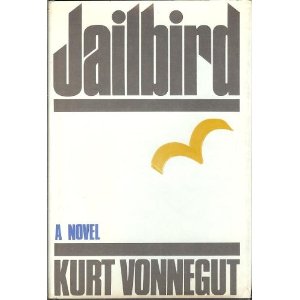
[READ: June 4, 2012] Jailbird

First off I want to say how neat it is that I took this book out of the library and that it’s from 1979.  Thirty-three years old!  Books are cool.

Anyhow, I have a stack of dozens of books I want to read, and yet somehow Vonnegut said, no, read me now.  In addition to Vonnegut books being relatively short, they are also very quick to read.  I read this in a couple of days, which is very satisfying.

My old boss at the library told me that she thought Vonnegut more or less stopped writing good books after Breakfast of Champions.  I disagree, but that has certainly colored the way I look at his later books before I read them–which one had she read that turned her off?  I kind of suspect it was this one.

In some ways this is a minor novel.  It’s fairly brief (240 pages, although there’s  30 page Prologue which I gather is from Vonnegut himself (you never know, he has so many layers going on)).  He explains some of the details that are in the book and several other interesting preface-type things.  I enjoyed the bit about the fan who wrote to Vonnegut and (Vonnegut claims) summed up all of his works in just seven words: “Love may fail, but courtesy will prevail.”  And that is the basic plot of this book. (more…)

Read Full Post »

SOUNDTRACK: MAC LETHAL-“You’re vs. Your” (2012).

Mac Lethal is a YouTube sensation (he did the pancakes video that I liked quite a bit).  And, yes, he does actually have albums for sale.  He raps really fast (so fast that I wondered if it was sped up–I don’t believe so).  I am 100% behind the sentiment of this song (possessive vs contractions, this is something you used to know).

I’m a grammar freak, so it bothers me when I see these common mistakes made.  It’s nice to hear a song about it (even if it’s not a terribly catchy song or anything).

I like his name dropping and his lecture is pretty effective.  I’m a little confused by the big dick reference/joke at the end of the song…it’s not really relevant.  But his fast tongue is really impressive.  As for his singing….mmm, stick to rapping.

I like the T-shirt!

[READ: May 15, 2012] Science News Letter

I’ve mentioned before when my company sends out links to articles that are interesting or cool.  This is the second time a link to a Science News Letter has gone out.  I swear if I had time, I would love to read all of these.  I wonder how often it was published?

This letter has only two articles in it–one from Physics and one from Archaeology.

The Archaeology one is called “Find Sacred Kitten in Bronze Cat Coffin.”  And indeed, two metallurgy experts were cleaning a bronze cat (which had “bronze disease”) and inside of it they found the bones of a fetal cat.  This was one of the first times that actual bones were discovered in one of these cat idols.  There’s even a (kind of creepy) picture of the bronze statue with the far creepier caption: Cat Coffin.

The Physics article is headlined: Fifth Dimension is New Realm Entered by Professor Einstein”  What?  How cool is that… “Professor Einstein!”  Einstein died in 1955, so it’s not weird that he’d be in a Science Letter.  But still!  Einstein talking about his current theories?!  The subtitle is “Celebrating Sixtieth Birthday, Scientist Wants New Dimension To Account for Electro-Magnetic Effects.” (more…)

Read Full Post »

SOUNDTRACK: THE GREAT GAMBLE-Book One (2012).

My friend Matt has worked at a school in Pennsylvania for years. He wrote to tell me that a few kids who graduated from his school had formed a band and have released a CD.  It’s streaming (and downloadable) on bandcamp at their site.

I have lots of friends in bands, and I’ve listened to lots of demos, so I wasn’t expecting very much.  But the first thing I noticed when I listened was how good this sounds–professional and, yes, like a “real” album.  This isn’t just a bunch of guys jamming in their garage.  What makes this even more striking is that the music is heavy progressive metal–not something you just whip out in a quick take.  This is complicated, interesting music.  I’m hearing a kind of Dream Theater meets King’s X vibe going on.  And man, it’s really good.

This is multi-step heavy rock (complete with a synth player/violinist!). The only song that is less than 9 minutes is the 90 second introduction called “The Marketplace.”  Otherwise, we’ve got three songs over ten minutes and one over 16!  Who even knew young bands did stuff like this anymore?

Al Joseph plays lead guitar and sings lead vocals.  His guitar speed is very impressive and his vocals sound not unlike Dug Pinnick from King’s X (noticeable on the opening track, especially) .  Matt Weaver plays violin and keyboards.  The keyboards offer more than just a fuller sound.  On “Release the Kraken” they provide some cool sci-fi sound effects.  At about five minutes in, “Release the Kraken” slows down to a quiet middle section that really showcases Steve Michael’s drums.  And then comes the blistering guitar solo.  It’s followed quickly but a slight diversion and then a wholly different style of solo.  It’s really something.

If “Release the Kraken” wasn’t a good enough prog rock title, how bout “Legends of the Symmetria.”  This one has a very Dream Theater feel for the opening.  But the vocals sound very different–dual vocals with great low harmony.  There’s a cool pre-chorus (I guess) at about 3 minutes.  This song is definitely a heavy one.  At about 4 minutes, the song slows down into a pretty classical guitar section,where Chris Joseph on plays bass gets to show off a bit (although he seems to be the most understated of the 4 players).  There’s some great drumming at the end of the song, too.

“The Ghost of Three Reflections” is a slow builder of a song.  There’s some quiet parts (with beautiful harmonies) and a guitar solo that sounds clear and perfect (I’m hyping the production so much because it sounds so good).  The guitar solo section in this one strikes me as something that might suit two guitarists better–maybe two more different styles of soloing, but he pulls it off well, especially when by the end, he has shifted to a very different style, and the music changes along with it).  I love the bass section at the 8 minute mark, which reminds me of something Rush might have done back in the mid 70s.  The song kind of merges into “Breach At Fort Mycenae” which opens with the same kind of staggered sound as the end of the previous song.  The violin gets an airing in the middle of this song and it’s a cool treat.  I could definitely use more violin in these songs, although maybe little bits are a treat.  There’s a few times when I don’t like the production choices–maybe there needs to be a bit more music behind some of these solos so it doesn’t just sound like two players soloing against each other.

The disc ends with the big one, the sixteen minute, “The Sleepwalker Pt. 1 – Tears of Dagon” [I love that it’s a Part One and it’s 16 minutes long].  When the vocals kick in at about 3 minutes, the harmonies are gorgeous.  I love the bass guitar break at 5 minutes.  Although there’s something about the keyboard sound that I don’t like–maybe they’re not big enough?  But I love the crazy guitar solo at the 9 minute mark of this track (I’m a sucker for dissonant scales).

This is an amazing debut CD and I hope these guys go far (they’re going from Scranton to Boston for school, but I hope they can go further than that).  They are tight as a drum, stopping and starting perfectly, keeping all of the rhythms and time changes perfectly.  They really have done their prog rock homework.  The only gripe is as I’ve said, some sections don’t feel “big” enough.  If you’re going to write a 16 minute song, you don’t want sections that sound small–you want your backing guitars or bass guitars to be a little louder so it sounds like the song is still going.  But other than that, there’s not much room for improvement.

I downloaded their CD, (and yes, I paid for it…that will help with college, eh?).  But my real complaint is that on the computer, the album cover is awesome–if you look at it from an angle, there’s a whole scene behind the large logo (try it, it works here too).  But when you print it out, you lose all of that.  The images are there, but the effect is gone.  This is a band that calls out for full color packaging and maybe even a gatefold sleeve!  (The bottom of the cover says Ο υπνoβάτης which means The Sleepwalker).

Good jobs guys!  You’ve done NEPA proud!

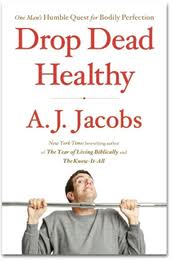
[READ: May 15, 2012] Drop Dead Healthy

Sarah got me this latest A.J. Jacobs book for my birthday.  At first I didn’t think I wanted to read it because I feared what a book all about being in good shape would be—nagging, obnoxious, making me feel bad about my vices. But I should have leaned from all of my A.J. Jacobs experience that he is completely NOT about that.

Jacobs occasionally enters into preposterous forays of Self-Improvement.  In the first book of his I read, The  Guinea Pig Diaries, he tried various weird experiments to see what it was like to be a woman, radically honest, a unitasker, etc.  His other books have been about self-improvement.  He read the encyclopedia from A-Z, he did a year trying to live like out of the bible (I will get to these eventually).  In this book, he is on a quest to be the healthiest person in the world.

It’s an impossible task.  And, frankly, a foolish one.  But he decides he will take two years and focus on individual parts of his body one month at a time.  I’m going say right up front I feared that this book would make me feel bad about all the things I don’t do for myself.   But well, a) Jacobs is a funny writer, so at least you’re laughing.  b) Jacobs is either in bad shape or plays up his badshapedness so that the average person doesn’t feel too bad off.  c) He is so over the top in his quest that no one would ever think about doing all of the things, but we can take what he learned and apply little bits to ourselves.  What is nice is that he tries to get two if not balanced opinions then perhaps fringe opinions to balance out–trying one extreme then another to see which work.

He Breaks His Categories Down thusly: stomach (eating right, the perfect food), the heart, the ears (the quest for quiet), the butt (avoiding sitting too much), the immune system (germs), genitals, nervous system, lower intestine (better bowels), adrenal gland (lowering stress), brain, endocrine system (removing toxins), teeth, feet, lungs, skin, inside of the eyelid (sleep), bladder, gonads, nose, hands, back, eyes, and skull.  Each category is designed to be a month-long workout of that organ/item–some things he keeps doing after the month is over making his workout regime something like 5 hours a day.  And at the beginning of each month he lists the stats for what he accomplished.

I’m not going to talk about all of his body parts, but I will mention a few that i enjoyed the most. (more…)

Read Full Post »

SOUNDTRACK: SISKIYOU-Keep Away the Dead [CST083] (2011).

I really enjoyed Siskiyou’s first album. This album updates the sound and makes it a bit bigger.  And yet somehow the album still sounds fragile.

The album is full of songs that are catchy, but not really easy on the ear.

The first song reminds me of Arcade Fire.  Something about the ringing guitar and crescendos.  But the recording feels more like a demo, much more intimate that Arcade Fire.  “Where Does That Leave Me” is an even more spare number, just vocals and guitar although it slowly builds.  “Twigs and Stones” is the first song that sounds like the bulk of the album—where Colin Huebert’s vocals really come to the fore.  His vocal style is loud and verging on the whiny (again, like Arcade Fire).  This song also has a lot of other instruments that percolate to the top—reminding me of older Mercury Rev.

“Revolution Blues” is the standout track for me, it’s incredibly catchy (and fun to try to sing in his eccentric voice).  The accordion and the minor key intensity is really powerful.  I guess it’s a shame that it was written by Neil Young, then (although the Siskiyou version is much better).  “Dear Old Friend” is a more country sound (which for me is shorthand for slide guitars), but it keeps the same style and feel as the other songs.  “Fiery Death” is the first song where percussion makes itself known very loudly.  It’s a cool introduction of loud thumping.  “Sing Me to Sleep” is a 2 minute lullaby and “Dead Right Now” is a 2 minute coda that ends the album nicely.

The disc is short (about 30 minutes) but a lot of emotion and craft is packed into it.  It’s really enjoyable.

[READ: May 24, 2012] “Sweet Dreams”

I’m always disconcerted when a story is in English but is set in another country.  Well, that’s not exactly right.  When it seems like it’s set in another country because the author is from that other country and he or she is writing about that other country without specifying it (usually because it is translated).  It’s very Amerocentric, but perhaps everyone thinks a story is set in their town unless told otherwise.  So I didn’t realize that this story was originally written in German (it was translated by Michael Hoffman), but it felt like it was taking place in Europe.  I actually guessed France, until later on it was revealed to be Switzerland.

There’s something cool about stories that are written elsewhere, especially if you don’t know the place well, it allows for almost anything to happen.  A couple riding a bus in Europe doesn’t mean the same thing as a couple riding a bus in, say Tallahassee.  But having set up that distinction, this story is about love.  And love is universal.

The story is written from the point of view of Lara, a shy bank worker.  She has been dating Simon for several months and they have recently moved in together.  They should be in the first bloom of love—on their own for the first  time (they never felt comfortable fooling around at their parents’ houses)—but her shyness in particular won’t loosen.  She doesn’t like him to see her naked, and they are very reserved in their love-making.  And from the start Stamm places a dark tone over the story.  The get a place in the town that he likes but it’s pretty run down.  He hadn’t brought much to the apartment, and he seems critical of some of her purchases.  He even comments that “forever is a long time” when she says that the towels she bought will last forever.  And then on the bus, a man, dressed in a long black coat stares at Lara over and over.  It may be innocent, but it’s still disconcerting.

When they get home, she takes a bath (she won’t let him in the bathroom) and asks him to go to the restaurant downstairs to buy a bottle of wine.  She finishes the bath and he’s not back yet, so she reads the paper.  Which is full of more grim news.  When she reads about a dead body found in the lake nearby and since we know she doesn’t feel comfortable about the restaurant downstairs, we know something bad has happened. (more…)

Read Full Post »

SOUNDTRACK: BARBARA MANNING-“Though with People” from Score! 20 Years of Merge Records: The Covers (2009).

I have a Barbara Manning disc, although I don’t remember it very well.  In this song, Manning’s voice is strong and good, but not terribly memorable–perhaps a less distinctive Neko Case?  It’s a catchy cover–a good 90’s era rocker.

The original is also a 90s era rocker. The song is by Portatstic, which is a side project from Superchunk’s Mac.  It doesn’t sound all that different from Superchunk (a little less manic, but Macs voice is distinctive enough that perhaps this just sounds like a slower version of their song).

I like Manning’s cover enough to go dig out 1212 to see what I haven’t listened to in a while.

[READ: April 13, 2012] “Stretch Out Your Hand”

This story came in second place in the Fall 2012 Narrative Magazine writing contest. I read this one first because it was much shorter than the other two stories and I needed a shorter piece for today !

I was disposed against the story from the start because of my own prejudices—I don’t really like stories set in the rural South from the early 20th century.  It’s a combination of my inability to relate and to my overexposure to clichés about the time, where everyone says “Momma” and everything sucks.

And so, when in the first few paragraphs, a young girl named Ruth has finally broken a fever and the father calls the mother “Momma” and the mother can’t stop thanking Jesus, I was not excited to keep on.

But then I started paying attention to the writing.  It was wonderful.  Ruth’s brother starts watching his sister’s fever evaporate and lift into the room.  Then he gives us this observation: “And which of these things is more miraculous: the incandescent movement of my sister’s fever, or the way my father held her.  I can’t say.  There is a place in me where these things go.”

The narrator does not conform to the stereotype of rural Southerners, which makes this transcend a story of sickness and grief. (more…)

Read Full Post »

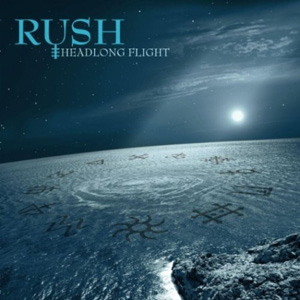
SOUNDTRACK: RUSH-“Headlong Flight” (2012).

A new single from Rush came out on Thursday.  And it’s seven minutes long!  Yeeha!  It’s also really heavy.

It opens with a cool bass riff and then thundering guitars.  This song continues in the heavier, grungier sound from Vapor Trails.  The middle section sounds distinctly Rush (late 80s style), and Geddy’s voice hits some pretty high notes.

There’s a brief extra section with a spoken word part–I’ve not been able to make out what it says, but the instruments (especially the great guitar sound) is fantastic behind it.  That’s followed by a great solo from Alex (that hearkens back to his wild solos from the 70s).  Geddy throws some cool bass fills–although he’s not showing off as much as he might).  And, of course, Neil is doing some cool drum things through the song–little fills and whatnot–and he sounds like he’s pounding the hell out of the drums.

Here’s the video

[READ: April 14, 2012] Squirrel Seeks Chipmunk

As I mentioned yesterday, I bought a book to have David Sedaris sign it, but decided the wait wasn’t worth it.  This is the book I bought.  It very excitedly claims to “with one new story” which I thought was funny both in itself and also because I hadn’t read any of the other ones (I gather they are from This American Life, although they’re mostly too vulgar to have read on the radio).  It also has illustrations from Ian Falconer, who is the guy behind Olivia, the children’s book series.

Anyone who has read David Sedaris essays knows what to expect–funny, presumably exaggerated stories about his family and loved ones.  Indeed, the stories that he read from during the show were just that–dark and funny and about his loved ones.  So imagine my surprise to find that these were all short fictional stories about animals!  No Sedaris’ are harmed in this book.

All of the animals are behaving like people, so Sedaris’ caustic wit and attacks on hypocrisy are all in play.  However, because they are animals, Sedaris can go much much further with them.  Matt Groening said that he could get away with a lot more social criticism because The Simpsons were cartoons; the same applies here.  Indeed, these are some of the darkest stories that I have ever read from Sedaris.

Some of them are kinda funny, but most of them left me mildly bemused at best.  Because while they seem to be a kind of laugh-at-the-recognition-of-our-foolish-behavior (as done by animals), really they are preachy and seem generally disappointed in us.   And who wants to read that?  It basically seemed like an opportunity for Sedaris to make fun of things that he doesn’t like about people.  But he knew it would be obnoxious to makes stories about people acting that way, so he made them animals instead.  And perhaps he thought that would make it funnier.  At times this was true, but not very often. (more…)

Read Full Post »

« Newer Posts - Older Posts »