Feeds:
Posts
Comments

Archive for the ‘Death’ Category

whatifSOUNDTRACK: SON LITTLE-“The River” (2014).

sonlittleI don’t like the blues.  I find it dull and repetitive.  I also don’t really like singers who are described as “soulful.”  And yet here is Son Little with a soulful blues stomper that I really like a lot.  WXPN has been playing this song pretty often, and I like it more with each play.

It’s a fairly simple set up with handclapping and a two note guitar riff.  Even Son Little’s voice doesn’t seem all that special at first.  But there’s some way that all of the elements combine that makes it so much more than the sum of its parts.

And with each verse, more elements are added, a synth sound, some guitar lines, even some bass riffs, building the song’s intensity.

But it’s that chorus–so catchy and ominous at the same time with interesting harmonies that just sound like he is echoing himself.  I really can’t get enough of it.

[READ: January 31, 2015] What if?

This book was just entirely too much fun.  Well, actually I thought it would be a bit more fun, but Munroe is so scientific that at times (when he got really factually scientific) I just felt dumb.  Which lessens the fun.  In fact, the first couple of pieces are really heavily sciencey, unlike some of the later ones which are really funny.

But what am I talking about?  This book is a collection of the “what if’ section of the website xkcd. There’s no real guidelines on the site for what kind of question you can ask, and many of them are quite strange (and often hilarious). They are hypothetical (what if?) questions and, depending on the arcane rules that Munroe follows he will answer them to the best of his scientific scrutiny.  And he will take the questions very very seriously–no matter how stupid your question may seem, he will try to answer it scientifically.  It’s fun!

But it’s also serious, and seriously scientific–Munroe is a former NASA roboticist.

So the first one “What would happen if the Earth and all terrestrial objects suddenly stopped spinning, but the atmosphere retained its velocity” almost seems to be put in the front to scare off those who might not want to be too scientific.  And the second question comes more down to Earth (but also destroys the Earth): “What would happen if you tried to hit a baseball pitched at 90 percent the speed of light?” (more…)

Read Full Post »

11SOUNDTRACK: BASIA BULAT-“Tall Tall Shadow” and “It Can’t Be You” live at Polaris Music Prize (2014).

basiaSwinging to the other side of the musical world from Tanya Tagaq, Basia Bulat also performed at the 2014 Polaris.  I like Bulat a lot, she comes across as a sweet singer (no idea if she is actually sweet).  And I love that she can make really complex songs out of such random instruments (she plays autoharp, hammered dulcimer and others).

In this performance, she is fairly traditional for “Tall Tall Shadow” on the piano (although the french horn accompaniment is a nice twist), but “It Can’t Be You” on charango really highlights just what you can do with, essentially, a souped up ukulele.

“Shadow” highlights her voice which she holds for some quite long notes.  The song is really pretty with a great chorus.  “It Can’t Be You” is just her and the charango (which looks like a ten string ukulele but is Andean in origin).  It’s quite a song–her voice and that instrument are lovely.

[READ: February 4, 2015] Grantland #11

I enjoyed this issue quite a lot, even if I didn’t know who half of the people profiled were (and won’t remember them in two days time).

I am very curious why Grantland is just so obsessed with basketball than other sports.  It’s a little crazy how one sided these books tend to be.  They obviously love all sports but the preponderance of NBA articles is really staggering.

I do wish there’d be a bit more about TV and movies (and even more about the shows that I watch), but it is a fun way to learn about shows I would never watch.  And maybe that’s why I like these books so much, it’s my chance to vicariously enjoy sports without having to care about any of it (especially since it is all a year old, I never know if anything they talk about actually came to fruition or not).

This issue covers January-March 2014 (it’s fun reading about things almost exactly a year apart–to read about Oscars and Super Bowl stuff but have it be last year’s Super Bowl (especially since it too had the Seahawks) was very trippy indeed).

(more…)

Read Full Post »

Cover_Blue_Angel_MarohSOUNDTRACK: LAIBACH-Sympathy for the Devil (1988).

sympathyAfter recording Let It Be, Laibach decided to tackle another sacred cow–the Rolling Stones’ “Sympathy for the Devil.”  “Sympathy” is my favorite Rolling Stones’ songs and even so, I love this incredibly different version of that song.

The Laibach version does everything that they did to Let It Be–changing tempo, deep spoken vocals, marching beat and chanting and they do it eight times.

This is an album/EP (it’s 50 minutes long) and it features several (quite different) versions of the song as well as some recordings by Laibach side projects Dreihunderttausend Verschiedene Krawalle and Germania.

I’ve broken the track listing down by artist, although on the disc, they are interspersed a bit more which adds to the variety.

Laibach: “Sympathy for the Devil” – Done in a big bombastic style–with deep spoken words.   I love the way the horns (after the second or third verse) bring in this cool militaristic/triumphant feel.
Laibach: “Sympathy for the Devil (Time for a Change)” – This version isn’t that different.  The music is minimal–the keyboards are stripped away, although the triumphant horns seem louder and the hoo hoos seems to be more present in the mix.  There’s some wild orchestration in the middle and some very cool tubular bells at the end as well as an instrumental denouement.  I think I prefer this version.
Laibach: “Sympathy for the Devil (Dem Teufel zugeneigt)” – Features some quotes from Kennedy and is spoken in German (with sitar (!) accompaniment).  The remaining verses are done in the original deep voice.

300.000 V.K.: “Sympathy for the Devil (Anastasia)” or “Anastasia” – Sirens open this song as pianos lull us into a sense of peace before the chaos of sampled music and loud beats takes over.  Even though it has really nothing to do with “Sympathy” the “oh ohs” from the Laibach version are also sampled.
300.000 V.K.: “Sympathy for the Devil (Soul to Waste)” – Vocals slowed down even more, sounding deeper than Laibach (in fact he kind of sounds like Andre the Giant).  I’m not even sure what he’s saying in the beginning (the “Sympathy” lyrics do kick in properly at some point).  It does have the same feel as the Laibach version but faster and even more dancey.  The female backing hoo hoos are a nice lightening touch.  There’s also a rocking guitar solo.
300.000 V.K.: “Sympathy for the Devil (Soul to Waste – instrumental)” –Just an instrumental dance version of the above, probably the least interesting on the disc.  Twice as long as the non instrumental version.

Germania: “Sympathy for the Devil (Who Killed the Kennedys)” – This song opens with an interviewer asking if someone has a theory about who killed Kennedy.  The answer is a sullen no.  This interviewer pops up throughout the song repeating the questions and then asking about mixing drugs.  There are all kinds of samples buried in the mix (I hear “All You Need is Love”).  The lyrics are whispered by a female vocalist while the original Jagger vocals are played quietly behind her.  The deep male voice comes in too.  The music is kind of a discoey dance version of the Laibach bombast.
Germania: “Sympathy for the Devil (Who Killed the Kennedys – instrumental)” – Only has a little of the spoken word business–it is basically just a dance remix.

So even though these versions are all basically variations on a theme (and yes 50 minute scan get a little maddening), the variety is pretty impressive (especially since they reuse many of the parts in the different versions).  No one is going to love this version more than the original, but all these years later, I still think it’s pretty cool.

To see the original Laibach version in all its glory, check out this video which I’ve not seen before:


[READ: January 17, 2015] Blue is the Warmest Color

I was intrigued enough by Maroh’s Skandalon, that I wanted to check out her earlier book, Blue is the Warmest Color.  I had no idea that it was a really big deal or that it has been made into a movie.

This book, which was translated by Ivanka Hahnenberger, is about a woman who is sure of her sexuality until she meets a woman who changes her mind.

The book is incredibly moving and touching, and it is told in a way that gives you the (sad) end right up front, although the end is not exactly what you think it is.  It’s incredibly well done.

As the book opens up, we see that a woman is riding a bus to go to her lover’s house.  There are superimposed words from her lover’s diary which says that when the woman on the bus (Emma) reads these words, the writer will be dead.  As the first sequence ends, we read: “I love you Emma, you are my life.  Signed Clementine.”  Emma has gone to Clementine’s parents house (where Clementine was living) to retrieve the diary.  Her parents are not happy with Emma.  And they seem to blame her for Clem’s death.

The book is kind of a visualization of Clementine’s diary from when she received it on her 15th birthday until her final entry. (more…)

Read Full Post »

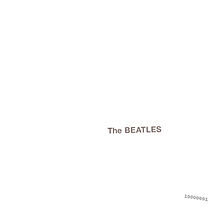
dec2SOUNDTRACK: THE BEATLES-The Beatles (1968).

220px-TheBeatles68LPDespite the sound effects, it’s clear from the start that this album is going to be different from the psychedelia of previous albums.  And the whole album is very stark—guitars, bass, drums, occasional piano and organ but not much else.  True there are some strings and horns, but it’s all very much in the vein of rock and roll–nothing trippy.  Turns out that most of the songs were written during a Transcendental Meditation course with Maharishi Mahesh Yogi in Rishikesh, India–a period that was free from drugs (except or marijuana of course).

“Back in the USSR” is a fun rocker, although it always confused me and there’s some explanation that this is sort of a joke on the Beach Boys.  “Dear Prudence” is a mid tempo song (with some cool bass lines).  I should have been keeping track of all the Beatles songs that I know better from other artists.  This one I know better from Siouxsie and the Banshees.  I had no idea what this song was about, and the story is weird and fascinating.  I love the way it builds band builds. “Glass Onion” has a really groovy sound, and I love all the self referential nonsense in it.  “the walrus was Paul” and “I told you about the Fool on the Hill” (McCartney overdubbed a record part to reference the original)–sounds like Lennon goofing around but making cool music out of it.

“Ob-La-Di, Ob-La-Da”is a goofy song (Paul is good at those it seems).  Evidently it was meant as a pastiche of ska (with Jimmy Cliff contributing initially).  According to Wikipedia this song is one of the factors that led to the break up of the band because they got so sick of it.  “Wild Honey Pie” is a weird 50 second snippet of a song.  This seems to foreshadow the medley tracks on Abbey Road.  Evidently it was just McCartney goofing around and referencing “Honey Pie” from later in the album.  “The Continuing Story of Bungalow Bill” is a song that I always sort of liked because it’s so weird.  But I never understood it.  While it may not be necessary to know all of the details of songs, it’s fascinating to learn that this one was written by Lennon after an American visitor to Rishikesh left for a few weeks to hunt tigers. The recording features vocals from almost everyone who happened to be in the studio at the time. Yoko Ono sings one line and co-sings another.  The Spanish guitar at the beginning of the recording was overdubbed later by Harrison.

I’ve always really liked “While My Guitar Gently Weeps” and thought Harrison was an underrated songwriter because of it (although I find that I don’t really like most of his other stuff that much).  I never knew that Eric Clapton played the leads on this song, which may be why I like it so much–not that I’m a huge fan of Clapton but he really scorched this song in a way that I don’t think Harrison every would have.

“Happiness Is A Warm Gun”always surprises me because the first verses sound so unlike the rest of the song–I really don’t recognize it as this song, always assuming it starts at the “I need a fix” part.  Of course, there are so many different parts that it’s really more like several different songs.  And that was all for side one.  Side Two opened with “Martha My Dear” a jaunty piano ballad played entirely by McCartney.  “I’m So Tired” reminds me a lot of “Bungalow Bill” and seems unnecessary.  “Blackbird” is, simply, a beautiful song.

“Piggies” is an interesting criticism of modern society–I love that they used a harpsichord for it (evidently Charles Manson was inspired by it as well as “Helter Skelter”).  Like “Bungalow Bill” I never really understood “Rocky Raccoon.”  McCartney’s crazy accent at the beginning and the whole premise of the song is peculiar–unless of course you don’t think of Rocky Racoon as a raccoon (which I have a hard time getting past).  It’s a pretty decent folk song. though, I suppose.  “Don’t Pass Me By” is a song I really don’t know at all–a honky tonk piano (which was the first solo song Ringo wrote).  It’s fine and kind of nice.

I had always assumed that “Why Don’t We Do It in the Road?” was a Lennon song, but it was all McCartney–Lennon didn’t even play on it.  It’s  just a weird noisy track (written when Paul saw monkeys doing it in the road in India)  Despite its brevity (less than 2 minutes), I actually find it goes on too long.  “I Will” is a sweet acoustic song.  I always assumed that “Julia” was a McCartney song, but it’s a beautiful Lennon ballad.

I asked Sarah, who was a huge Beatles fan, if she listened to sides 3 and 4 as much as sides 1& 2 because listening to these sides, I feel like I don’t really know them that well.  She says they did, so what do I know?

Of course I know “Birthday.”  i find it to be a weird song–why would you write a song about a birthday unless you didn’t want to sing the Happy Birthday song anymore?  It is evidently meant to be in the style of Little Richard.  I didn’t know and rather dislike “Yer Blues,” which I simply don’t believe the lyrics of.  And um, what is the reason why? It’s a pretty dull blues song although the guitars solos are pretty good.

I don’t really know “Mother Nature’s Son” that well–I feel like I know the little bass line between verses as significant but not the song itself.  It’s a pretty acoustic song that kind of reminds me of “Julia.”  “Everybody’s Got Something to Hide Except Me and My Monkey” has some really sharp piercing guitars on it.  I like the ringing bells and c’mon c’mon section. The whole song is fun, whatever it’s about.  “Sexy Sadie” is a song I’ve never been too crazy about.  I like the middle part better than the verses.  Apparently this was originally called “Maharishi” and was written about him–he changed the words later–which makes it all make a bit more sense.

It’s a shame that Manson has co-opted “Helter Skelter” because it’s a wonderfully blistering song.  The guitars and vocals are just awesomely rocking and raw.  I also love that a helter skelter is just a slide and not something sinister (duh, Charles–see what happens when you try to read into Beatles lyrics).  I actually knew Siouxsie and the Banshees and Mötley Crüe’s versions before the original, but now I think the original is the best version.  I love that the song just never really ends–it’s got codas and extras and blisters on fingers.

“Long, Long, Long” is a song I don’t really know.  I like the melody although it’ a bit too slow for me.

“Revolution 1” is weird to me because I knew the more rocking version first and this sounds like a kind of jokey version (with the shoobie doo wops)–although it was actually recorded first.  “Honey Pie” is a cute dance hall/1920s era song–Lennon played the guitar solo on the track, but later said he hated the song, calling it “beyond redemption”.  (He was quite nasty about a lot of Paul’s silly songs).  “Savoy Truffle” is yet another Harrison song that I just don’t know–did radio stations ban his songs?  It’s a decent rocker with electric piano and saxophone.  “Cry Baby Cry” is a song that I kind of know. I like that there’s accordion on it.  It builds very nicely.  The end has a little coda called “Can You Take Me Back.”

“Revolution 9” is probably the most notorious track on the disc.  I have to assume it was left on because there was a lot of empty space to fill in order to make the album a double album.  It’s such a strange creation and has really been responsible for so many cut and paste songs I’m sure.  There’s some sophisticated tape manipulation going on, but at 8 minute sit is just too long for what it is.

“Goodnight” is a sweet song that I have to assume was often ignored by fans who took the needle off the record during “Revolution 9.”  i actually didn’t even know there was a song after revolution 9.  Indeed, I only know the song because it was on a children’s CD that I used to play for my kids every night.  And while Ringo’s voice is nice, I like the other version (which I can’t think of) a little more.

So there’s the big white album–an album I never owned until recently.   It could probably have been reduced to a single album, but there are some undoubtedly brilliant songs on it.

[READ: July 3, 2014] “Road Kill”

I was curious to see how many short stories of older New Yorker magazines I had read.  It turned out that I have read nearly every story in every issue for the last several years from 2009-2014 (and many from 2008).  However, I have missed a few over the years.  Like this one.  I had typed up a post but just never finished it for some reason.

So, I’ve decided that I will go back and make sure that I’ve read each story from each issue from 2008-2015 (but not right away, I’ve done a lot of New Yorker stories recently.  So, I’ve got 13 from 2009, 6 from 2010, 2 from 2011, 1 from 2013 and 1 from 2014 (and, uh 27 from 2008–that’ over half, so maybe I wasn’t quite in the spirit of things yet back then).  But in the meantime, here’s one from 2013.

This is a brief story about a taxi driver in Sri Lanka.  He has been traveling the same route (across country) for two years.  This necessitates a stop in Kilinocchi, a town associated with the nerve center of terror (it is even commented on that it sounds brutal in English).  But the driver is a pro now—he says all you have to do to stay safe is keep your eyes open to drive all night.

On this trip, he is driving Mr and Mrs Arunachalam to see their soon-to-be house.  She is hugely pregnant and complains much of the way and they are both relieved when the hotel pulls into view. (more…)

Read Full Post »

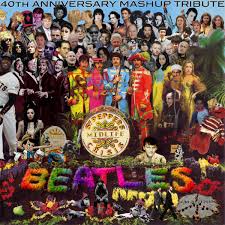
july 28SOUNDTRACK: THE BEATLES-Sgt. Pepper’s Lonely Heart’s Club Band (1967).

pepper A few years ago I started writing about Beatles records–a thankless task if ever there was.  I got held up at Sgt Pepper, so it seems fitting to get back to the Beatles after enjoying the cover album from the Flaming Lips.

I have long thought that this was my favorite Beatles album–it was the first one I bought on vinyl, after all.  But when I was writing about the records last time, I discovered that I like Revolver a little better.  I’m surprised by this especially since I really enjoy all of the amazing musical advances the band made with this album (and the psychedelics too).  I mean, to pretend to be another band, to add a full orchestra–the band had pretty much given up touring at this point–and to have added so many interesting things to this record is really amazing.  And I don’t mean to say that I dislike the record, just that I think Revolver is better.

The title opening is great with the horns and sound effects (just so you know, Paul’s voice is all in the right channel, something that sounds really weird if you only listen to the left!).  In fact the whole album has all kinds of fun stereo manipulations.

“With a Little Help from My Friends” has so many great vocal parts and I love the bass–slow and simple but playing unexpectedly high notes.  This apparently also means that Ringo is Billy Shears.  Speaking of the concept, this album doesn’t really work as a concept album–I mean, overall, what’s the “message”?  There are some songs about love (the lonely hearts club) but there’s also some songs that are not at all about love.  And how does say “She’s Leaving Home” connect to “Mr. Kite?”  It doesn’t really matter, I suppose.

“Lucy in the Sky with Diamonds” is just great–everything about it from the harpsichord to the weirdo processed vocals and the big drums for the chorus (the chorus could actually be a bit bigger) still sound tremendous.  “Getting Better” sounds very old school Beatles to me–I like it but it doesn’t really fit the psychedelic nature of the album.  The harmonies are great (“it can’t no worse”).  It’s also a strangely simply love song I believe, even though it seems like it’s about life in general.  On a sour note, what’s with the Beatles beating their women?

“Fixing a Hole” has a great melody line and instrumentation.  I have always liked “She’s Leaving Home,” I think it’s pretty and the lyrics are great.  But I suddenly find it to be a bit too slow and string-heavy–guess I’m just a rocker at heart?  Interestingly there’s no other Beatles playing instruments on the song.  “Being for the Benefit of Mr. Kite!” is all sung in the right speaker. It’s a wonderfully weird song with great instrumentation.

I’m constantly surprised by “Within You Without You” just because it is completely Indian–no Beatle plays on the song at all, expect for George.  There are also uncredited Indian musicians on swarmandal, dilruba, tabla, and tambura–imagine that there are Indian musicians who can actually say they played on Sgt Pepper, and be telling the truth!  I feel like with a 5 minute song (twice the length of any other song on the disc, except the closing) that Indian music should have become much more popular (or maybe people just skipped the track–it was track 1 on side 2 after all.

The delightfully silly, but somehow profound “When I’m 64”–vocals sped up a bit and bouncing from left to right ear seems like a trifle but is still fun.  “Lovely Rita” is a fun jaunty song.  I like that he thought she was cute dressed as a military man.  Interestingly, she pays for dinner.  “Good Morning” I feel is more known for the chorus, while the verses are a bit obscure.  Although it’s interesting to hear the kind of fast verses that Lennon sings (and that scorching guitar solo (from Paul!) is pretty cool).

I’m intrigued that “A Day in the Life” comes after the song that seems like it should end the record (the Pepper reprise).  “A Day in the Life” really does get better with each listen–the closer you listen, the better it gets, too.  It’s a great way to end any disc.

So yes this album is great and incredibly influential.  I love listening to it.  The biggest surprise to me is that the album is only 39 minutes.

Thirty-nine minutes!

[READ: January 24, 2015] “Last Meal at Whole Foods”

This story is set in a Whole Foods (duh). The narrator is eating dinner with his poor mother.  He says that she is till young which is the tragedy, since she is close to death.  They had a doctor’s appointment earlier which was meant to be “a formality.”

While they are eating he tells us that she has maintained an appetite even though she was always just a nibbler.  But as of late her apatite has been voracious.

The man then reflects back on the location of the Whole Foods.  Twenty years ago this street was apart of a dicey neighborhood.  The only building was the Goodwill.  The Goodwill that he and his other shopped at when they first moved to the area.

On their first outing there (his mother was so excited to get to building) she bought him a football jersey–even though he didn’t follow the local team. But the jersey proved to be a very cool item and the boys all talked to him about football because he wore it–there was even a rumor that he was related to the name of the back of his shirt. (more…)

Read Full Post »

 appleSOUNDTRACK: PRIMUS AND THE CHOCOLATE FACTORY with THE FUNGI ENSEMBLE (2014).

Achoclnd after all of that, we catch up to present day Primus.  And this time Tim Alexander is back with them again!  I was supposed to see Primus at a small theater when they toured for the chocolate Factory.  And because of a planning snafu I didn’t get to go.  I had wanted to see the show live before hearing the album.  Sigh.

I was thinking about Les Claypool and covers.  He does a lot of them.  Even though he is clearly a creative tour de force, he also likes to revisit stuff.  His live albums are full of covers, and the Duo de Twang mostly revisited songs he had already done, not to mention how he has re-recorded almost all the songs from Primus’ debut at one point or another.

So it comes as no surprise to me that they would cover the entire Willy Wonka and the Chocolate Factory soundtrack.

The thing to know right off the bat is that Les Claypool is a rather dark and disturbed individual.  And that means that this cover recording is really much more dark and nightmarish than the original (which is quite sweet).  Now true, Wonka is a really dark and creepy figure, and maybe that’s what Les was playing off when he constructed this carnivalesque, dark funhouse mirror version of soundtrack.

And your tolerance for that (and your love of the original) will say whether or not you enjoy this.

This is not fun goofy Primus, this is dark Primus of the “My Name is Mud” and Mushroom Men variety.

“Hello Wonkites” opens this disc with dark and slow bass strings and a slow and menacing melody.  “Candy Man” one of the sweetest songs ever is turned incredibly dark with hypnotic vibes and weird bowed bass sounds.  The way they speed up parts of the song are really disturbing and his vocals are creepy as anything.  This tells you all you need to know about this recording.

“Cheer up, Charlie” is a little bit sweeter as it opens with cellos. But Les’ vocal is weird and a little, yes, disturbing,  Although I don’t really like the original very much so this one works better for me.  “Golden Ticket” is also quite sinister with the mad carnival sounds and the stomping bass.  “Lermaninoff” is a cool 5 second reprise of the Rachmaninoff lock in the movie.

“Pure Imagination” is probably the least creepy of all the songs, although it is still dark and ominous.   It features a lot of percussion, and I read somewhere that Tim doesn’t really play drums on this record, he just hits all kinds of crap that’s around him.  There’s a long instrumental section that is pretty cool.

There are four versions of the Oompa Loompa song, just like in the movie.  Each one is about a minute and a half long.  They’re each quite similar and faithful to the original’s creepy vibe.  They might do better to be spaced out more, but it’s still fun.  The “Semi Wondrous Boat Ride” is actually not nearly as creepy as the original.  “Wonkamobile” is just over a minute long and it is just Les being Les.

“I Want It Now” features lead vocals by Ler!  I don’t know that we’ve ever heard him sing anywhere before.  He doesn’t have a great voice (or he’s trying to be bratty, it’s hard to tell), but it’s such a welcome change to have someone else singing on the disc.

My favorite track is “Goodbye Wonkites” which has a very cool Pink Floyd feel.  The instrumentation is the same as “Hello” but the guitars have this great echo, and the chords that Ler is playing (yes normal chords) sound very much like Pink Floyd to me.  It’s a cool instrumental.

Even though I don’t love this soundtrack, I’d still like to see the stage show that they create for it, which I imagine is just insane.

And that brings an end to the Primus land–a month’s worth of Les and the boys.

That there’s a bad egg.

[READ: January 29, 2015] “Apple Cake”

This story is about a woman who has just entered hospice care.  And yet surprisingly it is not all that sad.

Jeanne was the youngest sister.  Her to older sisters Sylvia and Helen are very different but both were quite upset that it was their baby sister who would die first (even though none of them was actually young).

Since she was in hospice, the family was gathered around pretty much all the time.  The sisters were there constantly and her sons and nieces and nephews all took time off to pay their last respects.  But Jeanne lingered–despite doctors saying that she had only a day or two left, she continued to seem rather strong and coherent.

And really this story turns out to be more about the fighting between the healthy sisters–and their children.  Will they defer to Jeanne’s wishes–like when she asks for a bagel even though she hasn’t eaten solid foods in weeks?  And, most importantly, will they honor Jeanne’s wishes about her death–she wants no funeral, no ceremony, not even a burial.  Or will they follow tradition and have a rabbi preside over her.

And so this fight comes down to Helen and Sylvia.  Even though Jeanne has made her intentions clear to her sons, Helen and Sylvia have always been at odds and will continue to be so: “There was simply the great divide between them: Helen told the truth, while Sylvia tried to paper over everything.”  Helen is insistent that Jeanne see a rabbi and have a proper burial.  But Sylvia and everyone else finds it disrespectful.

And in her grief, Helen begins baking.  After all, she was the baker of the family–Sylvia hadn’t baked in years because her husband was diabetic.  She made apple cake (which was pretty good), almond cookies (which were less so) and a pecan bar which was, well, left uneaten.  And so the food starts piling up, because Helen never threw anything away.

Then one day Sylvia brought in an apple cake, warm and fragrant.  Even Jeanne remarked on how good it smelled.  Which gets Helen indignant.

“It’s my recipe,” Helen said, “I gave that recipe to Sylvia twenty years ago.”
“Yes I remember,” Jeanne said, “she bakes a very good apple cake.”
“I bake the same one!  I brought you apple cake last week.”
“I know, but I like hers better,” Jeanne said.

Eventually Helen convinced the rabbi to see Jeanne.  The rabbi is friendly and accepts that Jeanne is an atheist–Jeanne was looking for a fight but he was very kind.  And she even concedes that she could be buried in her plot.

When Jeane eventually dies, they agree to a simple ceremony.  Helen tries to make it more religious–saying that Jeanne agreed to it–but she is unable to hijack the ceremony.  Sylvia is off course pot off by Helen’s behavior and gets rather sulky.

At the gathering afterward, they agreed it would be catered and no one would bring baked goods.  But as the day dragged on, there suddenly came the smell of fresh-baked apple cake.  The nuclear option had been pulled.

I really enjoyed this story and the inner workings of passive aggressive family troubles.  And the way that Jeanne seemed to supervise the whole thing.

Read Full Post »

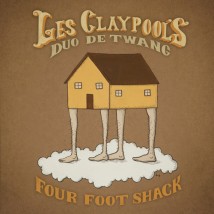
 june30SOUNDTRACK: LES CLAYPOOL’S DUO DE TWANG-Four Foot Shack (2014).

Four_Foot_Shack_coverAfter touring around for the then latest Primus album, Les Claypool and M.I.R.V. guitarist Bryan Kehoe.  They got together for a bluegrass festival and decided to keep going with it.

So this is just Les and Bryan each playing a resonator bass and resonator guitar and twanging up the songs (with extra mandolin and backing vocals on a few tracks by Wylie Woods).

The disc opens with the only new song, a 42 second bit that doesn’t quite prepare you for the nonsense inside.  Because this is really a fun record of covers (Primus songs, Les’ solo songs, and others).

I tend to like the proper Primus versions better, but I really enjoy the way he has transformed them in this format.  “Wynona’s Big Brown Beaver” totally fits in this format and I do like it (the yodel bit is perfect) I just happen to like the bass and guitar better in the original.

The covers include: “Amos Moses” which works fine in this format.  “The Bridge Came Tumblin Down” (by Stompin’ Tom Connors) sounds very Stompin’ Tom.  It’s quite a sad song (thanks Tom).  “Stayin’ Alive” is fantastic–it really works with that style and the “how how how” is funny without being mocking.  “Pipeline” is a surprisingly good surf song for these two instruments–they really rock it out.  Perhaps te second biggest surprise (after Stayin’ Alive) is “Man in the Box” from Alice in Chains.  It projects a “Rawhide” vibe, and works very well It’s also kinda funny with the lyrics: “for some reason I’m buried with my very own shit.”  “Battle of New Orleans,” sounds really familiar although I’m not sure where I know it from.

There are several songs from Les’ solo albums done in twang style.  “Red State Girl” works great in this format (although it makes me sad that we still know who Sarah Palin is).   “Boonville Stomp” I like this version better than any others I’ve heard–some great steel guitar soloing going on in the second half.  The intro to “Rumble of the Diesel” is funny where he says that Seattle people don’t know anything about fishing and they turn on him.  “Buzzards of Green Hill” works really well with the twang, as does “Hendershot” (although I like the way he says “Hendershot” in the original more).  “D’s Diner” is fun in this format, less weird (the original is pretty weird).  And I’d love some malted buttermilk pancakes all day long.

The final song is a cover of Primus’ “Jerry Was a Race Car Driver.”  It feels very different.  The guitar solos are fun–there’s a Benny Hill vibe before the solo for Jimi Hendrix’ “Third Stone from the Sun.”

So while the album is goofy, it’s done in good fun, and the impact is really strong–Les’s songs have always been about rhythm and they translate really well.

[READ: January 29, 2015] “Pink House”

Rebecca Curtis continues to be one of my favorite recent discoveries.  Strangely enough I bought a copy of her short story collection and then proceeded to lose it in my house. How is that possible?

This story comes from a different narrator than the other stories, although she is just as bristly and straightforward as Curtis’ other narrators.  And in the way of delightfully convoluted stories, this one has an unusual setting to get to what it wants to say.

The narrator is at an artist’s gathering . None of the seven people gathered around–a Korean American crime-noir novelist, a Lebanese fantasy writer, a Thai journalist and three Brazilian painters–knew each other.  A foundation had flown them out together to practice their arts for six weeks.  “None of them knew who’d selected them for the residency, or why.”  I love that.

So the narrator decides to tell them a story about a ghost.

She had been living in Manhattan, although she was originally from Maine.  She was barely scraping by but then she was accepted into the MFA program in Syracuse.  She asked them to secure housing for her and she accepted an apartment sight unseen.

Before she left, she decided to have one last fling with her boyfriend.  She makes a point of telling everyone that he is black (she pretty much exclusively dates black men), and there’s an awkward moment where she says that her boyfriend half comic half angry asks, “”You like black cock?”” The rest of this answer is out loud: “I hesitated.  To me the question seemed off, since it was evident that I did.  Who I wondered wouldn’t like such a good thing?”  Meanwhile, the journalist asks her, “This relates to the ghost story?”  She says that it does.

Albeit somewhat tangentially.  She wound up oversleeping on the night she was supposed to pack.  Her parents drove down from Maine to help her move and her father was super mad that she wasn’t ready (he had no intention of sleeping in a hotel in Syracuse).  The whole relationship with her family: her angry father and her mother who believes that she will be going to hell because of her premarital sex is very funny.  It also takes up a large chunk of the story but has little to do with the actual ghost part, well, except for one important thing. (more…)

Read Full Post »

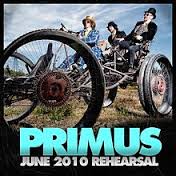
jan 12SOUNDTRACK: PRIMUS-June 2010 Rehearsal EP (2010).

rehersalBack in 2010 Primus reunited (again).  And they released a free downloadable EP of their recent rehearsals.  It’s got 4 songs and the mix is interesting–Les in the left speaker and Ler in the right, so you can hear each individual part if you like.

Two of the older songs are some of my favorites: “Pudding Time” and “Harold of the Rocks.”

The other two songs are “American Life” which comes from Sailing the Seas of Cheese.  It’s a deep cut as opposed to the more obvious single, “Jerry was a Race Car Driver.”  This version is 3 minutes longer than the original, which means that Primus are still in jam band mode.  “Duchess and the Proverbial Mind Spread” is from The Brown Album.  It’s got a pretty good solo from Ler.

This EP features the drumming of Jay Lane who was in Primus before Tim Alexander.  This is the first official Primus release that he has been credited with.  And his drumming sounds really good.

Since tis is a rehearsal, some leeway can be given with the sound quality which is very crisp–perhaps too crisp.  But overall it’s great to hear these guys sounding so in tune with each other.

[READ: January 27, 2015] “The Crabapple Tree”

In my reading experience, Robert Coover likes to play around with fairy tales and turn them on their heads or, sometimes, inside-out–showing viscera and all.

To my knowledge, this one doesn’t mess around with an extant story, but it does have a very fairy tale quality to it.

I love that it happened “here in our town.”  Th narrator’s friend married a local farmer.  When the friend had her baby she died in childbirth.  The farmer buried her under the crabapple tree.  He proved to be a rough unpleasant guy: he drank too much and didn’t care much for the baby.  He soon found another wife who, maybe, was a hooker.   The kids in the area called her Vamp.

Vamp had a daughter from another marriage, Marleen.  She was kind to her stepbrother although their games were certainly unusual.  She’d put a collar on the boy and he’d walk around on all four with no clothes on–she taught him to pee by lifting his leg.  But she cared for him and when he got sick, she could make him well again, kind of magically. (more…)

Read Full Post »

jan5SOUNDTRACK: PRIMUS–They Can’t All Be Zingers (2006).

zingersIt’s funny to think of Primus having a greatest hits album, although they did in fact have some hits.

I always think it’s interesting to see what albums are most represented on Greatest Hits collections–did a band become popular later in their career or did their success fade after a time?  In this case, the early stuff is very well represented.

There’s nothing from Suck on This, which isn’t too surprising since pretty much everything has been re-recorded, but you get three tracks from Frizzle Fry (a great album that I would think would be hard to choose three songs from), three from Sailing the Seas of Cheese and three from Pork Soda.  You even get three from Tales from the Punchbowl (I wouldn’t have thought “Electric Grapevine” would make it).

As the end of the first part of their career came into view, we get only two songs from The Brown Album.  There’s only one song from the hated (by Les) Antipop and I feel like a conciliatory nod to the reunion EP with “Mary the Ice Cube.”  I would have rather them put “The Devil Went Down to Georgia” on the disc as their cover of that song is only available as a video on any official release.

Perhaps the most fun thing about this release is the packaging, which, yes, looks like processed cheese.

[READ: January 23, 2015] “The Ways”

This was a strange story to me.  It is about three older teens who appear to be living on their own in what I gather is rural Ireland.  The oldest brother (Nick) is out of school and is currently working, the two younger siblings are still in school, although the youngest brother (Gerry) is always getting in trouble and the sister (Pell) basically just stopped going to school once their father died.

As the story opens, Pell gets a call that Gerry has been fighting and has been suspended.  She hitchhikes and then takes the bus into the city (which is a dozen or so miles away) to pick him up.  On the bus some of Gerry’s friends recognize her and give a her a bit of hard time, but she gives back just enough–asking why those guys are not in class–they say they were off messing about for the morning.  It’s clear that Pell takes no guff.

The next section shifts to Nick while he’s on a cigarette break at work.  There’ a funny bit about his coworker, a Chinaman named Sean.  When Pell and Gerry show up at the restaurant, he gives them so free food and tells them to hold on.  He tells Pell that the next time, the school should call him at work.  When Pell says she tried to call him when the school called their house, but that he didn’t answer, he says that he won’t answer when they call him either, but at least Pell won’t have to deal with it. (more…)

Read Full Post »

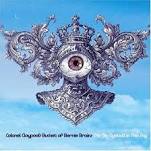
dec15SOUNDTRACK: COLONEL CLAYPOOL’S BUCKET OF BERNIE BRAINS-The Big Eyeball in the Sky (2004).

eyeballAfter touring with Primus for a bit, Les met up with Buckethead, Bernie Worrell, and Brain at the 2002 Bonnaroo Music and Arts festival. Worrell, Brain and Buckethead were there to perform with Bill Laswell as Praxis, but Laswell was not able to play.  So Claypool invited them to jam with him and the Bucket(head) of Bernie (Worrell) Brain(s) was formed.

This is another fun jam band for Les with jamming credentials (Bonnaroo and all).  But the biggest change to the overall sound is the addition of Bernie Worrell on funk keyboards which adds a radically new dimension to Claypool’s music.  And Claypool plays along accordingly.

The disc opens with keyboards! (even a song that’s all about Buckethead opens with keyboards).  The verses are carnivalesque while the chorus are funky with Les’ wild bass and some good keyboards from Bernie.  Even though the guitars from Buckethead are great they don’t really stand out amid the music—there’s no room for showing off in this bunch (although his solo at 4:30 is pretty groovy).  I love the riffs (keys) at 3:00, it’s a great section and could have easily been a whole song.

I find that the more I enjoy the jamming music that Les creates the less I enjoy his vocals/lyrics.  It seems like his songs get limited when he starts using conventional (sic) verse chorus structure.  So I love the chorus that he sings on”Thai Noodles,” but the verses just don’t seem to fit with the interesting music going on.

“Tyranny of the Hunt” has an interesting weird riff, but the real highlight of the disc is “Elephant Ghost.”  I have complained that many of Les’ songs have been too long, but in this case, 11 minutes is just about right for this lengthy groovy jam.  It’s got the kind of melody that doesn’t grow tired after a few minutes and the soloing is really great.  It actually feels a lot shorter than some of his 6 minute songs.

“Hip Shot From the Slab” and “Junior” have that redneck kind of thing that Les has been playing with.  The backing vocals on “Slab” are a nice bright contrast, but I feel like he’s really getting hung up in this darker style of music lately.  “Scott Taylor” is another great instrumental.  I love that the main riff is a keyboard riff–and man is it a good one.  “The Big Eyeball in the Sky” is an anti-televsion song.  “Jackalope”is  a bouncing bass heavy instrumental.  It is the least fun of the three.  “48 Hours to Go” is a little dull, but the disc ends with the interesting “Ignorance is Bliss.”  This is a great change of pace with a cool violin/fiddle sound and good vocals.

Even though Claypool is ostensibly the leader of the band, I like these songs best when he take a backseat and lets the other guys shine.

[READ: January 21, 2015] “Savage Breast”

Now this was a weird little story.

It opens with a woman saying that the day was ordinary aside from her headache.  She was supposed to go to a party that night but didn’t feel like it.  So she took a nap instead.

But when she woke up she found out that the room she was in was not her own, but rather her childhood bedroom.  Everything was exactly as she remembered it–all details perfectly in place, including the view out the window and the clothes in the closet (which were her childhood clothes but still fit her).  Weird, right?  But even weirder was the fact that the other person in the house with her was a beast–a big hairy beast.  And yet, as she got nearer and nearer she realized that the beast was actually her mother–it acted like her, lay like her and behaved like her, even if she was totally covered in fur.

In fact, when her “sister” beast comes home, she acts exactly the way her sister did when they were kids.  And when her “father” beast comes home after work, he has the exact same drink that her real father always had.  It’s like a crazy flashback to her childhood, except that everyone is a beast.  (more…)

Read Full Post »

« Newer Posts - Older Posts »