Feeds:
Posts
Comments

Archive for the ‘Culture Shock’ Category

SOUNDTRACK: BEN FOLDS/NICK HORNBY-Lonely Avenue (2010).

As the cover of this album notes: “Ben Folds adds music and melody to Nick Hornby’s words.”  And that is true. The only surprising thing about this combination is that Folds is quite a good lyricist himself, so it’s surprising that he would sacrifice his words.  But regardless, the fit is a good one.

Sometimes it seems like Hornby is challenging Folds to come up with melodies for some of his more difficult lyrics which Folds lives up to).  But they have such similar sensibilities that (aside from occasional references to British things) the words could have come from Folds himself (although, Hornby’s a better writer, so Folds wouldn’t have written exactly the same things).

The big surprise is the diversity of musical styles on the disc.  Folds of course does play lots of different types of music on his previous discs, but I guess since the cohesion is Hornby’s words so Folds can really let loose.

The opener, “A Working Day” is a keyboard pop confection, a surprisingly 80s sounding synth song with some wry lyrics about being a writer/performer (“some guy on the net thinks I suck and he should know, he’s got his own blog”).  “Picture Window” is a beautiful downer, a string-filled song that seems like a companion to Folds’ “Brick” (“You know what hope is, hope is a bastard”).  It’s just as sad but the melody is gorgeous.

“Levi Johnson’s Blues” is a strangely topical song (in fact, it took me a minute to remember who he was when I first listened to the song.  Anyhow, it’s a silly song about what happened to the father of Sarah Palin’s grandchild.  And yet, despite the novelty of it, it’s actually a somewhat sympathetic portrait of the guy (sure he’s a redneck, but he’s just a normal guy thrust into a ridiculous spotlight–the liner notes say the chorus came from Levis (redacted) Facebook page).

“Doc Pomus” feels like a classic piano song.  While “Young Dogs: is a fast romper (with great vocals) and more keyboards.  “Practical Amanda” is a slow ballad (and Hornby says it’s not autobiographical at all).  While “Claire’s Ninth” is a story about a young girl of divorced parents who hates having two birthdays.  (With sweeping choruses!) Hornby states that this was his first accepted short story (modified for the song, of course) but the magazine that accepted it stopped publishing before his appeared.  D’oh!

“Password” is a wonderful song which only makes sense when you know the name of it (which I didn’t at first, as I usually don’t look at titles right away).  Throughout the song Ben spells words which leads to a cool conclusion–it’s wonderfully clever writing and it’s done in a fascinating R&B-lite style.

“From Above” is a jaunty rocker about people who never meet, although their paths cross quite often.  “Saskia Hamilton” is the “single” from the record.  It’s another great 80’s keyboard fueled romp.  Since I have a friend named Saskia (hi, Saskia) I’m fond of this song–her name is fun to say.  They have a bunch of fun in the recording too.

The final track, “Belinda” is designed like a classic 70s piano ballad (there’s a lengthy email printed in the notes that explains the construction of the song–reading that makes the song even more impressive).

It’s a great Ben Folds album.  It’s not as tidy as some of his other ones–but all of that experimentation leads to some new avenues of melody. It’s a risk that paid off.

[READ: May 10, 2011] Five Dials Number 7

This issue of Five Dials was primarily about Memoir.  Typically, I don’t like memoirs, but I’m finding (and this coincides with what one of the memoirs below states), that I just don’t like celebrity memoirs.  Or perhaps I just like three page accounts of an incident in someone’s life (which these are).

Each of the writers below is given an introduction in which they summarize WHY they write memoirs.  It’s interesting to see that many of them do, in fact, take other people’s feeling into consideration (not as seriously as Mark Twain who waited 100 years for the publication of his), but they try to do something or other to spare people’s feelings.  I was intrigued also that several of the writers also talk about finding themselves through writing.  One or two of them make the exercise of writing memoir sound obnoxiously solipsistic (which of course it is), but it’s nice to read ones that are interesting and not too self-centered.

CRAIG TAYLOR-A Letter from the Editor: “On Audio Detective Work and Memoir”
This letter explains the extent of the audio detective work that went into the interview (presented later) between Raymond Chandler and Ian Fleming.  Since I love playing with audio software, this was of especial interest to me.  And it made me really look forward to the interview. (more…)

Read Full Post »

SOUNDTRACK: FUJIYA AND MIYAGI-Live at the 9:30 Club, Washington, DC April 30, 2007 (2007).

I was turned onto Fujiya & Miyagi through a sampler CD from WXPN (the song “Ankle Injuries” was included).  “Ankle Injuries” has such a simple template.  It’s an electronic song, full of washes and beats–nothing too high or low–with the repeated lyrics (sort of whispered) “Fujiya, Miyagi.”  I kind of forget that there are other lyrics, since that “chorus” is repeated some seventy times during the song.  The rest of the lyrics are also whispered (but mixed loud so they are audible) and are sort of weird, rambling nonsense.

It’s slick and catchy and with the simple lyrics, it’s really easy to sing (or whisper) along.  The problem is that pretty much all of their songs (in this live NPR show, anyhow) sound like this.  That’s dismissive and not entirely true, but they all tend to follow this similar template: smooth, catchy keyboard melodies and whispered vocals.

The thing is that it works quite well, and the show is kind of fun.  And yet, it’s also rather repetitive.  This seems to be the kind of show that I need to be in the mood to enjoy.  It also makes me glad I didn’t buy the album.  I think little doses are enough for me.

This concert (available from )

[READ: April 1, 2011] “Where Are the Men”

This is  another story that, once I was about halfway through, I remembered reading the first time.  This one in particular was quite memorable because of the middle section.  But let’s go back to the beginning.

As the story opens, a woman is talking, out loud, to herself.  Her name is Eye-Dora; she’s in a dark basement and sees searchlights flooding into her room.  But she herself is dark: her skin is dark, her house is dark so she feels safe.

She is from Barbados, a single mother (her husband left many years ago and is now dead) with a son who wears a robe and now goes by a muslim name.  Eye-Dora is pissed.  She is pissed at the state of black men in Toronto.   She is pissed that a black man is going through her garbage and leaving it strewn all around.  She is pissed that a black man was killed for wandering down the street claiming to be Jesus.  She is pissed. (more…)

Read Full Post »

SOUNDTRACK: SHARON VAN ETTEN-Live at SXSW (2011).

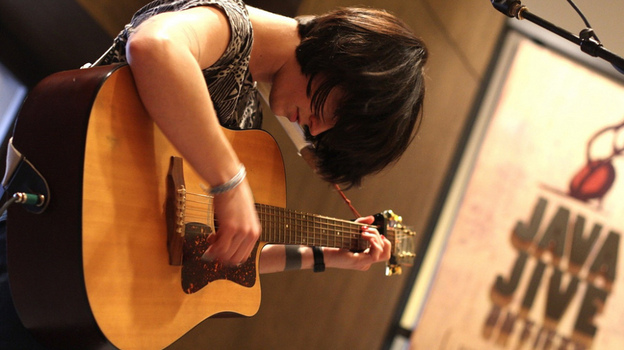
Sharon Van Etten has a lot of sessions at NPR.  Not too many are downloadable, but this one is.  This is a fascinating set because it’s a special breakfast show for KUT. (See in the picture she’s doing Java Jive).  (She also plays a show later that night, but it’s not available here).

The set is four songs (all from Epic) on acoustic guitar.  The really different thing about this set than any of the other things I’ve heard from her is that her voice sounds really gravelly (like she just woke up–which she may have, almost all of her between song banter is about how it’s early–it’s either endearing or annoying).  Normally, Sharon has a really amazing voice–high and soaring.  This time it’s much  raspier.  But the interesting thing is that it works well.  She never misses a note and it brings an interesting growly tone to these (somewhat) angry songs.

It’s a great (although brief) set.

[READ: March 30, 2011] “Mont Royal”

This is a very brief (three column) story that reads like a stream of consciousness piece.  And that is appropriate because it not only references Ulysses, it actually quotes the end of the novel.

There are many fascinating things about this story.  First off, it is written in direct address: “When I moved to the city, ladies, …” but we never find out who the ladies are.  Second, it begins with the humorous idea that the narrator–upon moving to Montreal–believed for many years that the cross on the to of Mont Royal was a plus sign (he is an engineer). (more…)

Read Full Post »

SOUNDTRACK: BATTLES-“Ice Cream” (2011).

My friend Lar told me about Battles way back in 2007.  I listened to the concert he sent me, and it was great. But my memory of the band was that they were really heavy (the drummer was in Helmet and Tomahawk for cripessakes).

But they’re not so much heavy as noisy and crazy.  And this track is a head-spinning amalgam of keybaords, unsettling rhythms, processed guitars and singing from Argentinean techno producer Matias Aguayo.  The lyrics sound like they are not English, but they are (with heavy effects on them).

The song is weird, indeed. But after just one listen, I was totally hooked.  It’s catchy and bouncy and very sunny and it’s a real joy to listen to.   I absolutely must go back and check out their debut Mirrored.

Listen at NPR.

[READ: April 28, 2011] Five Dials Number 6

Five Dials Number 5 was an excellent issue that I enjoyed immensely.  They followed it up with Number 6, which deals with a subject that I was very passionate about in the early 90s: censorship/obscenity.  When I was in high school and college, the PMRC was the big bogeyman for advocates of free speech (of which I am one).  I still advocate passionately for freedom of speech (now that I’m in a library, the issue can be part of my daily life), but it seems like there are so many more important issues in the world, that stickers on a record seem kind of silly.

Nevetheless, as this issue reminds us, those who control what is said control what we hear.  And that’s true for music and books, as well as our everyday news.  So, free speech should never be taken lightly.  Although this issue looks largely at obscenity in England, they also pull up some good information from Jello Biafra as well.

CRAIG TAYLOR-A Letter from the Editor: On John Mortimer and Obscenity
John Mortimer appears later in the issue. He was the lawyer who defended Lady Chatterly’s Lover against accusations of obscenity.  And Taylor points out that Mortimer’s attitude was that he “understood the silliness of censorship.”  And with that attitude, he was able to work to convince juries of that silliness.  The rest of the issue looks at important cases of censorship over the years, from The Dead Kennedys to NWA (it’s nice to be reminded about how “dangerous” they were when they came out).  He also laughs at the lame attempts at putting adult content on network TV (Fudge you!). (more…)

Read Full Post »

SOUNDTRACKMETRIC-Fantasies (2009).

I was hooked by the song “Gold Guns Girls.”  I liked it so much, I bought the disc, and I was absolutely not disappointed.  This disc reminds me of all of the best things about late 90s alt rock (one of my favorite musical periods).  There are echoes of later period Lush, or of Garbage or some other slickly produced commercial alt-rock.

I’m led to understand that this disc would merit cries of sell-out from older fans (their earlier stuff it a bit rougher, I gather), and yes, this is a pretty commercial release, but I don’t mind.  The songs are all top-notch: great songwriting, catchy choruses, wonderful production.  And there’s something slightly uncommercial about the lyrics which I think is what keeps this album from being too slick for its own good.

I have listened to this disc dozens of times at this point and I never get tired of it.  And, there’s no reason why I shouldn’t go back and get some of their earlier releases too.

[READ: May 15, 2011] Fraud

I’ve seen Rakoff on the Daily Show, and his name has been cropping up in various places lately.  So I decided to read his actual published work to see what he was all about.

Fraud is his first book.  It is mostly funny, although it also dwells on serious matters by the end of the book.  In many ways Rakoff is like a slightly wilder, slightly edgier version of David Sedaris (the two have a long history of friendship and working together, so this may not be totally surprising).

I’m not going to compare him to Sedaris in any meaningful way, just to say that there are similarities of temperament and style; I don’t think either one of them is hilarious, but that I enjoy both of them and often laugh pretty hard at their material.

I’m also not going to review each essay in this book.  It seems to be constructed in a vague sort of narrative arc.  Well, actually, the second half of the book has the narrative arc (I suspect that the essays that were published previously were modified slightly and that the new essays allude to some of the incidents mentioned there.

The first few essays of the book are the funnier ones (insert joke about Woody Allen’s early funny movies here), and they stick more to the idea of Rakoff as a “Fraud.”  In them, Rakoff, a Canadian ex-pat (he’s from Toronto), somewhat neurotic, gay, New York Jew goes to different locations where he is an atypical person and then reports on them. (more…)

Read Full Post »

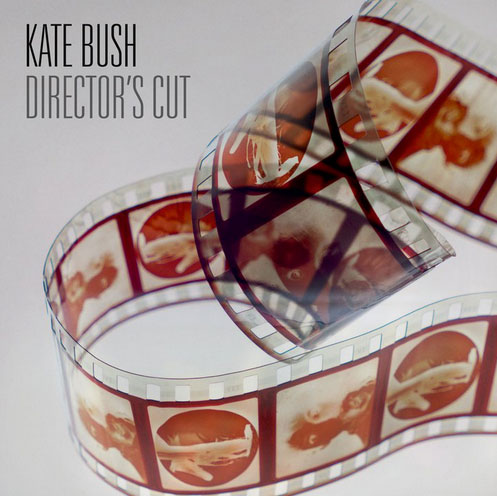
SOUNDTRACK: KATE BUSH-Director’s Cut (2011).

Kate Bush has re-recorded eleven songs from her two least-loved discs, The Sensual World and The Red Shoes.  According to the story at NPR, this seems to have been inspired by the Joyce estate’s granting Kate the right to use part of Ulysses as the lyrics for the song “The Sensual World” (in the original version she paraphrased the book).  So, she decided to re-record a bunch of other songs from those two albums as well.

I admit that neither one of those discs is high on my repeat play list, with The Red Shoes being a particular disappointment.  (Although there are some great songs on each).  When I read that these songs from those two albums I wasn’t terribly excited to hear them.  But I must say that these new versions have really reinvigorated these tracks.

I’m surprised by some of the choices (redoing “This Woman’s Work” is something of a shock, as is redoing her only real hit from The Red Shoes, “Rubberband Girl”), but whether it’s that she chose the best songs, or the new version have more life to them, this is a wonderful collection of songs.

Actually, rechecking the track listing, it does appear to be the best tracks from both discs, but I’m pleasantly surprised to seen how many good songs were actually on The Red Shoes to begin with,

from The Sensual World

  • Sensual World (retitled “Flower of the MOuntain”)
  • Deeper Understanding
  •  This Woman’s Work
  • Never Be Mine

from The Red Shoes

  • The Song of Solomon
  • Lily
  • The Red Shoes
  • Moments of Pleasure
  • Top of the City
  • And So is Love
  • Rubberband Girl

For the most part, the music seems to be the same (although there are some glaring exceptions).  I admit to not remembering the originals for all of them all that well).  But she has mostly rerecorded her voice (and possibly other lyrics, if NPR is accurate).  Her voice is unmistakably Kate, but in some places she sounds noticeably older (which she is, so duh).  She doesn’t seem to be able to hit quite the highs of before, but her voice has a throaty excellence to it now that brings something new to the songs.  It’s not noticeable on every song, although it is most notable on “This Woman’s Work,” which began with high sopranos, and now begins with lower alto notes.  But she can still hit some of the cool screechy notes on “Top of the City”

There are some tracks that are very different, “A Deeper Understanding” (a song about love via modems) replaces the earlier style of singing with a heavily autotuned computer voice.  It’s unsettling but very cool sounding.

The biggest changes come in “This Woman’s Work” and “Rubberband Girl.”

“This Woman’s Work” is a far more sedate track now. It doesn’t have any of the soaring moments of the original.  It seems to have more depth in this version, but I miss the “Oh darling make it go away” moment.  Nevertheless, it sounds really pretty in this more mature version.  It’s simply a very different song now.

As for “Rubberband Girl,” I’ve always had a real fondness for the original, so I don’t know how I feel about the rerecorded version (which is so very different).  The original is very elastic with cool music and weird vocals and is kind of trippy (and may not even be all that good), but I have grown quiet attached to it.  The new version is a simple guitar sound (it reminds me of a sort of unplugged Rolling Stones song now).

Overall, this is an exciting revitalization of Kate’s back catalog, and I hope it inspires her to make another new album in the next few years or so.

[READ: May 14, 2011] Austerlitz

I read about Sebald in Five Dials. And the glowing talk about him made me want to read one of his books (specifically, this one).

Austerlitz is a strange novel which I enjoyed but which I never really got into.  I feel like rather than absorbing me into its words, the book kind of held me aloft on the surface.  As such, I have a general sense of what happened, but I’d be very hard pressed to discuss it at length.

The basic plot summary is that an unnamed narrator runs into a man named Jacques Austerlitz.  Austerlitz talks to him at length about his life. They run into each other at various points over the years, and Austerlitz’ story is continued.  And literally, that is the book.  Now, of course, Austerlitz’ story is multifaceted and complex.  But we will never forget that this is a story within a story (it’s impossible to forget because the phrase “said Austerlitz” appears about 500 times in the book. (more…)

Read Full Post »

SOUNDTRACK: VAMPIRE WEEKEND-KEXP performance & interview (2008)

While trolling around NPR’s Favorite Sessions Pages (an amazing place to look for live music!), I found this Vampire Weekend in-studio session from KEXP in Seattle (whose site features some amazing shows that you can listen to (but I don’t think any are downloadable).  This interview and performance was before the band’s debut album had come out (and they had only been playing live for about six months).

So the set has four songs.  All will appear on the debut album, but they sound a little different.  Perhaps it’s the in-studio sound recording or perhaps they play them a tad bit slower, but you can hear the words more clearly (which is cool) and some of the beats are sustained a bit longer.  It’s a wonderful set.

The interview is also fun.  The interviewer is pretty well gushing all over the band.  But he asks interesting questions–it’s amazing to be reminded just how young the guys are.  The DJ also asks about their influences and that’s kind of an interesting discussion, although thy don’t really admit to any specific influences (rats).

It’s a wonderful (if not too brief) session, and well worth a listen.

[READ: March 27, 2011] “The Man on the Island”

I really enjoyed the way this story was constructed. It went through several different teasers before settling down into what the story would ultimately be about.

It opens with a taxi driving through Bridgetown in Barbardos.  The passenger, a reporter from Canada, asks the driver, Calvin Braithwaite, to drive him all over the island on a special commission.  Braithwaite agrees, and they spend the reporter’s few days in Barbados together.  When the reporter leaves, he asks for Calvin’s email address and phone number, for possible follow-up.

This introduction leads us to assume that the story is about the reporter.  And also that Calvin is “the man on the island.” (more…)

Read Full Post »

SOUNDTRACK: KANYE WEST-My Beautiful Dark Twisted Fantasy (2010).

Before buying this album I really only knew of Kanye West as a loudmouthed guy who tweeted a lot and told off George Bush.  But then everyone was raving about this album (Pitchfork gave it a 10 out of 10!).  So I decided to check it out.  And I can’t get over how great an album it is.

Now I’m going to start this review by mentioning a few things I dislike about rap as a genre.  1) I dislike all of the “guests” that appear on a record–I bought the album because for you, not your friends.  2) I dislike excessive use of “unh” and “yeah” at the beginning of a track; when you have nothing to say–let the backing music flow, save your voice for actual words.  3) Rap is still terribly misogynist and vulgar–I’ve nothing against vulgarity per se (I do have something against misogyny) but excessive use is lazy, and it stands out much more in a rap song since you’re saying the words not singing them.

The Kanye West album is guilty of all three of these things, and yet I still think it’s fantastic.  The first reason is because it goes beyond a lot of rap by introducing real musical content into the songs.  This is not an “all rap is just a beatbox” dismissal of rap, it’s an observation that rap tends to be more about the lyrics and the musical accompaniment can get kind of lazy.  West’s songs have (beautiful) choruses, strings, and samples that augment the rest of the song, as opposed to samples that ARE the song.  And Kanye West’s voice is great.  His delivery is weird and twisted, a little cocky but more funny, with a twisted attitude that is really cool–and to my rather limited palate of rappers, it’s original.

The opening of the disc “Dark Fantasy” has a chorus singing “Can we get much higher” which is catchy and cool (and is used in the promo for The Hangover 2).  The switch from this opening to the rapping works well (aside from the FOUR “yea”s).  Although I don’t love the yeahs, I love his delivery, and that he occasionally ends lines with these weird “hunh” sounds, that are wonderfully emphatic.

The guests start showing up on track 2, but even the guests can’t detract from the excellent guitars of the song (and the cool solo). And I’ll say about the guests that I like some of them, but for the most part I’d rather hear Kanye.

“Power” samples King Crimson’s, “21st Century Schizoid Man”; anyone who samples King Crimson is alright with me.  But to use it so perfectly, to make it part of your song is real genius.  It works musically as well as within the overall concept of the album.

“All of the Lights” (with the pretty piano intro) features scads of guests including John Legend, The-Dream, Elly Jackson, Alicia Keys, Fergie, Kid Cudi, Elton John (!), and Rihanna.  I can hear some of these people but not Elton John (why would he agree to be on a track where you can’t even hear him?).  It is a beautiful pop track nevertheless.

“Monster” is a monster of tracks with yet more guests (I like that some of these guests break with the typical guest, like Bon Iver (!)).  And I really like Nicki Minaj’s verse.  [I’m not familiar with her work at all (in fact I keep wanting to say Minja instead of Minaj) but her verse with the wonderfully crazy vocal styling she displays is weird and cool and very powerful–I would like to check out her solo album, but the samples I heard weren’t that interesting].  It also has a great repeated chorus of being a “motherfucking monster.”

It’s followed by the even more catchy “So Appalled” (with FIVE guest rappers–some of whom I’ve never heard of but who do a good job.  I love Cyhi da Prince’s lyrics: “I am so outrageous, I wear my pride on my sleeve like a bracelet, if God had an iPod, I’d be on his playlist”  or  “So call my lady Rosa Parks/I am nothing like them niggas baby those are marks/I met this girl on Valentine’s Day/fucked her in May/she found out about April so she chose to March” or this line, “y’all just some major haters and some math minors.”

“Devil in a New Dress” opens with a bunch of “unhs” (which I dislike) but this is nice ballad in the midst of all of the noise (and it has some clever lyrics).  It morphs right into “Runaway” one of the more audacious singles I can think of.  The piano melody is so simple (a single note to start) and the lyrics show Kanye as a loser in relationships.  It’s a surprisingly thoughtful song for a song with a chorus that goes: “Lets have a toast for the douchebags, let’s have a toast for the asshole; a toast for the scumbags every one of them that I know.  You been putting up with my shit for way too long…runaway fast as you can.”  It gets even more audacious when you realize the last 4 minutes of the song are a solo with distorted voice.  And the video…the video is 35 minutes long!

The sentiment of that song is erased by the next one, “Hell of  a Life”.  It opens with a great distorted guitar riff and lyrics about sex with a porn star.   “Blame Game” is a surprisingly honest song about being nasty to your girlfriend (“I’d rather argue with you than be with someone else”).  It features a sample of Aphex Twin’s (!) “Avril 14th”.  And it’s quite a sad but lovely track.  It ends with a very long skit by Chris Rock.  I like Chris Rock, but this dialogue is kind of creepy because the woman who Rock is talking to (about the great sex she gave him) seems to be a robotic sample–why not have an actual woman talk to him?

The final track, “Lost in the World” has a lengthy intro by an auto-tuned Bon Iver.  It’s one of my favorite tracks on the disc, especially the end, where the processed vocals get even weirder but accent the beat wonderfully.  This track morphs into what is the actual final track, “Who Will Survive in America” which is basically a long recitation from Gil-Scot Heron.  It works great as an album closer.

So, despite several things I don’t like about the disc, overall, it’s really an amazing release.  And I can overlook the few things I dislike because the rest is so solid.  I can’t decide if it’s worth looking for his earlier releases.  How can they live up to this one?

[READ: May 6, 2011] McSweeney’s #37

This is the first McSweeney’s book where I’ve had to complain about the binding.  The glue peeled off pretty quickly from the center cover.  Fortunately, the back cover held up well.  I’m guessing it’s because there’s an extra book tucked into the front cover which prevents the book from closing nicely when it’s removed.

But aside from that, the design of the cover is very cool.  It is meant to look like a book (duh), but actually like a 3-D book, so the bottom right and top left corners are cut on diagonals (this makes for a very disconcerting-looking book inside–with triangles cut across the top).  The artwork inside is also cool.  In keeping with this appearance, each two page spread looks like a book with a spine drawing in the gutter of the pages).  And the bottom of each page has lines making it look like the bottom of a book.  (The illustrated margins are by SOPHIA CARA FRYDMAN and HENRY JAMES and there are interior paintings by JONATHAN RUNCIO).

The front matter is wonderful.  Although it gives the usual publishing information, the bulk of this small print section is devoted to counteracting all the claims that the book is dead.  It offers plenty of statistics to show that not only are the public reading, they are reading more than ever.  The introduction also goes a long way towards arguing against the idea that people are reading less now than in the past.  When was this “golden age” of readers?  There’s also the wonderfully encouraging news that 98% of American are considered literate.

This issue opens with letters. (more…)

Read Full Post »

SOUNDTRACK: THE HEAD AND THE HEART-KEXP in Studio, September 14, 2010 (2010).

My saga of The Head and the Heart continues.  Sarah had ordered me the disc for Christmas, but the self-released CD had gone out of print.  This is because Sub Pop was going to re-release the record sometime in the new year.

Well, NPR loved the album, so why wouldn’t they have more recordings by them?  (This is one of the great things about enjoying new bands…they are far less likely to restrict listening and downloading abilities online).  So, this session (September) was recorded shortly after they released their album (July).  I have still yet to hear the actual album, but I have fallen in love with these songs.

This set (which has some very brief interview portions) is five songs. The band sounds great, with wonderful harmonies.  The first two songs “Cats and Dogs” and “Coeur d’Alene” meld together seamlessly, and it works wonders.  “Lost in My Mind” is an amazingly catchy single: the “whoo whoos” (which sound not unlike a train) are wonderfully catchy (in a Mumford and Sons kind of way).

They also play “Ghosts” (another catchy catchy song) and the non-LP song “Down in the Valley” (which has the slightly uncomfortable opening lyrics: “I wish I was a slave to an age-old trade”).

This neo-folkie revival has generated some great bands, and The Head and the Heart are yet another one.

[READ: April 14, 2011] “A Withered Branch”

This is a very brief short story (a page and a half) translated by Anna Summers.

A young woman hitchhikes into Vilinus.  She is picked up by a trucker and is unbothered until they get to a rest stop.  While they are having dinner, one of the drivers wonders who she will sleep with that night.

But that is the prelude to the story.  When she arrives in the city, she meets a woman of about fifty who, when the narrator asks if there is any place to stay, offers her own house to the (dirty and sweaty) stranger/narrator. (more…)

Read Full Post »

SOUNDTRACK: WU MAN-Tiny Desk Concert #124 (April 27, 2011).

Wu Man is considered the master of the pipa. If that sentence was complete gibberish, the pipa is a 4 stringed lute-like instrument and Wu Man is a Chinese virtuosi of the instrument.  This Tiny Desk Concert shows Wu Man playing three songs, solo.

The songs are, if not traditional Chinese songs, then at least traditional in style.  Needless to say they are not for everyone (and really, they’re not even my cup of tea–I’m not downloading it, just watching it), but watching her fingers move on this instrument and really paying attention to the kind of things she’s doing with four strings, it’s quite an impressive feat.

She doesn’t sing, and the songs do not follow western musical structure at all.  But it’s an interesting look into Chinese musical culture.

Even if you only watch the first song, it’s worth the time.

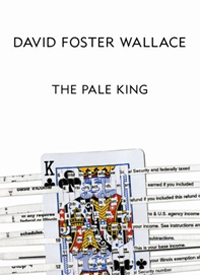
[READ: April 29, 2011] The Pale King

[Note: this review is pretty much free from spoilers–some details are given but I don;t think they ruin anything–but it is full of speculation and imaginings of what could have been]

I finished The Pale King today.  It took about a month, but that was because I only read it at lunch hour.  And I was surprised to find that, unlike with other books, I didn’t always feel up to pushing my lunch hour a few extra minutes to get some extra pages in.  Not because I didn’t like the book, but I think it was just really dense and often quite intense.

I’ll also state that I hadn’t been making any kind of notations when I started.  Then, a bit of the way through, when I realized there were a lot of characters, I started jotting down some names and characteristics.  But then I stopped again, because it was interfering with my absorption of the story as a story (such as it is).  So, this review is based on an initial read (yes, I’ll be reading it again in the not too distant future, that’s for sure), without any real note taking.

Is note taking necessary?  Well, yes, at least to keep the characters straight.  There are many many characters and most of them do not interact (or at least not explicitly) so it’s not always easy to know who is who or which person’s weird characteristics are showing up in any given chapter.  Plus, there are dozens of chapters in which unnamed people are described.  It’s hard to know how deliberate that was or how much of it is just the fact that book was unfinished.

The other thing is the ending, of course.  DFW fiction is notorious for its “lack” of endings.  Broom of the System ends mid-sentence, Infinite Jest ends in the middle of a scene, so who can imagine what The Pale King would have ended.  As such, we have only to go by editor Michael Pietsch’s placement of chapters.

So, in many respects, this book is very much Pietsch’s project.  Sure, DFW wrote all the words, but it was Pietsch’s job to piece them together.  Who is to say that DFW would have wanted §50 to end the book?  Pietsch also includes about ten pages of notes at the end of the book all showing ideas that DFW had asked himself about the nature of the finished product.  Some of these questions are minor, but others are quite significant, and would effect not only connections in the novel, but also the overall shape of the book.  It also implies that there could have been as much as another 500 pages coming.

The book feels like a kind of culmination of all of the things that he has been putting into his work for the past few collections.  There are character sketches based on interviews (Brief Interviews), there are lengthy sections of bureaucratic minutiae, lovingly rendered (“Mr Squishy”), there are scenes of conformist office work (“The Soul is Not a Smithy”) and there is redemption in the everyday (“This is Water”).  The mind reels at what this could have been had it been finished.

So this book is obviously, radically unfinished (and yet it’s still over 500 pages long).  So, why bother reading it?

(Here’s where the review really starts).

Because what is here is amazing. (more…)

Read Full Post »

« Newer Posts - Older Posts »