Feeds:
Posts
Comments

Archive for the ‘Dublin, Ireland’ Category

[LISTENED TO: November through December 2010] A Portrait of the Artist as a Young Man

I initially ended this post with: “Even though this audio was unabridged, it felt a bit like hearing an abridged version.  I suspect I shall have to actually read the novel again in 2011 to see what I missed.”  Well, I assumed that the audio was unabridged.  But now I see that there is another recording which is 7 discs as opposed to my copy’s 3 discs.  Gadzooks!  In tiny print on the back of the box, I see now that this is abridged.  NO WONDER I felt like so much was left out of the story.  It actually made me think that the story wasn’t all that coherent.  As such, you can kind of disregard this post until I listen to the unabridged version (which is available free for download here).

So, back to my initial review:

I was listening to this audio book while exercising.  The fact that it took me as long as it did to finish the audio book is more of a testament to my lack of exercising than the book itself.  Although I will say that unlike Dubliners, I found that listening to this book (and again, perhaps it was the distance between listenings) to be somewhat unsatisfying.  And of course, as with all of these Naxos CDs, the vocals are recorded so quietly (except when he starts screaming–the hellfire sermon is so loud it scared my family upstairs) that you really have to try to listen hard to hear the whispers.  The final chapter–Stephen’s diary–is read so quietly it was hard to hear over the exercise machine, even with the sound up all the way.

So this is the story of Stephen Daedalus before Ulysses, when he was, as the title states, a Young Man.  My favorite memory of reading this book was when I read the opening aloud to a sick friend who thought that I was messing with her:

Once upon a time and a very good time it was there was a moocow coming down along the road and this moocow that was down along the road met a nicens little boy named baby tuckoo….

Stephen is of course, baby tuckoo, so this novel is more than just the young man days.   But from this baby story, we quickly jump to Stephen at school and we see an episode that impacted his whole life: boys who were teasing him pushed him into a stagnant pool of water. (more…)

Read Full Post »

[LISTENED TO: October 20, 2010] Dubliners Part II

This collection covers the last five stories from the book.  They are all longer stories, especially the fantastic novella “The Dead,” which runs well over an hour.  The titles included in Part II are:

A Painful Case
Ivy Day in the Committee Room
A Mother
Grace
The Dead

These last five stories look at (continuing the theme from my previous post) middle age and later life.  The protagonists are all older, and as with the first part, they all must deal with harsh realities and even death.

“A Painful Case” is the first story in the book where the title doesn’t directly apply to the protagonist (even  though, of course, it does).  Mr Duffy is a solitary man.  He goes out from time to time but is not really social.  At a concert he meets Mrs Sinico and they form a friendship.  Her husband approves of the friendship because he believes that Mr Duffy is really after their daughter.  The relationship grows stronger and stronger and Mrs Sinico feels closer to him than she does to her husband.  Then, Mrs Sinico make a gesture indicating she’d like a more intimate relationship.  Mr Duffy is immediately turned off by this and vows to himself to see her no more.  This leads to a quote that I assume is not original to Joyce, and yet it is still common today: “Love between man and man is impossible because there must not be sexual intercourse and friendship between man and woman is impossible because there must be sexual intercourse.”  The strange thing about this story is that it then jumps ahead four years.  We learn that Mrs Sinico took the dissolution of their friendship very hard indeed.  And naturally, Mr Duffy is made to rethink his life choices.  It’s yet another story of despair. (more…)

Read Full Post »

[LISTENED TO: October 5, 2010] Dubliners Part I

I found listening to Ulysses to be rather satisfying.  And, since I have recently commenced an indoor exercise regime, I thought it would be “fun” to listen to some audio books during the workout.  I started with Dubliners because and because Jim Norton is the reader (and I enjoyed his style on the abridged Ulysses) and because I own it.

It’s disconcerting to read/listen to Dubliners after Ulysses because Dubliners is such a conventional collection of stories.  There’s nothing untoward about them, there’s nothing scandalous (except for drinking and mistreating wives), and there’s nothing to be confused about (except maybe early 20th century Irish political references).  But one thing that  is abundantly clear is that Joyce was a great writer, right from the get go.

This disc’s stories are mostly between 10 and 21 minutes long, although “A Little Cloud” runs to half an hour.  The titles included in Part I are:

The Sisters
An Encounter
Araby
Eveline
After the Race
Two Gallants
The Boarding House
A Little Cloud
Counterparts
Clay

I’m not really going to review the quality of the audio.  It is uniformly very good, with Norton conveying accents wonderfully.  And those accents really bring the stories to life.  There is music in between each story, and the songs are all relevant to the time, if not the individual story. As with most of these audio books, it could be mixed louder, but that’s a minor quibble. (more…)

Read Full Post »

SOUNDTRACK: THE DUCKWORTH-LEWIS METHOD-The Duckworth Lewis Method (2009).

This is a CD released by the combined forces of Neil Hannon of The Divine Comedy and Thomas Walsh of Pugwash.  And if that weren’t enough of a sales pitch, the title of the band is a method of calculating cricket scores!  And even more…in concordance with that, this CD is largely about cricket.  Huzzah!  Buncha sellouts.

I don’t know a thing about cricket, but I know about great orchestral pop, and this disc has it in spades.  Some of the more obvious cricket songs are even understandable to non cricketers (the themes of “Jiggery Pokery” are familiar to anyone who has failed in a sport–and musically it sounds like a silent film soundtrack).

“The Age of Revolution” begins with an olde-fashioned soundtrack as well (jazz swing, including tap dancing) but quickly jumps into a dancey discoey verse (the two soundtracks blend surprisingly well in the chorus).  And the revolution?  Well, it has something to do with cricket.  Next, “Gentlemen and Players” is a wonderfully Divine Comedy-esque track complete with harpsichords.

“The Sweet Spot” is another discoey dancey track with some funky bass work (and innuendo whispered vocals).  And “Rain Stops Play” is a fun musical interlude.

“Mason on the Boundary” is the first track that seems distinctly Pugwash-y.  Hannon and Walsh have similar singing styles, and I find it hard to know who is who sometimes.  But this track is clearly Walsh’s and it’s very nice indeed.  Similarly, “Flatten the Hay” has that distinct Pugwash XTC/Beach Boys vibe and it’s quite good.

“The Nighwatchman” is also a very DC type song (it even sounds a bit like “The Frog Princess” but pulls away before being a repeat of that great single by introducing some very 70s sounding strings).  The rest of the disc follows in this same wonderfully orchestrated pop feel.  This a great record that, as far as obscure bands that get no statewide attention go, is top notch.

Oh, an it’s even more fun with headphones!

[READ: October 9, 2010] Skippy Dies

Wow, there’s a lot going on in this book.  It’s exhausting just trying to think of all the topics covered: boarding school life, failed romance (two big ones), life as a teacher, the appeal of pop singer Bethani, the Catholic priest sex scandal, drugs of all kinds, sneaking into a girls’ school, World War I, institutional cover ups, M-theory–which is pretty much the entire universe, and donuts.

But let’s start at the beginning.  Yes.  Skippy dies.  In the first couple of pages.  And what’s fascinating about this is that we don’t care.  I mean, in the scene where he dies, he’s not even the major character.  But then Skippy turns out to be more or less the glue of the book once the story proper begins.

Skippy resides at Seabrook school in Dublin (the best, most prestigious Christian academy in the country–sorry Gonzaga).   His roommate is Ruprecht (perhaps the strangest major character name I’ve read in a long time).  Ruprecht is a large boy who is incredibly smart (he will single-handedly raise the school’s average on the year’s final exams).  He is a computer geek who is obsessed with aliens and SETI.  And he hopes to be able to communicate with the other world by using techniques suggested in M-Theory.  The book does an admirable job explaining M-theory and string theory.  I’m not going to take up space here, but there’s a fine description at Wikipedia (or, if you don’t like Wikipedia, here’s an academic explanation that is written for the lay person).

Anyhow, Skippy and Ruprecht are two of a few dozen boys who reside full time at the school.  (Most of the other kids are day students).  And they have a cadre of half a dozen friends that they hang out with who make jokes at each other’s expense.  It’s a very realistically written entourage.  Mario is Italian and claims to have had sex with many many women (thanks to his lucky condom which he has had for three years).  Dennis is the ballbreaker.  He’s the abusive one (but by most standards, he’s not a bad guy).  And a few other hangers on.

This story of dorm life is a good one.  The boys are funny, their stories believable, even if they are all eccentric in their own way.  And then, one day, Skippy sees a girl playing frisbee at the girls’ school across the way (Ruprecht has a telescope which he uses for the stars, while eveyrone else uses it for the girls’ school).  And Skippy winds up becoming rather obsessed with the unknown “frisbee girl.”

This girls’ school plays a part in the story in another way too.  Carl and Barry are the Seabrook’s thugs.  When Barry hits upon the idea of selling ADD meds to the locals (as diet pills), it’s the girls’ school that he mostly preys on.  For yes, this story is also about drugs. (more…)

Read Full Post »
[LISTENED TO: September 27, 2010] Ulysses [abridged]

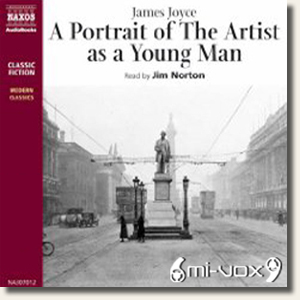
Because I am a glutton for punishment, I decided to listen to the abridged version of Ulysses as well (what’s 4 more hours of my life?).  (This edition is by Naxos, which Amazon is selling as a download).  I decided that the main reason was that since I have the text so fresh in my mind, it would be interesting to see what they abridged.  I mentioned in a recent post that the abridged version is 4 discs (just under 5 hours).  That is a serious abridgment, from 40 to 5 hours (actually the Naxos unabridged version is only 22 discs…how come theirs is so much shorter?  It seems that Jim Norton reads much faster).  And I am curious to see what they consider the “essential” text of the book.  Plus, realistically, I would never really want to do it at a later date.

So this version is read by two different people: Jim Norton (who read Dubliners, Portrait, and an abridged Finnegans Wake too) and Marcella Riordan.  There are a number of places where the two interact (she is Molly in the early scene in bed and she is some of the whores in the nightwon scene…it adds some real dramatic resonance to the story). (more…)

Read Full Post »

[LISTENED TO: Week of September 20, 2010] Ulysses 17-18

The final two Episodes of the Ulysses audio book were a mix of nothing new and massive revelations.

Episode 17, the catechism, doesn’t reveal all that much in the reading.  It’s a fairly straightforward Episode, so there’s not very much in the actual reading that would impact it.  One or two things do become somewhat clearer with the audible emphases but questions like this one are still a beast to unpack:

What counterproposals were alternately advanced, accepted, modified, declined, restated in other terms, reaccepted, ratified, reconfirmed?

Although in Episode 18, Molly says:

he says hes an author and going to be a university professor of Italian and Im to take lessons what is he driving at now

So I guess the Italian lessons plan is settled?  Which gives us some account of Stephen’s future.

But back in 17, this time through I became more aware of the

interment of Mrs Mary Dedalus, born Goulding, 26 June 1903.

So Stephen has been “in mourning” for almost a year.  Is that standard for Ireland at the time?  And how interesting it is that

Rudolph Bloom (Rudolf Virag) died on the evening of the 27 June 1886.

Their parents died on almost the exact same date (different years, obviously).  This is another interesting similarity that is not directly mentioned in the Q&A. (more…)

Read Full Post »

[LISTENED TO: Week of September 6] Ulysses

This week I almost finished Episode 15.  I’ve just finished where Bella turns into Bello and things get really weird.  And I have to say that this Episode, for all of its craziness, is masterfully handled by Donal Donnelly.  I’ve already raved about his vocal stylings in the earlier chapters, dealing with so many different men.  But in this chapter he proves to be very dextrous at male and female voices, with a very delicate voice for some and an incredibly masculine woman’s voice for Bello (very well done indeed).  He has also proven himself to be a treat with sound effects (of which there are many here).  I won’t say for certain that it makes this insane Episode a lot clearer, but it certainly makes it easier to follow.

Back to Episode 13. The Gertie section is written in a style that is supposed to be romantic, very quick and flowy.  And Donal really nails it.   After the business of Episode 12, the lightness of 13 is wonderful, and it really brings to life the scene, especially when the rockets go off.

One thing I picked up this time is that Bloom assumes that he knows exactly when Blazes and Molly consummated their affair.  Even re-reading it now, it wasn’t quite as clear as the way he read it aloud:

Funny my watch stopped at half past four. Dust. Shark liver oil they use to clean could do it myself. Save. Was that just when he, she?
O, he did. Into her. She did. Done.
Ah!

So, yes I suppose it’s obvious, but sometimes reading along you just don’t pick things up.  And it took the way he read it for me to realize just what those short sentences meant. (more…)

Read Full Post »

SOUNDTRACK: SONSEED-“Jesus is a Friend of Mine” (1983).

My friend Nick sent me a link to this song.  And he said that it would  have been the theme song to his radio show back in college.  (We went to a Jesuit school, so it could be taken seriously as well).  Of course, knowing him, he absolutely would have played it as his intro music.

Anyhow, I listened to it and enjoyed the video in the spirit of gentle mockery that it was sent.  But I found myself listening to it quit a lot and I have concluded that I now enjoy it irony-free.  And how can that be?

Well, first off, Christian rock generally sucks.  In addition to many other reasons, it’s often played with a style that is inappropriate to the message.   And Gawd, forget the bombast of arena Christian rock bands (who shall remain nameless).

What I like about this song is that a) the musicians are really good. It’s a live song (I assume–they wouldn’t lip synch on  Christian TV show would they?) and they are tight.  Also, the music (ska!) is upbeat, just like the message.  Finally, while lyrically not very clever (most of the lyrics are pretty laughable), they are sincere and not aiming too high.

And, I hate to say, it’s catchy as hell (although I suppose you have to like ska to like it).

Evidently, I’m not the only one to be transfixed by this strange group (and, it seems I’m at least two years late to the party, as there is already a great deal of chatter (and even controversy) about this video).  So, let me be the umpteenth person to post it on his blog.

[READ: September 2, 2010] McSweeney’s 35

This new issue shocked me because I noticed that it was printed in Canada, not Iceland. I’m not sure when this switch occurred, but I feel somewhat saddened for the Icelandic press!

The cover is a (softcover) foldout (with two flaps).  The front shows two people crossing a street, but even more shocking than the Canada thing is the cover itself…something I didn’t notice until I left it out in the car.  The black of the cover (see above) is actually heat sensitive.  When it gets warm, it reveals a secret underworld to the picture.  Very very cool!  I was really confused when I picked up the book and it was no longer black but green with fishes swimming around, and I couldn’t imagine why I ever thought it was black.  Pretty sneaky, sis.

This issue features a newly revised letter column (although “letter” is a subjective term here).  There are four longer stories, and the rest of the book has two sections.  The first is comprised of an awesome photo series of lunch bags (which I will attempt to emulate for my kids when they begin school).  The second is “a Portfolio of Stories from Norway.”  The Norwegian Stories are great, and really show the strength of literature coming from the country. (more…)

Read Full Post »

[LISTENED TO: Week of August 30, 2010] Ulysses

While I was reading Ulysses for the group read at Infinite Zombies, I thought it would be (more) enjoyable to listen to the book.  So much of the book is, if not musical, at least euphonious [since I’m talking Ulysses, I’m throwing in big words, eh?].

Nevertheless, when you receive the Ulysses box from another library and you see that it is FORTY discs, and the running time is over 40 hours, it’s a bit daunting.   When you start reading a book you have a vague sense of how long it will take you, but you never see it written so starkly: 40 hours.  Jaysus wept.

I’m almost 20 hours into the book now, so I’m going to mention things up to Episode 12. (more…)

Read Full Post »

SOUNDTRACK: THE CHIEFTAINS-The Long Black Veil

Like the Dubliners, The Chieftains are a bunch of old men who play traditional Irish music.  Unlike the Dubliners, they have gained a fan base beyond the trad scene.  This album in particular features a great deal of crossover material.

Guest singers include: Sting (singing in Irish!), The Rolling Stones, Sinéad O’ Connor, Marianne Faithfull,Van Morrison and Tom Jones (!)

The Sinéad tracks are really great, as she uses her voice wonderfully on the spare musical tracks. “The Foggy Dew” is particularly powerful, and “He Moved Through the Fair” isn’t too shabby either).

Sting’s track is very Sting (with trad accompaniment); Mick Jagger sings the title track, but it doesn’t do a lot for me.  Van Morrison is Van Morrison, regardless of who he’s playing with.  And Tom Jones is so over the top on “Tennessee Waltz” that it’s hard not to laugh with him.

The song with no guests, “Changing Your Demeanor” is a cute Oirishy song with deedly-ee-ayes.

It’s the final song, “The Rocky Road to Dublin” (which I’ve already said is a favorite by other artists) that fares the worst here.  About midway through the song, The Stones seem to burst in (think Run DMC & Aerosmith but a lot older) and play a really sloppy version of “Satisfaction” while The Chieftains are playing their trad song.  Nobody fares well in this version and it’s a shame to have included it on an otherwise good disc.

This is not really a good place to hear the Chieftains as a trad outfit.  It’s certainly more of a showcase album.  But it might work as a crossover introduction to some of these songs.  And yes, the album is very adult contemporary…there’s not a lot of rocking going on here.

[READ: Week of August 16, 2010] Ulysses: Episode 15 [Circe]

This is the Episode I remember most from my previous reads.  I didn’t remember the details, mind you, just the absolute insanity of it.  This is also the place where you can look if you’ve ever wondered why this book was brought up on obscenity charges.  Those first few chapters, with the outhouse and the impure thoughts are mild; even Bloom’s masturbation, while controversial doesn’t hold a candle to all of the insanity that is contained within this Episode.

It was also the only week where we read just one Episode.  And that’s because it is loooooong.  True, it is written in play form (ie, lots of white space), but it is still about 4 times longer than any other Episode.  And man is it a doozy.

I’ve already read that Daryl was just going to write WTF about this Episode.  Of course, that’s sort of what I felt about the previous one, so I guess it’s no surprise that I did enjoy the nonsense of this one.  I’ve always had a great appreciation for the absurd, so this is right up my alley.  This is not in any way to suggest that I understood it, even a little.  But there were parts that I laughed at and parts that I smiled at and parts that I practically blushed at.  Good fun!

Of course, the big question in this chapter is (aside from what the hell is going on and why is it so long) what’s real and what’s Bloom’s fever dream.  This is preceded by the big question of why Bloom is having these fever dreams (or whatever they are).  I’ve been under the impression that he is drunk (but my tenuous following of the previous chapter makes me a little unsure just how drunk he was or if he drank at all.)

In a nutshell what happens is that Stephen (and Lynch) go to the red light district.  Bloom follows behind.  Bloom had a massive memory flashback/acid trip/freak out, and then he “rescues” Stephen (and his money) from the brothel.  He can’t save Stephen from getting punched in the face by a soldier, but he is able to keep him from getting arrested (with Corny Kelleher’s invaluable help).  Bloom, despite his inaction, then offers to take Stephen home.   (more…)

Read Full Post »

« Newer Posts - Older Posts »