Feeds:
Posts
Comments

Archive for the ‘Canadian Music’ Category

SOUNDTRACK: THE TRAGICALLY HIP-Live at Austin City Limits Music Festival 2006 (2006).

I hadn’t heard of this album until I stumbled across it on the Yahoo! music page.  As far as I can tell it hasn’t been released on CD.  Or if it was, it’s no longer in print.  But you can download all of these songs from your online retailer.

Austin City Limits has brought out some great performances, but if the cover photo is to be believed, this is the outdoor music festival and not the usual intimate setting that you see on TV.

This is a seven song EP. I’m not sure if it covers their whole set or not.  But it does touch on many of their high points.  “Courage,” easily one of their best songs,  sounds a bit strained here.  Downie’s voice sounds like he can’t hear the rest of the band (although I suspect he was just being intense).  “The Lonely End of the Rink” sounds great, though. A really solid performance.  “Gus,” one of my personal favorites, also sounds fantastic.  These big anthemic songs work very well in this large setting.

They quiet things down a bit with “Bobcaygeon.”  I’ve always felt that this song really shines live, an it certainly does here.  But there’s little downtime when they rock out with the great “Poets.”  “At the Hundredth Meridian” also rocks really hard, but as with “Courage,” Downie seems less than excited to be singing it.  It just doesn’t have the attention to detail that he brings to the other songs.

The set ends with “Blow at High Dough” and unlike the other older songs, Downie seems to be having a lot of fun with this one.  He plays fast and loose with some lyrics, but the stuff he adds is his usual bizarre stuff.  It was a treat to find this recording, even if it isn’t their best live showing.

[READ: March 9, 2011] “Jackie”

As soon as the story opens, you know it’s going to be unusual: “I made a girlfriend a while ago. String, wax, some chemicals.”  And, indeed, the narrator has made a woman, not an inert sculpture, but a full-fledged woman, who eats and speaks and of course has sex.  He names her Jackie.

After her introduction, we learn about him.  He is an engineer and a pro soccer referee.  She enjoys going to the games.  But aside from the amazing sex (he built her well), she seems mostly disinterested in him.  He senses this but, since he made her, he assumes the best (although he does wish she’d get a job as it’s expensive doing all the fun things she wants to do.

So she gets a job at Imovax, and she is very secretive about her work.  He tries to find out even what the company does but she more or less just blows him off. (more…)

Read Full Post »

SOUNDTRACK: BLACK MOUNTAIN-Live at the Rock n Roll Hotel, Washington DC, February 19, 2008 (From NPR) (2008).

I’ve really enjoyed the two Black Mountain CDs that I have (I’ve yet to hear their debut). Their blend of psychedelia and Black Sabbath is always interesting, especially when singer Amber Webber adds her great harmonies (and leads) to the proceedings.

So it’s astonishing that Webber herself is the sole reason that I can’t listen to this show.

The band sounds great.  The musicians are right on, and the energy is good. But I can’t imagine what possessed Webber to sing the way she does.  At the end of every sung line, she ends with a vibrato that is not so much vibrato as it is staccato.  I thought it was an odd affectation to increase the psychedelicness of the first song, but she does it on every track, even when she sings lead!

Holy cow, is it ever annoyin-in-in-in-in-ing.

There are tracks when she doesn’t participate, and those are fine.  There’s also a song that is mostly instrumental and that sounds great.  But as soon as she starts singing, the whole thing goes downhill.  She doesn’t sing like that on the records, so what ever made her think that was a wise choice for a live show?   To add a really obscure reference, she sounds not unlike Diamanda Galás during her Plague Mask recordings–but that was an operatic style befitting her over the top recording.  It simply doesn’t work here.

Even Bob Boilen, normally an ecstatic reviewer of the shows he hosts seems put out by them.  He says that the band never set up a rapport with the audience.  That’s not exactly true as they do thank everyone for coming out on a Tuesday night.  But there didn’t seem to be a lot of warmth shared between everyone.

Stick to the studio albums!

[READ: March 19, 2011] Half a Life

This book is a memoir by novelist Darin Strauss.  And it opens with the fairly shocking revelation: when he was 18, he killed a girl.  She was a fellow classmate in the grade below his.

He and some friends were driving to a of social event (they were all sober).  She was riding her bike with some friends on the same road.  He saw her, but he was in the left lane, so he wasn’t too concerned and then suddenly she swerved over two lanes and into his windshield.  She died soon after.

He was completely absolved of all blame: police, eyewitnesses, even her family (oh my god, her family), everyone agreed that it was not his fault at all, there was nothing he could have done.  And yet, as he puts it, because of where he was, a girl is now dead.

The rest of the book details how, at 18, one can learn to cope (or not) with the unthinkable.   He has to finish school and prom with all of the kids in his small Long Island town who know that he killed a classmate.  He also can’t stop thinking about her and wonders how he can go on with his life when she won’t be able to do the same.

It’s an emotionally riveting story and I was utterly empathetic.  Not that I’ve had any kind of experience like that, but (especially) now that I have children, I can’t imagine how I would react to such news.  And since Strauss is a sensitive individual I can imagine at how that would eat away at you forever.

By the second half of the book, something newly unthinkable has happened; her family is suing him for $1 million.  Which he obviously doesn’t have.  This trial–and remember he has been exonerated by everyone–lasts on and off for 5 years, all during his college.  And, of course, this isn’t something you tell people–he doesn’t want anyone at college to think of him as a killer–so there’s pretty much no one he can talk to.

The events of the story happened in the 80s.  Strauss has gone on to be a succesful novelist (although I hadn’t heard of him before this book). He also has a family of his own.  Writing this book was his way of trying to cope with this incident that really defined his life.

It’s hard to say much more about the book.  It is really powerful and a simply horrifying thing to consider.  Strauss is a very good writer who never plays for sympathy (he even sides with her family in the beginning). The book is also a remarkably fast read.  Many of his chapters are one or two paragraphs, and you can finish it in a couple of hours.  But that’s also because the story is so gripping.

For ease of searching I include: Diamanda Galas

Read Full Post »

SOUNDTRACK: THE TRAGICALLY HIP-World Container™ (2006).

After delivering a number of different-sounding yet great records since their musical heyday, The Hip turned a commercial corner with this release.  The producer is Bob Rock, famed for all manner of commercial pop-metal recordings, and his style is all over this disc.  I don’t know how commercially successful this disc was or if it made a dent at all in the U.S., but it’s not for want of trying.

“Yer Not The Ocean” is the big opening song with big chords and soft verses.  The best song is the second one, “The Lonely End of the Rink” a breakneck track which brims with intensity (as a song about hockey ought to).  And then the album shows its commericalness.

“In View” is so aggressively poppy it could be on the soundtrack to any teenybopper movie.  It’s followed by “Fly” an unreasonably over-the-top ballad.  It’s somewhat unfathomable to think that the Hip had this kind of poppiness in them, as they’ve always been slightly left of pop-land.  But wow, they pull out all the stops there.

The Kids Don’t Get It” starts awkwardly (but with fun/clever lyrics) and then it gets catchy.  Those same clever/fun lyrics are repeated in the piano ballad “Pretend.”  It’s a very nice ballad, but seems odd for the Hip.  An instant encore/lighter moment, it’s not sappy exactly, it’s just lacking any kind of edge.

By this time, one hardly expects “The Drop Off” an aggressive track in which Downie’s voice sounds kind of bratty.  It’s an interesting effect.  And it leads to the final track, “World Container,” another major plea for airplay.  It is such an aggressively over the top radio anthem that you almost feel bad for the band.

I remember enjoying this album a lot when it came out, but listening to it now in the context of their other records, it seems like a strange plea for commercial success.  I’m not sure if that’s what they were after, but I hope they got a bit of it.

[READ: March 8, 2011] “Miss You Already”

I’ve read a few stories lately that have been rather dark. So when this one opened with “Mary Ann didn’t think she would want the casket open,” I thought, oh boy another one.  However, this story proved to be dark in an entirely different way.   And in fact, the darkness is tempered with incredible tenderness.

So, we know right off the bat that someone Mary Ann loves has died. It turns out to have been her husband.  He was a cyclist and was very fit.  But he was in an accident with a car and didn’t survive.  She loved him very much, and since they both agreed to never have children, they were very content with their lives.   So it was a surprise to many of her friends how quickly she seemed to move on.  But indeed, she was moving on in her own unique way.

And here’s where the story gets oddly touching and yet kind of creepy. She buys a camper van and drives around the country following a map that she has highlighted in pink.  We don’t learn what the locations are until she gets to the first one.  And here I have to give a kind of spoiler because there’s no way to talk about the story without revealing this bit so, the next paragraph will be a spoiler but nothing after that will be.

SPOILER: When her husband died, he had agreed to donate his organs.  She travels around in her van visiting all of the men who received his parts.  She wants to see her husband in these men, and when she finally arrives at everyone’s doors, she believes she does.  Indeed, as she gets closer she can see (in the eyes) or feel (in the scars) or smell (from the lungs) her husband, so she gets closer and closer.  And closer.

When she arrives unannounced at each circled destination, the people at the other end are overjoyed to see her, for she (via her husband) gave something so precious to each of them.  She spends some time with each one and then moves on to the next.  I found myself tearing up at the warmth and emotional reunions these people had, especially when she realized that she could see her husband in these man.  Yet at the same time I was kind of creeped out by it how close she wanted to get with everyone.

She proves to be a tender woman, expressing her love in an unusual way.  And the multiple uses of the title are really wonderful.  And all of that made it a very good story indeed.

Read Full Post »

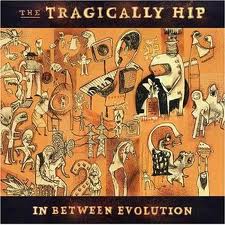
SOUNDTRACK: THE TRAGICALLY HIP-In Between Evolution (2004).

The Hip are still putting out solid rock records.  And “evolution” is a good word in the title, for the Hip are clearly no longer the band they were.  And yet there is a sense they are returning to something…if not their own roots necessarily, perhaps a more basic sound.

The opener, “Heaven is a Better Place Today” is so upbeat it’s almost shocking.  It’s bouncy and catchy with some very cool riffs.  It’s followed by “Summer’s Killing Us, a raucous, rocker with another great chorus.

This album has some of my favorite tracks of recent Hip albums.  The best song on the album is “Gus: The Polar Bear from Central Park.” Between the riff and the way Downie sings the song, it’s got a brooding intensity that I can’t resist.  “Vaccination Scar” has a really rocking slide guitar.  And it continues in the vein of the album in which the band sounds more like Pearl Jam than R.E.M.

“It Can’t Be Nashville Every Night” is another song that sounds typically Hip and yet with a bit more oomph.  Even some of the later tracks (tracks which tend to be less than stellar on Hip discs–am I wrong?) are really strong.

“Makeshift We Are” has a great stuttery quality to the chorus, and “You’re Everywhere” has an unending power with a great chorus.  “Mean Streak” sounds like a pretty typical Hip song until about half way through when it throws in a minor chord break that really surprises.

“The Heart of the Melt” and “One Night in Copenhagen” are two late album tracks that are short and urgent.  “Melt” is a speedy loud rocker and “Copenhagen” screams along until it comes to a catchy end.

This isn’t really a return to the Hip’s roots, but it is a return to an urgency that the Hips early albums possessed.

[READ: February 16, 2011] “If Things Happen for a Reason”

This story starts in a fairly shocking way: the narrator wakes up from blacking out to hear a man she doesn’t know saying that their kids will laugh over this someday.

We pull back to see that the woman was in a bicycle accident (face first into the pavement–ouch) and the man helped her up and brought her to a hospital.  The story proceeds with his declaration and her belief that indeed, they will have kids together (even though she hadn’t met him before that moment).

Her family believes she is too young for anything like that so she hides him from them.  Eventually the truth comes out and she introduces him.  And they settle down into a happy stability (even if they can’t always pay their bills on time). (more…)

Read Full Post »

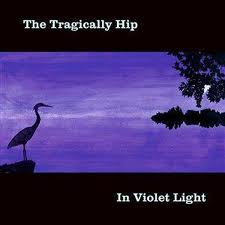
SOUNDTRACK:  THE TRAGICALLY HIP-In Violet Light (2002).

Back in 2000 or so, I was a little down on The Hip’s releases.  I may have even decided to give them a break for a while. But then I heard bits of In Violet Light and I felt that they were back to their strengths: anthemic rock with interesting hooks.  And the disc scales back the total time to about 45 minutes, so there’s less bloat.

“‘Use It Up'” is a pretty standard fast rocker but there’s nice subtle sounds in the bridge that make it a bit more.  But their two best songs in years come on this disc:  “The Darkest One” and “It’s a Good Life if You Don’t Weaken.” “Darkest” brings back that smooth low end that gets you moving and Downie’s voice just soars above the music.  And “Good Life” is a great slow builder, the kind they haven’t really done in a few albums.  Again, the bridge is great.

It’s followed by “Silver Jet” which features some of the most unusual sounds that Hip guitarist have made.  Squealing feedback sounds, which build to a great chorus.  “Throwing Off Glass” is one of their infectious ballads.

There’s a couple of okay songs towards the end, but the album comes back to life with “Beautiful Thing” a catchy, building rocker and “Dire Wolf” a great ballad in which Downie’s voice and lyrics (along with some interesting country tinged guitar) make this a great track.  And the album closer “Dark Canuck” is a slow builder.  It starts off somewhat plainly, but it keeps ratching itself up over 6 minutes to end the disc on a high note.

The Hip are definitely moving into a more mature period at this point, but they’re still writing interesting songs that are full of intensity.

[READ: February 15, 2011] “Wireless”

This story has a few components that tie together very nicely.  The major component is alcohol, for this is a story about an alcoholic.  And what I liked about the construct of the story is that it seems to take a while to gain focus, like the alcoholic herself.

It opens with observations about people who collect or obsess over something (her friend has a Glenn Gould obsession –glennerd she calls herself).  The story then tries to get us to meet the antagonist of the story, but, the story plays coy, making a joke out of how the two meet.  Finally, Joan and Ned meet in a bar in Toronto.  She’s from Vancouver, he’s from Newfoundland.

She is charmed by his east coast/Irish/Newfie ways and even though he hates to be seen as charming he assumes that this is a pick up so he lets it pass. Ned is in a trad band which plays lots of vulgar trad songs (sounds like a lot of fun,actually).  They have many drinks together.  He figures the night’s going well for him until we learn that Joan doesn’t like burly, hairy men, which Ned is.  She doesn’t invite him back to her room, but he invites her to visit him in Newfoundland any time.

She can’t get him out of her head, so she plans an excursion to Newfoundland, under the guise of writing a piece about the east coast for her magazine.  She argues that since that movie was filmed there and its very touristy now, it will be of interest to their readers.  (I don’t know what that movie might be).

Ned is excited to see her and they quickly get to drinking.  Ned’s Newfie hospitality makes him insist that she stay at his place that night, but frankly, her hotel is ever so much nicer than his house.  Rather, after much internal debate, she invites him to stay in the hotel room.

The next day they do some sight-seeing together–the go for a hike to the icebergs.  Ned is not as interested in the outdoors as Jane is, and Jane starts talking about how they (alcoholics) need to stick together and take care of each other (Ned is on his fifth cigarette by now).  Ned is put off by this, and their relationship gets strained very quickly.

But Ned is not willing to let her go and he makes some promises to her which she is not sure how to read.

It’s a dark story, that’s for sure.  I liked it, especially the way it came alive just before the end, but I had some complaints.  There was too much in the way of grand proclamations about “alcoholics.”  I got as annoyed by it as Ned.  But the really complaint is that, by the end, Jane is clearly the only person who doesn’t see what Ned is doing (readers figured it out a page earlier than she did), and it makes the ending all the more disappointing because although there is resolution, it’s rather unsatisfying.

But I did enjoy the story, and the ending threw in some wonderful surprises.  It just felt like the actual end missed a great opportunity to blow us away.

Read Full Post »

SOUNDTRACK: THE TRAGICALLY HIP-Music @Work (2000).

I tend to dismiss this Hip record for two reasons: the cover is pathetic and I don’t like the title.  Of course, the title track is catchy as anything, and, in reality, the whole record stands up quite well.

Music @Work rocks harder than Phantom Power did, although clearly The Hip are in a new mode of music making–no longer lengthy emotive tracks, now the make shorter, poppier tracks that explore what would have to be called their gentler side.  “Stay” is a very simple acoustic guitar track with maybe a bit of keyboards, but Downie’s voice is mixed so high it’s practically like a spoken word track (only catchy).

There’s a lot of songs that, while not brilliant, are catchy and very toe tapping like “The Completists.”  As I described their earlier stuff, this disc is above average rock, and this is a more adult-alternative rock than their earlier raw rock.    But there are a few louder rocking songs too: “Freak Turbulence” is a fast rocker  that comes in at under 3 minutes.  “Train Overnight” is a return to a somewhat rawer sound and “Wild Mountain Honey” has a great opening riff and some unexpected stops and starts.

Despite my negative thoughts about this record, listening to it again made me realize just how good it is.

[READ: February 15, 2011] “Warlords”

This story continues with The Walrus‘ flash fictions.  Again, I don’t see this story as being in the tradition of Flash Fiction so much as just being a very short story.  Of course, as with any good flash fiction, this story packs a ton of information in to a half a page.

The story is all about Warlords.  Duh.  But rather than looking at the warlord himself, Atwood looks at the people who live under a warlord.  Those who can work for him or those (women, bankers, writers) who will never be able to.  She then peels away the layers of the warlord’s minions until we reach the inner circle.

And what happens to the inner circle when a warlord is deposed?  Is that guy sweeping garbage a former member? (more…)

Read Full Post »

SOUNDTRACK: BIG DIRTY BAND-“I Fought the Law” (2006).

I just found out about this “supergroup” which was created for the Trailer Park Boys Movie.    The group consists of Geddy Lee and Alex Lifeson from Rush, drummer Jeff Burrows from The Tea Party and three people I don’t know: the singer from Three Days Grace, the singer/guitarist from Thornley and on lead vocals Care Failure from Die Mannequin.

I have to say that I’m not that excited by this cover.  The song has been covered so many times (some very good: The Clash, some very clever: The Dead Kennedys, and some terrible: many others).  And frankly there’s not much that you can do with this song.  It’s simple in structure with potential for shouting (which everyone likes), but little else.

For Rush fans, you can’t tell that Geddy or Alex are even on it.  So really it’s just a kind of metal-ish version of this old song.

Oh well, they can’t all be zingers.  You can hear it here.

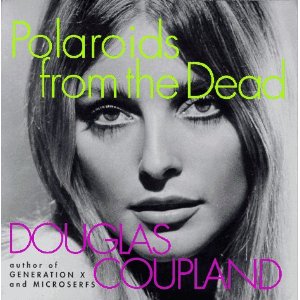
[READ: February 1, 2011] Polaroids from the Dead

After reading Shampoo Planet, I wanted to see if I remembered any of Coupland’s books.  So I read this one.  It’s entirely possible that when I bought this book I was disappointed that it was not a new novel and never read it.  Because I don’t remember a thing about this book.  (This is seriously calling into question my 90’s Coupland-love!).

But I’m glad I read it now.  It’s an interesting time-capsule of the mid-90s.  It’s funny to see how the mid 90s were a time of questioning authority, of trying to unmask fame and corporate mega-ness.  At the time it seemed so rebellious, like everything was changing, that facades were crumbling.  Now, after the 2000s, that attitude seems so quaint.   Reading these essays really makes me long for that time when people were willing to stand up for what they believed in and write books or music about it (sire nothing changed, but the soundtrack was good).

So, this collection is actually not all non-fiction.  Part One is the titular “Postcards from the Dead.”  It comprises ten vignettes about people at a Grateful Dead concert in California in 1991.  As Coupland points out in the intro to the book, this was right around their Shades of Grey album album In the Dark, and huge hit “Touch of Grey”, when they had inexplicable MTV success and it brought in a new generation of future Deadheads.  He also points out that this is before Jerry Garcia died (which is actually helpful at this removed distance).

These stories are what Coupland does best: character studies and brief exposes about people’s lives.  The stories introduce ten very different people, and he is able to create a very complex web of people in the parking lot of the show (we don’t see the concert at all).  As with most Coupland of this era, the characters fret about reality.  But what’s new is that he focuses on older characters more (in the first two novels adults were sort of peripheral, although as we saw in Shampoo, the mother did have millennial crises as well).  But in some of these stories the focus is on older people (Coupland was 30 in 1991, gasp!).  And the older folks fret about aging and status, just like the young kids do. (more…)

Read Full Post »

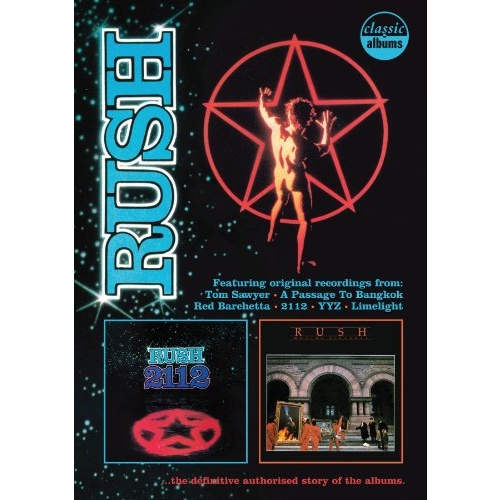
[WATCHED: January 3, 2011] Classic Albums: Rush–2112 • Moving Pictures

Sarah got me this disc for Christmas.  Thank you, Sarah!

This DVD is from the Classic Albums series.  The series is shown on VH1 in the states and BBC (and other places) elsewhere).  There’s been about 35 episodes of the series, with Rush being one of the few bands to have two albums for the show (which is an honor, but which also cuts down on the content for each album by half…boo!).

The show is an hour, and there’s almost an hour of bonus footage on the DVD  (which die-hard fans will enjoy more than the actual show).

The main show itself looks at the creation of these two classic albums.  There are interviews with the band members as well as many people associated with the band (and a couple completely random musicians).  We get their manager Ray Daniels and the producer for these albums Terry Brown (his segments are my favorite because he gets behind the mixing console and plays around with the songs).  We also get Cliff Burnstein (the guy with the crazy hair) who was instrumental in getting Rush publicity. (more…)

Read Full Post »

SOUNDTRACKTRAGICALLY HIP-Phantom Power (1998).

The last couple of Hip albums were pretty intense, and it seems like the live album seems to cured them of their need for raucousness. And so Phantom Power follows with a much less intense collection of songs.

The first three songs are somewhat loud and rocking, but they lack any of the twists and turns that the previous records had.  Rather they are pretty straightforward rock tracks.  “Poets” is catchy and fun to sing along to, with a good guitar intro.  And “Something On” is similarly rocking.  But after that the disc changes.

There’s a lot more folk and acoustic guitars here.  It’s an unexpected direction, especially when you figure that their first albums were so raw sounding.  In some ways that makes the album disappointing.

But what they have removed in intensity they have made up in subtler ways.  Take the cool harmonies on “Membership.”  I’ve always found their backing harmonies to be slightly off, usually in an interesting way, but the harmonies are perfected on this song, where they are more of an echo of Downie’s vocals which add a new sound to the song.

There’s a really fun rocking song about hockey (among other things) in “Fireworks,” although for all of its speed, it’s a very poppy track–there’s very little bass evident on the track (or most of the disc).  And it speeds along just as catchy as can be.

I have to wonder if “Vapour Trails” had any influence on Rush’s decision to name their comeback album Vapor Trails.  Probably not, but it’s fun to think about (and it is probably the heaviest song on this disc).

But “Bobcaygeon” is the obvious highlight (although it’s even better live)–the bridge into the chorus is sublime.  It’s one of their more mellow tracks, but there are cool twists and turns throughout.  Second is “Escape is at Hand for the Travellin’ Man” an uptempo but by no means rocking number that propels itself along on a simple riff and engaging lyrics.

I tend to forget about this album because it is not so intense, but listening to it again, I’m reminded not to overlook this album, even if it’s not a hit-worthy as some of their others.

[READ: February 8, 2011] “Samson and Delilah”

This story is a retelling of the Samson and Delilah biblical story.  I knew the original story pretty well, but I didn’t know that Samson was blinded (which he was).

This retelling is more contemporary (in langauge) and it is somewhat funnier (although it’s obviously not a funny story in the end).  Goldstein has added aspects that make it funny: anachronisms and such.  But he also imbues Samson (and Samson’s father) with characteristics that aren’t in the original. (more…)

Read Full Post »

SOUNDTRACK: MONEEN-The World That I Want to Leave Behind (2010).

I’ve liked Moneen’s discs; they played an interesting mix of grungey noisey rock and incredibly poppy emo.  And their song titles were really long and often funny (“The Frightening Reality Of The Fact That We Will All Have To Grow Up And Settle Down One Day,” “There Are A Million Reasons For Why This May Not Work… And Just One Good One For Why It Will”).

The first sign that The World I Want to Leave Behind is different is that their song titles are all really short.  The longest one is the title of the album–which is the shortest song: a 2 minute quiet intro that features some noisy guitars at the end.   The rest are 1-3 words long.  Now, perhaps you can’t judge a band by that; however, their music, like thier song titles, has eschewed complexity and embraced pop.  (“Believe,” “Waterfalls,” “Lighters”).

Okay Moneen always had this component to it.  So it’s not like suddenly the band is all pop.  Take “Are We Really Happy with Who We are Right Now?” from the album of the same name .  The song is all emo vocals (including harmonies) but the music is punky and noisy.  It’s also got a lot of dissonance.  Similarly, “The Start to this May be the End to Another” (from their debut), opens with really blasting noise and then turns into a heavy emo track with loud and quiet sections.  They are certainly poppy, but there’s at least nods to noise.

This album removes all of that noise and chaos and settles into to some tried and true emo.  If you hate emo, you will hate this album.  There’s virtually no dissonance on the disc at all.

Okay, that’s not entirely true.  The second song, “Hold That Sound” opens with some noiy aggressive guitars (and interesting noisy effects) and “The Long Count” has some noisy heavy opening chords which propel through the track.  But unlike earlier records, the noise gets pushed to the background pretty quickly.  “The Monument” also shows some remnants of heaviness–there’s even screaming vocals at one point.

And yet, the aforementioned “Wateralls” and “Lighters” sound like Guster-lite (and I like Guster quit a bit).

The final song, “The Glasshouse” does rock pretty hard (although the harmonies are all still there and the emo certainly seeps in by the end with a piano break and the final 2 minutes being all gang vocals).

Okay so in fairnes to the band, they haven’t smoothed off all the rough edged, but the polished bits are really polished now.  The thing is, I kind of like emo, so despite my tone, I don’t really dislike this record.  I’m always diasppointed when a band moves more commerical, especially if they cut off their more interesting bits, but Moneen make good emo (if you allow that such a thing exists).  I don’t like all emo bands, but there’s still enough interesting stuff here to keep me coming back to it.  In fact, for all of its poppiness, “Believe” is a really fantastically catchy alt rock song which should be in heavy rotation somewhere, if it’s not already.

[READ: February 13, 2011] A Place So Foreign and 8 More

When I saw that Cory Doctorow had a book of short stories out, I was intrigued. I’ve enjoyed two of his books quite a bit, so what could he do with short fiction?

This is some of his earliest work and I found it a mixed bag.

The first story “Craphound” was great (and the origin of his website name).  It concerns going to flea markets and buying all kinds of crap.  When you do it a lot, you become a craphound.  But when you take a fellow craphound’s crap of choice for yourself, you break the unwritten rule.  That’s all well and good.  But in this story one of the craphounds is an alien, like from another planet.  And what he trades for his crap is pretty wild.  But why would he break the unwritten rule?  The story is a fun look at what happens when extra-terrestrials are a part of your life.

“A Place So Foreign” was my absolute favorite story in the book, and one of my favorite short stories in quite some time.  I’m happy to say that I read it last, so it totally ended the book on a high note. Despite the cover picture with an “alien” hand holding a suitcase, the story has nothing to do with that at all. (more…)

Read Full Post »

« Newer Posts - Older Posts »