Feeds:
Posts
Comments

Archive for the ‘Canadian Music’ Category

janfebSOUNDTRACK: TANYA TAGAQ-“Uja” and “Umingmak” live at the Polaris Music Prize (2014).

tanyaTanya Tagaq won the Canadian Polaris Prize this year.  Tagaq is a Canadian (Inuk) throat singer from Cambridge Bay (Ikaluktuutiak), Nunavut, Canada who at age 15, went to Yellowknife, Northwest Territories to attend high school where she first began to practice throat singing.  Mostly I included that so I could have the word Ikaluktuutiak in a post.  She is the first native Canadian to win the prize.

Tagaq sings in a gutteral throat singing style combined with some more traditional high-pitched notes.  She has worked with Mike Patton and extensively with Björk.  Most of her songs don’t have lyrics per se, and the album that won the prize is called Animism.

This is a live broadcast of her set which has been describes as truly mesmerizing in person.  It is certainly mesmerizing in video–marveling that the woman can sound so possessed  and yet so clearly in control.

At 1:38 when the backing vocalists (who were shrouded in darkness sing out, it’s quite startling.  I don’t know when the first song ends and the second begins, but at 3:48. when the drums start a regular beat, you can hear a sense of commercial rock amidst the avant garde music.   Around 5 minutes the music drops away and when Tagaq sings briefly in her non-throat voice she sounds almost childish. But when the throaty growls returns, it’s a bit scary, frankly.

Tagaq has talked about bringing the sensuality of throat singing out into the public and by 7 minutes, the sensuality is right there on the stage.  By the end, when she is screaming her lungs out, it has to have been really intense in the theater.  And her wold howl at the end is uncanny.

Clearly not to everyone’s taste, but probably not lie anything else you’ll hear all day.  And unlike anything you’d hear at the Grammy’s.

[READ: January 2, 2015] “Beyond the Shore”

This is  brief story about competitiveness at the gym.  It’s the kind of story that is probably acted out in gyms across the country and one which shouldn’t have been all that interesting, but Awad chose an interesting setting and characters to flesh this out.

I also enjoyed that the title has nothing to do with the action of the story.  Rather, it refers to the place where they live: “Beyond the Shore, a gated-living community that has nothing to do with California (we are nowhere near California), the apartment building which overlooks the Malibu Club Spa and Fitness Centre.”  Each morning when the narrator wakes up, she can see from her bedroom window that Char, an extremely depressingly fit woman, is already working out ion the gym. And most of the time she is working out on Lifecycle One, the very machine that the narrator has signed up for in fifteen minutes.

This wouldn’t be a problem except that in fifteen minutes, the narrator, who is not in peak physical shape will get to the gym and Char will still be in mid-routine with no intention of stopping.  When the narrator approaches Char, Char says she’s almost done (even though she ‘s already over by five minutes) and then mutters a nasty name about the narrator under her breath.  Often by the time Char gets off, the narrator has but 24 minutes in her time slot before the cardio group comes in next. (more…)

Read Full Post »

freedomSOUNDTRACK: CRASH TEST DUMMIES-Jingle all the way… (2002).

ctdEven though the Crash Test Dummies are often seen as a joke band or a one hit wonder (which I guess they are), I’ve liked them for a while (their earlier stuff a lot more than their later stuff, admittedly).  But it seemed like they’d have a fun take on Christmas music.

And it starts out in a comical sort of way with Brad Robert’s deeper-than-ever voice reciting about his life in Los Angeles, where it is warm and sunny at Christmas time.  I like that he rhymes 24th with up north.  The spoken section is quite loud in the mix (it sounds like he is right in your ear).  Unfortunately, that is the case when he starts singing too–he is uncomfortably loud in the mix and it sounds like he is holding back because of it–he doesn’t sound great and his voice sounds more comical than interesting.  Which is a shame because the music (with cheesey keyboards) is great.

Roberts sings lead on about half of the songs.  Ellen Reid sings lead on the other half except for a couple where they split lead duties.

The rest of Robert’s songs include: “Jingle Bells” (which is certainly comical–it sounds like a chain gang song with the “Hey!s” sounding almost like a prison chant).  It’s weird and cool though (even if his voice is once again too loud in the mix).  “God Rest Ye Merry Gentlemen” has his voice mixed much better–he seems to be really singing.  And this version–a loungey/jazzy rendition is much great fun.  “God King Wenceslas” sounds proper (with Reid’s close backing vocals).  It has a pretty penny whistle keeping the song going.

Ellen Reid has a great voice and I love hearing her sing.  But in the first two songs she sings lead on in this disc she sounds like she is singing too slowly.  “O Little Town of Bethlehem” especially sounds like the music is going to pass her up at any minute.  I also don’t like the country vibe of the song.  “In the Bleak Midwinter” is also (intentionally) slow, which I don’t like.  Perhaps I just don’t like this song (although I do think the melody is lovely).  “The Little Drummer Boy” is beautiful and Robert’s bass backing vocals are perfect.  “Silent Night” is done in a countryish style, but I like this version.  Although normally this song can make me cry, this version absolutely does not–too honky tonkish.

The final song, “The Huron Carol” is quite formal and proper–just Reid and a piano opening the song.  It sounds very holy, very pretty.  When Robert’s bass backing vocals come in, it adds more depth to the song.  And it’s a lovely way to end.

[READ: October 30, 2014] Freedom

I read this a couple months ago and then got so caught up in reading other things that I never got around to posting about it.  And that’s a bummer because I really liked the book a lot and I fear that I won’t remember everything I wanted to say about it.

I had read a couple of excerpts from the book in the New Yorker (quite some time ago).  They were helpful in grounding the story for me, but they didn’t prepare me for the breadth of the story.  It follows one family, the Berglunds, through several decades, focusing on each of them in great detail as they navigate through the Reagan, Bush, Clinton, Bush and a smidge of the Obama years.

The Berglunds are a liberal family.  They were among the first white families to move onto their urban street in St. Paul, Minnesota (after white flight to the burbs).  Patty is a charming (some say smug) homemaker and Walter is a lawyer (public defendant, naturally).  They have two kids, Jessica and Joey.  Patty dotes on Joey to an embarrassing degree (Joey is embarrassed by it, Jessica is infuriated by it and even Patty is kind of embarrassed when she really thinks about it).  At the same time she is rather neglectful of Jessica.  Naturally, Jessica becomes quite the success (loves reading, committed to the environment), while Joey rebels and finds all kinds of ways to disappoint them and make money.  (This isn’t a bad thing, but the family has plenty of money and Joey doesn’t need to (especially not the way he goes about it).  Not to mention Walter and Patty are not into the money for money’s sake thing.

The book opens that there was some “news” about Walter. He and Patty had moved to Washington DC two years earlier.  He clearly did something bad (we won’t find out until much later).  But that serves as an introduction to the Berglunds.  And then we go back to see them, years earlier, settling into St Paul. (more…)

Read Full Post »

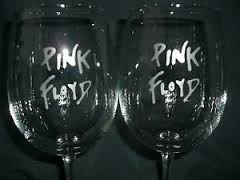
greatestSOUNDTRACK: PINK FLOYD-“The Hard Way” and “Wine Glasses” (1974).

glassThis book informed me about these two unreleased Pink Floyd songs (there’s a Wikipedia site that lists some fifty more !).  While the were unreleased in 1974 (from the abandoned Household Objects album), they were eventually released in 2011 on expanded versions of albums.

“The Hard Way” features some “percussion” that sounds like someone taking steps.  There’s a bass riff which I gather is from rubber bands (but very well tuned).  There’s clocks ticking and chiming and tape being unspooled.  It’s a neat idea and while it is absurd to think you could make a whole album with this kind of stuff (in 1974), it’s a surprisingly good sounding track.

“Wine Glasses” was apparently made with wine glasses.  It is all of 2 minutes long.  It was designed to be a full song but was eventually used in the introduction to “Shine on You Crazy Diamond.”  I never really considered that there were wine glasses making the sounds (and clearly there are synths added on top), but yeah, so that ‘s kinda neat.

[READ: November 25, 2014] The Greatest Albums You’ll Never Hear

I found this book at work and knew I had to read it.  I was actually surprised at how long it took me to read (there’s a lot of entries).

The title and subtitle pretty much say everything you need to know about this book (and if you need to read it or not).  This book collects a series of writers who give a brief history of some of the more famous (and some not so famous) albums that were never released.  It explains (as best they can) why the albums weren’t released and even gives a percentage chance of likelihood of the album ever seeing the light of day (interestingly, most seem to be a 3/10–they may have been able to use a 5 point scale).

I knew some of the records they talked about (The Beach Boys’ Smile, Neil Young’s Chrome Dreams), but was ignorant of quite a lot of them. And while big fans of the artists may know all of the details about their favorite lost album already (these are sketches, not exhaustive research), there will certainly be some new information.  For instance, I’m a huge Pink Floyd fan but had no idea about the two shelved works mentioned here.

I liked the way the book was done chronologically and grouped by decade.  It was also interesting to see how the “reasons” for the non-release morphed over the decades from “the record label didn’t like it” to “it was leaked online.”

The one major gripe I have with the book is that it is chock full of “imagined” album covers.  This in itself is okay, but it is not made explicitly clear that they are all imagined (credits are given at the bottom of each image, but it took me a few entries to realize these were just people’s ideas of what the covers could look like).  And most of them are gawdawful.  Just really lame and dull (as if they had 20 minutes to come up with an idea).  They mar an otherwise cool collection,especially since some of the unreleased records actually do have proposed covers (even if they were never released).  I see that there is in fact a paragraph about the covers in the front pages of the book, but it is almost hidden away.

In addition to the albums I’ve listed below, I learned some fascinating things.  That Bruce Springsteen has hundreds of songs that he wrote but never released for various reasons.  That Pink Floyd did try to make an album out of household objects (with no instruments).  That the Sex Pistols’ Never Mind the Bollocks was almost simultaneously released illicitly as Spunk.  And that Danger Mouse’s The Grey Album was recently remastered.

The end of the book includes two small sections: other favorites that were never released.  Not sure why they earned only a small column instead of a full entry, but that’s okay.  The second was albums that we eventually did see, like My Bloody Valentine’s MBV and Guns N’ Roses’ Chinese Democracy.

So if you ever wondered what happened to that long lost album, this may be the book for you.

A sampling of the unreleased records include:

  • The Beach Boys-Smile
  • Buffalo Springfield-Stampede
  • The Kinks-Four Respected Gentlemen
  • The Beatles-Get Back
  • Jeff Beck-The Motown Album
  • Jimi Hendrix-Black Gold
  • The Who-Lifehouse
  • Wicked Lester
  • Rolling Stones-American Tour ’72
  • CSN&Y-Human Highway
  • Pink Floyd-Household Objects (1974), Spare Brick 1982
  • Dusty Springfield-Longing
  • David Bowie-The Gouster (1975), Toy (2001)
  • Sex Pistols-Spunk
  • Neil Young -Homegrown (1975), Chrome Dreams (1976)
  • Frank Zappa-Läther
  • Beastie Boys-Country Mike’s Greatest Hits
  • Weezer-Songs from the Black Hole
  • Jeff Buckley-My Sweeetheart the Drunk
  • Van Halen-IV
  • Foo Fighters-The Million Dollar Demos
  • Green Day-Cigarettes and Valentines (the author doesn’t believe it was actually stolen)
  • Tapeworm (Trent Reznor and Maynard James Keenan among others)
  • Deftones-Eros
  • U2-Songs of Ascent
  • Beck-The Song Reader


Read Full Post »

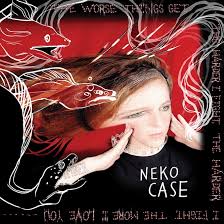
ladySOUNDTRACK: NEKO CASE-The Worse Things Get, the Harder I Fight, the Harder I Fight, the More I Love You (2013).

nekoSarah got this disc for me for Christmas last year.  Amusingly, she wrapped it and then we couldn’t find it  So I got to listen to the auto download on amazon and to wonder who threw it out.  When we took down the tree several weeks later, we found it on one of the branches.  Belated Christmas gift!

I have enjoyed most of Case’s output since I first heard he several years ago withe New Pornographers.  And this album is no exception.  There are 12 songs and most of them are quite short (no guitar solos for Case–well, okay a couple). And I love how great her voice sounds.  Although, perhaps surprisingly I do not like her voice in the few a capella moments she does.

“Wild Creatures” showcases her great songwriting.  “Night Still Comes” has some amazing harmonies in the chorus (I didn’t realize this but vocals are by Jim James).  I love the way the song builds and retracts as she criticizes “you” for not holding a falling star “at the right angle.”

“Man” is one of my favorite songs ever.  It’s so punchy and rocking.  And lyrically it is both subversive and really funny.  In addition to the whole premise “I’m a man, that’s what you raised me to be/ I’m not your identity crisis” it features the great verse: “and if I’m dipshit drunk on pink perfume, then I am the man on the fucking moon, coz you didn’t know what a man was until I showed you.”  There’s also a great simple guitar riff from M. Ward.  And at 3 and a half minutes I could listen to it over and over.

But Case plays with all differs style soft music on this record, so “I’m from Nowhere” is just her and an acoustic guitar (and her voice is gorgeous in this stripped down setting).  “Bracing for Sunday” is just over 2 minutes, but it’s not a fast punk song it’s just a speedy shuffling rocker (with horns!).

Then comes “Nearly Midnight, Honolulu.”  I don’t think I have hated a song as much as I hate this one.  It is more emotionally fraught that “Suzanne Vega’s “Luka” (which I like) with none of the subtlety.  I’ve only listened to it once or twice and don’t even want to listen to it again to say what else I hate about it.  Maybe if it was spoken instead of sung it would be more palatable, but ugh it is awful, and really seems to ruin the mood of the record for a couple of songs (even if I skip it).

“Calling Cards” is a countryish song, mellow and pretty, but after the bad taste of “Honolulu” I feel lit just kind of falls flat.  “City Swans” brings back the thumping drums and rocking guitars.  “Afraid” is a more successful a capella ish song (with vibes and autoharp accents).

Of course, I prefer when the album perks up again.  “Local Girl” has a simple but cool bassline and great backing vocals.  After a slow weird intro, “Where did I Leave that Fire” turns into a cool jazzy number.”  Although I don’t have a clue what she’s singing about at the end.  The final song, “Ragtime” has a kind of dreamy “Blue Moon” quality until the big horns kick in at the and it really swings and makes me want to listen to the album again

Despite how much I like Case’s voice I just don’t like the slow a capella moments on the album.  There’s so much I do, but I feel like those moments really mar the disc for me.  And yet after the final song, I’m always game to listen again (especially when “Man” comes on).

[READ: November 16, 2014] Lady Cycling

I saw this book at work and thought that with that title and that cover that it would be a very funny tome about how women shouldn’t really ride bikes (I mean “what to wear” comes first, right?). But to my surprise and delight, this book is actually very pro women riding (Miss Erskine herself is a rider) and while she does warn women not to overdo it (no more than 40 miles a day!), it is actually quite a practical and, dare I say still, useful book for female and male riders.

The funny, out-of-date parts are mostly about dress—she encourages all women to wear wool all the time because cotton chafes and wool keeps you warm when you get wet (and you will sweat a lot).  Now I’m not going to overstate the practicality of it in modern society, really, but there are some things in it which are terribly useful and which many contemporary riders do not observe.

But from the get go, Erskine is adamant that women do and should ride bikes.  She says it is much cheaper than owning a pony (true) and is more than just recreation it can also be a means to an end.  She addresses the then controversy by saying that if women “ride fifty miles when ten ought to be their limit—in short, if in cycling they cast reason and common-sense to the four winds of heaven—then, beyond all doubt, cycling is harmful.” (2). The one really out of date aspect here is that she says women ought not to race (it is bound to end in disaster), although I’m unclear if she disapproves of women racing or of racing in general.

In chapter three she answers the question about what kind of bike women should buy. And while she doesn’t exactly name brands she does sensibly say that a cheap bike will wear out and be less well constructed, so it is worth spending more up front.  More practically, she also talks about the location and adjustment of the seat and handlebars. She even talks about the proper way to pedal (using rat-trap pedals—which are apparently the ones we still use today with the metal grippers). (more…)

Read Full Post »

writeSOUNDTRACK: NELLY FURTADO-“Time Stand Still” (2010).

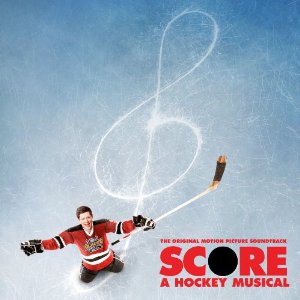
scoreI stumbled upon this cover of a Rush song when I learned about Score: A Hockey Musical (which I stumbled on when looking for information about Dave Bidini).  I hadn’t heard of the movie, but i was sure intrigued by it (the parts I’ve seen have terrible songs but since it’s all jokey, it’s okay).

This cover song is presumably an end credits song.

I don’t really have an opinion of Nelly Furtado, but, man, I really don’t like this cover.  I’m of course delighted that she covered Rush at all (and it makes sense in a Canadian hockey movie to have a Rush song) but she basically strips away all of the music and adds a very simple synth riff and drums.  It’s painful for a Rush fan to hear all the music taken away from this song.

Furtado’s voice actually works pretty well (especially since Aimee Mann does the backing vocals on the original) and she sings it quite nicely.  I think I might like it if I didn’t know it was a Rush song, originally (the music is good, eh?).  It just hurts my sense of righteousness to hear this weird lite version of Rush.

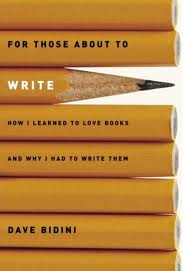
[READ: February 24, 2014] For Those About to Write

After reading Pseudonymous Bosch’s writing guide for young people, I figured I’d compare it to Dave Bidini’s writing guide for young people.

It’s interesting to see how two writers can try to accomplish the same thing in such vastly different ways.  Bidini doesn’t really write fiction (he has written some, but not much), so unlike Bosch, he doesn’t try to get the young writer involved with a made up story.  Rather, he presents his own life as an example of one way to become a writer.

Bidini talks about how he loved books as a kid–stapling together stories, or loving the feel of cardboard binding books together (he fondly remember his first writing project for school and how it all felt so official).  He was also fortunate to have parents who could appreciate his artistic needs–so if he needed to write or to play music, they were supportive. (more…)

Read Full Post »

joySOUNDTRACK: STEVEN PAGE-Page One (2010).

pageoneThis is the first proper solo album for Steven Page, former Barenaked Lady.  He did have a side projet while he was still a BNL guy, called The Vanity project, but this comes after he left the band.  As a lead songwriter for  BNL, this album sounds an awful lot like a BNL album.  But he does branch out a bit for better and worse, on a couple of songs.  I like that the record is designed sort of like a book.  And that there’s a library check out sleeve and that one of the names who checked out the “book” is Leland Palmer (ha).

“A New Shore” sounds like classic Barenaked Ladies, with a big chorus (and Page’s great voice), strings and even a whistling section.  If you imagine the harmony vocals are by Ed Robertson, this could easily fit on a BNL disc.  “Indecision” sounds like latter BNL with the “whoo hoos” and the way the verses really slow down the craziness of the chorus.  The big difference is the female backing vocals.  “Clifton Springs” opens with a ba da da section and a very catchy melody that sounds like a sitcom theme song (hey sitcoms, check this out!).  It’s a mellow song that really highlights Page’s voice.

“Entourage” is a kind of dance song.  It has a kind of Pet Shop Boys feel (or else I’ve been listening to the Pet Shop Boys too much).  It even has a line “I only love you when I’m drunk” which echoes Pet Shop Boys’ “You Only Tell Me You Love Me When You’re Drunk.”  But I love the way Page says “Alright” at the end of the chorus and it could possibly have been a dance hit.  It ends with a minute or so of a jazzy coda.  “Marry Me” could also be a theme (to the new show Marry Me, duh).  It’s energetic and poppy.

“All the Young Monogamists” has cello and violin and in some places, little else.  It’s quite a different sound for the album, like a minor orchestral piece.  It works mostly.  “She’s Trying to Save Me” is a great return to the bouncy single that BNL did so well.  “Over Joy” has a very sixties feel (the way Page’s voice is processed).  I believe it is also the same melody as the Barenaked Ladies song “Hannukah Blessings” which Page wrote.  And why not?  It’s very catchy.

“If You Love Me” has a very synthy 90s pop feel.  I can see it being on the far end of Page’s fun zone, but I don’t really like it.  When the song ramps up to the next notes around 2:50, it is excruciating.  On the other end of the spectrum is “Leave Her Alone” which opens like a big band number (and stays that way in the chorus) but has verses that are very electronic.

“Queen of America” is a big bouncy song, that I wish I liked more.  The final song, the five and a half-minute “The Chorus Girl” is a sad ballad (the kind that Page also writes very well).  The song seems to want to be an epic (with horns an extended coda), but I think it drags on a bit too long.

Anyone who misses Page in BNL will certainly like this album.  And those who are a little disappointed in the Page-less BNL newer records could easily mix half a dozen songs from this and some of the best songs from the newer BNL records into a very satisfying BNL+Page disc which would sound totally coherent.

[READ: April 25, 2014] Further Joy

This is Brandon’s first collection of short stories and I enjoyed them all quite a lot.  Brandon specialized in disaffected protagonists, settled and settling in the South.  And there is a nice amount of diversity in these stories.

The Favorite
In this story, Gardner returns to his home town after ten years of being away.  he was quite a success when he left, but his return is less than exciting.  He lives in small town that was big into high school football and he was glad to be away from it.  But now that he is back he goes to games with his mother. The locals are happy he’s back, they think it’s great that he returned to be with his mom and to look after her.   But he is miserable.

The only thing that makes the return palatable is seeing Ainsley.  They dated in high school but didn’t have a bad breakup when he left.  She is divorced now and single. She works in a doctor’s office and tells him stories about patients (despite it being against HIPPA–although she ever gives names).  Since he is short on cash, he uses some information that she gives him to bet on an upcoming football game (he was able to figure out one of the players from the injury she described). Now the question is, could he go through with the scheme.  He calls on a favor from another former friend who has never had much success.  It could all go horribly wrong, of course.  I really enjoyed this story a lot, and I loved the way the title played into the story unexpectedly.
(more…)

Read Full Post »

2014-07SOUNDTRACK: SLOAN-Commonwealth [Spade Side–Andrew Scott] (2014).

commonFor Sloan’s 11th album, the four members of the band each wrote the songs of a side.  I originally thought that they recorded all of the music alone, but that seems to be wrong–and would hardly be a Sloan album).  In conjunction with the album, each guy was given a suit of cards (and an actual deck was made as well).  While this doesn’t necessarily mean the album is very different from their others (it still sounds very Sloan), it seems to have given the guys a bit more room to experiment.

The final side of Commonwealth is by drummer Andrew Scott.  Scott has written three singles for Sloan over the years: “500 Up”, “People of the Sky”, and “I’ve Gotta Try.”  But for this album, he has created a 17 minute and 49 second epic called “Forty-Eight Portraits.” This makes it seem like it could be 48 small songs which it isn’t.  But it also isn’t one long song exactly.  There are, by my count 15 sections–although there could be more or fewer depending on how you break it up.

So my demarcations:

  1. The song opens with a dog barking.  There’s complex percussion and a smattering of piano seemingly searching for a melody.
  2. At 3 minutes the first real song proper starts.  We’ll call it “You say you’re going with me.” There’s acoustic guitars and a bouncy melody.  It’s a great song with a neat guitar riff that overlays around 4 minutes in.  But
  3. At 4:23 the song changes dramatically.  It grinds to a slow pensive section, call it the “Don’t ask for a second chance.”  But it doesn’t last long,
  4. At 5:16, the next part jumps in, it’s a bit faster and feels like it could be an extension of the previous section.  Call it the “Do the things I do” section.  It speeds up
  5. At 5:41, to a similar style as the “first song.”  It has a sing along starting “How Does It Feel?”  It’s got one verse before a time signature change and instrumental break.
  6. At 6:40 the next section comes in.  Aggressive guitars and spoken word lyrics “There’s something happening here.”  It also has one of the few uses of the word “fucking” in a Sloan song.
  7. At 7:25 it shifts to a falsetto style and higher pitched guitars.  It’s vaguely Beach Boys-like for a verse “Do you think she loves you?” until
  8. At 7:48 it’s back to a reprise of the “How does it feel” section.
  9. At 8:15 it shifts to a new slow piano section.  This feels like the most fully realized song section of the epic.  “I can’t believe you never told me the truth.”   It leads into a big chorus sounding section (two lines) around 8:40 (“What it is us unsustainable”).  There’s even a repeat of this “verse” and  “chorus” as well.
  10. At 10:26 a new guitar section is introduced.  It works as a transition “You said you’re coming with me.” It morphs
  11. At 10:52 into a very cool slowed down section “I asked for a proper glass.”  And then
  12. At 11:22 the song again returns to the “How did it feel” section.
  13. At 12 minutes the song transitions with a “ba ba ba” and horns which move into the “Sometimes I feel like I’m slipping away” section.  The song feels like it might end at 13 minutes as the last notes seem to ring out.  But
  14. At 13:21, the song rebuilds again with the “inside a cloud” section.  This feels like the final section of the song is built around a similar construct. It’s a guitar riff that introduces a children’s chorus at around the 14 minute mark.  There’s a slow guitar solo and pizzicato strings that keep this section from being to easy, but that guitar riff and children’s section reunite the end which concludes with the spoken “W.W.L.R.D.?” (which I assume the L.R. refers to Lou Reed).
  15. At 16 minutes, the chaos of the beginning returns with a dog bark, but the concluding riff is strong and seems to really draw out the end.

I really haven’t listened to the lyrics that carefully to know exactly what’s going on, but I really enjoy the “choruses.”  While a 17 minute song is not everyone’s cup of tea, there are so many parts and so many interesting and catchy sections, that it feels like a whole collection of short songs rather than one long song.  It’s a cool experiment and one that I find myself singling out as I try to parse it a bit more.

[READ: October 11, 2014] “Part of the Main” and “Watching the Cop Show in Bed”

The Walrus’ summer reading issue presents three stories and two poems in which: “The Walrus presents fresh takes on old crimes.”  Each story is about a crime of some kind, but seemed from an unexpected way.  I rather enjoyed the way the writers played around with the crime genre to make them something very different.  These were two poems.

I’ve don’t normally review the poetry in The Walrus, but since I had four sides and only three stories it seemed worthwhile to throw the two poems in as well 9especially since the finally song was so unusual).

The first one “Part of the Main” is written with wonderfully evocative language as it talks about something so base.

The first stanza talks about the inevitability of the tide, of life.  With beautiful language like: “the contours of the and effaced by the saintly patience of the tide.”  But the second stanza shifts gears.  In it, the narrator says that you can show him dire things on the television: “bloated bellies…bomb blasts” and he will weep and clench his fists “but otherwise do nothing.”  It is sadly an uncomfortably relatable attitude. (more…)

Read Full Post »

2014-07SOUNDTRACK: SLOAN-Commonwealth [Shamrock Side–Patrick Pentland] (2014).

commonFor Sloan’s 11th album, the four members of the band each wrote the songs of a side.  I originally thought that they recorded all of the music alone, but that seems to be wrong–and would hardly be a Sloan album).  In conjunction with the album, each guy was given a suit of cards (and an actual deck was made as well).  While this doesn’t necessarily mean the album is very different from their others (it still sounds very Sloan), it seems to have given the guys a bit more room to experiment.

I’ve always had trouble telling whose songs are whose in Sloan, primarily because they all write such different songs all the time.  But also because their voices aren’t radically distinct.

According to the CBC website, Patrick Pentland is responsible for some of the band’s biggest hit songs, including “The Good in Everyone,” “Everything You’ve Done Wrong” and “Money City Maniacs.”

Pentland only wrote four songs for his side.  And none of them are especially long.  Overall his songs are heavier fuzzier and rockier.

“13 (Under a Bad Sign)” is a heavy rocker at only two minutes.  Even though it’s the same length as Murphy’s also heavy “Get Out” it just rocks a lot harder.  It also opens with a bass–one of the few songs on the album that does so.  It’s a big loud rocking riff.  “Take It Easy” is even noisier.  The guitars feedback as the bass propels along.  It’s a simple song, with a simple heavy chord structure, and it has a simple catchy chorus.  Good rocking Sloan.

“What’s Inside” slows things down a bit—it has a familiar bass line and swirling guitars.  There’s lots of echo on this song, especially in the chorus which seems almost shoegazey.  It’s probably my least favorite song on the album because of the way it kind of meanders–it rather slows the momentum of the disc.  But his final song, “Keep Swinging (Downtown)” totally redeems it, with a super catchy classic rock sound classic.  It has a great got sing along chorus.  This could easily be a huge single and a live concert favorite.  It’s 3 and a half minutes, but nearly the last minute is an extended outro with a great pretty acoustic guitar riff.

For only four songs, Pentland makes a huge statement.

[READ: October 11, 2014] “Brute”

The Walrus’ summer reading issue presents three stories and two poems in which: “The Walrus presents fresh takes on old crimes.”  Each story is about a crime of some kind, but seemed from an unexpected way.  I rather enjoyed the way the writers played around with the crime genre to make them something very different.  This story is about murder.

Of the three stories I liked this story the least.  Not because it from the point of view of a dog–that part I liked.  In fact I enjoyed a lot of details in the story–like that there was a character named Grassy Noel, that the narrator believes all golden labs have a Scottish accent and that the narrator speaks as if he is not a dog.

First we learn about Big Cy’s (the narrator) history.  He used to hang around the bus station grubbing for food.

Then he witnessed a Lab rescue a baby and saw that dog praised and held high.  He wants to know:

Who is better. The dog who is … naturally good or the one who struggles to be good. (more…)

Read Full Post »

2014-07SOUNDTRACK: SLOAN-Commonwealth [Heart Side–Chris Murphy] (2014).

commonFor Sloan’s 11th album, the four members of the band each wrote the songs of a side.  I originally thought that they recorded all of the music alone, but that seems to be wrong–and would hardly be a Sloan album).  In conjunction with the album, each guy was given a suit of cards (and an actual deck was made as well).  While this doesn’t necessarily mean the album is very different from their others (it still sounds very Sloan), it seems to have given the guys a bit more room to experiment.

I’ve always had trouble telling whose songs are whose in Sloan, primarily because they all write such different songs all the time.  But also because their voices aren’t radically distinct.  According to Wikipedia, Murphy has written several Sloan songs that have been released as singles, including “Underwhelmed” from the album Smeared, “Coax Me” from Twice Removed, “G Turns to D” from One Chord to Another, “She Says What She Means” from Navy Blues, “The Other Man” from Pretty Together, and “The Rest of My Life” from Action Pact.

 Murphy, like Ferguson writes some really catchy songs here.  They are no connected like Ferguson’s though, and they feel more like discrete songs.  “Carried Away” is another amazingly catchy song that I get stuck in my head for hours.  The song opens with a full sound including strings. The verses are slow. But the chorus just kicks in catchy and easy to sing along with this great line: “She carried on buit she got carried away…”

“So Far So Good” is a slow piano ballad. The chorus swells in a big classic-rock-with-piano way and is also catchy.  “Get Out” is a short rocker, under 2 minutes.  It comes in, rocks hard and gets out. “Misty’s Beside Herself” is another song with an infectious chorus.  It’s a slow ballad, but with a big powerful chorus full of harmonies. It’s really pretty. “You Don’t Need Excuses to Be Good” has rawer guitar sound and sounds a bit more like older Sloan. Although it’s not as catchy as the other songs, there’s something about the sound (how different it is from the other songs) that really makes it stand out (that guitar solo s pretty great too).

Like Ferguson, Murphy knows how to write great catchy songs, and these five songs really showcase his strengths as a writer.

[READ: October 11, 2014] “Care and Feeding of the Amish”

The Walrus‘ summer reading issue presents three stories and two poems in which: “The Walrus presents fresh takes on old crimes.”  Each story is about a crime of some kind, but seemed from an unexpected way.  I rather enjoyed the way the writers played around with the crime genre to make them something very different.  This story is about kidnapping.

I’ve enjoyed Kuitenbouwer’s peculiar vantage point in a number of stories before.  Since this was a “crime” story I was curious about what this title could possibly have to do with a crime.  And then it’s laid out–a bunch of kids in a Montessori class (who are camping out in the woods) are lying in await for an Amish buggy to come by.  (While waiting for the ambush one of them farts, which really sets the tone for the story: “The fart hovered at nose level as the nostalgic clop of horses sounded and a decision became necessary”).

And then the decision is made.  Becky ran out into the street with a stick which made the buggy driver stop.  While Becky was asking him how many Amish it took to change a light bulb, the rest of her class snuck behind the buggy and grabbed the buggy’s little boy occupant.  She then frightened the horses and the buggy took off–with the driver unaware of the kidnapping. (more…)

Read Full Post »

2014-07SOUNDTRACK: SLOAN-Commonwealth [Diamond Side–Jay Ferguson] (2014).

 commonFor Sloan’s 11th album, the four members of the band each wrote the songs of a side.  I originally thought that they recorded all of the music alone, but that seems to be wrong–and would hardly be a Sloan album).  In conjunction with the album, each guy was given a suit of cards (and an actual deck was made as well).  While this doesn’t necessarily mean the album is very different from their others (it still sounds very Sloan), it seems to have given the guys a bit more room to experiment.

I’ve always had trouble telling whose songs are whose in Sloan, primarily because they all write such different songs all the time.  But also because their voices aren’t radically distinct.  According to Wikipedia, Ferguson’s more famous songs are: “I Hate My Generation” from the album Twice Removed, “The Lines You Amend” from One Chord to Another, “Who Taught You to Live Like That?” from the album Never Hear the End of It, and “Witch’s Wand” from Parallel Play.

Jay Ferguson has the more falsetto’s/delicate voice of the bunch.  He writes five songs that all works as kind of a suite.

“We’ve Come This Far,” opens the disc as a minute and a half piano intro.  It blends right into “You’ve Got a Lot on Your Mind” one of several super catchy songs on this record. The verses are gentle with an acoustic guitar playing along with Ferguson’s singing.  It’s a simple song with a great sing along chorus (and even a long Yeah- h- h ).   “Three Sisters” also starts with a piano (and reminds me of Twin Peaks theme in tone).  It is slower than the other songs, which suits Ferguson’s voice very well.  I enjoyed this lyrics which plays to the album art: “I Played a diamond where her heart should land. She recognized the tune but not the band.”  The mellow song has a cool buzzy guitar solo laid over the top.

And It jumps right into the much faster “Cleopatra” which is a simple (and again catchy) track with a boppy “talk to ya later” bridge. The piano and guitar solos are quiet affairs which play against the type of song and really showcase the Ferguson’s songwriting skills.  “Neither Here Not There” opens with, in sequence: a gentle organ, a quiet electric guitar riff and then a 12 string guitar  (not bad for 20 seconds). The song is barely 2 minutes long and is pretty ballad.

It’s a really pretty song cycle and shows of the kinds of songs that Sloan has been doing so well for so many years.

[READ: October 11, 2014] “Ultrasound”

The Walrus’ summer reading issue presents three stories and two poems in which: “The Walrus presents fresh takes on old crimes.”  Each story is about a crime of some kind, but seemed from an unexpected way.  I rather enjoyed the way the writers played around with the crime genre to make them something very different.  This story is about rape.

I’ve mentioned before that I feel kind of hit or miss about Stephen Marche’s short stories.  But I loved this one.

I was a little concerned at first because of the very cold and distant way it began: “On a scale of 1 to 10, with 1 representing “of no interest to me” and 10 representing “of maximum interest to me,” the rapes in my neighbourhood rated a 2.3.”

It’s a cold way to open a story.  But the narrator is not finished with his detached tone.  Indeed, he looks at everything in this detached way–on scales of 1-10 or in percentages.  He shares the same outlook as the protagonist of American Psycho, but this story is not about a psycho, just about a person who is exceedingly rational.

And it is a love story too (sort of).  We learn that he dated Catherine Anne Doran and he rates his time with her at 9.3 out of 10.  But by the end of the story something changed.  It wasn’t how he felt about her, it as something intangible.  Thus we learn the problem with the narrator: “Despite this high level of personal significance, the measurable changes our relationship produced were negligible. The numbers were the same, but everything changed. This is what I fail to understand.” (more…)

Read Full Post »

« Newer Posts - Older Posts »