Feeds:
Posts
Comments

Archive for the ‘Canadian Music’ Category

SOUNDTRACKTHE WOODEN SKY-Live at Massey Hall (June 23, 2017).

I don’t know this band at all.  I’m fascinated that he lead singer Gavin Gardiner and the keyboardist Simon Walker have the same haircut and glasses but are not related.  The band has a kind of folk-rock vibe.  Nothing really stands out about them to me, but I did enjoy the songs while they were playing them.

For The Wooden Sky, getting to Massey Hall always seemed unreachable.  But they say that getting here you can feel the history and see that the place opened in 1894.  Its pretty surreal.  Just looking out on stage you can feel–holy shit, this is cool.

“Life is Pain, Pain is Beauty” is a six-minute song that opens with a nifty guitar riff.  The keys and violins act as a kind of drone underneath.  The middle has a cool rollicking section with big drums and groovy keyboard solo.  There’s a nice jam element to the song, too with Jason Haberman on bass.

Gardiner has a kind of drawl or something.  His delivery is unique without being especially noteworthy.  On some of the later songs he puts on a strange vibrato that I find a bit unsettling.

“Our Hearts Were Young” has a cool violin part that runs through the song.  The backing vocals during the chorus are amazingly catchy.

It’s weird that they interrupt this song to talk about them making their record.  They miss a verse and a solo of the song to talk about them recording in their own studio.

He introduces “Deadhorse Creek” by saying that his parents are celebrating their 40th anniversary in a couple of days so this if or them.  It’s about living and growing up in Manitoba.

This song is also interrupted so they can talk more about working in the studio, how they recorded this song three different times.

There a wild harmonica solo from Gardiner mid song.

He invites his best friend Andrew Wyatt to the stage to play banjo–you know the passion he brings to the stage.  HE is listed as a member of the band, so this is a weird moment with him on stage.  They play “The Wooden Sky,” a mellows darker song where Gardiner introduces that vibrato singing. There’s a more mellow harmonica solo.

“Swimming in Strange Waters” is the most fun song. It rocks with some wild singing by the end.

“Angelina” ends the show quietly with Gardiner singing solo with acoustic guitar.  He says it is dedicated to his friend Aaron who passed away in 2010.  The rest of the band gathers around behind him as he plays.  Midway through the song Edwin Huzinga introduces a fiddle melody and Andrew Kekewich plays a kick drum as the song builds.   They all gather round to sing backing vocals.

[READ: January 24, 2018] “Question 62”

This short story has two plots running parallel.  It involves two sisters and wild cats.

How’s this for an opening line:

She was out in the flower bed, crushing snails–and more on them later–when she happened to glance up into the burning eyes of an optical illusion.

Until recently Mae had lived with her sister Anita in Waunakee, Wisconsin.  She now lived in Southern California where it never rained, except that it had been raining all week.  The snails loved this rain and were destroying her garden.  Which is why she was destroying them–despite being a vegetarian and wishing no harm to come to animals, really.  She and Anita made a vow to become vegetarian in junior high school.

But it was while she was crushing snails that she looked up and saw…could it be?  A tiger? She was startled, obviously.  She quietly cried for her husband (he was asleep inside). The tiger didn’t seem aggressive, it just seemed inquisitive at the sound of her voice. (more…)

Read Full Post »

SOUNDTRACK: BILL & JOEL PLASKETT-Live at Massey Hall (April 8, 2017).

I thought I had heard of the name Joel Plaskett before this, but I know I’d never heard of Bill Plaskett.

Sharing the spotlight with his earliest musical influence- his father, the JUNO Award-winning Canadian songwriter, Joel Plaskett performs a powerful collection of songs from both his own catalogue and from Solidarity, the musical collaboration between father and son, live at Massey Hall.

They talk about the prestige and history of Massey Hall as well as how it is a large venue but it still has intimacy.  There’s a big stage, but it projects–you feel like you can touch the audience.

“Dragonfly” opens with just him Joel on acoustic guitar.  After a few verses, the lights come on and the full band kicks in loudly and powerully–Benj Rowland (banjo, bass, accordion, guitar); Shannon Quinn (fiddle) and Josh Fewings (drums).

“Blank Cheque” starts lower and sounds a bit darker.  I love the lyrics: “oh honey, you can’t eat money–it’s gonna take more than luck just to save your neck.”

“Jim Jones” is sung by Bill.  It’s an olde ballad about prisoners and pirates and the goal in Australia.  Bill says it’s a British folk song from the time when convicts were transported to Australia for minor offenses like stealing rabbits from the Lord’s domain.  It’s a song of revenge.  Jim Jones was fictional but Jack Donoguhe had escaped from Botany Bay penal colony.

“Nowhere With You” is a song about all of Joel’s travels with big sing-alongs

“Heartless Heartless Heartless” is darker and quieter–there’s a wonderful moody feeling to the song.  Unlike “Rollin’ Rollin’ Rollin'” which is stompin and stompin.  People get up and start dancing and clapping.  Wow, there’s a lot of cowboy hats in the audience.  There’s a pretty fiddle that runs through this catchy sing-along song.

They talk about the magic in the collective energy of playing shows.  How the audience sends it back to you and you can feel it build over the course of a show.  It’s an awesome feeling.  Bill says it’s wonderful to play with his son in front of so many young people.

“Wishful Thinking” ends the show in a big rock n roll way.  “You can get on your feet again it feels good when you are.”  After some stomping around he starts improvising:

Don’t sing that song in A, sing it in B.
They shift to B and start singing and when they get to “it’s a long, long way to Winnipeg” the singers their notes forever–his dad longer than everyone else.  Joel: “That’s some circular breathing right there.”

The end is funny:

You’re hauling a lot of stuff, you’re taxing the vehicle.  Get rid of some guitars.
What are you talking about?  We need them for the show.
Well, figure something out.
So…

CDs for sale in the back of the hall
Buy one buy em all
Couple bucks cheaper than they are at the mall
Thanks very much we’ll be back in the fall.

It seems like he tries to end the song a few times, but they keep going and the guys from Elliott BROOD come out to sing a few ahhs at the end.

one more thing dude/
thank you Elliott Brood

[READ: February 6, 2018] “Darkness at Seven”

This is the opening scene from Eno’s play Tragedy: A Tragedy.

I really enjoyed this piece although I can’t imagine how it could be made any longer or in exactly what kind of direction it could go next.

Essentially this opening scene makes fun of all tragedy reporting and the generic platitudes that such coverage creates.   There’s Frank in the Studio, John in the Field, Constance at the Home, Michael the Legal Adviser and The Witness.

Frank sets the scene-a location in America, the once familiar sun has set.

John tells us that it’s the worst world in the world tonight.  People are looking, feeling, hoping and believing that they might learn something.

Frank wants to know if the sense of tragedy is palpable.  It is. (more…)

Read Full Post »

SOUNDTRACKPLANTS & ANIMALS–Live at Massey Hall (December 1, 2016).

This is the start of the fourth season of Live at Massey Hall.

I didn’t really know any of the six artists, but they have recently begun adding new bands about whom I am pretty excited.

Of course, as with many of these shows, it’s the bands I don’t know which blow me away.

I didn’t know Plants and Animals, but I loved their set.

Drummer Matthew Woodley says that he and Warren Spicer (guitars and vocals) met in Halifax and had a series of bands until they moved to Montreal and met Nick Basque (guitars, keyboards).  They started as an instrumental band and then Warren started to craft words and now we’re a normal singing, dancing and playing band.

“We Were One” opens with feedback and some cool mechanical sounds that come from one of their guitars.

Warren sings kind of quietly and plays acoustic guitar.  Mid way through, the song shifts gears with some big guitar sounds from Nick with a great little autocratic guitar run and riff before a big chord ends it all.

“All of the Time” is a cool moody piece with loud pianos from Nick, rumbling guitars and backing vocals from bassist Josh Toal.

During the break, one of them says, “we like an element of danger… if I go to a show and everything is under control it’s still fun if you like the music, but as an experience if you forget about the music,  the feeling it’s just going to play out…   they’ll get two encores and we’ll go home….  But we’d rather feel, “Oh, but this is cool whats going to happen?” The first band they toured with was Wolf Parade and they had a “wow, anything can happen, they might just stop.”  That’s the kind of show we want to pursue–something that feels a little bit dangerous.

“Flowers” opens with some cool falsetto vocals and then a moody middle section.

“So Many Nights” opens with synths and a cool bass line.  It sounds a bit like Air (French band) with some lengthy guitar solos from the acoustic guitar which sounds very cool.  The slows down and slows further and then builds and build and builds and builds further to a noisy crescendo with them chanting “your feet are heavy, carry on.”

“A L’oree Des Bois” opens with pretty, intertwining guitars while Nick talks about making records in his Québécois accent.

Before the final song they bring out a tiny boy (Aaron Spicer) who sings a quiet song in French–to rapturous applause.

“No Worries Gonna Find Us”  Is a great humping song that repeats the title and “no worries gonna be the boss of my mind.”

They say “you guys are gonna get your faces ripped off by Half Moon Run.”  But it was Plants and Animals that really impressed me so far.

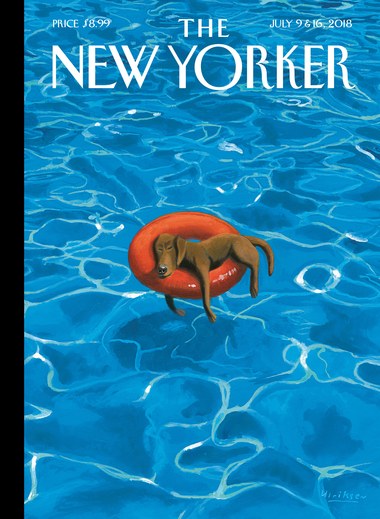
[READ: July 8, 2018]  “Active Shooter”

I always like when David Sedaris talks about visiting with his sister(s).

Sedaris and his sister Lisa were driving “in her toy-size car” to her home in Winston-Salem, North Carolina.

She is bemoaning a woman at Starbucks with a tiny monkey on a leash (in a pink dress).  She wanted to yell at woman, “What do you plan on doing with that thing once you lose interest in it?”

I love that this piece is about guns, but he is willing to throw in a bit about pet owners.

Like a lot of pet owner, I know, Lisa is certain that no one can take care of an animal as well as she can.

But as she was saying of  the woman “It’s a monkey, of course she’s going to lose interest in it” they drove past a firing range called ProShots. (more…)

Read Full Post »

SOUNDTRACKALEJANDRA RIBERA-Live at Massey Hall (February 5, 2016).

I had never heard of Alejandra Ribera before. She has a beautiful deep voice that can really soar.

I love that she sings in English and Spanish (in the same song) and sometimes, because of her delivery it’s hard to tell which language she is singing.

The show begins with her talking about Massey Hall and how the trajectory from the [working in? a] bar to this moment is unexpectedly fast and natural (because when you’re in it, you’re in it) but it has been overwhelming with ‘pinch me’ moments.

She says, “I used to have a poster on my wall with all of these goals… to get played on the CBC and to play at Massey Hall.”

The band is minimal and they create terrific sounds with just (primarily) an acoustic guitar from Jean-Sebastien Williams and upright bass from Cedric Dind-Lavoie)

The first song “La Boca” has the acoustic guitar and upright bass moving briskly with her voice soaring (but low) on top of it–really mesmerizing.  She sings parts in Spanish.

“Goodnight Persephone” has a muted picked guitar and bowed upright bass (it opens in vaguely Velvet Underground “Heroin” way until the bowing becomes bigger and deeper).  Alejandra sings to Persephone in a wonderful wounded, pleading voice.  The ending build with the refrain “keep this light burning bright for me.”

Before starting the next song, “No Mi Sigas” she tells us (not the audience) that when she was a young girl, she had crushes on girls and at the time she knew it wasn’t okay so she started writing poetry that was metaphorical and laden in imagery so no one would know what she was writing about.  And now she’s older and it doesn’t matter who she is writing about but she has still taken this approach and it’s why all of her love songs are in Spanish because she lives in Canada.

It’s only a shame that they cut off part of this beautiful song so much while she is talking.  She plays guitar as well in this sultry love song while Jean-Sebastien plays some wonderful leads.

“I Want” is an award-winning song and her voice really reaches deep to sing it.  She sounds great in this moody piece.  And the lyrics are very cool too: “There’s so much labor just in breathing lately.”

“Carry Me” is a bit more uptempo and she sings with that great style of hers–I’d never guess she was Canadian, even with the line “all the snow in Montreal couldn’t bury this.”

Turns out she is of Argentine and Scottish descent but was born and raised in Toronto, Ontario, and has been professionally based in Montreal, Quebec.

The bridge of this song is quite compelling with the three of them singing just notes the rise through a scale–strangely compelling.  And then Ribera gives a great whistling solo–which people want to applaud for (and should) but no one does.

In the last segment, she says that before playing music publicly she had gone through a nasty depression.  She had seen that Ron Sexsmith was playing at Massey Hall and she wanted to go see him.  But the depression was too powerful and she checked into St Mike’s across the street.  She had checked in for a time and then one night went to the stairs to smoke and saw the Ron was playing at Massey Hall that night.  That was the pivotal moment–she was so close–and she decided to get on the other side of that door.

Once again, it’s a shame she talks over so much of her song “Led Me To You” which starts quietly but builds to a great powerful ending (with her on guitar again).

This series has been excellent in introducing me to new artists, and Ribera is a great one I hope to explore more.

[READ: January 9, 2017] “Fifty-Seven”

If you were paying attention, you’ll notice that I have been posting these old New Yorker stories on the date that they were published (no matter what the year).  There have been some exceptions (like when there was more than one story in an issue), but I thought it would be a fun thing to keep up).  I am making an exception for this because when I read this story and the one after it I felt like they were connected in some way.  So I’m moving this to July  because there’s a ton of stories to go in November.

I feel like this story was trying to make a point.  And I didn’t like it because of that.  Although I will say that it seems like Kushner really did a lot of work (unless she happens to know this much about the penal system).

This is the story of a murderer.  It is third person but from his point of view. (more…)

Read Full Post »

SOUNDTRACKTHE WEATHER STATION-Live at Massey Hall (February 5, 2016).

I know of The Weather Station from All Songs Considered.  The Weather Station is Tamara Lindeman and she has been making music under this name for many years.

But as her profile rises, she says that she has been moving from small clubs to bigger venues:

“So many things I’ve learned, like how to perform on a big stage and make sure people pay attention to you and hear your words.”

The larger venues are odd because her songs are “thoughtful and philosophical not full of showmanship” but you don’t really have a choice you’re in that situation–step up and be confident

The set opens with “Tapes” which is very quiet and soft with lovely backing vocal oohs and a pedal steel guitar.

“Floodplain” is a bit more upbeat but there’s some  interesting guitar work and a nice juxtaposition with the bass.

I love the titles of “Almost Carless” and “Shy Women.”  About “Shy Women” she says it’s about a particularity conversation but it could apply to 1,000 conversations.  It’s my favorite song with some great moments of backing vocals and chord changes

On “All of It was Me” she sounds a bit like Aimee Mann. She says “Loyalty” is also about a conversation.

She talks about evolving as a performer, playing electric guitar on “Personal Eclipse.”  She talks about how on a big stage you have to expand to fit the space you are given and so “Know It To See It,” finally rocks out–the drums and bass really adding something to her music.  The show ends with “Way It Is, Way It Could Be.”

She was joined by Ben Whiteley, Ian Kehoe,  Adrian Cook, Ivy Mairi and Misha Bower.

[READ: February 4, 2018] “Sick Soldier at Your Door”

Reading all of these excerpts in Harper’s has really brought to my attention just how much fiction is written about war.  It’s not a genre I like, so I had no idea it was so popular. This is an excerpt from a then forthcoming novel.

Anse Burden is apparently the main character. He says he has found six soldiers from the ’91 desert war with Iraq.

He talks about how he was on Percordan and Dexedrine when he was shot down.  Others believe he shot himself down (is that even possible?  I guess so.) He was found babbling incoherently.  There’s a great description of him being in the surf with his parachute attached looking like a dirty white whale rising up and down. (more…)

Read Full Post »

SOUNDTRACKPEACHES-Live at Massey Hall (August 4, 2016).

Peaches is afraid of no one.  She bears it all, lyrically, visually, sexually (sample lyric: “Can’t talk right now this chick’s dick is in my mouth”).

She stands center stage, all by herself atop a small pyramid.  She programs some beats at the back of the pyramid and then begins singing the lyrics to “Rub.”  She demonstrates quite exaggeratedly where the rubbing out to take place

Tell on my pussy
Whistle blow my clit
Watch it open up
Cause it can’t keep a secret

What’s great about Peaches is that she was 49 at the time of this performance and she held nothing back–doing a very impressive split at the top of “Operate.”

She began the show with an oversized cape and what looks like a catcher’s chest protector with the outline of abs on it.  When she takes those off she reveals a body suit with hands all over it–grabbing her.

Next up is “Vaginoplasty.”  She introduces the song that it “is not about a big dick or big tits it’s about my big fucking vagina.”  Its at this point that her two dancers (Jess Daly and Agent Cleave) come out wearing gigantic vagina body suits.

In addition to being about her vagina though, she also addresses transgender issues

If you’re born as a man
But know you’re a woman
I understand
Gotta get it, get it girl

About this song she later said:

I think “Vaginoplasty” is about an important subject, but I also think it’s hilarious. The song is about a big vag, but then you have to think, Why does that gross me out?

Her voice is terrific on this song as well, she hits some really powerful notes.

“Mean Something” features a duet with “Feist.”  Feist sings the eerily compelling chorus.  It’s a great song without being explicit.

During an interview she talks about going to Berlin where she was appreciated before returning home to make her album.

After an onstage costume change, Peaches wears a fabulous outfit that’s a giant vagina and she walks out into the audience, walking across the backs of the chairs until she stops and says, “These are my parents!” (their reaction is..amusing).

“How You Like My Cut” is more of a rap–incredibly sparse with lyrics that are not terribly eloquent

How you like my cut
How you like my cut what
How you like my cut

But it seems more about the mood than the words.  Words are suitably important for “Fuck the Pain Away” (now that is something you did think you’d be singing at Massey Hall).  Both songs feature her dancers in minimal bondage gear.

The chorus that gets the crowd chanting is

S I S I U D, stay in school cause it’s the best

With repetition, the lines eventually sound like “SIS, stay in school cause it’s the best IUD.” Peaches thus ties the education of women directly to birth control and reproductive autonomy.

For the final two songs, she has one more outfit change (which leaves her topless, but with pasties on).  “Dumb Fuck” has an incredibly catchy chorus of “dumb fuck, you dumb fuck, you dumb fuck” which is certainly cathartic.

The final song is “Close Up” and is a duet with Joel Gibb from The Hidden Cameras.  They have a lot of fun with the song.

[READ: January 9, 2017] “The Bog Girl” 

Some stories are so weird that you have to keep reading.  And when they get even weirder and even more compelling, you sort of marvel at the way it unfolds.

This story was one of those.

Cillian is a fifteen year old boy working in the peatlands in an island off of Ireland on the archipelago known as the Four Horsemen.  He is working illegally, but his boss hired him because his house abutted the peatlands.

The story gives a brief history of peat–how it is created and used for fuel and explains that the lack of oxygen allows things to decompose there–so there are all kinds of dead animals in the peat.  But no one notices because it is now industrially harvested.

Then one day, as he is digging up the peat, Cillian sees a hand.  It proves to be the hand of a girl.  When she is exhumed, her body comes out intact.  She is cute with a sweet smile.  The police determine that she is not a recent murder, that she is probably 2,000 years old.  Well, Cillian is lucky that he lives on a remote island. (more…)

Read Full Post »

SOUNDTRACKTANYA TAGAQ-Live at Massey Hall (December 1, 2015).

This show begins the third season of Live at Massey Hall.  There are ten episodes in all.  And the first one is with the otherworldly whirlwind of Tanya Tagaq.

Tanya Tagaq is an Inuit singer.  She works with throat singing, but in a new (and somewhat controversial) manner.  She pairs the deep growls and grunts with high-pitched wails.  Her songs become primitive and raw and she seems to become possessed by the music.

This performance is simply amazing–there’s probably been nothing like it.  And what is most remarkable about the performance is that it is all improvised.

But none of this would work if the music were subpar or uninteresting and here’s where she is to be commended for selecting this group of musicians.  Including the 50 voice Element Choir.

Jesse Zubot plays violin like no one else, often as a percussive instrument and with all kinds of effects. Bernard Falaise plays guitars in washes of sound.  he’s also manipulating everything to create otherworldly effects.  And Jean Martin plays drums like no one I have seen.  It’s so much fun to watch.  And the way he punctuates things on and off the beat is really inspired.

The performance is intercut with an interview from before the show.  Its kind of a shame to interrupt the flow of the performance, but she’s also got a lot of interesting things to say.

The show opens with Zubot’s amazing violin, which includes him sliding the bow up and down the neck sideways to make a kind of scraping (but pleasant) sound.

She tells us (paraphrasing)

The combination of the venue and the audience impacts the music which is improvised.  They fall into the groove of the place–a cement box of mosh pits will come out differently from a seated hall.

I’m pretty grounded and I’m lucky because I spend half my time in the air.

Indigenous people are having a voice.  When I was growing up there was more shunning of our own culture.

Around 3:40 she starts singing/fluttering her voice. The choir is filling in behind her.

Around 5 minute she starts doing some real deep vocals and the drums kick in.

Martin is an amazing drummer.  He keeps the beat constant but is playing all over the cymbals and snare on polyrhythms with lots of clacks and rim shots.

Things get really intense around 8 minutes with the choir singing and the lights swirling and Tanya hitting cool high notes.

A kind of natural quieting moment occurs around 10 minutes and she talks about throat singing.

13 minutes she gets into a kind of rhythmic breathing with some cool sound effects from….someone.

After 19 minutes things start to build in intensity. It is so much fun watching the musicians play everything especially Martin–the way he is practically out of his seat hitting things.  Tagaq is singing in a  high voice, on her hands and knees.

Around 24 minutes things build to a peak that lends to a quieter moment and it cuts to her cracking up over

having people give me shit for not being traditional…. over the internet

Then the show comes back until the end.  She makes animal noises sounding like she’s having a conversation, with finger-animal-horns on her head.  Ecstatic moans and animalistic groans evoke a kind of call and response with the choir.

The final uninterrupted ten minutes are just an amazingly tense exercise.  Between the lights, the tension of the guitar the thumping of the drums and Tagaq herself being possessed where you can hear her “human voice” coming through the growls.

At 31 minutes she starts howling, and it sounds like a wolf–not a person doing a wolf.  The chorus is answering her as she poses and distorts her body.   And then she starts her circular breathing.  The sound of her breathing in and out is so intense–is she being chased, is she in the throes of passion.  Combined with the motions she makes and again the amazing percussion the last ten minutes are just mesmerizing.

Then it’s all denouement as she comes back into herself with thunder rumbling and crackling as she breathes.

I sure hope Owen Pallett didn’t have to follow that!

[READ: May 15, 2018] “Slingshot”

This is a story about love and how people perceive it.

The narrator explains that she was 70 when she met Richard who was thirty-two at the time.

Richard moved in next door and had lots of parties.  He was a fun-loving kind of guy and he had lots of lovers.

But he also stated that there is no such thing as love.  The narrator’s granddaughter Rose claimed to be in love all of the time and would then wind up crying by the phone.  The narrator herself had been in love–she had been married once some thirty years ago. (more…)

Read Full Post »

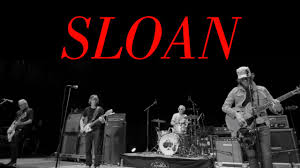
SOUNDTRACK: SLOAN-Live at Massey Hall (September 11, 2015).

Having now seen Sloan twice, it’s nice to compare this earlier show with mine.  And I get  to say that my shows were longer!  Much longer.

This edited for the web version leaves out 11 songs (including the ones which drummer Andrew Scott sings on–so there’s no switching instruments).  Having said that, the band sounds great and the set list is really strong.  I also had no idea that Gregory MacDonald had been touring with them for that long.

Jay Ferguson compares Massey Hall to Carnegie Hall and then regrets comparing something Canadian to something American).  Chris Murphy says “I don’t often use the word “hallowed,” but it is a “hallowed hall.”

He continues, “We are quite loud, we wondered, Do we try to tailor our set for Massey Hall–more like a theater set of songs?  We didn’t do that essentially because we’re incapable:   everybody turn down and then its like a volume war everybody turning up until we’re as loud as ever.”

They start with a great Jay song “You’ve Got a Lot on Your Mind.”  The band sounds great although the dominance of keyboards from Greg is surprising as the first song.

Introducing “The Rest of My Life,” Chris says, “You don’t have to stand but… sing along please.  Of course everyone sings “I know that I’ll be living it in Canada.”  As the song rings out, Chris starts a clap which segues into Patrick singing “Ill Placed Trust.”

Chris says, “We never got giant but we enjoy an audience that has followed us for a long time.  Thank you.”

The start the great guitar riff on the dark “The Other Man.”  There’s lots of sing-alongs in this one, too.

Jay is back with the super catchy “Who Taught You to Live Like That.”  And as the song fades out the siren roars the intro for “Money City Manis.”  Chris notes, “You actually have to stand up for this one.  You have to.”

Patrick and Chris take turns on lead vocals and then during the instrumental break Chris calls a six-year-old girl up on stage who dances, plays the tambourine and knows all the words.  Patrick says, “like I’m gonna be able to solo over that–that’s the solo right there.”  Chris wonders, “When you look at this stage, where does your eye go?”  She is amazingly self-possessed.

They end with the obvious–but a wonderful obviousness with “Underwhelmed.”  They (and the audience) have a ripping time of it.

It’s interesting just how long the band played in reality.  But yes, even after all this time, Sloan is a dynamic live act.  And this is great proof of that.

  1. O Canada
  2. Deeper Than Beauty
  3. If It Feels Good Do It
  4. C’mon C’mon (We’re Gonna Get It Started)
  5. Carried Away
  6. Keep Swinging (Downtown)
  7. Snowsuit Sound
  8. Fading Into Obscurity
  9. Forty-Eight Portraits
  10. Unkind
  11. You’ve Got a Lot on Your Mind
  12. The Rest of My Life
  13. Ill Placed Trust
  14. The Other Man
  15. Who Taught You to Live Like That
  16. Money City Maniacs
  17. encore
  18. People of the Sky
  19. Underwhelmed

[READ: May 10, 2018] “Dinner Party”

This is an excerpt from a novel Kudos.  It being an excerpt does explain some of the sparseness, but it feels like such a unique event that I can’t imagine even who the main character is supposed to be involved with in previous and future pages.

A writer enters a restaurant.  She is at a writing conference and she and the other delegates are to be treated to dinner.  I love this line “The delegates were reluctant to [sit], knowing their fate would thus be settled for the duration of the meal.”

The narrator recognized a woman from an all-female panel discussion who recognized her and instantly came over to talk to her.  The woman introduced herself “with the pragmatic directness of someone who accepts rather than fears the likelihood of such things being forgotten.” (more…)

Read Full Post »

SOUNDTRACK: ZEUS-Live at Massey Hall (September 11, 2015).

I had never heard of the Canadian band Zeus.  They seem pretty well-known (and have since become the backing band for Jason Collett when he’s not doing Broken Social Scene).

The band has been active for nearly a decade, but have only released a couple of albums (it is mentioned during the set that they are working on new material, but that was three years ago).

They talk about the amazing sound in Massey Hall.

Massey Hall is the furthest from a giant gnarly arena you can get.  We’ve played places with similar capacity and similar sound but there is something different here.  It sound really good and clean.  Maybe I would be intimidated if I played on this stage but you remember that not just anybody gets to pay here–you get asked to play here. This takes some of the onus off of being intimidated–you feel important in here.

Carlin says, “You never wanna say you had a shitty show at Massey Hall.  But you can hear yourself really well here, maybe that’s why they are all so good.  There’s always legendary shows there.

Everyone in the band switches instruments throughout.  It’s hard to keep track of what everyone is doing.  The only one who doesn’t move is Mr Robert Anthony Drake on the drums.

“Come Home” starts with a Carlin Nicholson on bass and Mike O’Brien on the electric guitar.  They share a microphone and the harmonies.  Neil Quinn is on acoustic guitar off to the side. adding a third voice.  It’s a surprisingly short song.

“Where is My Love” has Neil, still on acoustic, singing lead with his deep voice and an occasional falsetto on certain notes.  This song is quiet for the beginning with just the acoustic guitar and keys before the rest of the band kicks in.  The song shifts gear and musically sounds like a slower Sloan song (whom they were paired with that night) but the vocals are quite different.  Mike has shifted to keys with Carlin still on bass.  Jason Haberman is also playing multiple instruments–he’s on guitar for this one.

“Miss My Friends” has a kind of funky, almost disco rhythm.  Carlin has switched to keyboards and Mike O’Brien is on bass where he sings lead vocals.  Neil Quinn plays electric guitar and c Habermans has switched to electronic percussion.

Carlin introduces the next song, “This goes back to the very first Zeus record, “I Know.”  It’s got Carlin on keys and lead vocals. Neil on bass, Mike on guitar and Haberman on acoustic guitar.  Carlin invited people to sing is they know it but I can’t hear of anyone does.

Neil shifts to a pretty melody on the keys with a gorgeous intertwining melody from Mike.  It’s a great opening to “Heavy on Me.”  There’s cool 70’s sounding keyboards and a great bass rumble.  There’s a lot of quieter moments where the bass is all there is and the riff is cool and slinky.  The song ends with great jamming session with a noisy rocking guitar solo and heavy drums.

After the applause, Neil says, “Thank you.  This is just what this band needs right now–a house fill of love like this.”

“Air I Walk” has a shuffling beat with (questionable) electronic percussion hits.  Carlin back  bass with Neil on acoustic guitars and lead vocals.  It sound kind of mid 8os Dire Straits

“Throwdown” doesn’t sound like a throw down as it opens.  There’s quiet guitars and gentle vocals from Mike.  But it gets really big by the middle and sounds like a non-synthy 80s classic rock songs.

The show ends with “Are You Gonna Waste My Time.”  Just like the opening, Neil is on guitar and vocals, Mike plays a great lead guitar and Carlin is on bass.

I really enjoyed this set quite a lot.  Zeus is a little soft rock for my tastes, but their musicianship and songwriting is top notch.

[READ: May 21, 2018] “Seven Years of Identity Theft”

Rick Moody had his identity stolen.  We all hear about this happening, but he really shows you how much of a real pain in the ass it is.  It’s not just a matter of getting new credit cards.

This essay is written as a series of letters.

The first letter is to the Most Honorable President of Nigeria, Muhammadu Buhari.  He writes of leaving his bank card in an ATM in Macon, Georgia and that’s when he assumes it all started–the theft of his identity–back in 2011.

A week later his replacement card was rejected and ultimately deactivated due to fraudulent transactions. (more…)

Read Full Post »

SOUNDTRACKSPIRIT OF THE WEST-Live at Massey Hall (June 6, 2015).

This proves to be a pretty powerful show.

I was introduced to Spirit of the West by my Vancouver based friend Amber back in the 1990s.  I didn’t really keep up with them, but I have long enjoyed their album faithlift.

But here it is 2015 and as the blurb at the beginning of the show says:

In 2014, at the age of 51, John Mann, Spirit of the West’s lead singer, was diagnosed with Early Onset Alzheimer’s Disease.  On June 6, 2015, Spirit of the West would play their one and only show at Toronto’s Legendary Massey Hall.

The rest of the band includes Hugh McMillan, Vince Ditrich, Tobin Frank and Matthew Harder all of whom play various instruments including keyboards, accordion and all things with strings.

Most of the band have never been in Massey or even seen it.  But they marvel at the venue and are genuinely moved by the end of this show.

They open with their hit (from faithlift) “And If Venice is Sinking.”  It’s got accordion and a big bass line and some funny lyrics and a full backing vocal chorus.

We made love upon a bed
That sagged down to the floor
In a room that had a postcard on the door
Of Marini’s Little Man
With an erection on a horse
It always leaves me laughing

John Mann is the lead singer, Geoff Kelly is the co-lead guy.  He does most of the speaking.  He says “This is as close as were every gonna get to Beatlemania.”

Next up is “King of Scotland” about a man who desperately wanted to be Scottish.  It, like many of their songs is a rousing half-trad/half rocking song.  Incidentally, Mann has been singing off of an iPad to help with his memory.

“Doin’ Quite Alright” is the first of many songs sung by Kelly.  he also plays bodhran.  It sounds quite trad and is much faster with a  cool bassline.  The addition of 70s sounding keyboards is a little odd though.

“July” sees the introduction of what I think is a bouzouki and sounds an awful lot like “Love is All Around” by Wet Wet Wet except for the fun and powerful chorus of JuLYYYYYYYY!

Kelly jokes that someone in the band is delighted by Massey Hall because it is finally something he’s found that is older than Kelly is.

Up next is “Political,” a song “we recorded on our Labour Day record in 1988ish and then again on Go Figure and then again with the Vancouver symphony.  I guess we really like this song.  Kelly is on flute and plays a wild harmonica solo.

Next up is their newest song, which is about 12 years old.  It’s about how every year New Year’s parties just get worse and worse.  “Another Happy New Year” starts out with slow staccato piano and then it really takes off (with Kelly on the penny whistle).

After sincerely thanking everyone for their kindness (it’s getting pretty emotional), they are going to play a drinking song called The Crawl.  The crowd really gets into the raucous song.

The night ends with Kelly saying this was the most awesome night ever.  They are going to leave everyone with “Home for a Rest.”  The audience sings along with Mann for the first verse and then Mann backs off and lets them sing it all.  It’s pretty great.  As is the song which ends with a wild instrumental jam that’s basically a flute-led jig which ends the sing and the show.

I imagine being there was pretty special.

[READ: May 15, 2018] “Nothing But”

This is a wonderful short essay on memory with the epigram: “The truth–that thing I thought I was telling.”

He begins by talking about a chapter in his book White Sands about a visit to the house of Theodor Adorno.  The essay takes its title “Pilgrimage” from a short story (why is it not considered a memoir?) by Susan Sontag in which she and her friend Merrill went to the house of Thomas Mann when she was 14.

It came out later that Merrill never understood why Susan left their friend Gene (who had gone with them) out of the story entirely.  (It happened in 1947, she wrote it in 1987).   This shows “a startling manifestation of the vagaries of memory and a vindication of what can sometimes seem like the fussiness of editorial fact-checking.” (more…)

Read Full Post »

« Newer Posts - Older Posts »