Feeds:
Posts
Comments

Archive for the ‘Canadian Content’ Category

SOUNDTRACK: THE RUSSIAN FUTURISTS -“Paul Simon” (2010).

Continuing my march through CBC Radio 3: I love the name of this band, but I’m sadly underwhelmed by this track.

This is a horn (synth) heavy track which has a somewhat lo-fi quality in the verses.  I have to assume that the horns are a nod to Paul Simon, but I can’t be sure of that.  It has an orchestral feel and it’s kind of fun.  But while I wouldn’t turn it off if I heard it again, even after two listens I didn’t think of it so much as a song as a catchy horn blast repeated over and over.

[READ: June 14, 2010] “The Kit Bag”

Now this seems like a quintessential Canadian story to me.

This is the story of a young boy, soon to be a man, saying goodbye to his father as he heads off for the mines of Flin Flon. (more…)

Read Full Post »

SOUNDTRACK: ZEUS-“Kindergarten” (2010).

Continuing my march through CBC Radio 3: The radio announcer dude said that this album might make the long list for the Polaris Prize.

Zeus is a Toronto based band that has worked as a backup band for one of the guys from Broken Social Scene.  This is an acoustic guitar/quietly distorted electric guitar track that’s poppy and fairly commercial.

I wasn’t all that inspired by it, until near the end where these wild backing vocals come in (and it gets something of an Arcade Fire vibe).  The second song on Zeus’ page, “Marching Through Your Head” is much more promising.  A catchy bouncy pop track with enough weirdness to keep it interesting.

They do a cover of Genesis’ “That’s All” which is described as “raucous.”  And if you click on the link you’d be hard pressed to disagree with that assessment.

[READ: June 14, 2010] “Mask”

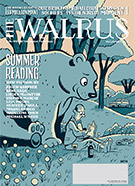
Hot on the heels of the New Yorker Summer Fiction Issue, I received this issue of The Walrus with their own Summer Fiction section called “Canadian Studies.”  This issue features nine authors.  They were all asked to write “the most Canadian story they could think of.”  Now, I’ll start out by saying I’m not Canadian, and I don’t want to suggest that I know what the most Canadian story should be like. At the same time, I read The Walrus, I watch a lot of Canadian TV, so I have a slight grasp of the culture.  So while I know a Canadian story isn’t going to be about igloos and elk, I’m certain that some more subtle stories will be lost on me.

Lisa Moore’s story is first in the collection.  It is quite short.   And I didn’t think it was especially Canadian, although perhaps, given one of my Vancouver friends’ proclivities, it is. (more…)

Read Full Post »

SOUNDTRACK: RAH RAH-“Arrows” (2010).

This issue of The Walrus features the Summer Reading Issue, which nine short fictions about Canada.  In concert with that I decided to listen to CBC Radio 3 online and review the first songs that I hear in their entirety.

The first band up is Rah Rah.  I’d never heard of them before.  This track arrows is from their just released 2nd CD.  They sound kind of like they are Regina, Sask’s answer to the Arcade Fire.  Rah Rah have 7 members in the band, and they play a sort of energetic poppy punk with lots of backing vocals. (Some of them are screamed, but from a long way away…a very cool effect). The song is catchy and is only punk in the tempo of the track (and the somewhat shambolic nature of the vocals–which is meant as a complement).

I liked the song enough that I had to listen to it again. The riff is super catchy, and the vocals complement it nicely. I liked it enough to check out more of their stuff.  “Fuck NAFTA” is a wonderful song that is surprisingly delicate and catchy for such a belligerent sentiment. Great stuff.

I suspect that I’ll be picking up their album, if I can find it for sale anywhere.

[READ: June 14, 2010] Walrus Summer Reading, featuring Seth

The Walrus’ July/August issue features a summer reading collection.  Nine authors all answering the call “to write the most Canadian story they could think of.”  Over the next week or so I’ll review them all.  But as an introduction, I wanted to mention the artwork of Seth.

Seth is rapidly becoming my favorite artist whom I know very little about.  (more…)

Read Full Post »

SOUNDTRACKRUSH-Beyond the Lighted Stage (film) (2010).

Okay, so I haven’t seen this yet, but I’m delighted to be able to add the link to the trailer.

This film is an in depth look at Rush’s history.  There’s interviews with all three of them (Neil speaks!) as well as all kinds of fans.  According to the website, it will air one day only, June 10 in the US and Canada, June 7th in the rest of the world.  It’s only playing in 4 theaters in NJ, and there’s a slight chance I can get to it.

Otherwise, I’ll have to wait for the DVD. But those 2 minutes of trailer were very exciting!

[READ: May 24, 2010] “Do Not Touch”

This story works a lot like an onion.  It starts in one place, then it sort of burrows in through a series of layers.

We open with the narrator falling for Thomas because he seems nervous (she find this an attractive quality in everyone).  He is a music reporter, and she is able to assist him with information about Diana Krall.  Soon enough, she has moved in with him.

But things aren’t great.  And then, one day, when she brings a watch to a jeweler, she marvels at the man’s delicate touch and his charm.  And she rummages through the house to find more watches for him to fix.

One of these watches she found at the zoo.  No one claimed it, so she kept it.  It is engraved and is quite old.

The story more or less culminates on a return visit to the zoo, where it takes a decidely different turn.  The narrator watches a woman makes a connection with a primate; a connection that aleinates her son.  And as the narrator watches this scene, she makes a personal decision.

What I loved about this story was watching the onion unfurl in just a few paragraphs.  The only problem I had was that I felt the onion didn’t unfurl all the way.  Many decisions were reached, but I’m unclear what her final decision will be.

Nevertheless, this story was very enjoyable.

Read Full Post »

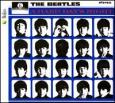
SOUNDTRACK: THE BEATLES-A Hard Day’s Night (1964).

Despite my CD player trying to eat this disc, I still managed to listen to the whole thing.

This album came out just a few months after their second disc.  But it is quite a leap forward musically.  Rather than the simple rock and roll sound of the first two discs, there’s more depth of sound (attributable to George’s 12 string guitar?)  Perhaps also because of the use of the 4 track, rather than the 2 track mixer.  Also, Lennon and McCartney wrote all of the songs, so they weren’t bogged down by covers,

At first I thought that I had gotten to my first Beatles disc where I knew all the songs.  But that turned out not to be true.  I knew the first half of the disc (the songs that are in the movie).  But when we got to the second half (and I learned that the US version was different in that in included George Martin’s score for the movie (!)) there were a couple of tracks I didn’t know at all.

With the tracks sequenced as they are, you don’t get a big crunching finale at the end of the disc, like on the first two.  However, those first few songs are pretty classic (even if “Can’t Buy Me Love” completely contradicts the sentiment of “Money” from the previous album.  This is a really enjoyable fun disc from start to finish, even the songs I didn’t know.

I was pretty certain that after this disc, I’d recognize all of the songs.  But I had one more surprise waiting for me.

I also brought the movie home from the library one night but I couldn’t get through most of it.  Guess you had to be there.

[READ: May 13, 2010] “The Flight Album”

This is a memoir of the a Vancouver author’s stay in New York City.   I wasn’t really sure how interesting this story would be, I mean, there are a million stories in the City, so why should this transplant’s story be worth reading?

The piece starts with the author’s awkward assimilation to New York (and the almost offensive Dave Chapelle joke she relates to a cabbie).  His mild reaction lets her know that maybe she can make it there.

For me the best part was the author’s insert of Shit: A Guide to Canadian Usage.  The most notable difference between Canadians and Americans, she has found, is that Canadians use the word “shit” all over the place, and in many ways that Americans do not (in fact it is more all purpose than fuck.  The things that started it all was her use of the phrase “What the shit.”)  It is quite a funny section. (more…)

Read Full Post »

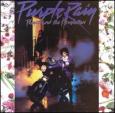
SOUNDTRACK: PRINCE-Purple Rain (1984).

I resisted Prince for most of my high school and early college years.  He was just so, so, so.  Well, actually I think he was just so popular.  Plus, my freshman year of college, someone on our floor used to blast this CD at full volume every time he did laundry.  It was pretty oppressive.

As I grew less strident, I learned to appreciate his talent (and his absurdity), and even to like Purple Rain.  And when I divorce Prince from the hype, the overplay, the excess, the quirks (yes, I’m talking 2 U) this is a damn fine record.

It’s also somewhat surprising that it was as big a hit as it was.  Musically, it’s all over the place (or is that something for everyone?).  I think in today’s specialized market, this may not have sold as well (or else it would be like Gnarls Barkley and be a hit regardless).

“Let’s Go Crazy” is poppy sure, but it rocks really hard (and showcases Prince’s guitar virtuosity).  But it’s the  second half of the disc that is just berserk with great music. “When Doves Cry” has that insane guitar solo opener.  The rest is simple keyboard pop (until the ecstatic screams at the end).  “I Would Die 4U” is the poppiest thing on the disc.  And the disc ender, “Purple Rain” is just a great rock track.  Delightfully pretentious in the beginning, full-bodied by the middle.  It’s quite genre defying.

I’m obviously not the biggest Prince fan in the world.  I have a few discs from this period (and the greatest hits).  It’s more than enough Prince for me.  And while I don’t listen to this disc while I do laundry, sometimes, when it’s warm, I’ll open the windows and crank this up.

[READ: May 14, 2010] “1999”

This story opens with the line “I wouldn’t fuck [the artist formerly known as Prince] if he was the last man on Earth.”  This turns out to be excellent foreshadowing.  The year is 1999, morphing into 2000.  And the unthinkable has happened.  There is no one left on the planet.  Except for the voice of TAFKAP on the radio, exhorting women to cum 2 him and b with him.

Although Sonya wouldn’t fuck him, several other women in the story most certainly would.   And so, the story follows four different women, each with her own agenda as they travel across the continent to Minnesota, to Paisley Park. (more…)

Read Full Post »

Sarah and I watched a bit of the third or fourth episode of this show when it aired on CBC.  But jumping into the middle of this show is difficult.  The characters are established pretty quickly, their quirks are all explained in the first episode, and it’s a bit hard to care about them without knowing their whole story.

So, when the show released on DVD, I decided to give the whole series a shot. And it has now given me a new favorite actor of the month: Sherry Miller who plays Mrs Jarlewski is just fantastic.  She’s like an older,  subtler version of perennial  favorite Portia de Rossi.

The show also introduced a cast of relative unknowns (who have all gone on to do more since then), and gave a wonderfully twisted role to former Growing Pains dad Alan Thicke (he’s an alcoholic, a philanderer and a wannabe (but not very good) actor).  And in a (presumably) unintentional nod to Growing Pains, his wife’s name is Carol, too.   (more…)

Read Full Post »

SOUNDTRACK: RUSH-Caress of Steel (1975).

Despite the fact that this album is largely considered a failure, it’s one of my favorite Rush albums.  There’s so much weirdness about it that I can see why it isn’t terribly popular but there’s so much goodness that it makes me a bit bummed that some glorious tracks are overlooked.

It opens with the one track people know from the disc: “Bastille Day,” a rough raw rocker that is heavy and really sets the tone for the first side of the disc. The heavy heavy riff is reminiscent of Black Sabbath and other early metal pioneers.  I also learned that they were touring with Kiss around this time, so maybe that’s where they got some of their heavy riff ideas from. I of course cannot imagine Rush and Kiss touring together.  That must have been a real trip.

The second song, the amusing “I Think I’m Going Bald” is rather obvious, especially the way he delivers the title line, but man the guitar solo just rocks and rocks and rocks.  “Lakeside Park,” a real location outside of Toronto is a gentle tribute to youth.   This quote amuses me no end, and is something I just read about.

The first real highlight for me is “The Necromancer,” a wacked out 12-minute mini epic.  It opens with a spoken word introduction, setting the tale of three travelers fording a river. The first part is pure psychedelia, with screaming guitars going from ear to ear.  The second part is heavy with a slow pounding riff and Geddy’s screamed vocals  It features a long headphone-happy guitar solo.  And just when you think it’s over, there’s some crazy sound effects and, yes more guitar soloing.

The third and final movement sees the return of By-Tor from “By-Tor and the Snow Dog.”  By-Tor is now a good guy and he scares off the Necromancer.  I always enjoyed playing this part on the guitar as the chord progression is really pretty.

Side Two is one song, a full side, their first proper epic. Called “The Fountain of Lamneth” it focuses on a man’s quest for this elusive Fountain.  It has six parts.  The first, “In the Valley” is a pretty, acoustic ballad that expands into a loud rocker.  It introduces our anonymous narrator, and by the end its sets the tone with a loud/quiet explanation of his satisfaction and dissatisfaction with his life.

It’s followed by the insane “Didacts and Narpets” (Teachers and Parents (anagram on Narpets).  It’s just drums and shouting.  Evidently it’s designed to show a young man fighting with teachers and parents, and sure why not.  It’s pretty out there, but it’s only 90 seconds long.  (I’ve always enjoyed it).

The middle sections are really quite mellow.  More of that beautiful classical guitar that Alex does so well.  The songs don’t remain mellow the whole time, with “No One at The Bridge” adding some loud aggressive bits.  But “Panacea” stays quite mellow, with some beautiful guitar harmonics.  The next bit, “Bacchus Plateau” is a really pretty song despite its ultimately downer message, and probably could have been a hit if tit weren’t part of  20 minute song..

The song ends with him finding the fountain.  And yet rather than rejoice, he’s exhausted.  But I’ve always enjoyed the “message” of the song: “Life is just a candle but the dream must give it flame.”  It’s inspirational and depressing at the same time.  It ends with a reprise of the opening acoustic bit. It’s a tidy song and a wonderful first attempt at an epic track.

The only reason I’m surprised this didn’t sell well is that it works so well as a trippy 70s disc, ideal for sitting around with headphones on in one of those round chairs.  I assume its the heaviness that turned away fans of Pink Floyd and the like.  And, well, probably the downer message and really weird title of the disc (what does Caress of Steel mean anyhow?) might have had something to do with it.

[READ: March 10, 2010] Rush, Rock Music and the Middle Class

I read about this book in an article from The Walrus. And I thought to myself, it’s geeky enough to love Rush, but how about reading an academic treatise about Rush? I’m so there.

Well, I haven’t really read a truly academic (as in published by a University Press) book in a while, but it didn’t take too long to get back in the swing of things.  Plus, if I may be so bold, ethnomusicology seems like a lot more fun than philosophy.

As the subtitle implies, this book looks at Rush as music for the middle class.  The only thing I had a hard time with the book was the definition of middle class.  It is specifically aimed at a U.S./Canadian middle class (although the UK does enter into it too), and with all of the definitions thrown around, middle class seems very broad.  The easiest breakdown to see was based on employment and the most prominent type of employment among Rush fans was “professional” (including librarians and IT people).  So, evidently I am middle class.  I only say this because for the most part classes are hidden in the US (they aren’t, of course, but there are many attempts to try to keep them hidden).

This concept of class obviously pervades the entire book.  But before we get too hung up on that, we must not forget that the real focus of the book: the music of Rush. (more…)

Read Full Post »
SOUNDTRACK: BLUE ÖYSTER CULT-Cultösaurus Erectus (1980).

BOC came back with a vengeance on this disc.  From the cool title (c’mon that’s a cool title) to the futuristic fossil on the cover, this album is all heavy.

The opener, “Black Blade” puts us firmly back in the heavy sci-fi world of BOC.  There’s cool time changes, there’s a wild end section with weirdo distorted vocals.  And the lyrics are by Michael Moorcock.  It’s followed by my favorite BOC track of all time: “Monsters.”  This is a fairly straightforward metal song.  It’s starts with a fast riff and big power chords but after the second verse it bursts into a full on jazz section: walking bass, wailing sax solo (!)  for several measures, until it jumps right back into the song as if nothing happened.  Thre’s even a third, even heavie part that comes later.  It a terribly underrated song.

The next two songs flirt back with their more recent gentle releases.  “Deadline” is keyboard fueled little ditty (and the general BOC rule is, the more keyboards, the less metal.)  Yet, in small doses, Allen Lanier’s keyboards really define BOC’s sound.  “Hungry Boys” and “Fallen Angel” show the band really trying to find its sound (and not being terribly successful there).

“The Marshall Plan” gets the band back on heavier terms, with that classic theme of metal songs: playing in a metal band.  (There’s a humorous musical quote from “Smoke on the Water” AND a spoken line from Don Kirshner).  Finally, the wonderfully weirdly titled “Lips in the Hills” gets the band back on familiar rocking territory.

While this isn’t their best disc, it is certainly better than the previous one, and ranks up pretty high in their catalog.

[READ: March 7, 2010] “Paul Farenbacher’s Yard Sale”

This was a cool story with a bunch of twists.  The simple premise is that the story is set at a yard sale.  The sale is being held by the wife (and new boyfriend) of Paul Farenbacher, a recently deceased man.  The narrator was the family’s neighbor (and on one occasion kissed their son).

In the intervening years she has become closer to the family.  She helped sell some products that Farenbacher was selling, and also sold new (home made organic cleaning products) to Farenbacher’s wife (and the rest of the community).

The story is a way for secrets to get revealed and truths to be told. (more…)

Read Full Post »

SOUNDTRACK: RUSH, obviously (1974-present).

I’ve loved Rush since seventh grade.  They introduced me to prog rock, Canadian accents, Lakeside Park and Ayn Rand.  They taught me how to play killer bass lines, wild guitar solos and to ponder the existence of washing machines on stage.

[READ: March 5, 2010] “Living on a Lighted Stage”

I don’t often write about non-fiction pieces in magazines, but because this one is about Rush, it seemed necessary to bring it up.

The rather humorous subtitle of the piece sets the tone here. Rush has been together since 1974.  They’ve been taken seriously by musicians and die-hard fans, but aside from that, the average person likes “Tom Sawyer” and that’s about it.

This article notes that Rush is appearing more and more in unexpectedly public places (to both the delight and consternation of fans).  From the Colbert Report (their first time on American TV in 30-some years), to appearances is movies, including appearing as themselves playing live in I Love You, Man.

In addition to all of this there are two new works that are designed to really delve into the history of Rush. One is a new book, an academic treatise that I am sure I never would have heard about if it weren’t for this article, called Rush, Rock Music and the Middle Class: Dreaming in Middletown by Chris McDonald (which I just received and hope to start reading shortly).  And, there’s also a new documentary coming out (possibly in the Spring) tentatively called: Rush A Documentary.

And finally, a new film coming out has Alex Lifeson (as well as about 100 other musicians) in a cameo (he plays a border guard). It’s called Suck, and you can see the trailer (which has Lifeson in it) at Rushisaband.com.

I can’t possibly explain the recent influx of Rush (“Tom Sawyer” even played a major plot point on Chuck not too long ago) except to suggest that maybe all the die-hard Rush fans have grown up and gotten jobs in some kind of prominence.

Some Rush fans bristle at the idea of the guys selling out (yeah, right) or, heaven forbid, having fun.  They’ve always had a silly side (read the liner notes, look at Geddy wearing a Devo pin in the late 80s), and it’s nice to see them showing that side off a bit.  And the thing is, none of this attention is going to make “Cygnus X-1” any more popular than it is.  But if it gets some new people into prog rock, well, where’s the harm in that?

I won’t be first in line when the documentary comes out, but I’ll certainly watch it!

This article is available here.

Read Full Post »

« Newer Posts - Older Posts »