Feeds:
Posts
Comments

Archive for the ‘Boredom’ Category

1981 SOUNDTRACK: SON LITTLE-Tiny Desk Concert #496 (December 18, 2015).

sonlittleI know of Son Little, although only vaguely.  WXPN has played his song “The River” quite a lot, although I don’t think I’ve heard anything else.

For this Tiny Desk Concert, he’s really stripped down–just his acoustic guitar, a percussionist (Jabari Exum playing a djembe with accoutrements) and a backing vocalist, his sister Megan Livingston.  His playing is even pretty stripped down–his chords are minimal, almost more like accents for most of the songs (although he does play louder from time to time).

As such, this really celebrates his voice which is strong and almost gospel-like.

He plays three songs. “Lay Down,” is a quiet soulful song with perfectly spare accompaniment.  When it ends, everyone seems adorably shy with Little saying, “just mildly awkward enough.”

“Your Love Will Blow Me Away When My Heart Aches” is a bit bigger–Little sings a bit louder and plays louder chords, but it is still quite minimal.

He ends with “The River” which is certainly stripped down from the radio version.  It opens with some claps and he encourages everyone to clap along although “If you’re like clap challenged then maybe… don’t–you know who you are.”  The song has that bluesy rock feel even in this understated form.  And while I like the original better, this is a great version–that quiet clapping and percussion is really nice.

[READ: July 26, 2016] The Complete Peanuts 1981-1982

So far the 1980s see Schulz settling into a few consistent themes in his strips–regular motifs that he mines over and over again.  Although it’s interesting to see how they have morphed over the decades.

Patty is constantly falling asleep in school (and getting D minuses), Snoopy continues to write funny/bad jokes and gets rejection letters about his books (this is usually pretty funny but it’s also surprising as Snoopy is usually the “successful” one); Snoopy also plays a lawyer a lot in these strips.

1981 begins where 1980 left off with Patty loving the story of Hans Brinker.  1981 also has a lengthy section about Valentines Day (a subject that gets more emphasis in some years than others), although this year Sally is the major protagonist (and her Sweet Babboo her object).  1982 also has a Valentine’s Day with Sally–she gets her hand stuck in the Valentine’s Day cards box.

Schulz used to do bible instruction which is why he quotes it so much.  And he occasionally peppers his strips with religious commentary.  There’s a joke about school prayer–Patty has to go up to the board and when her teacher falls ill she shouts “school prayer works, Marcie.”  There’s an amusing joke that Snoopy used to teach Sunday School at the Daisy Hill Puppy Farm.

Although the running jokes are funny, I love when he gets a new idea.  Like the a fun twist on the dog ate my homework joke when Snoopy as the WWI pilot steals Sally’s homework claiming it is the enemy’s secret papers and he eats them.

Sometimes Schulz gives a one-off joke that’s just silly and funny like when Woodstock “poofs” a dandelion and it “poofs” him back. (more…)

Read Full Post »

1978SOUNDTRACK: LAND LINES-Tiny Desk Concert #494 (December 11, 2015).

landLand Lines are a trio from Denver.  They have a drummer, a synth player and a cellist/lead singer.  Although their music is pretty spare and simple, I find them really compelling.

On “Wreckage,” Martina Grbac plays the cello with her fingers, strumming chords on the neck of the instruments in a way I’ve not seen anyone play before.   Grbac sings quietly and her voice–echoing and effects-laden–reminds me of someone from the 1990s, although I can’t exactly pinpoint it (maybe a Cocteau Twins vibe?  but not quite). James Han plays really interesting chords and textures on the keyboard.  Sometimes he adds melody lines, and other times, like at the end of this song, growing washes of sounds.  Ross Harada’s percussion is also fun for the complex and different sounds he adds to the songs.

“Anniversary” has a similar vibe withe that cello chord playing.  The opening keys play simple echoing notes which add a nice atmosphere to the acoustic chords and percussion.

For the final song, “Fall or Fall,” Grbac plays a rapidly bowed cello (which has such a different sound than the other songs).  The bass is provided by the synth (a good sounding bass).   I love the way her voice contrasts the keyboard chords.  The chord progressions throughout the song are interesting and I really like the unexpected sounds that close out the song.

I’d never heard of Land Lines, but I liked this show enough to listen to it a bunch of times.  I’ll have to check out their other songs as well.

[READ: July 9, 2016] The Complete Peanuts 1977-1978

I feel like this era is when I would have read Peanuts the most, although I have no recollection of any of these strips.

The covers of the books don’t necessarily depict who will be prominent in the collection, but Peppermint Patty on the front does equal a lot of Patty inside.  While Peppermint Patty continues to do very poorly in school, she does get some witty remarks like “What was the author’s purpose in writing this story?  Maybe he needed the money.”

We see a return of Truffles in January which also introduces Sally calling Linus her Sweet Babboo for the first time.  “I’m not your Sweet Babboo!”  Truffles is very excited to see Linus and vice versa but it kind of ends with unanswered questions because, in one of the first times this surreal gag was introduced, Snoopy flies in as a helicopter–a joke used many more times in the future–to sort of interrupt the whole saga.

Snoopy also pretends to be the Cheshire Cat a few times.

It has been a while since Linus has built anything outstanding (something he used to do a lot as a precocious child).  Well, in Feb 1977 he builds a snowman of Washington crossing the Delaware (to show up Lucy’s George Washington snowman with a little sword). (more…)

Read Full Post »

harpaugSOUNDTRACK: LAND OF KUSH-The Big Mango [CST097] (2013).

mangoOsama Shalibi is how Sam Shaibi is credited on this album.  He is the composer and creator of The Big Mango, although he does not appear on it.

Some background that may or may not be useful.  This comes from Popmatters:

“Big Mango” is the nickname for Cairo and The Big Mango is a love letter from composer Osama (Sam) Shalabi to his new home, Cairo, and all of its tumults and contradictions…. Reveling in free-jazz noise, rock rhythms, and the radical propulsion that Shalabi encountered on trips to Dakar, Senegal, the album weaves the divine spirit unleashed through fury and joy and dance into an utterly fascinating whole…  This pinging between controlled pandemonium and something beautiful, strident, transcendent, is not accidental. Shalabi is tackling the nature of change and the place of women in Arab culture on Big Mango, and by so clearly blurring the strange and the celebratory, he suggests that even sweeping, radical change need not be a revolution, but perhaps a way of life, movement as vital force in the universe.

With an introduction like that it’s hard not to want to love this record.  But a with everything Shalibi does, he is always trying to push boundaries and attitudes.  And so, this album has some songs that are really fun ad/or pretty and some songs that feel like (but apparently are not) wild improvisations that test the limit of your patience for experimentation.

As I mentioned, Shalibi doesn’t play on this –I would have loved to hear his oud, but instead we hear all kinds of interesting Western and Eastern instruments: setar (is a Persian version of the sitar), flutes, saxophones, piano, balafon (a wooden xylophone), hand drums: riqq (a type of tambourine), darbuka (goblet drum), and tablas (like bongos) and of course, guitars and bass.

“Faint Praise” opens the disc with 3 and a half minutes of Middle Eastern music quietly played with a rather free form vocal over the top.  The vocals are a series of wails and cries (and almost animalistic yips).  It sounds like an orchestra warming up, and indeed, the Constellation blurb says:

These opening six minutes are an inimitable destabilizing strategy of Shalabi’s – his lysergic take on an orchestra ‘warming up’ – that serves to introduce most of the instrumental voices and the montage of genres that will form the rest of the work

It comes abruptly to a halt with “Second Skin,”  a much more formal piano piece—structured notes that end after a few minutes only to be joined by a saxophone solo that turns noisy and skronking and nearly earsplitting.

After some dramatic keyboard sounds, “The Pit (Part 1)” becomes the first song with vocals (and the first song that is really catchy).  It begins with a jolly sax line which is accompanied by another sax and a flute before the whole band kicks in with a refreshingly catchy melody.  For all that Shalibi likes exploration, he has a real gift for melody as well.  The lovely lead vocals on this track are by Ariel Engle.  It’s very catchy, with a somewhat middle eastern setar riff and those voices.  When the song stops and it’s just voices, it’s really beautiful.  The song is 7 minutes long and I love the way the last 30 seconds shift gears entirely to a more dramatic, slower section.  This section is so great, I wish it lasted longer.

“The Pit (Part 2)” is only two minutes long.  It’s a quiet coda of piano and flute.  After about a minute, a low saxophone melody kicks in, it is slowly joined by other instruments and Engle’s voice.  Unfortunately I can’t really tell what she’s singing, but it sounds very nice.

“Sharm El Bango” is a jazzy song with hand drums and all kinds of space age samples spinning around the song.  I really like when the flute melody takes over and the song become quite trippy.

“Mobil Ni” is the second song with vocals.  It begins with some strings instruments and hand drums over a slow bass line.  Then Katie  Moore;s voice come s in with a gentle lovely vibrato.  Her voice is a little smoother than Engle’s.  The song ends with a mellow section.  And then there’s a trumpet blast that signals the beginning of “St. Stefano.”  The trumpet gives way to brief explorations off free-jazz type before turning giving way to a bowed section with resonating bass notes.

“Drift Beguine” returns to catchy territory with a full Middle Eastern musical phrase and Elizabeth Anka Vajagic’s lovely voice raging from high to scratchy and breathy.  Around 4 minutes when the pace picks up, it’s really quite fun.

The final track is the only one that really rocks.  “The Big Mango” has a big catchy guitar riff and hand drums filled in by Molly Sweeney’s rock vocals.  The song ends the disc as a kind of fun celebration.

As with most of Shalibi’s releases, it’s not for everyone.  But there’s a lot of great stuff hear, if you’re willing to experiment.

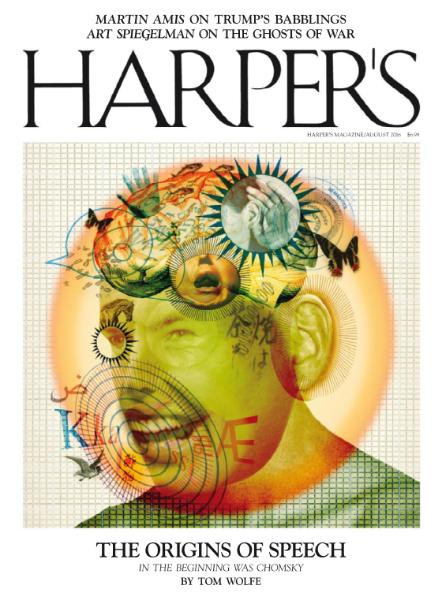
[READ: August 25, 2016] “Don the Realtor”

I hate to contribute anymore attention to Trump.  But it’s hard to pass up a chance to read Martin Amis, especially when he eviscerate his targets so eloquently.  Hopefully Trump’s voice will soon disappear from the airways and we can go back to forgetting about him.

Ostensibly this is a review of “two books by Donald Trump,” The Art of the Deal (1987) and Crippled America (2015).

Amis begins, as he usually does, by getting to the point: “Not many facets of the Trump apparition have so far gone unexamined, but I can think of a significant loose end.  I mean his sanity: What is the prognosis for his mental healthy given the challenges that lie ahead?”

Some basic questions come up about Trump: “Is his lying merely compulsive, or is he an outright mythomaniac, constitutionally unable to distinguish non-truth from truth.  Amis adds that “Politifact has ascertained that Donald’s mendacity rate is just over 90 percent, so the man who is forever saying he ‘tells it lie it is’ turns out to be nearly always telling it like it isn’t.”

But the Trump lying machine has grown from the rubble of the G.O.P. which “has more or less adopted the quasi slogan ‘there is no downside to lying.'” (more…)

Read Full Post »

carrieSOUNDTRACK: CATE LE BON-Tiny Desk Concert #337 (February 18, 2014).

cateCate Le Bon has a very interesting style of singing–it reminds me of Grace Slick in her enunciation, but also like someone whose speaking accent is very strong and is somewhat masked by her singing (like the way she sings “reason” as “ree-sun” as opposed to “reezun”).

The blurb explains that her “phrasing is completely tied to her Welsh dialect — in fact, her first record was in Welsh…. The enunciation is completely tied to the loneliness and the questioning.”

 For this concert it is just her and her fellow guitarist H. Hawkline (both wearing super cozy sweaters).  They share the guitar licks very nicely–it’s not always clear who is playing what–with her sometimes finishing his lines (I believe).

“Are You With Me Now?” has a very catchy chorus (with an “ah ha ha ha ha” part that makes it sound like an olde English ballad).

“No God” plays with very simple guitar lines (chords played very high on the neck of her guitar and a simple accompanying riff).  Hawkline plays keys (and sings some great falsetto backing vocals) to flesh out this song.  Everything is so clean you can hear each note from the guitar and her voice.

“Duke” opens with some interesting slightly off sounding from Cate while Hawkline plays a simple chord pattern (his fingers are enormous, by the way).  Hawkline’s falsetto is almost as engaging as the vocal lines that match the guitar line which Cate plays.  And when she says “I’ll see you here” in that unexpected pronunciation, it’s totally captivating.

I like Le Bon a lot and want to hear what she wounds like on record.

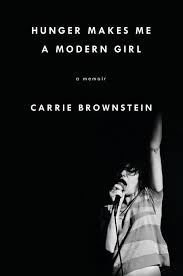
[READ: May 18, 2016] Hunger Makes Me a Modern Girl

After finishing Bob Boilen’s book and thinking about how I don’t really love music-based books, I immediately read Carrie Brownstein’s book.  Carrie Brownstein is one of the two guitarists in Sleater-Kinney and Wild Flag.  She is also one of the leads (writer and actor) on Portlandia.  And she wrote for NPR for a while, too.  Basically, Carrie is the shit.

One thing I took away from this book is that I’ve read a few musician memoirs (Mötley Crüe and Marilyn Manson to name a few) and this is the first one I’ve read that was filled with so much sadness.  Not “I was stoned and regret sleeping with that person with an STD sadness,” but like, real family problems and even a dead pet.  And, as Carrie herself jokes, her stories of being on tour and ending up in the hospital are not based on drugs or other debauchery, but on anxiety and even worse, shingles.

The beginning of the book starts in 2006, around the initial break up (hiatus) of Sleater-Kinney.  Carrie is in pain–emotional and physical–and she can’t take much more.  She starts punching herself hard in the face. (more…)

Read Full Post »

moomin9SOUNDTRACK: LILY & MADELEINE-Tiny Desk Concert #330 (January 7, 2014).

lilmadLily & Madeleine are a duo (surprise!).  But for a real surprise, they are sisters and at the time of the recording Lily was 16 and Madeleine was 18.  They sing beautiful folkie rock with fantastic harmonies.

That’s Lily on guitar and Madeleine on keys (and higher harmonies).

They play threes songs.  The first one, “Devil We Know” is amazing.  Their harmonies start off the song and it’s a beauty.  It’s an uptempo song that has a gorgeous verse.

“Paradise” features each sister singing an individual verse before the other chimes in with a harmony.  And while their individual voices are nice, when they harmonize it’s really something.

“You Got Out” sounds like a folk song from long ago–with the chord structure and harmony “ooohs.”

The duo is really great and they have just released a new record this year.

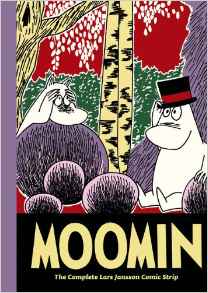
[READ: March 19, 2016] Moomin Volume 9

Moomin Book 9 and every subsequent book is made entirely of strips written and drawn by Lars Jansson.  These stories originally ran in the Evening News, London 1960-1975.  I have more or less caught up with the Moomin series at this point.  Book Ten has been released but my library does not have it yet.

This book tends to veer away from the Moomin family a little bit.  Of course they are still present, they just aren’t always the focus, as you might be able to tell by the chapter titles:  “Damsel in Distress” “Fuddle and Married Life” “Sniff’s Sports Shop” “Mymble’s Diamonds.”

(more…)

Read Full Post »

moomin8SOUNDTRACK: VAN-ANH VANESSA VO-Tiny Desk Concert #329 (January 4, 2014).

voOne of the things I love about the Tiny Desk Concerts is that they expose listeners to artists that we’d never encounter anywhere else.  As a person who loves rock, there’s no way I’d encounter this artist who plays traditional Vietnamese music.  Even though I think she;s amazing, I’d have no exposure to her otherwise.  So this is a wonderful treat–even more so to see her play in such a small space.

Van-Anh Vanessa Vo is a Vietnamese born musician living in America.  Typically the field of Vietnamese traditional music is dominated by men, but she fought to learn and here she demonstrates her skill on three very different instruments.

The first song “Three-Mountain Pass” is played on the Hang.  The Hang is like a steel drum with different sounds at all of the flattened indentations.  There’s also a tone in the middle which resonates nicely.   It is played with the fingers rather than mallets.  It’s a cool instrument to be sure.  For this song she also sings a Vietnamese song that is very breathy.

For the second song, she has taken Erik Satie’s Gnossienne No. 3 and arranged it for dan Bau, the traditional 9th century Vietnamese monocord. The instrument (“invented by beggers on the street”) has a single string, but by bending it with a kind of whammy bar made from a water buffalo horn.  Despite having one string the bar allows her to go 5 steps up and 1 and a n half octaves down.  She plays a backing track of a while playing the main melody line on the dan Bau.  Watching her play this one string and get ting so many interesting sounds out of it is very cool.

“Go Hunting” is an original composition played on the dan T’rung, a bamboo xylophone from Vietnam’s south highlands. This instrument, which looks a bit like a skeleton, is struck with double-headed mallets.  She says on the album she has a taiko drum, but there is no drum here.  But she doesn’t need it as the song begins slowly but grows faster and faster with the crowd offering some extra percussion.  She plays some amazingly fast melodies as the song reaches its climax.

[READ: March 19, 2016] Moomin Volume 8

Moomin Book 8 and every subsequent book is made entirely of strips written and drawn by Lars Jansson.  These stories originally ran in the Evening News, London 1960-1975.

The story is much more reflective of Lars now.  His art is slightly different is subtle ways, but you can see him using his sown style rather than trying to exactly mimic Tove’s.

The chapters are “Moomin Family Robinson,” “Artists in Moominvalley,” “Sniff’s Holiday Camp” and “The Inspector Nephew” (more…)

Read Full Post »

corpseSOUNDTRACK: STEVE KIMOCK-Tiny Desk Concert #532 (May 16, 2016).

kimockI’d never heard of Steve Kimock before.  He is a guitar player, evidently known for his improvisational playing.

Based on that, I was doubly surprised that the first song not only had vocals, but that they were by someone else in the band (the unnamed female pianist).  “Careless Love” sounds incredibly familiar.  Even on the first listen, it sounded like I’d heard it before–the vocal melody and her voice, the bass riff, everything seemed familiar, although I’m still not sure if I actually know it.

Kimock’s guitar is metal (or aluminum).  It’s quite unusual looking–all shiny and silver.  It’s a hollow body but it sounds unlike an acoustic guitar.  He’s joined by Bobby Vega on bass–and his bass is so smooth (even on this acoustic).

For the second song, he switches to a hollow bodied electric guitar.  He says that “Tongue N’ Groove” is an oldie for himself and Vega (for whom it is also very early in the morning).  The singer switches to piano for this instrumental that has a light jazzy feel.  It’s quite a lovely song.

For the final song, “Surely This Day,” he switches to an acoustic guitar which he plays across his lap (and uses a slide).  This is beautiful solo song with some wonderful moments.

[READ: February 15, 2016] Exquisite Corpse

I really enjoyed this First Second comic.  It was translated by Alexis Siegel and it doesn’t feel translated at all.

This is the first book by Bagieu that I have read and I immediately loved her style which has simple lines but also subtle shading.  It feels at time realistic and at times cartoony.

The story focuses on Zoe.  She is working as a kind of model–a pretty girl who stands near things like cars or boats or whatever.  She doesn’t love the job (who would) and on the second day we see a guy honks her ass.   The other models are doing the work part-time to put their way through school, but Zoe is the only one with no other options.  They tell her she should change jobs or stop complaining. (more…)

Read Full Post »

augSOUNDTRACK: LA MISA NEGRA-“Sancocho” (Tiny Desk Contest Runner-Up 2016).

misanegraLast week, a Tiny Desk Contest winner was announced. This week, All Songs Considered posted ten runners-up that they especially liked.  I want to draw attention to a couple of them.

La Misa Negra is a cumbia-loving band from Oakland, Calif.  There are eight members in the band.  There’s a drummer with a small kit but lots of frenetic drumming, and a bongo player who is also frenetic.  The percussion is pretty major in this band.

There’s also a sax, trumpet, clarinet, guitar and upright bass.  The guitar player does super fast ska chords, while the horns plays some insanely fast riffs.  The singer is full of yips and trills.  It’s a non-stop fun rollicking ride.

I have no idea what they’re singing about (it’s all in Spanish) and I just don’t care, (“Sancocho” is named after a hearty stew popular in several Latin American countries).

Their tiny desk is a school seat with the writing top attached to the side.  By the end it can’t contain the singer who has to get up and dance around too.

What a fun song.

[READ: February 10, 2016] “In Praise of Boredom”

The August 2015 Harper’s had a “forum” called How to Be a Parent.  Sometimes these forums are dialogues between unlikely participants and sometimes, like in this case, each author contributes an essay on the topic.  There are ten contributors to this Forum: A. Balkan, Emma Donoghue, Pamela Druckerman, Rivka Galchen, Karl Taro Greenfeld, Ben Lerner, Sarah Manguso, Claire Messud, Ellen Rosenbush and Michelle Tea.  Since I have read pieces from most of these authors I’ll write about each person’s contribution.

I don’t know Claire Messud, but I totally related to this essay,

She is about my age and explains that the world she grew up in no longer exists.  She says her parents, while wanting for nothing, were always frugal–they saved Ziploc bags and repaired things rather than threw them away.

They didn’t aspire to material wealth or popular culture, but rather they traveled a lot and had the children read.  But Claire says that as a child she would rather have her own record player and clothes from the Gap.

So when her mom went to work she grew absorbed in pop culture TV and she felt like she became less serious than her parents.

I agreed with this:

The comparative ease of our upbringing first inspired guilt, then defiance. If, as our parents said, we should be eternally grateful for our comfort, then couldn’t we be grateful without feeling bad about it? Why should we accept that the hard path was always superior? Why shouldn’t we enjoy life’s pleasures? Why believe that reading Beckett or, God forbid, Heidegger, was an innately more worthy activity than watching music videos? Says who?

She knows that reading Beckett is a stimulating hour, but she can spend that hour just as happily watching Scandal. (more…)

Read Full Post »

cst053webmoomin7SOUNDTRACK: THE DEAD SCIENCE-“Throne of Blood (The Jump Off) 7” single [CST053] (2008).

This was a tour only 7″ that Constellation picked up before releasing The Dead Science’s Villianaire album.  There are two songs, “Throne of Blood (The Jump Off),” which is the lead song from the Villainaire and “The Duel of Iron Mike” which is unavailable elsewhere.

“Throne of Blood (The Jump Off)” opens with some lovely harp playing before the eccentric vocal styles of The Dead Science take over.  Everything about this song is unexpected–the weird staccato guitars, the crazy falsetto, wavery vocals.  The song seems totally random until you hear all of the intention in it all where it all gels at the chorus. I love the part where the backing vocal comes in and sings “Villainiare Ice Grillianiare” (or whatever the heck it says).

“The Duel Of Iron Mike” (not to be confused with the Wu Tang Clan track which is what you’ll find if you look up the song n YouTube), opens with an interesting riff.  There’s that low bass and that falsetto vocal that you either love or hate.

The chorus is almost catchy–it’s a little too minor key to be catchy but it’s very intriguing because it’s not quite what you expect and after one or two listens, you can’t stop playing it.  The end section with the two layers of falsetto vocals is weird and very cool, too.  The Dead Science are a unique band.  I wish they’d put out more music.

[READ: February 12, 2015] Moomin Volume 7

Moomin Book 7 and every subsequent book is made entirely of strips written and drawn by Lars Jansson.  These stories originally ran in the Evening News, London 1960-1975.

These four stories continue with the themes that Tove wrote about.  And Lars’ drawings look very much like Tove’s as well.  I have noticed a few things that look different–sometimes he does the eyes differently, and certain angles don’t look quite right.  But otherwise, it’s a pretty seamless transition.  Oh I aslo noticed that in this book, he has begun signing his name much bigger in each strip.

The chapters are “Moomin the Colonist” “Moomin and the Scouts” “Moomin and the Farm” “Moomin and the Goldfields”

(more…)

Read Full Post »

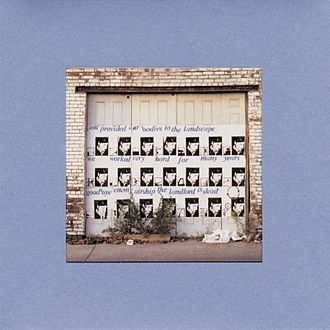
6SOUNDTRACK: DO MAKE SAY THINK-Goodbye Enemy Airship the Landlord Is Dead [CST010] (2000).

330px-DmstgoodbyeenemyAfter their debut album, Do Make Say Think made this second album which sonically fits together perfectly and really explores instrumental post-rock.  Most of the songs were recorded in a barn giving it a very big sound (complete with insects chirping).  While there were horns in the debut, they seem to be punched up a bit more on this record, and they really seem to help the record rock more.

“When Day Chokes the Night” song is 6 minutes long and I love the way the opening is a simple guitar melody slowly picked and strummed for 3 or so minutes. Then at 3:30 there’s a noisy “drum solo” that sets you up for the second half of the song which introduces wailing saxophone and it all really rocks out.

“Minmin” is 8 minutes long.  It opens slower but adds a steadily propulsive bass and drum pattern. Around 5 minutes the drums become martial and a new rhythm and bass pattern enters as the song gets bigger.  The riff is a solid rock riff and there’s some interesting feedback behind it.  It’s some of a classic construct of a slow building song that shifts gears midway through.

“The Landlord is Dead” (at a brief 5 and a half minutes). opens with a similar echoing riff, this one is more catchy than the others. Some horns fill out the background.  The song builds properly to a screaming guitar soloing wild ending.  It’s easily my favorite song on the record.

“The Apartment Song” is slower, with echoing guitars and a more trippy feel.  I love the way the really noisy guitars blast out for 8 notes and then recede again.  It’s the first of two songs under four minutes

“All of This is True” starts out with a noisy drum beat, open chords and a distant horn.   This song slowly builds for about two minutes before pausing entirely and then resuming as something else—more slow horns layering on each other the horns drift away and guitars take over again.  There’s something of a dancey beat on the drums all along.  The song ends with crowd noises and someone shouting “Merry Christmas Everybody” before seguing into “Bruce E Kinesis.”  “Kinesis” opens with a heavy bass line and insistent drum beat before the interesting guitar counterpoint plays over the riff.  For the first time, really, a keyboard riff takes over  It feels slightly sinister.  This song has a kind of claustrophobic feel, but with a kind of funky drum all the way through.  At only 3:40 this song feels compact and efficient, and as something of a lead in to the 12 minute album closer “Goodbye Enemy Airship”

The final takes a while to get where it’s going.  After some introductory drumming there’s plenty of one-note guitar and horns which keep growing louder and more insistent for the first 4 minutes.  It turns into a very bright guitar melody–bouncy and fun.  (This is one of the two songs not recorded in the barn).  It develops a distinctly jazzy feel.   The song gets bigger with some great bass chords alongside the repeating riff on the guitar.  At around 9 minutes the song morphs into the third part of this exploration of similar riffs and textures. This one is a bit trippier. The disc ends with some mildly dissonant keyboard notes as the guitar echoes to halt.

While I do enjoy their debut, this album feel like a giant stride forward in terms of composition and cohesion.

[READ: February 3, 2015] Moomin Volume 6

Moomin Book 6 is composed entirely of strips written and drawn by Lars Jansson.  Lars was 12 years younger than Tove.  He was a writer, translator and gold-miner (!).  He wrote his first novel at fifteen and then proceeded to write 8 more.  Lars translated the earlier strips into English as Tove wrote them in Swedish.  Tove’s contract was to expire in 1959, so he began teaching himself how to draw Moomins (Tove didn’t know).  Tove’s creative fatigue set in and so Lars wrote his first comic in 1956 and by 1960, he was ready to take over.  The newspaper syndicate approved the switch and so these final strips all belong to him.  He created Moomin for fifteen years–twice as long as Tove worked on it.  These stories originally ran in the Evening News, London 1960-1975.

I love that they must have agreed that each strip would open with a big Moomin behind as well.

The chapters are “Moomin’s Lamp” “Moomin and the Railway and “Moominpappa and the Spies” “Moomin and the Circus”

(more…)

Read Full Post »

« Newer Posts - Older Posts »