Feeds:
Posts
Comments

Archive for the ‘Books about writers’ Category

SOUNDTRACK: maNga-“We Could be the Same” (2010).

I don’t know much about music from Turkey.  I also don’t know all that much about music from the Eurovision contest; however, I’m led to believe that the music is generally pretty poppy and treacly.  So I’m rather surprised that the second place winner is this alt metal rocker from Turkey (of course it was over 70 points behind Lena at number 1).  If this was 1983, this song would probably be riding up the American charts (of course, maNga throw in some turntable & hip hop scratches, so we know the song is at least circa 1993).  It’s got some pretty lite-metal guitar riffs and a big, loud chorus.

As with all Eurovision songs, it’s a plea for peace.  I think it’s a love song, too.  (Perhaps it’s a Romeo and Juliet deal).  Lyrically it’s suspect, but the video (with flags waving and men in balaclavas) is visually interesting.

The whole package is satisfying, and I’ delighted to see that they have two albums out already.

[READ: July 15, 2010] “The Young Painters”

The most interesting thing about this issue of the New Yorker (which is not to detract from the short story) is that there were 21 pages of ads for Canada.  I couldn’t get over how many maple leafs there were in here, especially since there was nothing in the issue itself (contentwise) that would suggest a Canadian connection.  Most of the ads were for doing business there.

Another interesting thing was the article about the Eurovision song contest, which took place a few weeks ago.  Since America’s not in it (hence Eurovision), we don’t pay any attention to it, but it’s a fun musical extravaganza, especially if you like ponderous songs sung in broken English (and who doesn’t?).

But on to the short story.  I found this story a little confusing to start with.  I think I was confused because the story begins with a woman saying that she is married to a man (named S.) and that they were invited to a party at a dancer’s house.  Then she describes her husband and then describes the apartment, all in a few sentences.   So at first I thought they were in their own house and I was confused that they had a painting she had never seen before.  Rereading the paragraph clarified things quickly, and it makes a lot more sense when you get the setting straight!

Otherwise, this was a fascinating story about a successful writer.  She and her husband went to the dancer’s house where they remarked on a painting.  The dancer reveals the fascinating story behind the painting to the entire dinner party.  The writer, being utterly transfixed by the story and feeling that it was not told in confidence, decided to write a short story about it. (more…)

Read Full Post »

SOUNDTRACK: BISHOP MOROCCO-“White City” (2010).
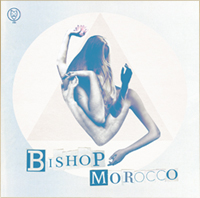
I’d never heard of Bishop Morocco.  Then they played this song on CBC Radio 3.  “White City” is a fascinating confluence of influences.  It sounds somehow late 80s/early 90s yet the the electronic drum sound is decideldy retro, early 80s.

The guitars are heavuily vibratoed.  As are the vocals.  It’s a surpiringly full sound given the limited instrumentation (it’s pretty much guitars and drums).  And it’s quite gloomy (circa The Cure’s Pornography), and yet once the chorus kicks in (still vibratoed, but now major chords) the song perks up (some).

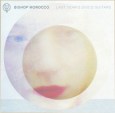
The CBC site has 4 songs by them, and each one confirms that the early New Order/Cure sound is what they’re shooting for.  The cover of their EP “Last  Year’s Disco Guitars” really seems to encapsulate their sound (more so than their album cover does).  I enjoyed the song but after a few listens, I grew kind of bored by it.

[READ: July 4, 2010] “The Entire Northern Side was Covered with Fire”

Rivka Galchen is a completely new author to me.  This was a weird little story that I enjoyed quite a lot, because even though it seemed to be all over the place, narrative-wise, it was actually quite focused.  The narrator is an author who has a burgeoning fan base: male prisoners, who write letters. But of equal importance is that at the time that she sold her movie, her husband had just left her.  Out of the blue.

Although perhaps not out of the blue.  Because in a very humorous (darkly humorous) bit, we learn that all of her friends knew of her husband’s site: i-can’t-stand-my-wife.blogspot.com.   (more…)

Read Full Post »

SOUNDTRACK: YOUNG RIVAL-“Got What You Need” (2009).

I was only able to hear this song once.  It’s surprisingly on available on the Young Rival playlist on CBC Radio 3).  Young Rival play a kind of fast, noisy punk and yet the melodies underneath the noise are very poppy.

I also played the track “Authentic” which is similar in style.  I found both songs very catchy, but have to admit that even a few minutes later I couldn’t recall them at all.  I’d say it’s perfect  for radio airplay.

[READ: June 14, 2010] “Say the Names”

This, indeed, is the quintessential Canadian story.  Every line in the piece is taken from a Canadian song, book or movie.  (I only learned that from the introduction to all of the stories. There’s nothing in the story to reveal that.  Although given its fractured nature and the very obviousness of some of the titles, it wouldn’t be too hard to figure out.]

It’s kind of fun to play “spot the lyrics” or what have you.  I knew some, but far fewer than I would have guessed.

As for the story itself, well, it’s a little disjointed. (more…)

Read Full Post »

SOUNDTRACK: THE BEATLES-A Hard Day’s Night (1964).
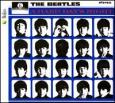
Despite my CD player trying to eat this disc, I still managed to listen to the whole thing.

This album came out just a few months after their second disc.  But it is quite a leap forward musically.  Rather than the simple rock and roll sound of the first two discs, there’s more depth of sound (attributable to George’s 12 string guitar?)  Perhaps also because of the use of the 4 track, rather than the 2 track mixer.  Also, Lennon and McCartney wrote all of the songs, so they weren’t bogged down by covers,

At first I thought that I had gotten to my first Beatles disc where I knew all the songs.  But that turned out not to be true.  I knew the first half of the disc (the songs that are in the movie).  But when we got to the second half (and I learned that the US version was different in that in included George Martin’s score for the movie (!)) there were a couple of tracks I didn’t know at all.

With the tracks sequenced as they are, you don’t get a big crunching finale at the end of the disc, like on the first two.  However, those first few songs are pretty classic (even if “Can’t Buy Me Love” completely contradicts the sentiment of “Money” from the previous album.  This is a really enjoyable fun disc from start to finish, even the songs I didn’t know.

I was pretty certain that after this disc, I’d recognize all of the songs.  But I had one more surprise waiting for me.

I also brought the movie home from the library one night but I couldn’t get through most of it.  Guess you had to be there.

[READ: May 13, 2010] “The Flight Album”

This is a memoir of the a Vancouver author’s stay in New York City.   I wasn’t really sure how interesting this story would be, I mean, there are a million stories in the City, so why should this transplant’s story be worth reading?

The piece starts with the author’s awkward assimilation to New York (and the almost offensive Dave Chapelle joke she relates to a cabbie).  His mild reaction lets her know that maybe she can make it there.

For me the best part was the author’s insert of Shit: A Guide to Canadian Usage.  The most notable difference between Canadians and Americans, she has found, is that Canadians use the word “shit” all over the place, and in many ways that Americans do not (in fact it is more all purpose than fuck.  The things that started it all was her use of the phrase “What the shit.”)  It is quite a funny section. (more…)

Read Full Post »

I’ve waited to post this, my wrap up of ideas abut 2666, until I saw what others had to say about it.  Which is kind of a cop out but also kind of understandable.  This book is a giant mess of information, and I’m not entirely sure how to process it all.  So I’ve been looking for help.  And I’ve gotten some, but it’s all kinds of contradictory.  Most people seemed to hate the book.  A few people enjoyed it somewhat, and one or two people really felt moved by it.

I think I fall squarely in that middle camp.  As anyone who has been reading here knows, I became obsessed with Bolaño’s books, and read all of his short fiction (saving Savage Detectives for a read in a few weeks).  And yet I’m not exactly sure WHY I felt compelled to read these stories.  (I’m very glad I did…there will be more on Bolaño himself in a day or two).

I’ve decided to look back over what I wrote to get a sense of what I thought of the book (I knew these posts would come in handy). (more…)

Read Full Post »

SOUNDTRACK: FUGAZI-Steady Diet of Nothing (1991).

Jangly noisy guitars open the track (and then a lengthy silence after a minute or so).  And this loud/soft dynamic is pretty dramatic on this disc.

There’s a slot of really cool sounds (within the framework of loud noisy alterna-punk).  “Reclamation” opens with some harsh guitar harmonics over a kind of spoken verse, but it bursts into a great chorus.  “Nice New Outfit” is quite catchy (even if lyrically it’s very dark).  But by the middle of the disc, it feels like some of the songs aren’t quite as interesting.

Of course, the instrumental “Steady Diet” is noisy and wonderful.  And “Runaway Return” has a catchy noisiness to it.  But the band comes back to a high point with “Polish” and the thoughtful “Justice Letter” (written about favored  Supreme Court Justice William Brennan who retired in 1990).

This record is a cool departure from the first disc.  To me it’s not quite as immeiate as Repeater, and yet it still has some really powerful songs.  I find that no matter how many times I listen to it there’s a few tracks that never grab me, but overall, this is another great release from Fugazi.

[READ: Week of April 26, 2010]  2666 [pg 831-893]

Wow.

The book is over and I am blown away.  I don’t know if it was the set up, or my utterly lowered expectations or the complete lack of connections previous to this, but I had assumed that this story would end (well, actually exactly as it did, with him going to Mexico) but the 30 pages before the end blew me away.  I can’t get over how nicely he tied so much together and in such an unexpected way.  I could not tear myself away from the end.  Wow.

I’m still not sure how I feel about the whole book.  I’ll do a final thoughts post after I digest, but the ending of the book was immensely satisfying. (more…)

Read Full Post »

SOUNDTRACK: THERAPY?–One Cure Fits All (2006).
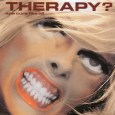
I’ve always liked Therapy?’s brand of aggro-alt metal/whatever you call it.  Their earlier stuff was harsh and dark. During their middle years they grew surprisingly commercial (although they’ve always had a bit of a commercial side to them, even at their harshest).

The last album I got from them was 2003’s High Anxiety (the first in a series of grotesque and unpalatable CD covers which culminates with this horrorshow).  I think the band must have lost any kind of distribution deal in the States, because it is still very hard to find these later discs (without paying way too much for them).

I was delighted to find this one on Lala.  And it stands as a pretty solid Therapy? disc.  They have always had guitars that sounded very sharp, almost electronic, which I thought really exemplified their take on angry literate metal.  And this disc opens up with it (after the 30 second “Outro”)

Their earlier tracks (like the awesome “Teethgrinder”) employed sonic tricks that really propelled the songs onto genius territory.  These songs are a bit more conventional, and yet they’re hardly commercial.  The most likely single would be the “ballad” (which also rocks pretty hard near the end) “Dopamine, Seratonin, Adrenaline.”

The back half of the disc is more melodic and catchy (a sort of reversion back to their middle period?). The only song that veers too far into pop territory is the closer, “Walk Through Darkness.”  It’s almost a bit cheesey, especially after all the heaviness of the earlier tracks.

It’s a fun disc, and a shame that it (and those BBC Sessions, which I am drooling about!) have yet to get a proper release in the states.

[READ: April 28, 2010] “Austerity Program”

In one of the letters to The Believer this month a reader suggests that they start printing fiction.  No reply is given to the letter.  At the same time, here is a piece that is certainly fiction.  There is no comment or explanation attached (which is surprising as The Believer usually tells us everything that’s going on in the magazine.

So, I’m going to treat this as a short story.  Tucker Nichols is responsible for the art direction, while David Khoury wrote it.  It is printed as a series of letters on official letterhead (with a logo but no name) stationary.

Much like with the novel Ella Minnow Pea, the “austerity” is a cost saving measure in which letters are removed from general use. (more…)

Read Full Post »

SOUNDTRACK: THE DEAD MILKMEN-Chaos Rules: Live at the Trocadero (1994).

It wouldn’t be a complete look at the Dead Milkmen without mentioning their one live release.
Chaos Rules is a surprisingly good live set (taken from two separate concerts).  They had to leave all of the songs from their Hollywood Records discs off this collection, so this comes across more as a classic concert rather than a comprehensive one.

The band sounds great and the songs sound pretty close to the originals.  Not that the originals were hard but it wasn’t always obvious whether the Milkmen were doing what they were doing on purpose.  This set suggests that they were.

As any good live band, they play around with their songs, being surprisingly angry about local politics and changing the (by then twenty year old) “Bitchin Camaro” intro to reflect that.

The only reason it would have been nice if they had been allowed to include some of the Hollywood Records songs (they do sneak one in under a different name) would be to see if they played them any differently.  Since the early tracks are pretty chaotic, I wonder what would happen to the latter, more mellow songs.  Did they stand up under the weight of the nonsense or did they become more ramshackle as well?

I guess I’ll never know.  This is not essential by any means, but it is an interesting artifact for the curious and is totally enjoyable for DM fans.

[READ: April 23, 2010] Distant Star

Because Bolaño never does anything typical, this novella is a spin-off of sorts to Nazi Literature in America.  The introduction states that “in the final chapter of my novel Nazi Literature in America I recounted, in less than twenty pages and perhaps too schematically, the story of Lieutenant Ramirez Hoffman…which I heard from Arturo B.  He was not satisfied with my version…So we took that final chapter and shut ourselves up for a month a half in my house in Blanes, … where we composed the present novel.  My role was limited to preparing refreshments, consulting a few books and discussing the rest of numerous paragraphs with Artuto…”

Okay, there is so much wonderful deception in just this introduction to this book it totally cracks me up.  (Arturo B has long been a stand in for Bolaño himself). In the original, the narrator is named Bolaño (he is the narrator in jail who eventually helps the detective locate the poet).

For yes, the story is the life of a poet who is also a murderer.  And, the story is pretty much the same as the 20 or so pages of Nazi Literature.  It is now an extended meditation on this particular poet.  All of the events that were present in the short version are here, they are all just fleshed out with Bolaño’s wonderful details and full biographies of other characters.

The big, weird thing though is that almost all of the names have been changed (to protect the guilty?).  So even though the poet of this book has the same exact  life story as Lieutenant Ramirez Hoffman, he never has that name in Distant Star (and he goes through several pseudonyms).  There are twins in the short version who now get new names.  Even the poetry teachers have different names.  However, the detective who hunts him down at the end has the same name.  Weird.

The book works as a critical assessment of the Allende administration (which is why the real Bolaño was imprisoned).  But on to the story. (more…)

Read Full Post »

SOUNDTRACK: PHISH-Joy (2009).

This is basically Phish’s reunion disc (after a 5 year hiatus).  It opens with one of their poppiest songs, “Backwards Down the Number Line” a song that picks up where their least disc left off: with a feeling of driving down a country lane with nowhere to go, windows opens, just happy to be alive.  The second track, “Stealing Time from the Faulty Plan” is a delightful rocker with a supremely catchy chorus “got a blank space where my mind should be….”
The third track, “Joy” starts as a simple piano ballad, but quickly morphs into one of the prettiest songs I’ve heard in ages, an outrageously happy upbeat tender song: “We want you to be happy, cause this is your song, too.”

“Sugar Shack” is a delightfully funky song, recognizable at once as one of Mike’s songs.  It’s a simple, pleasant enough track, but somehow Mike’s voice sounds weaker than usual.

“Ocelot” is a silly track (and one of my favorites) while “Kill Devil Falls” is a bluesy number that will easily be a lengthy jam live.  It’s my least favorite track on the disc, but it is followed by a more upbeat future-jam called “Light” which features delightful multi part harmonies.

The highlights of the disc are the final two songs: the 13 minute “Time Turns Elastic” and the five-minute “Twenty Years Later.”  “Elastic” is a wonderful non-jam, a thoughtfully constructed epic with many parts (although not an elaborate prog rock track or anything).  It’s catchy and moving with sweeping grandeur and easy to sing parts.  And it melds wonderfully into the delicate multipart gorgeous final track.

This is a really strong, mature disc from Phish. There’s not a lot of silliness or nonsense, just some great uplifting gentle rock songs.  It’s quite wonderful.

[READ: Week of April 19, 2010]  2666 [pg 766-830]

This penultimate section of 2666 (the end is nigh!) settles down into an almost pasotral recollection of Archimboldi (the man formerly known as Reiter) as a writer (yes the pronunciation of his name is not lost on me, although I assume it doesn’t have the same connotation in German).  And while it is not all happiness, there is more joy in these 60 some pages than in most of the rest of the book combined.

But before we get there, we have one final moment with a war criminal.

(more…)

Read Full Post »

SOUNDTRACK: New Moon Original Motion Picture Soundtrack (2010).

Back in the 90s, it seemed like every week there was a new soundtrack featuring an unreleased song from some great alt rock band.  This meant huge sales for soundtracks, even if for the most part they weren’t solid start to finish.  In fact, mostly you got three great new songs, three pieces of rubbish, one great song by a band you’d never heard before and two or three okay tracks.

The inclusion of a new Death Cab for Cutie song was the big news about this soundtrack.  And overall, the reviews were positive.  And I’m pleased to say there aren’t really any horrible songs here.  (I have no idea how the soundtrack fits in with the movie as I haven’t seen it and probably never will).

But as with that old soundtrack formula: we get a few good songs by reasonably well-known bands: Death Cab for Cutie, Thom Yorke, Bon Iver & St, Vincent, Muse, Grizzly Bear.  And then there’s a whole bunch of good rock songs.  The disc plays as something of a sampler of downcast, mellow alt rock. In fact, the back half of the disc sounds like a pretty decent alt rock radio station from the last decade or so.

Some of the tracks even sound like 90s alt tracks (Hurricane Bells, that song is 16 years old right?  And Sea Wolf, you’re channeling Peter Murphy, I know.)  The final two tracks are okay.  The Editors is kind of a Nick Cave via Joy Division sorta spoken word ballad.  And I admit I’m a little disappointed in the Lykke Li track–they got hyped beyond their ability.  The final track is a piano score, which is fine.

The biggest surprise to me is how much that Death Cab for Cutie songs sounds like a Rush song.  I’ve never considered that the bands sound anything alike before, and yet from the moment the song opens, that could be Geddy Lee singing, and that whole guitar structure is very Rush-like.  Maybe they should do a cover of it.

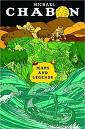
[READ: April 20, 2010] Maps and Legends

This is a collection of 17 non-fiction pieces by Michael Chabon.  The pieces cover everything from book reviews, essays about reading and writing, comic book and comic book artists and golems.

The opening essay is about the modern short story and it sets the tone for the entire book.  Interestingly, this essay talks about the state of entertainment and how “Entertainment has a bad name.  Serious people learn to mistrust and revile it.  The word wears spandex, pasties, a leisure suit studded with blinking lights. (13).  This very topic is at the heart of the David Lipsky/David Foster Wallace book (and in fact Chabon is mentioned in that book as well.)  Ah, serendipity. (more…)

Read Full Post »

« Newer Posts - Older Posts »