Feeds:
Posts
Comments

Archive for the ‘Books about writers’ Category

SOUNDTRACK: TIJUANA NO!-Transgresores de la Ley (1994).

In the mid 90s, when I was living in Boston, I discovered MTV Latino, and the Rock en Español resurgence.  Since I’m always interested in new music, I bought a few CDs by these Spanish-singing bands.  For most of my life I’ve thought about the rabid Japanese audiences who loved bands that sand in English.  Did they understand the lyrics?  And did it matter?  Well, here was a test for me.

Tijuana No! was the first band I bought and I really liked it (and still do).

The disc opens with a rollicking ska rocker “Goples Bajos” which features a wonderful horn filled breakdown and ends with a blistering guitar solo.  The title track, “Transgresores de la Ley” opens with a military beat and a military sounding flute before taking off with a heavy verse and, more impressively, a punk/shouty chorus.

My favorite song is “Tu y Yo,” it’s funky all over the place and has a super heavy midsection.  And “Borregos Kamikazes” has a wonderful juxtaposition of speedy, almost loco lyrics in the verses with some great group vocals in the chorus.

The first surprise (for me) comes with “La Esquina del Mundo” because suddenly there’s a female vocalist on lead.  She sounds great (her voice has a cool echo on it) and although she doesn’t quite convey the heaviness of the rest of the track, it’s an interesting juxtaposition.

The second surprise is that the track “Conscience Call” is mostly in English (I got so used to not understanding the lyrics that I was quite surprised to hear words I understood).

The final surprise comes with the penultimate track: an excellent cover of The Clash’s “Spanish Bombs.” Again sung by the female vocalist, her voice works wonderfully with the track.  The chorus, sung in Spanish, is really perfect.

So, in answer to the question, do you need to understand the lyrics to enjoy the music?, I’d say no.  Although it is nice once in a while.

[READ: November 20, 2010] The Savage Detectives

This was the Bolaño novel that I had initially wanted to read because the reviews were so glowing (amusingly enough it turns out to be virtually the last book of his that I read).  And now that I have read almost all of his books, it’s obvious how this book fits into his larger scheme of writing (I wonder what I would have thought if I hadn’t read the other books, too.  In fact, I wonder if I would have liked 2666 more at the time if I had read this one first.  As it is, I think I enjoyed this more having read 2666 first).

[DIGRESSION: When I was reading 2666 I found a fantastic review of 2666/The Savage Detectives by Daniel Zalewski, which reviews 2666 and The Savage Detectives in context of Bolaño’s life].

In a previous post I noted how Bolaño doesn’t really write conventional novels.  And this one is no exception.  Part I is the diary of Juan Garcia Madero, a 17-year-old aspiring poet.  It covers from November to December 31, 1975 .

Garcia Madero talks about his introduction to the visceral realists, a group of Mexican poets whose legacy is more or less unknown to us now (in the book–in reality there was no such group).  The two main visceral realists are Arturo Belano and Ulises Lima, and we will follow or look for these two for the rest of the book.

As with other Bolaño books, there is a massive obsession with sex.  At first Garcia Madero is a virgin and thinks about sex a lot.  Then he finally has sex with first one woman and then many women.  And he writes about them in his diary and spares no details.  (Many entries reveal him having sex with one of his girlfriends 5 or 6 times a night).  And there are of course whores and other deviant sexual individuals (including a guy who carries a large knife by which he measures his penis–we never see this, it’s all hearsay, but it’s in there).

And during this time, he is writing poetry as well–a fully welcomed member of the visceral realists.   (more…)

Read Full Post »

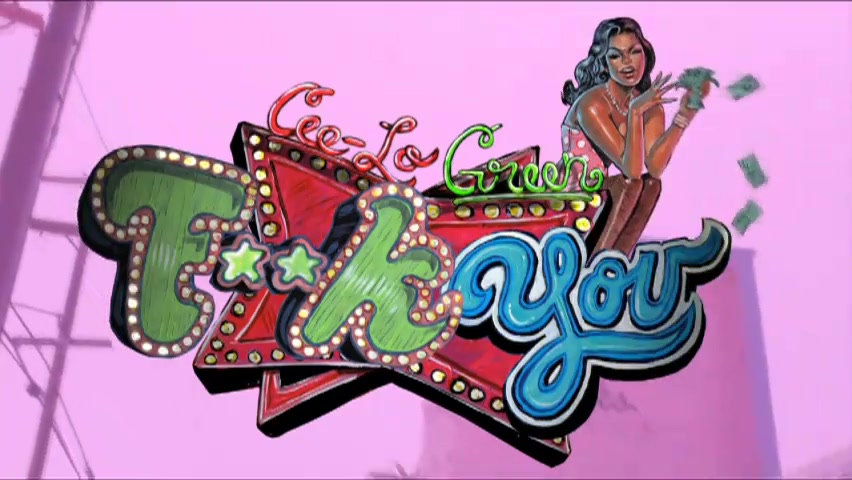
SOUNDTRACK: CEE-LO GREEN-“Fuck You” (2010).

Like the entire world, I am in love with this song.  I have long postulated that songs with cursing in the chorus are almost by definition catchier than songs that have none.   And this song is one of the most catchy fucking songs ever.   (I of course admit that the censored radio version “Forget You” is equally as catchy but we can’t forget that the curse version came first).

I have listened to this song dozens of times now and I simply haven’t grown tired of it.  It has a simple construction with an interesting descending musical motif and a killer killer hook.  But of course the key is Cee-Lo’s voice.  I first heard him with Gnarls Barkley and I considered getting some of his solo stuff based on the amazingness of his voice.  (I never got a round to it).  And now this song has pretty well solidified him in my esteem.(Actually his appearance on The Colbert Report where he sang Fox News in the chorus was the real solidification for me.

This song transcends genre (it’s played all the time on an alt rock station by me).  And I think that’s why it is so appealing and such a big hit.  And now I’m going to be whistling the chorus for the rest of the day.

[READ: November 20, 2010] “Two’s Company”

This story follows Franzens “Breakup Stories” rather nicely because it too is about a breakup.  This time, though, the story itself is much longer than the others (4 whole pages!).

The story is about Pam and Paul, a couple who married young and were immediately successful as TV scriptwriters.  They worked together, created memorable sitcoms and owned a company whose logo shows their names with a heart between them.

But as they settle into greater success they begin to look for something slightly different to occupy them.  I love that they said Paul stopped appearing in public because he had trouble “remembering whether the ‘O’ in ‘Michael Ovitz was long or short.”  And their public persona, just like their logo, shows them to be perfectly content and in love.  Of course, as seems inevitable, some cracks begin to surface in their perfect facade.

They are to cowrite a movie.  He has always be the more highbrow of the two (and usually gets the bigger laughs), but it is her common, even cliched, sensibility that makes all the money.   And Pam more or less takes the reins of the screenplay, writing about a couple who is perfectly happy together (the husband doesn’t even glance at the hot women that his friends are constantly ogling).  Paul feels that the story is supposed to be about them, and he starts to resent her.  He thinks her script idea is crap (a bland comedy for older ladies) and he begins to think that Pam is less attractive than she used to be.  The speed with which their partnership disintegrates is rather astonishing.

I enjoyed the story–Franzen has a great way with character.  Although I admit I was a little sad that the story went this way.  It would have been nice (like her purposed movie script) to see a couple who could work together, be successful and remain happy (I guess I’m a bland old lady).  But, as Paul seems to think, that’s just a fantasy.

Read Full Post »

SOUNDTRACK: LETTERS TO CLEO-“Cruel to be Kind” (1999).

I’ve liked Letters to Cleo since I first heard them back on WFNX radio in Boston.  And since I had a dog named Cleo and their album was called Aurora Gory Alice, how could I not love them?

This cover of Nick Lowe’s song comes pretty close to the end of their career when they were poppier and slightly less indie.  In fairness, they were always a poppy band and their hooks were irresistible, but they had a bit more of an edge in the beginning.

This cover is pretty spot on.  There’s not a lot of “Cleo” put into it.  It sounds a lot like the original, only sung by the wonderfully voiced Kay Hanley (she sang Josie’s parts in the (terrible) Josie and the Pussycats movie, the title song for My Friends Tigger & Pooh and (gasp) as a backing singer for a Miley Cyrus tour (that’s the sound of my indie heart breaking).  I love her voice (she has a strange pronunciation/accent of some words that I find endearing), so I find the LTC version better than the original, but it’s honestly not all that different.

[READ: Week of November 16, 2010] Consider David Foster Wallace [essays 4-6]

These three essays cover the novella “Westward…” and Infinite Jest.  I was pleased to begin the essays about IJ because I know that novel far better than I know the short stories or Broom of the System.

As I mentioned in the previous entry:  because I don’t have a lot to say about the pieces, I’m only going to mention things that I found puzzling/confusing.  But be assured that if I don’t mention the vast majority of the article it’s because I found it interesting/compelling/believable.  I don’t feel comfortable paraphrasing the articles’ argument.  Besides, what would be the point of that? (more…)

Read Full Post »

SOUNDTRACK: fIREHOSE-“fROMOHIO” (1989).

After the punk of The Minutemen, you wouldn’t expect the sound of fROMOHIO to come from Mike Watt and friends.  The opening song, “Riddle of the Eighties” is quite poppy, but with a countryish flair.  In fact, much of the beginning of the disc sounds not unlike the Meat Puppets–southwestern punk.  Track two, “In My Mind,” has a wonderful latin/Mexican feel to it (singer Ed Crawford has that whole southwestern vibe down quite well, even if they are from Pedro).

The disc also has what I’ve learned is that peculiar SST Records sound–almost nonexistent bass, despite what Watt is accomplishing.  Actually the bass is there, and it’s mixed fine but it’s much lower than you might expect for what they’re playing.

Even track three “Whisperin’ While Hollerin'” which is all about the bass (with cool blasts of guitar over the top) doesn’t have a lot of low end in it.  The bass sounds crisp and clear (which is good), just not very deep.  “Mas Cojones” is a weird one.  Funk bass with disco guitars over the top and some odd spoken word from Watt.

The highlight is “What Gets Heard,” a great funky fast bassline with angular guitars and vocals by Watt.  Near the end of the disc, “Some Things” is another solid song, really typical of this period: great bass, great guitar work and yet still a lot of punk.  And “Liberty for Our Friend” is a great folk singalong, and I dare you not to singalong by the end.

There’s also some fun, unexpected bits.  There’s a pretty acoustic guitar solo called, “Vastopol” and two (!) drum solos “Let the Drummer Have Some,” and the wonderfully titled, “‘Nuf That Shit, George.”

And its all packaged as really short songs (most around 2 minutes, with late songs running longer).  It’s a fun disc and a worthy addition to the SST catalog.

[READ: October 25, 2010] “Caught”

After the seriousness of “My Father’s Brain,” this true story about Franzen’s wicked days in high school was tremendously enjoyable, possibly one of my favorite pieces that I’ve read by him.

The piece opens with the incredibly tempting story about students successfully pranked their high school by managing to get a tire over the top of a 34-foot flagpole.  This sets in motion Franzen and friends’ attempts to do the same to their school’s 40 foot flagpole (there’s even a diagram or three!).  The story is exciting and filled with secretive plotting as they try so many different ways to get that tire over the top of the flagpole.

There’s a great bit of self-deprecation from Franzen.  He admits that although one of his friends was far more architecturally-minded, he himself was far more persuasive.  Ultimately, their gang put his “Devices” to work, which are universally decried as pieces of shit.

Although I assumed that the tale would focus only on their attempts at flag pole ringing, in fact the group undertook many pranks.  At first they called themselves U.N.C.L.E., but then they changed their name to the far more amusing (with an incredibly involved explanation) DIOTI.  DIOTI undertake several delicious pranks including removing the clappers from all of the bells in the school (and leaving a series of poems as  clues for where they are) and piling all of the classroom desks into one room.  (The “centrally located” comment and its resultant embrace by the school is simply wonderful). (more…)

Read Full Post »

SOUNDTRACK: AZTEC CAMERA-“Jump” (1984).

This is a wonderfully twisted covered of Van Halen’s “Jump.”  VH’s version of “Jump” is bouncy, lively, fun, it makes you want to yes, Jump!  It was many years after the release of VH’s “Jump” that I heard the Aztec Camera version (even though it was released the same year).  The first time I heard it I assumed it was a joke.

I didn’t know much about Aztec Camera (and actually still don’t–looking at their Wikipedia page I don’t recognize the names of any of their singles).   But I have grown to love this cover of “Jump.”  In fact I prefer it to the original.

The opening chord structure makes me think it’s going to be the Rolling Stone’s “Waiting on a Friend” but instead of Jagger’s ooh oohs we get Roddy Frame’s deep voice practically whispering the lyrics that David Lee Roth made famous.  And it stays with this delightfully mellow acoustic style and pacing throughout.  The guitar work in the bridge is actually much more interesting than the bridge in the Van Halen version (ouch).

The chorus seems kind of odd with his very mellowly saying “jump” (although David Lee Roth doesn’t scream “jump” either, it’s the backing vocals that do the exciting part).  I feel like the original VH version hasn’t held up that well, but the Aztec Camera version shows that it’s quite a good song.

Check it out here.

[READ: Week of November 8] Consider David Foster Wallace [first three essays]

I lied.

I said that I wouldn’t feel up to writing posts about all of the articles in this book on a regular basis.  As it turns out, I don’t have a lot to say about these essays, but I had a few thoughts about each one.  Since there’s a group reading going on, I thought it might be fun to post these thoughts now while people were still speaking about the articles instead of waiting until the end.

Before I say anything about this articles, I want to preface that I’m not going to repeat things that were said in the group read (for a couple of reasons).  Everything here is going to be things that I felt about the article and maybe, if something another reader says really sticks with me, I’ll mention it as an influence on me.

Having said that, in one of the comments, author Clare Hayes-Brady says that her article is a part of a longer thesis.  I found this to be a very useful thing to know, and I assume that she is not the only one who had to compress her article because of size and time constraints.  With that in mind, I’m going to accept that if it seems like the author could/should say more about a certain thing within the article that there is probably a larger version of the piece.

And finally, because I don’t have a lot to say about the pieces, I’m only going to mention things that I found puzzling/confusing.  But be assured that if I don’t mention the vast majority of the article it’s because I found it interesting/compelling/believable.  I don’t feel comfortable paraphrasing the articles’ argument.  Besides, what would be the point of that?

(more…)

Read Full Post »

SOUNDTRACK: fIREHOSE-Live Totem Pole EP (1992).

Listening to Superchunk’s “Slack Motherfucker” reminded me that I knew a live version from somewhere else.  And, with a little help from the web, I remembered it was here.

fIREHOSE is Mike Watt’s post-Minutemen band, and they are a lot of fun (and even managed to get a major label deal before breaking up.  This (apparently really hard to find) EP is a great, weird collection of covers: Blue Oyster Cult’s “The Red and the Black”; Public Enemy’s “Sophisticated Bitch” (yes you read that right); The Butthole Surfer’s “Revolution (Part 2)” (with the repeated coda of “Garry Shandling, Garry Shandling”; Superchunk’s “Slack Motherfucker” and Wire’s “Mannequin”.  There’s two Watt-written songs, “What Gets Heard” (from fROMOHIO) and “Makin’ the Freeway” (from if’n).

The covers are universally solid.  The band sounds punky and kind of sloppy and fun (not so terribly virtuosic on the solos), and they bring an amazing vitality to these songs.  The Public Enemy song is probably the biggest surprise as it sounds fantastic in this rocking band set up (although the original rocks pretty hard too, frankly).  And “Slack” is possibly even faster and punkier than the original (it sounds awesome here).  Interestingly to me, “Mannequin” sounds completely like an SST track (which if you know the label will make sense and if you don’t, it won’t) even though it’s a Wire song (and not released on SST).

I’d always known that Watt was a mean bassist, but man, he is wild on this disc.  The runs and fills he puts in all over the disc are great.  “What Gets Heard” has some great slap bass and “Freeway” is one of Watt’s weird and delightful spoken rants with fantastic bass fills.

fIREHOSE may not have always been brilliant, but they had moments of awesomeness.

[READ: October 16, 2010] “The Failure”

This story is part of the 1999 New Yorkers‘ 20 Under 40 collection (it’s the first story that was not included in that issue).  Its also the first story by Franzen that I have read.

It’s tempting, since I’m in a David Foster Wallace mood, to think that DFW was some kind of inspiration for Franzen (they were friends, after all).  The opening of the story talks a bit about cruise ships.  And Wallace’s “Shipping Out” was published in Harper’s just a couple of years before this.  Having said that, aside from the fact that the protagonist’s parents are taking a cruise (and there’s some cruise-mocking), the story doesn’t have much else in common with the piece, so we’ll get past that.

The story was excerpted in the main 20 Under 40 issue (the first few paragraphs), and I was intrigued, although the excerpt didn’t really indicate where the story would go at all.

Chip is a midwestern guy who has moved to New York City. He has lost a teaching job (for a very bad reason) and is now trying to survive as a writer.  His parents are in town briefly because they are taking a cruise out of New York.  And as he updates his mother and father on what he’s been up to, the list of minor failures (the ones he admits to and doesn’t) grows and grows.  And it’s clear from his mother’s talk that she’s more than a little disappointed in his reality. (more…)

Read Full Post »

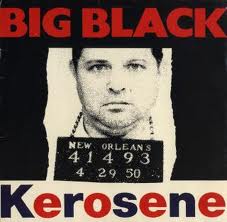
SOUNDTRACK: BIG BLACK-Kerosene [live] (1990).

It never occurs to me to go looking for live versions of songs online, even though there are clearly  thousands of songs I would like. So, I wait for them to come to me.  My friend Andrew posted a video of this song.  And it’s the first time I’ve seen Big Black live.

I’ve liked Big Black for a while (I got into them after they broke up). It’s not pleasant music by anyone’s standards, but there’s something visceral and unsettling about the lyrics and about Steve Albini’s guitar sound that I really enjoy.

I’ve seen pictures of Albini before, but I’ve never seen him in action, and I have to say, I can’t believe a guy as skinny and frankly, nerdy, as him is making sounds like this (although I can see someone like him being this angry).  Watching him in this video is pretty great.  He’s got huge glasses, his t-shirt is tucked into his pants–no that’s not right, it’s tucked into his guitar strap…how is he holding his guitar up??– and then he plays this guitar that sounds like, what…glass, needles, pins, shards of something, certainly.

And just when you think that the song is only noise, this fantastic bassline kicks in.  The riff is outstanding: it’s heavy and propulsive and balances the sharpness of the guitar perfectly.  In this version, about midway through the song he seems to be walking out into the crowd, and they sort of hold him up or push him back on stage, while he’s playing.  And at the end, of course, he destroys the guitar.

Lyrically, it’s as disturbing as anything Albini has written, but man is it cathartic.   And this live version is even more stark and brutal than the studio version.

[READ: June 2010 & October 12, 2010] “Extreme Solitude”

After reading “The Oracular Vulva,” I decided to re-read this, his recently published story.  When this story came out in June, I heard that to some readers the main character reminded them of David Foster Wallace, and they speculated about whether or not this story was inspired by or a tribute to him.  Unfortunately, I read that analysis before I read the story and it automatically influenced my reading (which if you haven’t read it I have now done to you, sorry).

I’m not in any way convinced that it is about him, although there are many similarities–size, athleticism, chewing tobacco, intelligence, semiotics.  But since I know nothing about DFW personally and I don’t know if Eugenides does either, I won’t pursue that line any further.  I will say that I didn’t find that train of thought terribly distracting while reading, though.

Anyhow, this story is about a senior in college named Madeline.  Madeline was a good student and a good girl.  She had dated some, but never had any crazy affairs (and was a bit uncomfortable when her roommate proudly wore (or displayed) her diaphragm–the joke about wearing it to an event is particularly funny).

By her senior year, after breaking of a long relationship with Barry, Madeleine was prepared to settle into her major: English.  She was excited to read and to read a lot (it was her passion as well as her major).  She also decided to sign up for a Semiotics class, which is where she met Leonard.

The description of the semiotics class is wonderful, from the pretentious students to the insanity of the class assignments–from Lyotard to Derrida and everyone in between, authors that I loved in college but since leaving academia I find so convoluted as to be kind of silly. I adored the sentence: “(Could “the access to pluridimensionality and to a delinearized temporality” really be a subject [of a sentence]?)” (more…)

Read Full Post »

SOUNDTRACK: FUN BOY THREE-“Our Lips Are Sealed” (1983).

In an interview with David Foster Wallace’s sister, she says that David spent an entire summer listening to this song.  Most of us know the Go-Go’s version which is bubbly and playful (even though the lyrics–which are the same–are quite dark).

I’ve had this song on some compilation or other for years and I’ve alway thought of it as a kind of novelty.  And yet the more I listened to it, the more I liked it (and the more I liked it more than the Go-Go’s version).

Terry Hall, the singer of Fun Boy Three (and The Specials), co-wrote the song with Jane Wiedlin.  And it’s funny to hear how very different the two cowriters made their versions.

There’s definitely a new romantics vibe to the Fun Boy Three version, but the great bass backing vocals bring a coolly mysterious element to the song.  And if you check out the live version, you can see the polar opposite stage manner from Belinda Carlisle.  Terry Hall makes Robert Smith seems gregarious and silly.  And yet, for all of the darkness of the song, it’s still hard not to bop along to.  It’s pretty wonderful.

[READ: November 7, 2010] Consider David Foster Wallace

A group read of Consider David Foster Wallace is currently underway.  I had planned to read along and contribute weekly posts here.  I read the first two articles and, as it turns out, I have literally nothing useful to say about them.  And I certainly don’t have enough to contribute a weekly opinion about them.

It’s not that they are bad, not at all.  The onus is mine.  I am out of academia for something like a decade now.  I am totally out of practice for coming up with clever arguments and rebuttals to well researched pieces.  I have also seen a few people’s comments and critiques of these pieces and I realize that I am just not in the right mindset to be a productive member of the academic community.

But that doesn’t mean that I’m not going to read it and write a post when I’m done (I’ll likely follow along with the discussions, so this book won’t get posted for quite some time).

In the meantime, I wanted to say a few words about the preface and introduction.  (more…)

Read Full Post »

SOUNDTRACK: BROKEN BELLS-Broken Bells (2010).

When I first played this disc I was really disappointed by it.  I’ve grown to expect crazy magic from Danger Mouse, and I assumed that this collaboration with James Mercer of The Shins would be crazy awesome.  But it seemed very mellow to me.  Mellow in a way that just kind of sat there.  So I put it aside for a while.

Then I listened to it again a little later and I found that I really liked it this time.  In fact, it rapidly grew into one of my favorite releases of 2010.

The disc is a wonderfully paced mixture of acoustic guitars, interesting keyboard sounds and, often, downright bizarre electronic choices (subtle, yet bizarre).  The weird sounds that open the disc, a kind of backwards keyboard, are disorienting but also very catchy.  And the song itself is instantly familiar.  It’s followed by “Vaporize” a simple acoustic number that bursts out with some great organ and (very) distorted drums.  It also features a fascinating horn solo!

“Your Head is on Fire” settles things down a bit with a mellow track which, after some cool introduction, sounds like a  pretty typical sounding Shins track (ie, very nice indeed–and more on this in a moment).

“The Ghost Inside” feels like a ubiquitous single.  I’m not sure if it is or if it’s just so catchy (with dancey bits and hand claps and a great falsetto) that it should be everywhere.  “Sailing to Nowhere” reminds me, I think, of Air.  And the great weird drums/cymbals that punctuate each verse are weird and cool.

One of the best songs is “Mongrel Heart” it opens with a western-inspired sound, but quickly shifts to a quiet verse.  The bridge picks up the electronics to add a sinister air (and all of this is accompanied by nice backing vocals, too).  But it’s the mid section of the song that’s really a surprise: it suddenly breaks into a Western movie soundtrack (ala Morricone) with a lone trumpet playing a melancholy solo.  And this surprise is, paradoxically, somewhat typical of the disc: lots of songs have quirky surprises in them, which is pretty cool.

Having said all this, there are a few tracks where it feels like the two aren’t so much collaborating as just playing with each other.  And that may have been my initial disappointment.  I was expecting a great work from a combined powerhouse, and I think what we get is two artists writing great stuff while seemingly respecting each other too much to step on each others toes.

There is another Broken Bells disc in the works.  And I have to assume that they’ll feel more comfortable with each other and simply knock our socks off next time.  But in the meantime we have this really wonderful disc to enjoy.

[READ: October 21, 2010] The Broom of the System

It dawned on me sometime last summer that I had never read DFW’s first novel.  I bought it not long after reading Infinite Jest and then for some reason, never read it.  And by around this time I had a not very convincing reason for not reading it.  DFW seemed to dismiss his “earlier work” as not very good.  I now assume that he’s referring to his pre-Broom writings, but I was a little nervous that maybe this book was just not very good.

Well I need not have worried.

It’s hard not to talk about this book in the context of his other books, but I’m going to try.  Broom is set in the (then) future of 1990.  But the past of the book is not the same past that we inhabited.  While the world that we know is not radically different, there is one huge difference in the United States: the Great Ohio Desert.  The scene in which the desert comes about (in 1972) is one of the many outstanding set pieces of the book, so I’ll refrain from revealing the details of it.  Suffice it to say that the desert is important for many reasons in the book, and its origin is fascinating and rather funny. (more…)

Read Full Post »

SOUNDTRACK: SUPERCHUNK-The First Part (1993).

The First Part opens with a guitar riff, very different from the chugga-chugga songs that they’ve played on the other tracks.  In fact, at the end of the verses, the bass backs out entirely leaving an interesting and unexpected sound for the song.

The second song, “Connecticut” is similar in that it also has a guitar riff (and a kind of solo) in the introduction.  The surprise comes at about a minute thirty-five when the guitar solo kicks in and the song suddenly shifts into an all out rocker.  This change is especially surprising since the song is just over 2 minutes long.

“Foolish” plays with a distortion-fueled repetitive riff that keeps the song moving.  It’s really quite infectious and something of a departure for the band.  This whole EP shows quite a leap forward in terms of Superchunk singles.

[READ: September 30, 2010] “The Toughest Indian in the World”

Sherman Alexie is the third author in the New Yorker’s 1999 20 Under 40 collection.

I have read a few Sherman Alexie pieces, and I’ve enjoyed what I’ve read.  And yet, for some reason, he’s not one of the authors I keep a look out for.

This story is about a newspaper writer. He is Spokane Indian.  We learn a little about his past.  And one thing–his father only ever picked up hitchhikers if they were also Native–is a tradition he follows today.  Even though his girlfriend doesn’t want him to pick up anyone.   We also learn a little about his previous girlfriends (like the white woman who only dated non-white men).

Alexie’s writing style is wonderfully fluid and relaxed during this background information. It’s a very easy read, and quite funny too.  But things change when he meets the titular toughest Indian. (more…)

Read Full Post »

« Newer Posts - Older Posts »