 SOUNDTRACK: THE STATLER BROTHERS-“Flowers on the Wall” (1965).
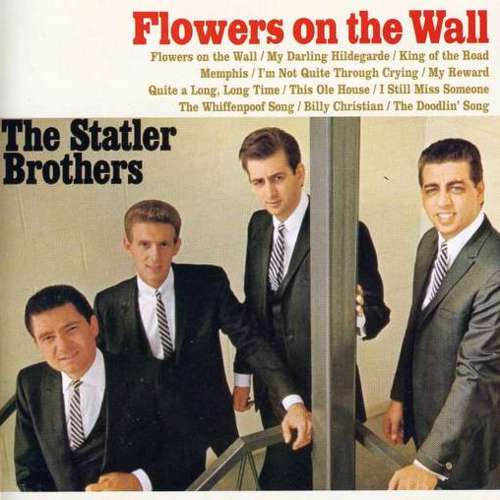 Vonnegut mentions this Statler Brothers song in Palm Sunday as well. I know this from Pulp Fiction–a song that I found very amusing and never would have guessed was a classic country song. Country music was very different in 1965 than it is now. I don’t even know if there was a folk or bluegrass category back then, and this song, with its banjo and bouncey acoustic guitar is a great example of the kind of country music I like. And those harmonies!
This song certainly seems to be about insanity–about a man counting flowers on the wall, playing solitaire with a deck of 51 cards, smoking cigarettes and watching Captain KAN Kangaroo. Don’t tell him he’s nothing to do. What a weird little song. And man is it catchy. No wonder it was a #1 hit.
[READ: May 31, 2013] Fates Worse Than Death
After reading Palm Sunday I learned that Fates Worse Than Death was a kind of autobiographical sequel to that non fiction book. I also learned that the two essays that make up Nothing is Lost Save Honor which is impossible to find (and for which I can’t even find a cover) are available in FwtD. However, since there is no real contents or index, you do have to read the whole thing to find out which chapters contain the essays. Or you can just look here and see that “The Worst Addiction of Them All” (which was published in The Nation) is in Chapter XIV and “Fates Worse Than Death” appears in Chapter XV.
The last time I read a bunch of Vonnegut together I got a bit burnt out on him and the same thing happened here. The problem with Vonnegut’s nonfiction is that he tends to repeat himself. A lot. And while this book is ostensibly about the 1980s, he talks an awful lot about his family and his friends from the war and his other literary acquaintances., like he did in Palm Sunday. In a number of places, he says that he doesn’t like to read himself in English, and it would seem that he doesn’t proofread to see if he said something already either.
This is not to say that the book is not worth reading. Indeed, if you read Palm Sunday in the 80s and then this one in the 90s, you might not remember all of the details that pop up again, but when you read them days apart…well. (more…)



 I Just Read About That...