Feeds:
Posts
Comments

Archive for the ‘Big Books’ Category

[LISTENED TO: August 2014] The Hero’s Guide to Saving Your Kingdom

stormThis audio book was ten hours long.  We listened to it on a long car trip (from Michigan to New Jersey) and when it looked like we might not finish the book, I considered slowing down on the interstate so we’d get to the end before we got home.  THAT is how good this book was.

This book picks up a few months after the exciting conclusion of the first book.  The Princes are back home (well, most of them are), reveling in the glory of their accomplishments.  Except that those blasted bards have written new songs about the League of Princes, like the incredibly popular “The Embarrassment of the League of Princes” which is causing the Princes even more grief than they had before they saved the world from blowing up.

Prince Liam is living with Prince Frederic (in Frederic’s castle).  He is trying to train Frederic to be a better fighter (with very poor results).  Princess Ella is living there too (in separate rooms, of course).  Ella and Frederic have been engaged since their first adventure, but not much has been spoken about it since that first day.  Indeed, Ella is a much better fighter than Frederic and she has been training harder with Liam. Liam is clearly smitten with Ella, but he doesn’t want to hurt Frederic.  When Frederic’s father gets fed up with Liam trying to teach Frederic how to fight, he makes it clear that Liam is unwanted.  So Liam leaves.

Gustav is not fairing any better.  It is his brother’s birthday and the humongous cake has been set out for them (while Gustav has been sent to the kiddie table).  When he disrupts the ceremony once the bard sings “The Embarrassment of the League of Princes,” he is unceremoniously sent off to teach the trolls how to farm (so they stop stealing from the villager’s gardens).  Of course, Gustav knows next to nothing about farming, so he teaches them how to brawl, which the trolls love even more.

Duncan has been writing a book since the first book. It was originally to be called The Heroes’ Guide to Saving Your Kingdom (hey!), but has since been changes to The Heroes’ Guide to Being a Hero.

The Prologue of our book tells us about Duncan’s book and then says:

No you may be asking yourself, Who is this Prince Duncan and what makes him such an expert on heroes? To which I will respond by saying that perhaps you may have skipped a book on your way to this one.  You should probably check on that.

So yes, the series will continue to be hilarious. (more…)

Read Full Post »

[LISTENED TO: June 2014] The Hero’s Guide to Saving Your Kingdom

heros1Holy cow, did I love this audio book!

I was looking for an audio book that the kids would enjoy on a long car ride.  The title sounded terrific and when I saw that it was read by Bronson Pinchot, I didn’t wait another second to download it.  And yes, Pinchot’s reading was stellar and amazing, but in addition, the story was hilarious and fantastic.

And I’ll get out of the way that the book is completely kid-friendly.  There’s nothing objectionable (the harshest word is crud).  Some of the violence is cartoony (and Pinchot makes it pretty visceral) but it doesn’t last long.  My nine-year old and six-year-old were just as hooked as the adults.

This book aims to set the record straight about Prince Charming.  Prince Charming is of course in every fairy tale, but you did know that they are not the same Prince Charming, right?   Those lousy bards who created the songs about the female leads certainly got the Princesses names correct, but they never bothered to get the Princes’ names into the songs.  (Charming is an adjective, not a name).  So, meet Prince Liam, Prince Frederic, Prince Duncan and Prince Gustav. They’re the Prince Charmings (actually it is Princes Charming–the book is very much a stickler for proper grammar), who saved–Sleeping Beauty, Cinderella, Snow White, and Rapunzel, respectively.  And they are out to make names for themselves or at least make their names known.

Each one of them starts as an outcast for a different reason.  The only thing I found confusing about this story was trying to keep the kingdom names straight.   So I’m trying to outline them here. (more…)

Read Full Post »

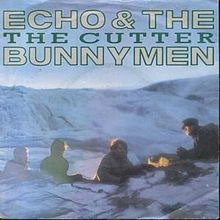
reySOUNDTRACK: ECHO & THE BUNNYMEN-“The Cutter” (1983).

echoI’ve never been a huge Echo & The Bunnymen fan, but I do like their greatest hits.  This is one of them, and it’s a song I’ve liked from pretty much the minute I heard it.  Ian McCullough has a Jim Morrison vibe in his vocals, and there are interesting Eastern melodies and pieces thrown into the song (like in the intro).  These give it an unconventional feel, even though the main melody is pretty straightforward.

I have no idea what the song is about–I sing along without really thinking about it.  And the “spare us the cutter” chorus, complete with screechy guitar chord is pretty dynamic.  As is the loud drum change during the “drop in the ocean” part.

By the end of the song the drums seem to sound bigger, and the fills really propel the song to the end.  It’s a fine song by a band that I’m not sure I need to hear more of.

[READ: August 25, 2014] Pale Summer Week 7 (§46-§47)

After the pile of small chapters that last week gave us, this week offers just two.  One is a very lengthy discussion between two characters.  The other is another piece of the Toni Ware puzzle.  I enjoy the way the first of these sections balances the medical, the emotional and the supernatural.  And it makes me laugh that Drinion’s supernatural bit is never addressed directly in any way–it just is–as assuredly as Rand’s psychological problems just are.  But I do find it interesting that more people have talked about Rand’s problems than Drinion’s (even though his is as fascinating as he himself is dull).
(more…)

Read Full Post »

tpk5SOUNDTRACK: INTERIOR DISPOSITION-“Fornix” (2008).

Critical Injuries Five Years of RehabilitationIt was challenging to find a related song for this week’s reading, although frankly a band called Interior Disposition would fit with just about any DFW passage.  But having a song called “Fornix” paired nicely with the computer problems that the author faced this week.

From the online information, it seems like Interior Disposition is a metal band.  And yet when I tracked down their full album and listened to a bit it’s largely trippy outer space noodling, or as one of the sites labels them: dark ambient.  There’s bubbling sounds and sounds of what I think of as deep space.  It is strangely relaxing and yet with a hint of tension all the way through (so yes, dark ambient is a pretty good sum).

Okay a little more digging tells me that the band is actually a guy, Oleg Hurvatov, who is Russian and also records under several other aliases: the wonderfully named Exploplasmatic Coagulation, and the puzzling Lanceolaria Im Licht Der Laterne

“Fornix” is only 1:46 and is probably a good introduction to the band/album.  If you like the 2 minute sound, the rest is pretty darn similar, just much longer.

[READ: August 18, 2014] Pale Summer Week 6 (§35-§45)

This weeks read was mostly a series of smallish sections.  some of them are entertaining, some of them provide interesting insights into the organization of the Service and of some of the characters.  And some of the sections are just downright funny.  The more I read of this book this time, the more bummed I am that it was never finished.  I even just wish I knew how much more he had planned.  There’s potential for this book to have spiraled out to 800-900 pages, there just seems to be so many things he could have followed up on–the Sylvanshine transformation to mastering RFI; the whole business with the infant, I love it; learning more about Mr. X (although likely there wouldn’t be much more about him); and of course what led to David Wallace leaving the Service and what compelled him now to write about it (which I don’t think is really addressed).
(more…)

Read Full Post »

tpk6SOUNDTRACK: BOREDOMS (various).

borepageBoredoms are an experimental noisy band from Japan.  I am completely unqualified to talk about them as I only know snippets of their output.  But I have always been intrigued by them.  Lead dude Yamataka Eye has been the main impetus behind the band.  And it seems like exactly the kind of noise/music one might play if one were horribly bored.

Yoshimi P-We is the longest serving drummer with the Boredoms.  She is the “Yoshimi” in the title of The Flaming Lips’ album Yoshimi Battles the Pink Robots.

Over the years they have gone from outright nose (listen to the track “Bubblebop Shot” from Soul Discharge or “We Never Sleep” from Onanie Bomb Meets the Sex Pistols which is mostly screams and drums) to a more ambient (but still noisy) style. They performed a live show with 77 drummers  on 7/7/07.

They’ve even changed their name to V∞redoms.

Here’s an interesting clip of the band from All Tomorrow’s Parties in 2012, being a lot less noisy but still pretty weird.

[READ: August 11, 2014] Pale Summer Week 5 (§27-§34)

There were a few things in this week’s reading that seemed to contradict other things in the reading.  This is not surprising as Pietsch says that there were things that he knew DFW would eventually change.  The notes at the back of the book (yes, I peeked, bit no spoiler here) say that there were different possible plotlines for some of the characters and even a duplication of a weird character trait.   But it’s funny to see it evolving in front of you.

In §27, Sylvanshine seems to be able to control his Random Fact Inference somewhat–and he seems to be using it rather than being inflicted by it.  This is either a big change or a cool development in Claude’s life.

There is also what I think is an actual mistake: two people have the same number: 907313433 (see §30).

In another “unfinished” issue, the surveillance in §29 is one of those situations that would certainly have been explained in greater detail (or had another scene about it).  I initially assumed they were doing surveillance for deadbeat companies (maybe for new vehicles), but there are indications (in later sections) that perhaps something else is going on, maybe to do with the Glendenning/Lehrl issue that Reynolds and Sylvanshine are talking about in §30.

One thing that I hadn’t explicitly noticed earlier, but which comes out in Cusk’s section below is the idea that “more information is not better.”  While this seems to be very true for their job, it can certainly be a debilitating world view and I wonder if that is at play as well. (more…)

Read Full Post »

tpk4SOUNDTRACK: NEGATIVLAND-“Nesbitt’s Lime Soda Song” (1987).

limeThere are multiple references to Nesbitt’s soda in this book.  I am unfamiliar with Nesbitt’s except in this funny little song from Negativland (on their album Escape from Noise).  I have always liked this song, perhaps because it is so simple (and is an actual song) amidst the chaos of the album.

A simple strummed guitar introduces this quaint song about everyday frustrations:

We spent a lovely summer, my wife Elaine and me,
We bought us a great big motor home, with a shower and TV,
We was camping and having a great time, watching Brokaw on Today,
Till a bee flew into the Nesbitt’s Lime Soda, and we had to throw it away.

Now most of the time I’m a peaceful man, but I lost my temper that day,
Just one last bottle of Nesbitt’s Lime Soda, and we had to throw it away.

I’m including the second verse not only because of the sodas listed, which I find endearing, but also because of the phrase “good old Mountain Dew” which reminds me of something DFW would say:

I brought a case of Nehi, and Double Cola, too,
A half a dozen Upper 10’s, and good old Mountain Dew,
I bought a quart of cola-a, to get me through the day,
But just one bottle of Nesbitt’s Lime Soda, and we had to throw it away.

I think most of the Nesbitt’s in the story is orange (that was their big seller) but Nesbitt’s did actually did have a Lime (or I guess Lemon-Lime) soda as well

[READ: August 4, 2014] Pale Summer Week 4 (§23-§26)

After last week’s massive 100 page section inside of one person’s head, it’s nice to get back to some of these smaller sections.  I’m particularly pleased to have another David Wallace section, as I find his the most entertaining.

§23

This is a brief First person section that begins: “Dream:”  Rows of foreshortened faces, many blank doing endless small tasks. It was his psyche teaching him about boredom.  He was often bored as a child, but that boredom was not actual boredom.  Back then he worried and fretted a lot, feeling the “sort of soaring, ceilingless tedium that transcends tedium and becomes worry” (253).  It was anxiety with no object.

He was the nervous delicate son, as opposed to his brother, the gifted driven son whose nightly piano practice coincided with their father’s return from work.  I section that says “after the incident with my own son” (254) reminded me that someone suggested that “Incarnations of Burned Children” may actually fit into this book and it seems like that could be applicable here, although I shudder to think it.  In psychotherapy he realized that his family was Achilles.  His brother was the shield and he was the heel. His father was a warrior, but his mother’s role was unclear. (more…)

Read Full Post »

tpk3SOUNDTRACK: OBETROL-“The Sound Machine” and “Chopped an Dropped”(2011).

obetrrolObetrol is a band that I can find out very little about. They seem to have 5 songs out and each one is quite different. My favorite is “The Sound Machine” which has a lush sound with twinkly guitars and a wispy female vocalist singing over the top of it.  It has a very trippy slow motion quality to it.  The singer sings a bit like a delicate Kim Gordon (in that shes not always exactly on key).

It’s hard to get more out of this song since it’s only 2:25, but I think it would make a cool intro to any record.

“Chopped and Dropped” on the other hand opens with buzzy guitars (and a “Kick Out the Jams” sample).  The vocals are sung (screamed) by a man. It is a fast-moving tinny punk song with trippy female echoed vocals in the background.

Hard to pin them down, but you can check them out here.

[READ: July 28, 2014] Pale Summer Week 3 (§22)

This week’s read is only one section because it is almost 100 pages of one person’s testimony.  Presumably, this is also part of the testimony on videotape which was broken down into smaller sections.  But there is no “context” for this section;  no ID number.  Although it does address very similar issues and questions.  I was on the fence about how much to include here.  So much of it is “irrelevant,” that I hate to get bogged down in details.  So I think it will be a basic outline of ideas until the more “important” pieces of information surface.

§22

For the most part, this is all inside one man’s head as he talks about his life in college, after college, and into the Service.  In terms of advancing the “plot,” there’s not much (until the end).  Mostly this is simply a wonderful character study, full of neuroses and problems that many people face at some point (to one degree or another).  We don’t know who this author is (very minor spoiler: we will learn who it is in §24 [highlight to read]).

The interviewee states that “A good bit of it I don’t remember… from what I understand, I’m supposed to explain how I arrived at this career.”

Initially he was something of a nihilist, whose response to everything was “whatever.”  A common name for this kind of nihilist at the time was wastoid.  He drifted in and out of several colleges over the years, taking abstract psychology classes.  He says that his drifting was typical of family dramas in the 1970s–son is feckless, mother sticks up for son, father squeezes sons shoes, etc. They lived in Chicago, his father was a cost systems supervisor for the City of Chicago. (more…)

Read Full Post »

tpk2SOUNDTRACK: SYLVANSHINE (2014).

sylvanOne of the fun things about doing these summer posts is finding appropriate music to each week’s write up. I like to find something related to what’s down below.  Last week it was an artist named Pale King.  This week it’s a band called Sylvanshine.

Sylvanshine is a cover band from Texas.  According to their web site, they play covers of Collective Soul, Van Halen, The Black Crowes and Stevie Ray Vaughn. I didn’t listen to any of their live tracks, but the excerpt of their version of The Toadies’ “Possum  Kingdom” is pretty spot on.

Learn all about them (or book them) at their website.

[READ: July 21, 2014] Pale Summer Week 2 (§10-§21)

Week two continues some of the characters’ lives and introduces us to them at the Service.  It also has a couple of very lengthy passages in which people spout their opinions about aspects of the country and the Service which are thoughtful and, frankly, very interesting and would work as good meme quotes, if you liked that sort of thing.

§10

This is a two-paragraph chapter about bureaucracy “the only known parasite larger than the organism on which is subsists.”

§11

A list of syndromes/symptoms associated with Examination Postings in excess of 36 months (ending with “unexplained bleeding”).

§12

Leonard Stecyk is back in this short chapter.  He is an adult now. He is walking door to door to introduce himself to his presumably new neighbors, and to offer to the neighbors the Post Office’s 1979 National Zip Code Directory–“his smile so wide it almost looked like it hurt.”

§13

An unnamed character is inflicted with nervous profuse sweating.  (This character will be identified later).  This chapter also has footnotes (as did the Author’s Foreword), although these footnotes are in the third person (as is the chapter).  Does this mean it is written by Dave Wallace too?  It is another thoroughly detailed chapter that I find very enjoyable to read even if it doesn’t advance the “story” much. (more…)

Read Full Post »

tpk1SOUNDTRACK: PALE KING-“An Airing” (2013).

paleNope, I never heard of the musician Pale King until I searched for a song to put here.

This song begins as a piano instrumental (with some keyboards layered over).  It swells and lifts through some simple chord changes.  A martial beat comes in from time to time to give it some urgency.

This might actually work as a the opening credits to the never-to-be made movie of The Pale King, or perhaps a soundtrack to §1 (which is a short prose poem type of thing).

At about 1:45, some guitars burst through (adding some drama), and the drums grow louder.  It builds slowly until it starts to taper off and ends much like it began

I don’t know much or anything about the artist except that he’s from Toronto and he has a bandcamp site where you can hear this track.

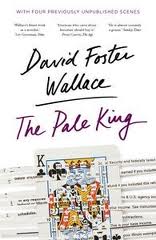
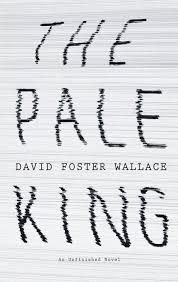
[READ: July 14, 2014] Pale Summer Week 1 (§1-§9)

In other Summer Reading Group posts, I have tried to summarize chapters, make connections between characters that I may have missed in earlier readings of the book and, just tried to be more microscopic about my reading.  I don’t usually philosophize too much about the stories, but I do wax poetic from time to time.  Having said all that, The Pale King presents its own unique challenges because the book is unfinished.  So it’s not always clear if any connections can be made from chapters that are elliptical. DFW in particular likes to write scenes without naming characters, giving the reader something to discover later on, perhaps.  So you may have a scene that has no named people in it, but their speech patterns or details are referenced later, allowing you to piece things together.

There is definitely some of that piecing going on here, but as I said, when a book is unfinished, and this one was largely pieced together by editor Michael Pietsch, it’s not clear if you are missing something or if it simply isn’t there.  So there will be some speculation, and some omissions for sure, but we press on.

A further complication is the collection of Notes and Asides at the end of the book.  Some reveal information about characters that is not necessarily evident in the book, some talk about things that might have happened or even might have been removed if DFW had played around with the text more.  In general I am not going to read these now, so as to avoid spoilers.  But I may insert them later (with spoiler warnings) to make it easier to make sense of the book later.

The primary setting for the book is the IRS Regional Examination Center in Peoria, IL set in 1985.  Editor Michael Pietsch (in his thoughtful and helpful Editor’s note which is mandatory reading if you are going to read the novel) says that DFW described the book as “torandic,” with elements coming in and going out over and over.

The other key question is just how unfinished is this?  We have no idea.  It feels like it could go on for a ton longer, and yet it no doubt would have been edited down to a more manageable size afterwards.  There are sections that seem like they could have more and others that seems like they would have been trimmed a lot.  And then of course, there could be other things that never even saw the light of day.  None of that should keep anyone from reading the book though. (more…)

Read Full Post »

karl2SOUNDTRACK: BRASS BED-Tiny Desk Concert #339 (February 24, 2014).

brass bedI expected Brass Bed to be a goofy band because of the snapshot image of them singing into toy microphones.  I was initially disappointed by how normal they were, but I was soon won over by their interesting floating sound. They have this overall trippy underwater vibe (which seems to be accomplished by a bowed slide guitar). This is especially notable on “Yellow Bursts of Age” their best song in the set.  Later the guitar solo is echoey and also underwatery. It’s a very wild sound for a fairly simple song.

They tell a funny story about being from Louisiana and encountering Washington DC snow and (of course) not having an ice scraper (although they did have bag of sand).

“Cold Chicory” is an upbeat sounding song musically although it is kind of a bummer lyrically, but again there’s the great sound of the bow on the slide guitar and the echoey lead guitar. “Please Don’t Go” is a slow song—with more interesting effects from singing into that slide guitar.

The plastic mikes do come out in the last song “Have to be Fine” in which they sing into the echoey mikes for the intro (with very nice harmonies).  They sing the intro for about a minute, and then the slide guitar player takes lead vocals on this simple but pretty song (I don’t know any of their names).

At the end, the NPR folks gave them an honorary NPR ice scraper.

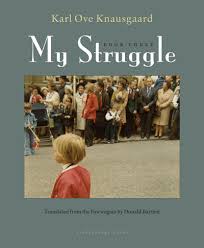
[READ: June 24, 2014] My Struggle Book Three

boyhoodI read an excerpt of Book Three just a few weeks ago.  And in the post about it I said I wouldn’t be reading this book for quite some time.  But then the book unexpectedly came across my desk and I couldn’t resist grabbing it while it was here.  So it appears that I will now have to wait well over a year before Book 4 (which is, I think about 1,000 pages–yipes).  I also see that Book Three is fully called “Boyhood Island” in Britain.

At the end of Book Two, Karl Ove was more or less caught up to the present–writing about what he was then up to (with a few years gap, of course).  So it makes sense that this book is about his childhood–showing us how he came to be the man he is.

The book, amusingly enough, starts off with memories that he cannot possibly remember, and he even says as much.  He is using memories of his parents and piecing together pictures from when he was an infant.  In 1970, (Karl Ove was born in 1968) his family moved to the island of Tromøy tromo(and check out the idyllic picture that Wikipedia had).  This is where Karl Ove spent his (rather traumatic) formative years.  Their island is small, so he knows everyone in his school, but there are some amenities around like the Fina station and the B-Max, and there’s lots of soccer to be played and bikes to be ridden.

Things seem normal at first–he runs and plays with his friends, there is ample green space to run around in, and they have boats to sail on.  And we meet two of Karl Ove’s earliest friends: Geir and Trond (so many people are named in the book, I’m very curious to know if any of them remember him).  In an early scene they chase the end of a rainbow looking for a pot of gold (and have a discussion about what happens to it when the rainbow vanishes (the boys even play a prank on Karl Ove that they actually found the pot,a dn while he doesn’t initially fall for it, he is compelled to go back and they tease him).

But the looming figure here and throughout the book is Karl Ove’s father, who, at least according to Karl Ove’s memory, is pretty much a monstrous dick.  He is demanding and exacting, unforgiving and seemingly uncaring.  He is either bipolar or a drunk, jumping from goofy to outright rage in a mater of seconds.  Karl Ove and his brother Yngve fear him unconditionally and, by the end of the book they both seem to hate him.  The scene where their dad tries and fails to teach Karl Ove to swim is heartbreaking, especially when the dad goes home and tells their mom right in front of him “He’s frightened of water.”  There are dozens of instances of fear and intimidation (often accompanied by a wrenching of Karl Ove’s ear).  Like when Karl Ove turns on the TV for his grandparents (he wasn’t allowed to touch the TV but he wanted to do something nice for them).  After a few minutes, the TV fizzed out and, naturally, he was blamed for it and sent to bed without supper (after some minor physical abuse). (more…)

Read Full Post »

« Newer Posts - Older Posts »