Feeds:
Posts
Comments

Archive for the ‘William H. Gass’ Category

SOUNDTRACK: KATE CARR-“The Ladder Is Always There” (2018).
At the end of every year publications and sites post year end lists.  I like to look at them to see if I missed any albums of significance.  But my favorite year end list comes from Lars Gottrich at NPR.  For the past ten years, Viking’s Choice has posted a list of obscure and often overlooked bands.  Gottrich also has one of the broadest tastes of anyone I know (myself included–he likes a lot of genres I don’t).  

Since I’m behind on my posts at the beginning of this year, I’m taking this opportunity to highlight the bands that he mentions on this year’s list.  I’m only listening to the one song unless I’m inspired to listen to more.

Messa is an Italian band (although they seem to sing in English).

The song opens with some feedback and a heavy guitar (and a single cymbal bell, which I quite like).  After playing the riff a few times, everything pulls back to reveal some delicate Fender Rhodes notes and Sara’s softer, muted voice.  Then things take off.  But it’s not fast or super heavy, it’s just spot on.

They have a great stoner rock sound but with a seriously metal edge to the riffs.  What really sets them apart is vocalist.  Their singer Sara has a great soaring 70’s classic rock voice.  It goes really well with the low end of the songs.

The end of the (eight-minute) song has a great guitar solo and then harmonizing vocals.  It’s an awesome song and I will definitely be checking out the rest of the disc on bandcamp.

[READ: January 3, 3018] “Living Animals”

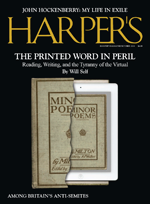
This begins the 13th year of this blog.  So why not start it with a criticism of online content.  This essay was originally written in 1999 (Gass died in 2017), and I’m sure his concerns multiplied on the decade plus since.  This is also an excerpt from the essay.

Gass talks about the permanence of the printed word whereas

words on a screen have visual qualities…but they have no materiality, they are only shadows and when the light shifts they’ll be gone.  Off the screen they do not exist as words.  I cannot carry them beneath a tree or onto a side porch [well, now you can, but you couldn’t in 1999], I cannot argue in their margins [now you can, sort of].

But then he gets more specific of what you cannot do. (more…)

Read Full Post »

SOUNDTRACK: PHISH-Live Phish Downloads 07.06.98 Lucerna Theatre, Prague Czech Republic (2008).

This live release is fascinating to me because there’s some major mistakes during the show.  It’s interesting to me that when I read other people talking about this show, they rarely speak of the mistakes.  I know that any band that plays as often and for as long as Phish does is bound to make mistakes, and of course, mistakes are part of the live experience.  Nevertheless, they are often jarring. 

And there are three pretty big ones in this show.  The first comes in “AC/DC Bag.”  This one is particularly noticeable because it comes after a brief pause in the song.  The band comes back in after the break and whonk–wrong chord.  A similar thing happens in their cover of “Cities,” it’s a staggered musical section and whonk–they’ve missed it.  But by far the most egregious is in one of my favorite songs, “Golgi Apparatus.”  There’s a really wonderful musical interlude in the middle of the song.  And in this version, holy cow.  Trey misses the notes to start the instrumental and he just cannot find them again, so the wrongness continues for almost a full minute.  It’s incredible.  Trey is a pretty mellow guy, I’d love to see his reaction during all of that.

But aside from these errors, the set is otherwise really good.  They come to a dead halt in the middle of a jamming, really blistering guitar solo section of “Maze” to thank the audience for coming and to apologize for not thanking them last night.  It’s a weird, quirky thing to do, but it’s amazing that they then pick up the song right where they left off, blistering away to the end. 

The version of “Ghost” is really fantastic with an amazing solo in the jam.  There’s a funny interlude near the end of “Makisupa Policeman” in which there are John Fishman, the drummer takes a solo audience is invited to whistle when the solo has gone on too long.  Amusingly, the solo is very simply a high hat and snare–no indulgences at all.  The crowd starts whistling and the song ends.  But the two highlights for me are the amazing 20 minute version of “Piper” with, again, an absolutely ripping guitar solo and “David Bowie, ” another great song with a cool guitar riff.

When live albums used to come out, they were polished and perfect–sometimes fixed up, or entirely recorded in the studio.  In these days when bands release full concerts all the time, it’s more common to hear mistakes.  But this was an offical release, one of but a handful of CD live releases, and I applaud Phish for not shying a way from a concert with some incredible highs and some major lows.   

[READ: September 25, 2011] 4 books reviewed

I’m including this other book review because I like William H. Gass and I labor under the mistaken belief that I will read all of his books some day.  In the case of this review I was totally fascinated by its construct and its length (Gass is not afraid to be long-winded).  The subject is Elizabeth Bishop, an author whom I know nothing about.  He talks about four books by or about her, her two collections: Prose and Poems, as well as Elizabeth Bishop and the New Yorker: The Complete Correspondence and Words in Air: The Complete Correspondence Between Elizabeth Bishop and Robert Lowell.

The review opens with Gass’ serious criticism of one of Bishop’s poems (he really seems to be laying into it).  He proceeds to say that back in the day (when Wallace Shawn was editor and earlier) that the New Yorker was quite different about the kind of things it accepted (wonderful examples include them not wanting to publish a poem at a certain time of year because it didn’t fit the season (!) or that the editors were uneasy about printing a poem that contained a clause about dirty underpants (!!–they published the poem but removed the clause).  The prissy nature of the rejections is hilarious, especially given the kind of explicit stuff they publish now. (more…)

Read Full Post »

SOUNDTRACK: THERAPY?-Lonely, Cryin’ Only [single] (1998).
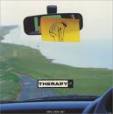
I have a few Therapy? singles, but I wanted to mention this one specifically because it has two “new” recordings on it.  The first is of “Diane” the Hüsker Dü song that they first recorded on Infernal Love.  The second is of “Teethgrinder” their first “hit” off of Nurse.

I’m always intrigued when bands reinterpret their own songs, but I have to say that these two remakes are disappointing.  “Diane” is slowed down quite a lot and is very very crisp.  But it rather removes some of the creepiness of the original (and it’s a very creepy song).

As for “Teethgrinder,” the original of that song is stellar.  Any changes can only be for the worst.  And that’s the case here.  There’s so many great, weird sounds from the original (and those sounds make it wonderful) that without them, the song is fine, but nothing awesome.

Fortunately these tracks are b-sides and not really official or anything.

[READ: May 4, 2010] The Review of Contemporary Fiction

This is my first exposure to this journal.  The only reason I bought it was for the main (and only) title in the book–Damion Searls’ ; Or The Whale (which I’m reading now and will review shortly).

The rest of the journal contains Book Reviews and ads for forthcoming publications.  Since I didn’t plan to talk about that back matter in ; Or The Whale, I ‘ll do it here.

There are 22 book reviews in the back of this journal (which itself is 368 pages and only costs $8.00!).  Each book is not quite an academic book, but certainly not popular fiction or non-fiction.  There are a lot of French writers (either in translation, or of books about them).  There’s also some reviews of books that were long out of print (Robert Walser’s The Tanners and two works by Breyten Breytenbach).

The one surprise is the inclusion of a sort of meta-science fiction title by Christopher Miller called The Cardboard Universe.  It’s an encyclopedic guide to a sci-fi author whose initials are PKD. (Phoebus K. Dank–although Dank does have a fictional character called Phillip K. Dick).  It sounds great and yet it is an encyclopedic-style book of over 500 pages.  I’m just not sure if I’m up for it.

I’ll probably never read any of the books reviewed (I barely have time for the stuff I really want to read), but they all sounded interesting in one way or another.   For the entire list of books reviewed and more info on the journal, click here.

After the Book Reviews, there’s a Books Received list.  I assume this is all of the books that they were asked to review.  I wonder if they’ll review all of them?   The only author I recognized in the list was A.S. Byatt.

There’s then a few ads for like-minded publications: n+1, Chicago Review, Trickhouse, which looks fascinating, and Absinthe (new European writing).  There’s also a listing for new books from University of Delaware Press about Don DeLillo’s Underworld, Thomas Pynchons’ Mason & Dixon and William Gass’s The Tunnel (which I really ought to read as that book was a mystery to me).  There’s even critics I recognize in these essays!

The final pages are ads for forthcoming books from Dalkey Archive Press (the publishers of The Review of Contemporay Fiction).  I know Dalkey for a few obscure titles (mostly from Flann O’Brien, but others as well).  The books in this list are from the Dalkey Archive Scholarly Series and include titles like Phantasms of Matter in Gogol (and Gombrowicz); Reading Games: An Aesthetics of Play in Flann O’Brien, Samuel Beckett, and Georges Perec (which I admit sounds really interesting, but which I will likely never read).  The final title in the list is called Don’t Ever Get Famous: Essays on New York Writing after the New York School.  I’m curious about this one.  The book blurb mentions a number of writers that I’ve never heard of, so I can’t decide how to take that title.  I only wish the blurb explained it.

If I were more studious, if I worked in academics, if I didn’t read so many other things, I would definitely subscribe to this journal.  But as it stands, I’ll be just getting just this one (and maybe an occasional other one if the mood strikes me).

Read Full Post »

harpersaugSOUNDTRACK: Songs That Got Us Through WW2 (1993).

ww2My dad was in World War II. He was a Navy man, and he worked on airplanes.  He was stationed in the South Pacific.  When I was growing up, he listened to a lot of big band music (while most of my friends’ parents were listening to folk music).

This collection of songs is a favorite of mine whenever I’m feeling nostalgic for my parents.  Although not every song on this disc was one I knew, the majority are greatly familiar.  My dad even had a lot of these records on 78 vinyl (and I have begun a small 78 RPM collection of my own).

When I think of a lot of these songs and what they meant to the people back home they go from being upbeat fun dance songs to being songs that people held onto during such a tough time.  There hasn’t been a lot of documentation about what families hold onto during our current wars (emails I gather are pretty important), and I suspect that with popular culture being fragmented so much, there aren’t really any unifying songs like in WWII. I’m not sure if that’s a shame, but it does mean less that nostalgia like this isn’t as likely 60 years from now.

[READ: July 19, 2009] “Kinds of Killing”

Normally I don’t write about book reviews.  However, since I enjoyed William Gass’ The Tunnel, and I am fond of his writing in general.  In fact, Gass is such a powerful writer, and he spends such a great deal of time honing his words, that anything he writes is worthy of a read.  And since this book review was something like 8 pages long, it seemed worthy of a few words. (more…)

Read Full Post »

SOUNDTRACK: STARLIGHT MINTS-Built on Squares (2003).

The Pixies were a weird band….  They wrote fantastically catchy alterna-rock, and yet, deep down, they were pretty weird, with shouty parts and quiet parts and bizarro lyrics about slicing up eyeballs and monkeys going to heaven.  Well, imagine if their music was REALLY weird, going beyond guitar/bass/drums to incorporate cellos, triangles and samples.  That approximates the Starlight Mints.  I first heard them on a sampler.  Their track “Submarine #3” blew me away.  It was under 2 minutes long and was weird and wonderful.  I can’t recommend that song highly enough.  Their debut album was solidly weird too.

This is the follow up, several years in the making.  And, all the parts are in place. The orchestration is a bit bigger, and yet it is still a somewhat unsettling listen.  Just as you think you get the pace of a song, they’ll throw in an unusual cello riff, or some unexpected sample.  This is not to say that the songs aren’t catchy, you just have to listen carefully for the catchiness.  And, since the songs are all under 3 minutes or so, you have to listen quickly.

I mentioned the Pixies because the second half of the album (and most of their first one) really sounds like a Pixies record.  In fact, there are parts of the songs (surf guitar, sparse solos, and Alan Vest’s voice which at times is an uncanny match for Black Francis’) might make you think you found a long lost Pixies track.  Then, of course, they throw in a trumpet, and you say, nope, not the Pixies.  So, if you like the Pixies, but wish they were just a bit more odd, definitely check out the CDs by these guys.

They released one other album after this one.  I’ve no idea what they’re up to now.  They have a MySpace page, but there’s not much on it except for a couple of songs.

[READ: June 2008] The Tunnel

I bought this book when it came out way back in 1995.  (more…)

Read Full Post »

sacred.jpgSOUNDTRACK: A Life Less Ordinary soundtrack (1997).

life-less.jpgFor those keeping score: at lunch, I have been listening to all of my CDs in order. This process started several years ago and really bespeaks my growing insanity. I had long since finished the A-Z bands, and have moved onto soundtracks. So, yesterday’s lunch had the great pleasure of listening to the Little Mermaid, Lock Stock and Two Smocking Barrels and A Life Less Ordinary at lunch, while reading this book!)

[READ: May 2007] Sacred Games.

MADERCHOD! MADERCHOD! MADERCHOD! ! (more…)

Read Full Post »