Feeds:
Posts
Comments

Archive for the ‘Tessa Hadley’ Category

CV1_TNY_04_08_13Ulriksen.inddSOUNDTRACK: THE POSTAL SERVICE-“A Tattered Line of String” (2013).
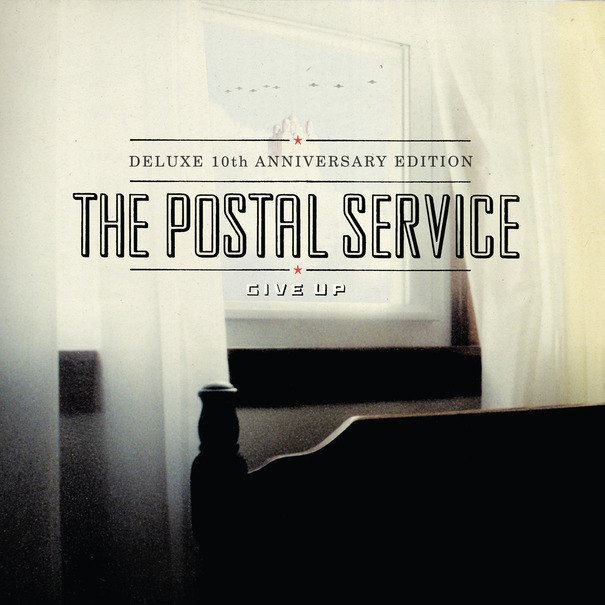
postalI enjoyed The Postal Service record but I wasn’t as big of a Death Cab for Cutie fan at the time.  Now, having enjoyed DCFC so much in the last couple of years, this song sounds much more like a DCFC song but with keyboards (Ben’s voice is so distinctive).

This song has been released with the reissue of the Postal Service album.  It’s not on the original but it also sounds like it might be a remix (the skittery backing vocals make me think remix).

Either way this is a supremely catchy song (Gibbard knows from melody) and when you throw the keyboards and dancey beats on it, it’s even more poppy than DCFC’s stuff.  I wonder why the album wasn’t bigger when it came out.

[READ: April 21, 2013] “Valentine”

Tessa Hadley has written another story that I enjoyed–with that same quaint feeling of love in 1970s England.

The story opens with the narrator Stella and her friend Madeleine waiting at the bus stop.  They are fifteen, have never kissed boys, and think about nothing else (especially since they go to an all girls school).   Madeleine is willowy with long curls a “kitten face” and “luscious breasts” while Stella is small, plump and shapeless.

As they wait for the bus, Valentine approaches (yes I though the title was about the day not a person).  He is in school as well but he is new to them.  Valentine has just moved to the area from Malaya.  And, as he sizes them up, offering them each a smoke, when it comes down to it, amazingly, he chooses Stella.

She likes him because he is different as she is different–they are clearly soulmates.  While her parents (well, Gerry is her stepdad) don’t ‘t approve of him (his hair, his dress, his attitude).  He barely talks to her parents when they interrogate him and then he imitates their voices when they are alone.  Regardless of what others thought or really, because if it, they are soon hanging out all the time.  And soon he is her boyfriend.  And soon enough she had lost weight (because all they did was talk and smoke), they died their hair black (a proto-goth in the hippie 70s) and they basically began to look alike. (more…)


Read Full Post »

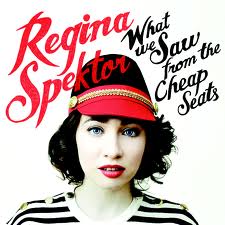
CV1_TNY_01_21_13Blitt.inddSOUNDTRACK: REGINA SPEKTOR-What We Saw from the Cheap Seats (2012).

spektorRegina Spektor’s latest album has gotten rave reviews this past year and deservedly so.  It’s catchy and more than a little weird.  The songs could be huge but they don’t have the gloss that makes for big sellers.  Which is fine, because Spektor’s niche is perfect with her in it.

Amidst the quirk, there are some wonderful piano pop songs with unexpected lyrics.  There’s a great phrase in the opener “Small Town Moon,” “Today we’re younger than we’re ever gonna be.”  But after the pretty piano intro, Regina’s full band kicks in for some rocking verses.  “Firewood” is a gorgeous piano ballad dealing with a common theme in her songs: death (but with jaunty piano lines and a beautiful instrumental section).  And “Open” falls into this category as well–achingly beautiful (and a touch Ben Foldsy in the piano).  Although there’s some really crazy sounds on “Open” too, like Spektor dramatically gasping for breath after lines of verse.

The album is full of electronic “drum” sounds that are what I assume is really Spektor going “doo doo” and then electronically manipulated.  You can hear them on one of the weirder songs, “Oh Marcello” which has Spektor singing in a crazy Italian accent and has a chorus of “I’m just a soul whose intentions are good”–but not in the manner in which it was originally sung).  This drum sound is really prevalent of “All the Rowboats” a fascinating song that seems to offer pity for paintings in museums.

“How” is also filled with theatricality–and Spektor’s gorgeous soaring voice.  “The Party” is another big blockbuster number–lots of instruments and a big soaring vocal.  Wonderful.

“Don’t Leave Me (Ne Me Quitte Pas)” has one of the catchiest choruses that I have no idea what is being said (because it’s in French).  It also has great orchestration giving it a very worldly feel.  “Patron Saint” is another pretty song, with lovely strings.  The disc ends with an acoustic guitar/piano tune.  A simple song to “Jessica.”  This album is gorgeous and deserves a wider audience.

[READ: January 16, 2013] “Experience”

Tessa Hadley had a story in the New Yorker back in June (she seems to be a favorite of theirs.  I liked that one, and I like this one as well.  Hadley creates interesting scenarios for her stories, scenarios that I can’t really imagine happening (unless things are different in England).  But I feel like that scenario’s set up is neither here nor there for the point of the story.  So in this one, a woman who has very recently divorced from her husband is looking for a place to stay.   A friend of a friend who is going to America for a few months agrees to let her live in her house rent-free.  Now I’m not saying that that kind of thing can’t happen, indeed there is a lot of fiction based on the idea of staying in someone’s house while they are away, but I’ve never heard of it happening in real life.  And despite my saying this, I don’t have a problem with it.  I’m willing to believe it happens all the time.

So the narrator, Laura,  makes herself at home in Hana’s house.   She doesn’t have a ton of money so she is more or less subsisting on what’s around the house until she has to get a job.  She checks out all the rooms and enjoys the comforts of Hana’s well-off lifestyle.  Then one day she finds a key to a locked attic room.  She decides to explore the room and see what kinds of secrets it hides.  It contains largely the ephemera of a successful woman: porn videos, a wetsuit, coffee table books and a number of paintings (Laura believes Hana made her money in the art world).  But then she finds a box that contains more personal effects.  Including a diary.

The diary reveals that Hana had been having an affair with a man named Julian.  Hana describes Julian, who is married, as rough and as someone who hurts her, but that the s*x is great.  I found it charming that Hana wouldn’t curse in her own diary  writing “f****d in the shower” and “Then X and you know what.”  The last words in the diary were “He makes me so happy.”

Reading this makes Laura feel despondent–she has never had any experience like that–she married young, was dutiful and is now divorced.  Her husband was smart and gentle and rather boring–even when they split up it was reasonable.  This causes Laura to mope around a bit.  Until one day Julian knocks on the door. (more…)

Read Full Post »

SOUNDTRACK: LATETIA SADLER–“There’s a Price to Pay for Freedom (And It Isn’t Security)” (2012).

What a treat to see Latetia Sadler as the song of the day from The Current (Minnesota Public Radio).  Latetia Sadler is the voice of Stereolab.  She has a new album coming out called Silencio and this is the first single.

It’s hard to say whether or not the song “sounds” like Stereolab, because Stereolab sounds different all the time.  But this is definitely not your bubbly Stereolab.

The song opens with some dreamy slow synths which morph into some dreamy guitars.   There’s no vocals for over a minute (which makes it seem like it might be an instrumental.  When Latetia’s voice comes in (backed by a deep male voice (very un-Stereolab) the music pulls back almost entirely and Latetia’s peculiarly inflected words [ree-uh-li-TEE] come to the fore.  It’s hard to believe that such a dreamy song would be about what the title suggests it’s about.  But how about this for a stinging (if oblique) final line: “Happy to identify with a reflection in merchandise.”

I prefer Stereolab’s bubblier music to their more dreamy, languid songs.  This one is nice, and because of her voice, it’s intriguing.  But I’d need a beat more oomph to want to get a whole record.

[READ: July 6, 2012] “An Abduction”

Tessa Hadley is rapidly turning into one of my favorite authors.  I only know her from reading New Yorker stories and I really must expand beyond these glossy pages.

This story was really fantastic.  I loved how the title has one meaning–the obvious meaning, which is even stated in the story–at the beginning, but by the end, the meaning changes to something else.

And what a great opening to a story: “June Allsop was abducted when she was fifteen, and nobody noticed.”  Shocking!  Then Hadley contextualizes this oversight: “This happened a long time ago, in Surrey, in the nineteen-sixties, when parents were more careless.”  Hmm.

So Jane was home from boarding school–her older brother was studying for college, her younger sister was not yet in boarding school and still had friends locally.  So, yes, Jane was bored.  She tried her best to have fun, but was really stumped.  When her father drove down the driveway past her and she accidentally hit his car with the ball from her Jokari set (paddle ball), the only fun she was having was destroyed.  Her father drove off in a huff.

Driving past him on the road was a two-seater convertible with the top down and three long-haired boys driving.  Her dad scowled at them, but paid them no mind.  Which is a shame as they are the abductors of young Jane. (more…)

Read Full Post »

SOUNDTRACK: ARCADE FIRE-“We Used to Wait” (Saturday Night Live, November 13, 2010) (2010).

I know they played two songs that night but I just watched the rerun and they only showed one song.

I’ve always thought that Arcade Fire were pretty cool live.  And this set from SNL proves me right.  “We Used to Wait” comes from The Suburbs and it’s a pretty mild song on the record.  But live, the band plays with really weird sounds and explores different types of cacophony.

This is especially true from guitarist Richard Reed Perry (who plays all kinds of other instruments too).   He plays some of the more riff-based notes in the song, but he also plays some really loud, unusual chords as well.  Some of them are quite dissonant and they really bring a dramatic noise to the song.

The string section (three violins on this show) in addition to playing the strings also added some really cool dissonance.  In fact, the first time the strings came in, the sound was quite surprising.

I also love the percussive nature of the band.  By the end of the song it seems like half the band are banging on drums (while playing other things as well, no doubt). 

Win Butler is an intimidating frontman–I find his face to be open, almost blank.  He’s kind of hard to read.  He’s also very tall.  When he walks out into the audience in the middle of the song, it’s a little unnerving. 

One thing that I have liked about Arcade Fire from the beginning was their intensity, and this song certainly displays it.

[READ: November 7, 2011] “The Stain”

This is another Tessa Hadley story about a woman who cleans up.  It’s nothing at all like “Friendly Fire,” but I still think it’s interesting that she has another character who opts to do cleaning work.

In this one, Marina is a mother of a young boy, Liam.  To makes extra money she takes on a job as a house cleaner and “companion” to an elderly man.  He’s 89 and from South Africa.  He has recently come to Britain after his daughter (who has lived here for a long time) moved him here.  And the house where he lives is a house not far from where Marina lives.  Indeed, it’s one that she grew up looking at and wondering what it looked like inside (it’s a very big house).

The old man is notorious for making cleaning women go away–he is cantankerous and crotchety.  But Marina soothes him right away and they form a kind of bond.  Marina even brings Liam over a few times and he gets along quite well with the old man. (more…)

Read Full Post »

SOUNDTRACK: WAVVES-Live at Sasquatch, May 28, 2011 (2011).

I learned about Wavves from NPR–in fact I listened to their other NPR concert before even getting their album.  So this marks my second concert from them.  What makes me laugh about Wavves is that the songs are really short and Nathan Williams is a total chatterbox. When I burn these concerts onto CD, I use Audacity and I make tracks for songs and band chatter.  Which means that this Wavves show, which is just under 40 minutes has 20 tracks.  (Whereas S. Carey, at about the same length, has only 11).

This show has 14 songs.  Four of the songs are from their second album, called Wavves (which is also their second album called Wavves).  The rest come from King of the Beach (except “Wavves” from their first album and a couple of newer tracks).

The band blasts through these songs (I’m not even sure who is in the band, since the Wavves albums are a solo endeavor), and they all sound very good.  The album has kind of a tinny sound (on purpose, I suspect), whereas live the songs sound a bit fuller.

Lead Wavves guy Nathan Williams wasn’t that friendly in the previous show; he seems to be having a bit more fun here.  But really it doesn’t seem like you don’t go to a Wavves show to hear him talk, you go for what is undoubtedly the pogofest that is Wavves’ punk.  It’s a good set.

[READ: July 2, 2011] “Friendly Fire

Pam runs a small but successful cleaning business–but her workers are pretty unreliable.  So her friend Shelley, the real protagonist of the story, helps out once in a while.  Shelley enjoys the work once in a while (she has a real job after all)–she can use the extra cash.

This job was cleaning a warehouse–not the warehouse section itself, but the bathrooms, kitchens and offices.  They arrive early, but the workers come in while they are working and Shelley enjoys teasing/flirting with the men when they come in to use the bathroom and find her bent over, ass waving in their face. (more…)

Read Full Post »

SOUNDTRACK: WAVVES-King of the Beach (2010).

I feel like I shouldn’t like Wavves.  There’s os much to dislike about them (or him,  I should say, since it’s almost entirely the product of one guy). He’s bratty, fans seem to dislike him (do a search for Wavves live), and in the first live show that I downloaded, he seemed a bit disdainful of the audience.

And yet, I really like this album. It’s fast and punky and reminds me of some of the best summer punk music from my high school days (Surf Punks anyone?).

So Williams plays all the instruments (with a few exceptions), and the sound is consistent through: a trebly guitar (the perfect sound for surf music, although he doesn’t play surf music at all).  Fast punky drums and William’s voice which is not so much whiny as bratty–the lyrics play out this bratty idea too:

bet you laugh right behind my back/I won’t ever die/I’ll go surfing in my mind/I’m not supposed to be a kid/but I’m an idiot/I’d say I’m sorry/but it wouldn’t mean shit

or

My, my own friends/Hate my guts/So what? Who gives a fuck?

(from “Green Eyes,” which sounds like a ballad but soon rocks out).

Of course, it’s not all just punky tracks, “When Will You Come” has the drums of a 50’s doo wop song (no one would mistake it for a doo-wop song, though) including his falsetto’d voice.  And “Baseball Cards” has a similar inspiration–although again, sounding nothing really like that style of music.  Even “Mickey Mouse” opens with what sounds like the music from “Da Doo Ron Ron” (indeed it is a sample from the song, but manipulated slightly).

“Convertible Balloon” sounds like a quirky Japanese pop confection.  And, “Post Acid” which is a punky bratty song has a wonderful part where the song stops and they make crazy grunting sounds which I like very much.

It’s not smooth summer music by any means, but it is fun and energizing.  Perfect punk beach soundtrack.

[READ: July 11, 2011] “Married Love”

This story had me fooled from the outset.

Recently we listened to Judy Blume’s Fudge-a-mania.  In that story Fudge, who is 5, says that he is going to marry Sheila Tubman, his big brother’s arch nemesis.  Everyone laughs, and we ultimately learn why he wants to marry her (I won’t spoil it).  In this Tessa Hadley story, Lottie, a nineteen year old girl (who looks about thirteen) announces that she is going to get married.  As in Fudge-a-mania, the family is bemused by the idea and laughs about it, until Lottie reveals that she is quite serious.

Things get even “funnier” when the family learns who she is planning to marry: Edgar Lennox, a former teacher who is forty-five years older than her and who is currently married.  Ha Ha Ha, says her family until, Oh, she is serious.

The story surprises even further when they go through with the wedding (about half way through the story). (more…)

Read Full Post »

SOUNDTRACKNOËL, PLESZYŃSKI, MAĆKOWIAK-“Salty Air” (2011).

While looking for videos of Basia Bulat, I stumbled upon a Polish music site.  The site featured a review of this album and a free stream of this song.

The album is a collaboration of artists Ann Noël, Grzegorza Pleszyńskiego and Artura Maćkowiaka (Ann Noël, Grzegorz Pleszynski and Artur Maćkowiak).  Their website explains the collaboration (in translated English obviously):

It is for the first time that Fluxus artist Ann Noël and a visual artist Grzegorz Pleszynski engage in a music venture. For Maćkowiak, a musician from Potty Umbrella and Something Like Elvis, this project has become an unprecedented way to go beyond rock band routines known for years.

Potty Umbrella?  Love it.

Anyhow, this is experimental improv music of the most fascinating kind. Especially since, “Ann and Grzegorz have never played music or any instrument.”  The site allows you to listen to all of the tracks.  “In Emmet’s Bag” is a spoken word piece in the spirit of Laurie Anderson (the spoken part is in English).  And “Hey Man!” is a pretty conventional guitar with spoken word piece.

But it’s this track, “Salty Air” that I keep coming back to.  It opens with some guitar waves. Then a simple repeated riff entrs the mix.  And after a minute or so, distorted, echoed vocals speak underneath the music.  I think it’s in English but that’s irrelevant because the repeating and echoing makes it almost incomprehensible.

It doesn’t evoke a mood so much as a kind of helplessness.  But it’s a beautiful helplessness.  Especially when the second voice comes in, sounding almost inhuman as it moans over the top of everything else.  It’s quite a track.

 You can hear this song (and others, and download the CD for $.50) at their site.

[READ: July 10, 2011] “The Swan”

“The Swan” was a wonderfully dark and confusing story.  I loved everything about it.  It opens with the very simple scene of David coming home from work and knowing something was wrong.  His wife Suzie is acting very strange, and where the hell is the car?  Suzie tells him that she was hit by a car and that her car was totalled.  Why didn’t she call him at work?  She didn’t think it was that big of a deal.

He doesn’t know what to think so he turns his anger towards his seventeen year old son (from his first marriage).  Jamie is upstairs in his room, smoking pot and more or less ignoring everything around him (a trait he has perfected).  When David finally breaks through to Jamie, he learns the truth–Suzie was hit by a swan.

The story unfolds a little more: Suzie imagined that the swan was David’s first wife, coming to give her a message.  David is more freaked out by this than Suzie seems to be.  He can’t understand why suddenly all these years later, she is so upset about his first wife (who died, before David met Suzie, by the way).  Suzie wants to know why David never talked about her (she didn’t want to know back then).  And then finally she winds up spending most of her time with a sketchy woman across town. (more…)

Read Full Post »

SOUNDTRACK: KOPECKY FAMILY BAND-Embraces EP (2008).

I learned about Kopecky Family Band from NPR’s Tiny Desk Concert.  When I investigated further, I found that I could download this EP for free. I compared their Tiny Desk show favorably to The Head and the Heart.  This earlier EP has a bit more punky edge to it (as their other stuff may as well–Tiny Desk doesn’t really lend towards punk).

And so this EP leads me to compare them more towards Stars.  But perhaps we’ll call them a more acoustic version of Stars.  There is some wonderfully intense musical construction on this EP, and the dynamic of the duel vocalists really bring great tensions.

This is a wonderful EP.  The strings belie the rather heavy chords  (especially on “Trainwreck”) and the harmonies throughout are really infectious.

[READ: June 30, 2011] “A Mouthful of Cut Glass”

I’ve really enjoyed Tessa Hadley’s recent stories in The New Yorker.  So I decided to go back through their archives and read the other stories of hers that they have published.  It turns out that she has been published in the New Yorker since 2002.  But many of the earlier stories were collected in her previous collection which I’ll read one of these days.  But rather, I started with the first ones that have yet to be collected.

“A Mouthful of Cut Glass” is a conflation of two expressions, neither of which I was familiar with: “talking through a mouth full of plums” and “an accent like cut glass.”  The malaprop came from the protagonist’s boyfriends’ mother.  And yet, I say protagonist as if Shiela is the real protagonist.  The story quite clearly opens with Neil.

In 1952 Neil was born into a very poor household.  But over the years, he was able to rise above his sattion and become a successful University student.  It was at University that Neil met Sheila.  Sheila grew up in a vicar’s house with a gaggle of brothers and sisters.  The two of them hit it off very well and began a serious relationship. (more…)

Read Full Post »

SOUNDTRACK: MOGWAI-Happy Songs for Happy People (2003).

Happy Songs for Happy People follows up Rock Action with more sedate music from Mogwai.  In fact, while Rock Action was pretty mellow (with a few bursts of noise) HMFHP is even more mellow.

Although it does open with a rocking track: “Hunted By a Freak.”  “Hunted” is one of Mogwai’s best songs.  It opens the disc with a catchy riff, some cool synthesized vocals and great washes of sounds.  It’s great on record and even better live.  But starting with “Moses I Am’n’t” the album takes a decidedly more mellow approach.  “Moses” is a song of slow washes layered on each other. There’s interesting textural sounds on display, but not a lot of melody.  It leads to “Kids Will Be Skeletons,” another mellow layered song.  It has a simple melody with delicate (!) keyboard washes.

But just when you think Mogwai have gone all soft, “Killing All the Flies” adds some intense sounds to the disc. It is similarly structured to the earlier songs on the disc, although it has some rather happy-sounding guitar lines in it.  It also grows in intensity about two-thirds of the way through.

“Boring Machines Disturbs Sleep” (sic) is a short, quiet song with subdued vocals.  It’s followed by “Ratts of the Capital” the only really long song here (8 and a half minutes).  It opens in this more subdued vein (is that a glockenspiel I hear?), but by 4 and a half minutes all you hear is guitar–growing louder and louder.  There are solos buried in the noise that threaten to explode out of the speakers, but they ultimately seem to hold back a wee bit.

“Golden Porsche” mellows things out again with a very pretty, very simple song (almost 3 minutes of beautiful melody) that reminds me of the interludes in Twin Peaks.  “I Know You Are But What Am I?” opens with a tense kind of piano (with some slightly off chords).  They merge with pretty keyboard notes which counteract the somewhat sinister feel of the main riff.

The disc ends with “Stop Coming to My House” (Mogwai have always excelled at song titles).  It’s a very subdued track (quiet drums propel waves of keyboards) and as the songs continues, more and more waves layer on each other until it just all fades away.

I obviously prefer the louder, more raucous Mogwai tracks, so these two albums are not what I think of when I think Mogwai.  These two albums feel like the work of a more mature, more restrained band–as if they are deliberately trying to put constraints on their music to see what they can achieve.  But even if they are less intense, the songs are wonderfully structured and show a still show a great emotional range.

[READ: June 07, 2011] “Clever Girl”

This was a fascinating story and is yet another story by Tessa Hadley that I really enjoyed.  And it’s another story that I didn’t realize was set in England until the fourth paragraph, which opens “Mum unpacked.”

Anyhow, this story follows Stella, a young girl whose family moves to a small suburb that has recently been developed (trees were cut down and none newly planted).  Stella and her mother used to live alone together for many years, but recently Stella’s mom met Norbert.  They married and moved into this new suburban house.

The story is told in past tense about the events from Stella’s childhood.  But there are occasional moments where the narrator pops in and offers some moments of “grown up Stella” perspective–like maybe she could have been nicer to Norbert.  Grown up Stella realizes that Nortbert was really perfect for her mom (especially since she was an older woman,  with a grown daughter).  At the time, she thought that Norbert seemed okay, but the whole move has upset her sensibilities.  [I also love that Norbert is known as “Nor,” which is wonderfully contradictory.] (more…)

Read Full Post »

SOUNDTRACK: MOGWAI-4 Satin EP (1997).

Mogwai seemed to thunder onto the scene back in 1997.  I missed this disc when it came out but I was on board with their debut.  And then it seemed like a whole bunch of stuff was released right away: a collection of early EPs and a remix album.  It was a little hard to keep everything straight including what the band actually sounded like.

This EP is pretty representative of their early sound: it has three songs that are less “songs” than they are soundscapes (or something).   It’s something of a noise fest.  Unlike their later songs which have discernible melodies (and are actually quite catchy) the three songs on this EP are more percussion and effects than actual melodies.

“Superheroes of BMX” is a series of washes over a simple series of electronic-sounding beats (it actually seems appropriate that they were on Chemical Underground records).  Although by around 5 minutes the minimal guitar structures do come out.  “Now You’re Taken” is closer to a proper song.  It has a beautiful understated structure and vocals (!) by Aidan Moffat of Arab Strap.

But it’s “Stereodee” that really stands out: 13 minutes of noise and crashing and feedback.  At about the ten minute mark, my five year-old son said, “I like this song daddy, it sounds like monsters crashing through a small hole.”  I couldn’t agree more.

[READ: March 7, 2011] “Honor”

Golly, this story is dark.  How’s this for an opener: “My father was supposedly dead, and I found out only years later that he’d left walked out when I was eighteen months old….”  Yipes.

And I’ll say that the story doesn’t get any brighter.

So the narrator, born in the late 50s, tells the story of her mother raising a daughter (with the help of her mother who lives close by), and somehow making ends meet.  Of course she would never even consider moving back home with her mom, but she is happy to have her so close.

The mother and the narrator are strong-willed and hard to stop.  And when they are on the same side, they are formidable together. But when they disagree with each other (which they did pretty much all the time once she was a teen), it was tough being in their house.

The story unveils a plot about half way through.  The plot concerns her Aunt Andy.  Aunt Andy is her father’s brother’s wife.  And she comes to stay with them for a period of time.  In the past, Andy was shy but a little superior.  Her husband is a used car salesman and quite wealthy.  But on this visit she is pale and visibly shaken.  She is quiet and doesn’t mention her son at all.  In the past, her son was a real jerk, so she’s somewhat relieved that the boy isn’t staying with them.

Andy won’t say what the problem is and her mother refuses to tell her anything serious.  But even at the young age the narrator knows something is wrong.  And then there’s the trial. (more…)

Read Full Post »

« Newer Posts - Older Posts »